
Products
| Bizen Sake Bottle & sake Cup | Tea Ceremony Things | Bizen Flower Vase | Bizen Dish & Bowl | Others |
Bizen Sake Bottle & sake Cup
1094 Items
FIRST PREV 5 / 92 page NEXT LAST
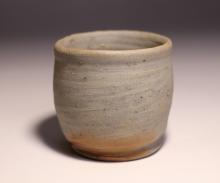


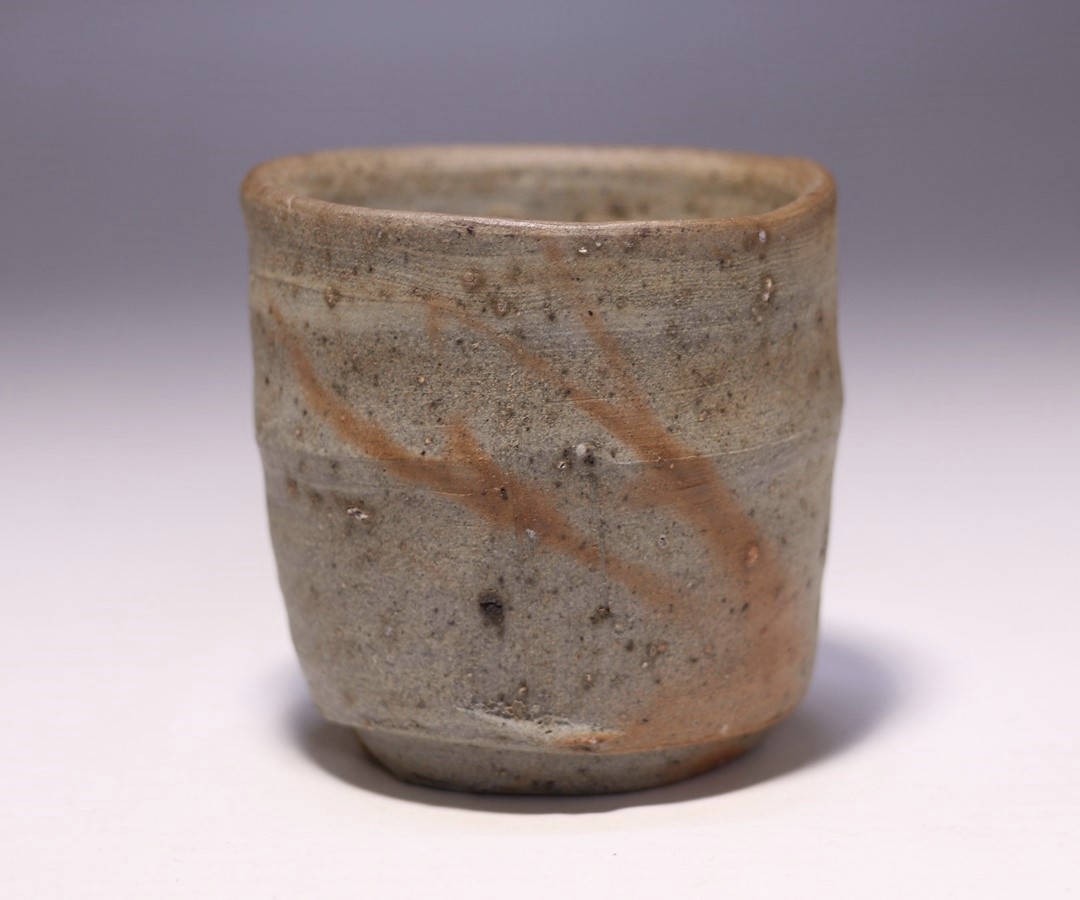
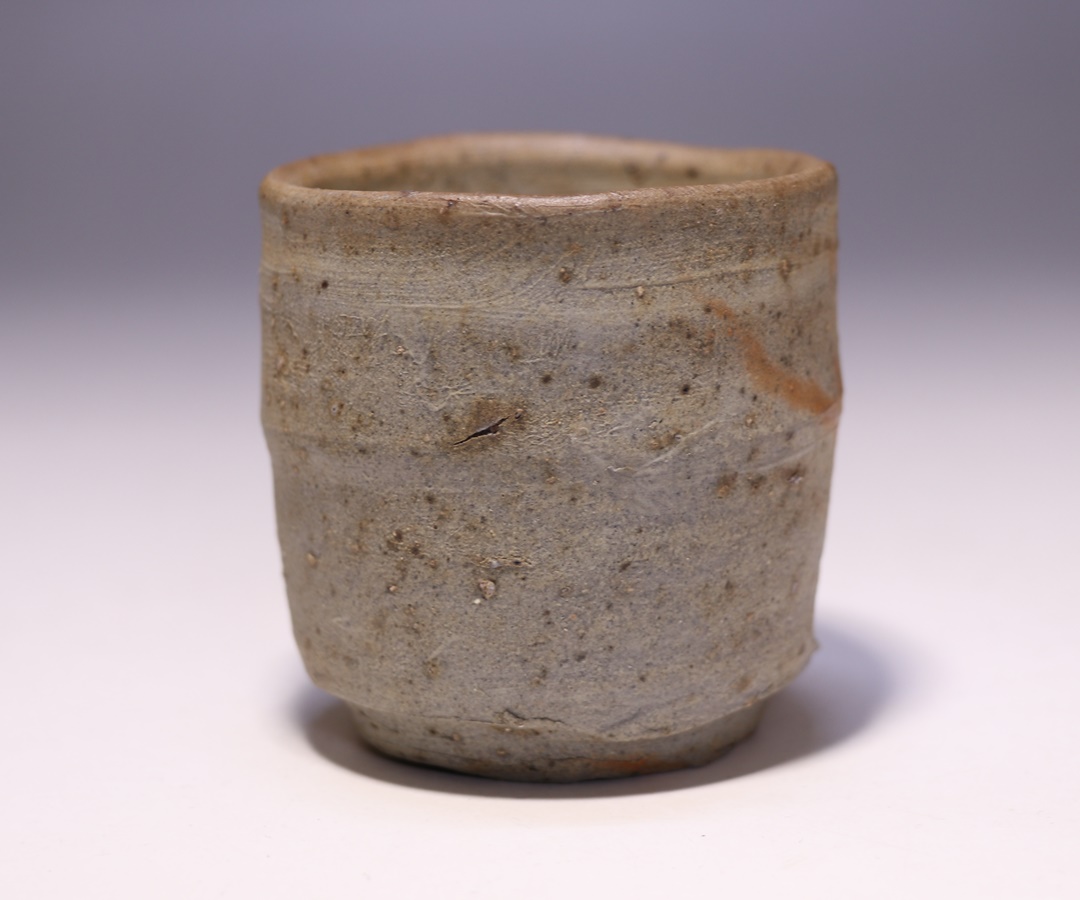
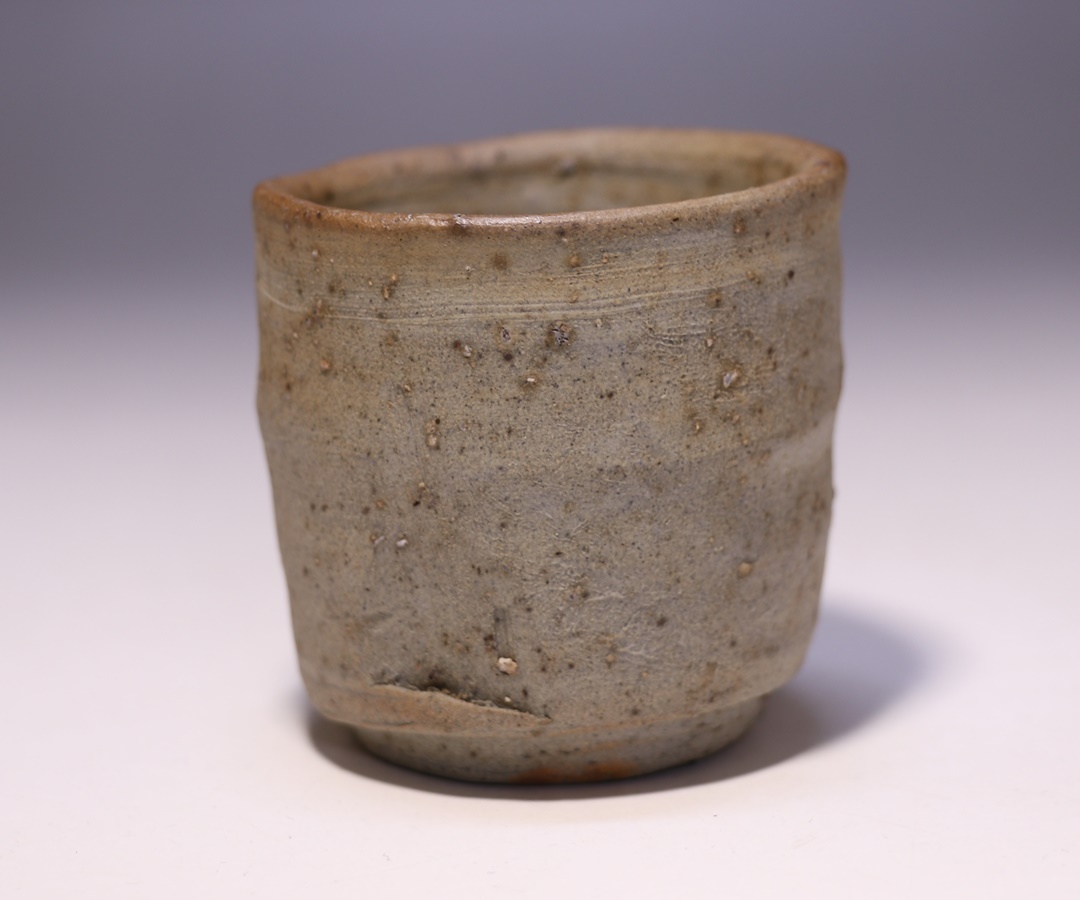
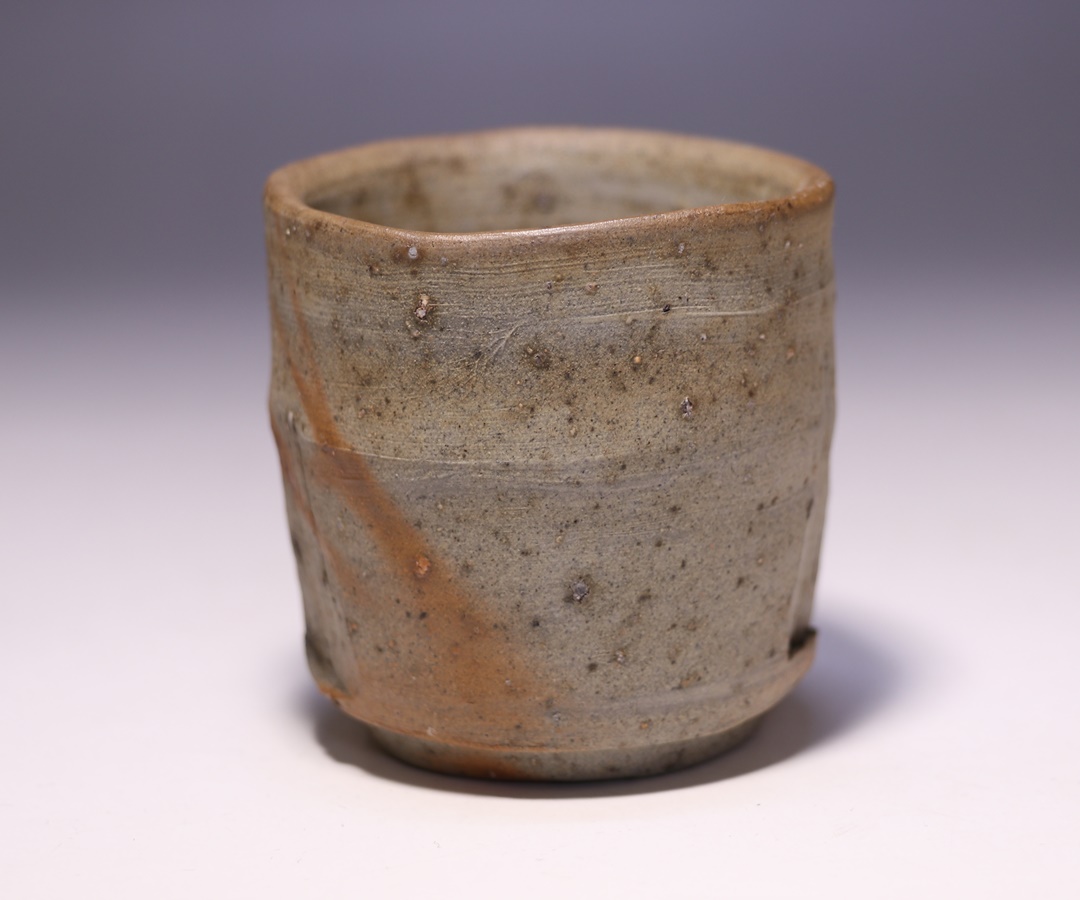
Makoto Kaneshige - Bizen Guinomi Highest quality clay
88,000 YENSold out
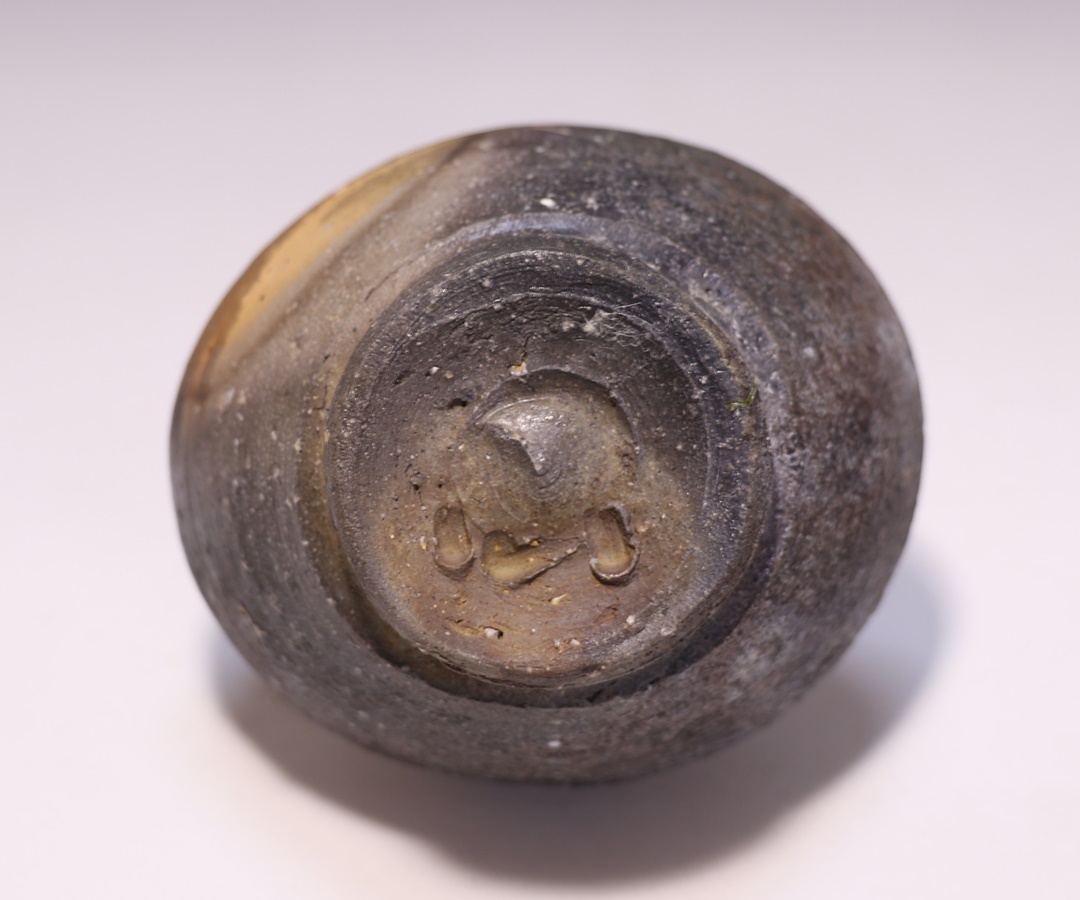
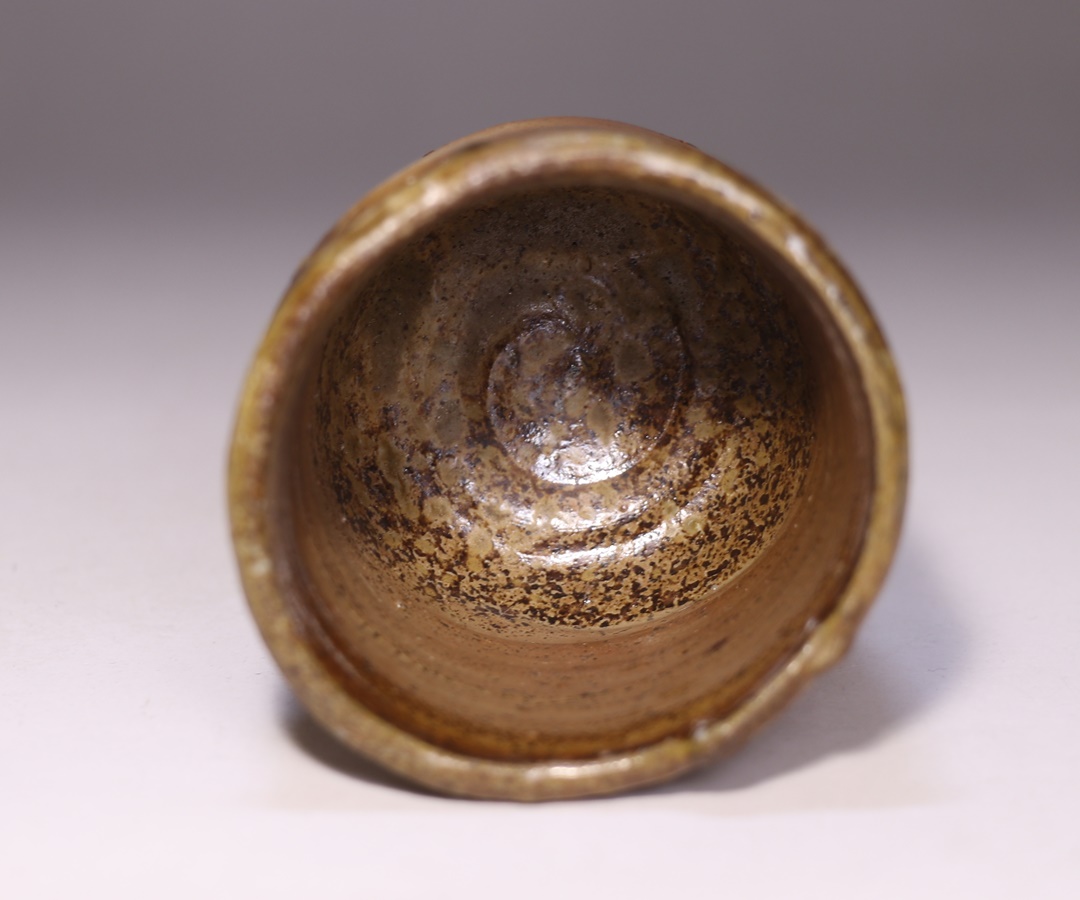
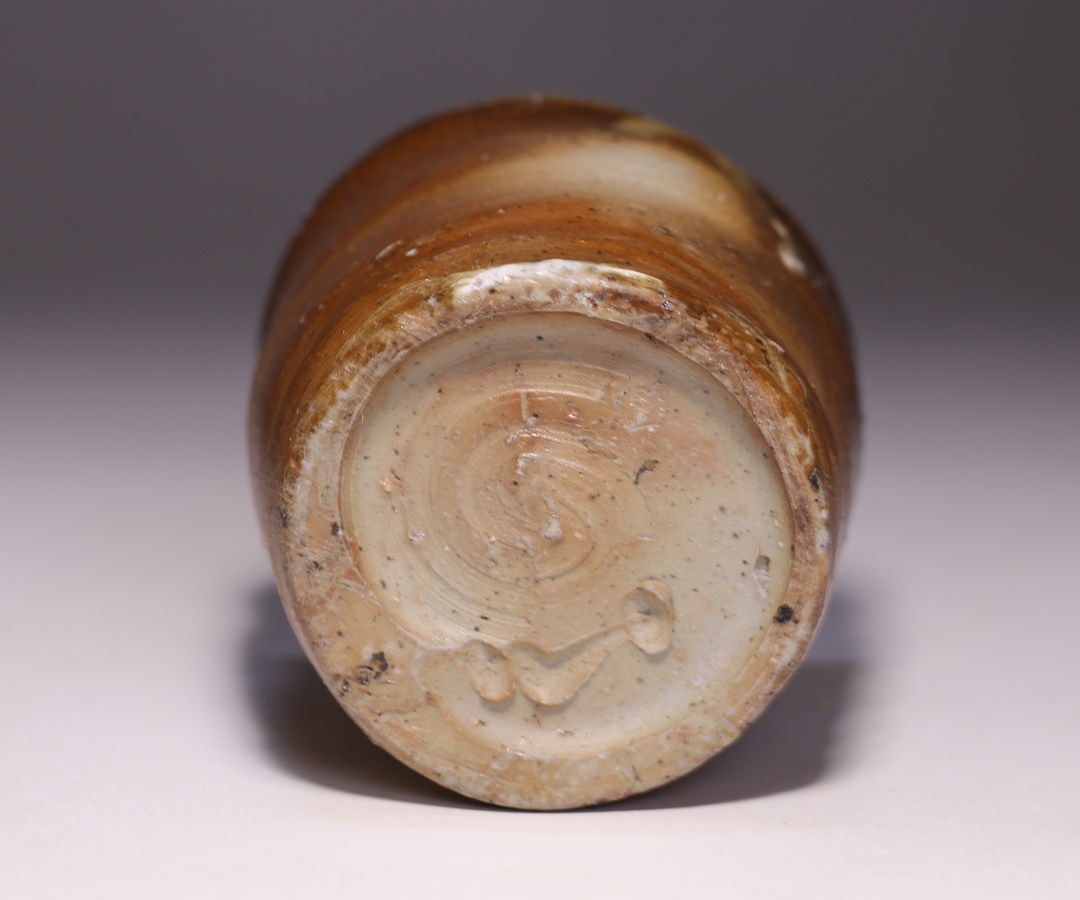
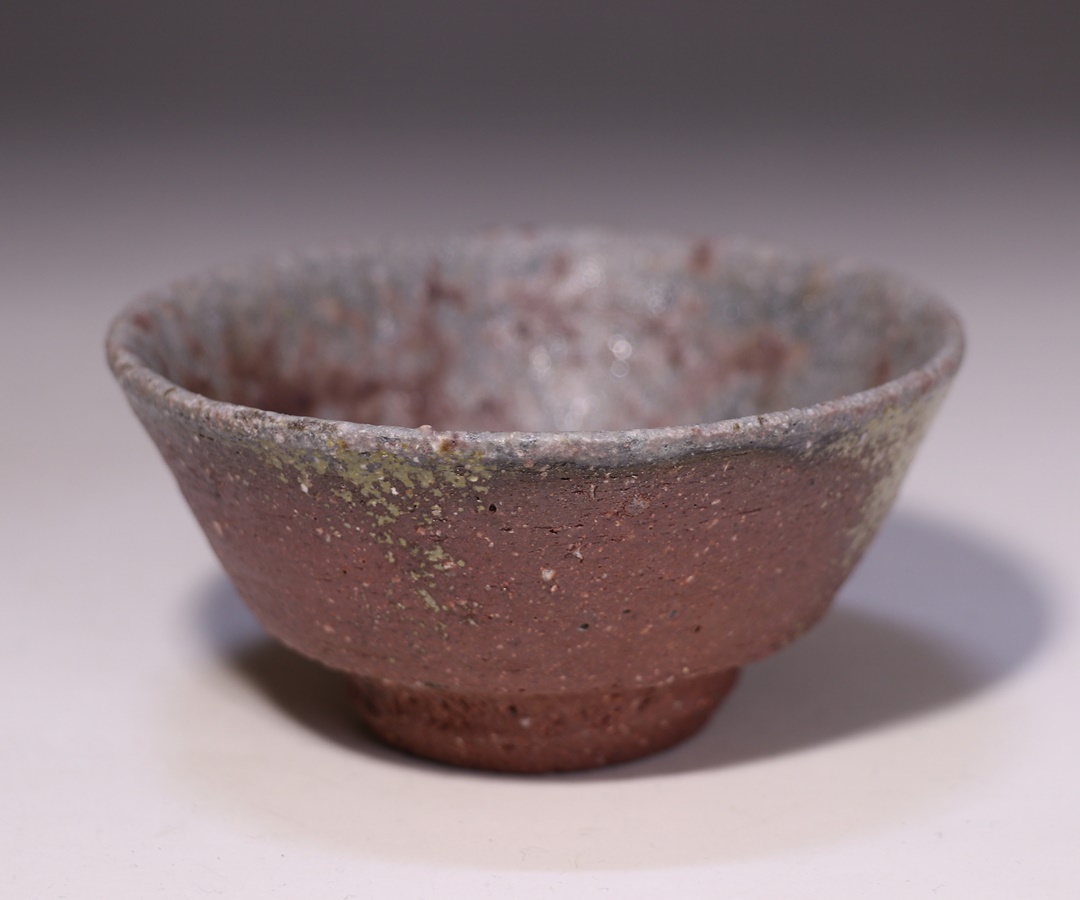
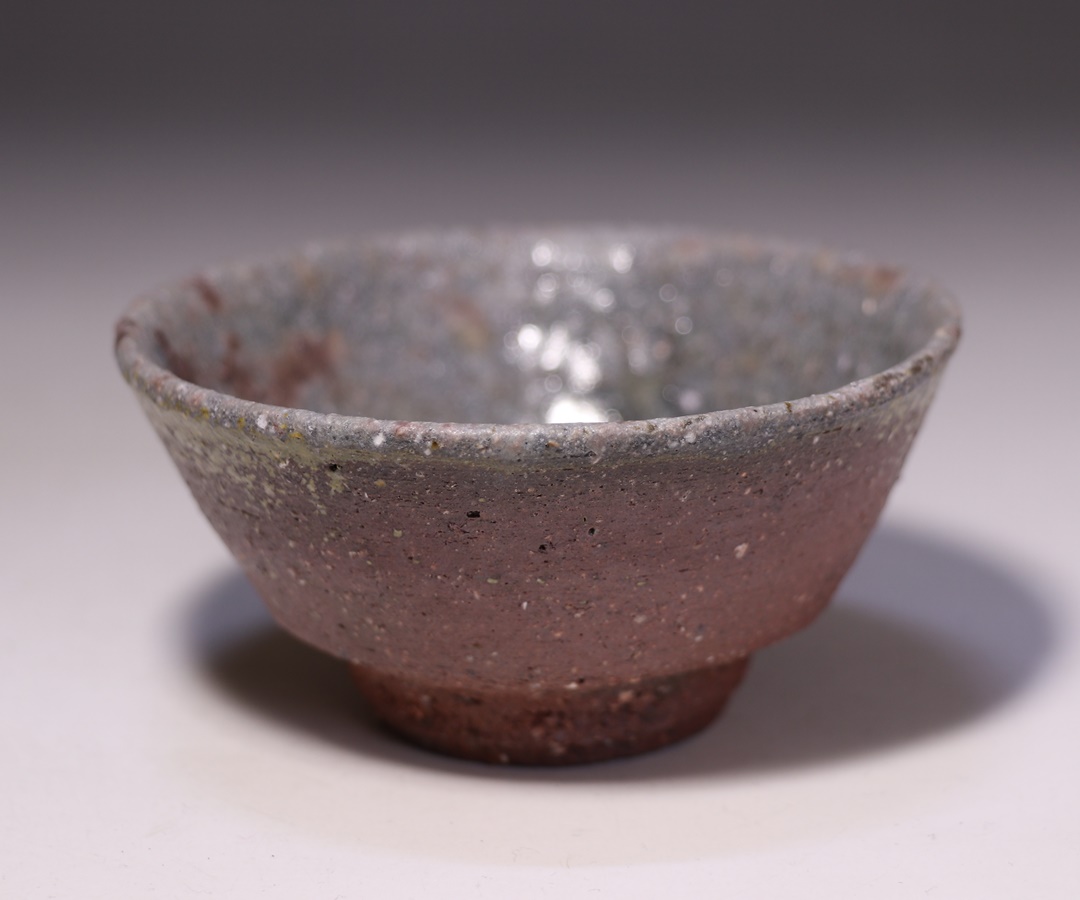
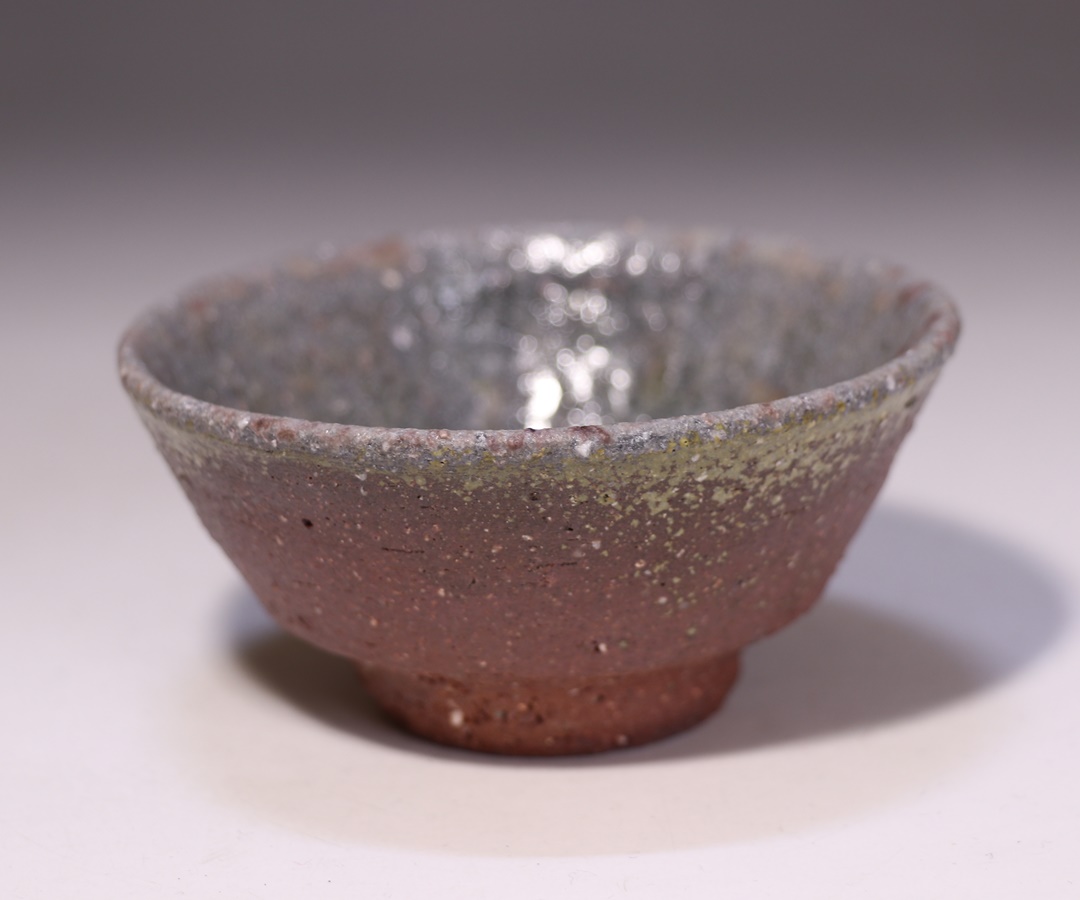
size : W6.7cm×6.6cm×H6.1cmMakoto Kaneshige, the eldest son of Sozan Kaneshige and heir to Maruyama-gama, continues to captivate many admirers through the harmony of refined, graceful clay texture and powerful form.
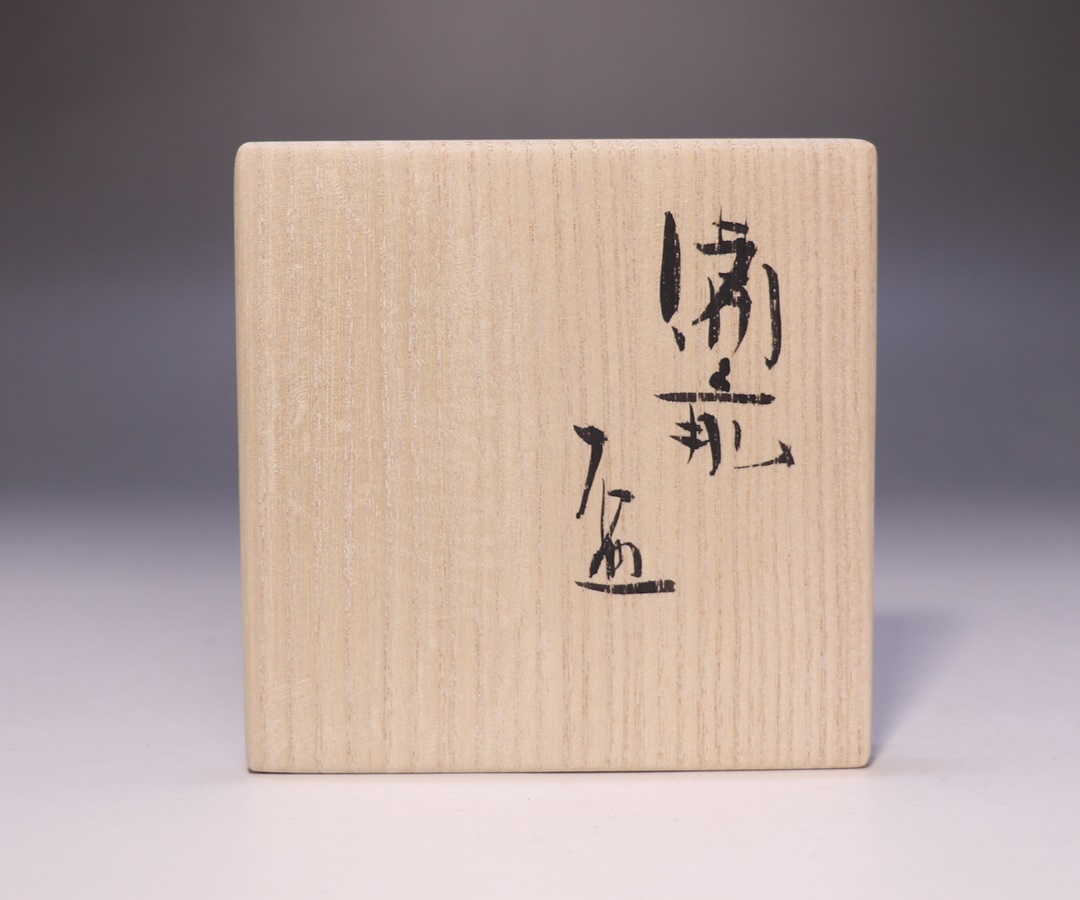
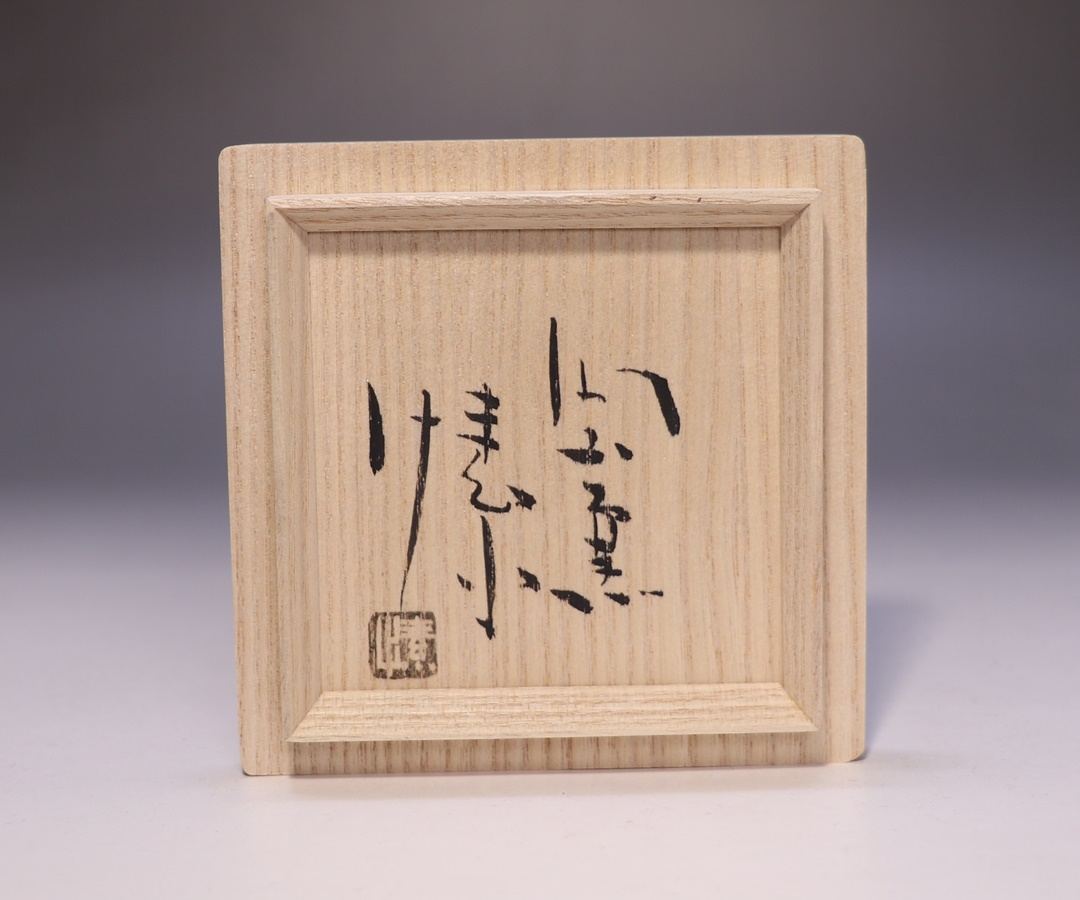
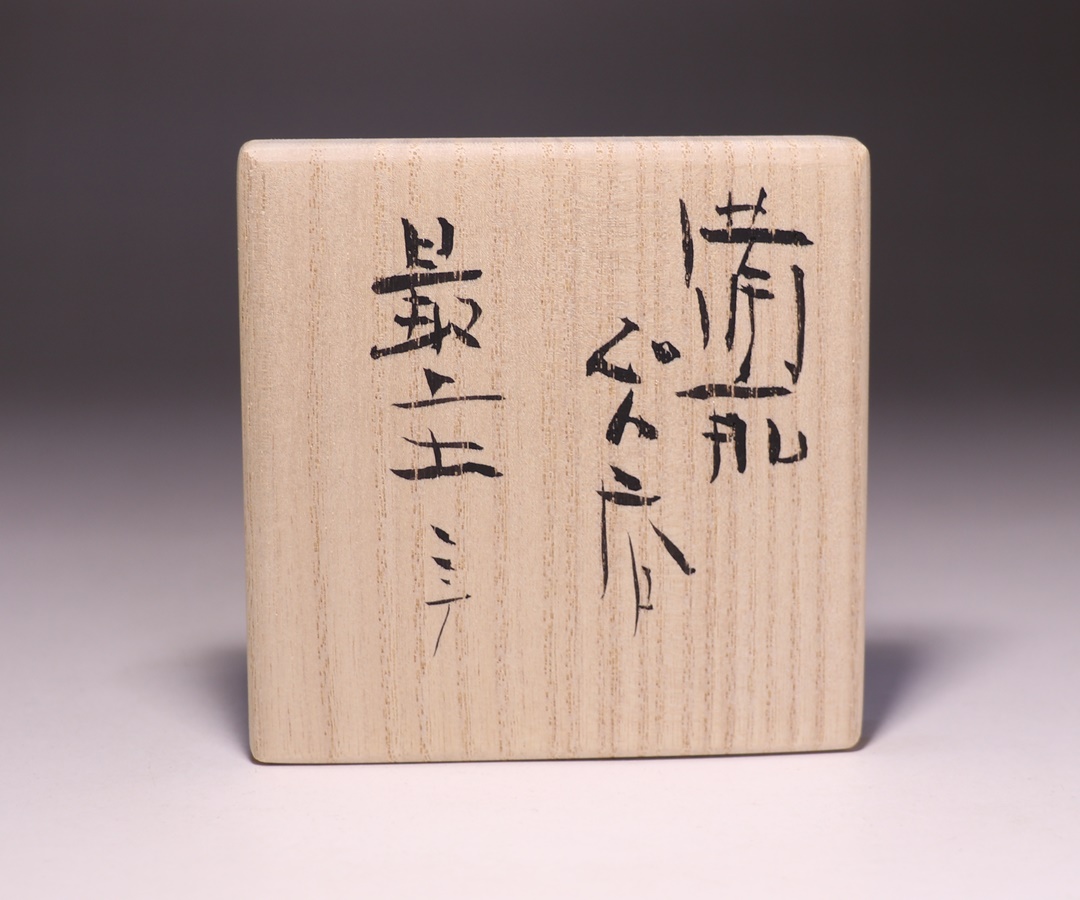
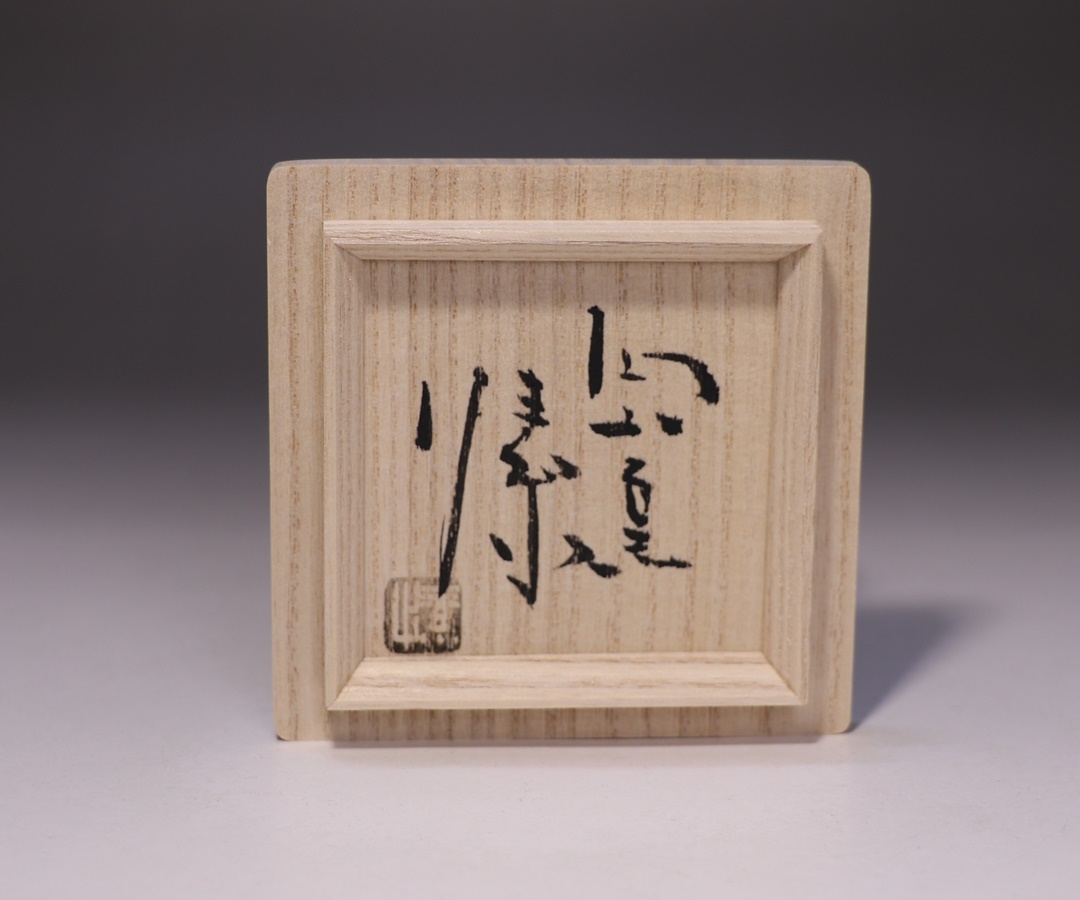
This is a newly fired Bizen Hidasuki Guinomi by Makoto Kaneshige, inscribed on the box as Saijyo Tsuchi Nite (“Made with the Highest quality clay”).
It is his latest work, freshly fired at the end of 2025.
As indicated by the box inscription Saijyo Tsuchi Nite, this piece was made from the finest possible clay, and was high-fired at Maruyama-gama to achieve a softly moist and supple surface.
About forty years ago, Sozan Kaneshige and Makoto Kaneshige discovered an exceptional batch of the highest-quality clay.
After preparing it entirely by hand, without the use of machines, they left it resting in storage for many years.
It was clay so precious that Makoto Kaneshige is said to have remarked that it would be too wasteful to die without ever using it.
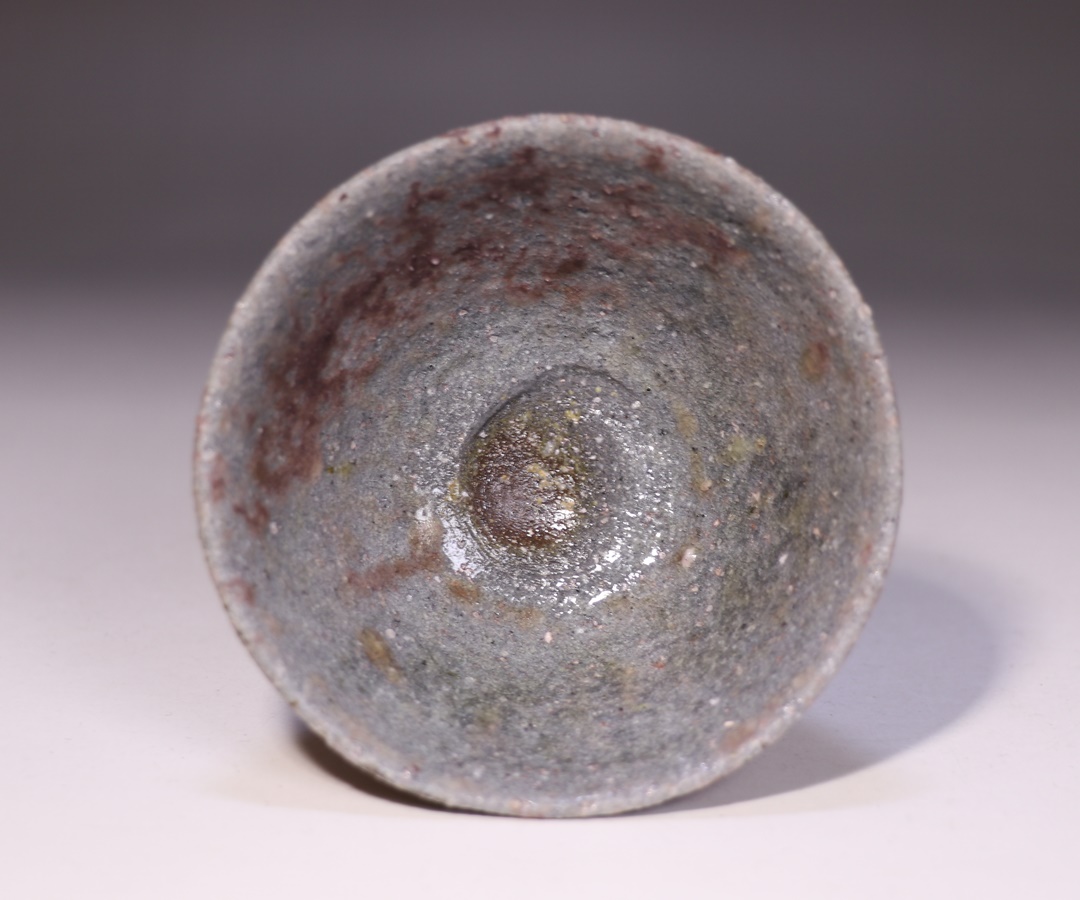
In striking contrast to the somewhat coarse clay surface often seen in his Hidasuki works until now, this piece has an extraordinarily fine texture, so refined that one might almost think it had been passed through an extremely fine sieve.
Sozan Kaneshige, the previous generation, generally chose slightly coarser clay for his Hidasuki works, and for that reason as well, this Guinomi can truly be described as luxuriously exceptional beyond compare.
The form is restrained to the essentials of wheel-throwing, avoiding excessive ornament and placing the beauty of the clay itself at the center of expression.
As if to prove the excellence of the clay, the surface displays a vivid yet delicate Hidasuki pattern, as though the straw had only just gently brushed against it, while the foot, revealed when the piece is turned over, asserts an overwhelming presence all on its own.
It is nothing less than masterful.
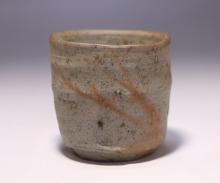


Makoto Kaneshige - Bizen Guinomi Highest quality clay
88,000 YENSold out
size : W6.3cm×6.2cm×H6.2cmMakoto Kaneshige, the eldest son of Sozan Kaneshige and heir to Maruyama-gama, continues to captivate many admirers through the harmony of refined, graceful clay texture and powerful form.
This is a newly fired Bizen Hidasuki Guinomi by Makoto Kaneshige, inscribed on the box as Saijyo Tsuchi Nite (“Made with the Highest quality clay”).
It is his latest work, freshly fired at the end of 2025.
As indicated by the box inscription Saijyo Tsuchi Nite, this piece was made from the finest possible clay, and was high-fired at Maruyama-gama to achieve a softly moist and supple surface.
About forty years ago, Sozan Kaneshige and Makoto Kaneshige discovered an exceptional batch of the highest-quality clay.
After preparing it entirely by hand, without the use of machines, they left it resting in storage for many years.
It was clay so precious that Makoto Kaneshige is said to have remarked that it would be too wasteful to die without ever using it.
In striking contrast to the somewhat coarse clay surface often seen in his Hidasuki works until now, this piece has an extraordinarily fine texture, so refined that one might almost think it had been passed through an extremely fine sieve.
Sozan Kaneshige, the previous generation, generally chose slightly coarser clay for his Hidasuki works, and for that reason as well, this Guinomi can truly be described as luxuriously exceptional beyond compare.
The form is restrained to the essentials of wheel-throwing, avoiding excessive ornament and placing the beauty of the clay itself at the center of expression.
As if to prove the excellence of the clay, the surface displays a vivid yet delicate Hidasuki pattern, as though the straw had only just gently brushed against it, while the foot, revealed when the piece is turned over, asserts an overwhelming presence all on its own.
It is nothing less than masterful.
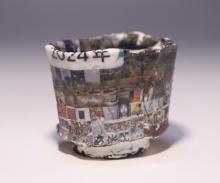


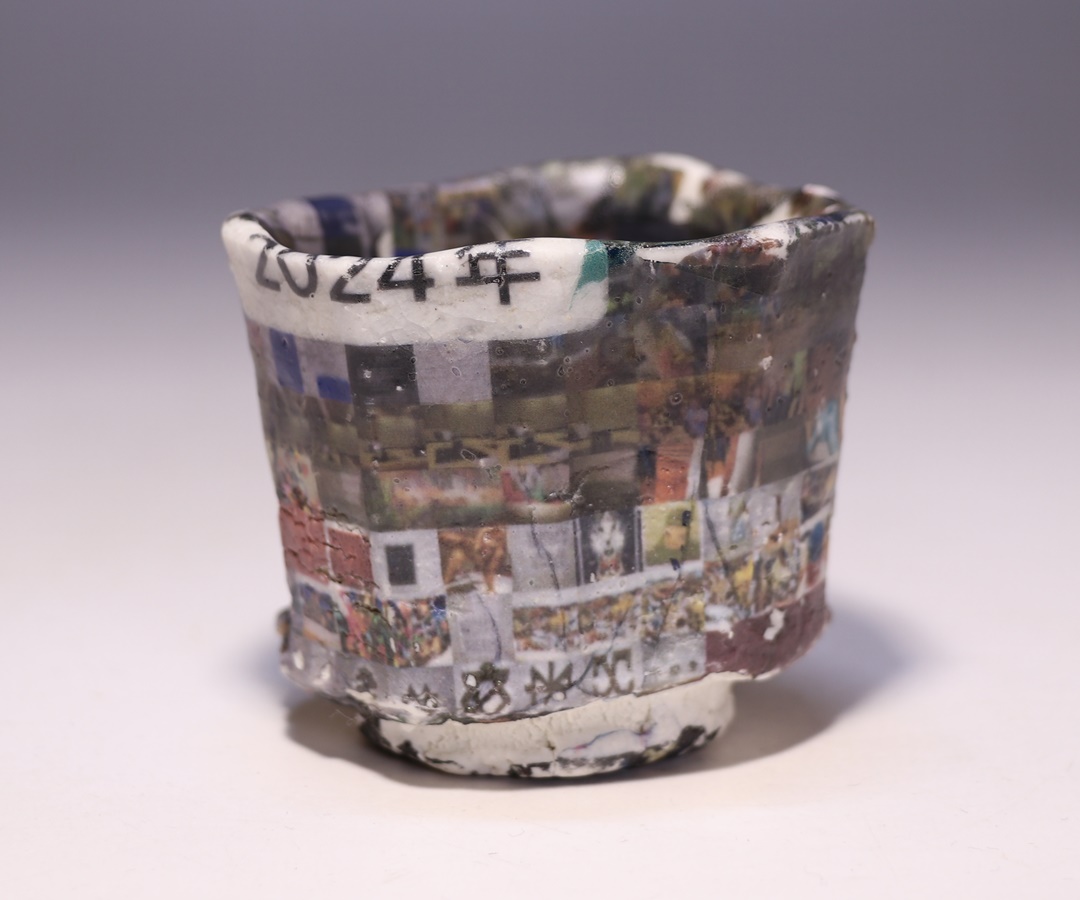
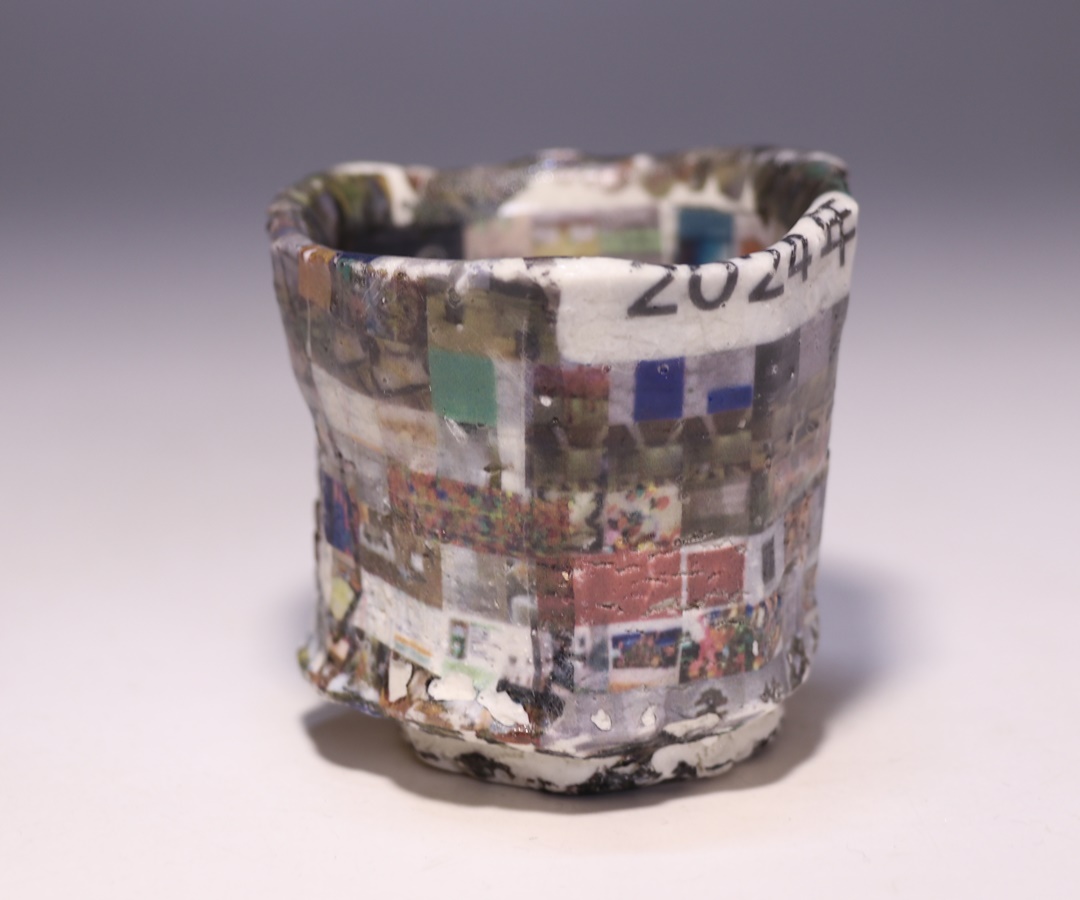
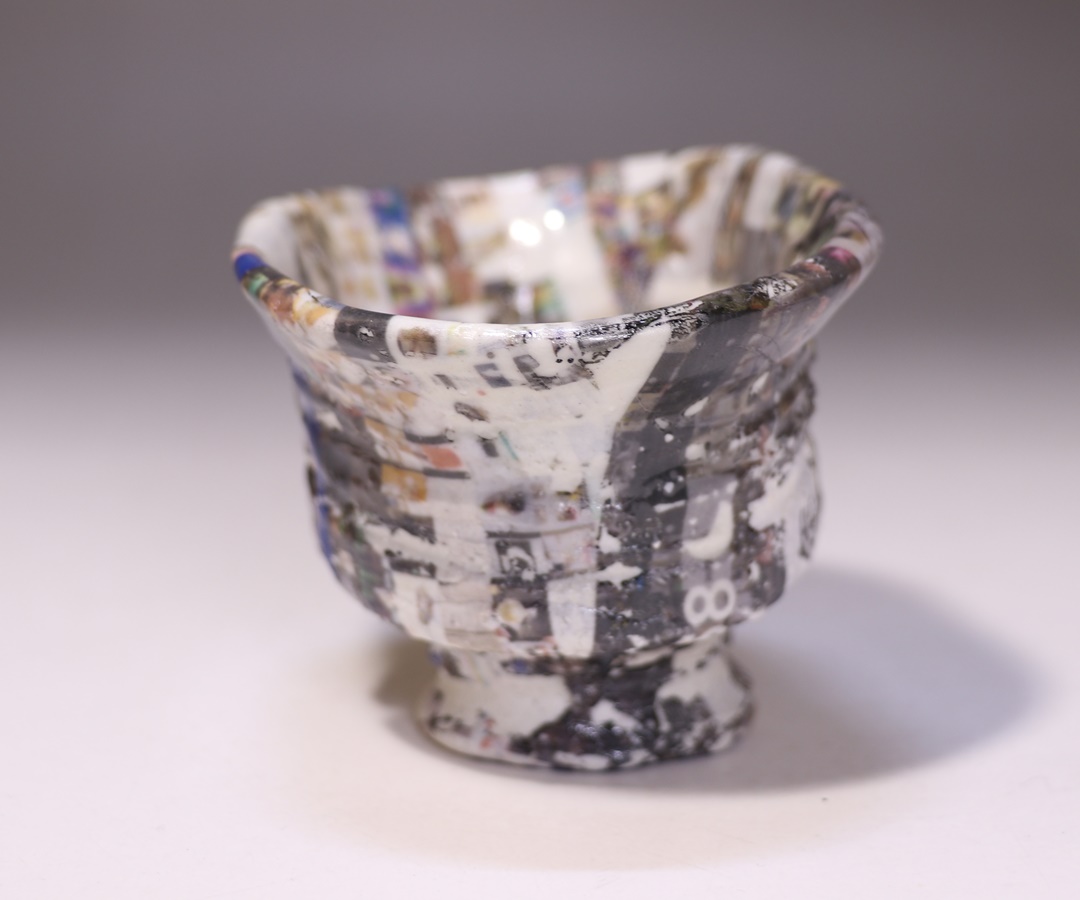
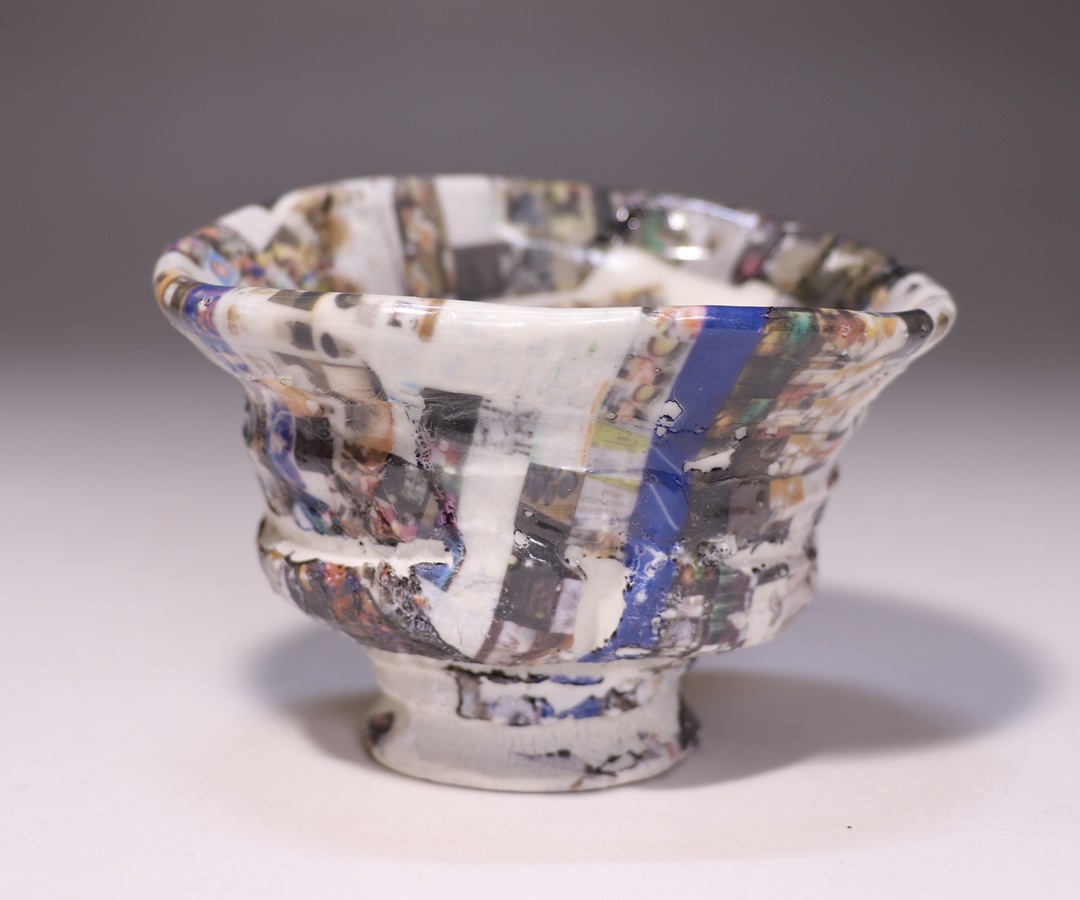
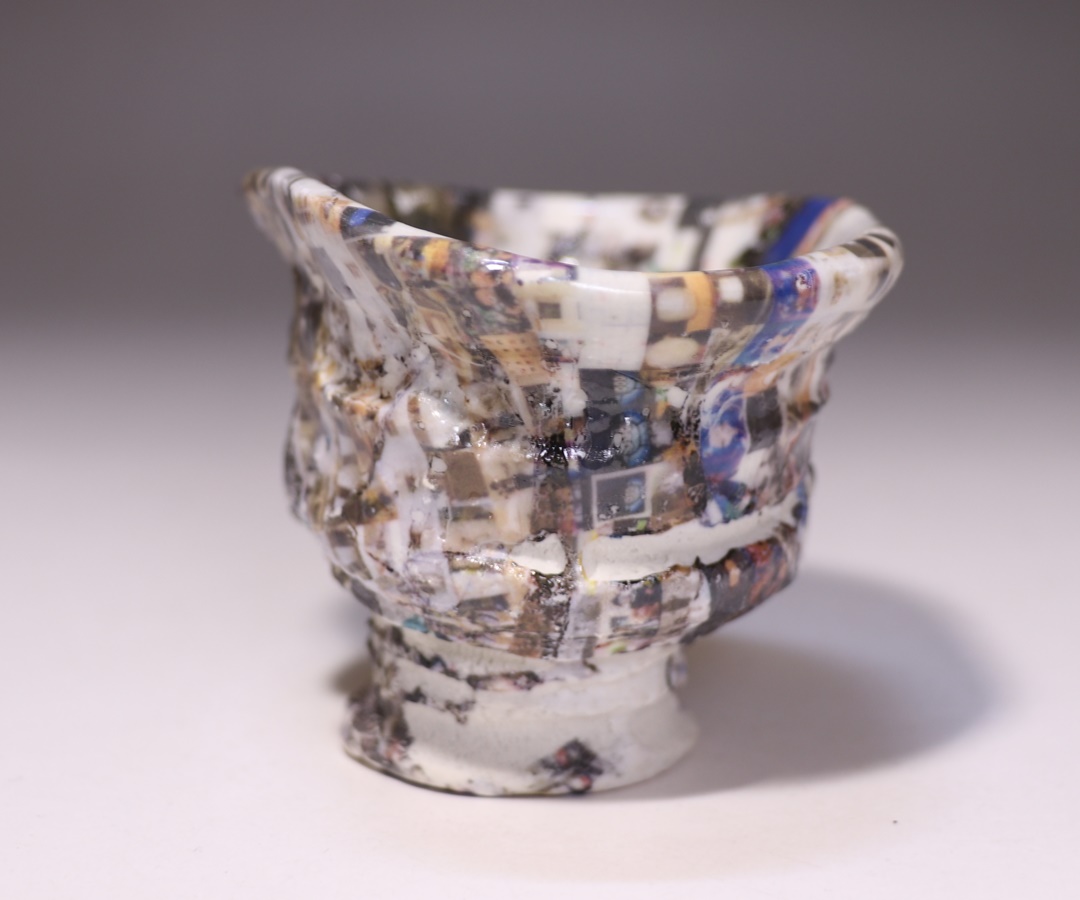
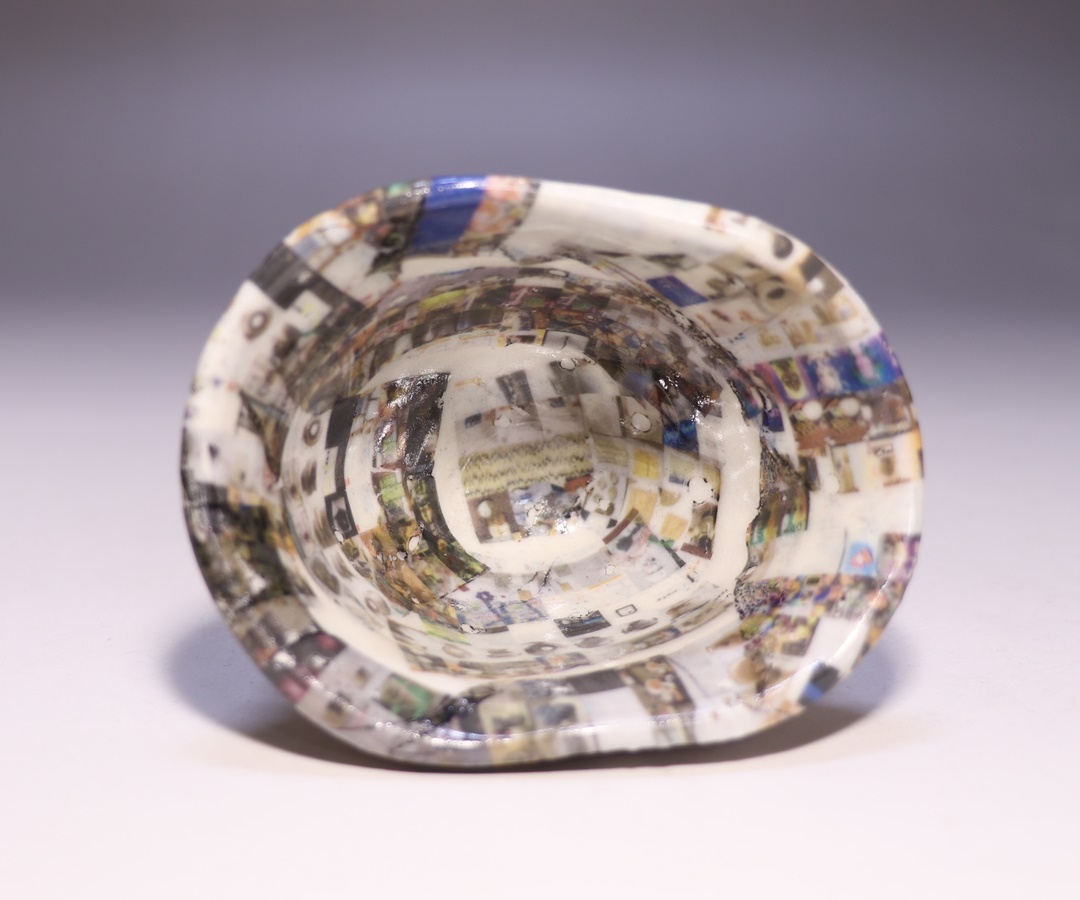
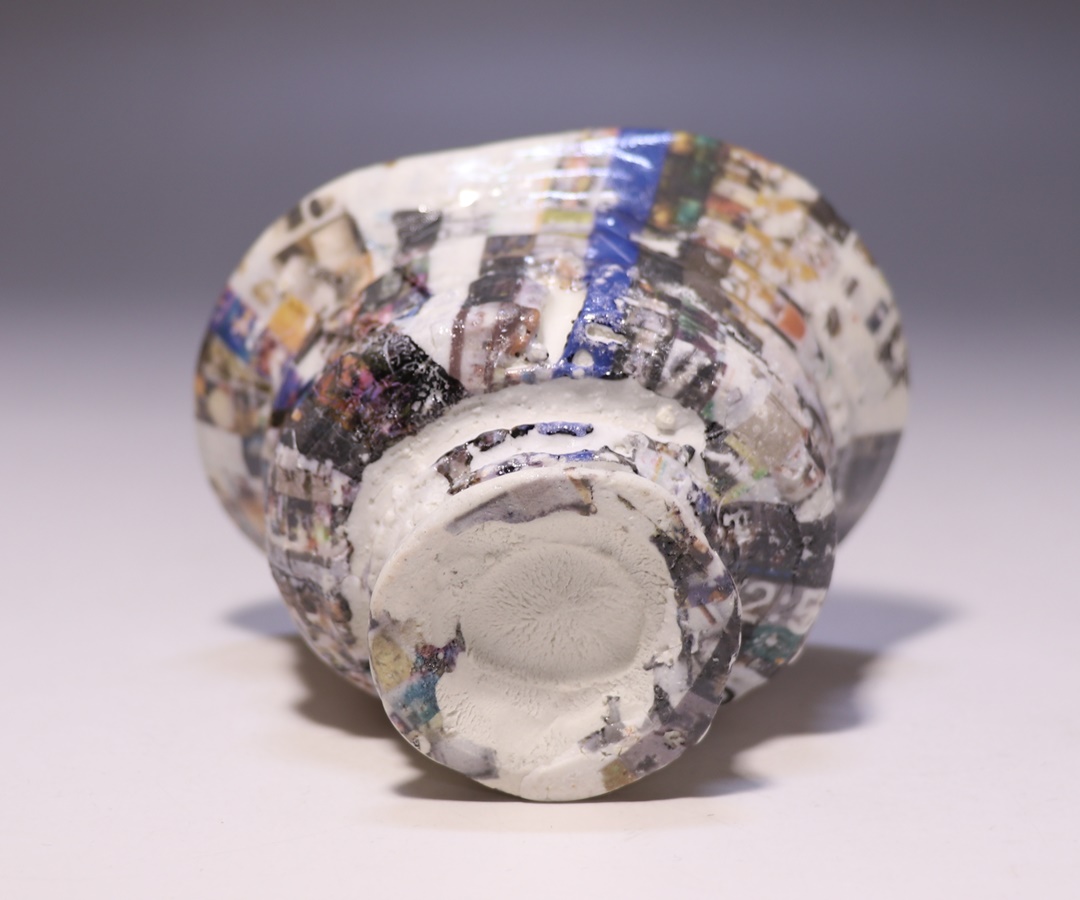
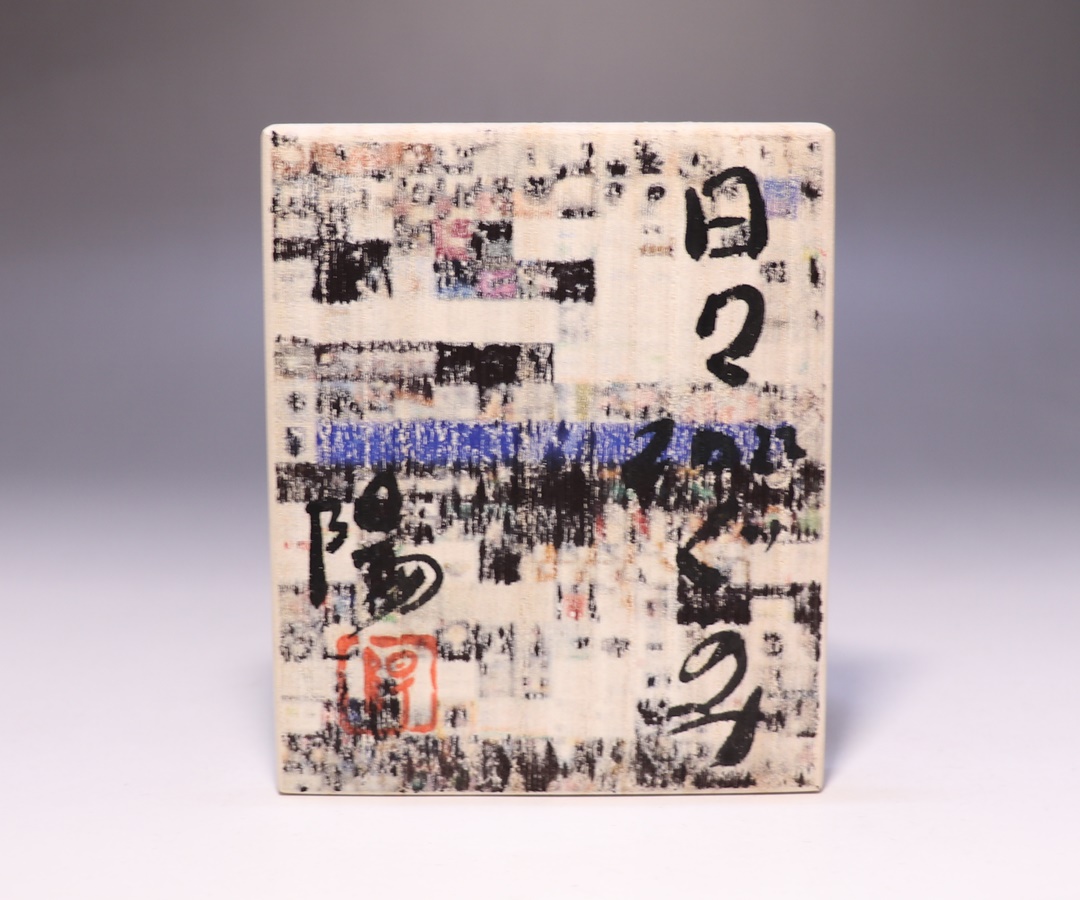
Youtaro Isezaki - Hibi 2024 Faceted Guinomi
18,700 YENSold out
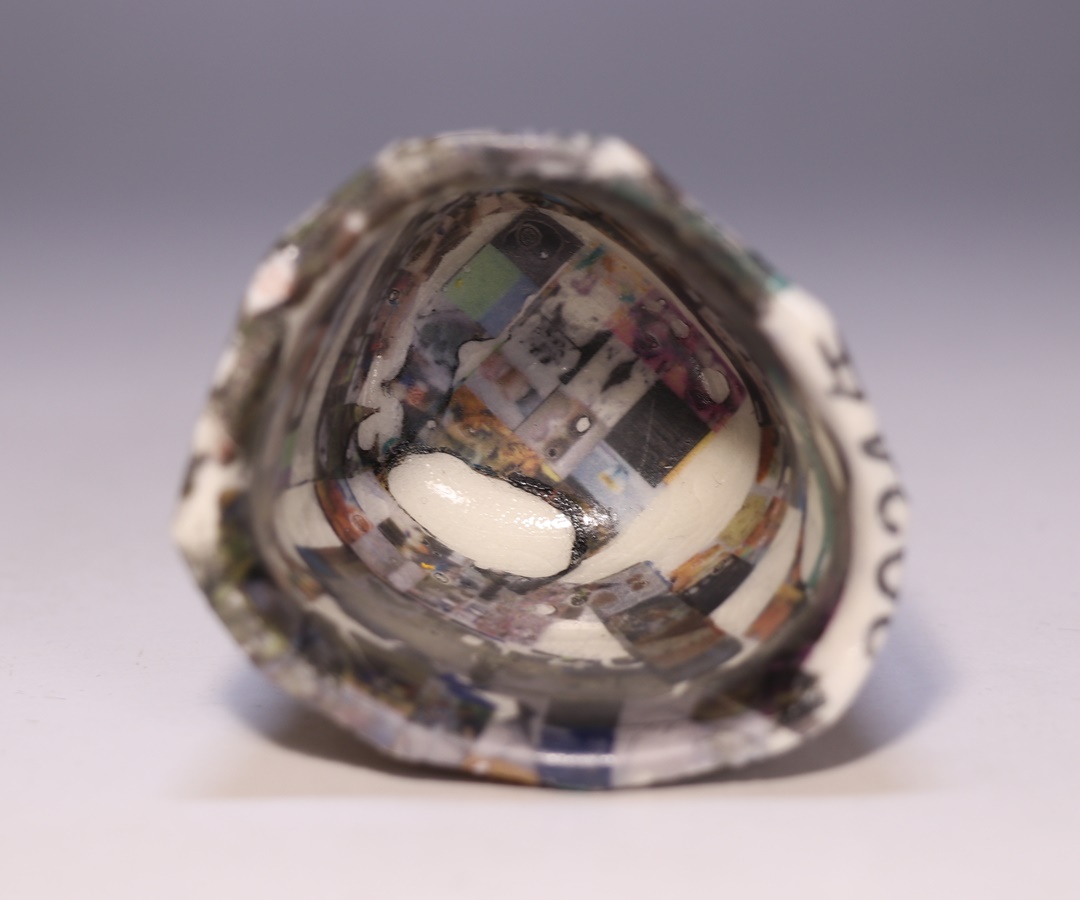
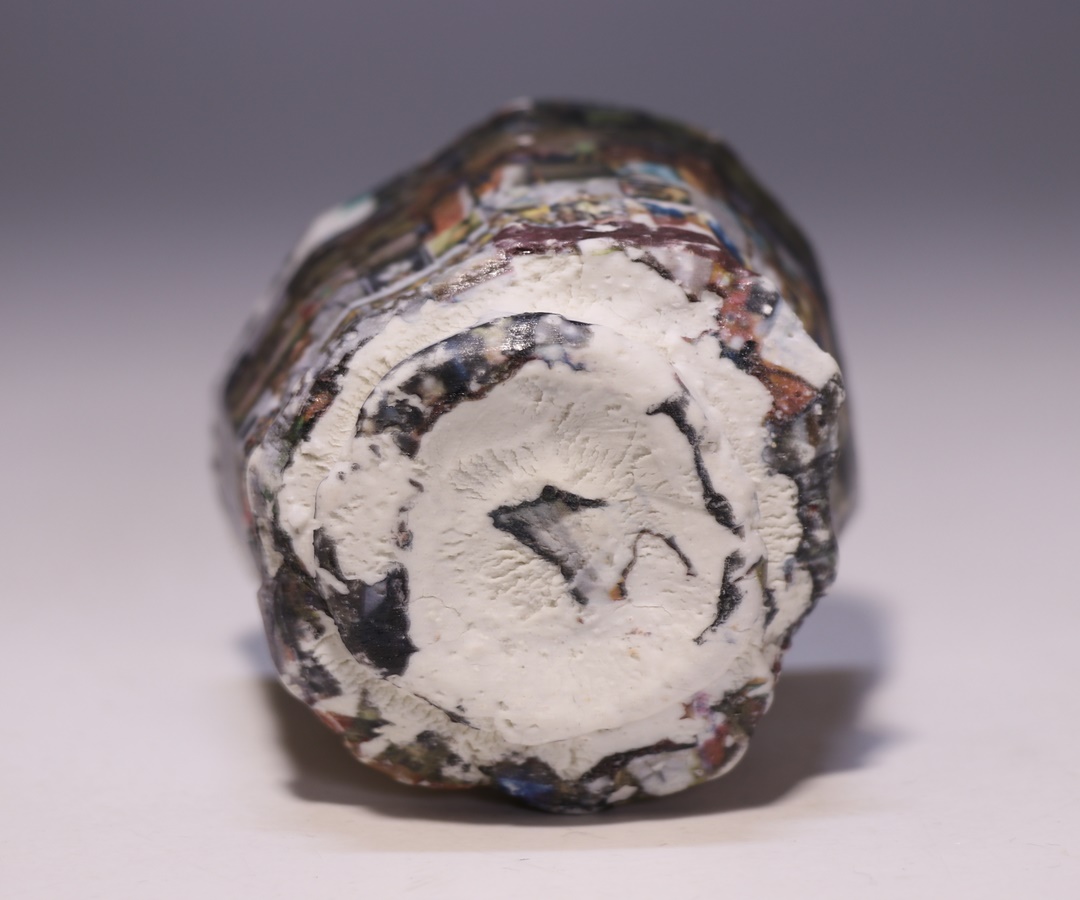
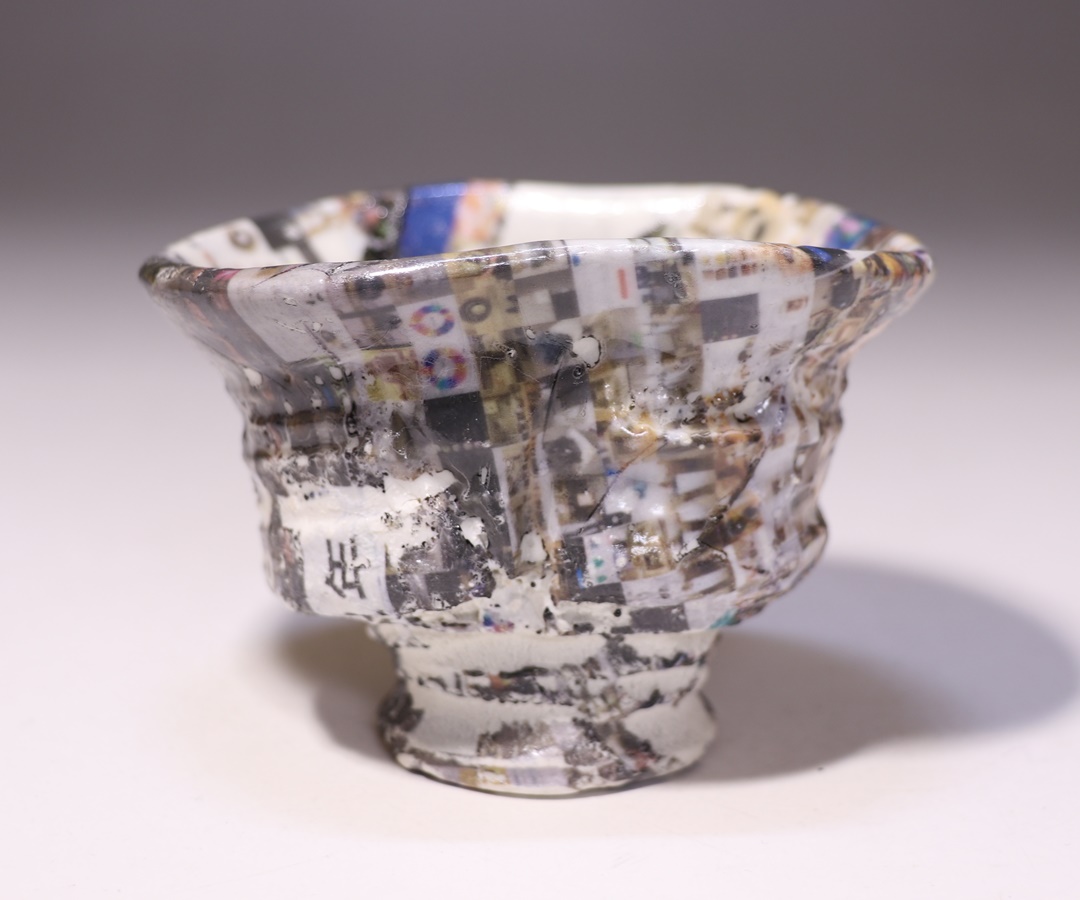
size : W6.5cm×6.0cm×H5.5cmBorn as the eldest son of Shin Isezaki into a prestigious family of Bizen ware, Youtarou Isezaki continues to create works in a new style that is not bound by conventional ideas. This is his **Hibi 2024 Faceted Guinomi**.
By incorporating AI-generated imagery and decal transfer techniques, he pursues a distinctive form of expression that brings contemporary sensibilities into ceramics.
As suggested by the title Hibi 2024 — with “Hibi” carrying the sense of everyday life and the repeated passing of days — he applies images from his own iPhone camera roll across the entire surface of the vessel with transfer paper, creating an effect reminiscent of a photo collage.
Based on an original clay body made by blending porcelain clay and Mogusa clay, the surface is adjusted with coated clay and glaze, allowing the vessel itself to function like a canvas.
Furthermore, this clay canvas affects the outlines of the transferred images through the texture of the clay particles and the glaze, creating a uniquely faded surface impression, as if the piece had been used over a long period of time.
The body is finely faceted with vertical marks made by a spatula, and when held in the hand, it is interesting to quietly feel the traditional sense of form that has been passed down through the Isezaki lineage from Mitsuru Isezaki.
While based on the traditional form of a drinking vessel, this work brings together contemporary elements such as AI, decal transfer, and smartphone functions, creating a new ceramic expression unique to Youtarou Isezaki.
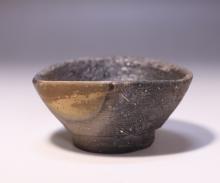


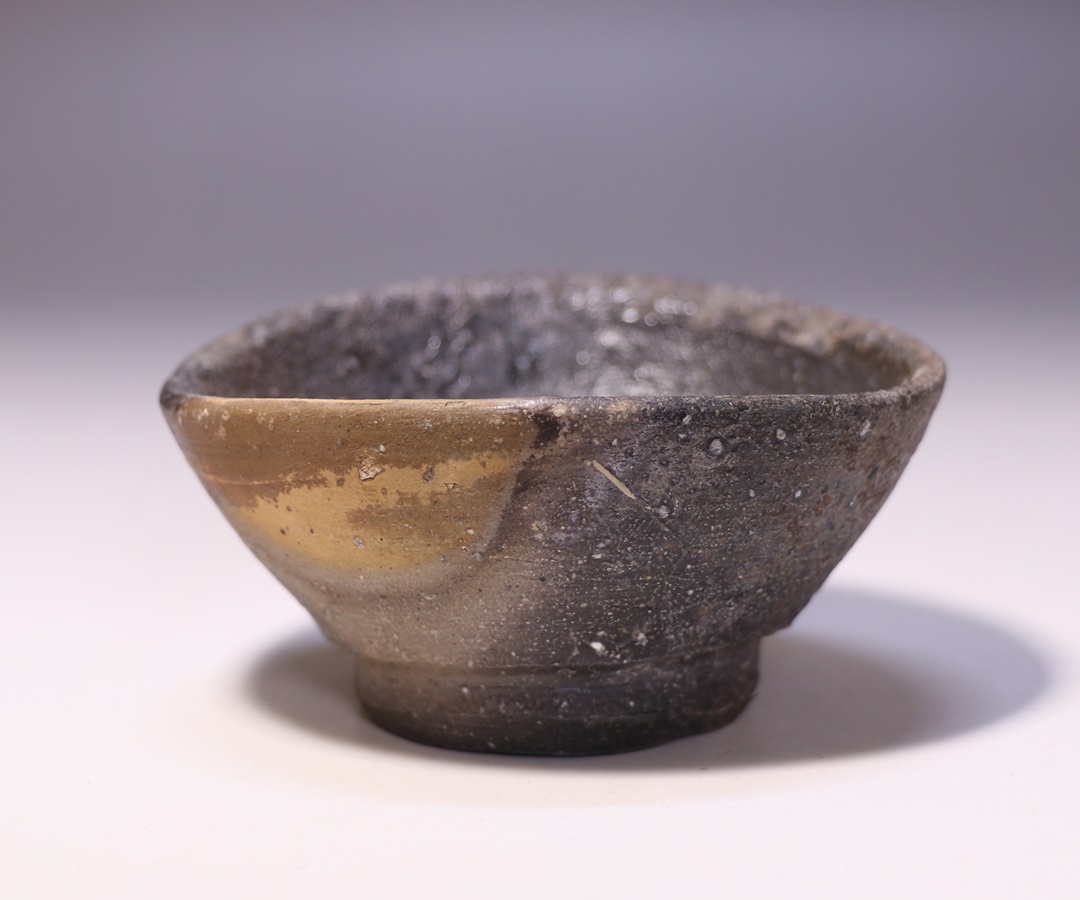
Makoto Kaneshige - Bizen Sakazuki
88,000 YENSold out
size : W8.5cm×7.6cm×H4.2cmThis is a freshly kiln-unloaded new Bizen sakazuki by Makoto Kaneshige, who inherited the Enzan kiln as the eldest son of Sozan Kaneshige and continues to captivate many people through a harmony of delicate, elegant clay character and powerful form.
It is his latest work, just unloaded from the kiln in late 2025 (Reiwa 7).
When Kaneshige aims for fire effects, he commits to the firing without compromise, and this piece shows a heavy, intense fire effect as if the clay itself has been fired to its very limit.
The ash-laden fire-effect area feels as though a fleeting moment of being overtaken by lava has been captured. The dark, softly gleaming mass of ash holds both a mesmerizing beauty and a sense of peril, as if it could pull you in.
Despite the daring firing that seems to test the threshold just before damage, the clay character is not completely burnt out. Miraculously, it retains a fresh, vivid hi-iro, allowing you to enjoy both the powerful fire effects and the finest clay character at the same time.
Also, the botan-mochi used to create the open, lighter area on the front continues into the interior as well, making this a piece that truly reaches completion when held and used—very much in the spirit of Kaneshige, who is himself a devoted sake lover.
And even after you finish your drink, there is still another pleasure waiting. While admiring the bold, wide foot that is so characteristic of Makoto Kaneshige, if you gently rub the last drops of sake into the surface, it will become an incomparable moment of bliss for any true sake enthusiast.
The shape of the base and Yohen make it a little unstable, but it becomes stable once you pour sake into it.
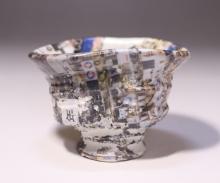


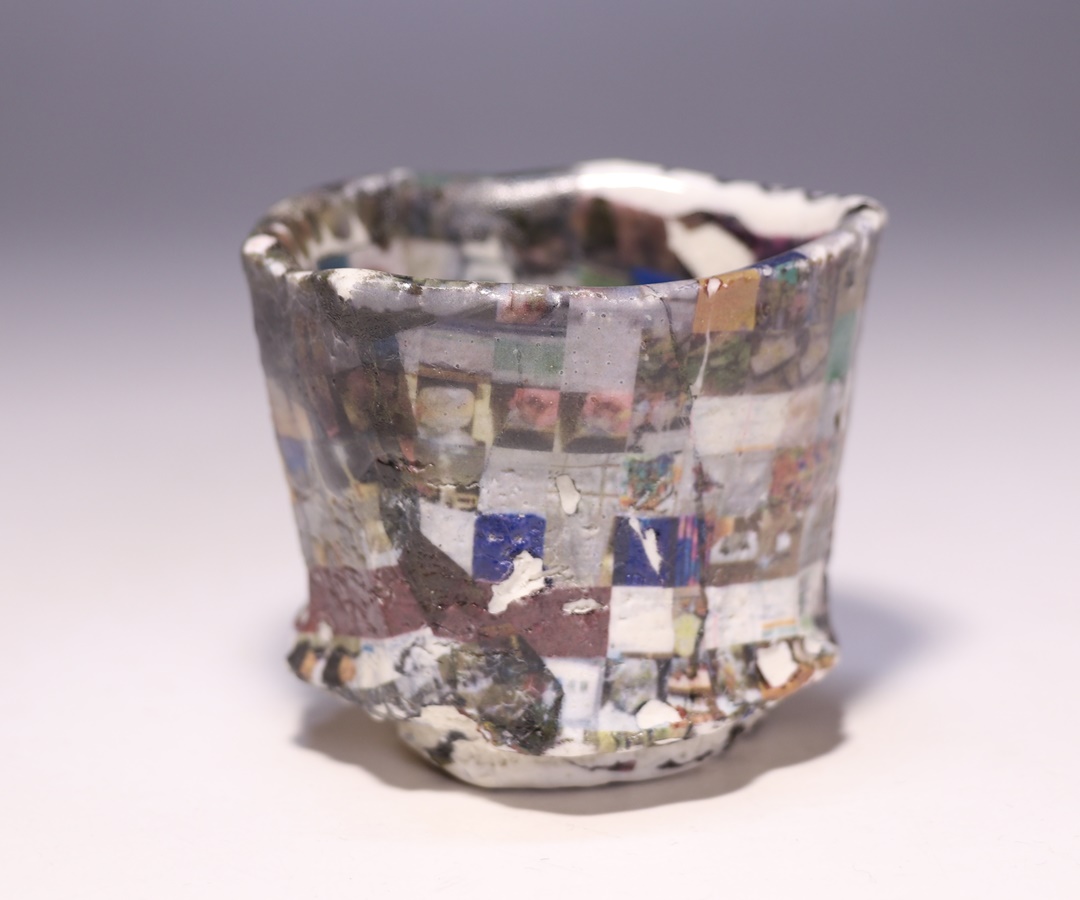
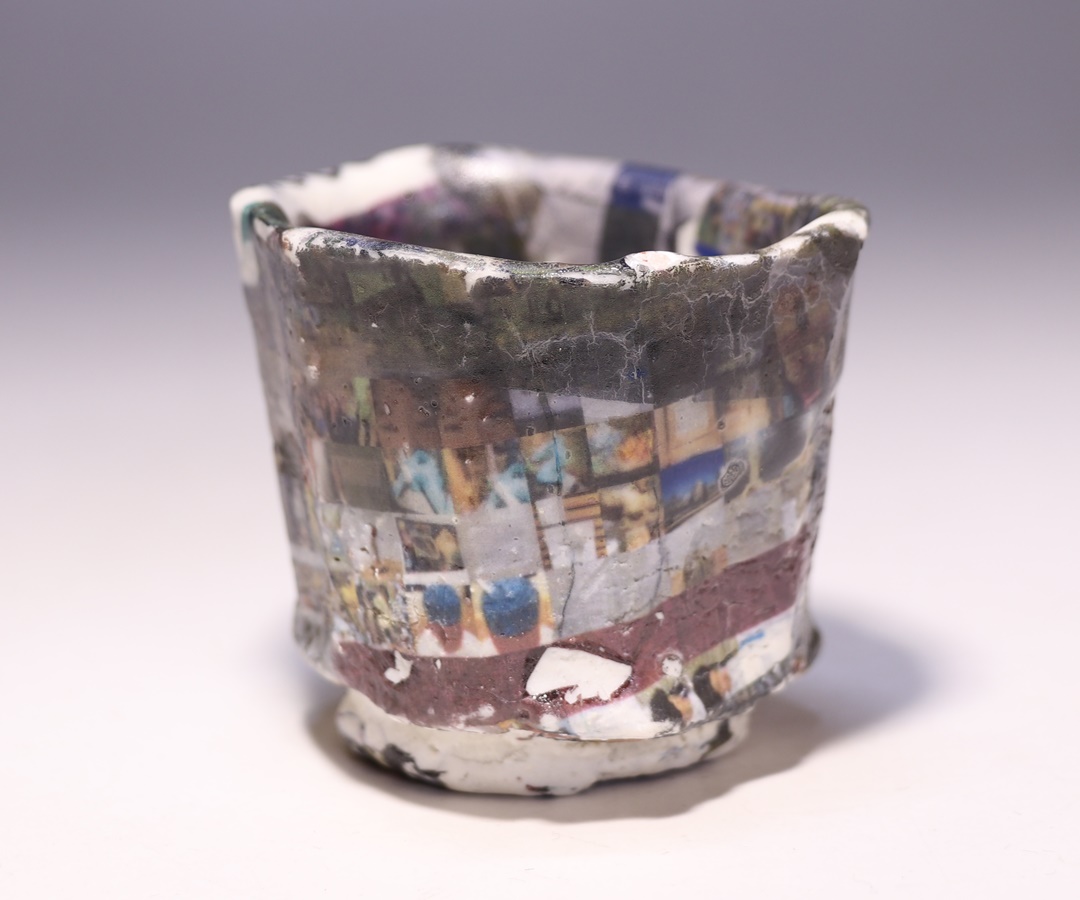
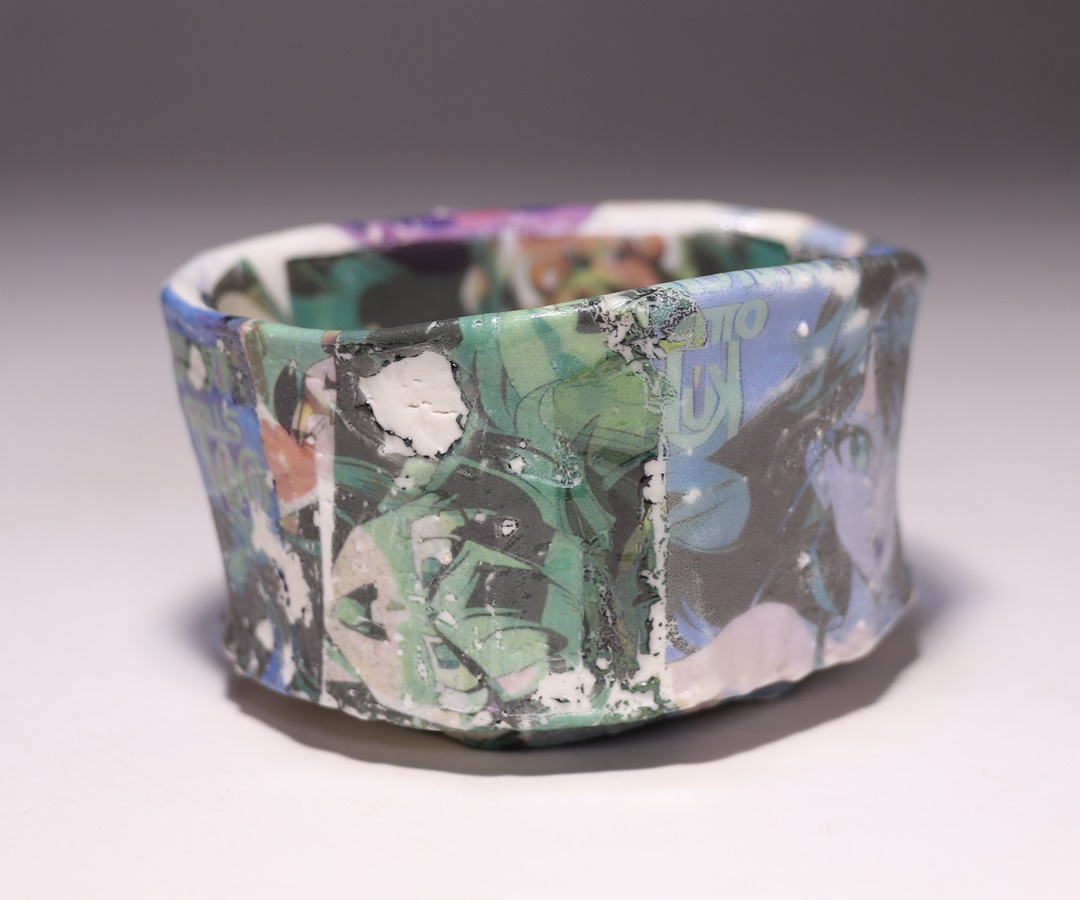
Youtaro Isezaki - Hibi 2022 Guinomi
22,000 YENSold out
size : W9.3cm×7.2cm×H6.7cmBorn as the eldest son of Shin Isezaki into a prestigious family of Bizen ware, Youtarou Isezaki continues to create works in a new style that is not bound by conventional ideas. This is his **Hibi 2022 Guinomi**.
By incorporating AI-generated imagery and decal transfer techniques, he pursues a distinctive form of expression that brings contemporary sensibilities into ceramics.
As suggested by the title Hibi 2022 — with “Hibi” carrying the sense of everyday life and the repeated passing of days — he applies images from his own iPhone camera roll across the entire surface of the vessel with transfer paper, creating an effect reminiscent of a photo collage.
Based on an original clay body made by blending porcelain clay and Mogusa clay, the surface is adjusted with coated clay and glaze, allowing the vessel itself to function like a canvas.
Furthermore, this clay canvas affects the outlines of the transferred images through the texture of the clay particles and the glaze, creating a uniquely faded surface impression, as if the piece had been used over a long period of time.
The body is powerfully carved with a spatula, giving the Guinomi a design that seems almost to expand and contract. This creates a strong presence that stands up to the visual impact of the camera-roll transfers.
While based on the traditional form of a drinking vessel, this work brings together contemporary elements such as AI, decal transfer, and smartphone functions, creating a new ceramic expression unique to Youtarou Isezaki.
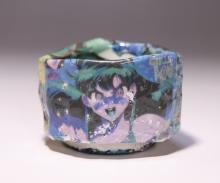


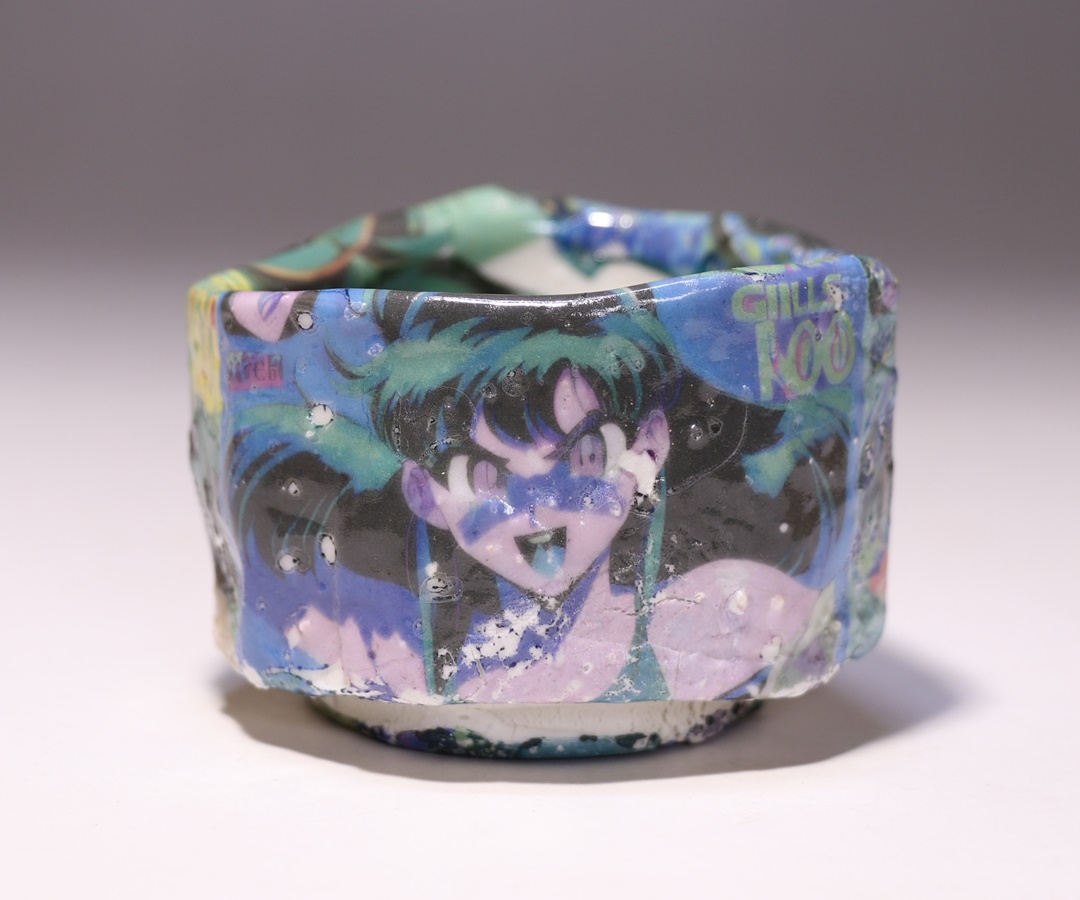
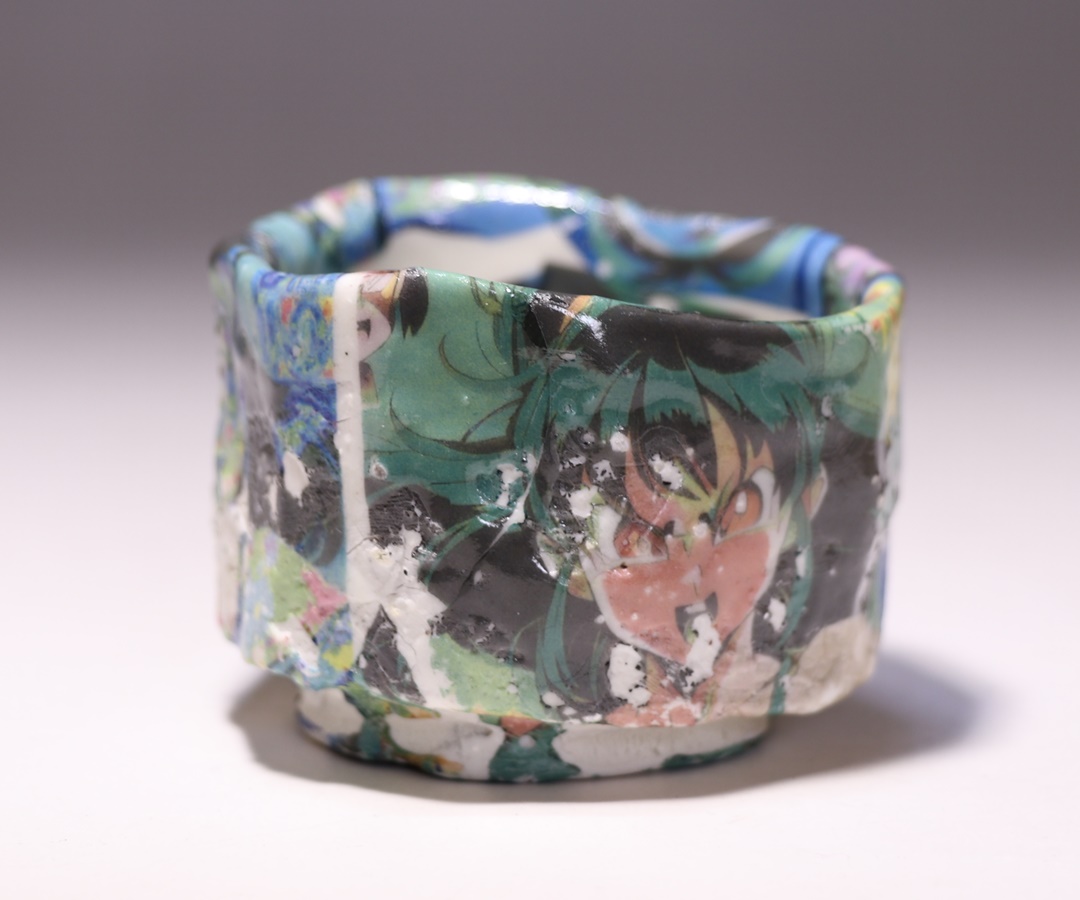
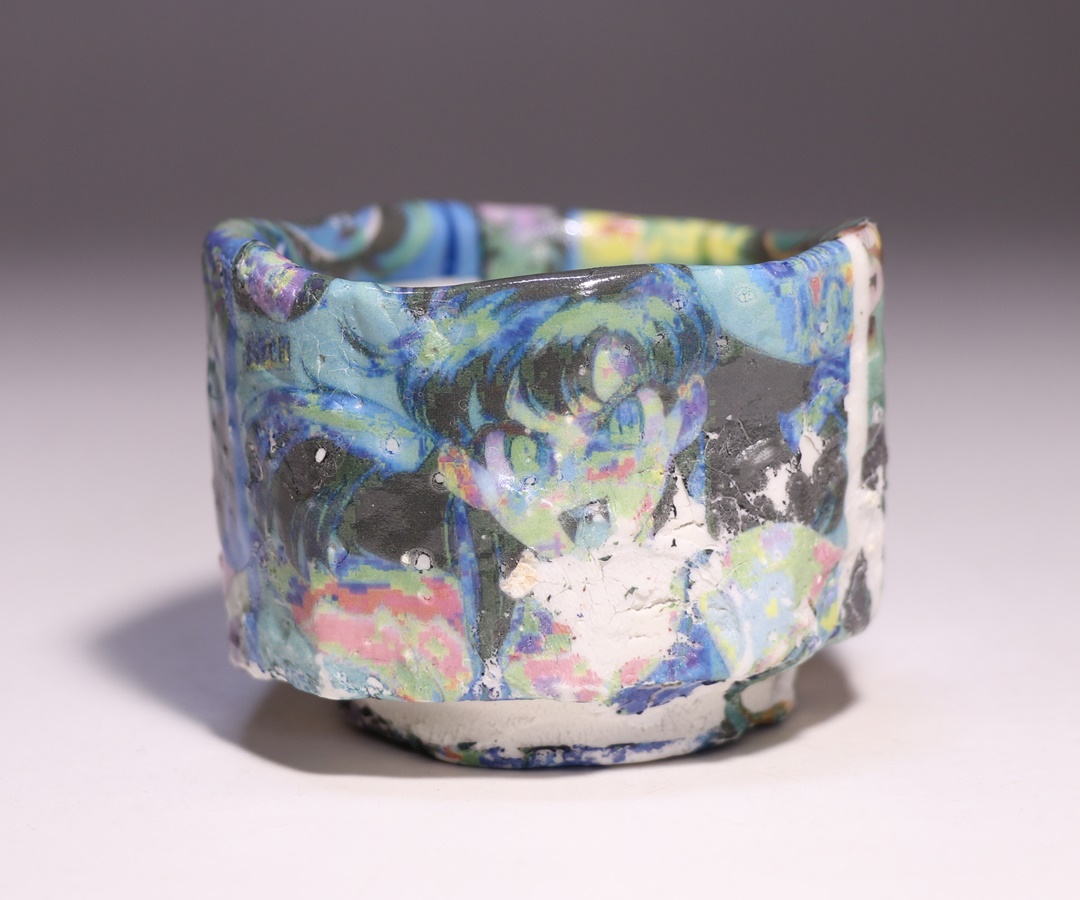
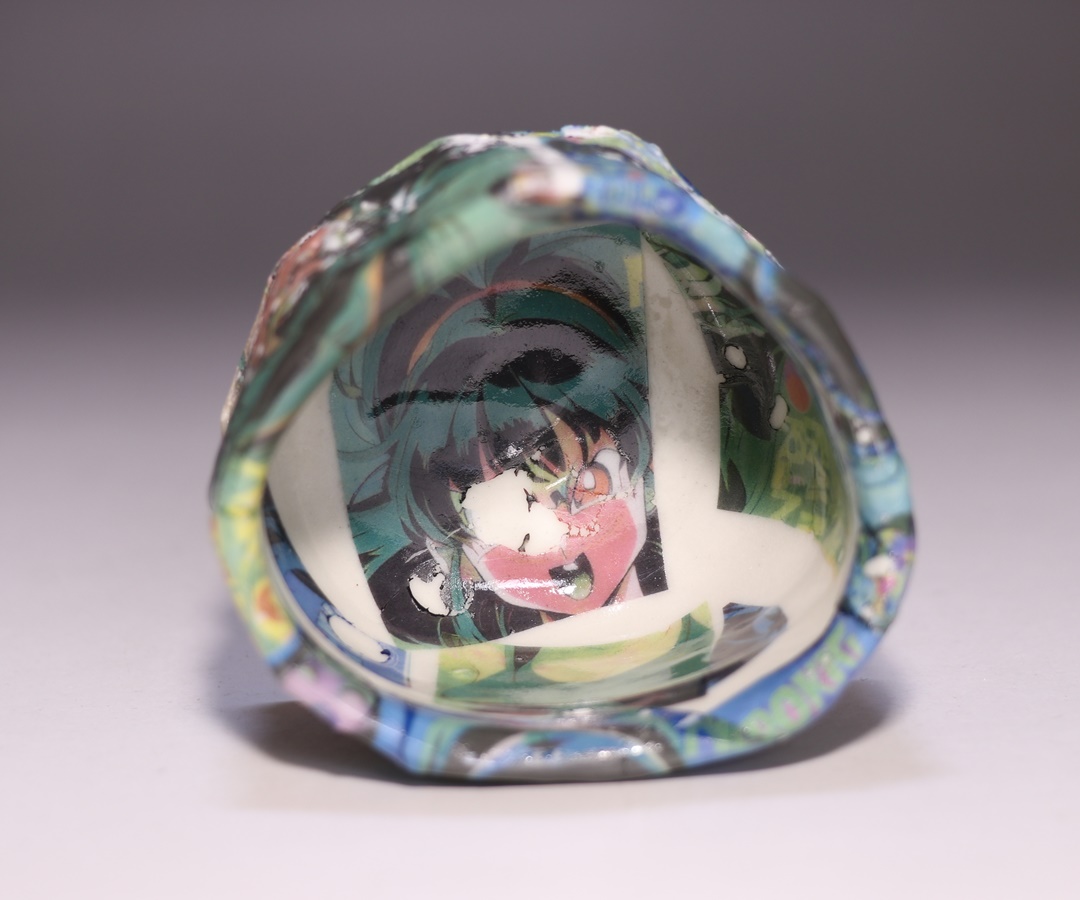
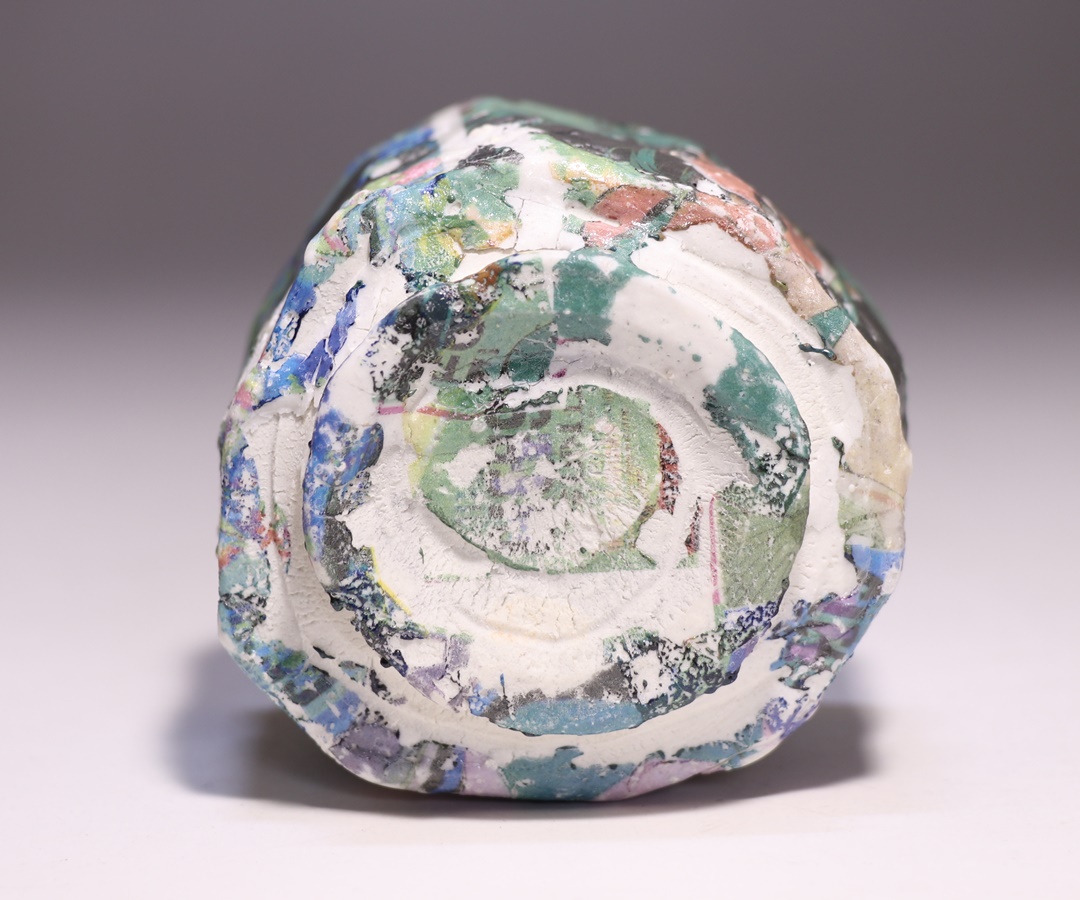
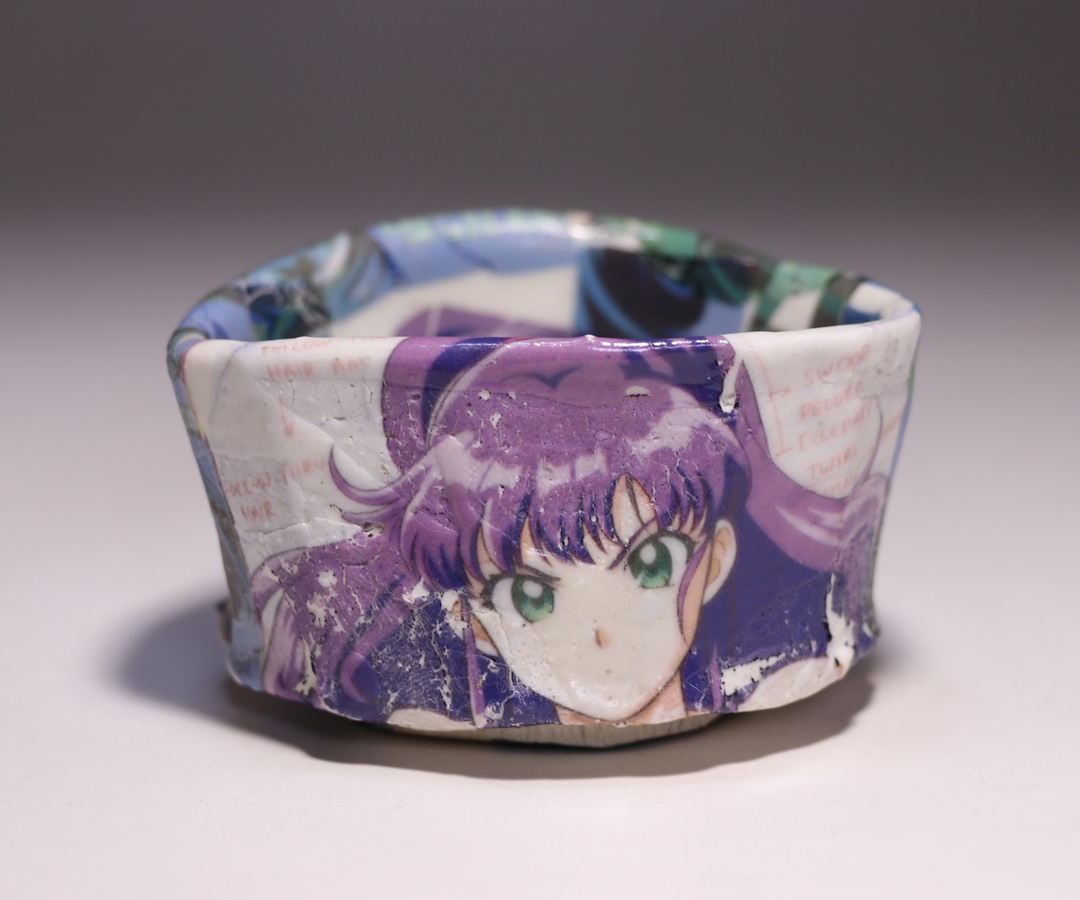
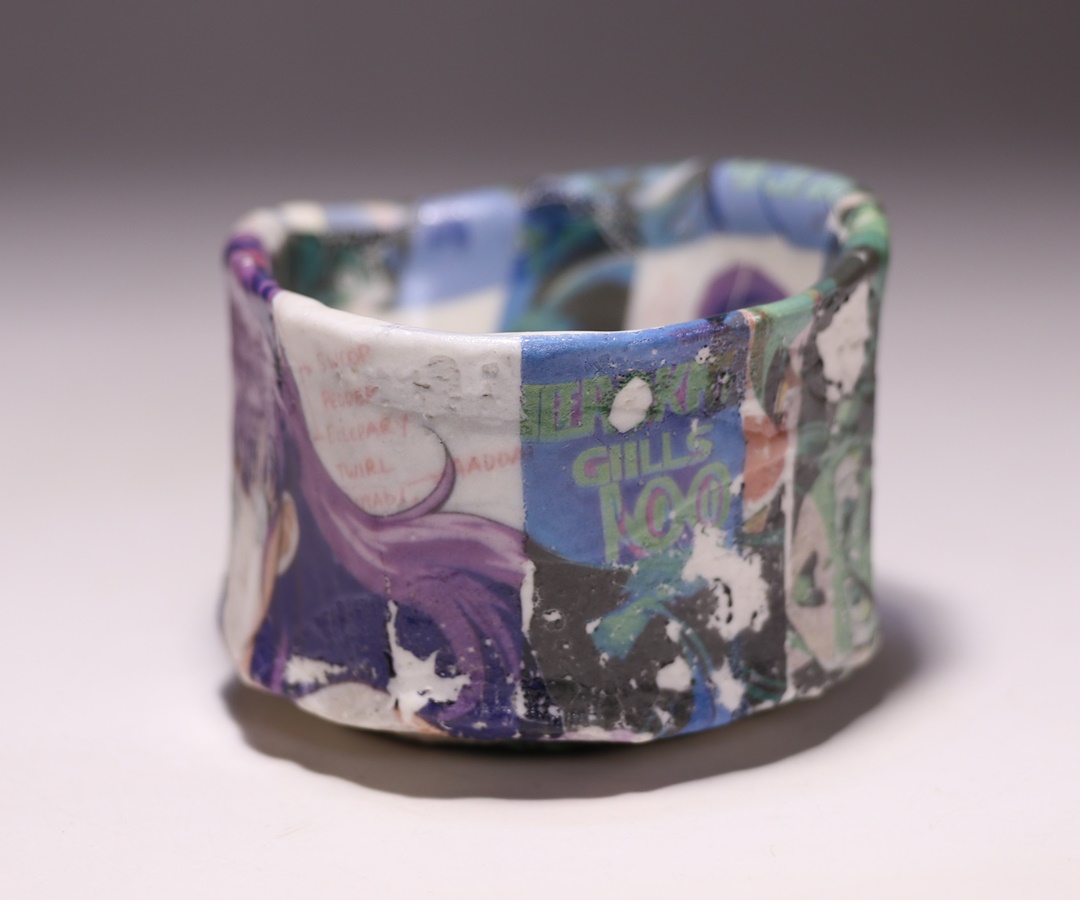
Youtaro Isezaki - HAL Faceted Guinomi
18,700 YENSold out
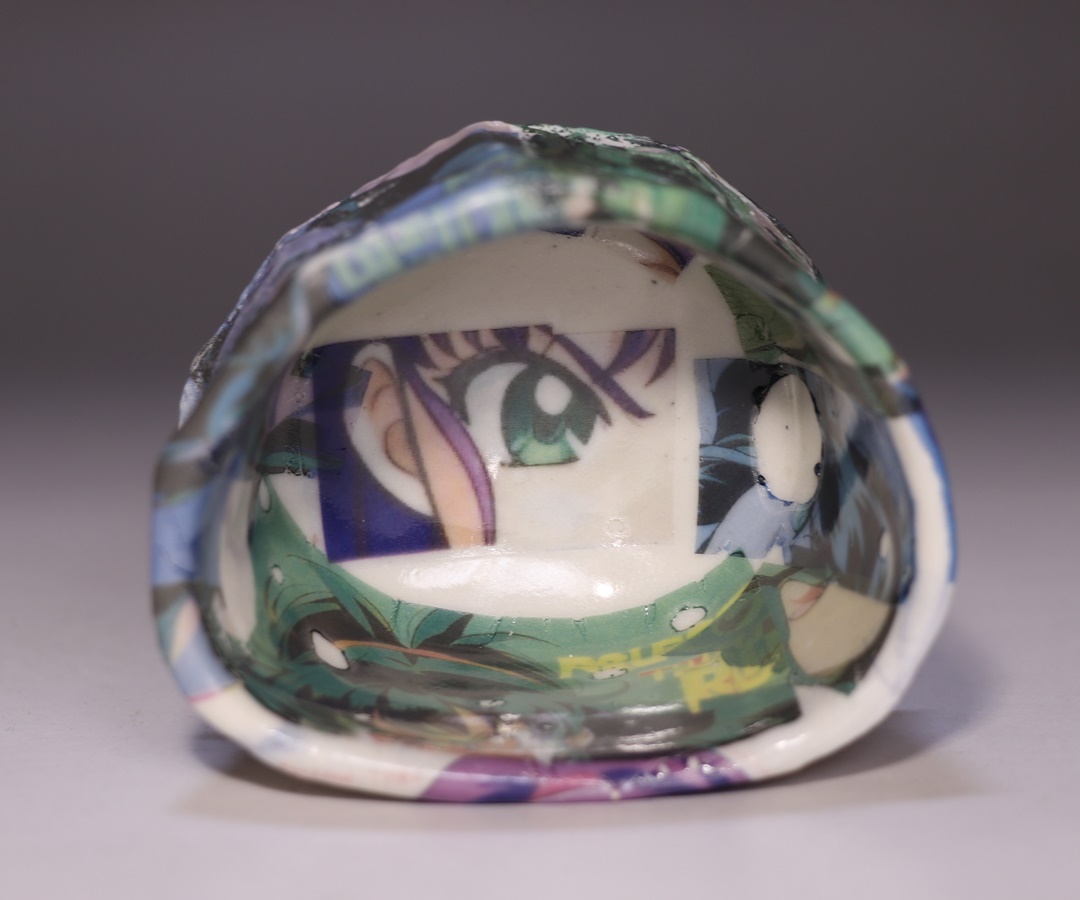
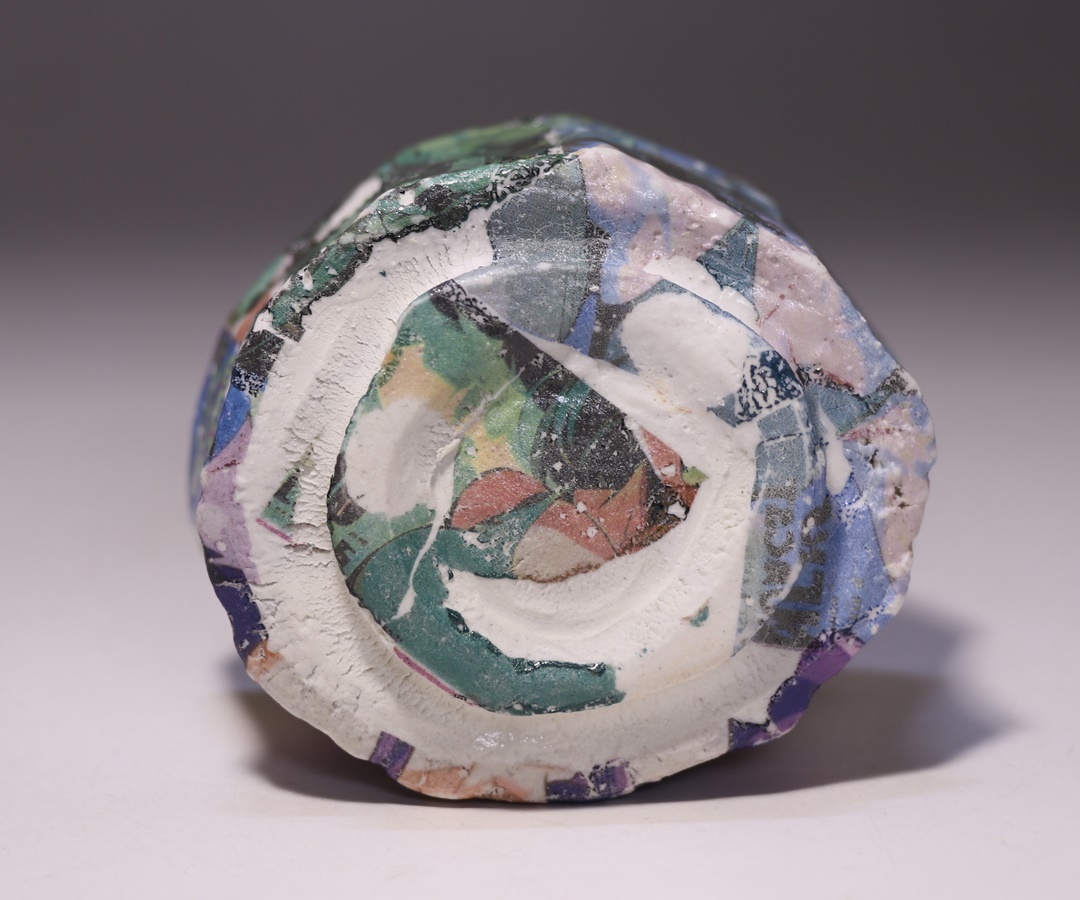
size : W6.8cm×6.5cm×H4.8cmBorn as the eldest son of Shin Isezaki into a prestigious family of Bizen ware, Youtarou Isezaki continues to create works in a new style that is not bound by conventional ideas. This is his **HAL Faceted Guinomi**.
By incorporating AI-generated imagery and decal transfer techniques, he pursues a distinctive form of expression that brings contemporary sensibilities into ceramics.
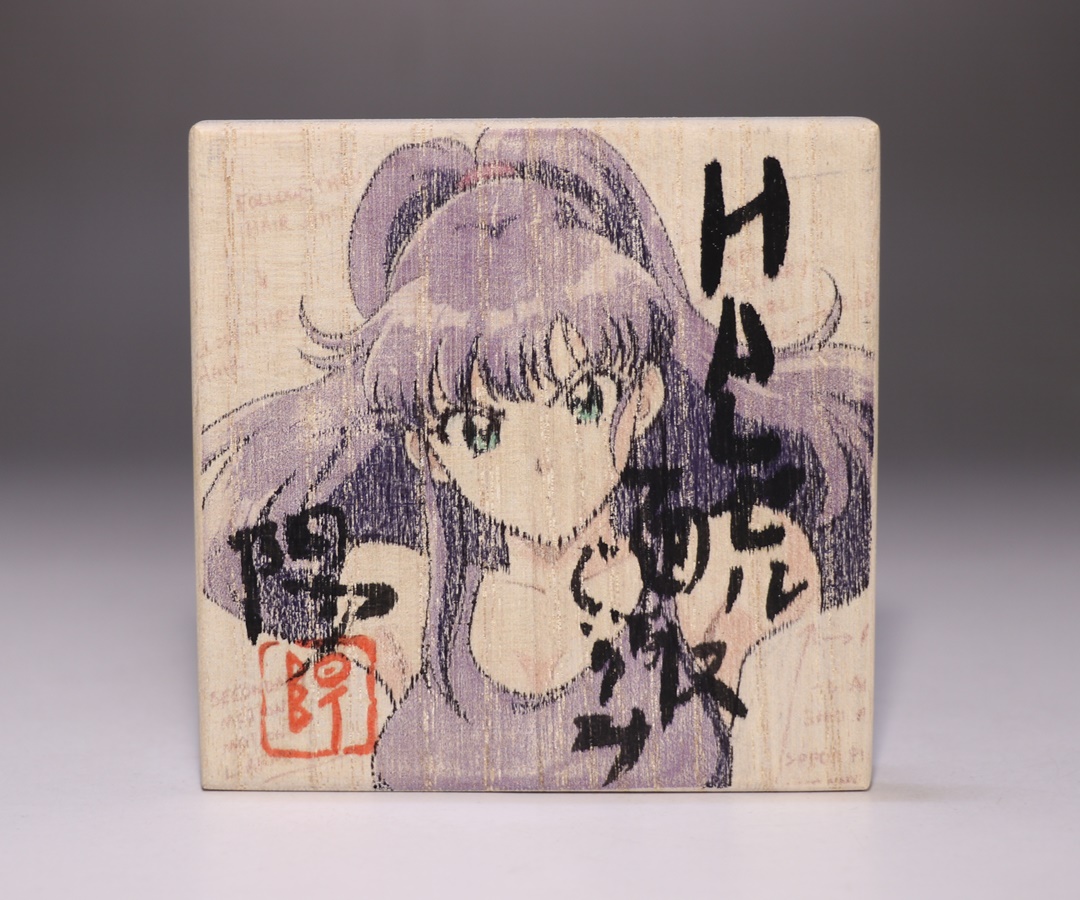
Inspired by Japanese anime, which is one of his own creative backgrounds, he generates original characters using AI and applies them across the entire surface of the vessel with transfer paper, creating an effect reminiscent of a photo collage.
Based on an original clay body made by blending porcelain clay and Mogusa clay, the surface is adjusted with coated clay and glaze, allowing the vessel itself to function like a canvas.
Furthermore, this clay canvas affects the outlines of the transferred images through the texture of the clay particles and the glaze, creating a uniquely faded surface impression, as if the piece had been used over a long period of time.
The body is finely faceted with vertical marks made by a spatula, and when held in the hand, it is interesting to quietly feel the traditional sense of form that has been passed down through the Isezaki lineage from Mitsuru Isezaki.
While based on the traditional form of a drinking vessel, this work brings together contemporary elements such as AI, decal transfer, and animation, creating a new ceramic expression unique to Youtarou Isezaki.
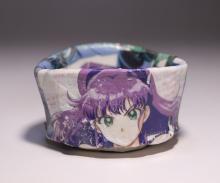


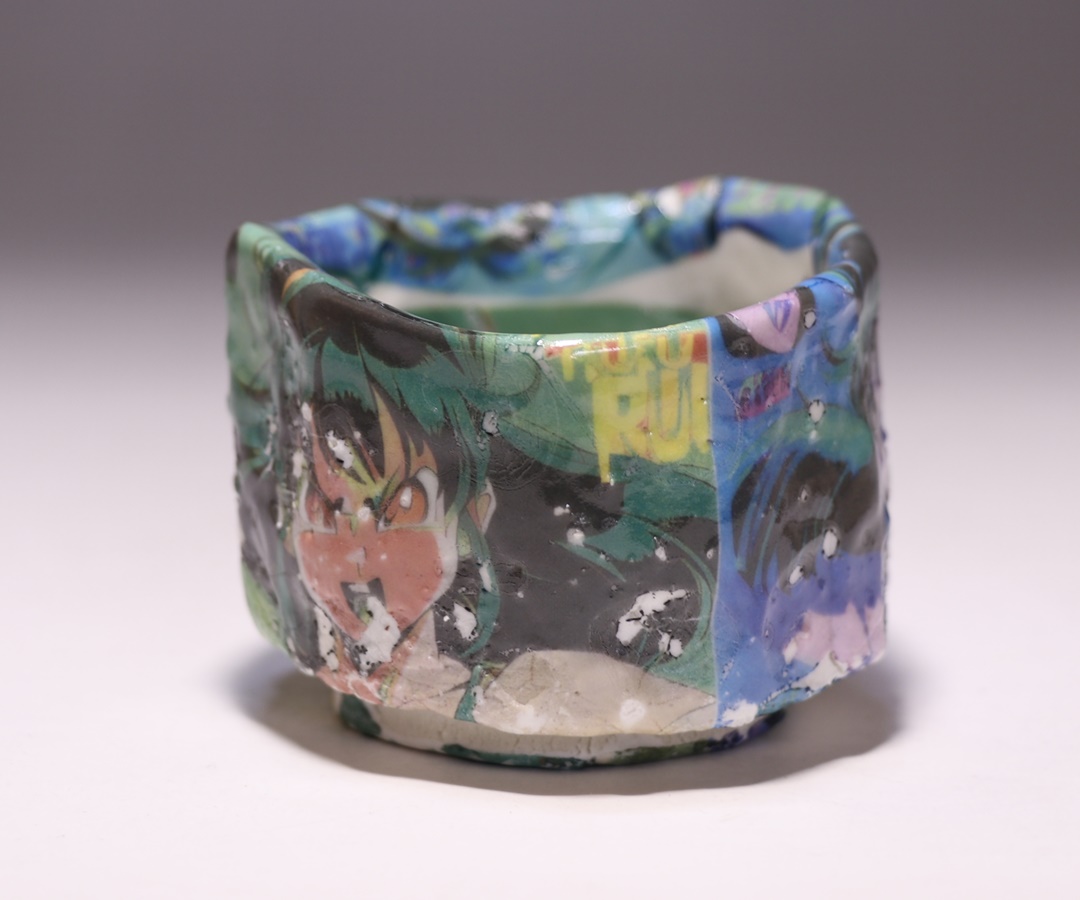
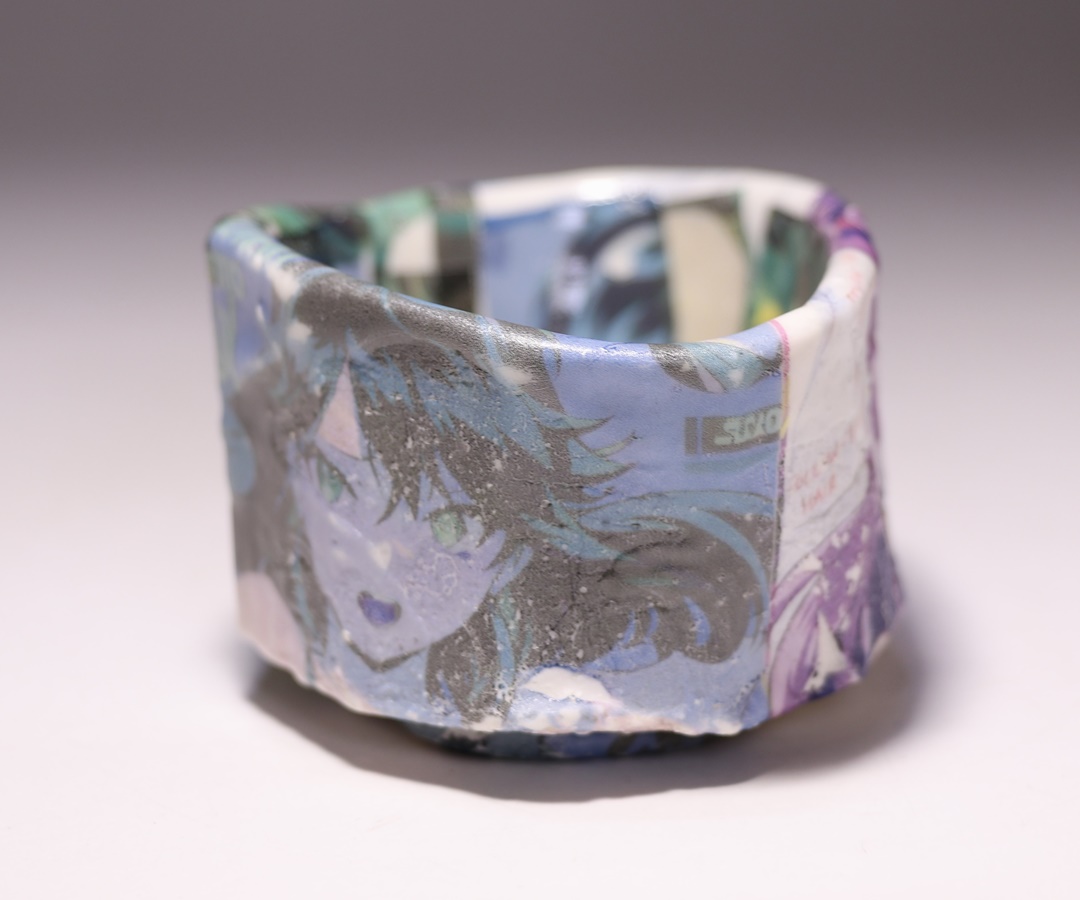
Youtaro Isezaki - HAL Faceted Guinomi
18,700 YENSold out
size : W7.7cm×6.3cm×H4.5cmBorn as the eldest son of Shin Isezaki into a prestigious family of Bizen ware, Youtarou Isezaki continues to create works in a new style that is not bound by conventional ideas. This is his **HAL Faceted Guinomi**.
By incorporating AI-generated imagery and decal transfer techniques, he pursues a distinctive form of expression that brings contemporary sensibilities into ceramics.
Inspired by Japanese anime, which is one of his own creative backgrounds, he generates original characters using AI and applies them across the entire surface of the vessel with transfer paper, creating an effect reminiscent of a photo collage.
Based on an original clay body made by blending porcelain clay and Mogusa clay, the surface is adjusted with coated clay and glaze, allowing the vessel itself to function like a canvas.
Furthermore, this clay canvas affects the outlines of the transferred images through the texture of the clay particles and the glaze, creating a uniquely faded surface impression, as if the piece had been used over a long period of time.
The body is finely faceted with vertical marks made by a spatula, and when held in the hand, it is interesting to quietly feel the traditional sense of form that has been passed down through the Isezaki lineage from Mitsuru Isezaki.
While based on the traditional form of a drinking vessel, this work brings together contemporary elements such as AI, decal transfer, and animation, creating a new ceramic expression unique to Youtarou Isezaki.
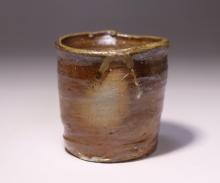


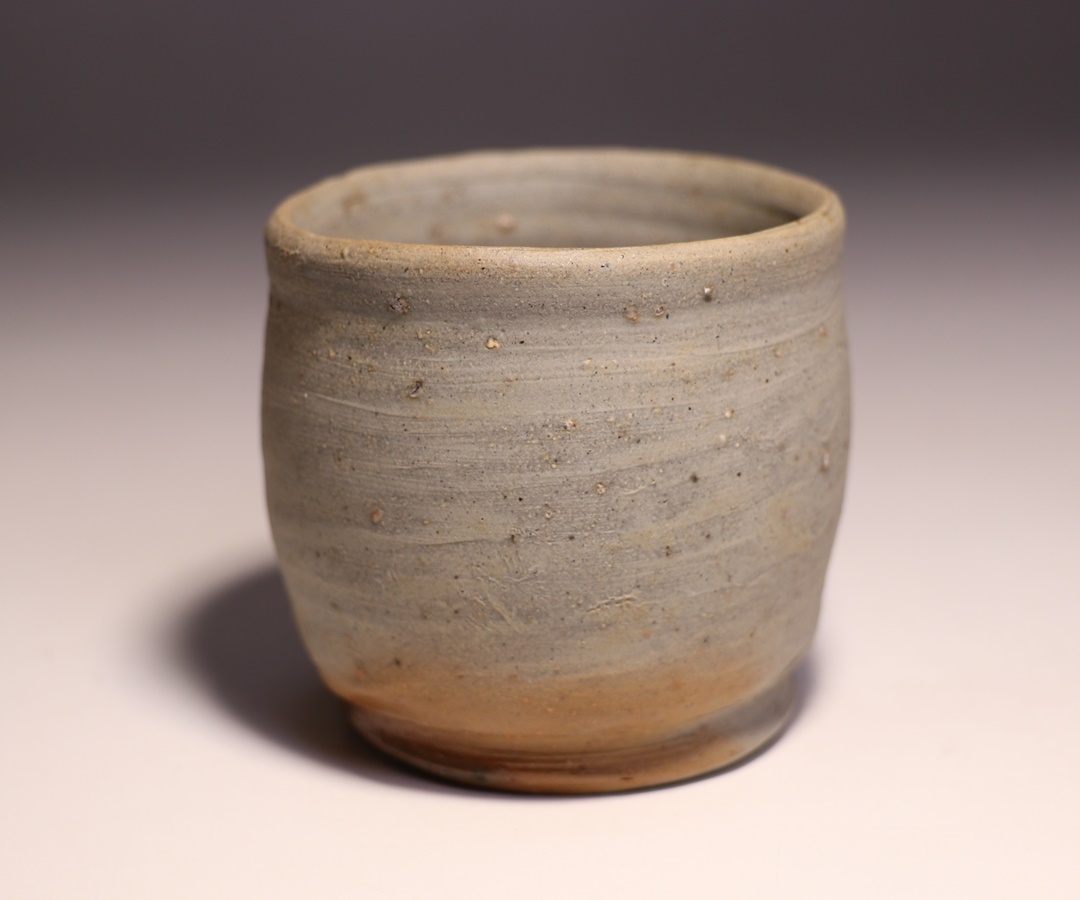
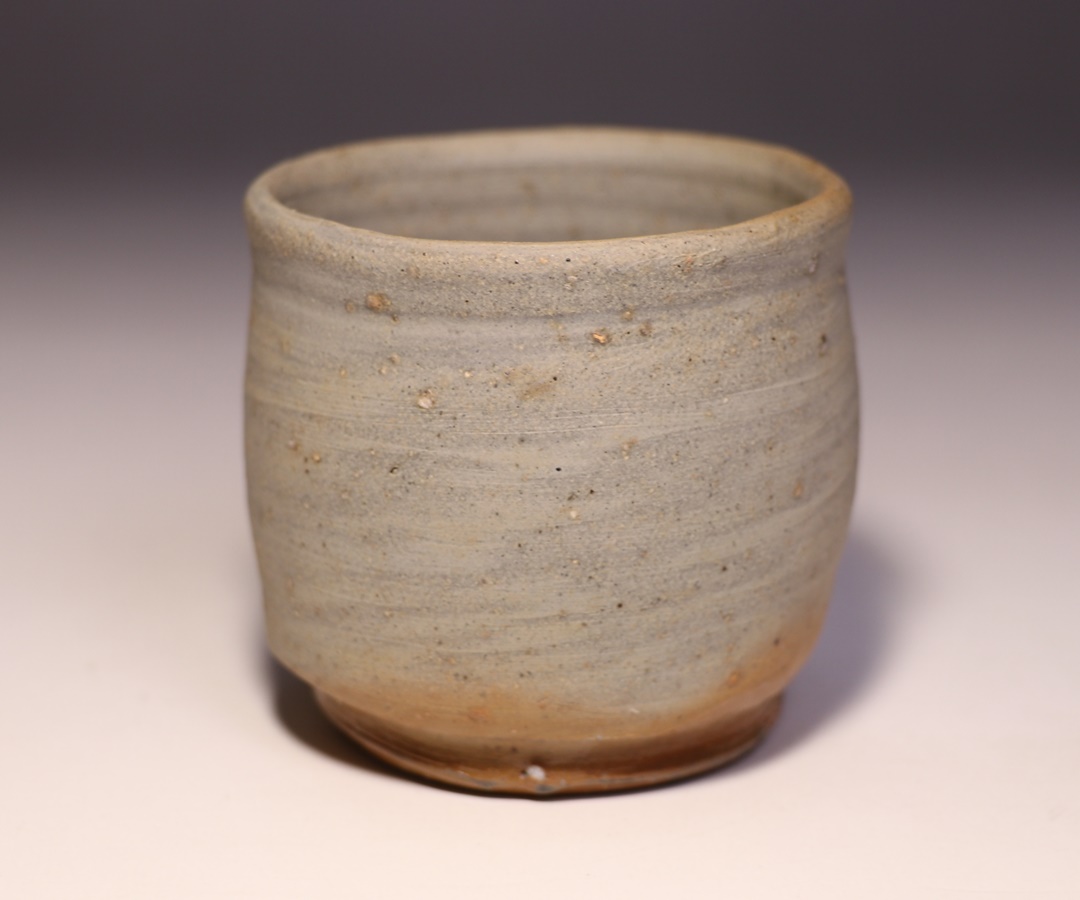
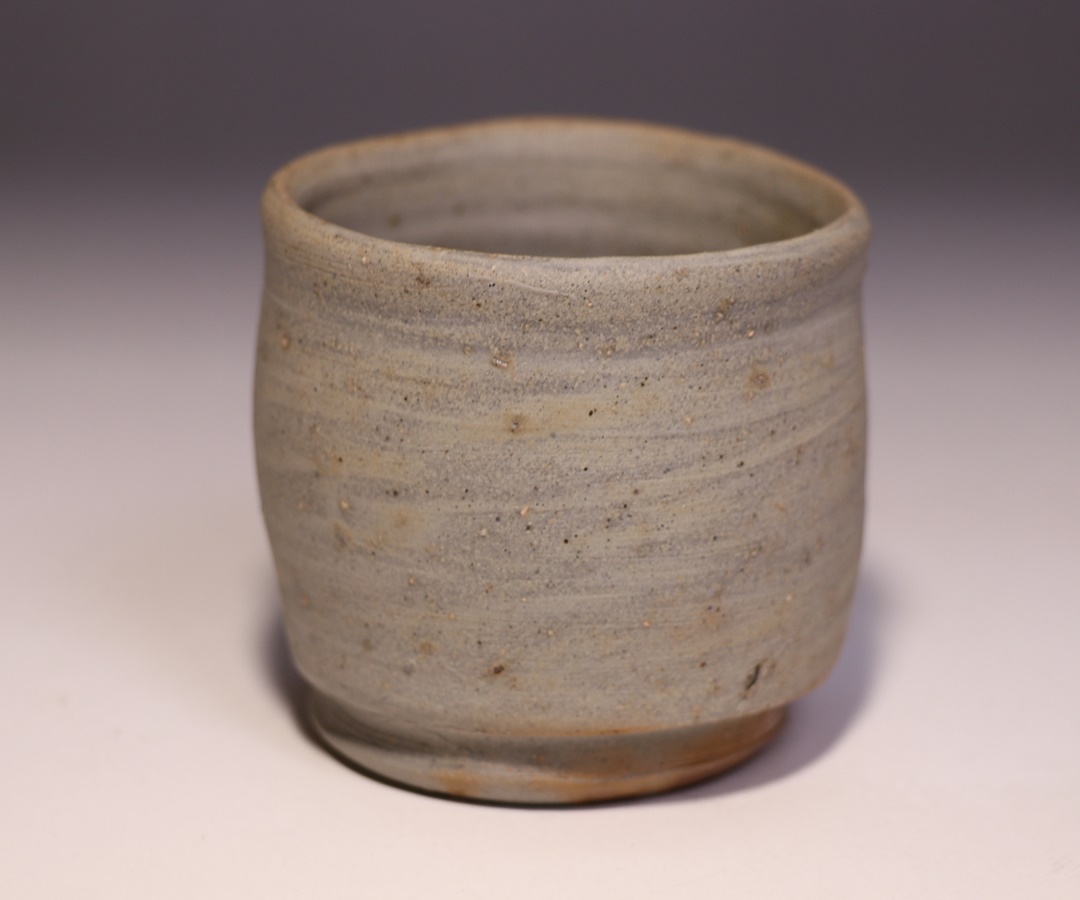
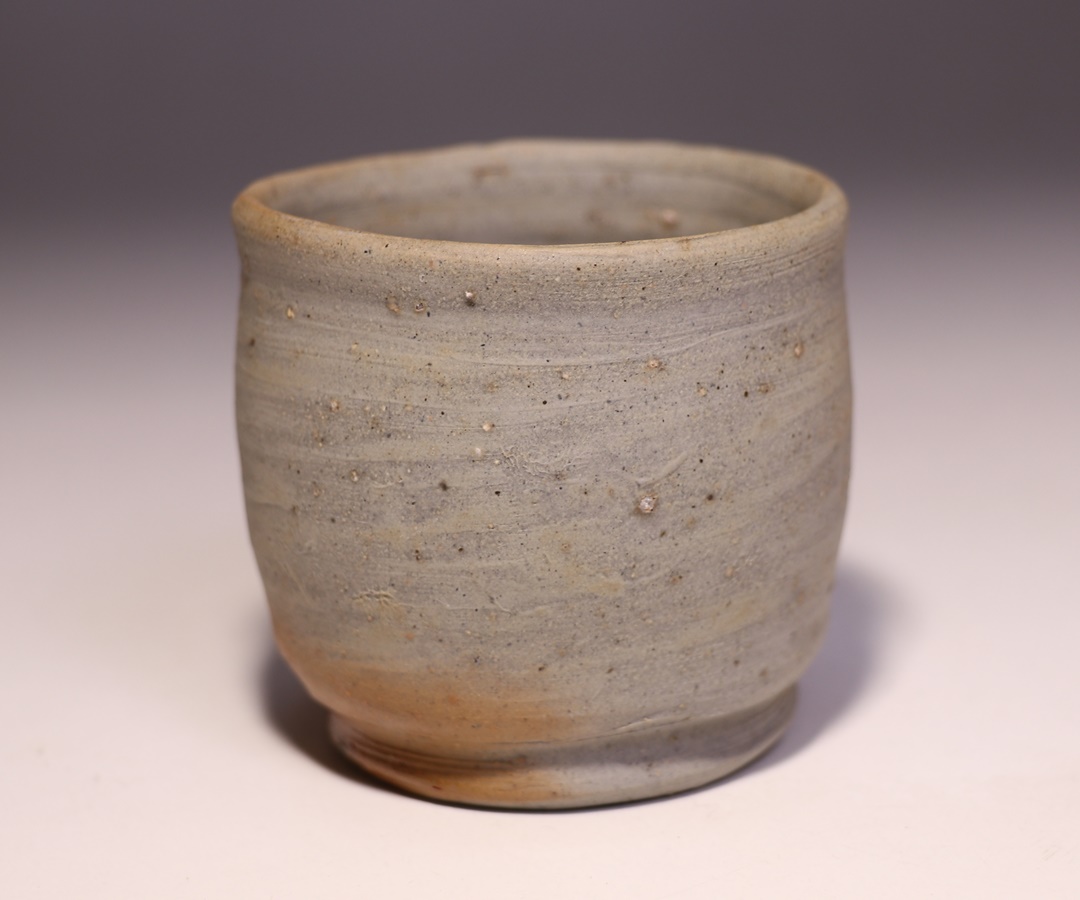
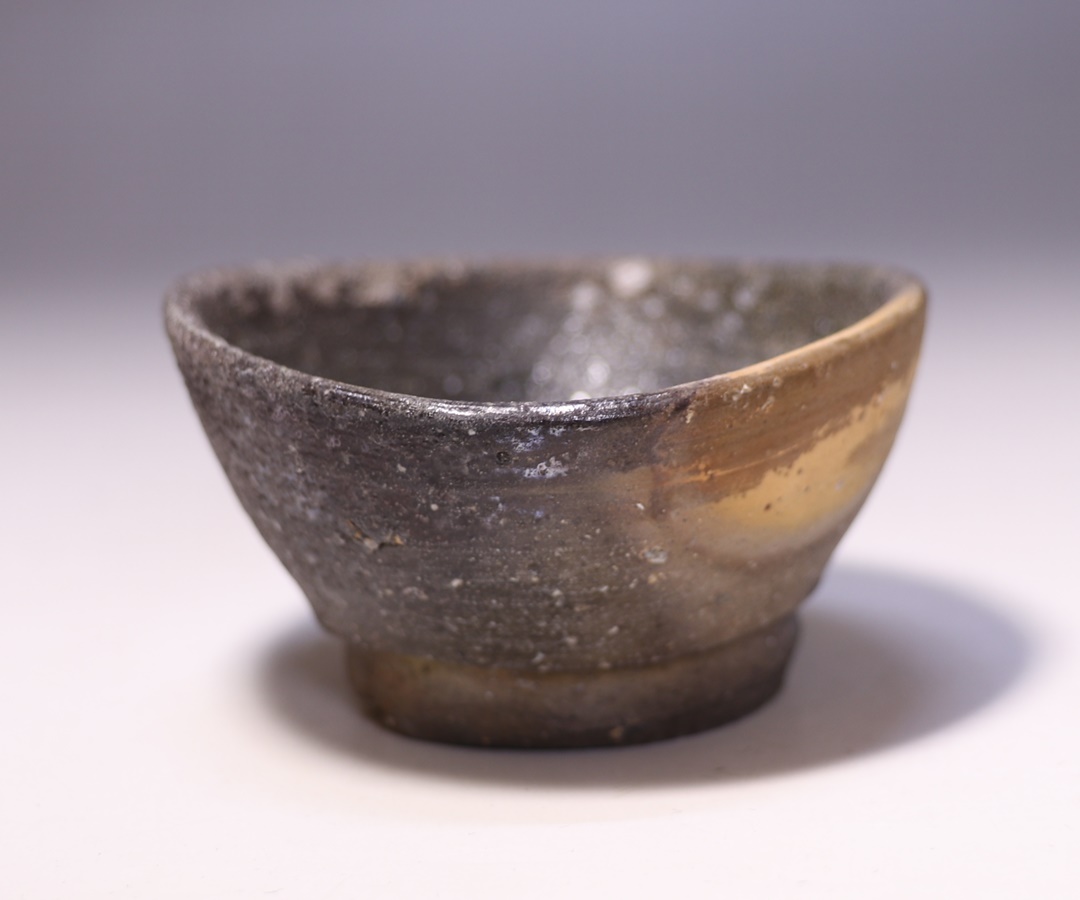
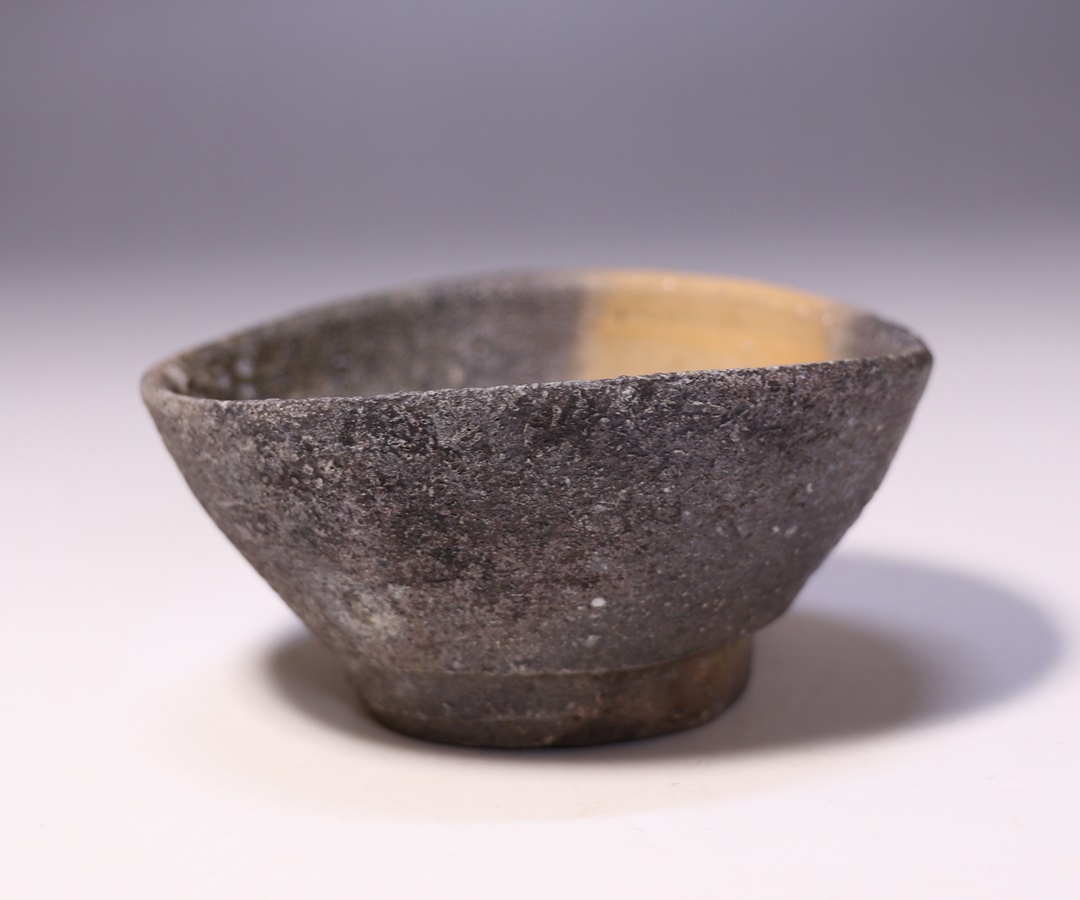
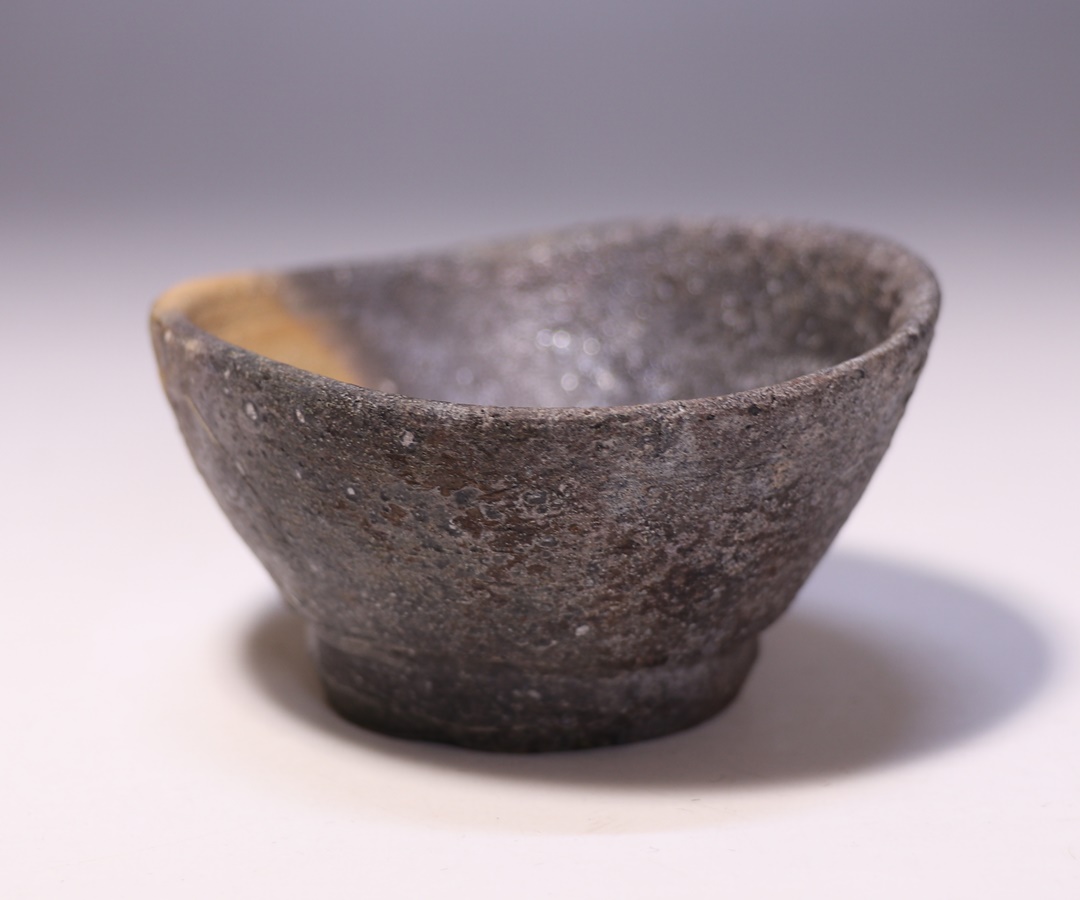
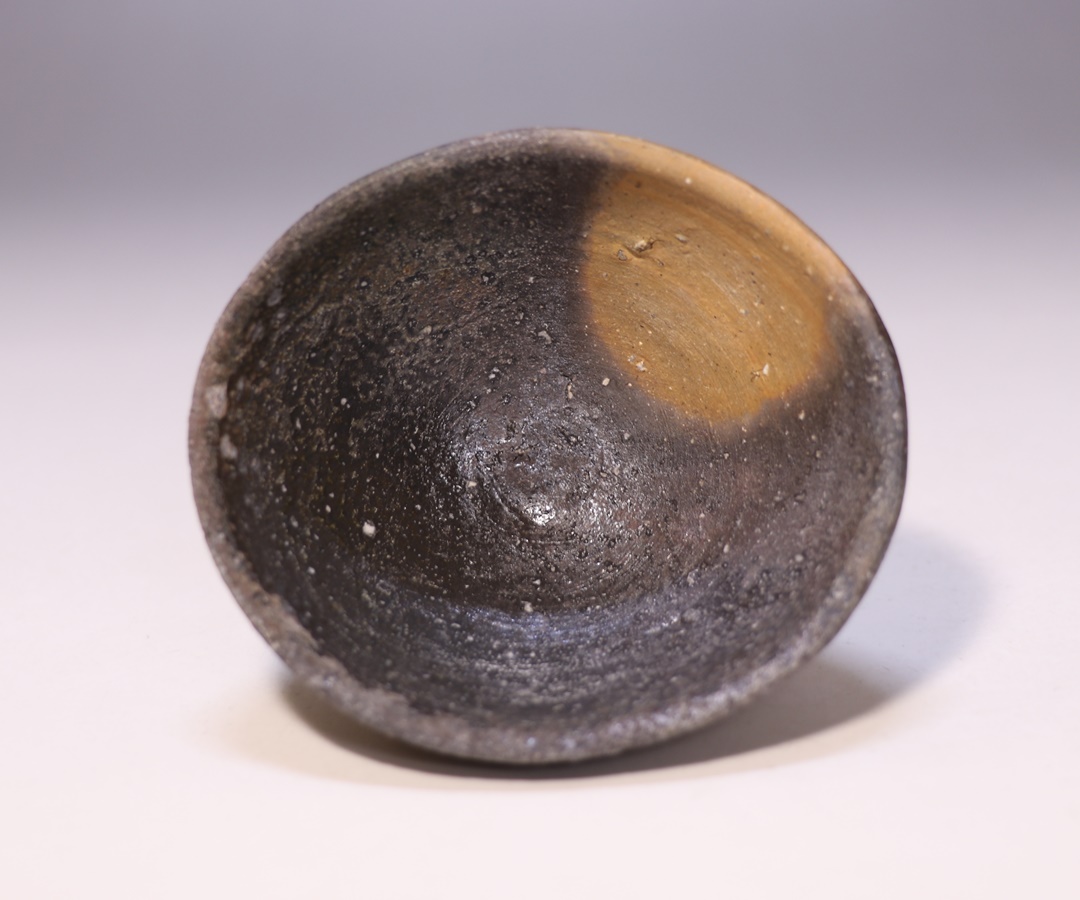
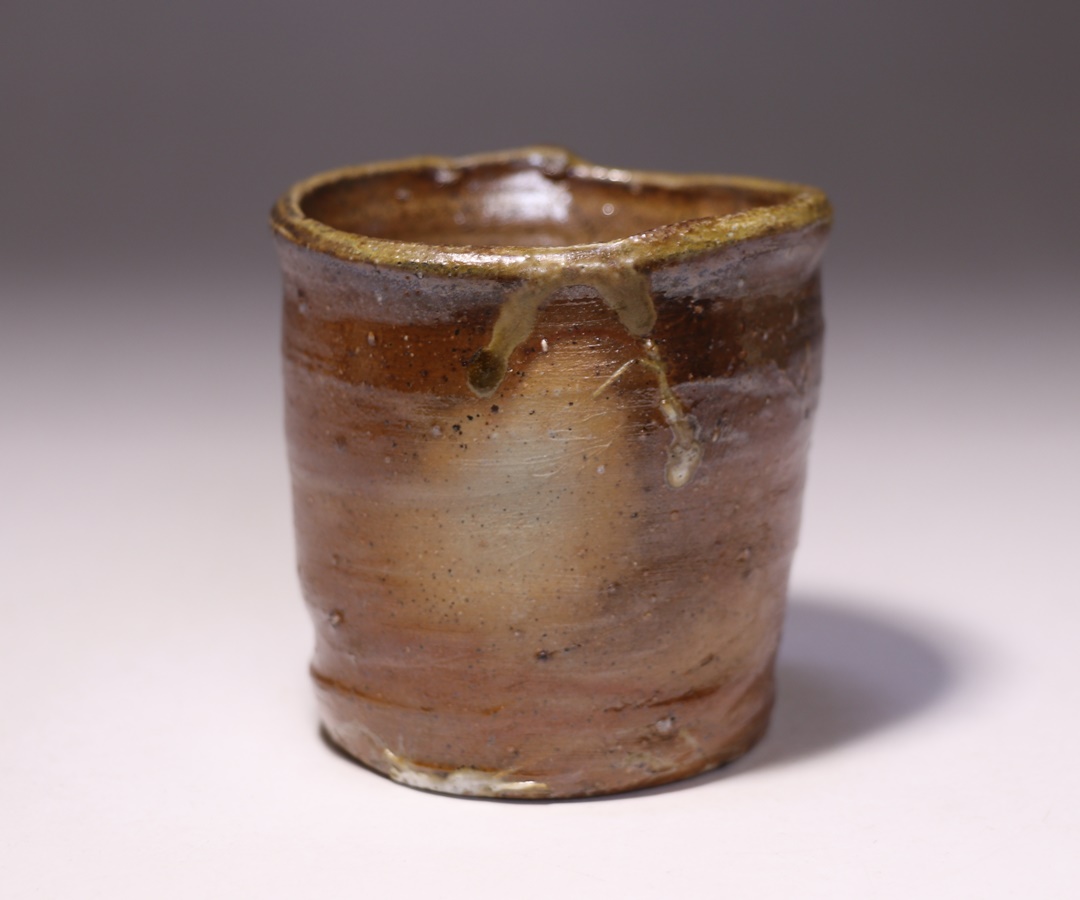
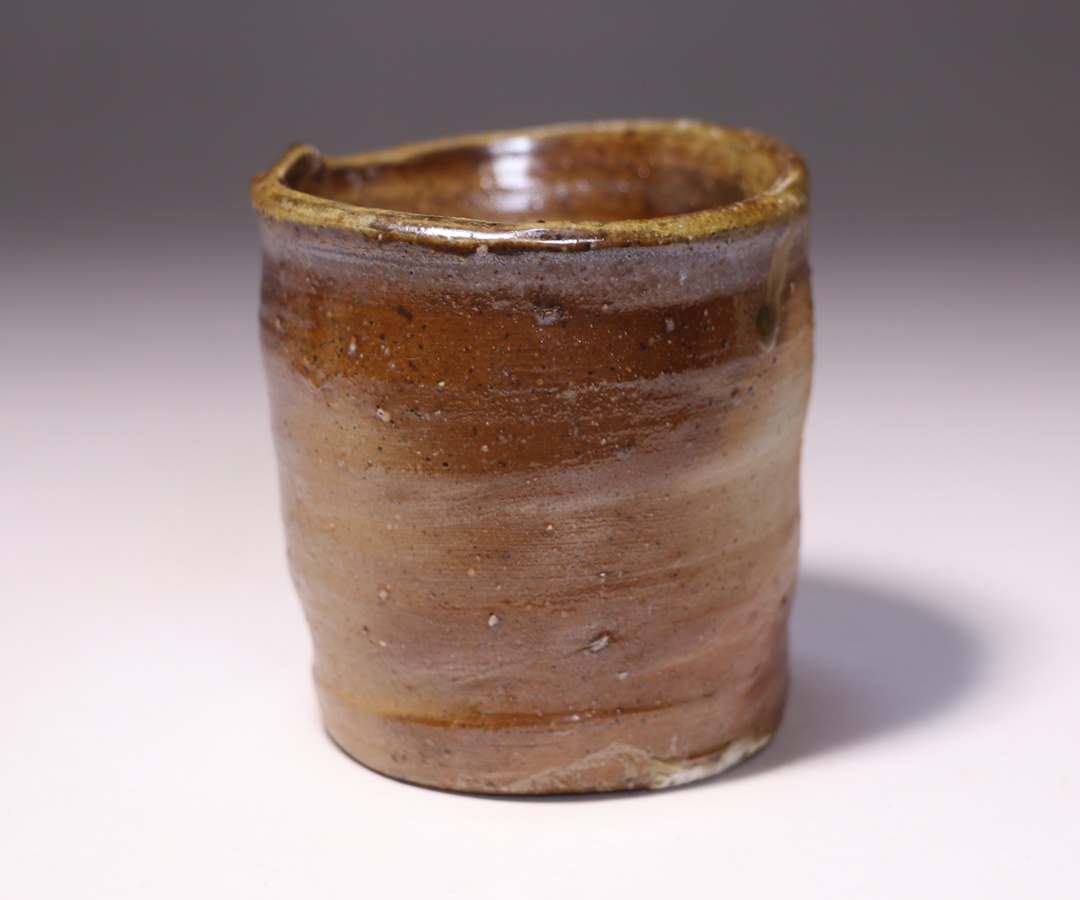
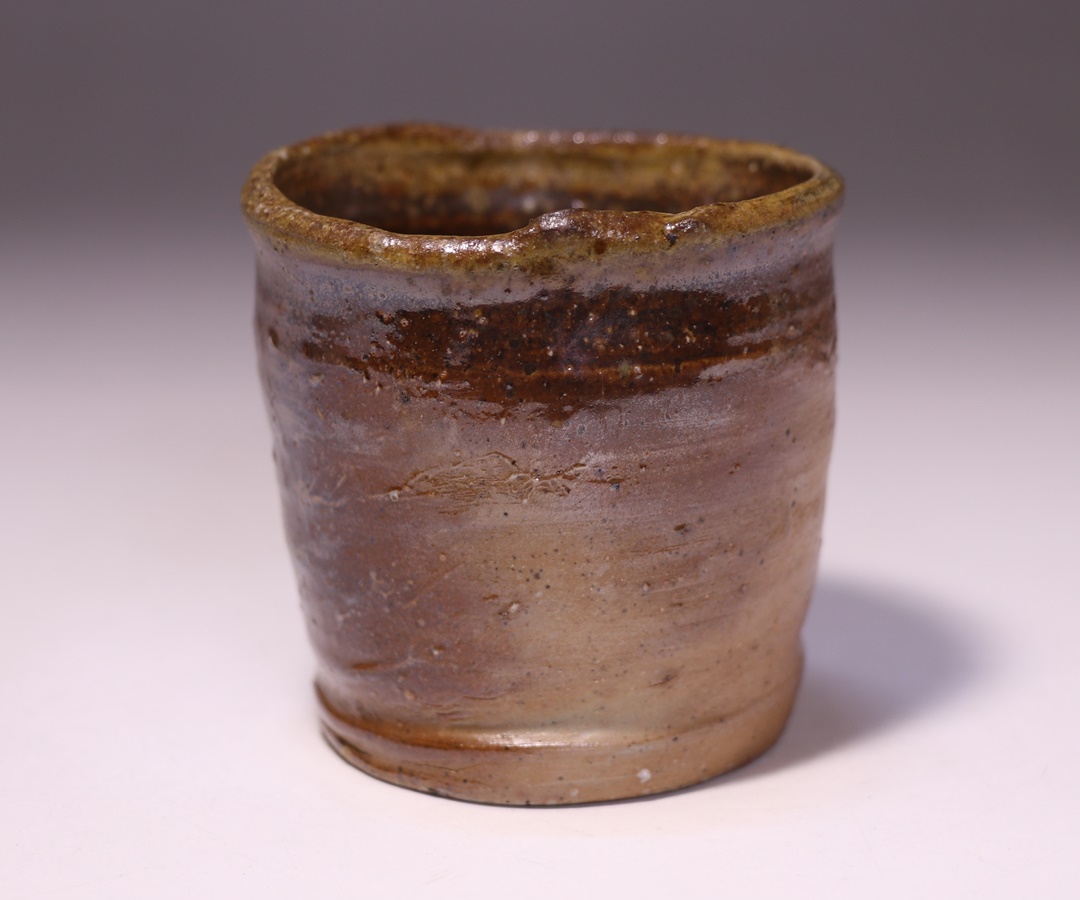
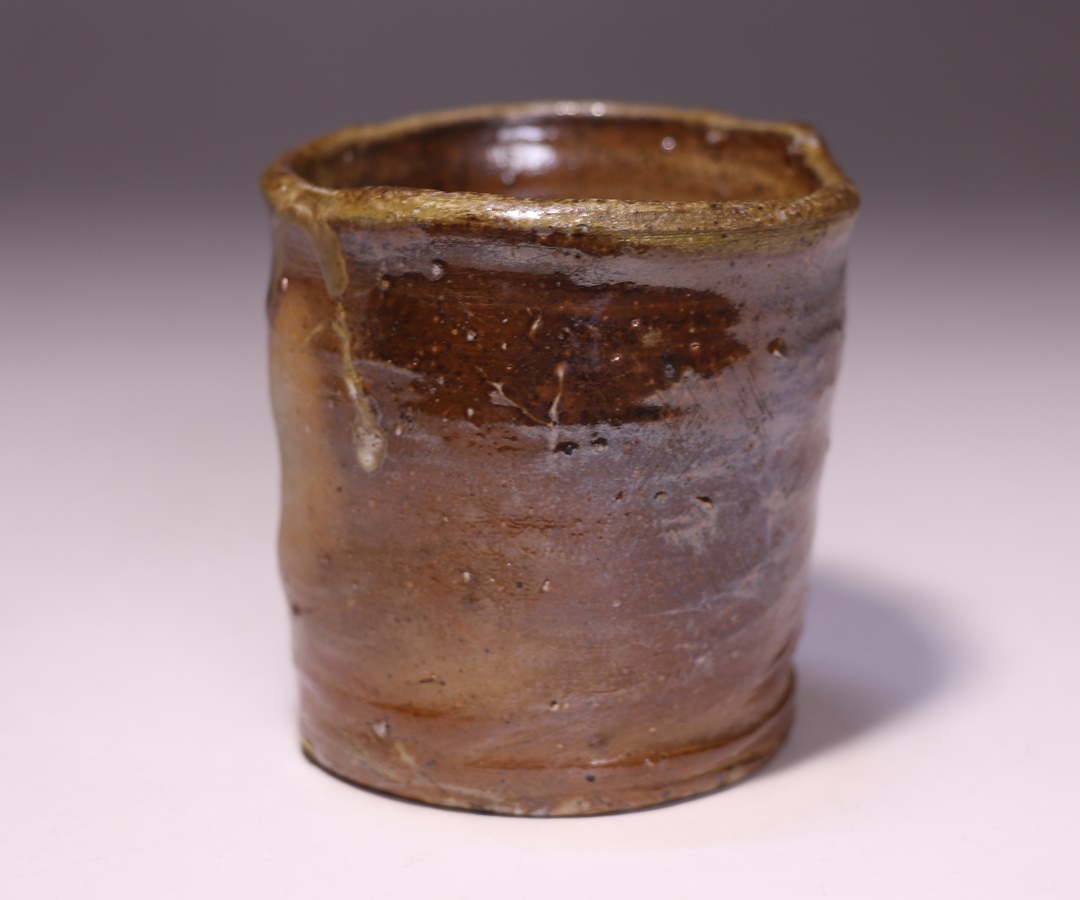
Makoto Kaneshige - Bizen Guinomi Highest quality clay
88,000 YENSold out
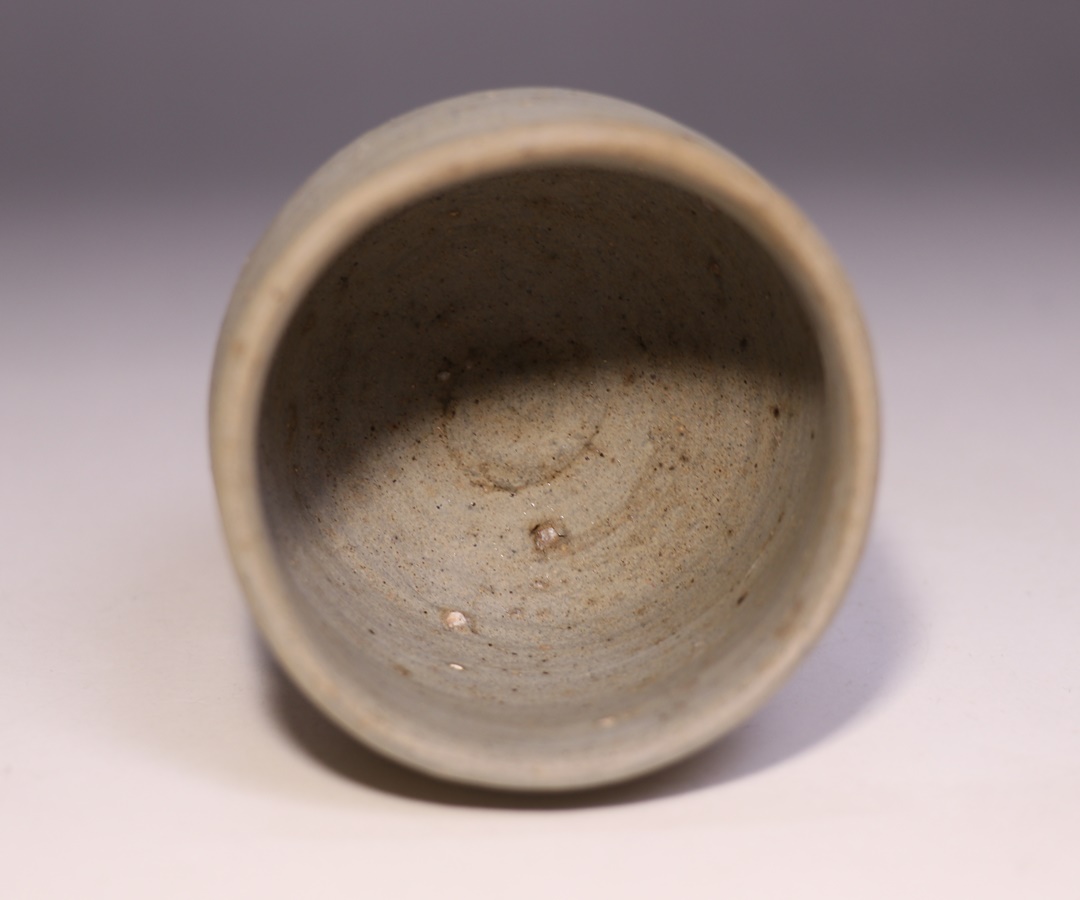
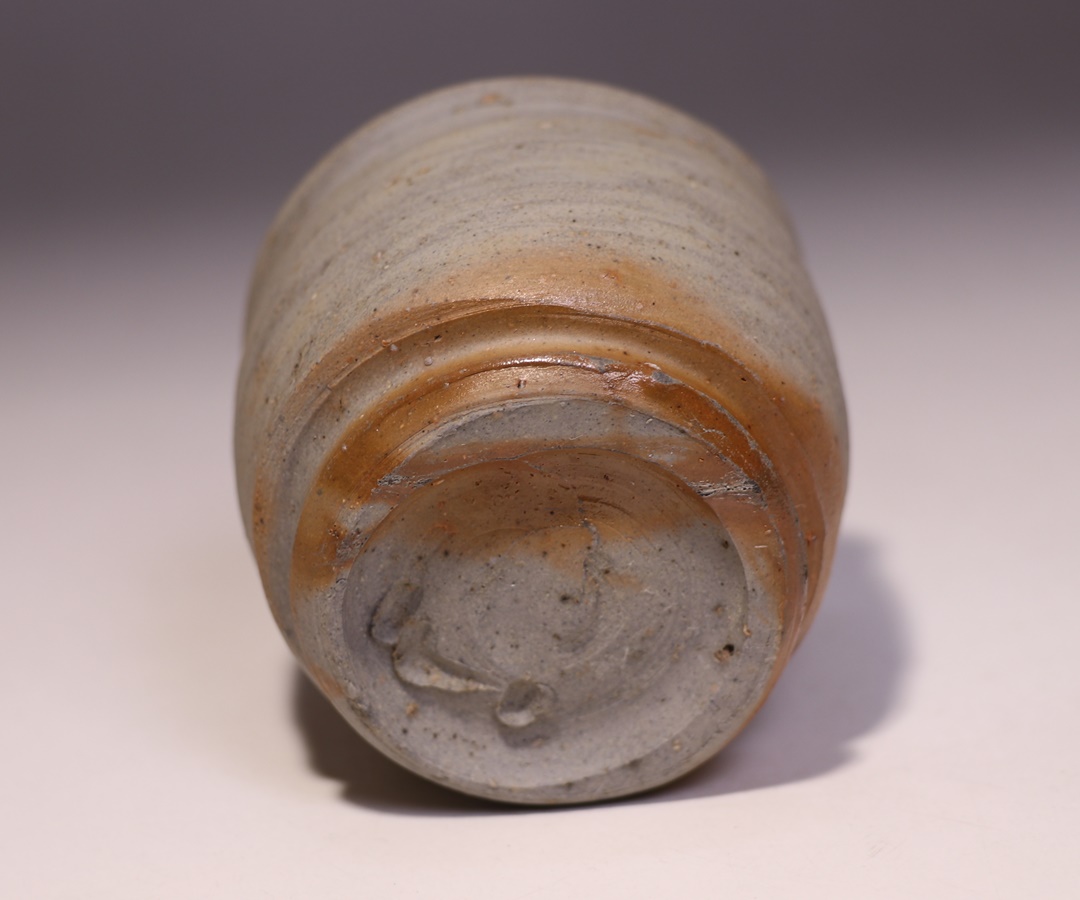
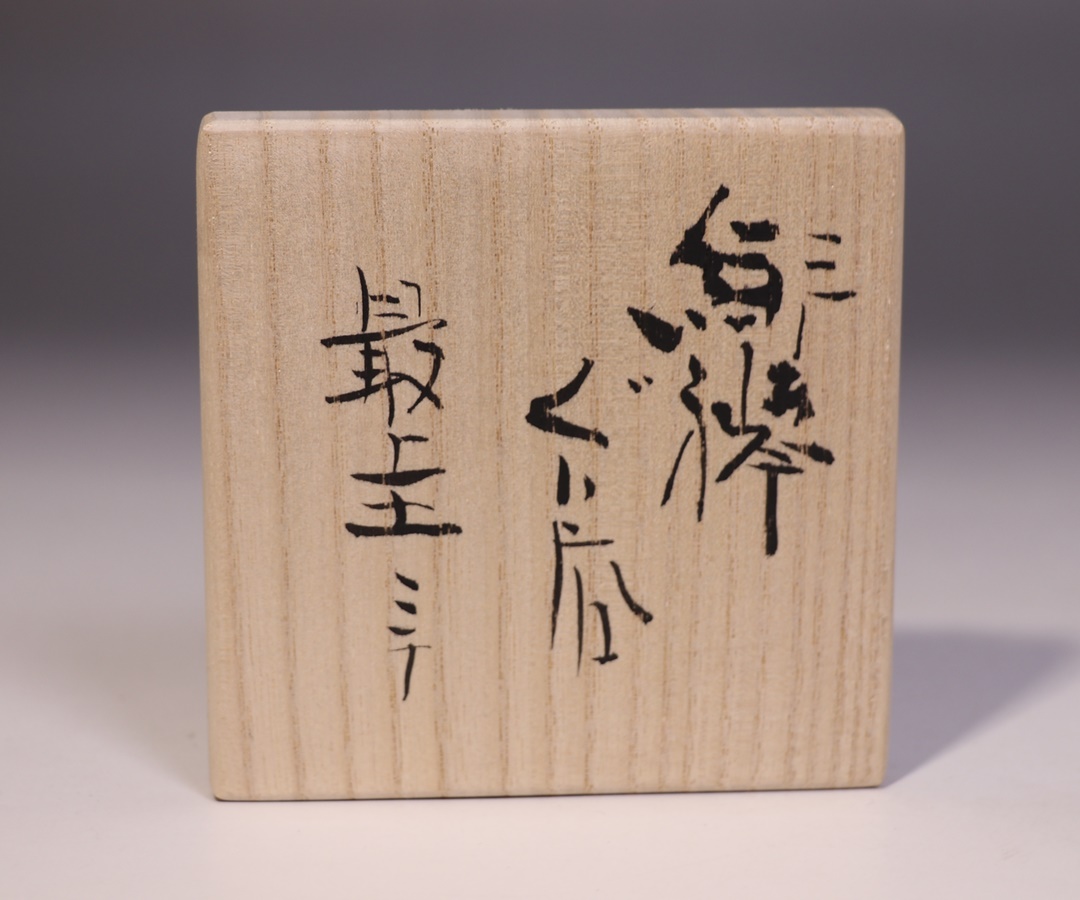
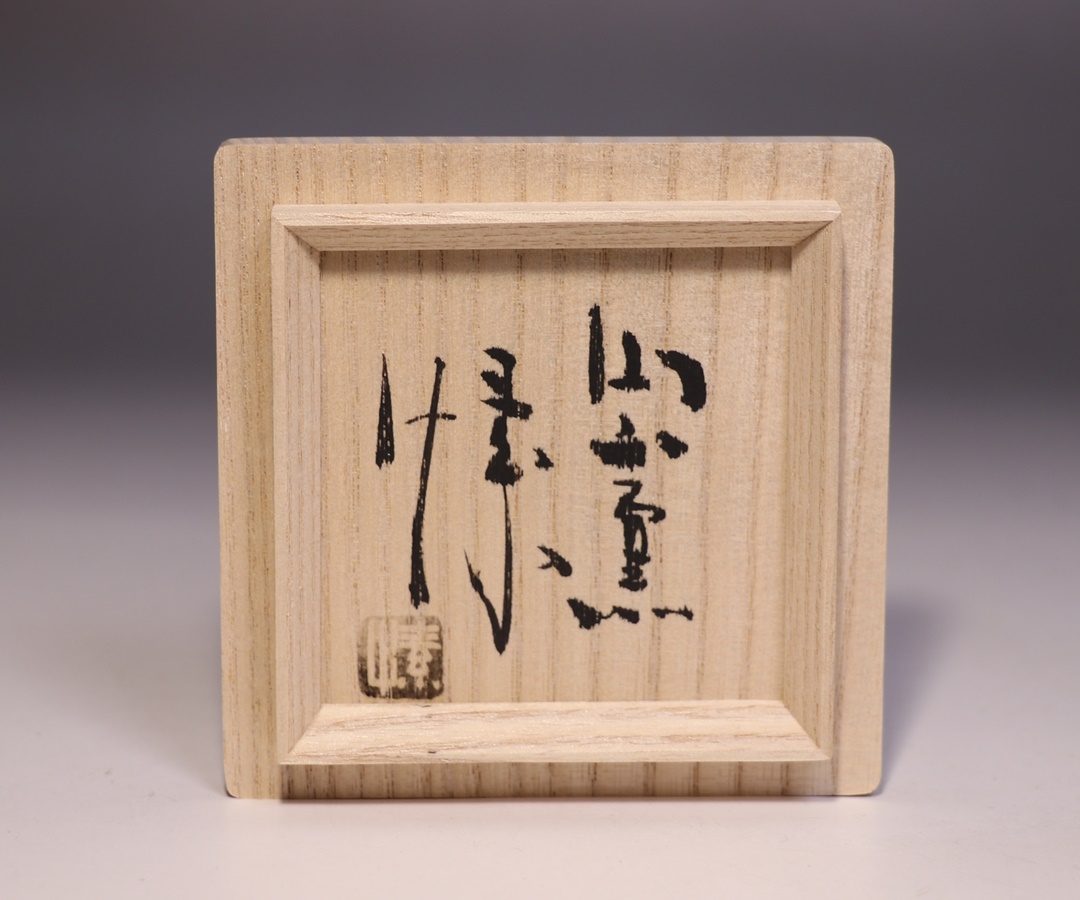
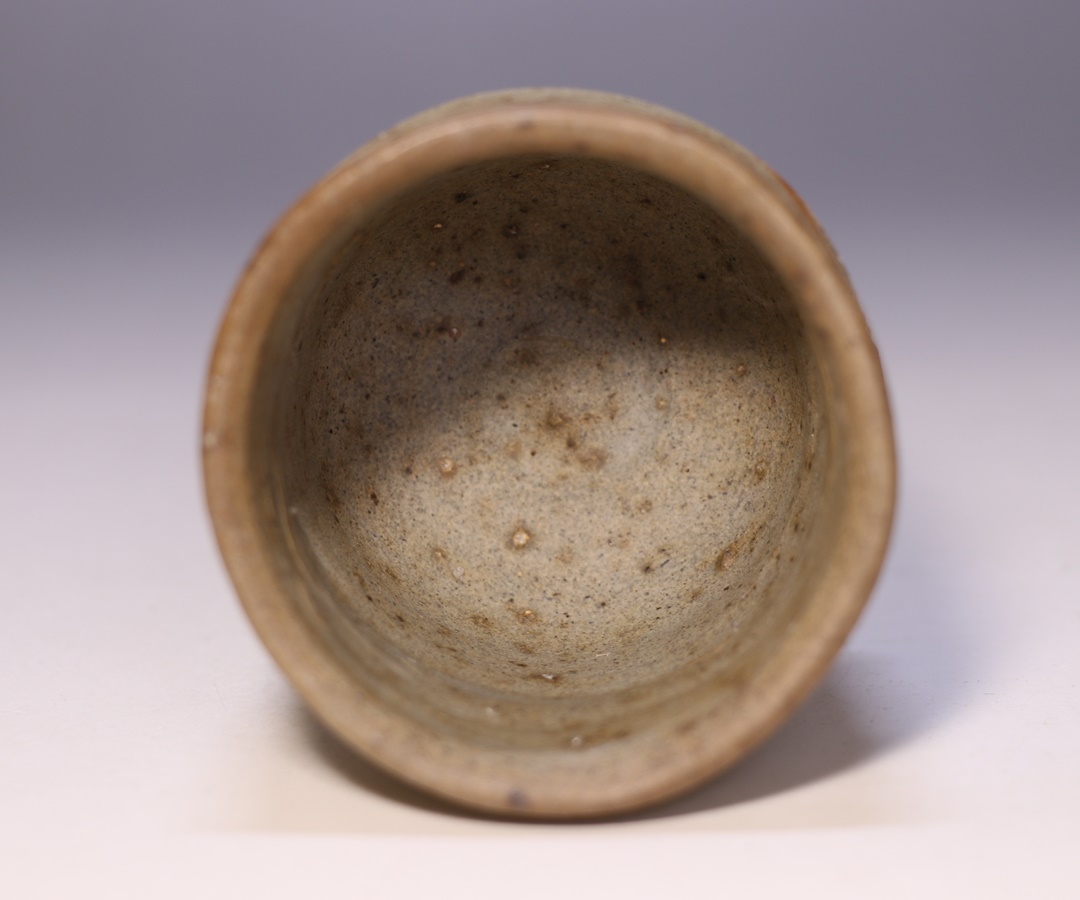
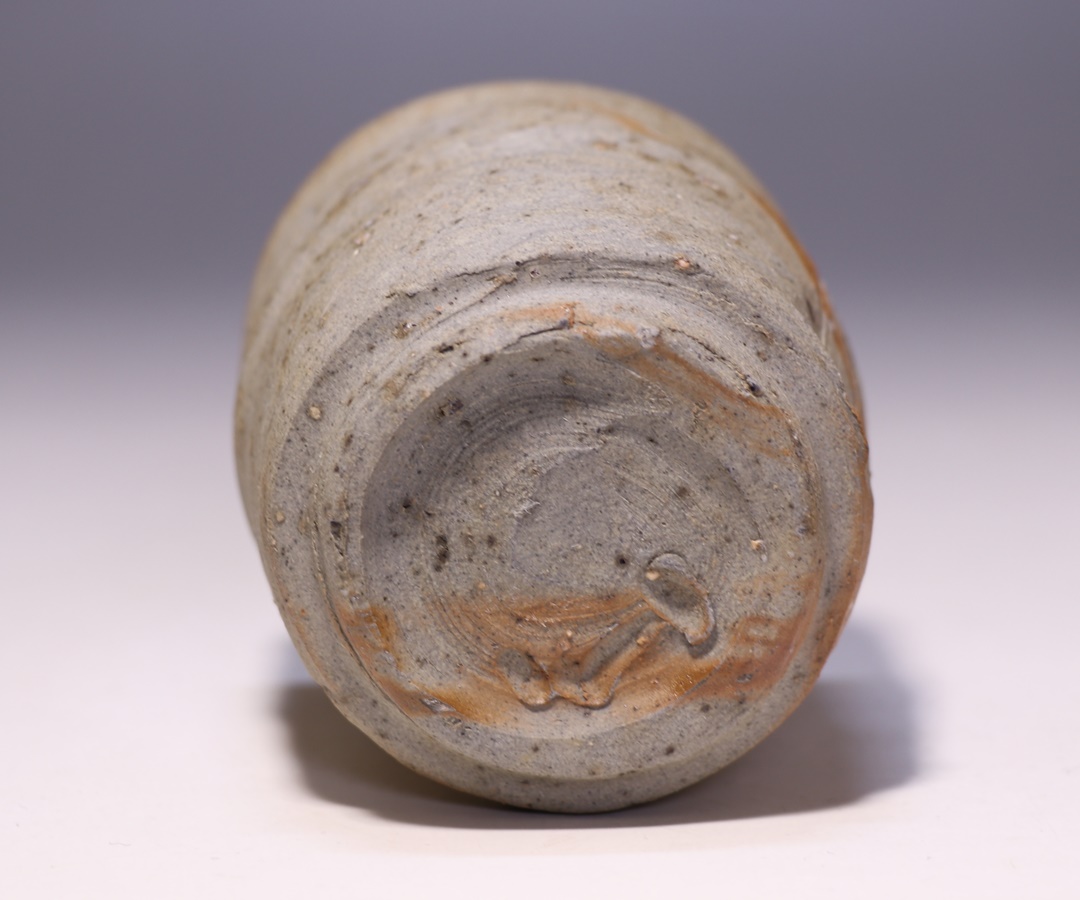
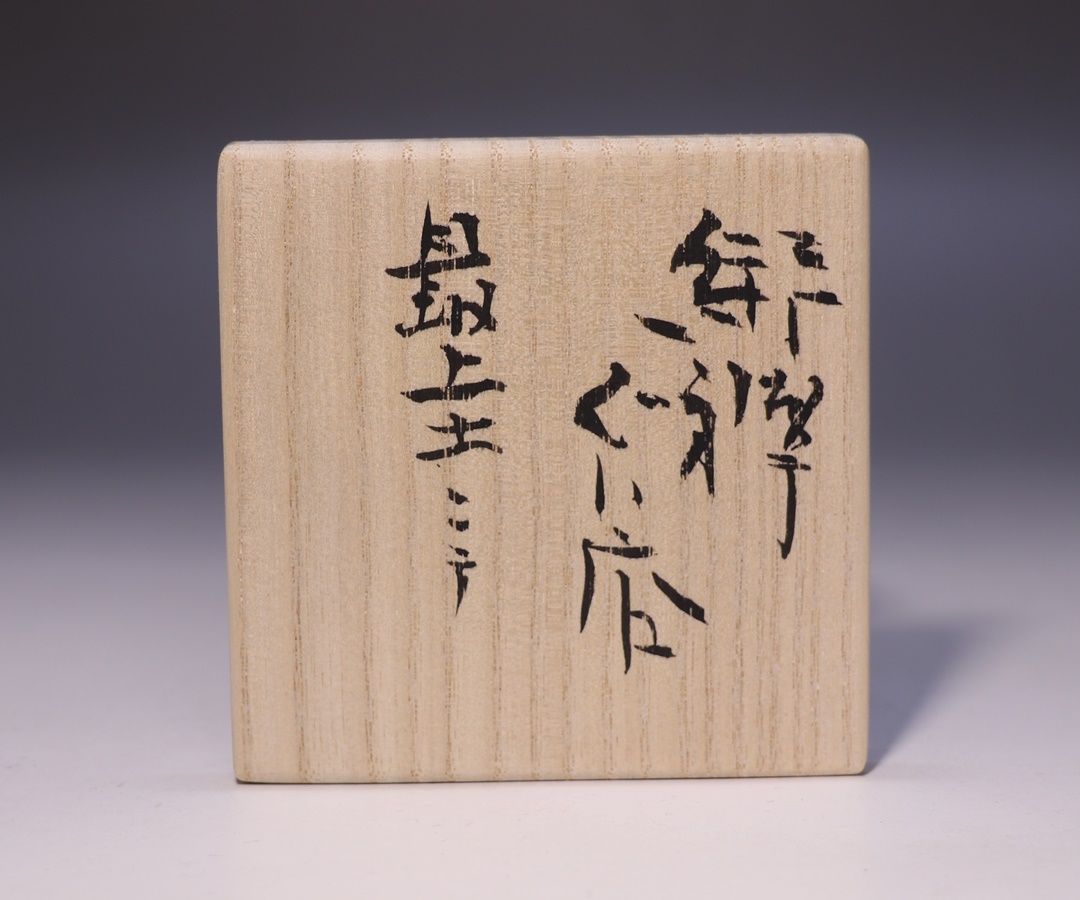
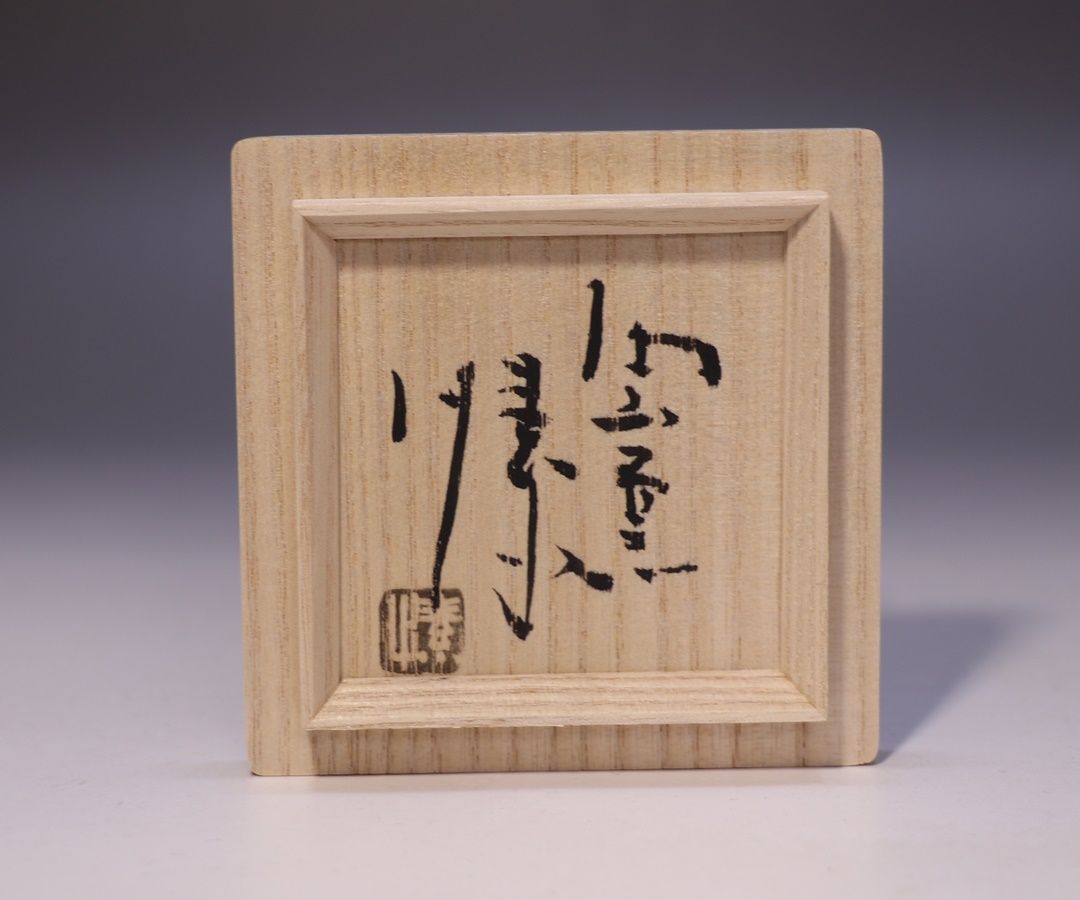
size : W6.7cm×6.3cm×H6.6cmThis is a new Bizen Guinomi, “Saijo Tsuchi Nite,” by Makoto Kaneshige, who inherited the Maruyama kiln as the eldest son of Sozan Kaneshige and captivates many with the harmony of delicate, elegant clay texture and powerful form.
It is one of his latest works, newly fired at the end of 2025.
As indicated by the box inscription “Saijo Tsuchi Nite,” this Guinomi was made from the finest possible field clay and fired at the Maruyama kiln, resulting in a moist and refined clay surface.
Around forty years ago, Sozan Kaneshige and Makoto Kaneshige discovered this highest-grade clay. It is said that the clay was prepared entirely by hand, without the use of machinery, and then left to rest in storage for many years.
It was clay of such exceptional quality that Makoto Kaneshige said he could not bear to leave it unused in his lifetime. By firing it slowly and thoroughly in the back of the Maruyama kiln, the surface has become so fine and smooth that it almost seems as though the clay had been passed through a fine sieve.
As with old Bizen works, straw was wrapped around the piece before firing, and the natural ash glaze guided by the straw has formed Ito-Goma around the lower body and rim.
In terms of form as well, the bold spatula work often seen in Makoto Kaneshige’s Yohen pieces has been restrained here, resulting in a quiet style that places the clay itself at the center of the work.
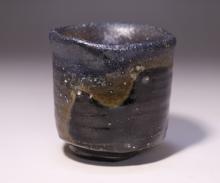


Jun Isezaki - Bizen Kuro Guinomi
132,000 YENSold out
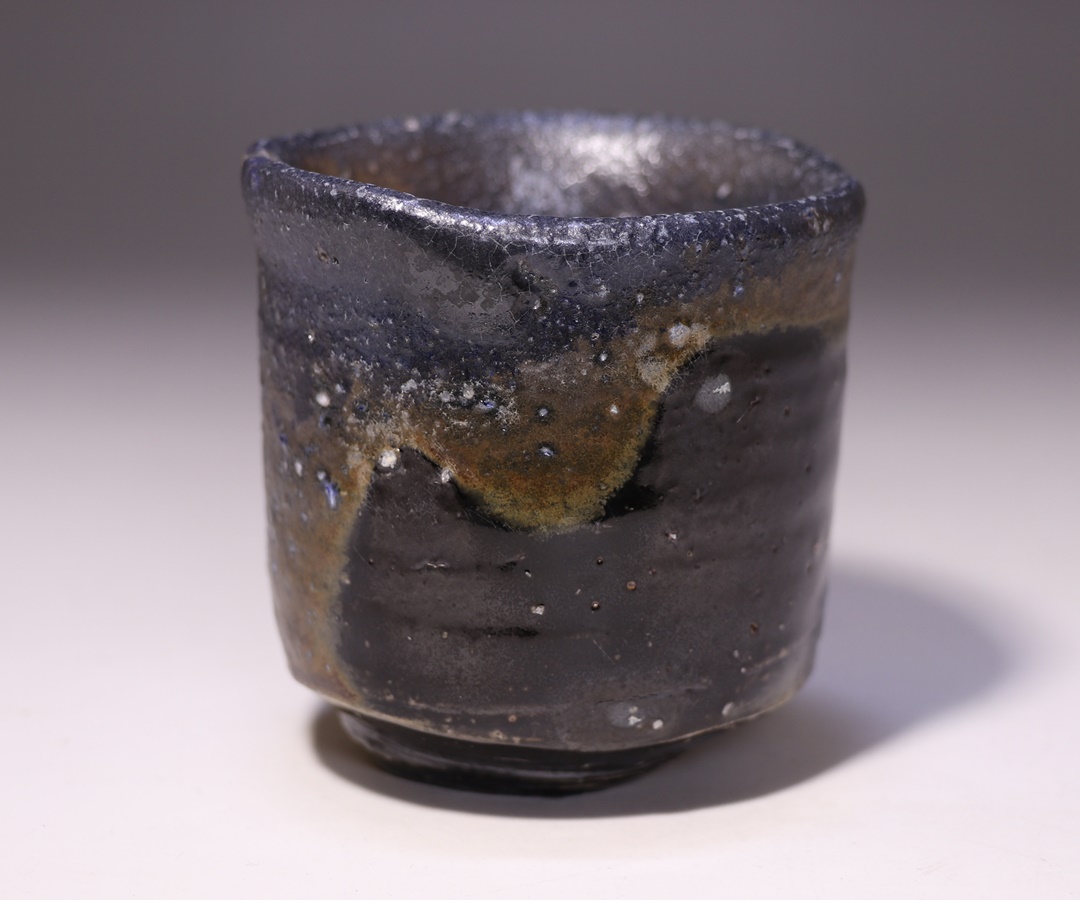
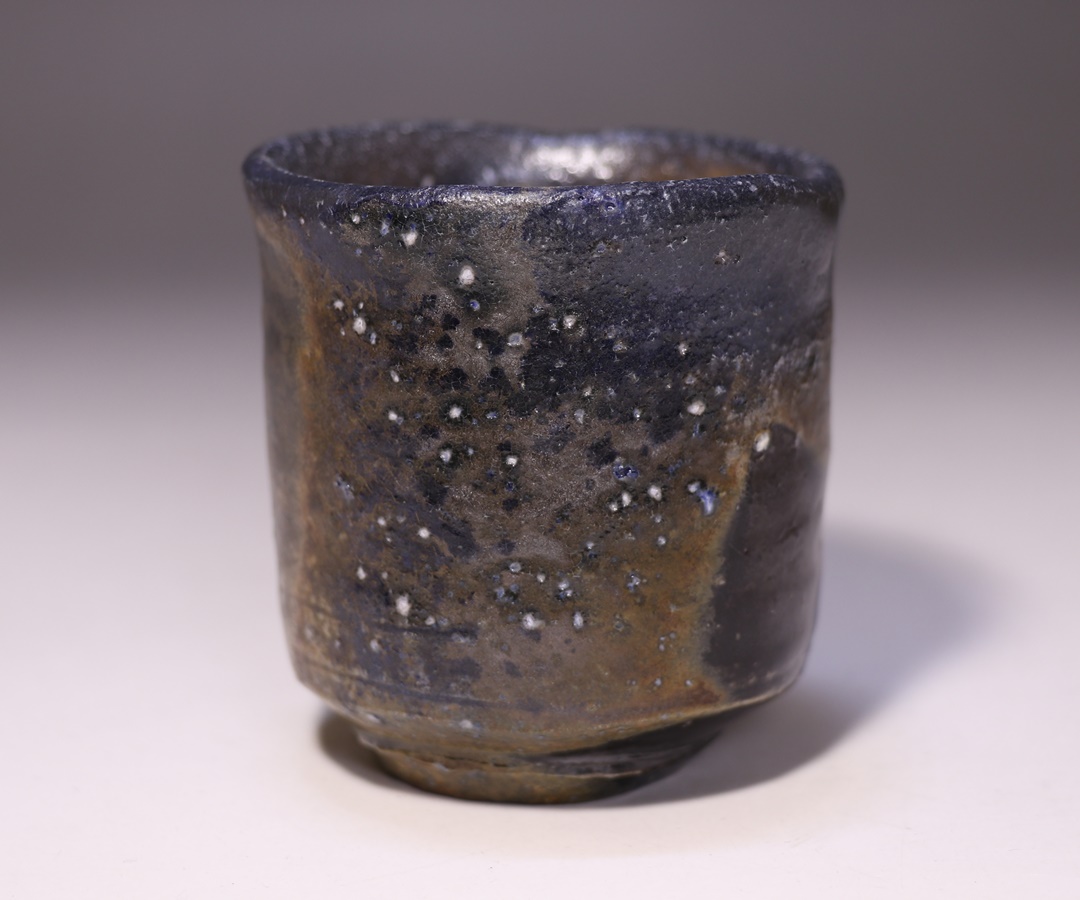
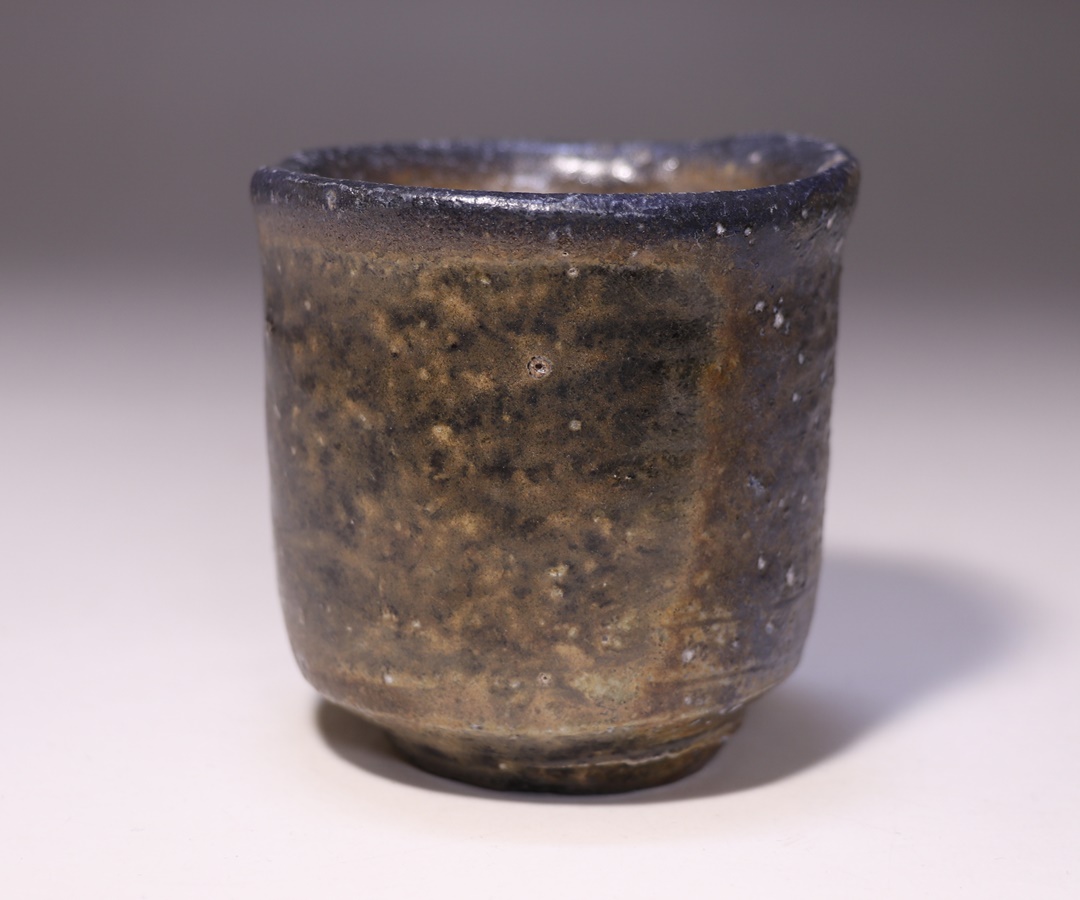
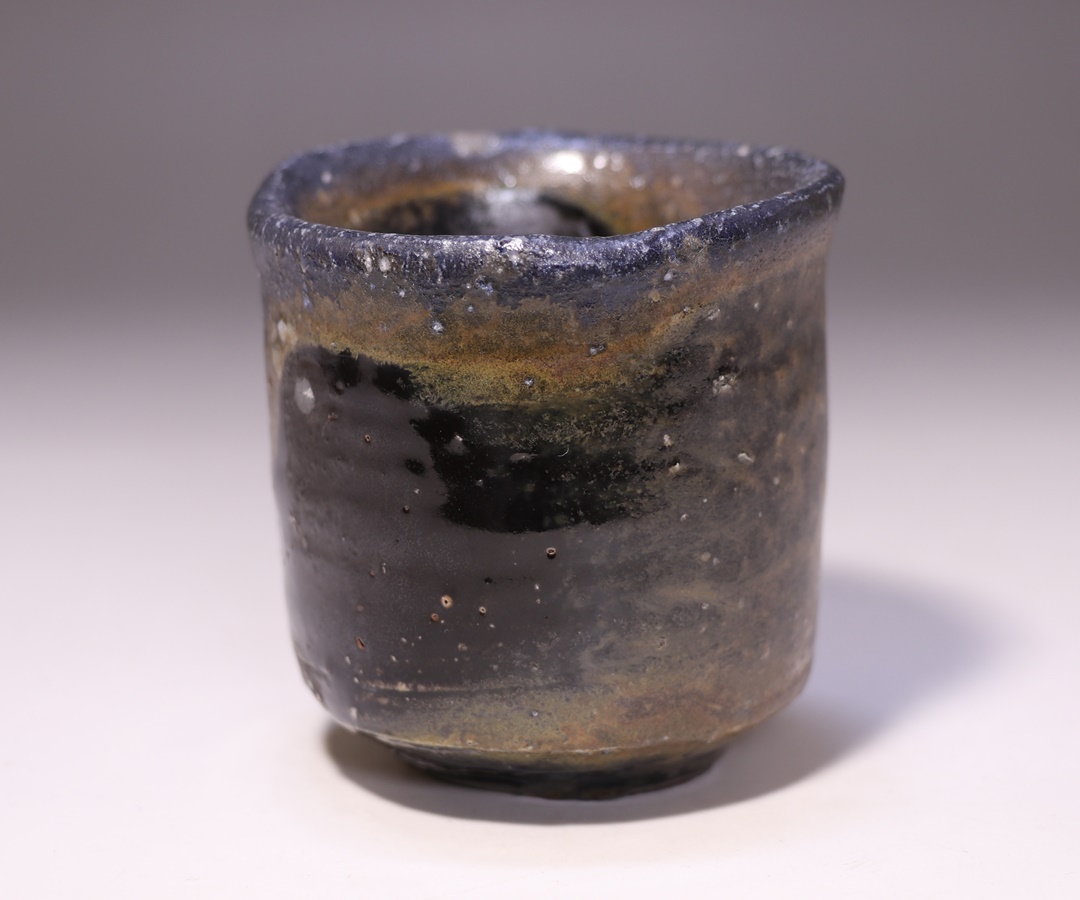
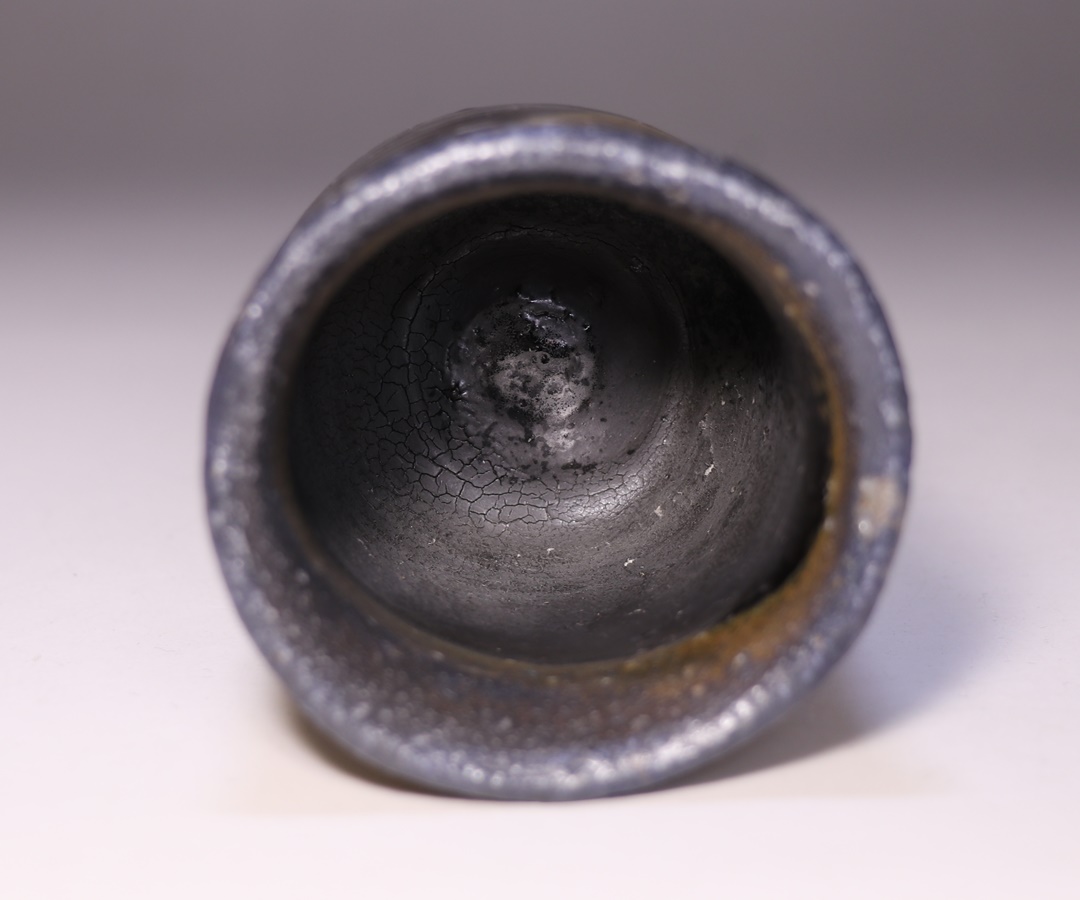
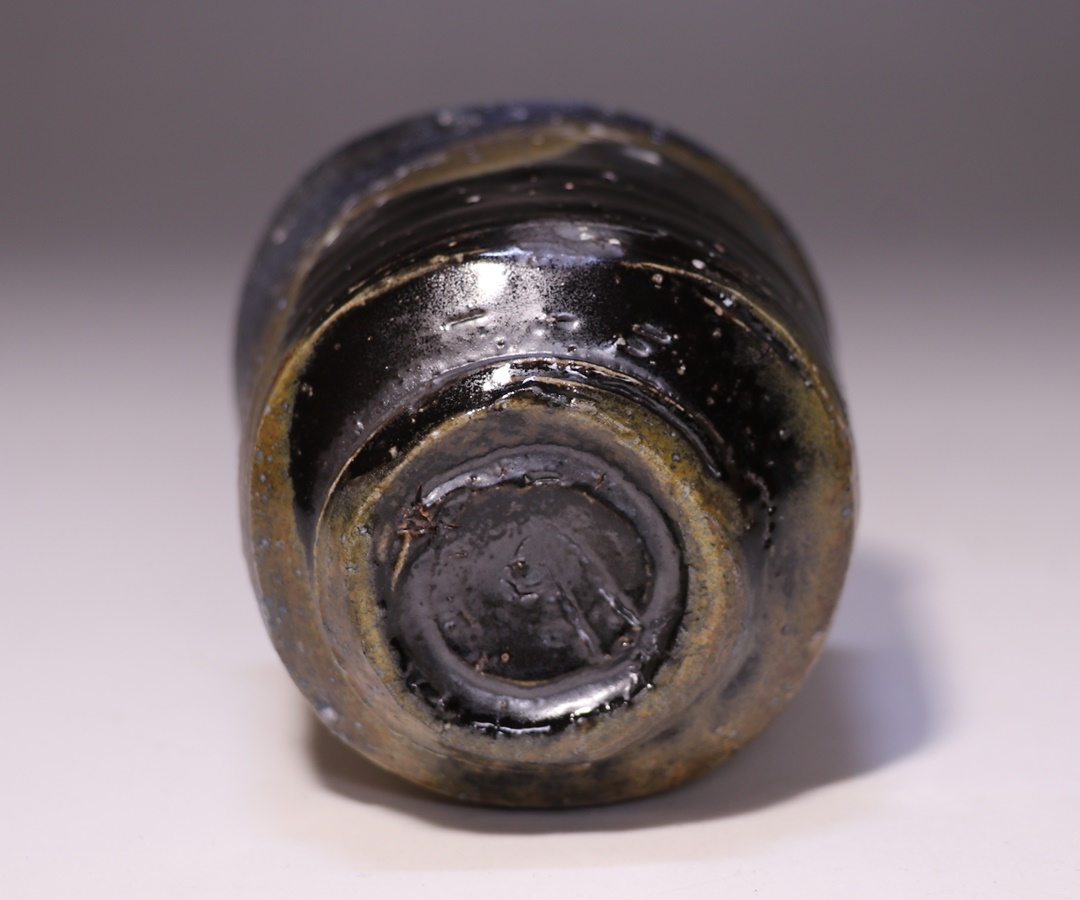
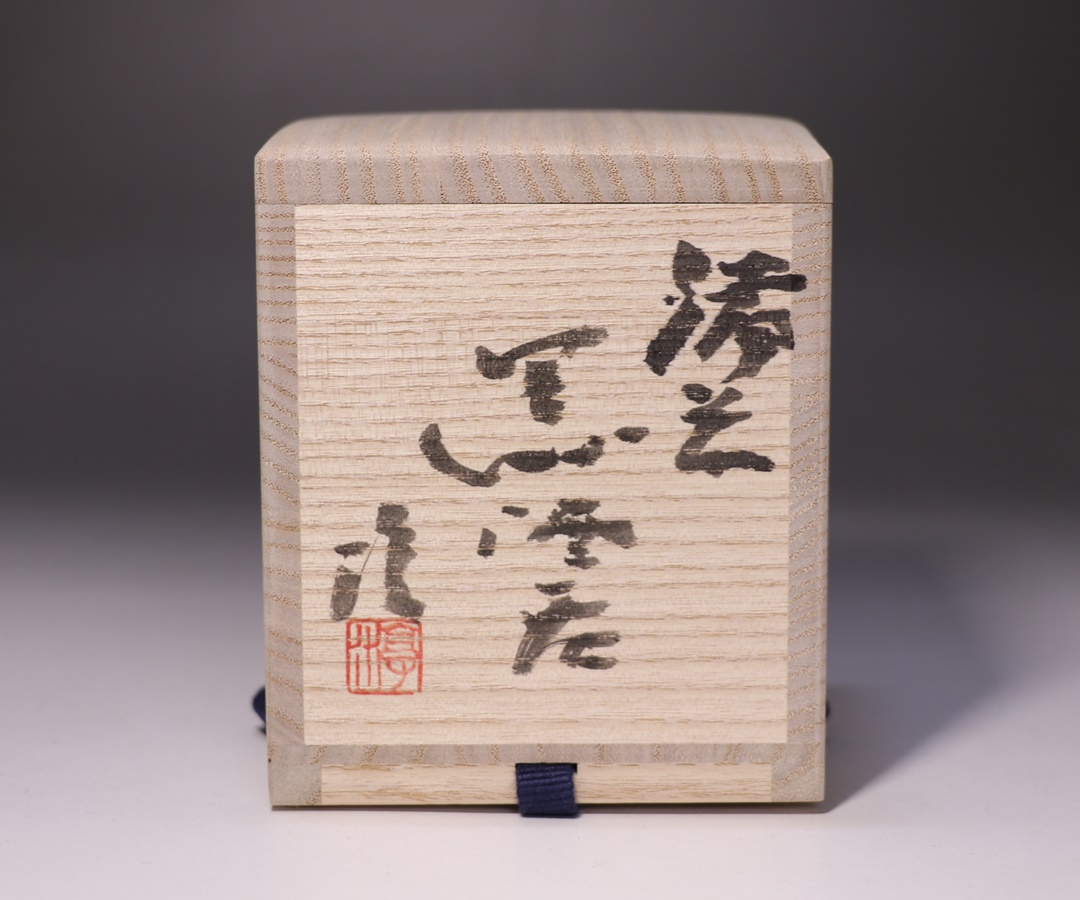
size : W7.0cm×6.7cm×H6.8cmThis is a new Bizen Kuro Guinomi by Jun Isezaki, a Living National Treasure who continues to lead the world of Bizen ware with a creative spirit that never runs dry.
This is one of his latest works, newly fired in February 2026.
Fired for about ten days in a semi-underground Anagama kiln, this piece shows a powerful clash between the black coating and intense Goma, with some areas transforming into a blue fire effect derived from the cobalt contained in the coating.
The piece was fired lying on its side, and natural ash glaze has adhered from the back as if covering the entire work, creating a bold and highly dynamic fire pattern.
Around the rim and nearby areas, the natural ash glaze has hardened to form intense scorched Goma, which combines with the black coating to create a rich cobalt-blue fire effect.
The fact that this blue fire effect appears right around the rim makes the piece especially fascinating as a Guinomi. When used and moistened by sake, the colors become even more vivid, delighting not only the palate but also the eye.
The smooth black tone of the clay surface, together with its generously sized and energetic form, gives the piece a finish unmistakably characteristic of Jun Isezaki, even beyond the beauty of the Kigoma and blue fire effect.
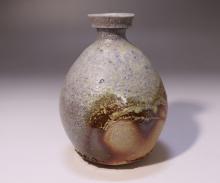


Kei Ushigaki - Tokkuri
24,200 YEN
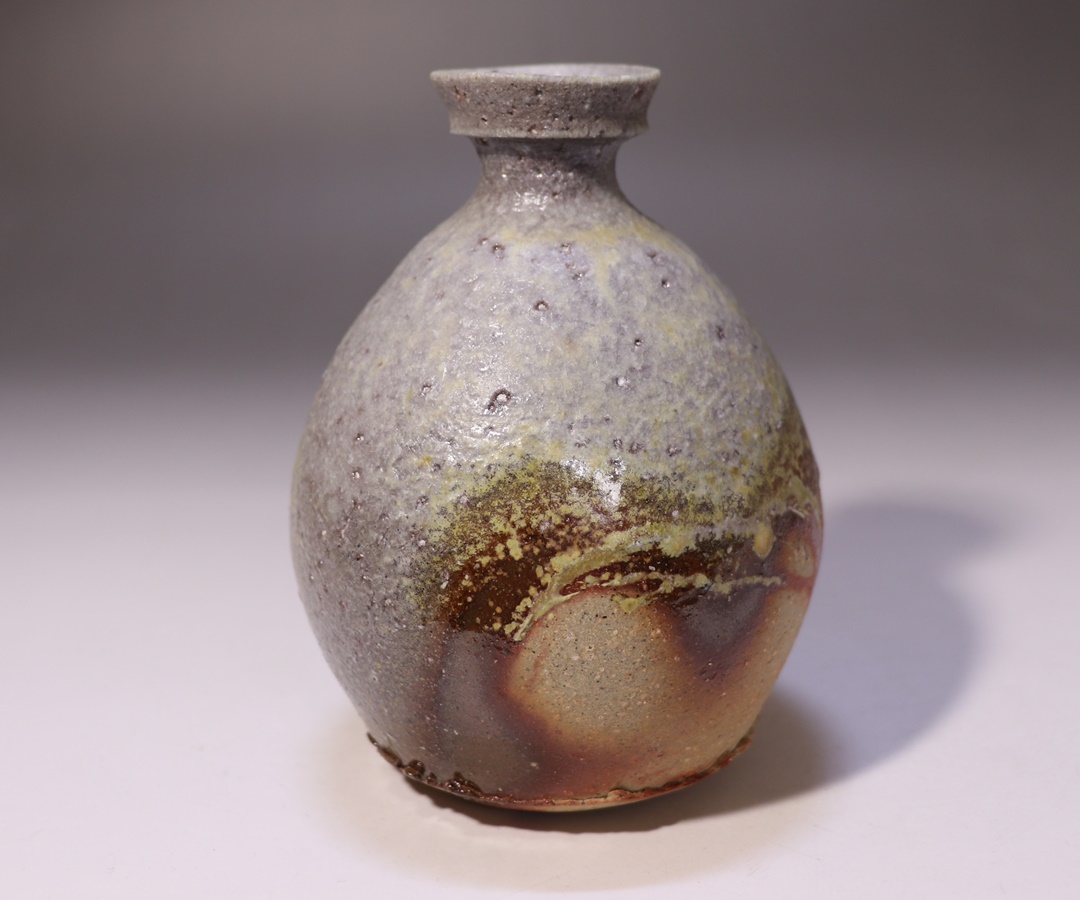
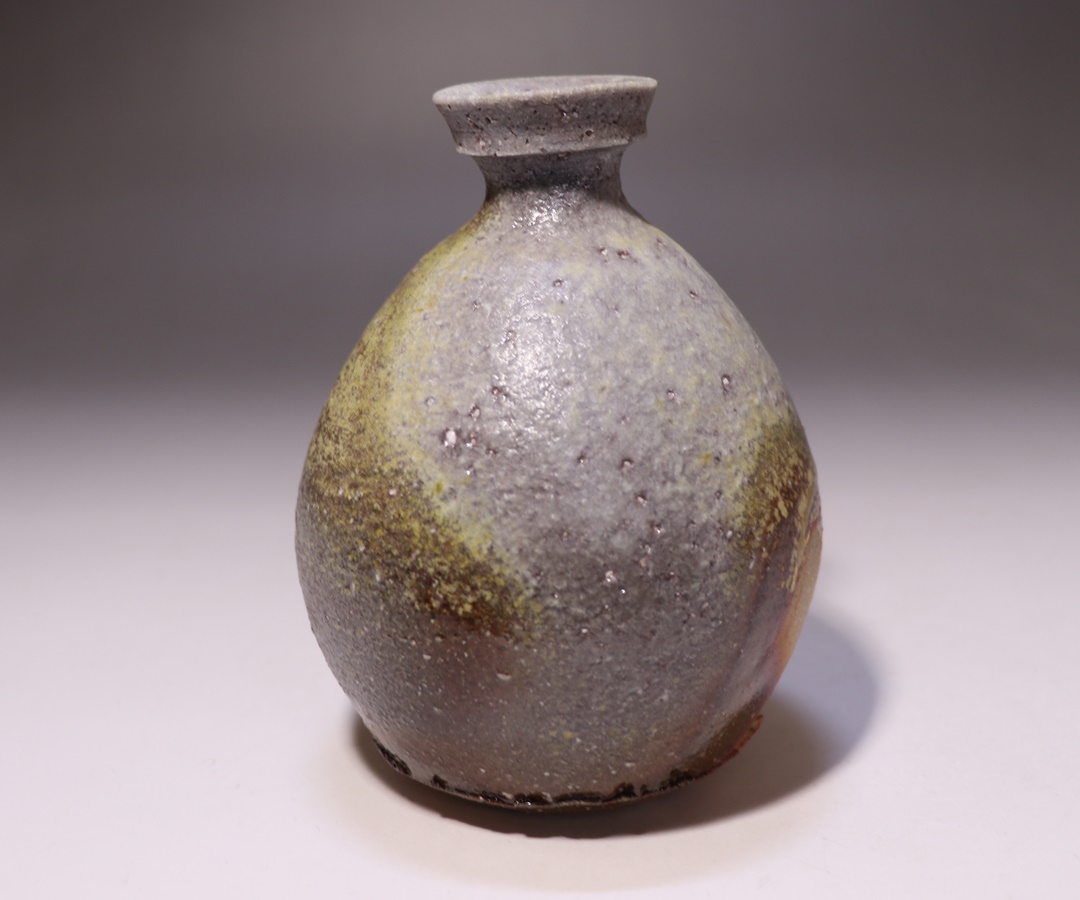
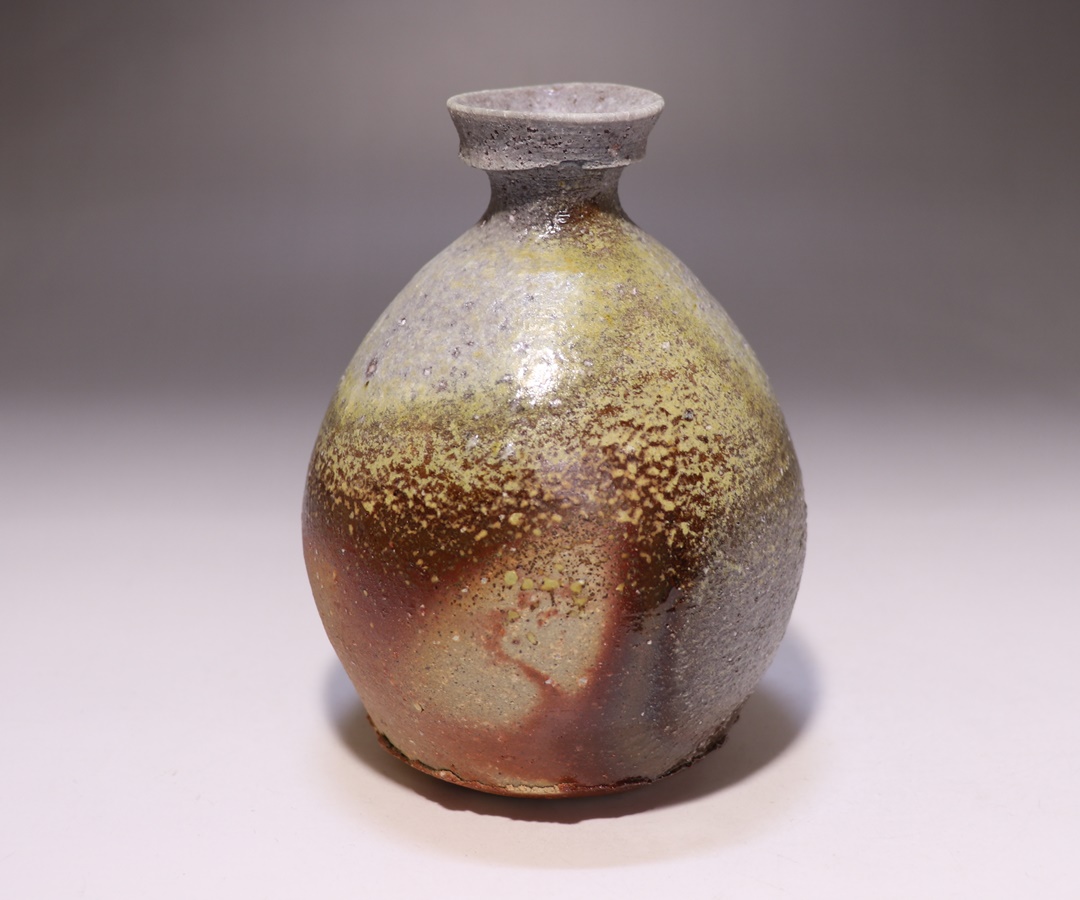
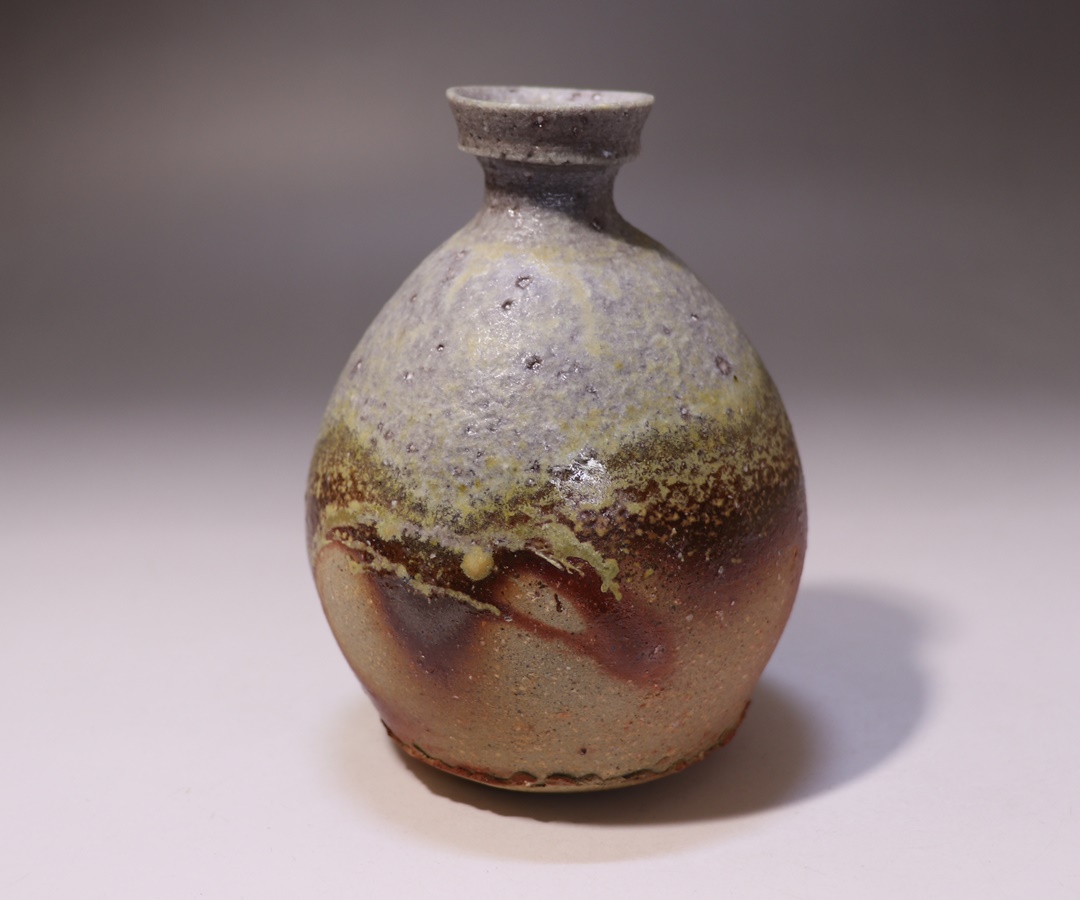
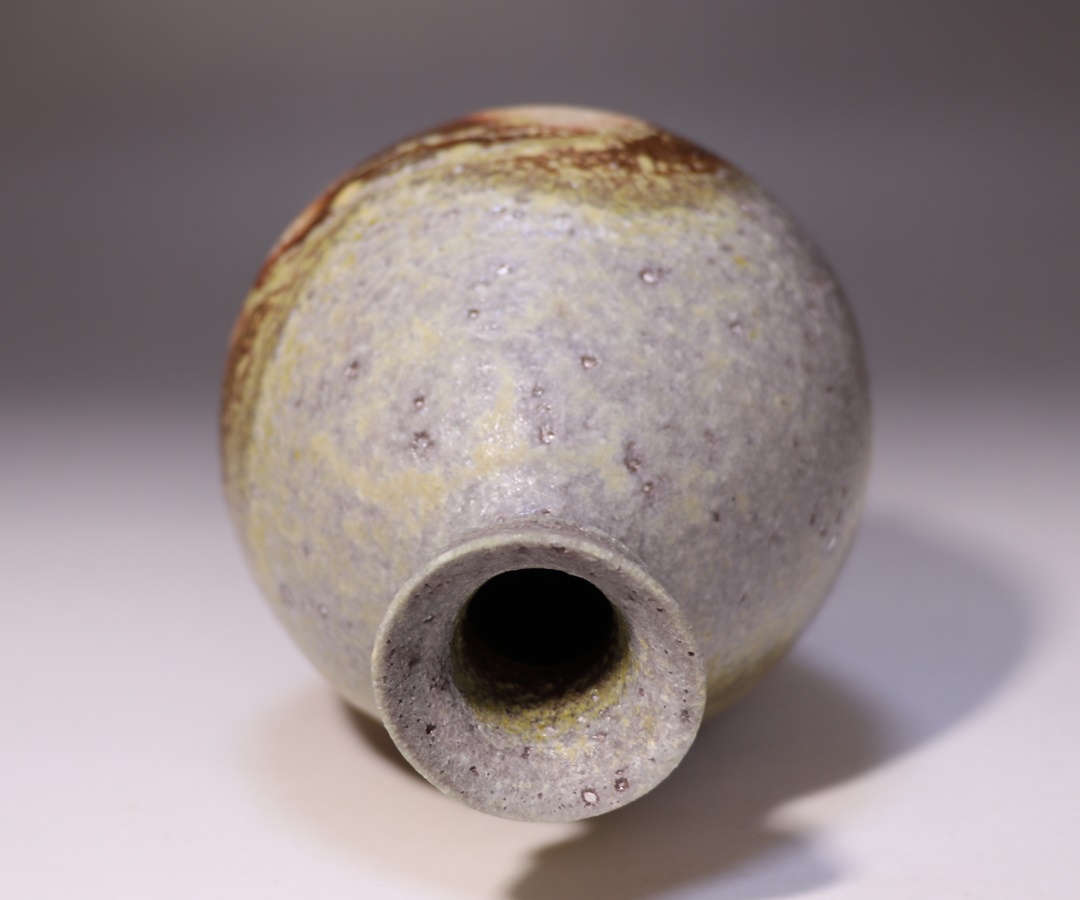
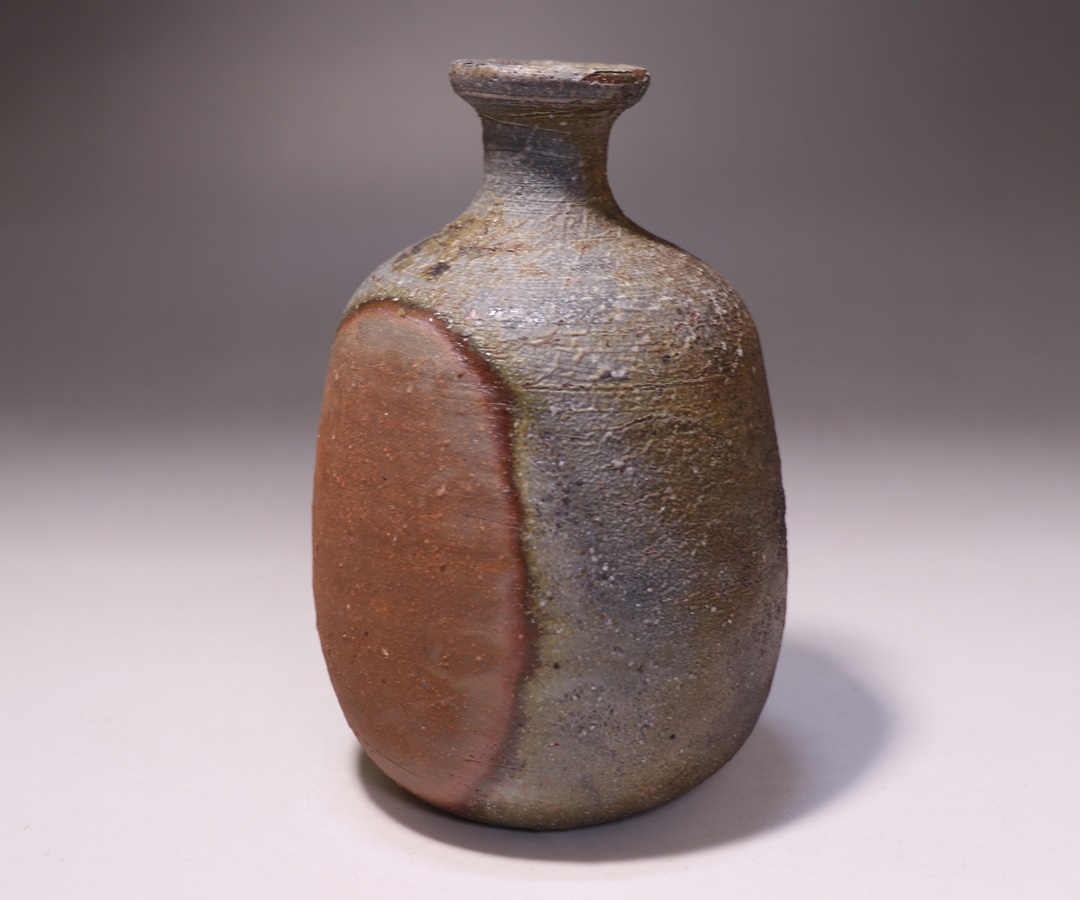
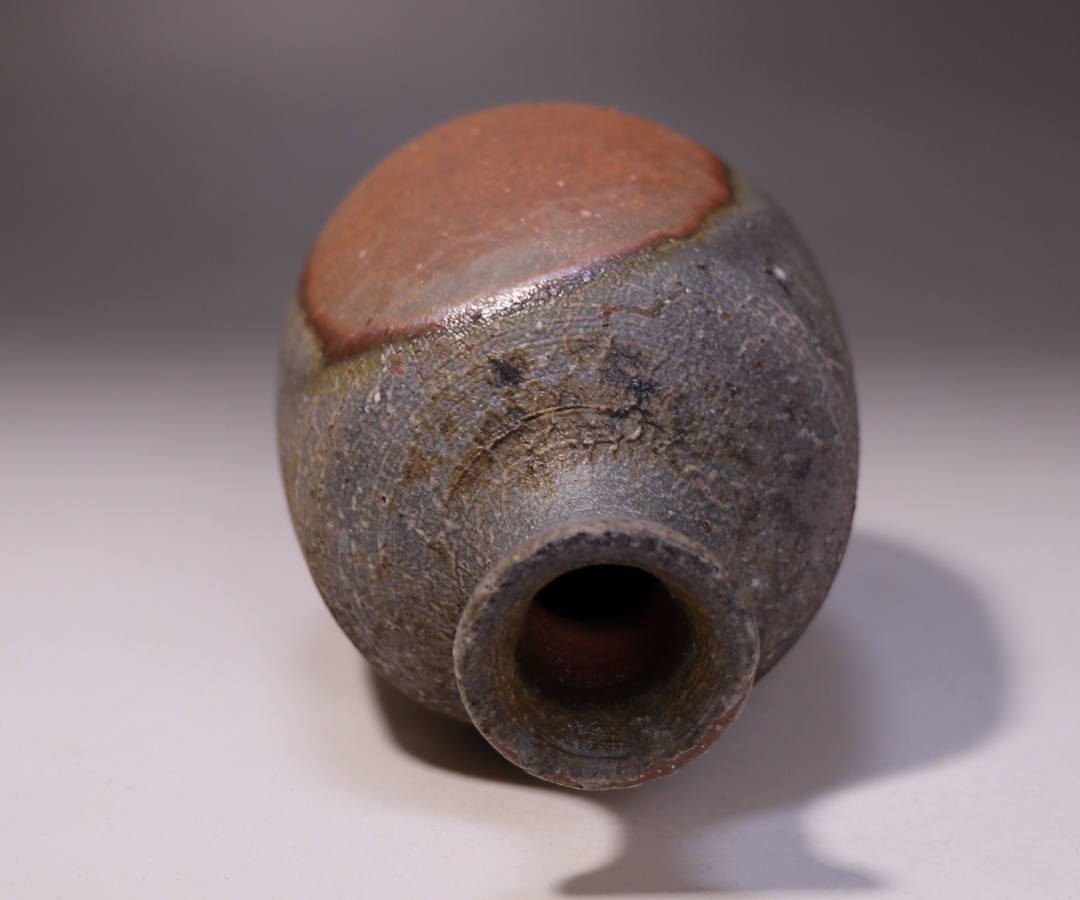
size : W9.7cm×9.7cm×H13.0cm 400ccKei Ushigaki trained under Jun Isezaki, a Living National Treasure, and later established his own kiln in Kagoshima, a place connected to his grandfather. This is a Tokkuri by Kei Ushigaki.
Created far from Bizen, in the land of Kagoshima, this piece reflects the appeal of Bizen ware that he came to recognize anew by viewing the tradition from an outside perspective.
It was made by firing high-quality clay in the Anagama kiln he built in Kagoshima. The natural ash glaze produced through strong firing has accumulated on the surface, forming complex layers across the vessel.
The base clay surface has a dry, beige tone, which beautifully enhances the lemon-yellow natural ash glaze that has fallen over the entire piece.
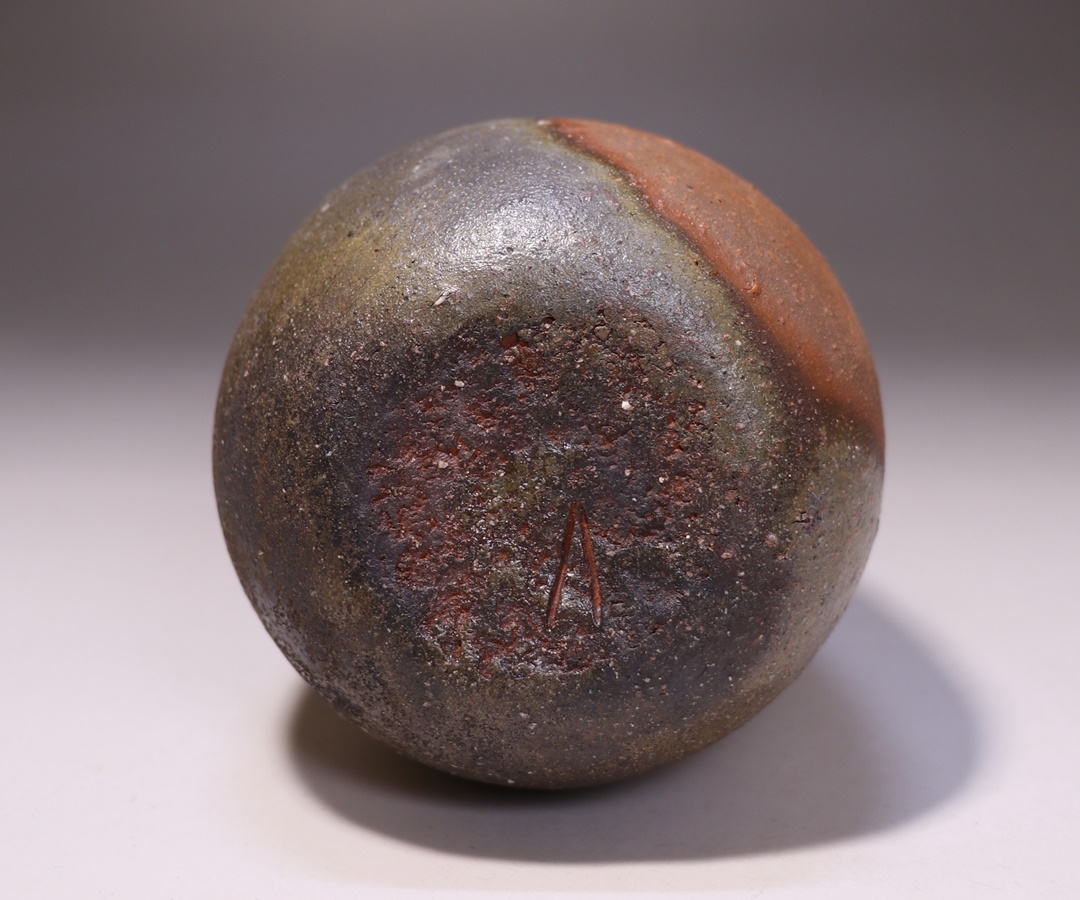
In terms of form, the work firmly carries forward the style of the Isezaki lineage, while the clay left around the base appears to curl and lift, creating a stylish and distinctive design.
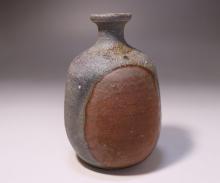


Jun Isezaki - Bizen Yohen Tokkuri
330,000 YENSold out
size : W9.0cm×8.8cm×H13.4cm 400ccThis is a new Bizen Yohen Tokkuri by Jun Isezaki, Living National Treasure, who continues to lead the world of Bizen ware with a creativity that never fades.
This is one of his latest works, newly fired in February 2026.
Among Jun Isezaki’s works, anagama Yohen is especially rare, and this piece stands out even within that group for its exceptional firing. Within an ash covering strong enough to rival that of a noborigama firing, it reveals the distinctive fire pattern unique to the anagama, creating a truly beautiful appearance.
The front shows a rich hiro that is characteristic of anagama Yohen, and this lightness in the Yohen, different again from that of noborigama-fired works, is especially appealing.
The back is covered with a complex ash effect where yellow, gray, and black intermingle, and when the piece is moistened, the various tones contained within the ash covering emerge even more vividly.
In keeping with the Yohen, the form is simple, without decorative elements such as impressed patterns, and this simplicity only serves to highlight the beauty of the kumadori-like arch even more.
Although Jun Isezaki often favors somewhat larger forms, this work has a classical size with a body diameter of 9 cm, and it expresses the classic Bizen form of the Yohen Tokkuri beautifully while still clearly showing his own distinctive character.
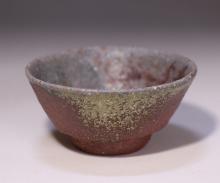


Mitsuhiro Kaneshige - Bizen Shuhai
19,800 YENSold out
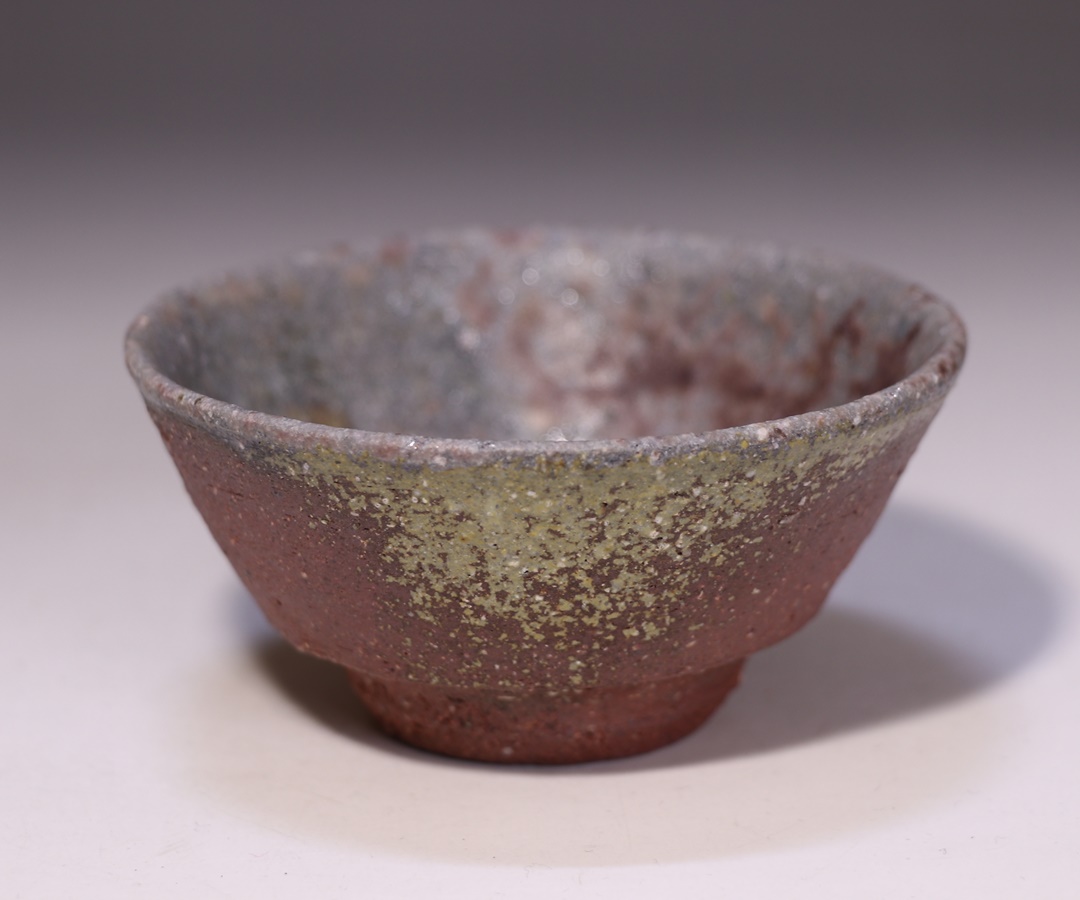
size : W8.9cm×8.7cm×H4.4cmThis is a Bizen Shuhai by Mitsuhiro Kaneshige, who was born into Kaneshige Ritouen, one of the six traditional Bizen kiln families, yet pursues his own path in pottery without being bound by the family name.
This work was created through a combination of electric kiln and wood-firing under a variety of firing conditions, as he sought to approach the texture and presence of the old ceramics he admires.
By reinterpreting the balance between ash coverage and Goma seen in contemporary Bizen, this piece presents a smooth, namako-like Yohen surface inside, while Tobi-Goma appears around the exterior.
The well-fired reddish-brown clay tone beautifully enhances the mustard-colored Tobi-Goma, creating an intriguing impression, almost as if two different ceramic surfaces had been joined together inside and out.
The form, inspired by Ido Chawan, fits very comfortably in the hand, enhanced by the supple quality of Bizen clay. Despite its powerful firing, it offers a remarkably natural and straightforward feel in use.
FIRST PREV 5 / 92 page NEXT LAST