
Products
| Bizen Sake Bottle & sake Cup | Tea Ceremony Things | Bizen Flower Vase | Bizen Dish & Bowl | Others |
Others
484 Items
1 / 41 page NEXT LAST
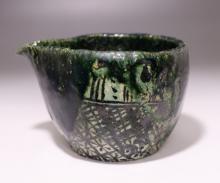


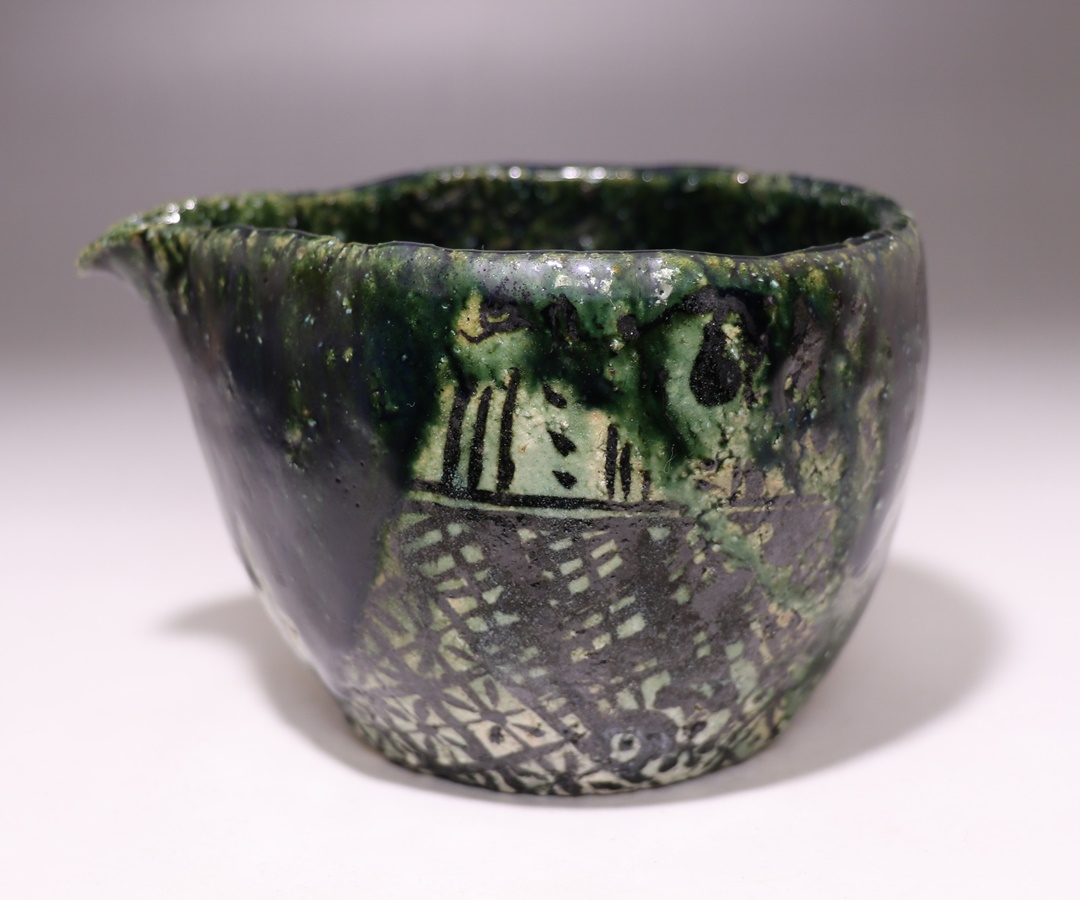
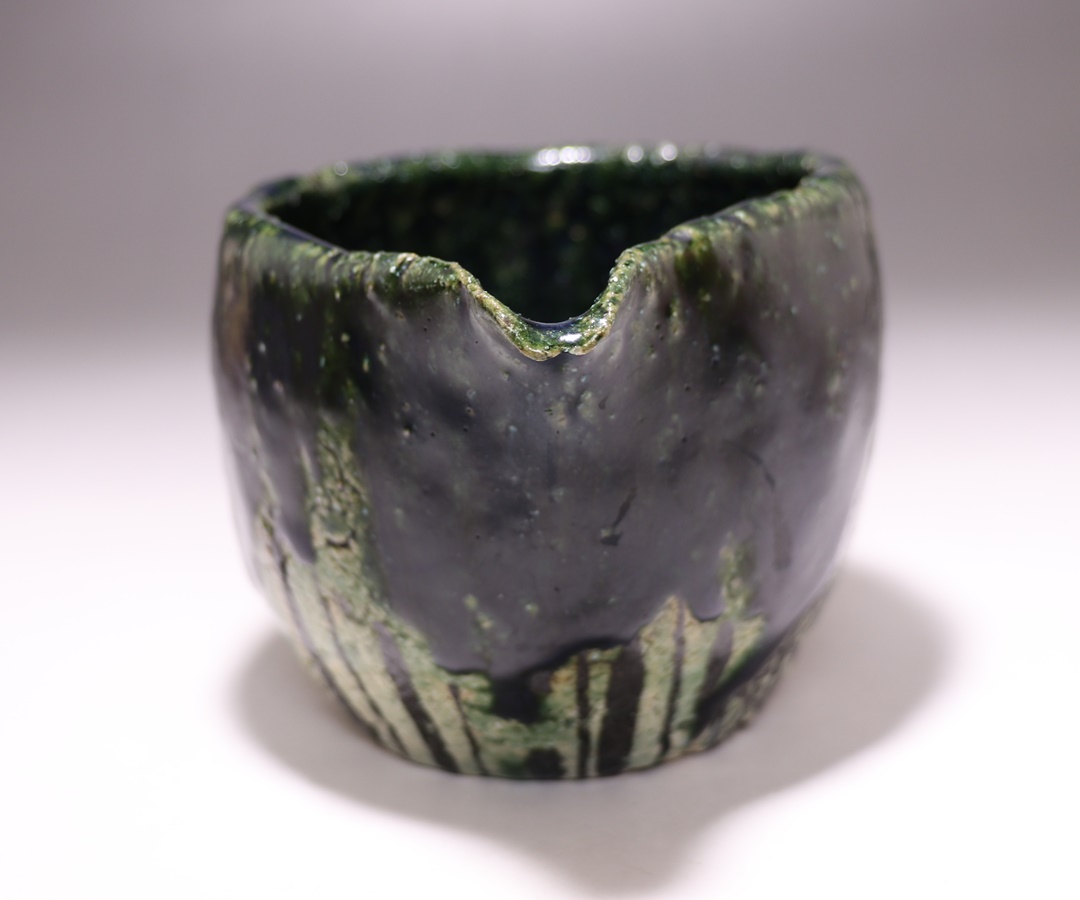
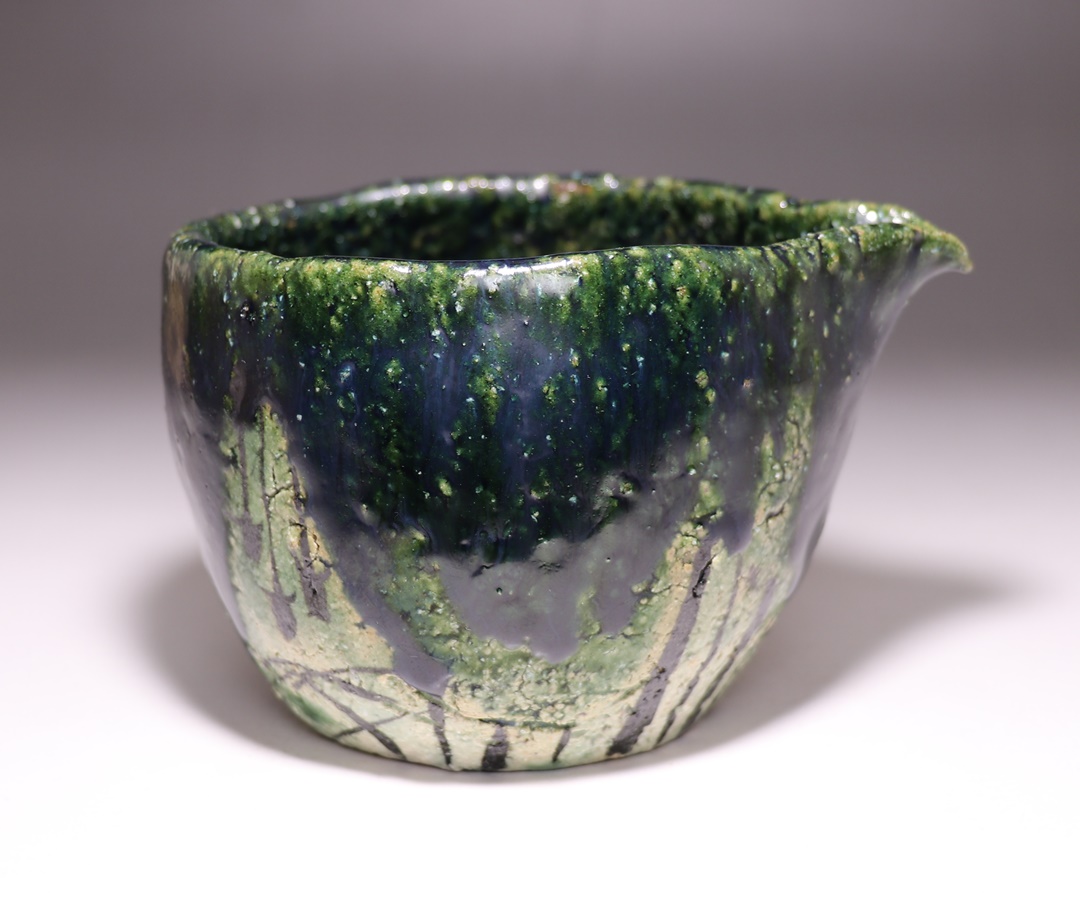
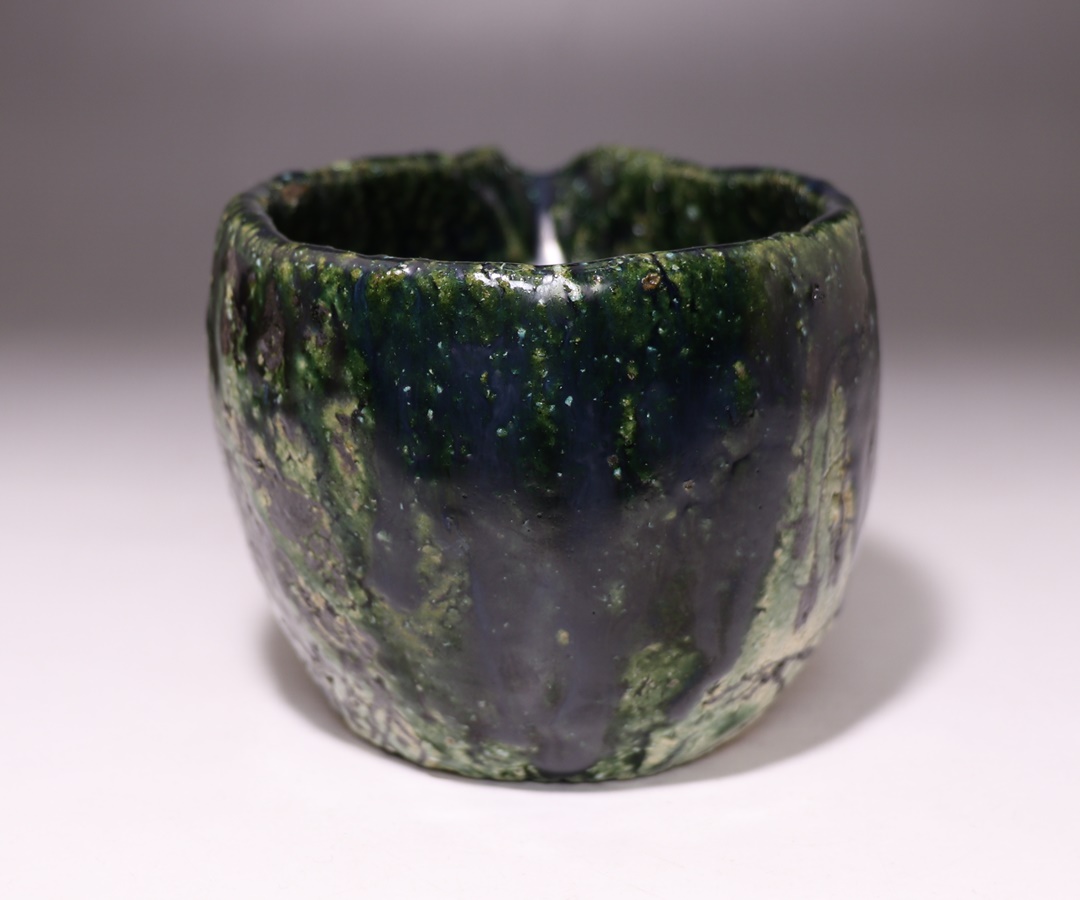
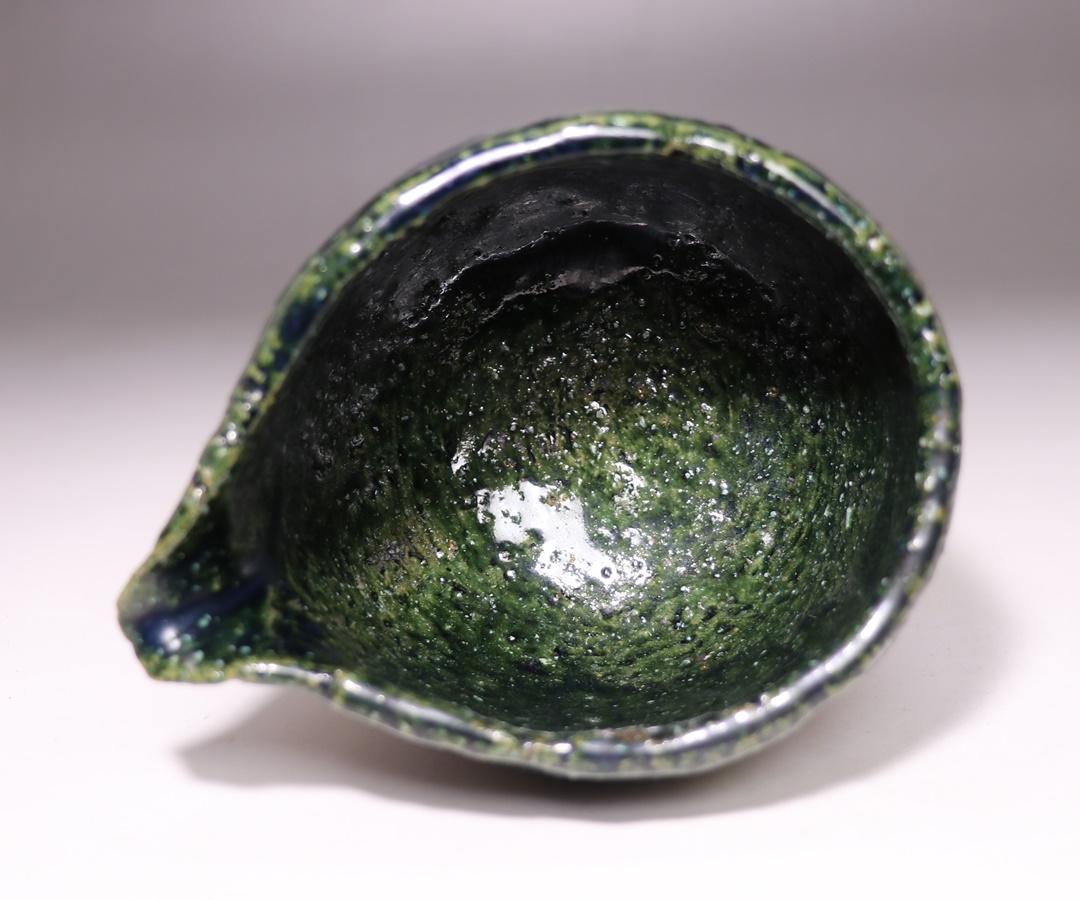
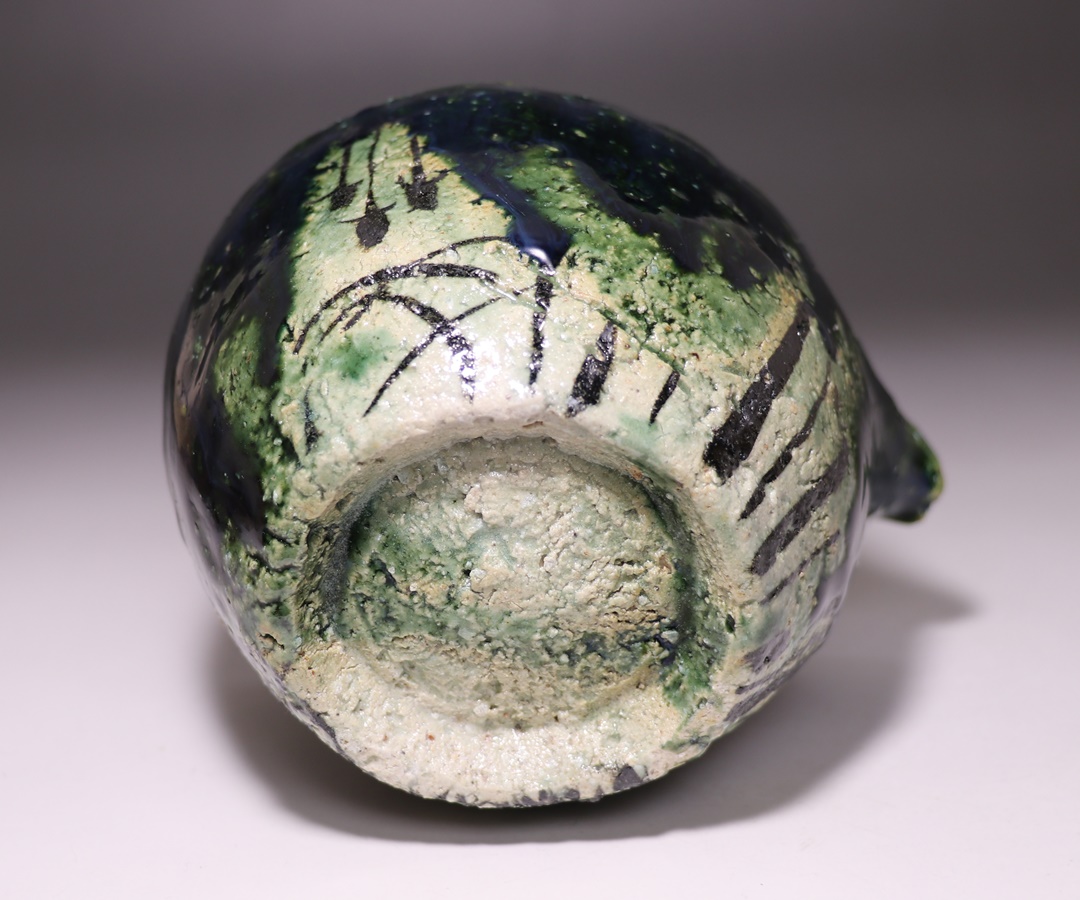
Sohei Takashima - Ao-Oribe Sake Pourer
22,000 YENSold out
size : W13.3cm×10.6cm×H8.6cm 300ccAfter completing his apprenticeship under Jun Isezaki, Sohei Takashima received the Contemporary Ceramic Art Encouragement Award from the Japan Ceramic Society, marking an impressive debut as an independent artist. This is a newly released Ao-Oribe Sake Pourer by the artist.
Having studied under Jun Isezaki, the fifth Living National Treasure of Bizen ware, Takashima established his own studio in Ushimado, Setouchi City. This sake pourer is one of his works inspired by the Oribe ceramic tradition.
For the clay body, Takashima selected a special blend of white clay, which is rarely used in traditional Bizen ware, and Mitsuishi pyrophyllite. Among the many varieties of Bizen clay, this combination was carefully chosen to emphasize the distinctive qualities of white clay.
Takashima applied an Oribe glaze that he developed through extensive research and experimentation to complement the white clay. The resulting glaze displays remarkable depth and beauty, demonstrating the artist’s exceptional technical skill and dedication to exploring new ceramic expressions.
The white clay itself has a particularly coarse and rustic texture, which adds remarkable depth and delicate variations in color to the Oribe glaze. The interplay between the textured clay and the glaze creates a beautifully nuanced surface that is one of the most captivating features of this work.
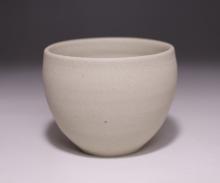


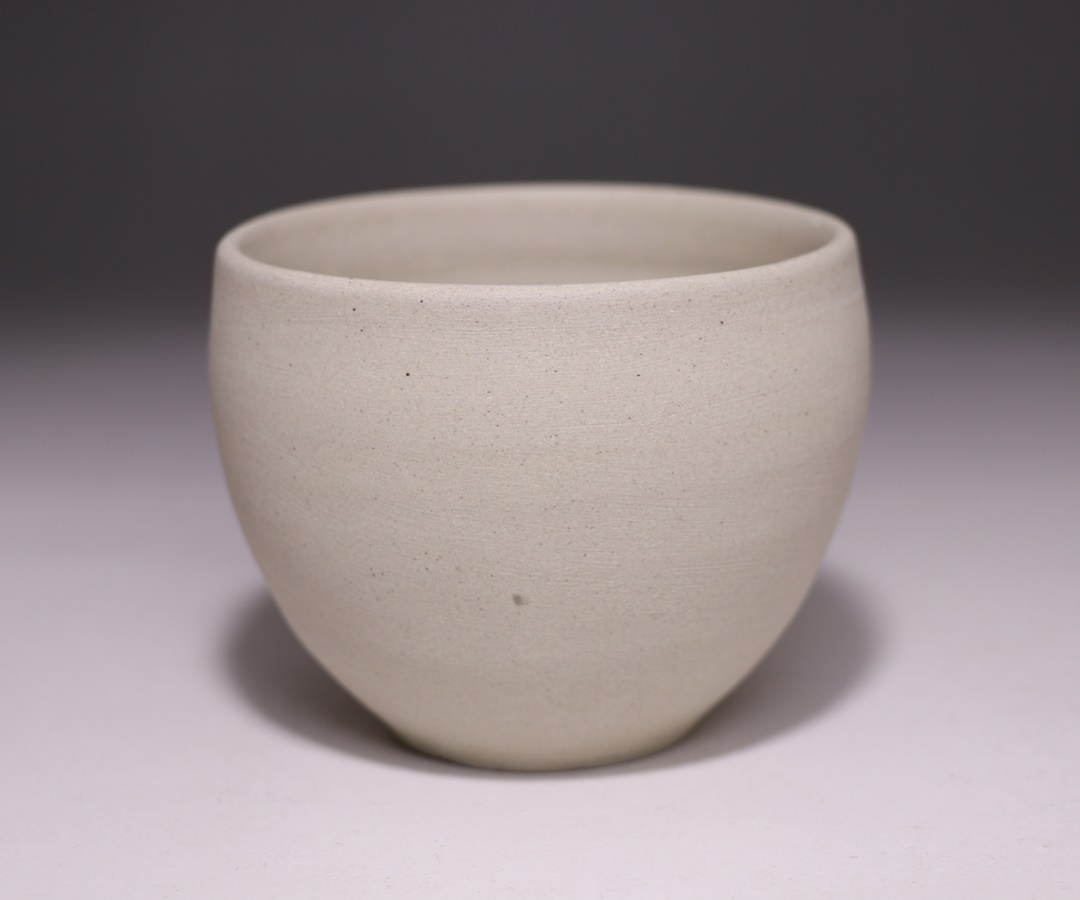
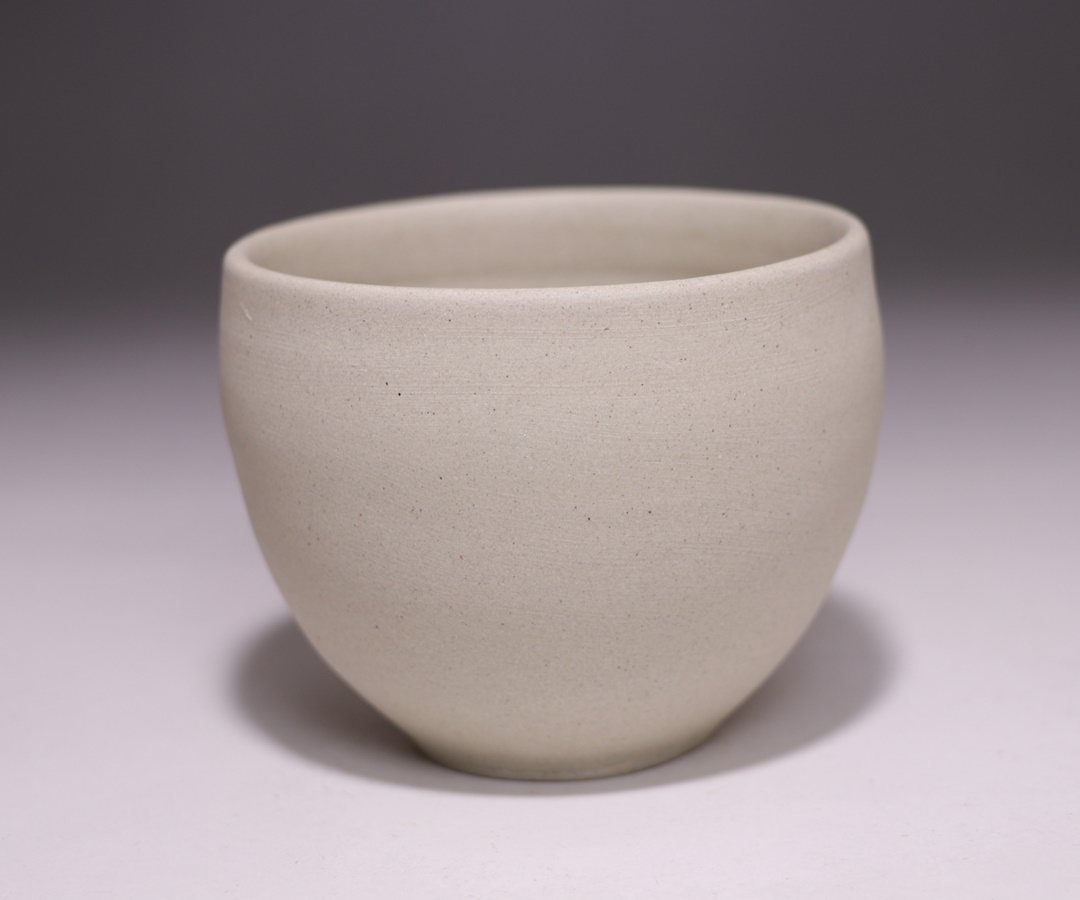
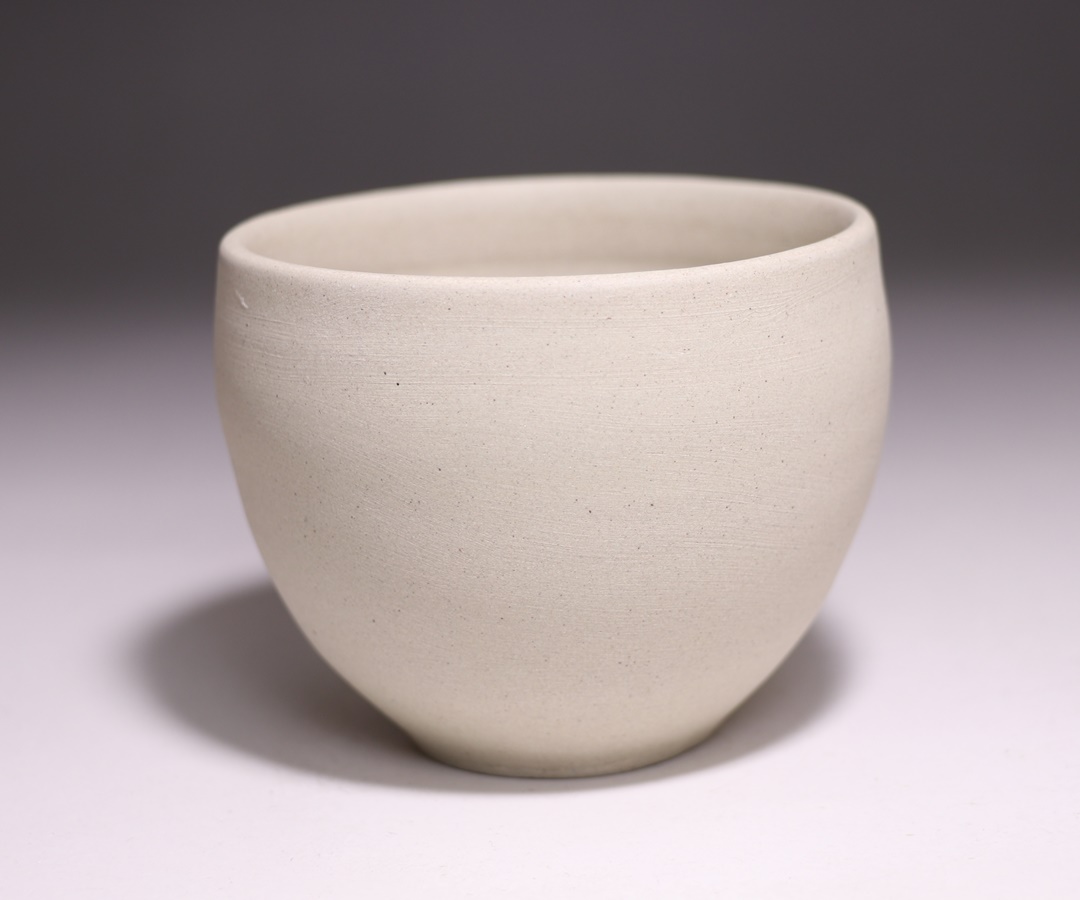
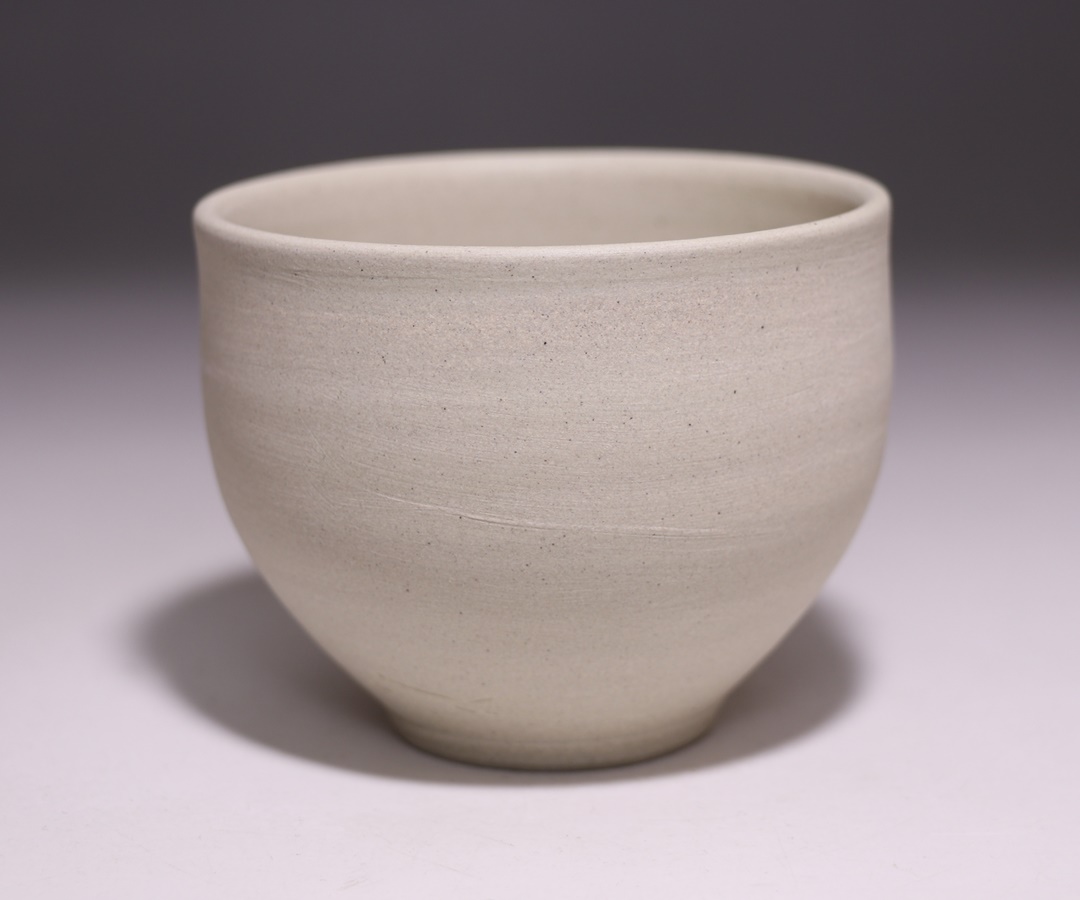
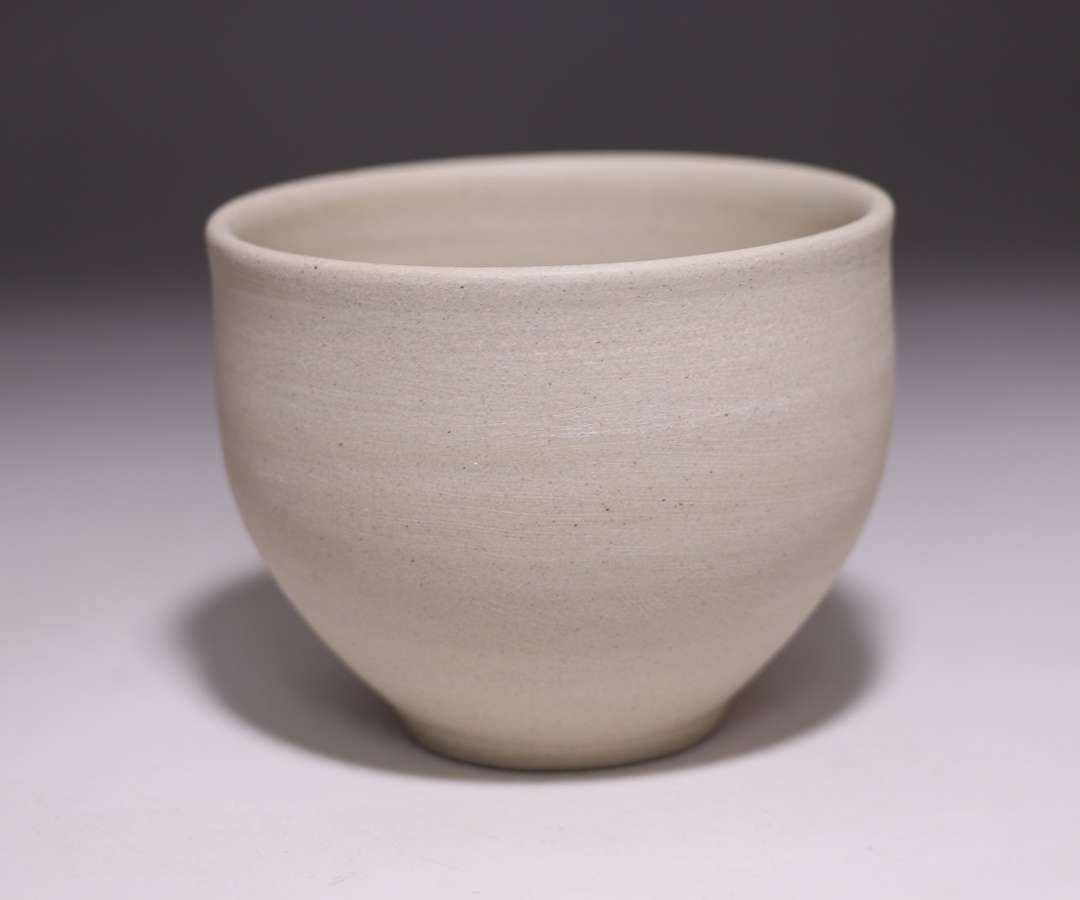
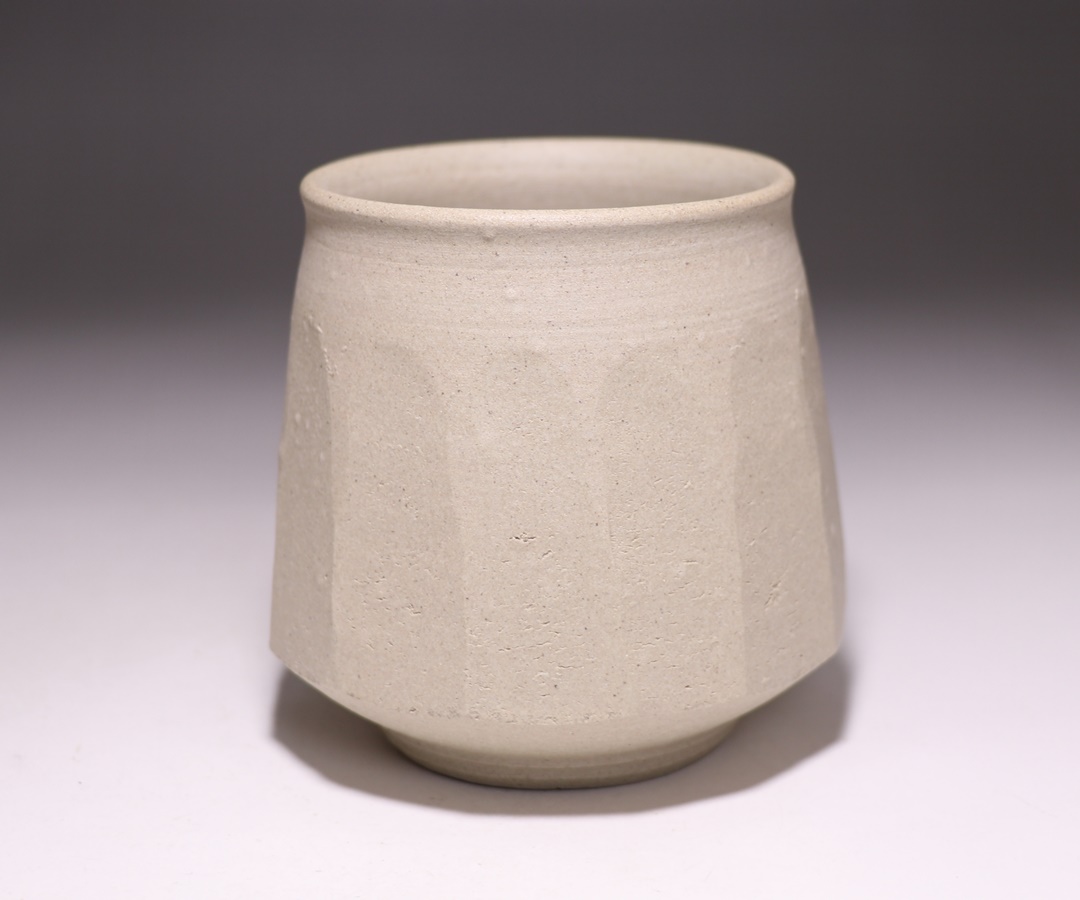
Sohei Takashima - Bizen Mitsuishi Yunomi
3,300 YEN
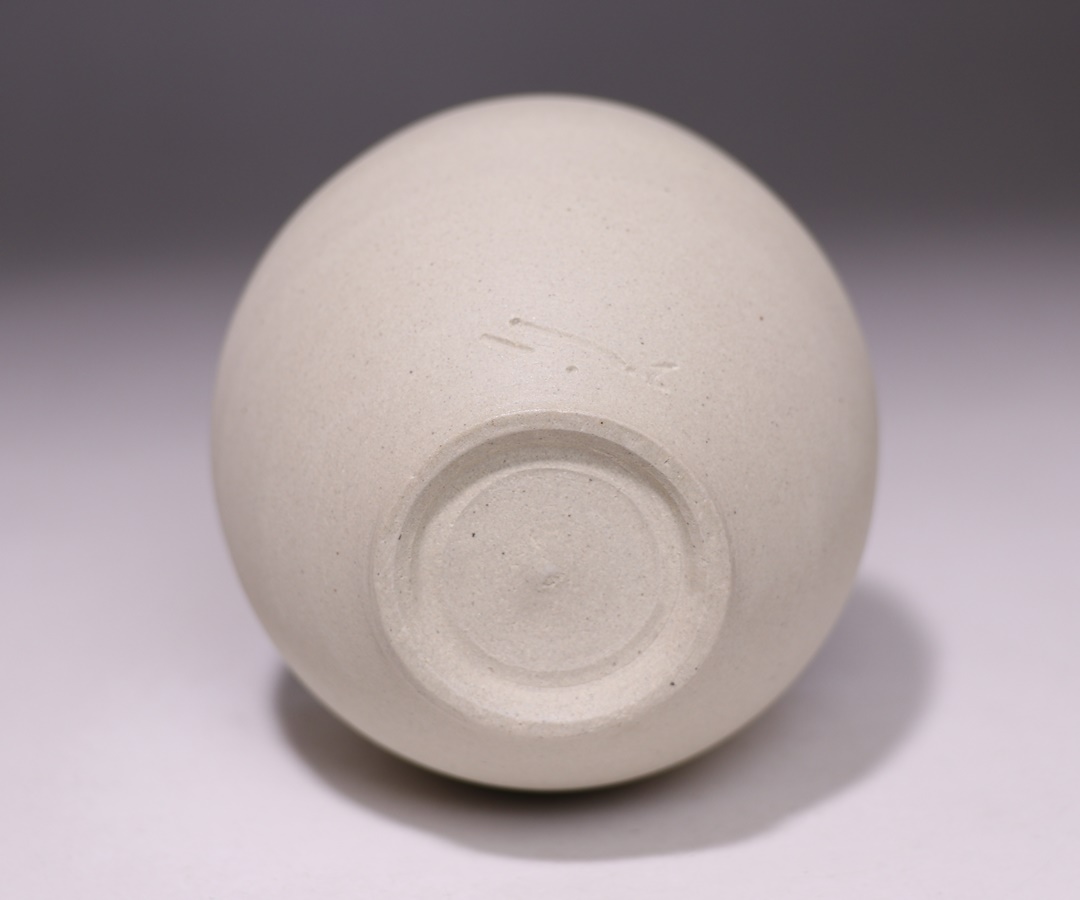
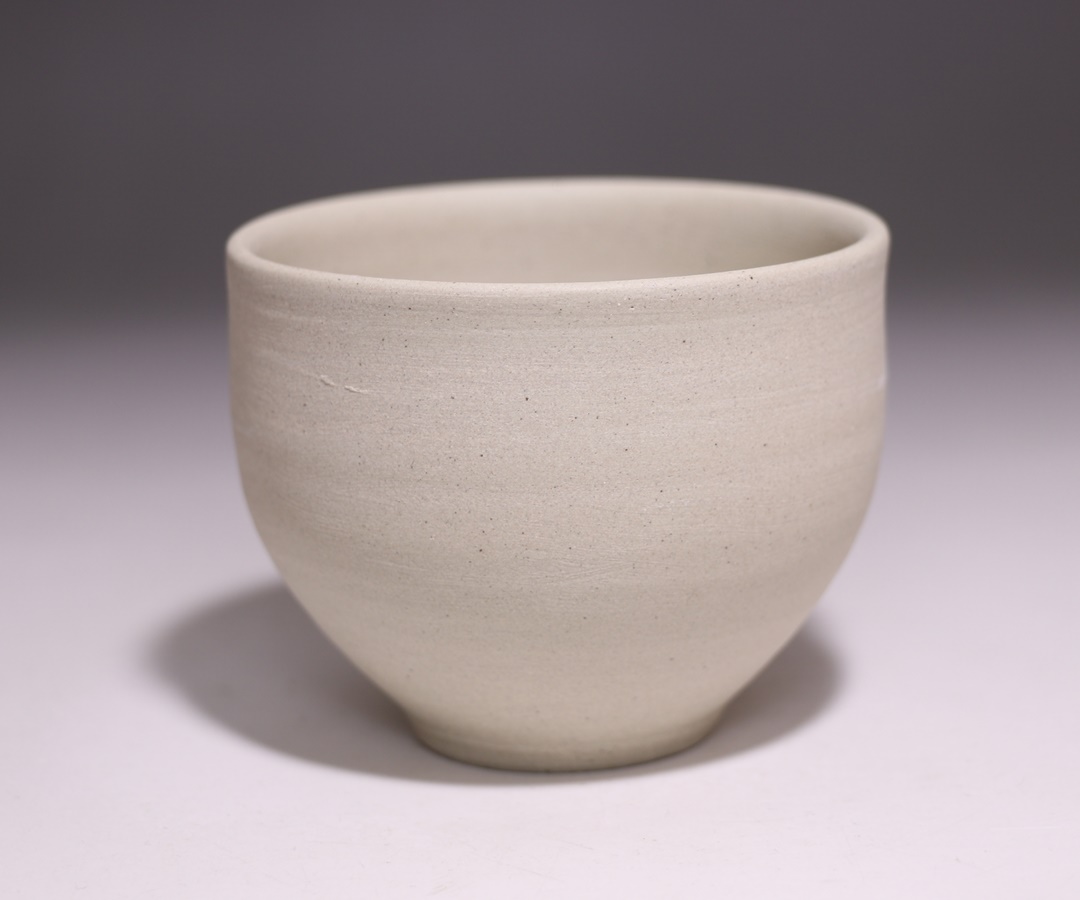
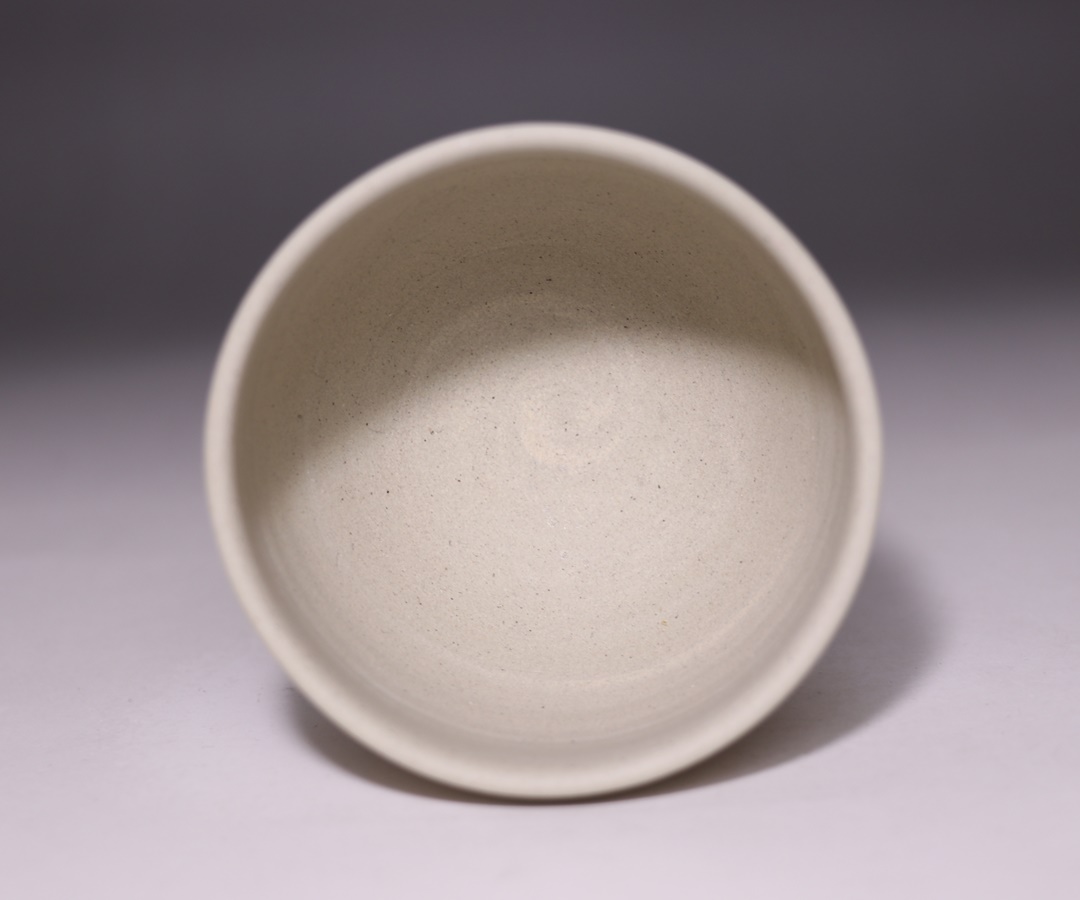
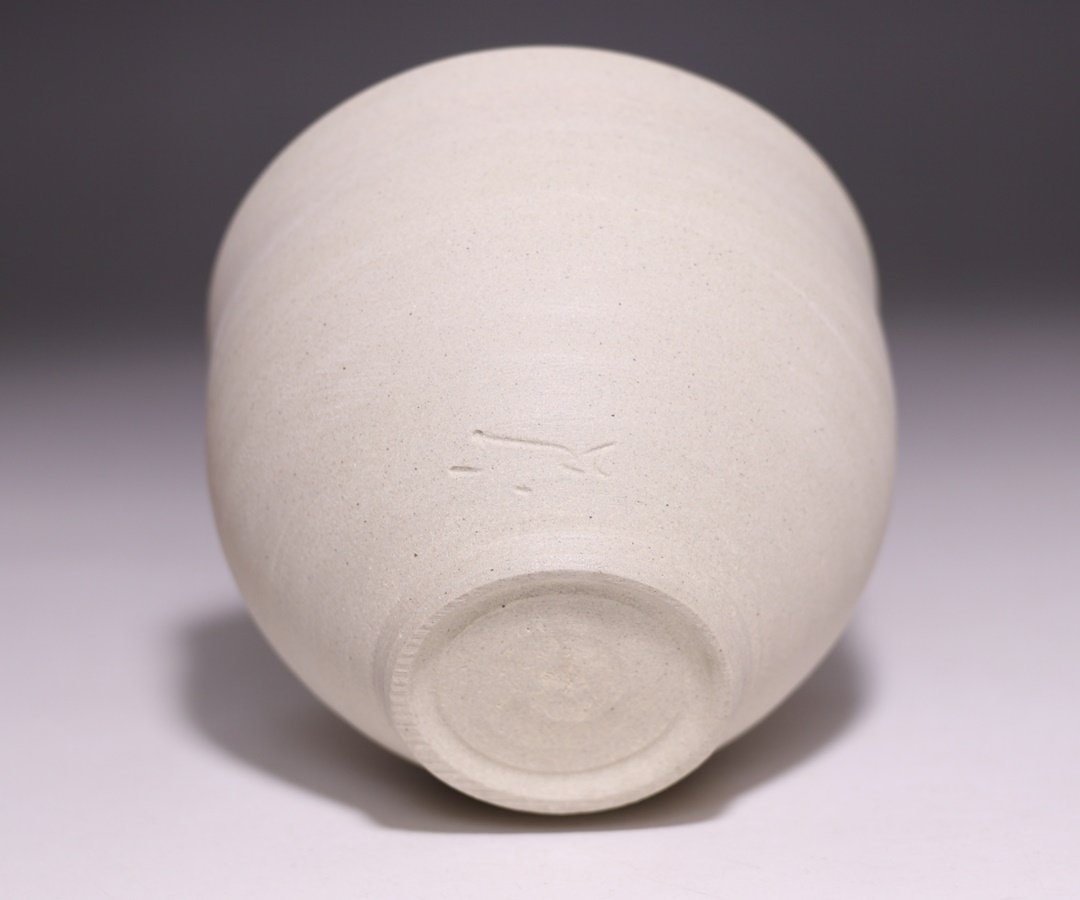
size : W7.8cm×7.8cm×H6.3cmAfter completing his apprenticeship under Jun Isezaki, Sohei Takashima received the Contemporary Ceramic Art Encouragement Award from the Japan Ceramic Society, marking an impressive debut as an independent artist. This is a newly released Bizen Mitsuishi Yunomi by the artist.
Having studied under Jun Isezaki, the fifth Living National Treasure of Bizen ware, Takashima established his own studio in Ushimado, Setouchi City. This Yunomi is one of his distinctive explorations of Bizen clay.
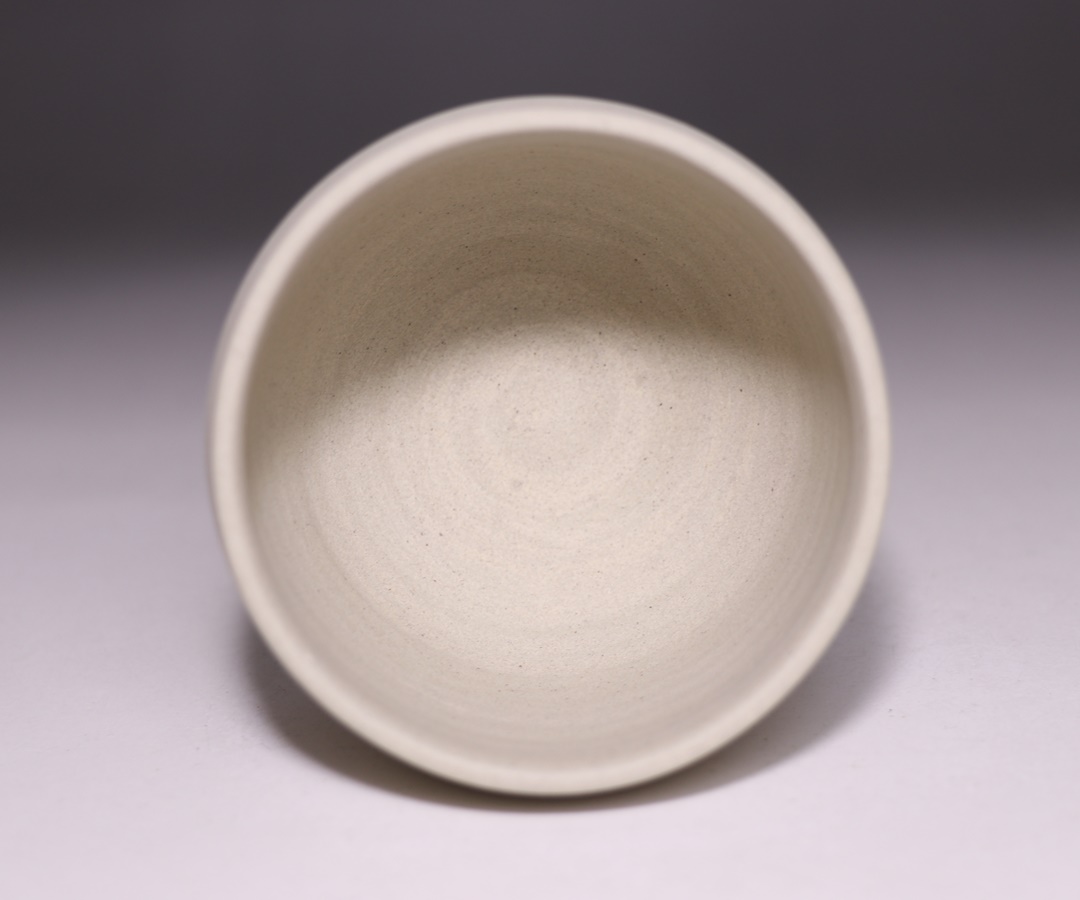
The piece was created by blending Bizen clay with pyrophyllite from the Mitsuishi district in eastern Bizen City, producing a remarkably white surface that almost resembles unfired clay.
The pyrophyllite, a specialty of the Mitsuishi area, was finely crushed and incorporated into the clay body. The resulting surface is exceptionally smooth, perfectly complementing its porcelain-like appearance.
Due to the unique properties of the clay, this Yunomi is particularly well suited to developing a rich patina through continued use. According to Takashima, the colors of tea and coffee gradually penetrate the surface, subtly transforming its pure white appearance into warmer, earthier tones, almost as though the vessel were undergoing a second firing.
The form has been deliberately stripped of any unnecessary ornamentation to complement the distinctive clay and its coloring. The result is a beautifully simple and serene design that perfectly harmonizes with the clean, refreshing appearance of the vessel.
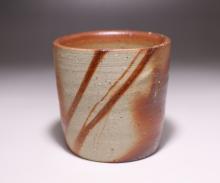


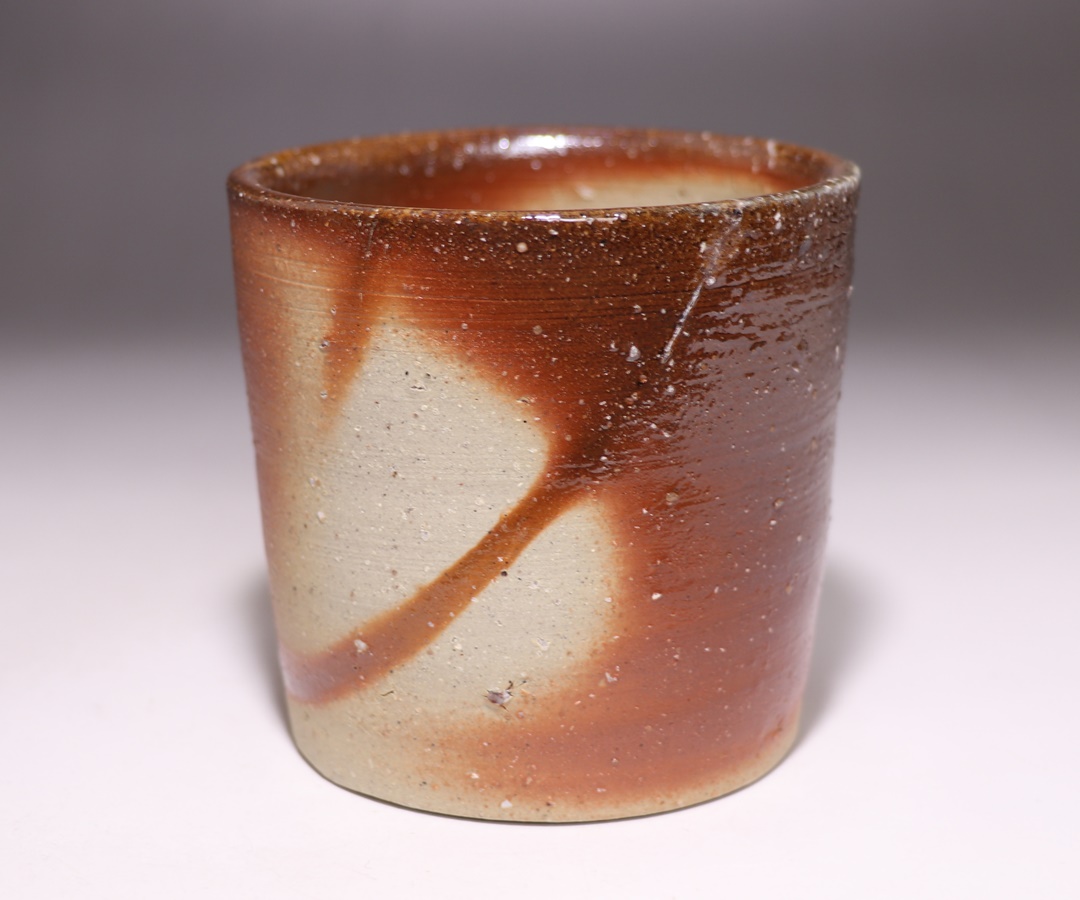
Jun Isezaki - Bizen Rock glass
44,000 YEN
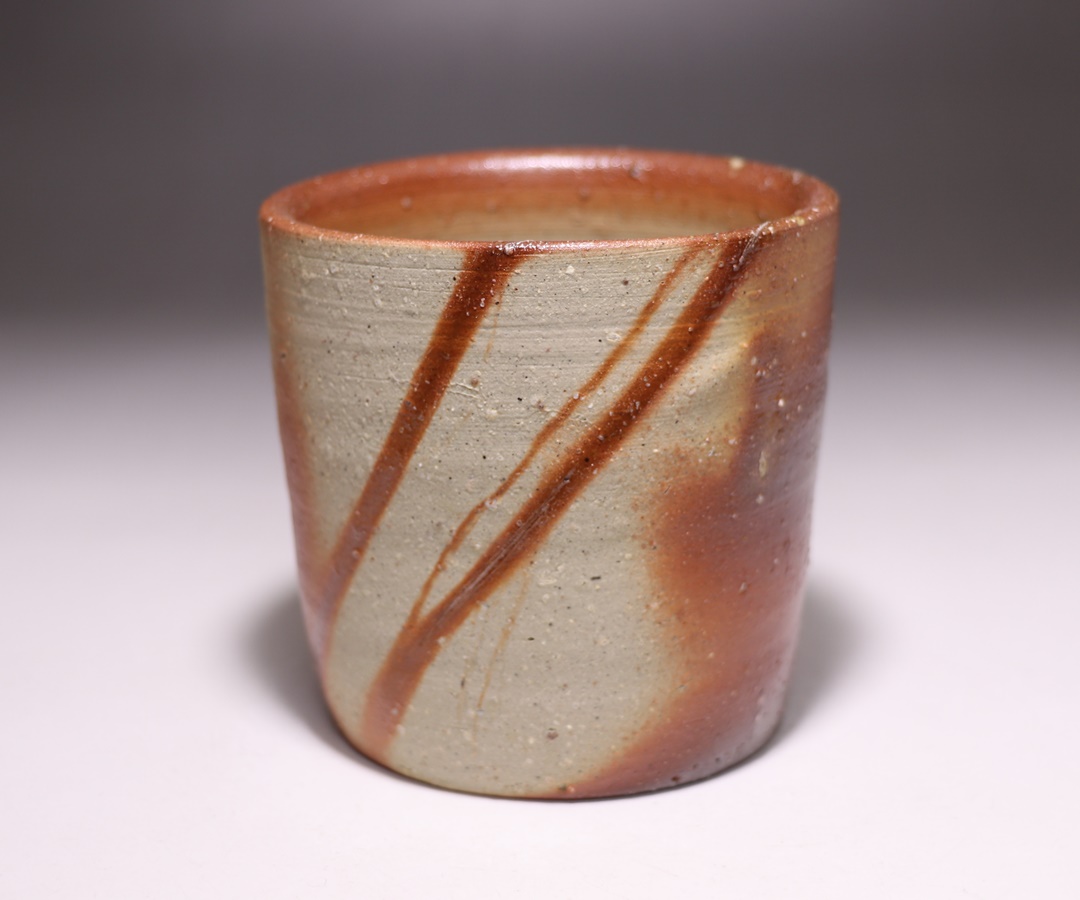
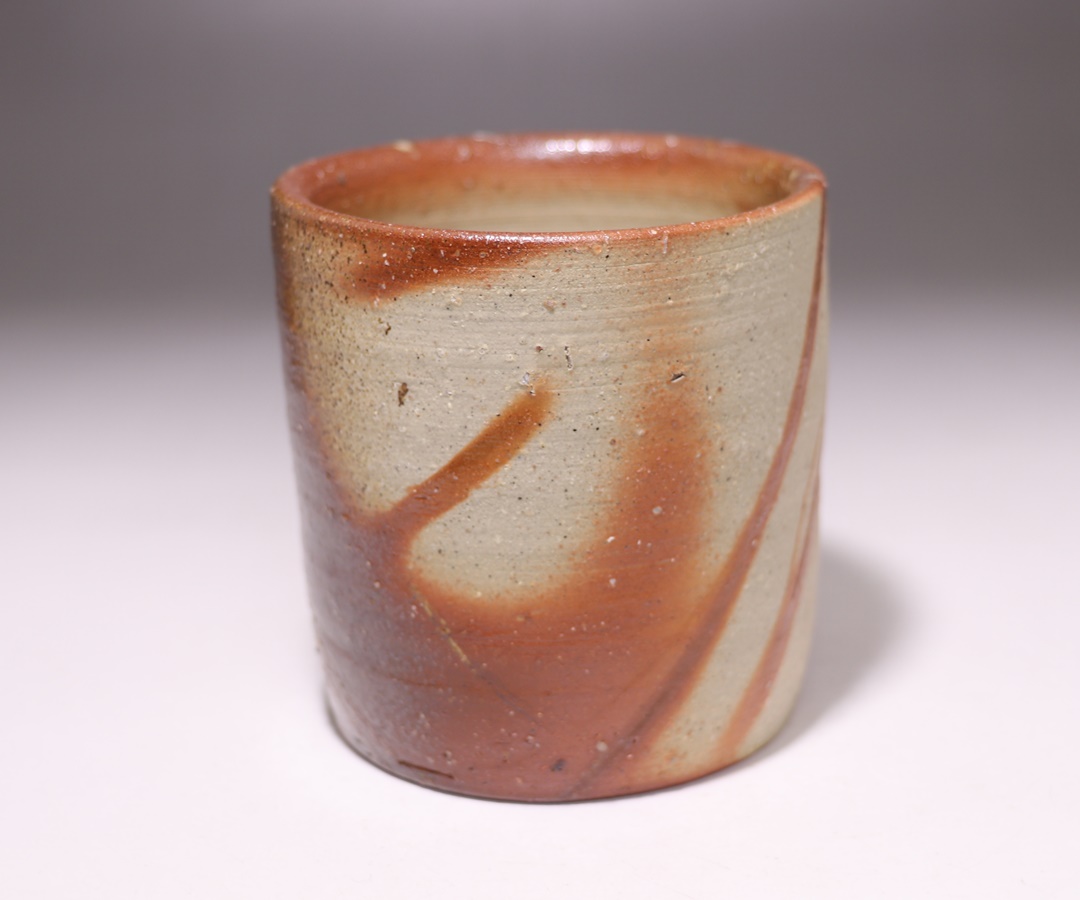
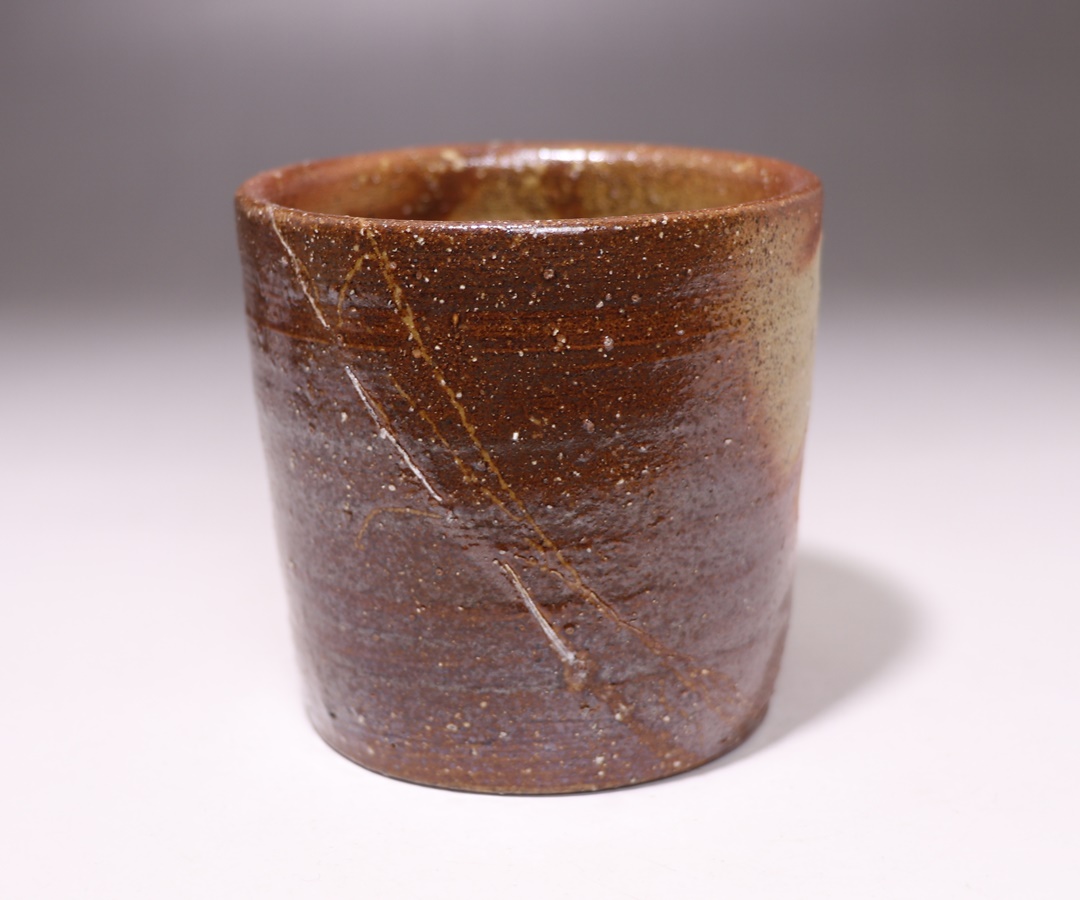
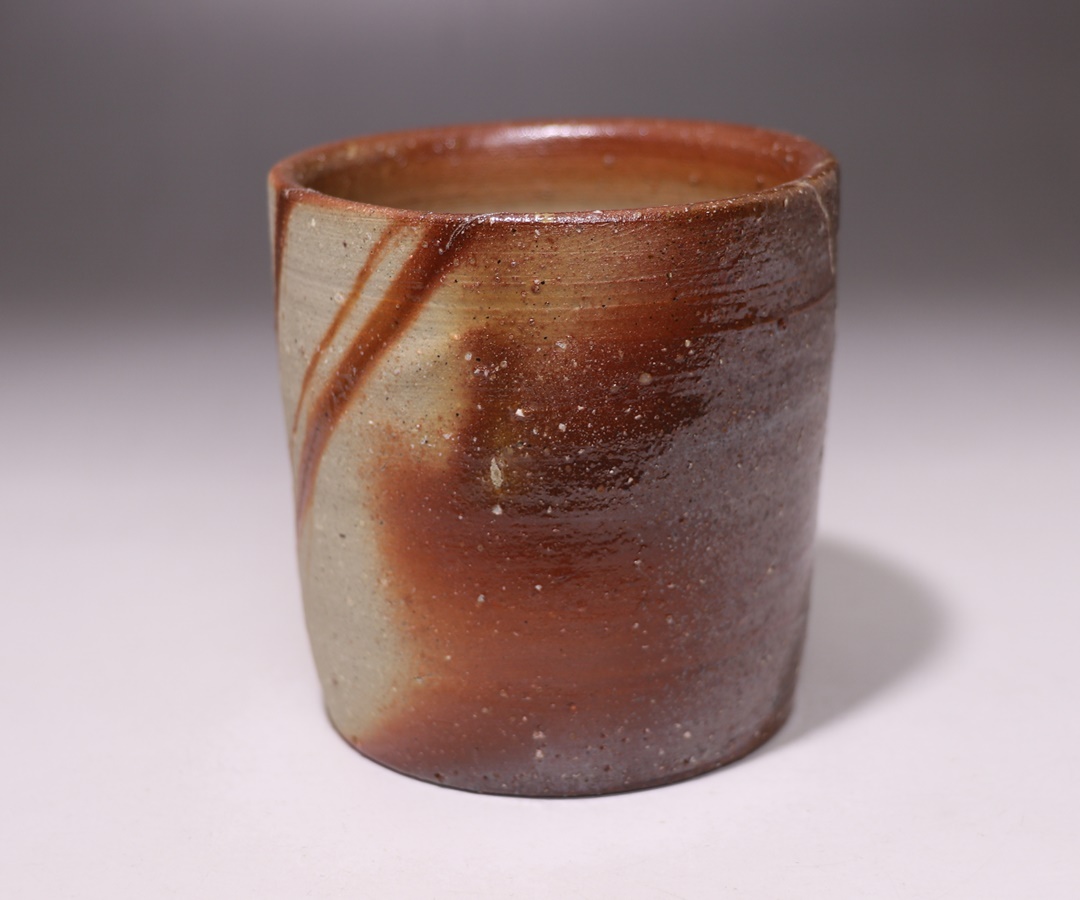
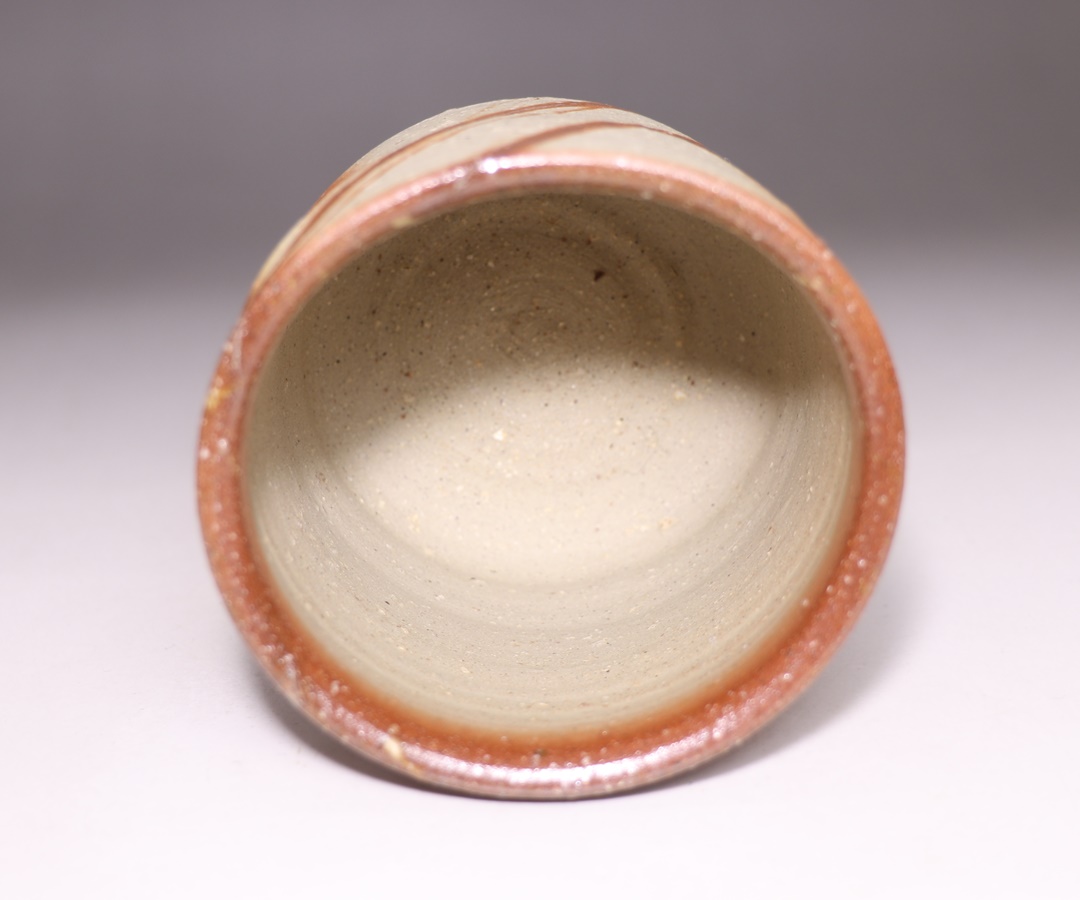
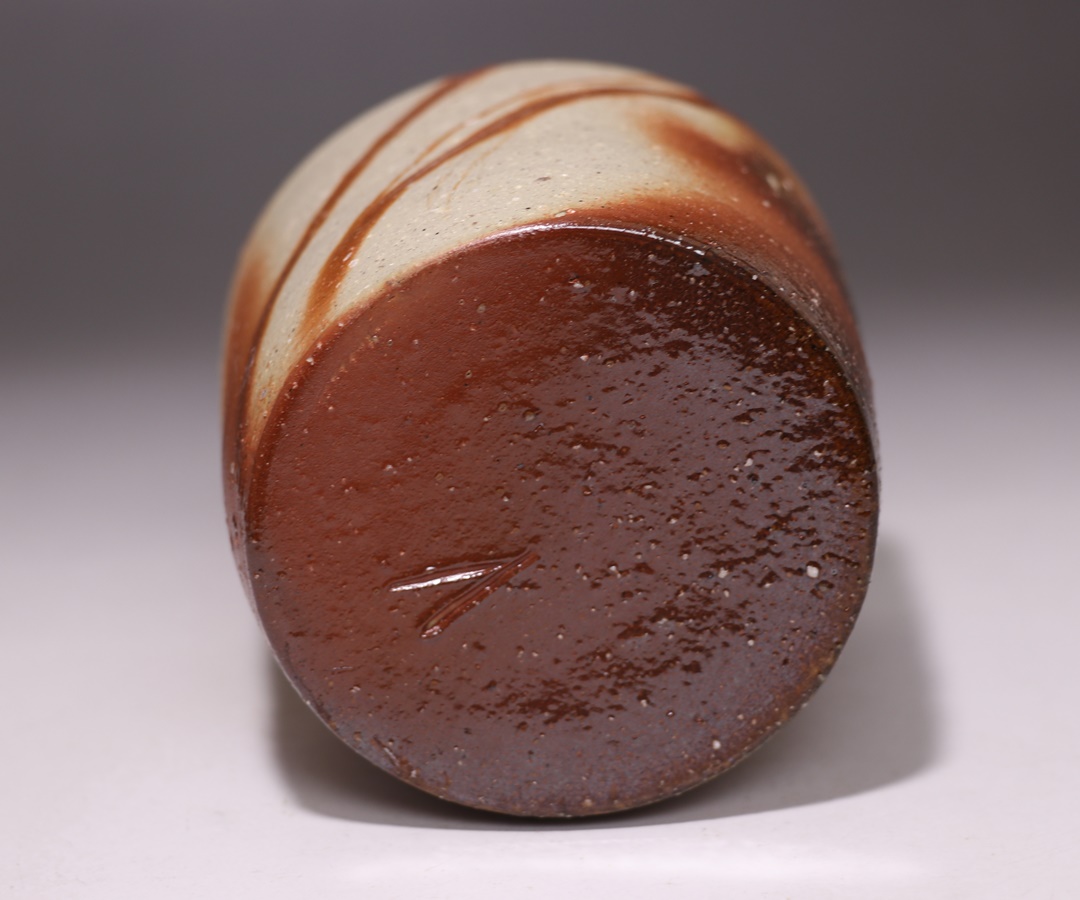
size : W9.0cm×8.5cm×H8.6cmDrawing a wealth of inspiration from the natural environment of his beloved home of Bizen, Jun Isezaki brought a new spirit to the tradition of Bizen ware. This is a newly released Bizen Rock Cup by the artist.
Fired in February 2026, it is a work from the final period of his career.
The cup was fired for approximately ten days in a semi-underground Anagama kiln. Its surface displays many of the kiln effects representative of Isezaki’s Bizen ware, including Goma, Hidasuki, fine thread-like Goma, and a gradation between white clay and vivid scarlet tones.
The work was formed from a somewhat coarse, sandy clay. On the interior, where the flames did not strike directly, a fresh orange color has developed.
Rice straw was wrapped diagonally around the vessel before firing, creating a Hidasuki pattern that circles the entire cup. The flowing movement of this pattern makes the work enjoyable to view from every angle.
During firing, the straw also fused with natural ash glaze carried by the flames, producing a variety of colors and textures that change from one area of the surface to another.
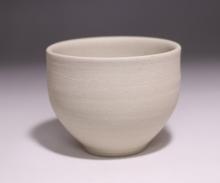


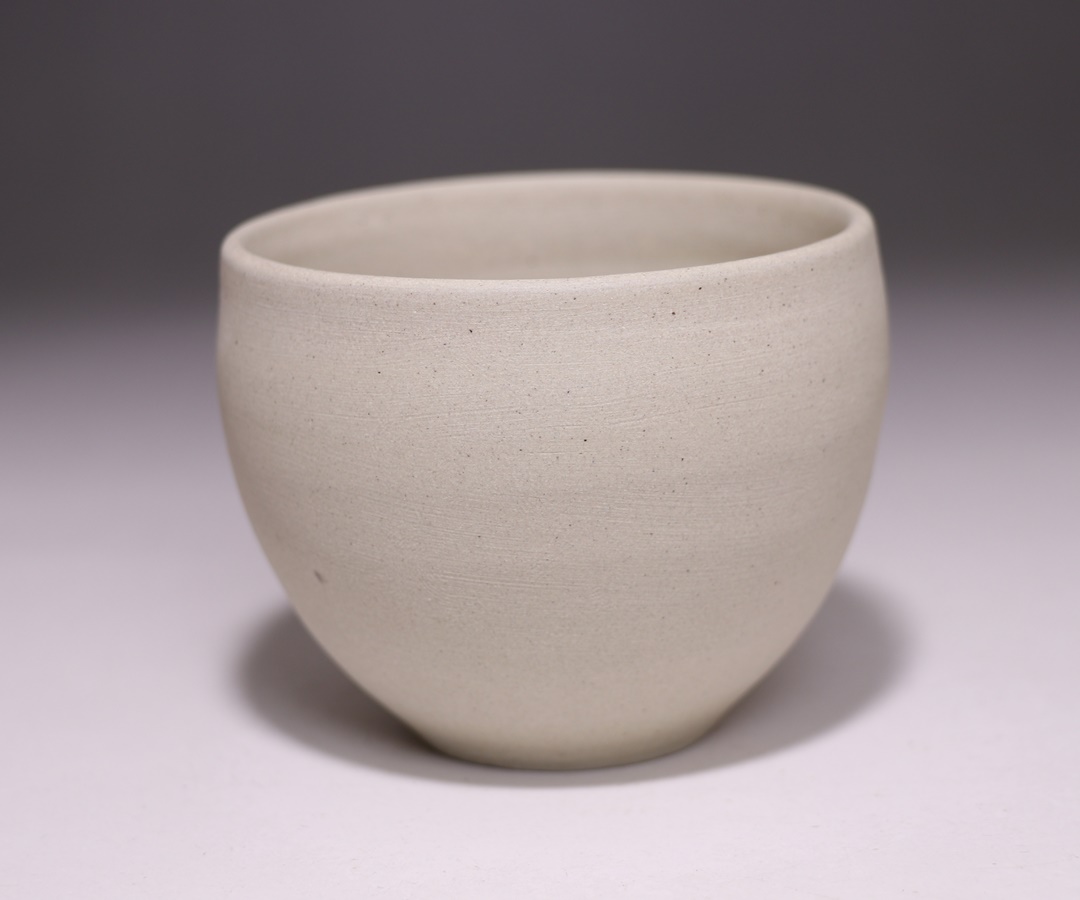
Sohei Takashima - Bizen Mitsuishi Yunomi
3,300 YENSold out
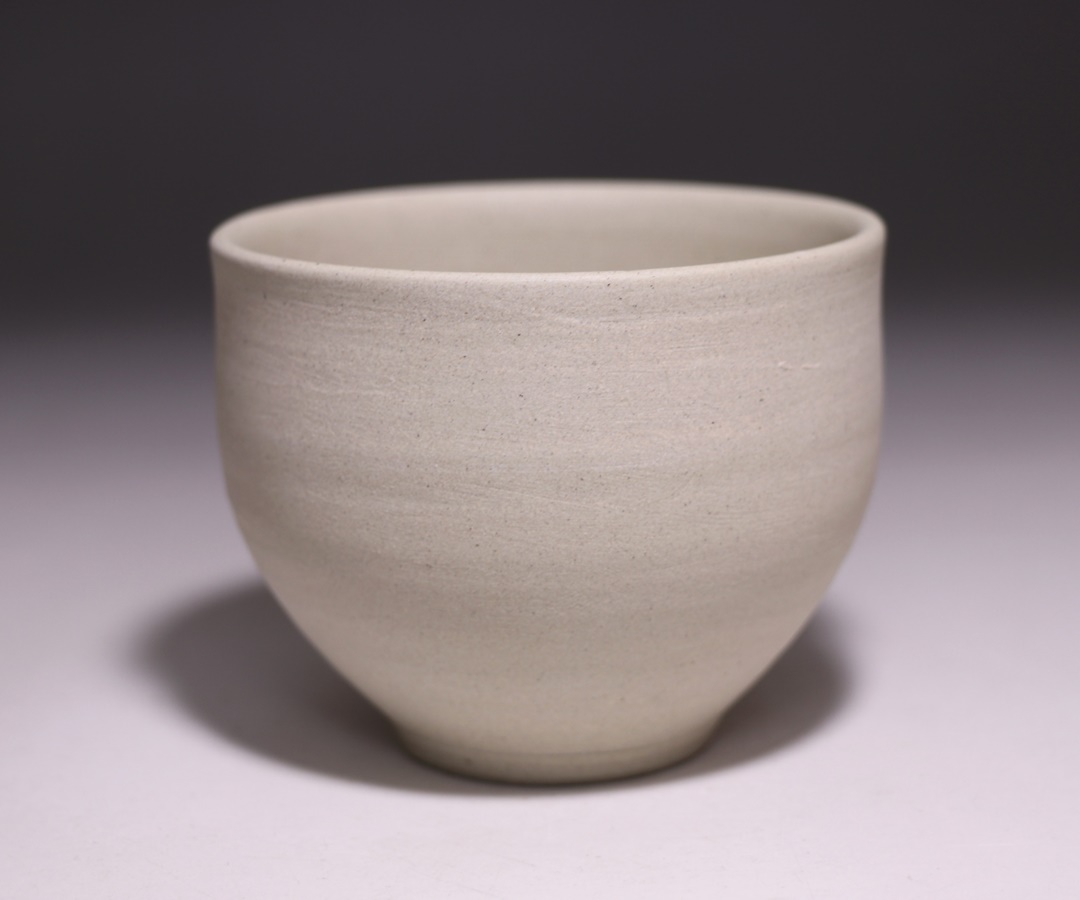
size : W7.9cm×7.8cm×H6.3cmAfter completing his apprenticeship under Jun Isezaki, Sohei Takashima received the Contemporary Ceramic Art Encouragement Award from the Japan Ceramic Society, marking an impressive debut as an independent artist. This is a newly released Bizen Mitsuishi Yunomi by the artist.
Having studied under Jun Isezaki, the fifth Living National Treasure of Bizen ware, Takashima established his own studio in Ushimado, Setouchi City. This Yunomi is one of his distinctive explorations of Bizen clay.
The piece was created by blending Bizen clay with pyrophyllite from the Mitsuishi district in eastern Bizen City, producing a remarkably white surface that almost resembles unfired clay.
The pyrophyllite, a specialty of the Mitsuishi area, was finely crushed and incorporated into the clay body. The resulting surface is exceptionally smooth, perfectly complementing its porcelain-like appearance.
Due to the unique properties of the clay, this Yunomi is particularly well suited to developing a rich patina through continued use. According to Takashima, the colors of tea and coffee gradually penetrate the surface, subtly transforming its pure white appearance into warmer, earthier tones, almost as though the vessel were undergoing a second firing.
The form has been deliberately stripped of any unnecessary ornamentation to complement the distinctive clay and its coloring. The result is a beautifully simple and serene design that perfectly harmonizes with the clean, refreshing appearance of the vessel.
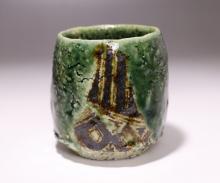


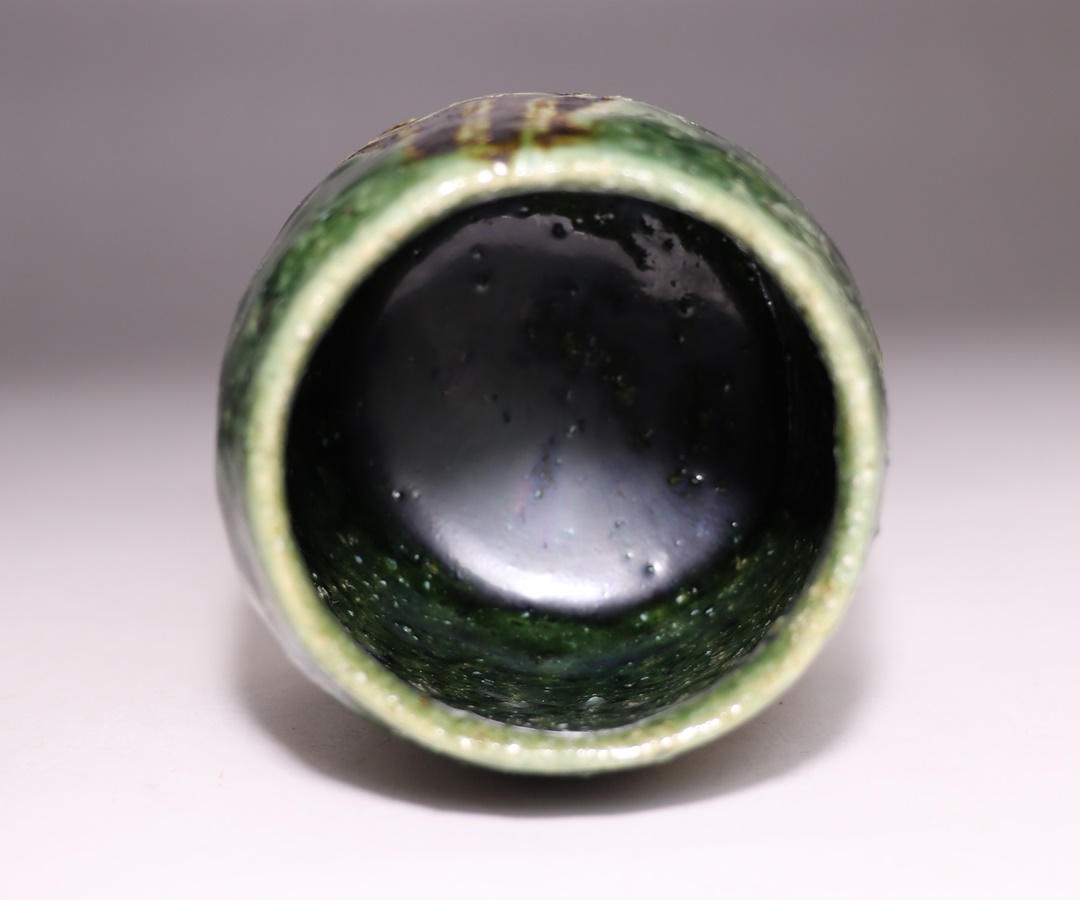
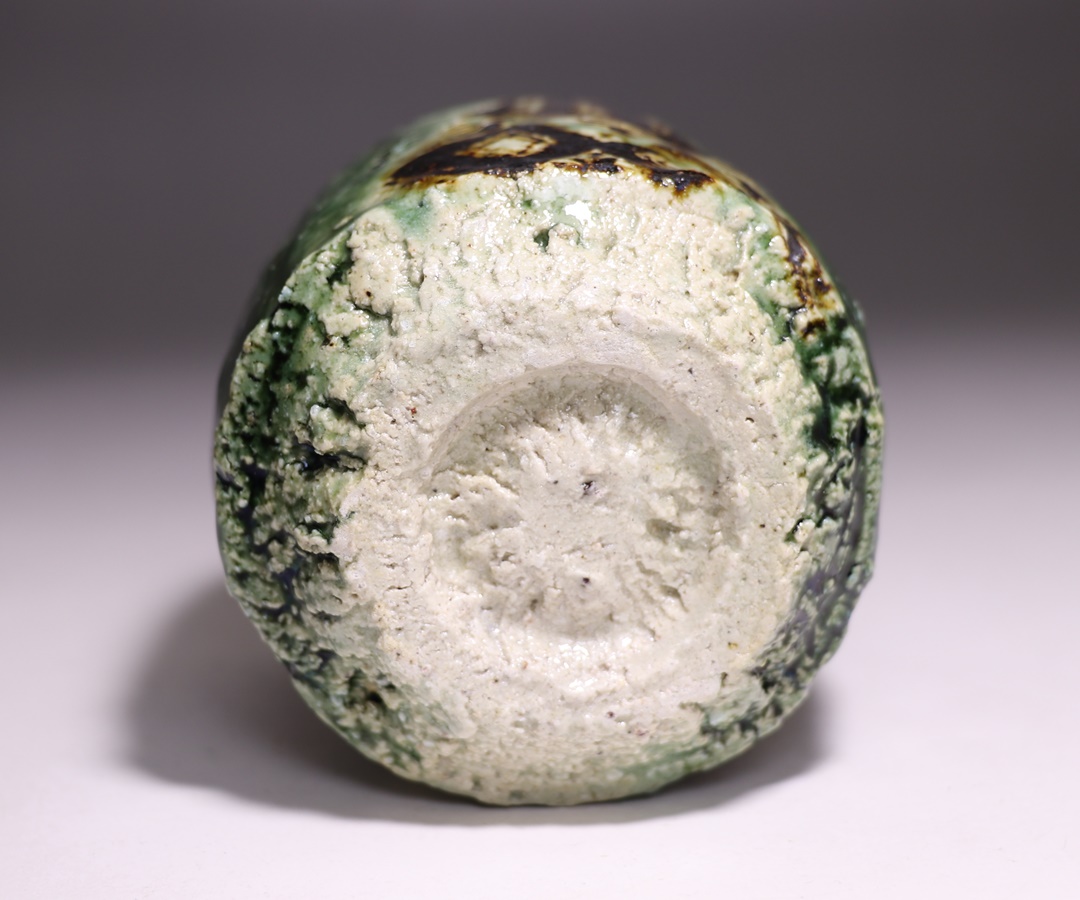
Sohei Takashima - Ao-Oribe Yunomi
6,600 YENSold out
size : W6.8cm×6.7cm×H4.9cmAfter completing his apprenticeship under Jun Isezaki, Sohei Takashima received the Contemporary Ceramic Art Encouragement Award from the Japan Ceramic Society, marking an impressive debut as an independent artist. This is a newly released Ao-Oribe Yunomi by the artist.
Having studied under Jun Isezaki, the fifth Living National Treasure of Bizen ware, Takashima established his own studio in Ushimado, Setouchi City. This Yunomi is one of his works inspired by the Oribe ceramic tradition.
For the clay body, Takashima selected a special blend of white clay, which is rarely used in traditional Bizen ware, and Mitsuishi pyrophyllite. Among the many varieties of Bizen clay, this combination was carefully chosen to emphasize the distinctive qualities of white clay.
Takashima applied an Oribe glaze that he developed through extensive research and experimentation to complement the white clay. The resulting glaze displays remarkable depth and beauty, demonstrating the artist’s exceptional technical skill and dedication to exploring new ceramic expressions.
The white clay itself has a particularly coarse and rustic texture, which adds remarkable depth and delicate variations in color to the Oribe glaze. The interplay between the textured clay and the glaze creates a beautifully nuanced surface that is one of the most captivating features of this work.
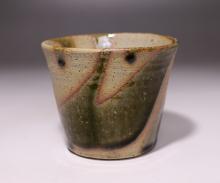


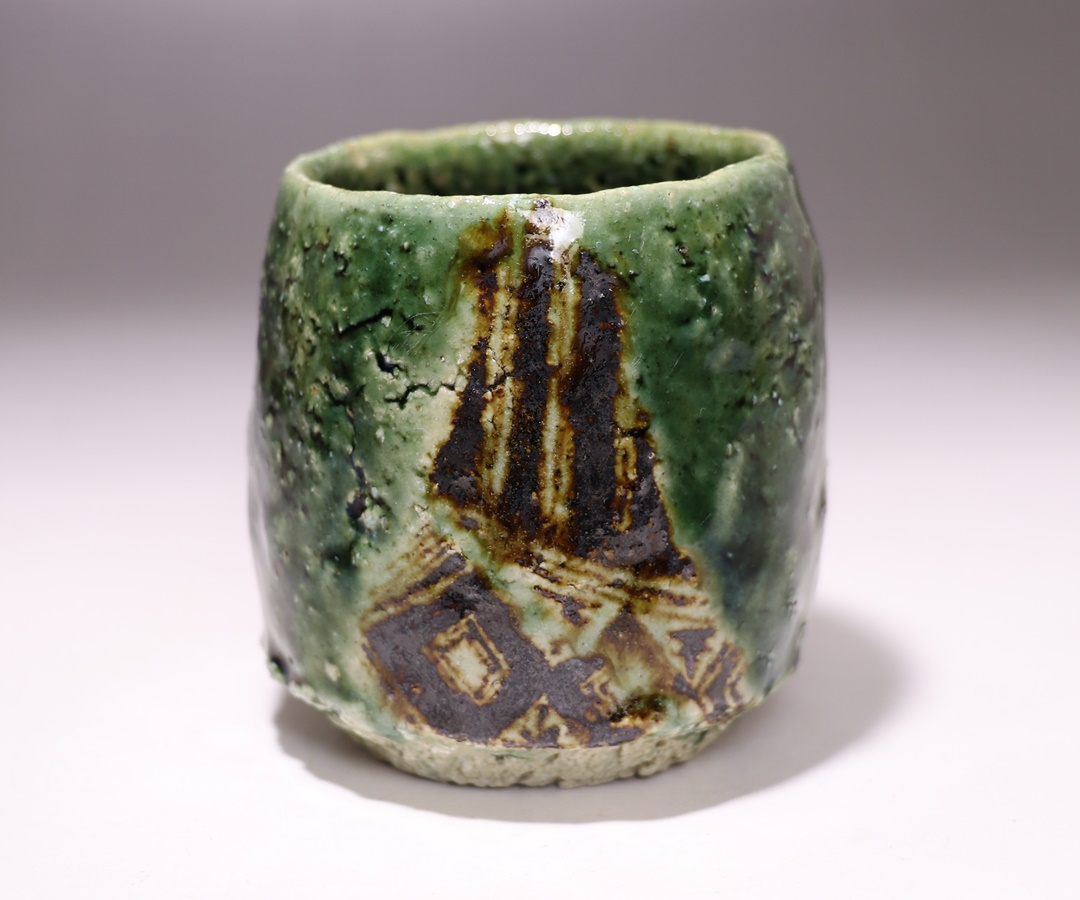
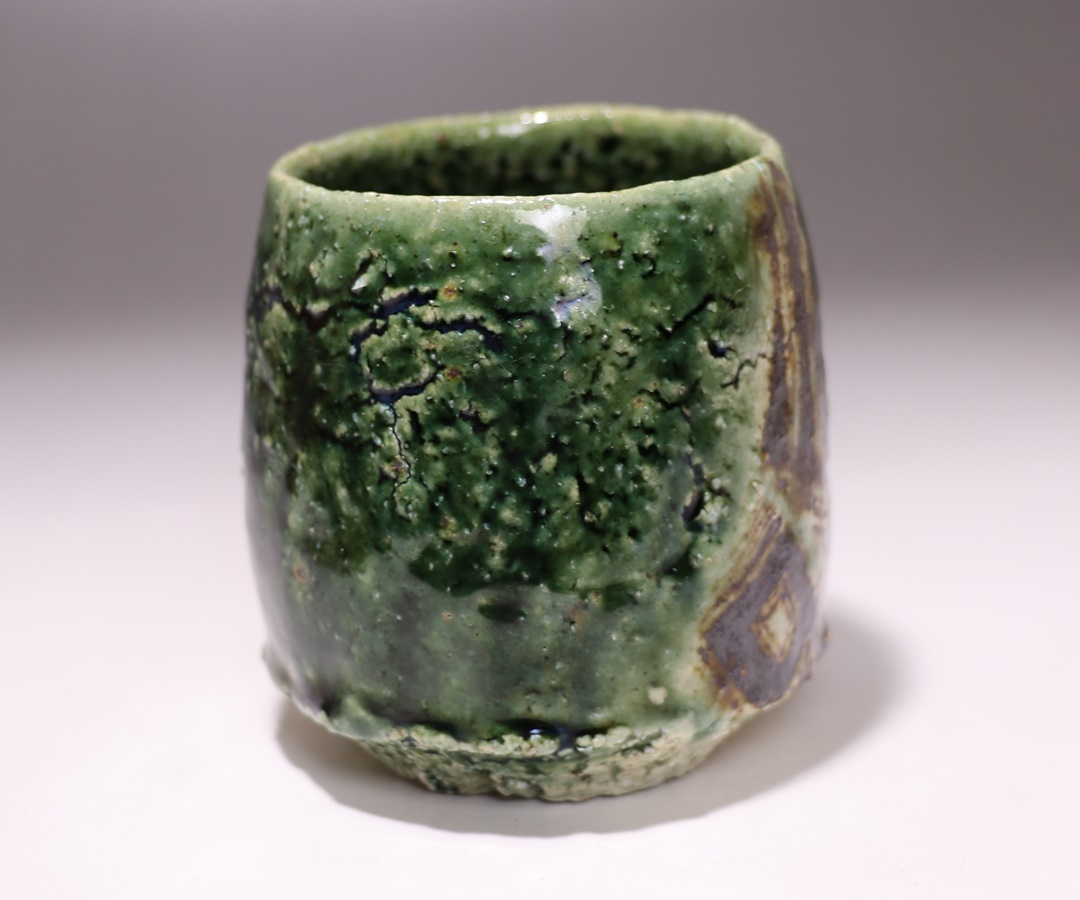
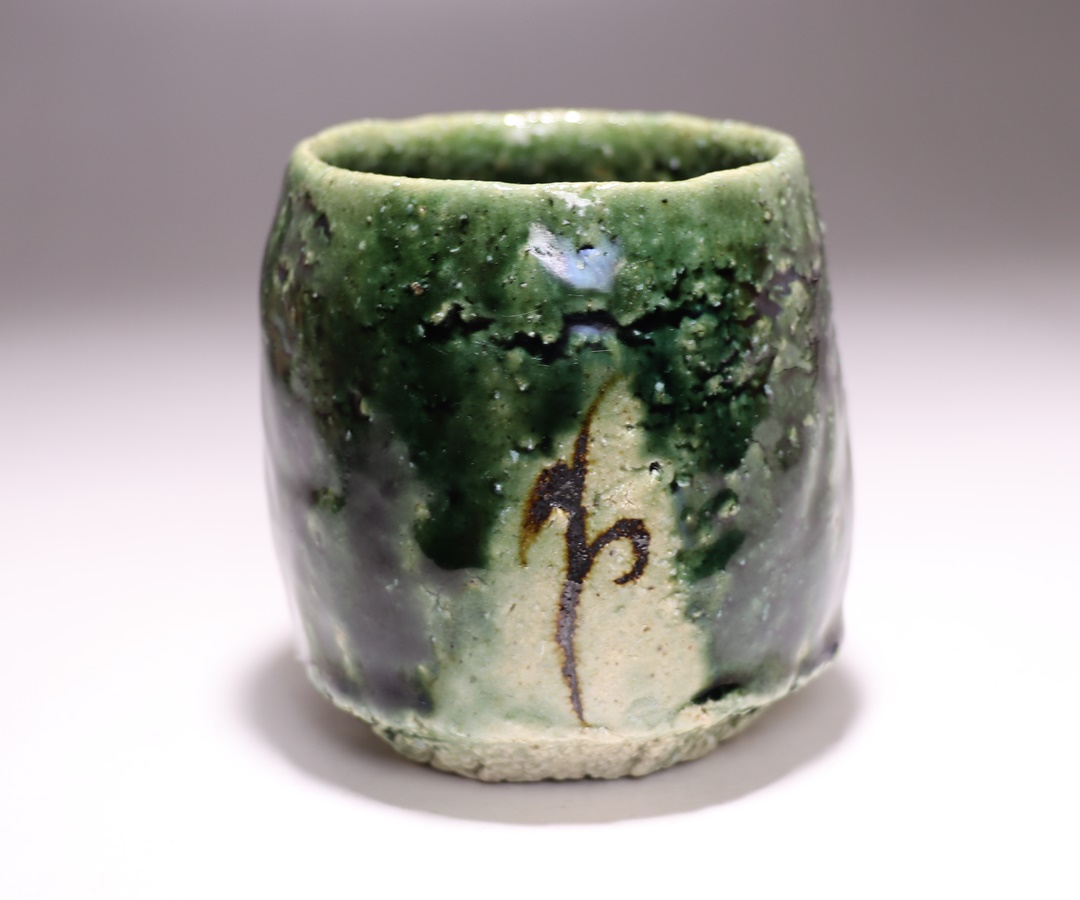
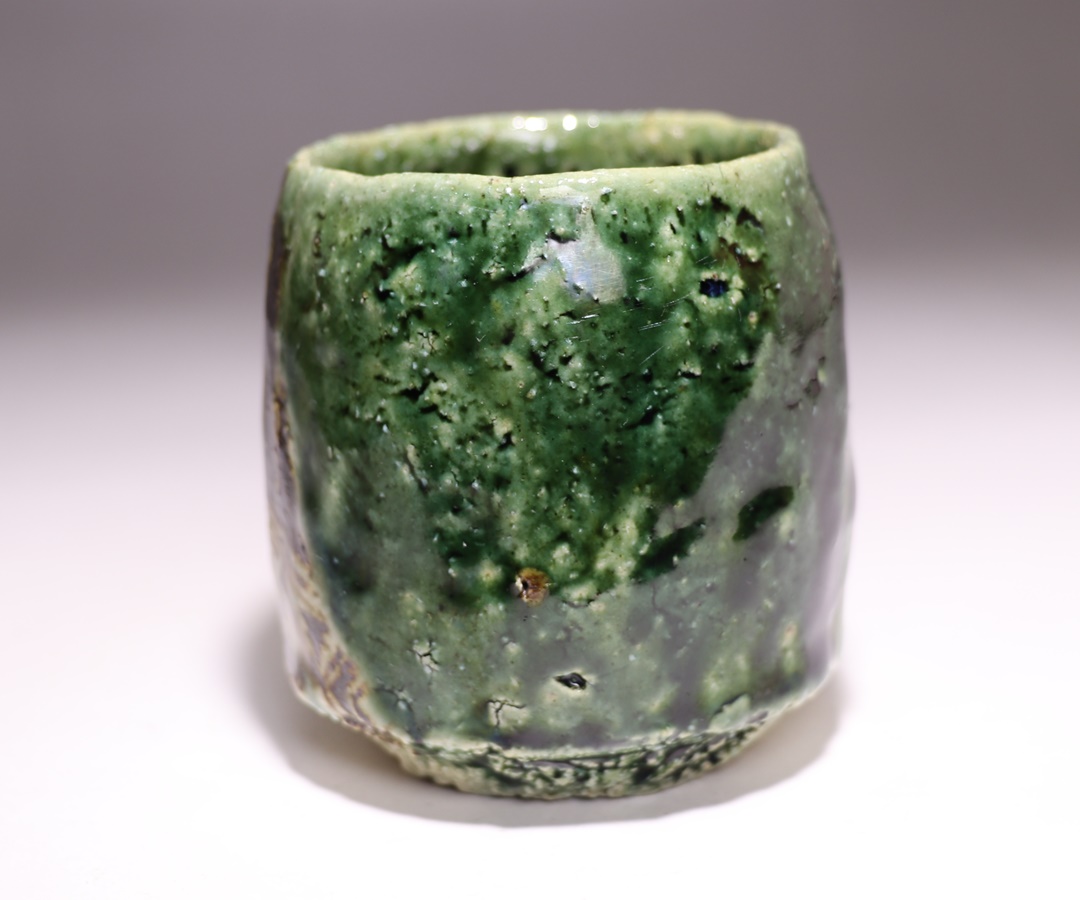
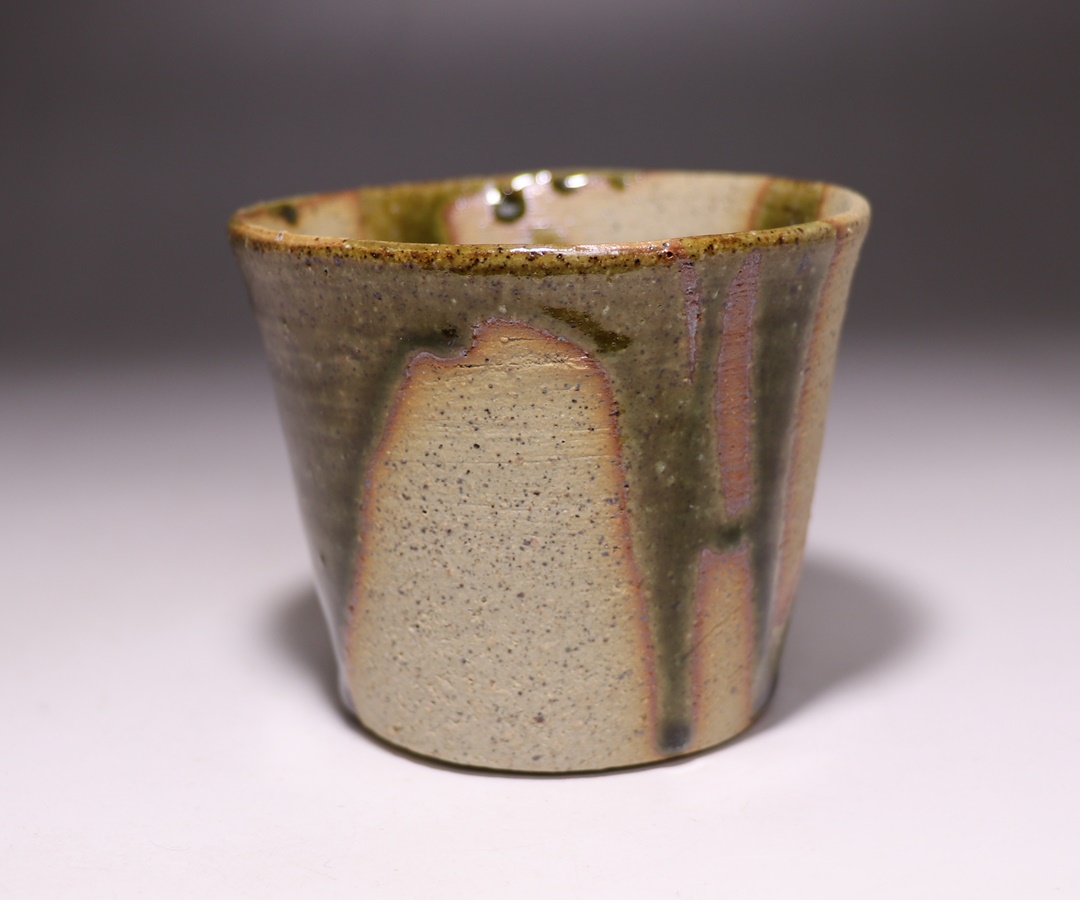
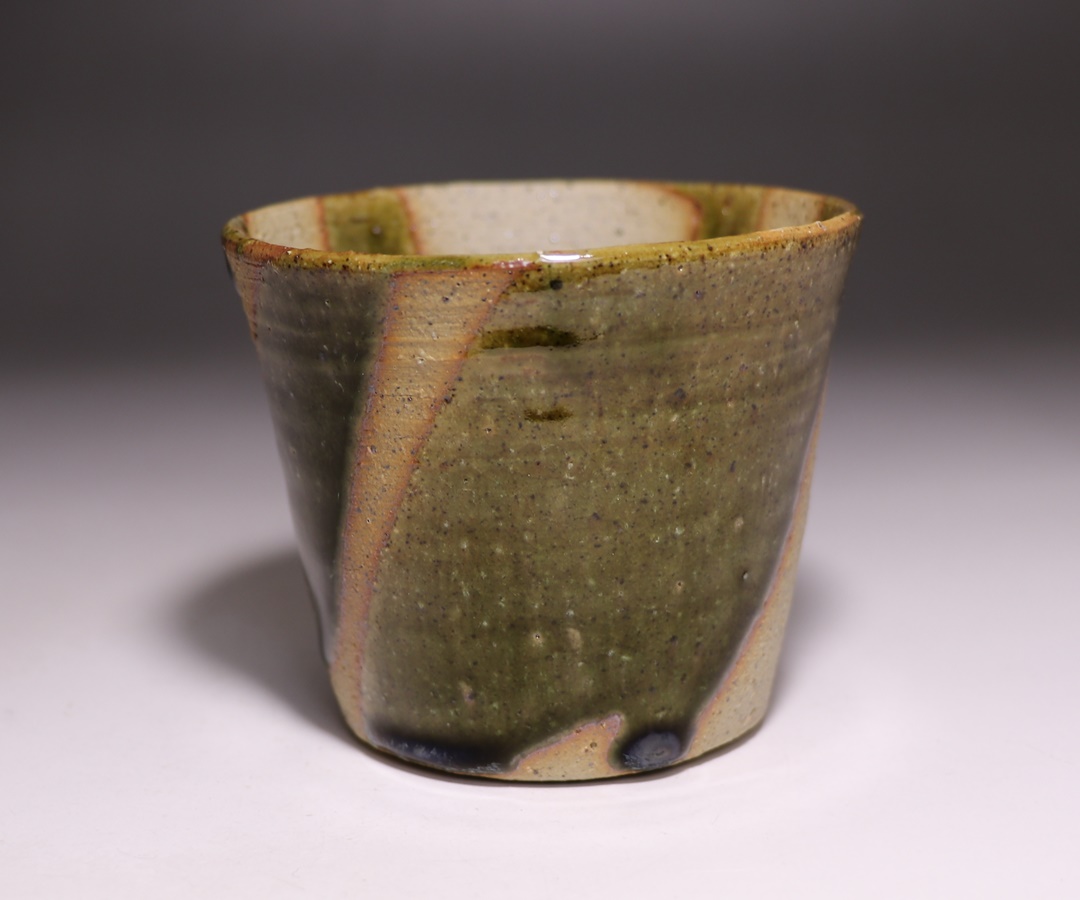
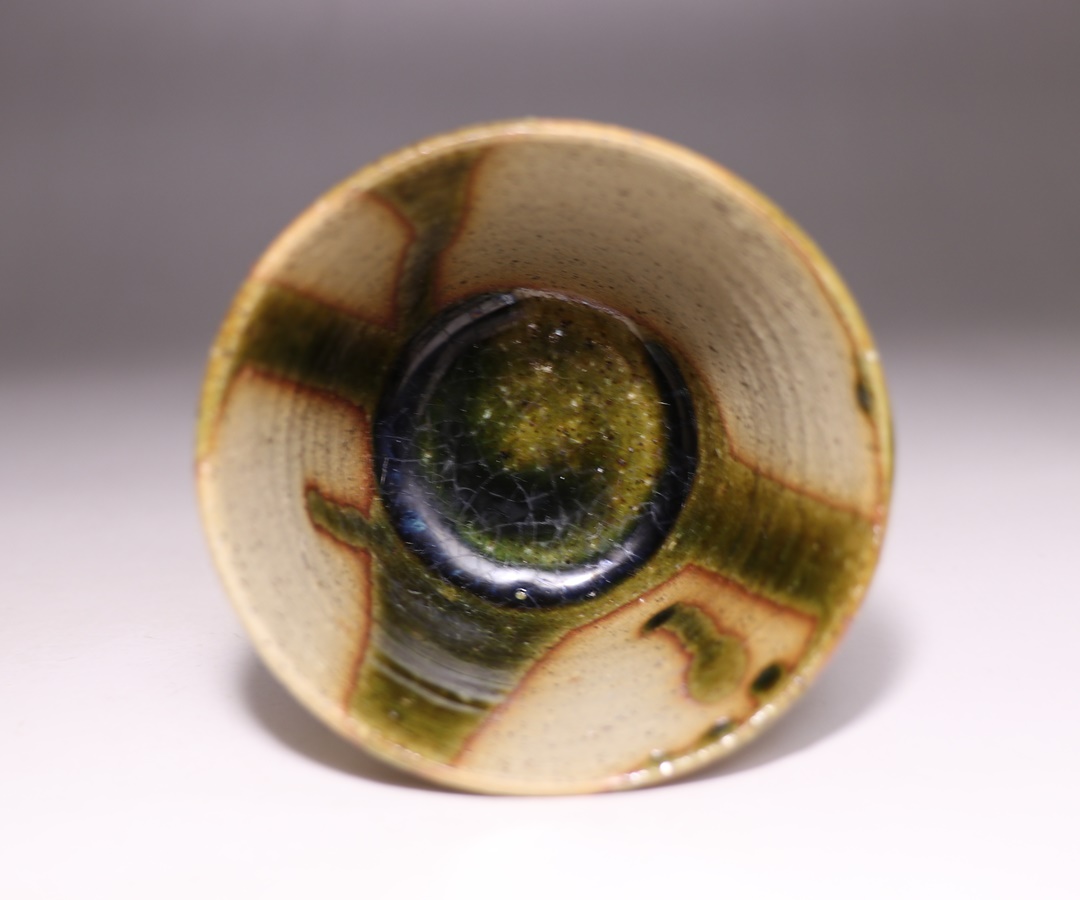
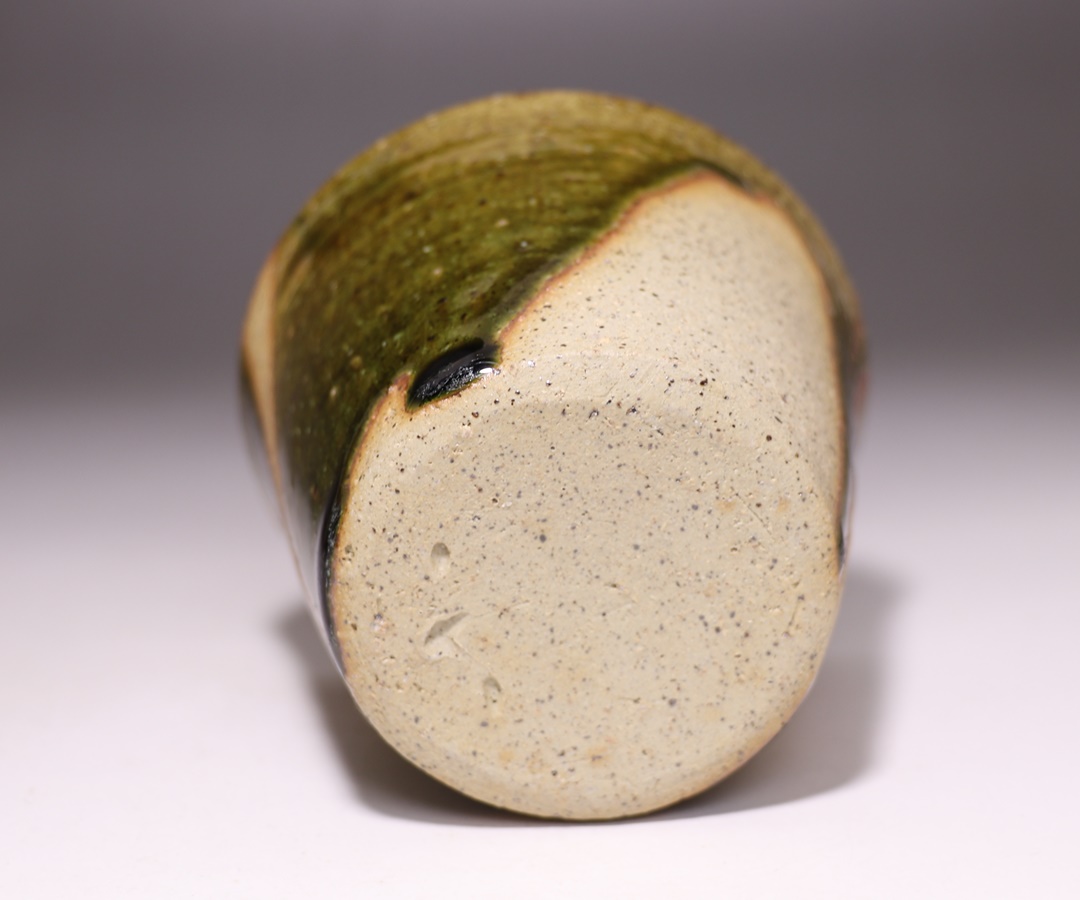
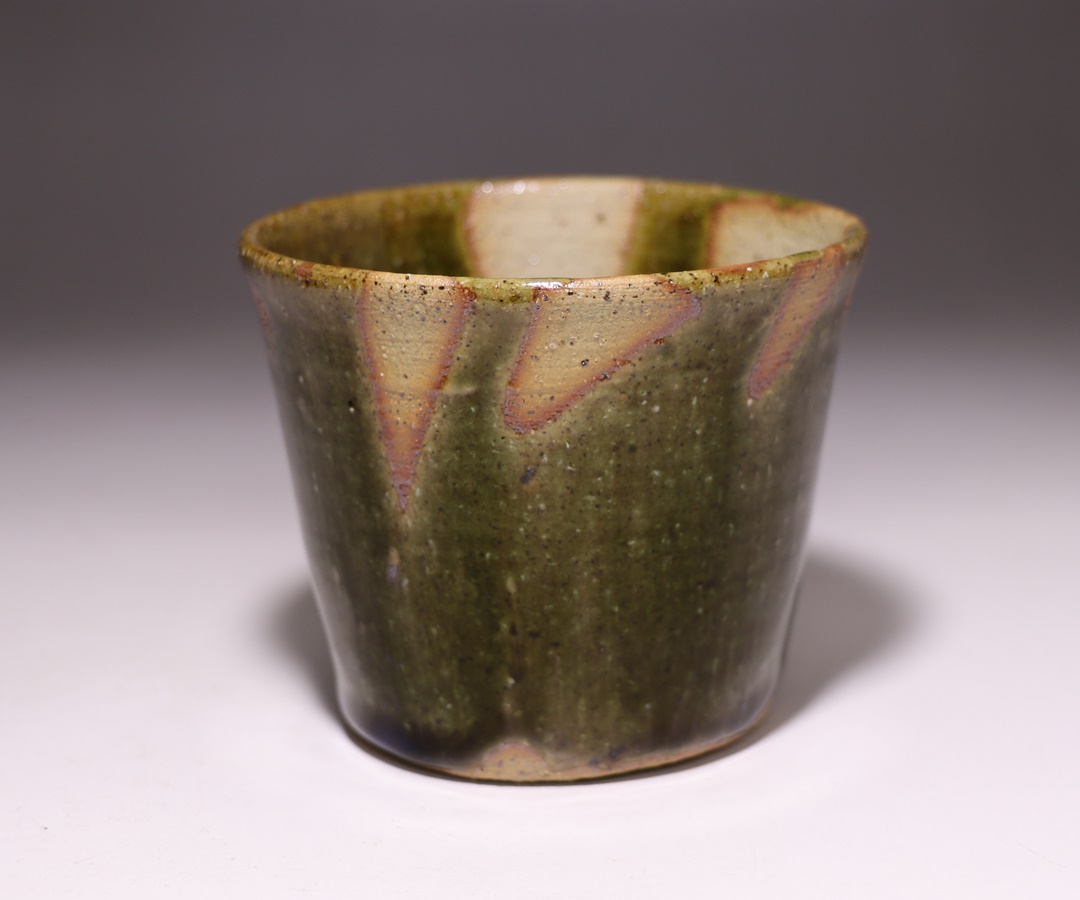
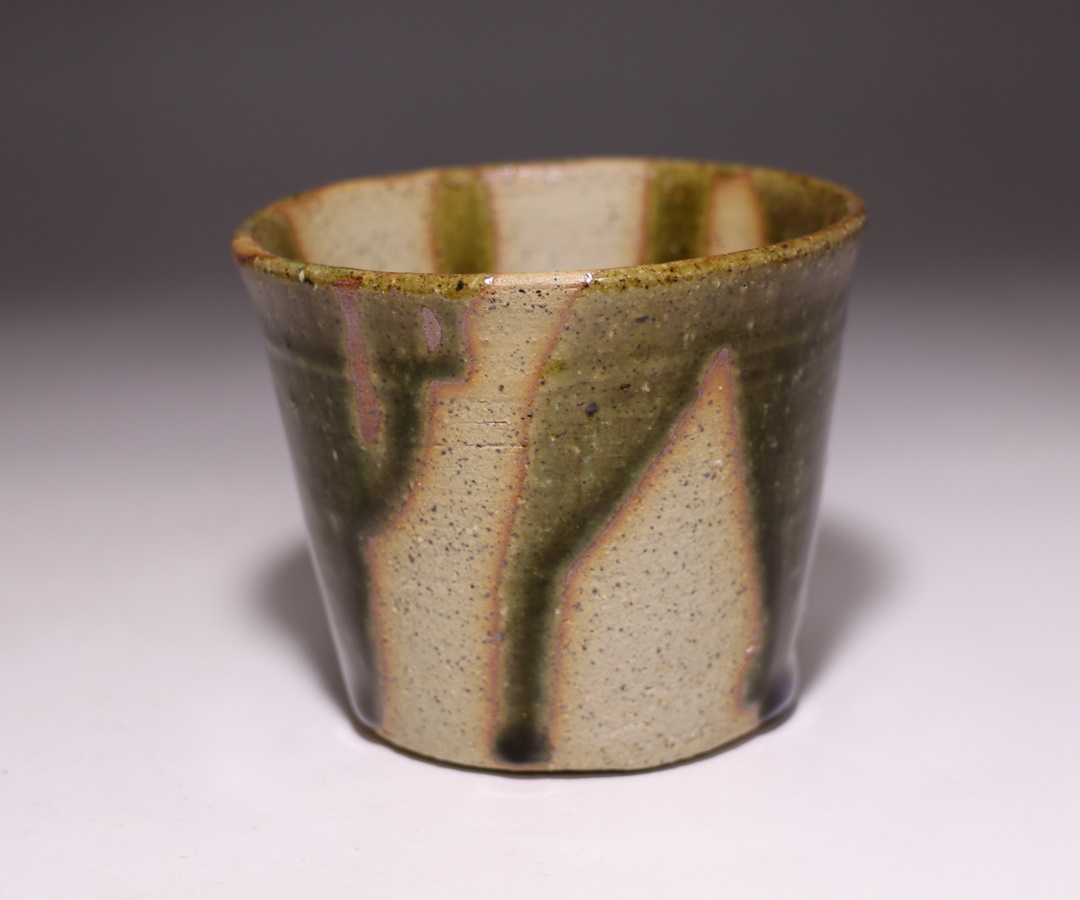
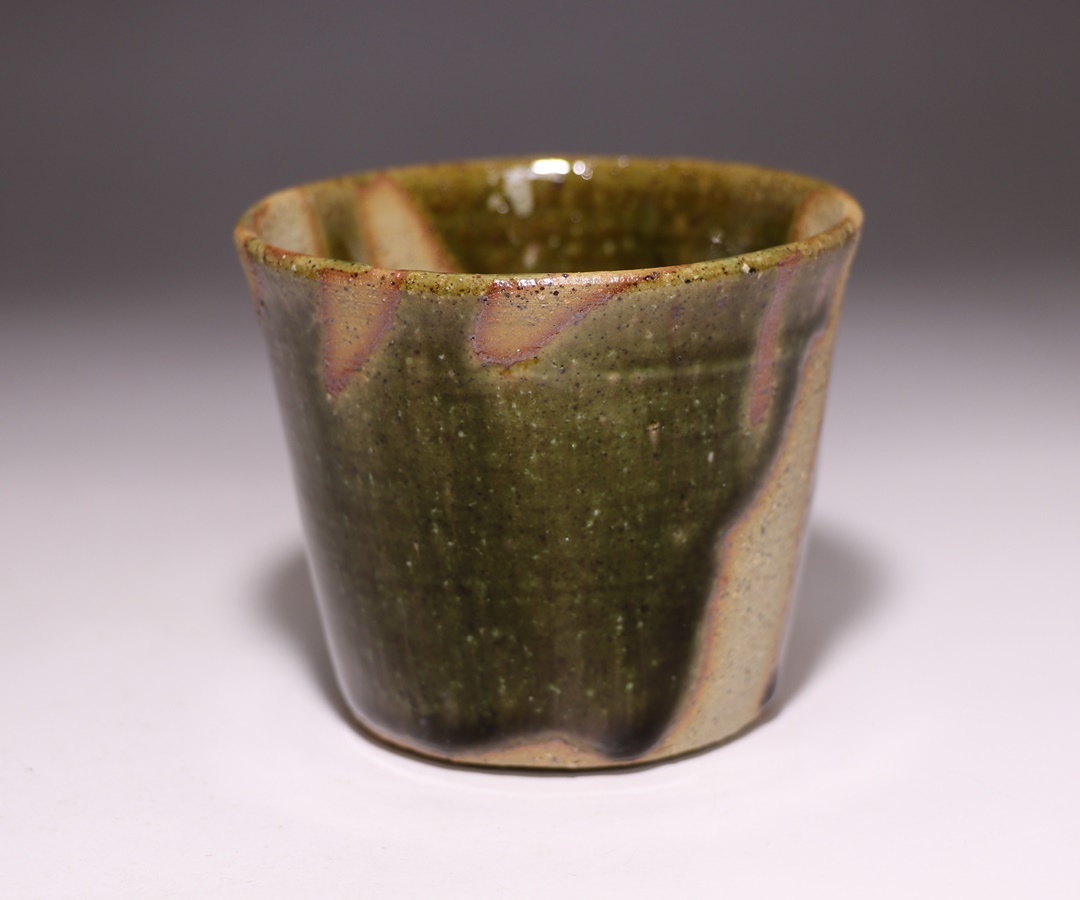
Kenji Takenaka - Bizen Oribe Cup
5,500 YEN
size : W8.7cm×8.4cm×H7.2cmKenji Takenaka entered the world of ceramics after working in jewelry design and later studied under Jun Isezaki. This is a Bizen Oribe Cup by the artist.
As the name *Bizen Oribe* suggests, the work combines Bizen clay with Oribe glaze, bringing out the distinctive appeal of both traditions.
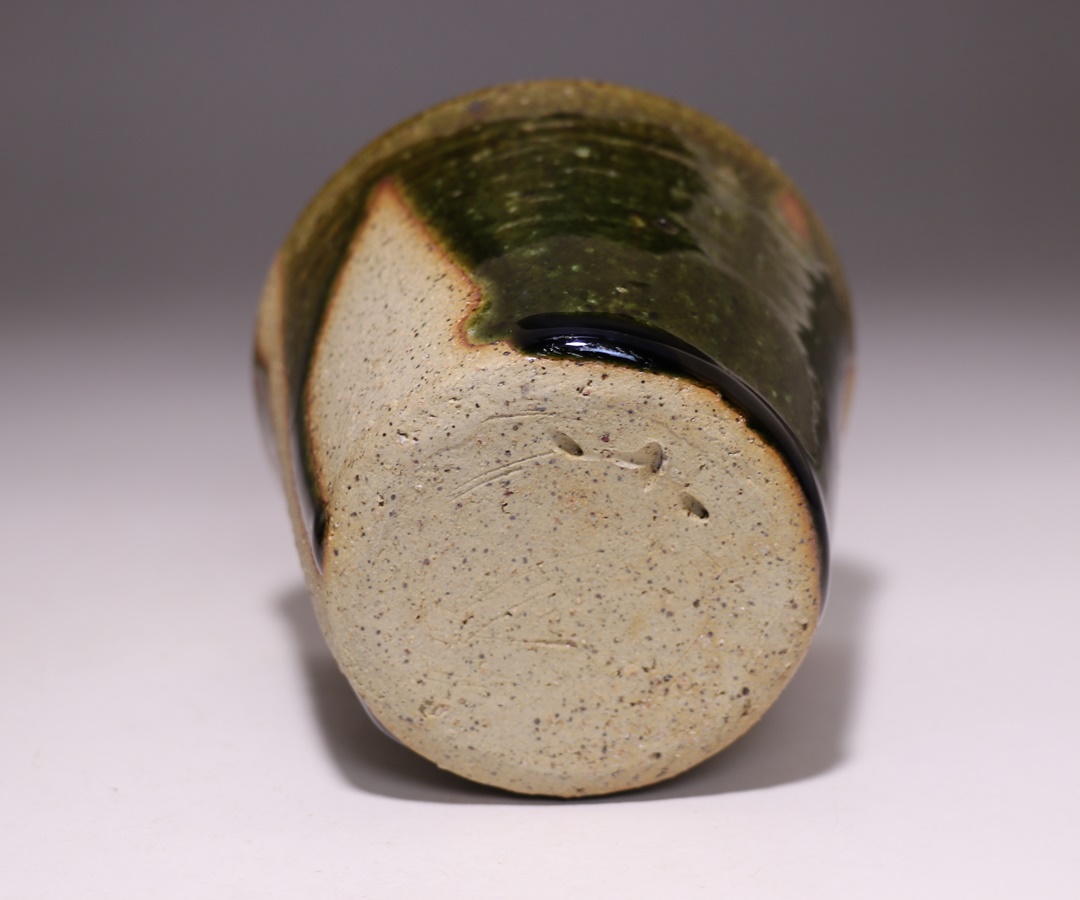
In the exposed areas of the Bizen clay body, various mineral components within the clay have emerged as black and silvery particles. These give off a subdued metallic glimmer against the warm, ochre-toned surface, creating an intriguing accent.
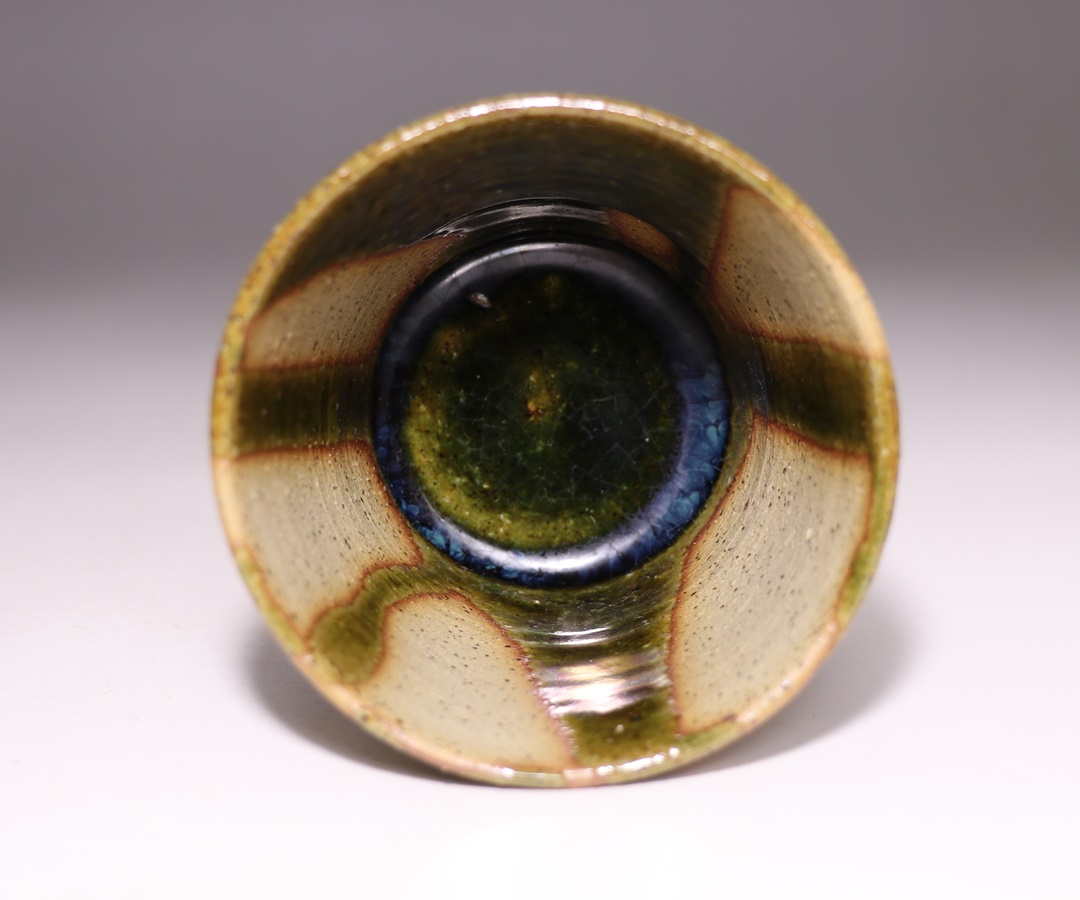
The Oribe glaze has been poured dynamically across the vessel. Taking advantage of the glaze’s natural translucency, Takenaka allows the wheel marks on the body to create beautiful variations in depth and color.
Inside the cup and around the lower body, the glaze has pooled more thickly and developed a deep tone reminiscent of obsidian. This is another striking surface effect that makes full use of the flowing character of the Oribe glaze.
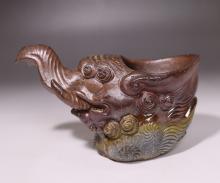


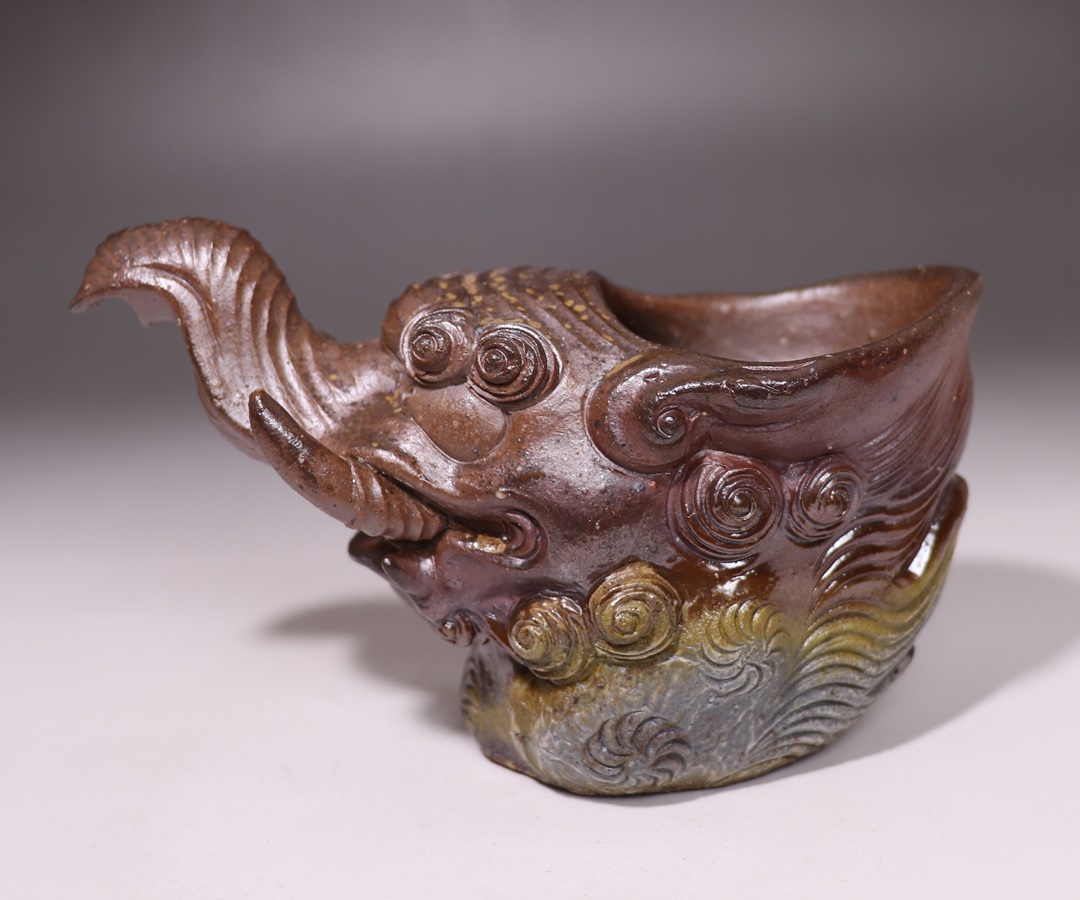
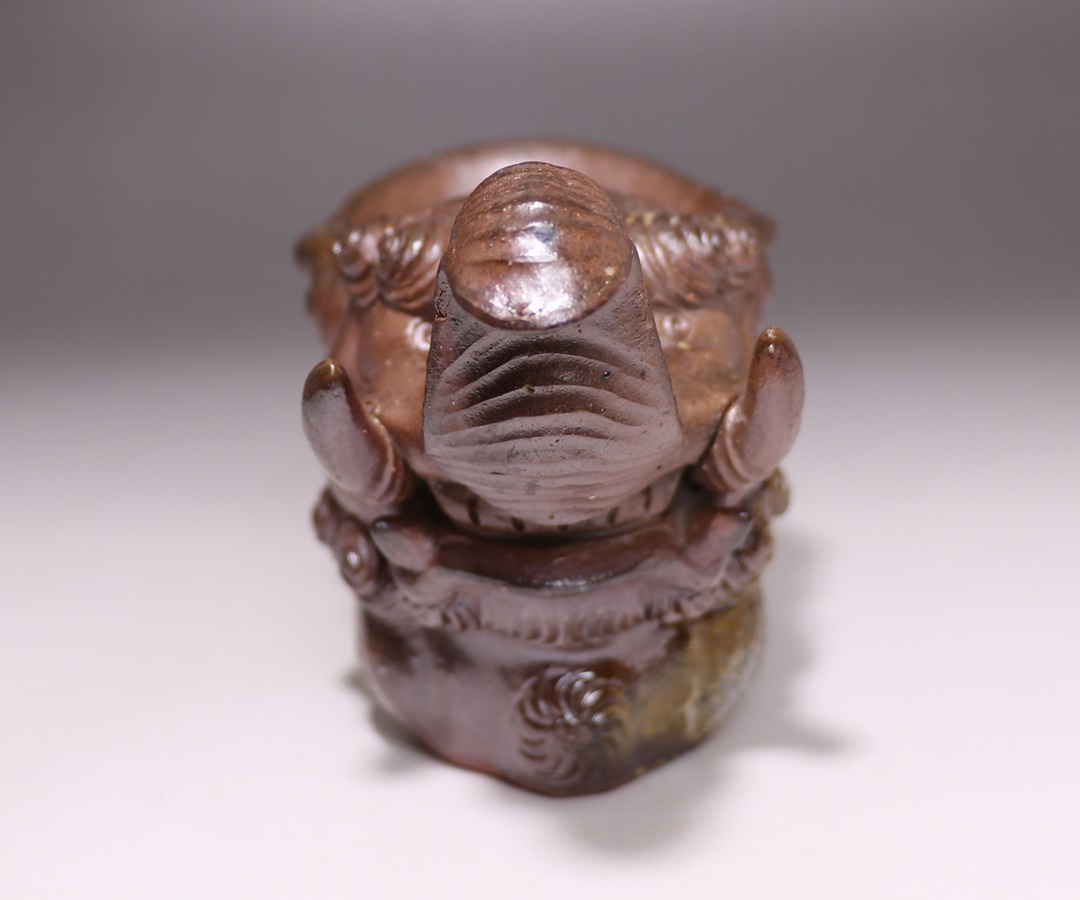
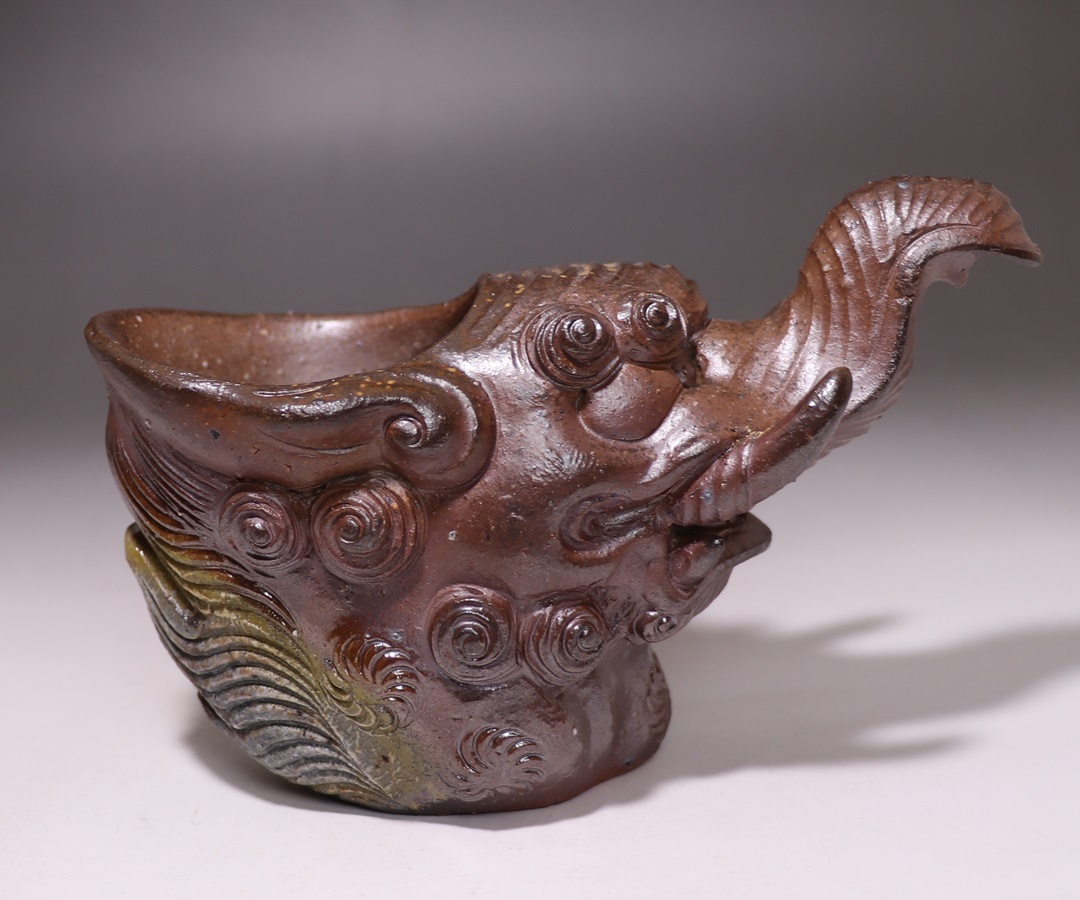
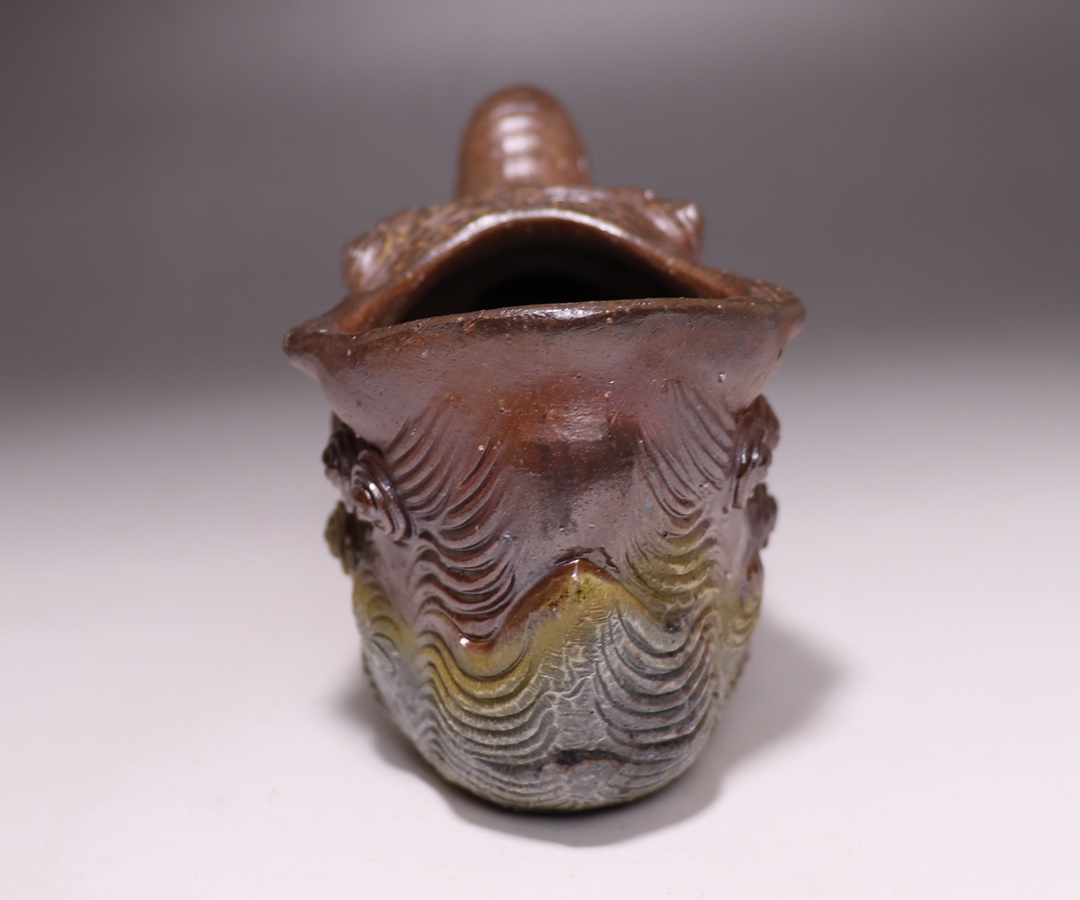
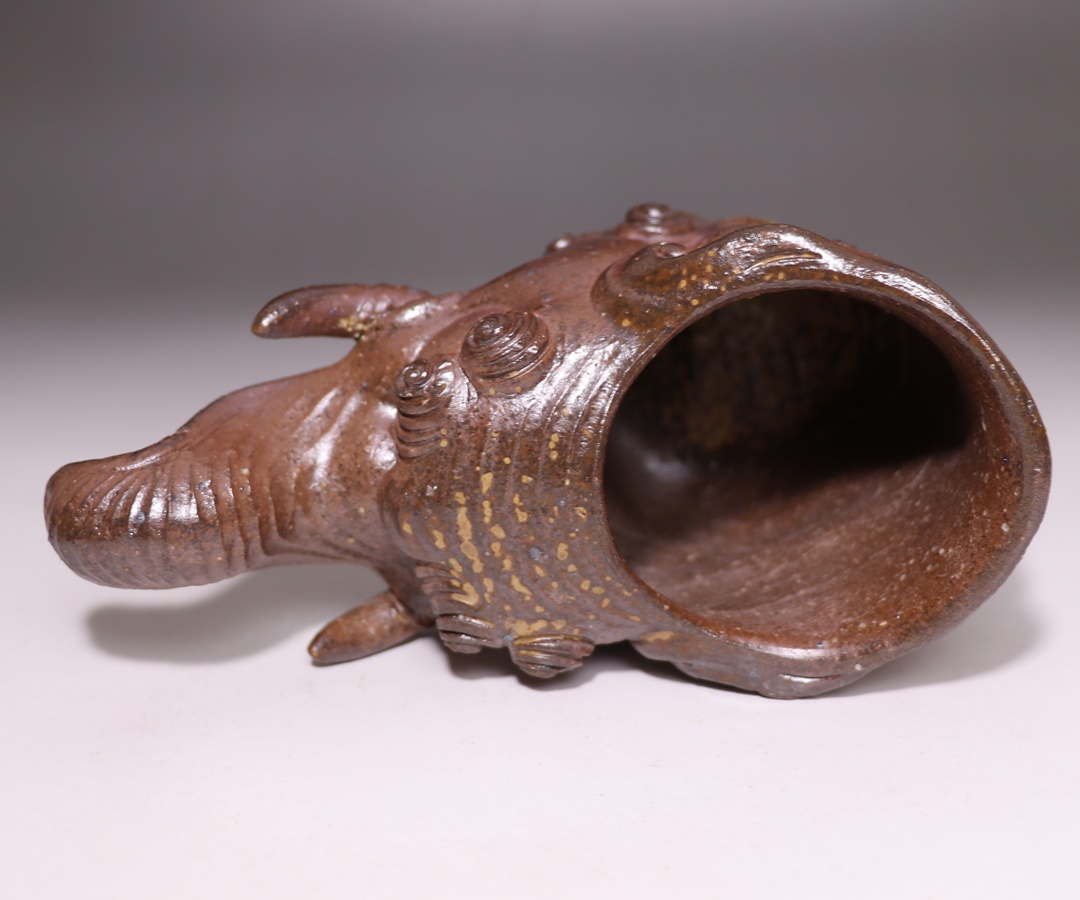
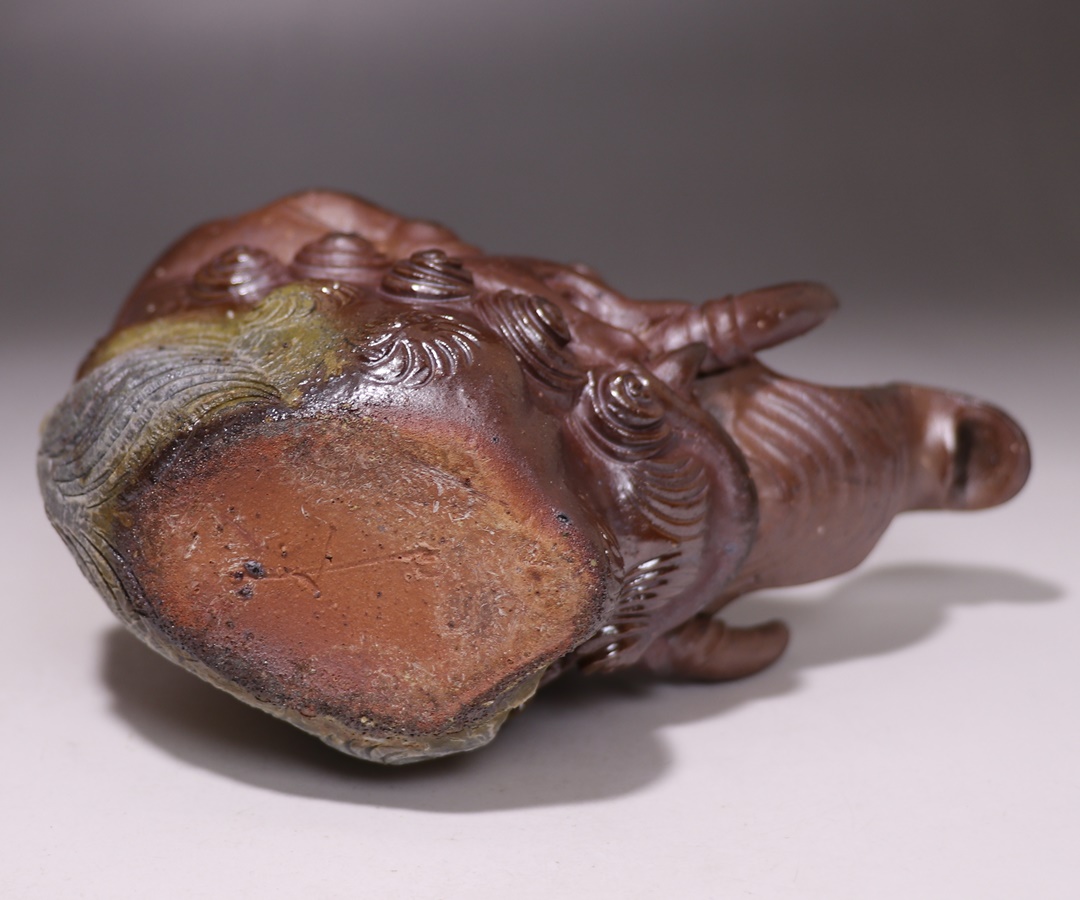
Koji Nakahara - Bizen Elephant Chuki (Sake Pourer)
55,000 YEN
size : W15.3cm×7.5cm×H9.8cm 170ccKoji Nakahara studied under Fumio Kawabata and strives to create works that complement contemporary lifestyles. This is a newly fired Bizen Elephant Chuki (Sake Pourer) by the artist.
Going a step beyond his earlier works, in which various animals were carved into the surface, this piece transforms the vessel itself into the dynamic face of an elephant, giving it an exceptionally powerful presence.
The intricate sculptural work reflects Nakahara’s current passion for detailed ceramic figures. The finely rendered tusks, hair, and trunk are so vivid that the elephant appears almost to have emerged from an ancient painting.
Although the vessel is relatively thickly formed, its overall weight and balance have been carefully adjusted. Despite its large and dynamic form, it never feels excessively heavy and remains fully functional as a sake vessel.
The experience of pouring sake directly from the elephant’s trunk is particularly striking and memorable. The sight of sake flowing vigorously from the elephant’s fierce-looking face leaves an impression that is difficult to forget.
This piece was fired in the kiln of his teacher, Fumio Kawabata. Kase-Goma has developed around the area corresponding to the elephant’s neck hair, creating a distinctive kiln effect that beautifully complements the intricate sculptural details.
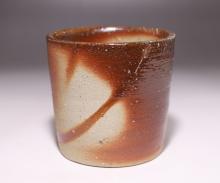


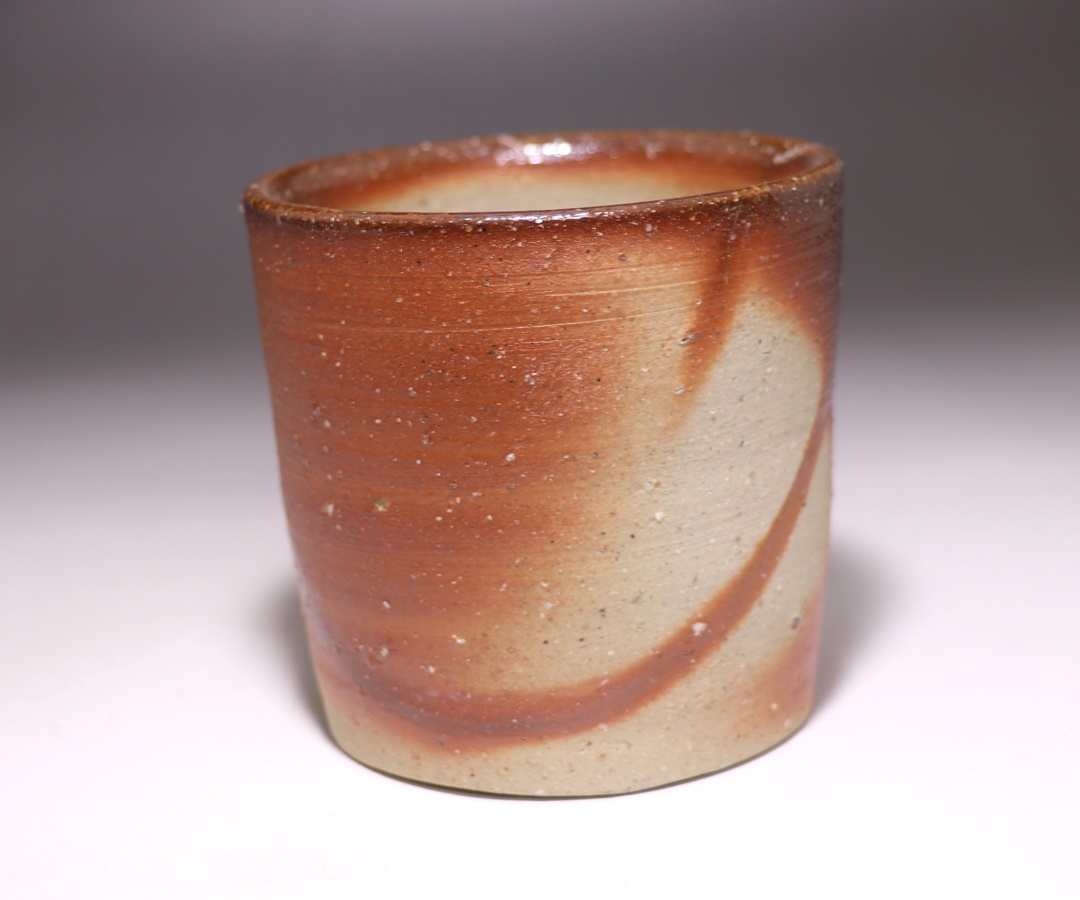
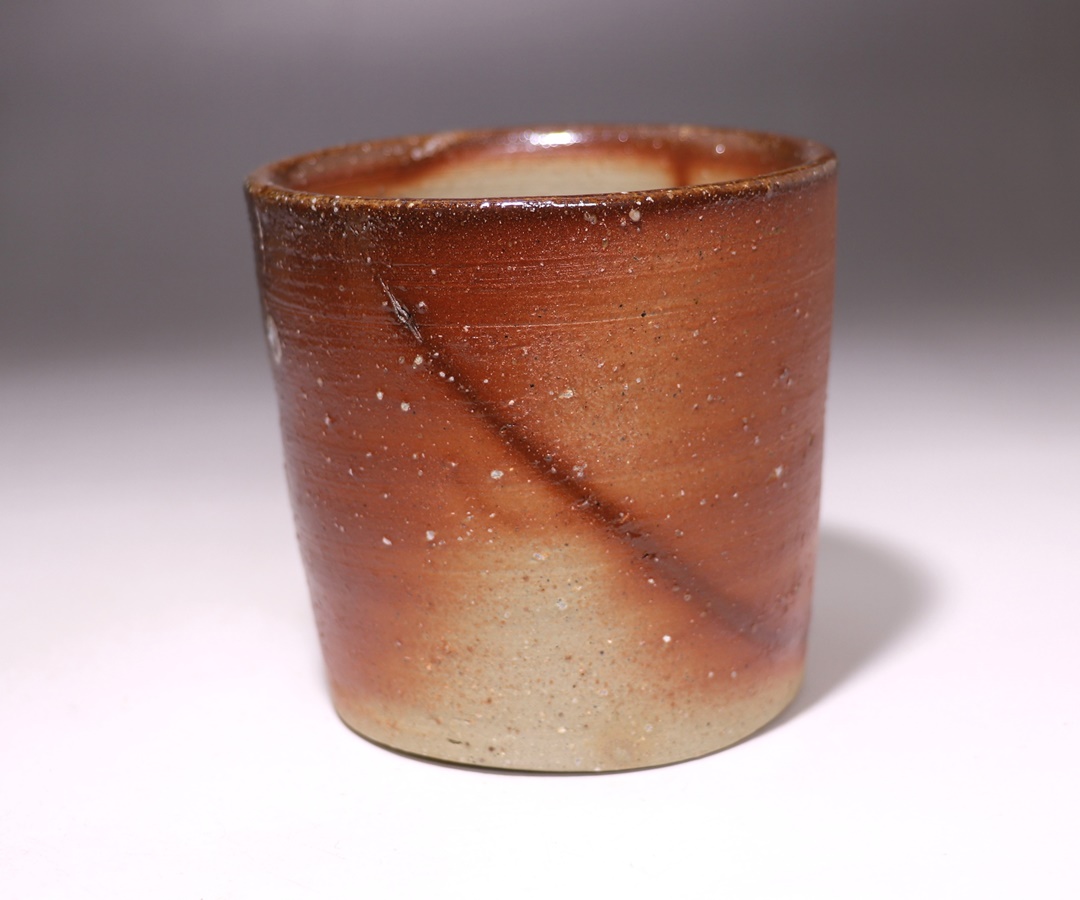
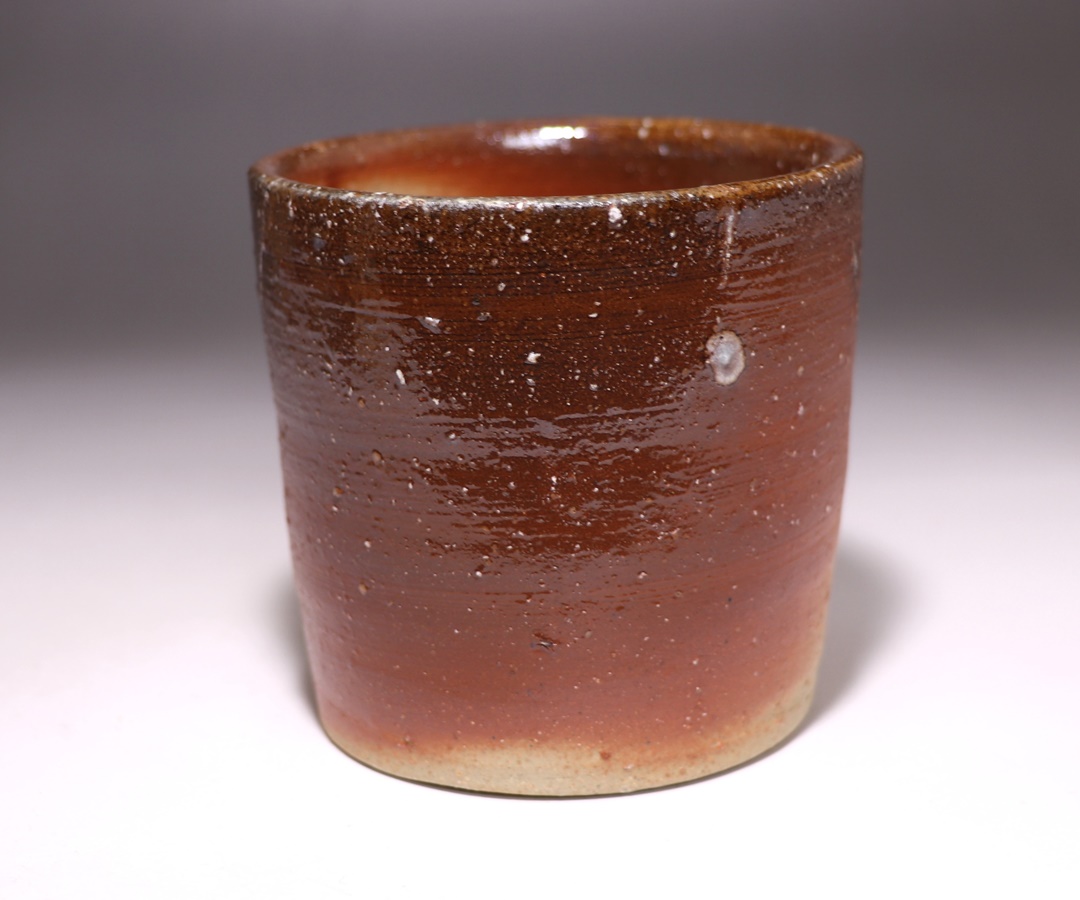
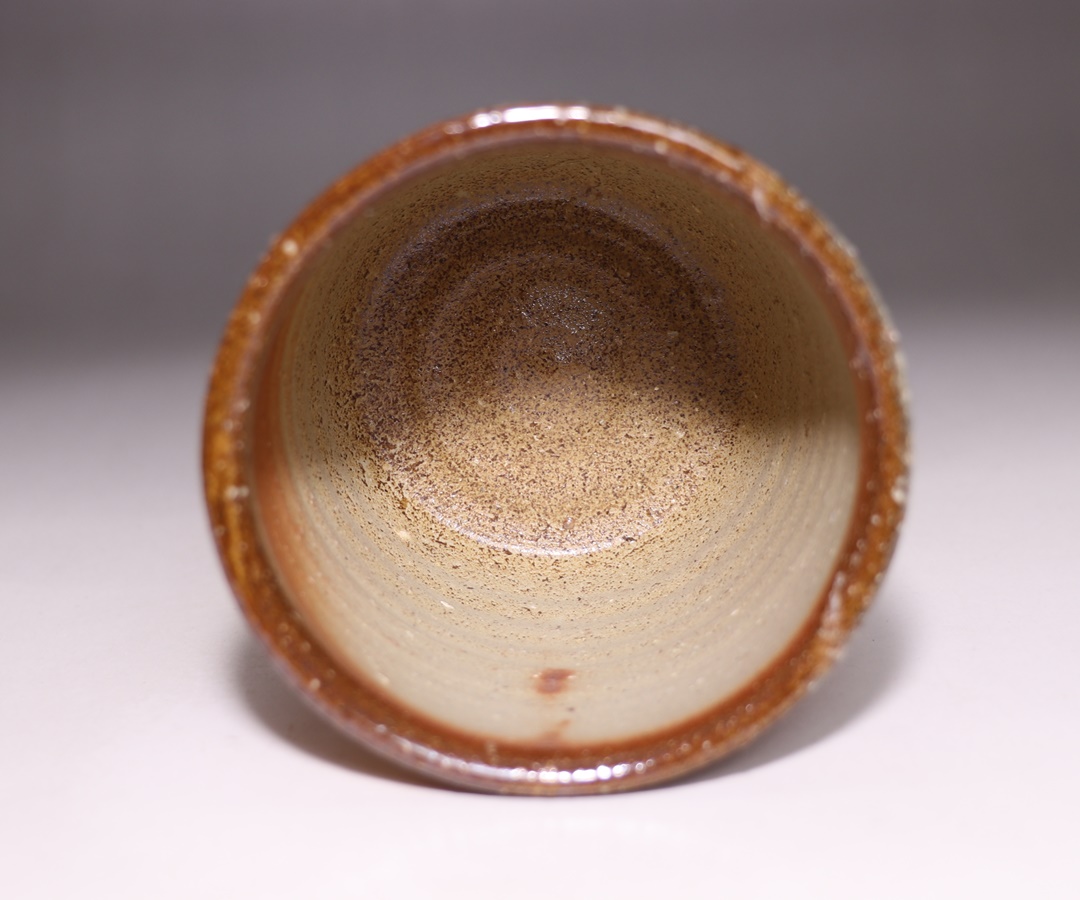
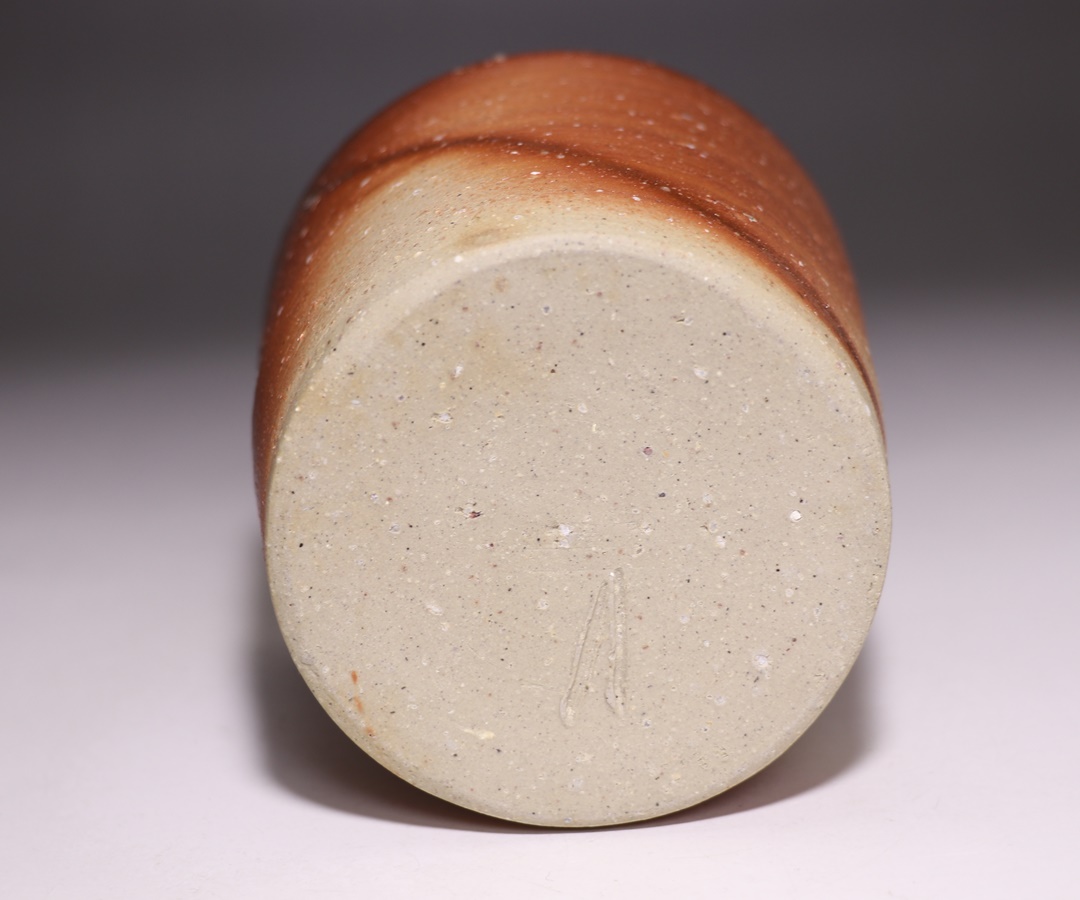
Jun Isezaki - Bizen Rock glass
44,000 YEN
size : W9.2cm×9.1cm×H8.8cmDrawing a wealth of inspiration from the natural environment of his beloved home of Bizen, Jun Isezaki brought a new spirit to the tradition of Bizen ware. This is a newly released Bizen Rock Cup by the artist.
Fired in February 2026, it is a work from the final period of his career.
The cup was fired for approximately ten days in a semi-underground Anagama kiln. Its surface displays many of the kiln effects representative of Isezaki’s Bizen ware, including Goma, Hidasuki, fine thread-like Goma, and a gradation between white clay and vivid scarlet tones.
The work was formed from a somewhat coarse, sandy clay. On the interior, where the flames did not strike directly, a fresh orange color has developed.
Rice straw was wrapped diagonally around the vessel before firing, creating a Hidasuki pattern that circles the entire cup. The flowing movement of this pattern makes the work enjoyable to view from every angle.
During firing, the straw also fused with natural ash glaze carried by the flames, producing a variety of colors and textures that change from one area of the surface to another.
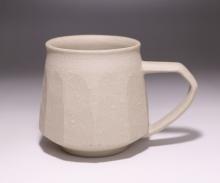


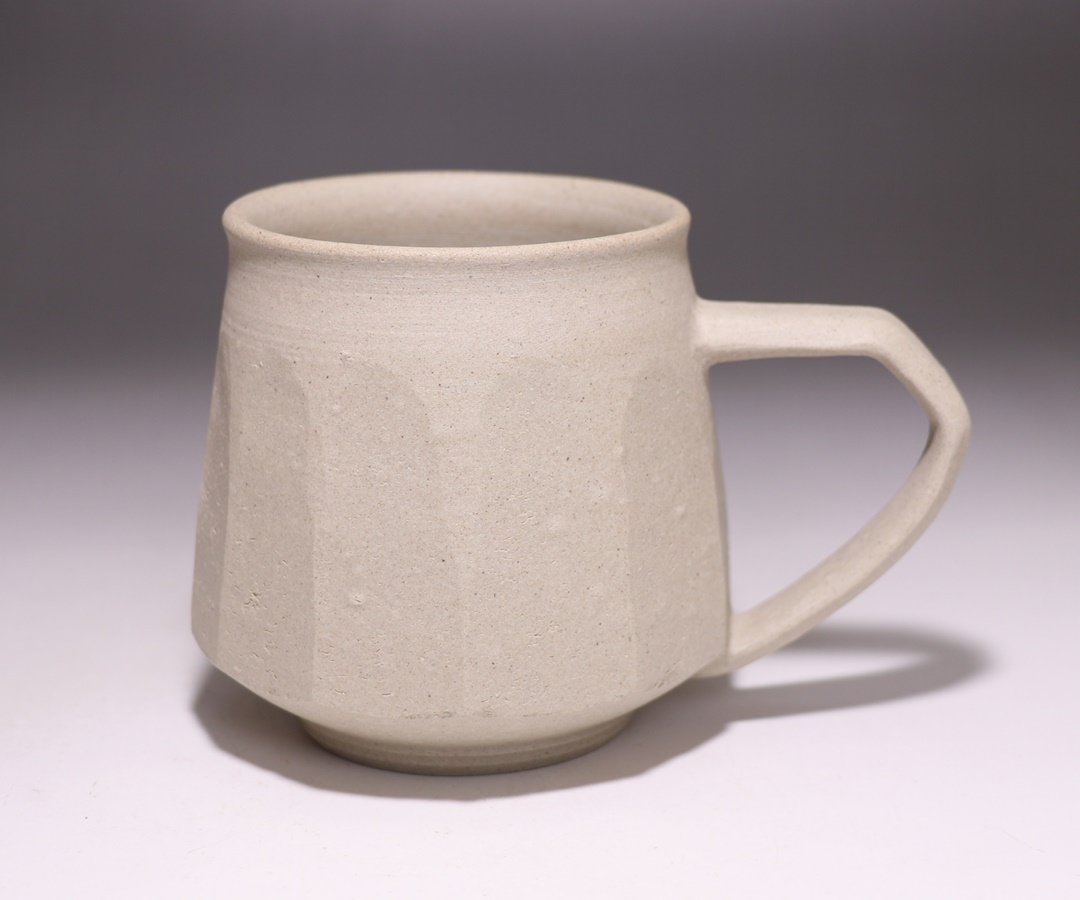
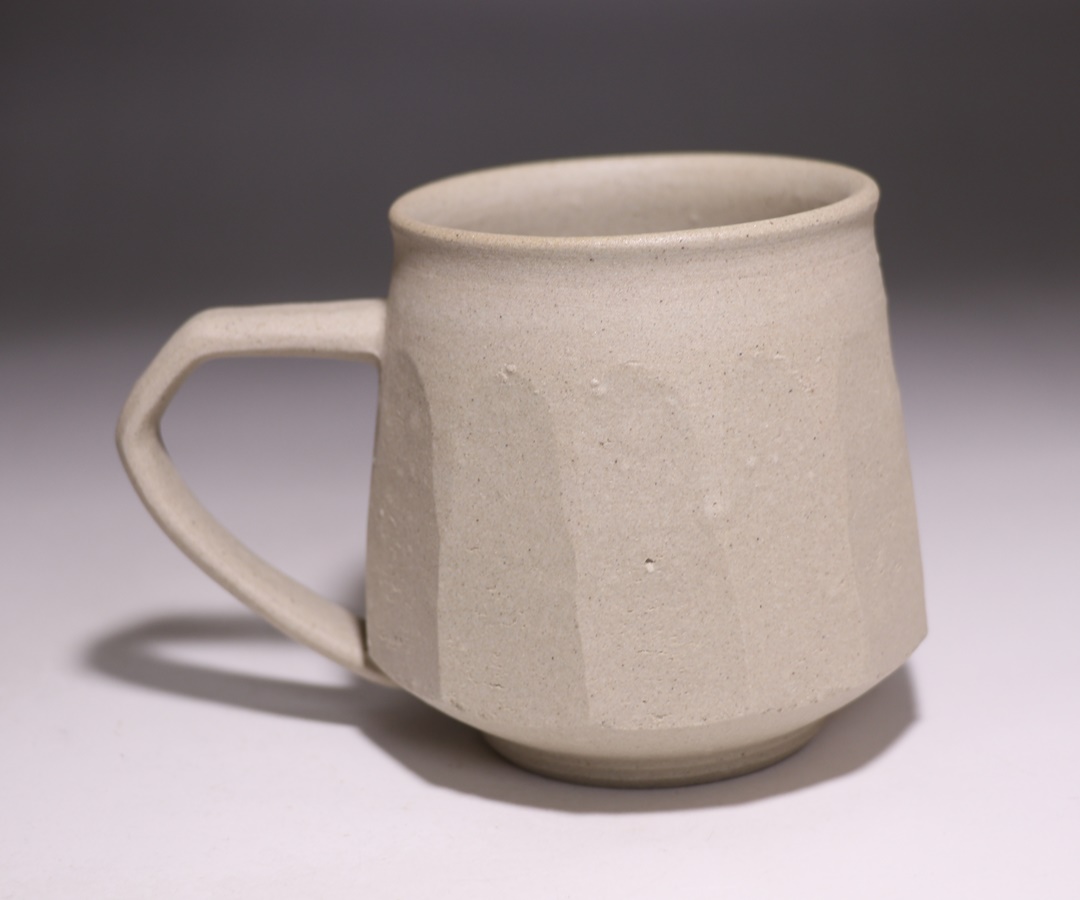
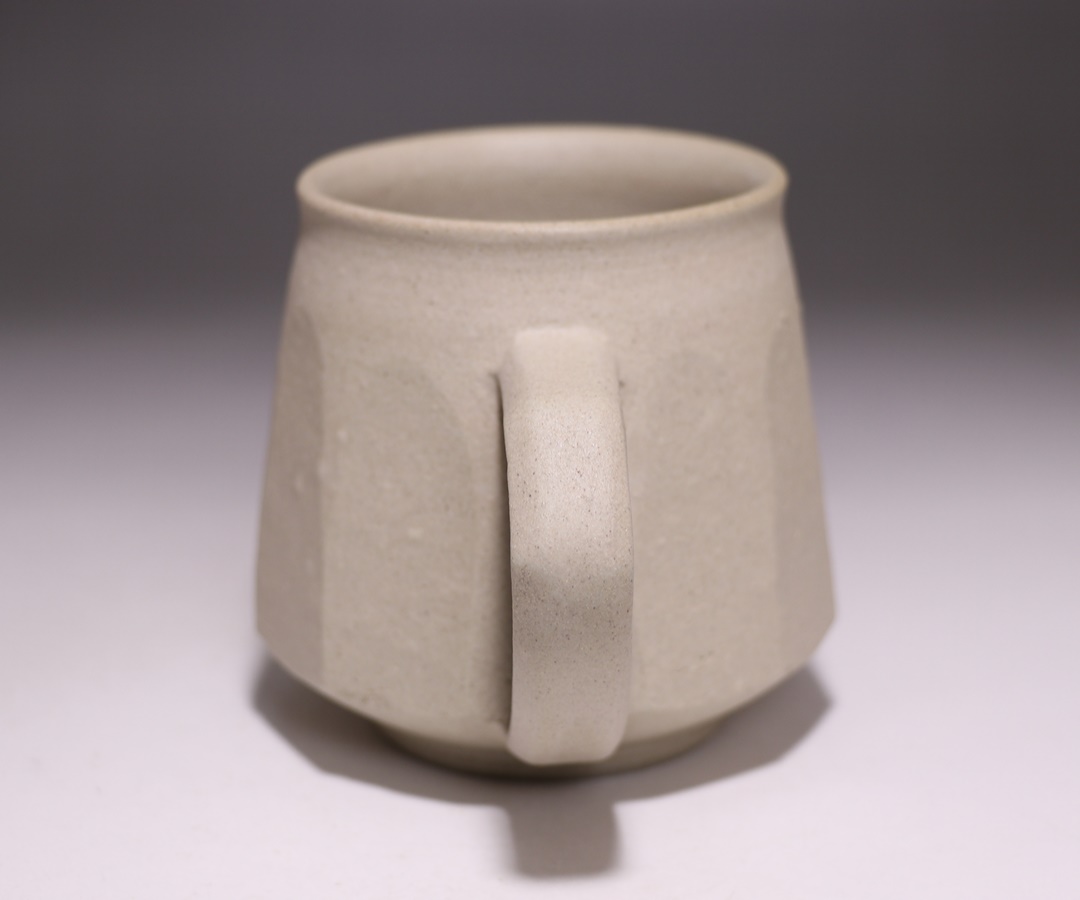
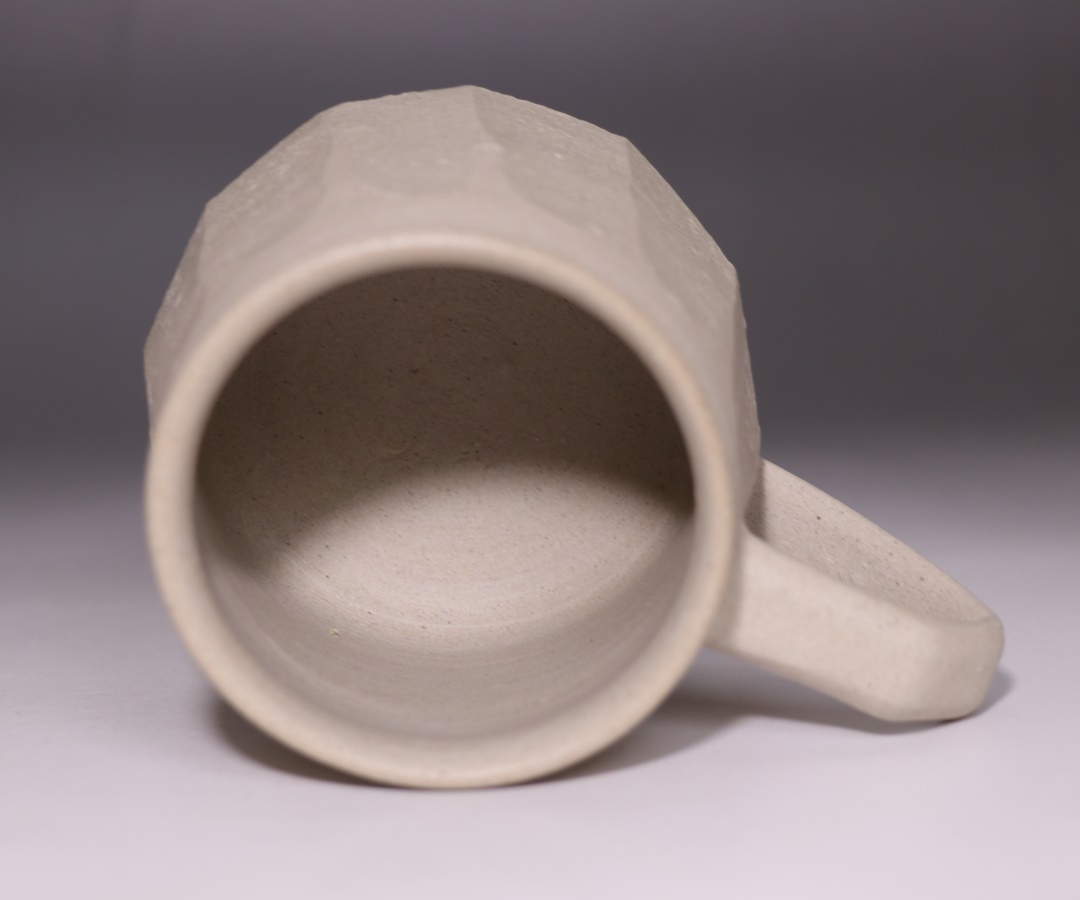
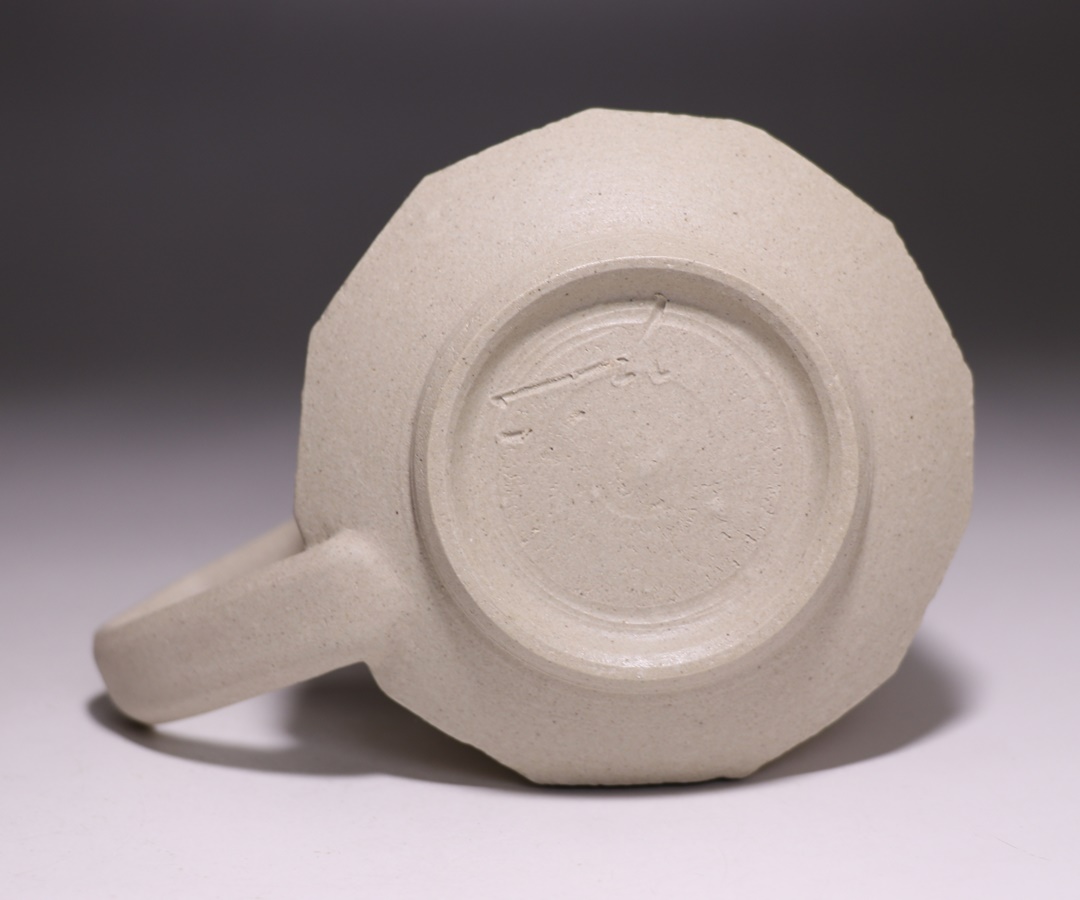
Sohei Takashima - Bizen Mitsuishi Mugcup
4,400 YEN
size : W11.9cm×8.8cm×H8.3cmAfter completing his training at Jun Isezaki’s studio, Sohei Takashima received the Contemporary Ceramic Art Encouragement Award from the Japan Ceramic Society, marking a brilliant debut. This is his new Bizen Mitsuishi mug cup.
Sohei Takashima studied under Jun Isezaki, the fifth Living National Treasure of Bizen ware, and later established himself in Ushimado, Setouchi City. This is one of his mug cups.
This piece was made by mixing Bizen clay with roseki stone from the Mitsuishi district in eastern Bizen City, resulting in a white surface that looks almost like unfired clay.
The roseki stone, a specialty of Mitsuishi, is finely crushed and blended into the clay, giving the piece an extremely smooth texture that matches its porcelain-like appearance.
Because of the nature of the clay, this is a piece that will develop beautifully with use. The colors of tea, coffee, and other drinks will gradually soak into the surface, and it is said that the piece will slowly take on a soft, earthy tone, almost as if it were being fired once again.
In keeping with the character and color of the clay, all unnecessary gestures have been completely stripped away. The result is a wonderfully simple and quiet design that perfectly suits its clean, pure appearance.
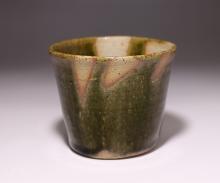


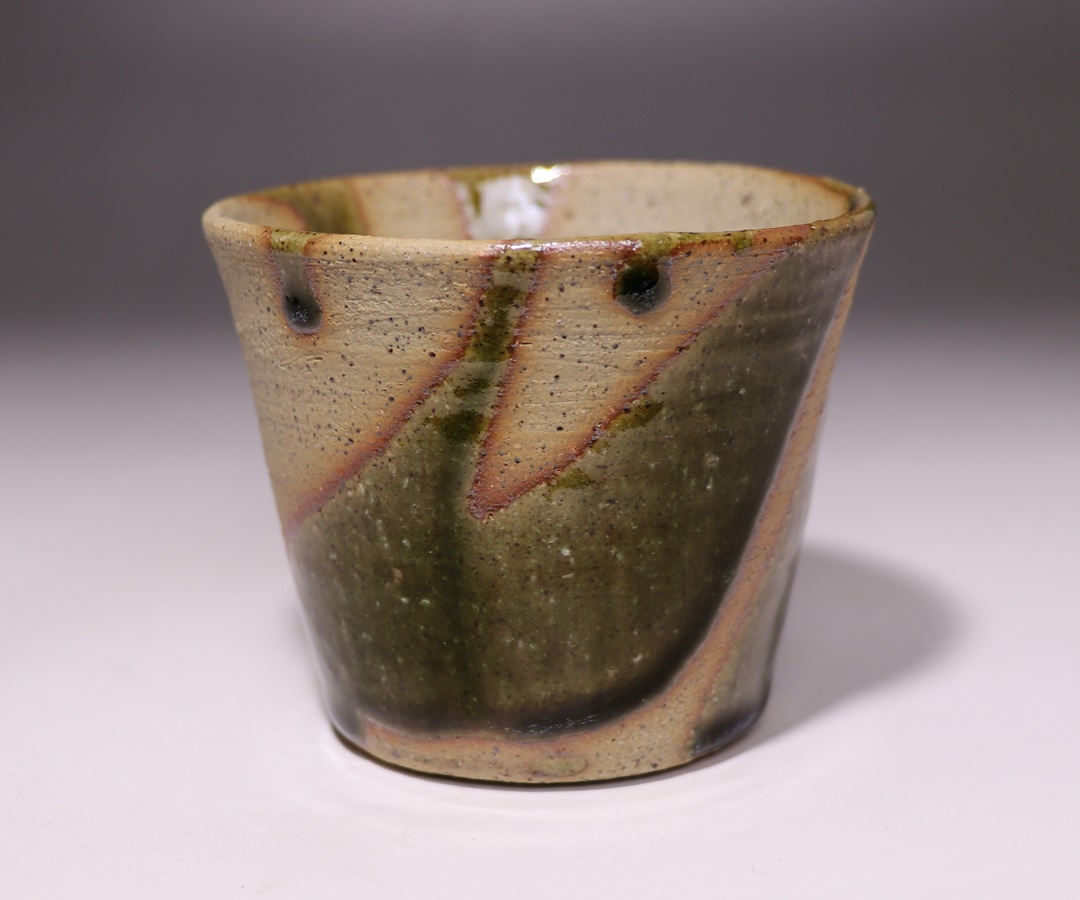
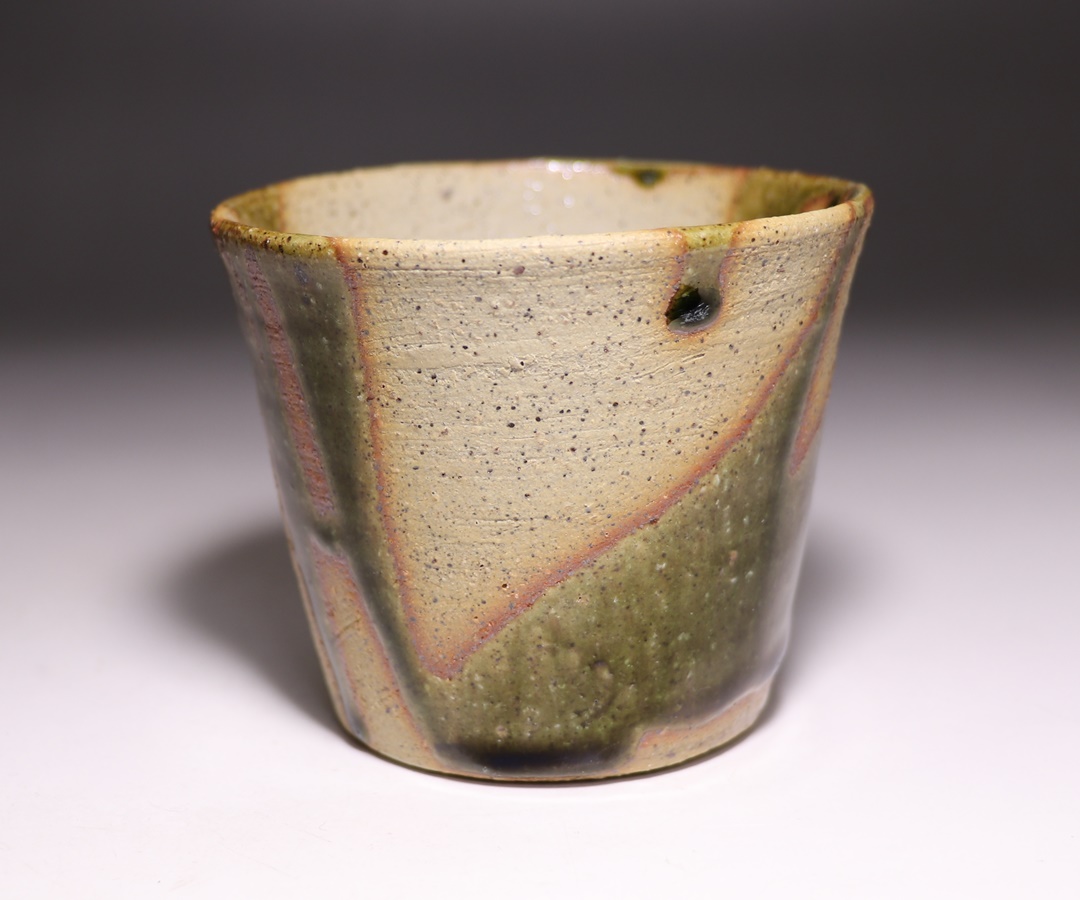
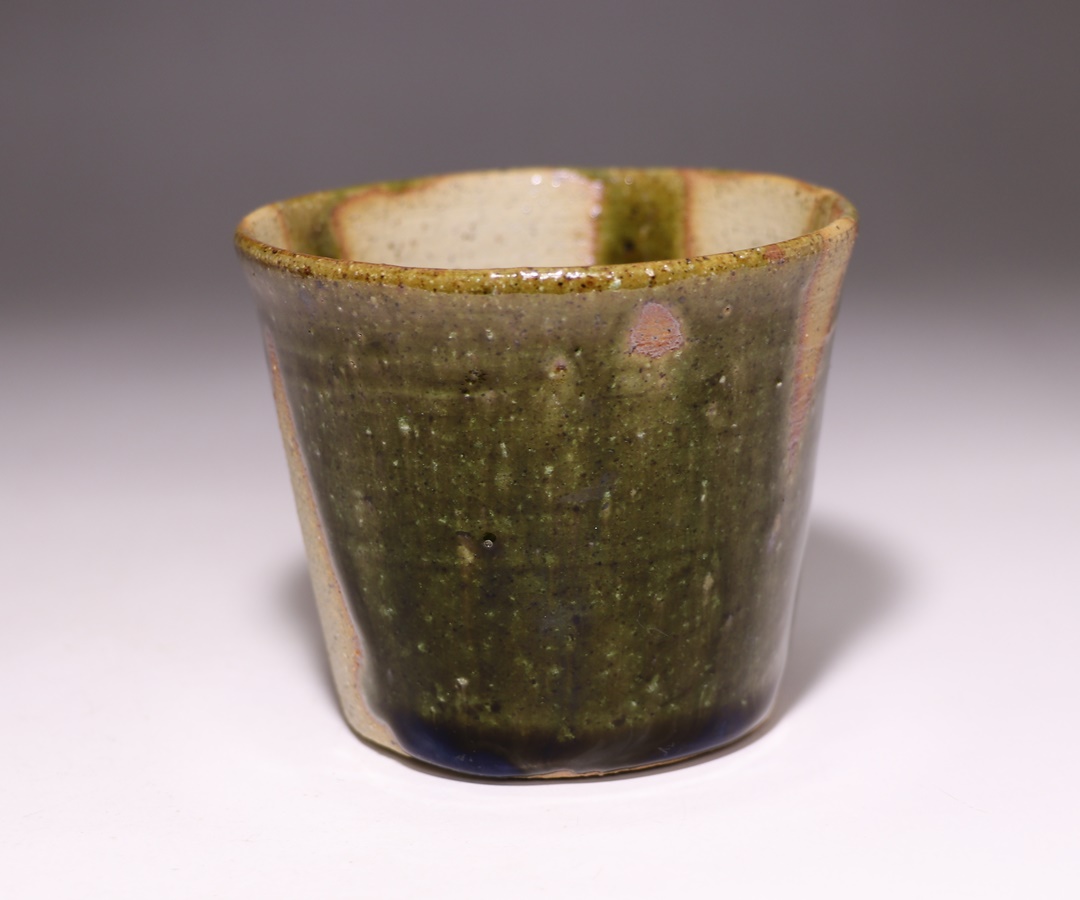
Kenji Takenaka - Bizen Oribe Cup
5,500 YEN
size : W8.5cm×8.3cm×H7.0cmKenji Takenaka entered the world of ceramics after working in jewelry design and later studied under Jun Isezaki. This is a Bizen Oribe Cup by the artist.
As the name *Bizen Oribe* suggests, the work combines Bizen clay with Oribe glaze, bringing out the distinctive appeal of both traditions.
In the exposed areas of the Bizen clay body, various mineral components within the clay have emerged as black and silvery particles. These give off a subdued metallic glimmer against the warm, ochre-toned surface, creating an intriguing accent.
The Oribe glaze has been poured dynamically across the vessel. Taking advantage of the glaze’s natural translucency, Takenaka allows the wheel marks on the body to create beautiful variations in depth and color.
Inside the cup and around the lower body, the glaze has pooled more thickly and developed a deep tone reminiscent of obsidian. This is another striking surface effect that makes full use of the flowing character of the Oribe glaze.
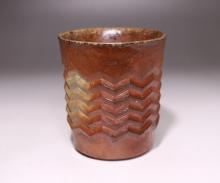


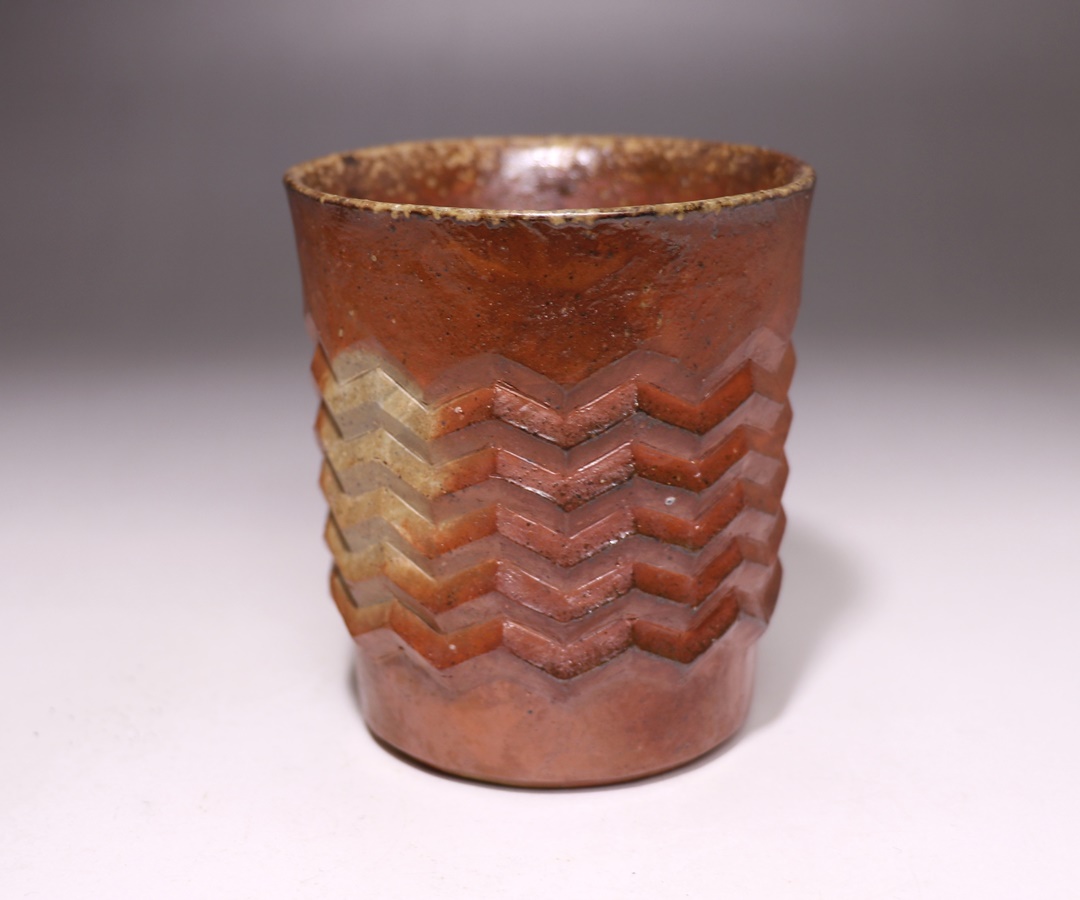
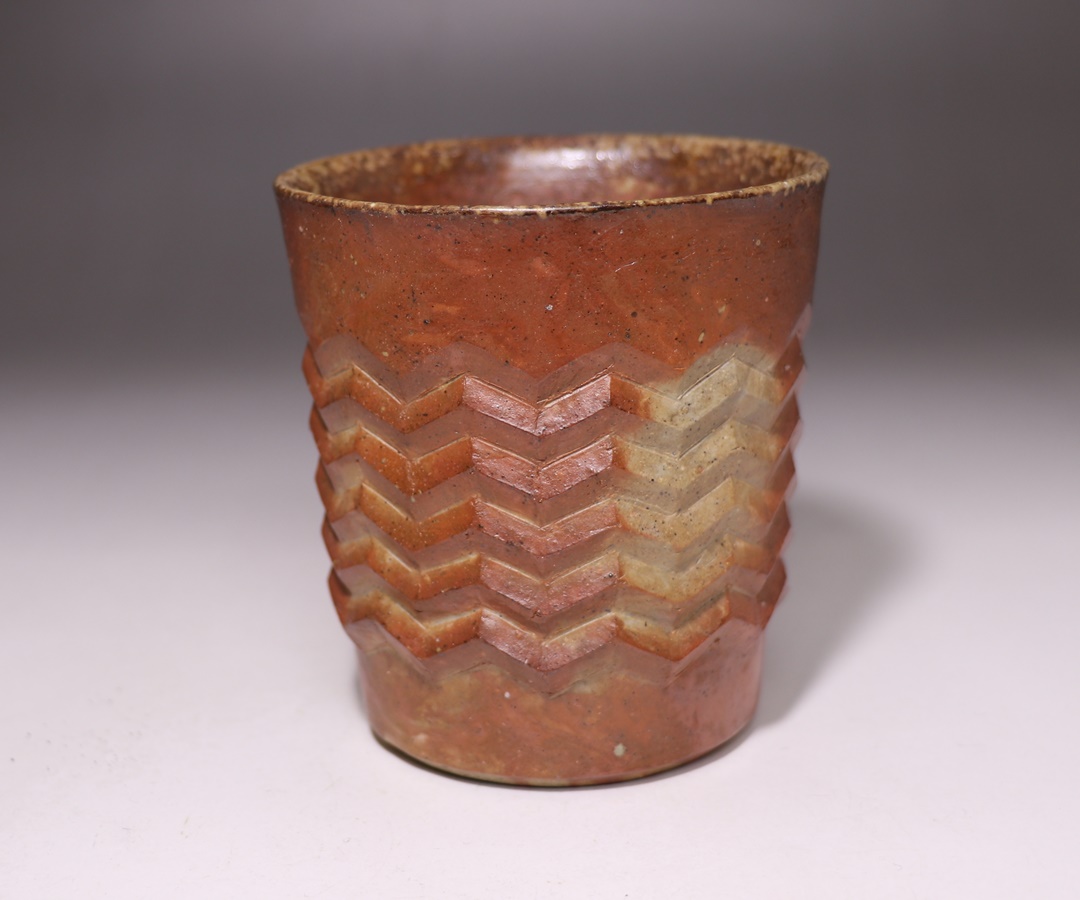
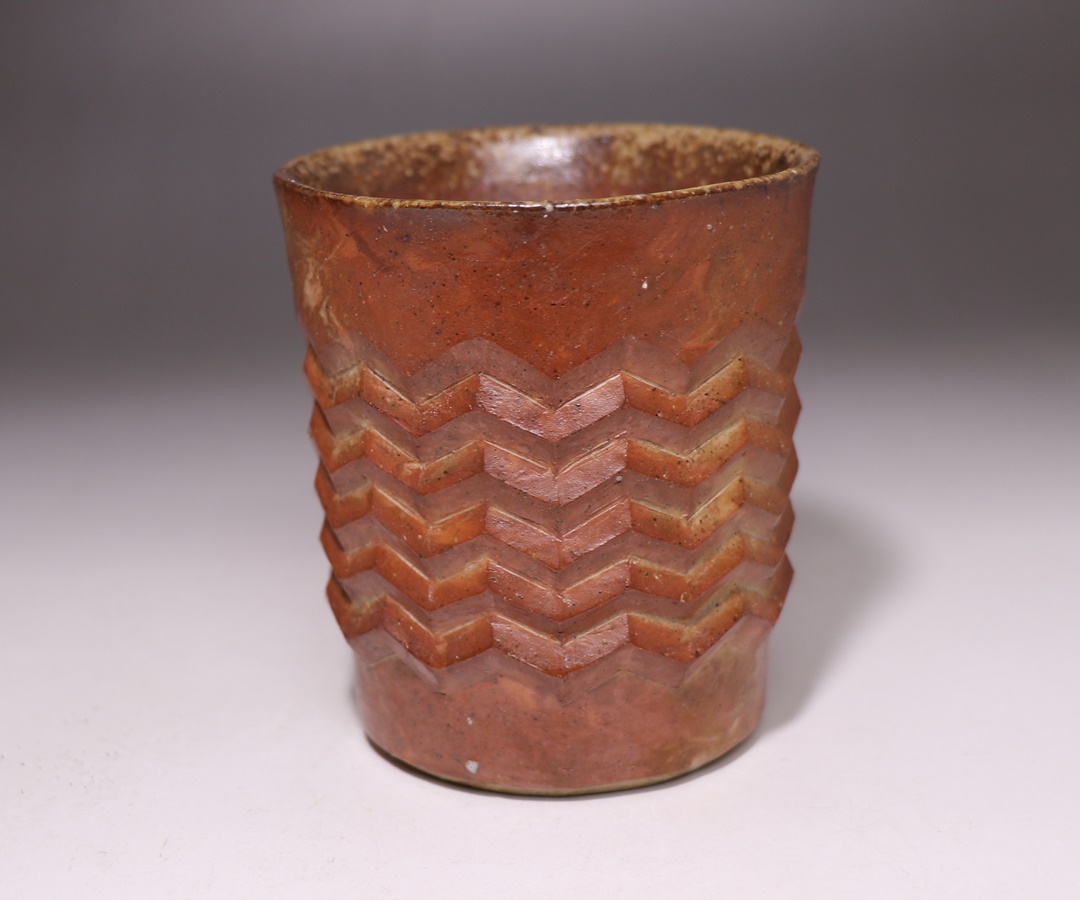
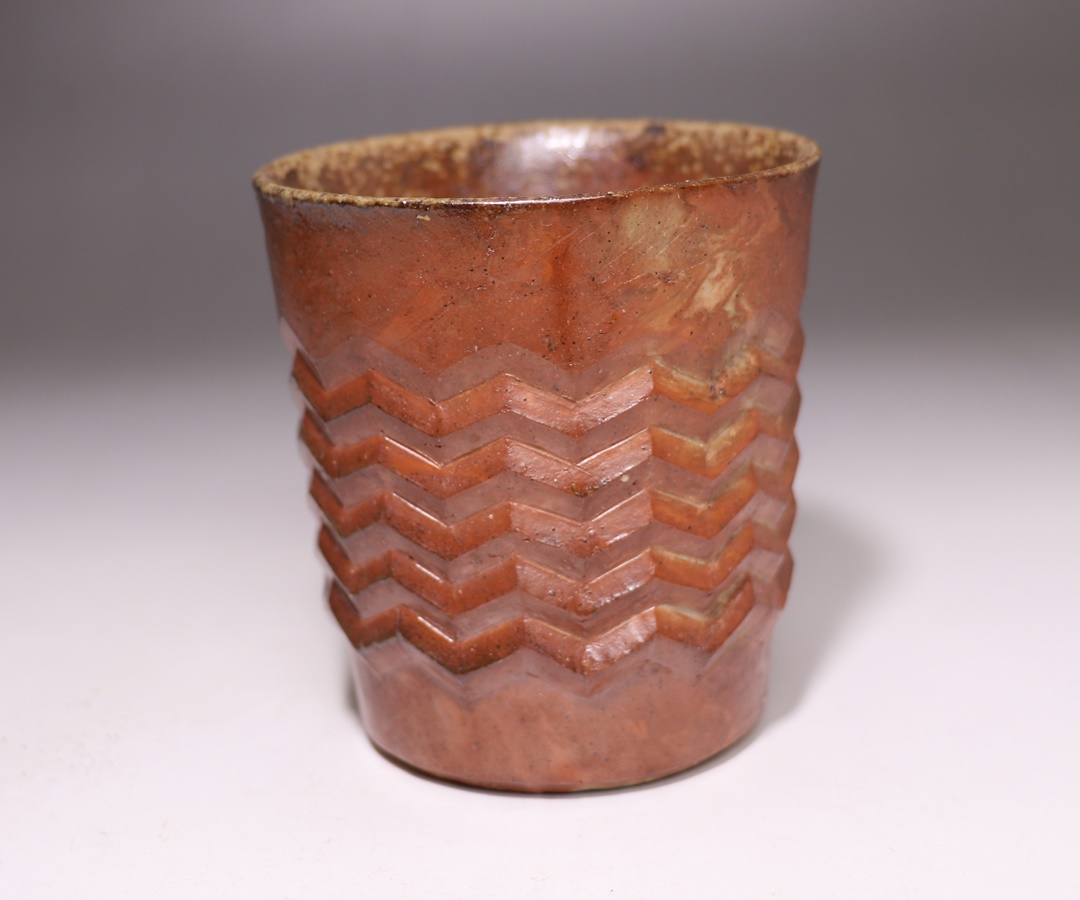
Koji Nakahara - Bizen Nerikomi Cup
17,600 YEN
size : W8.3cm×7.8cm×H8.7cmKoji Nakahara studied under Fumio Kawabata and strives to create works that complement contemporary lifestyles. This is a newly fired Bizen Nerikomi Cup by the artist.
The cup is distinguished by its marble-like clay surface, created by blending more than ten different types of rice-field clay and firing them together.
When clay of differing compositions is formed without being completely homogenized, cracks and other structural problems can easily occur. By repeatedly beating and compressing the clay as he builds up the form, however, Nakahara is able to create a beautifully shaped and well-balanced cup.
Because the vessel is formed by building up layers of clay rather than relying solely on the potter’s wheel, it is possible to create more complex designs that would be difficult to achieve through wheel throwing alone. In this piece, the center of the body has an accordion-like structure that almost looks as though it might expand if pulled.
The exterior is almost entirely covered with Hidasuki, while the Kigoma around the rim provides a perfectly judged accent. The clay surface, design, texture, and firing all come together at a remarkably high level, resulting in a beautifully accomplished cup.
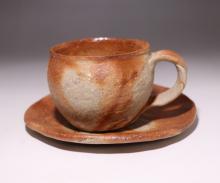


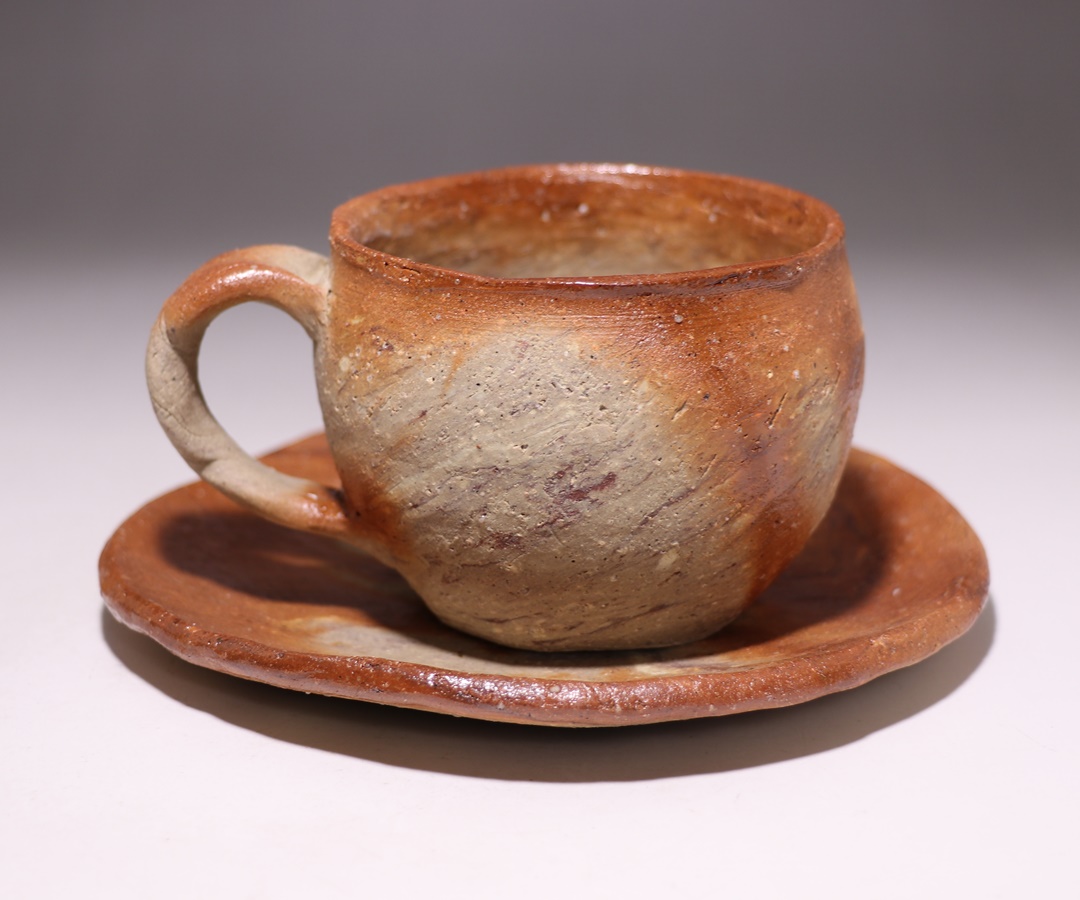
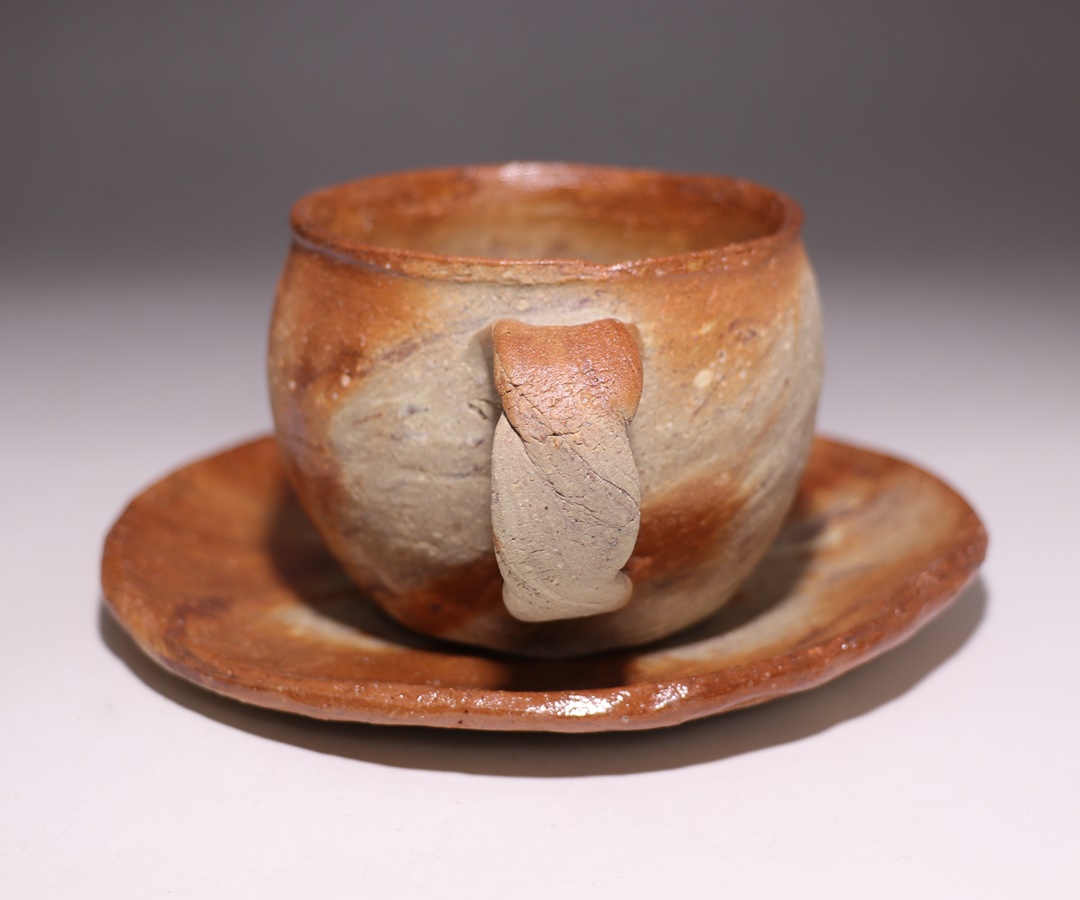
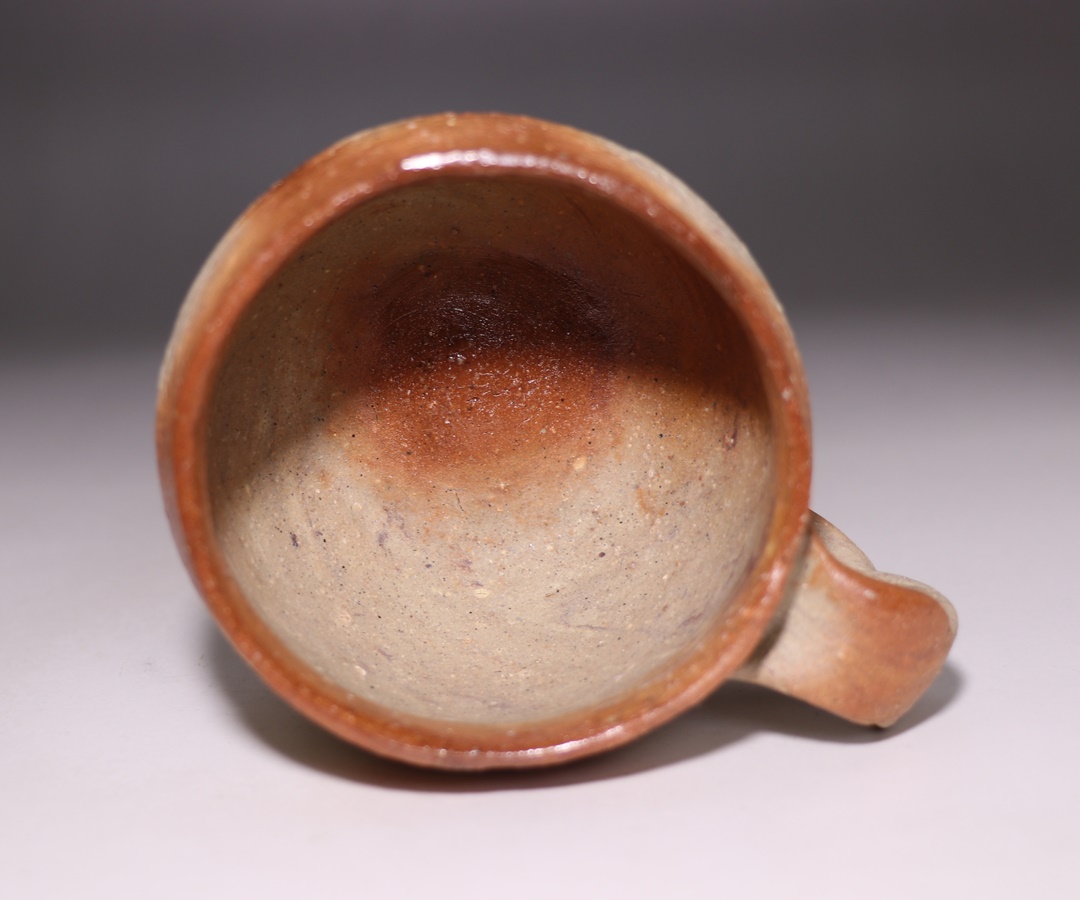
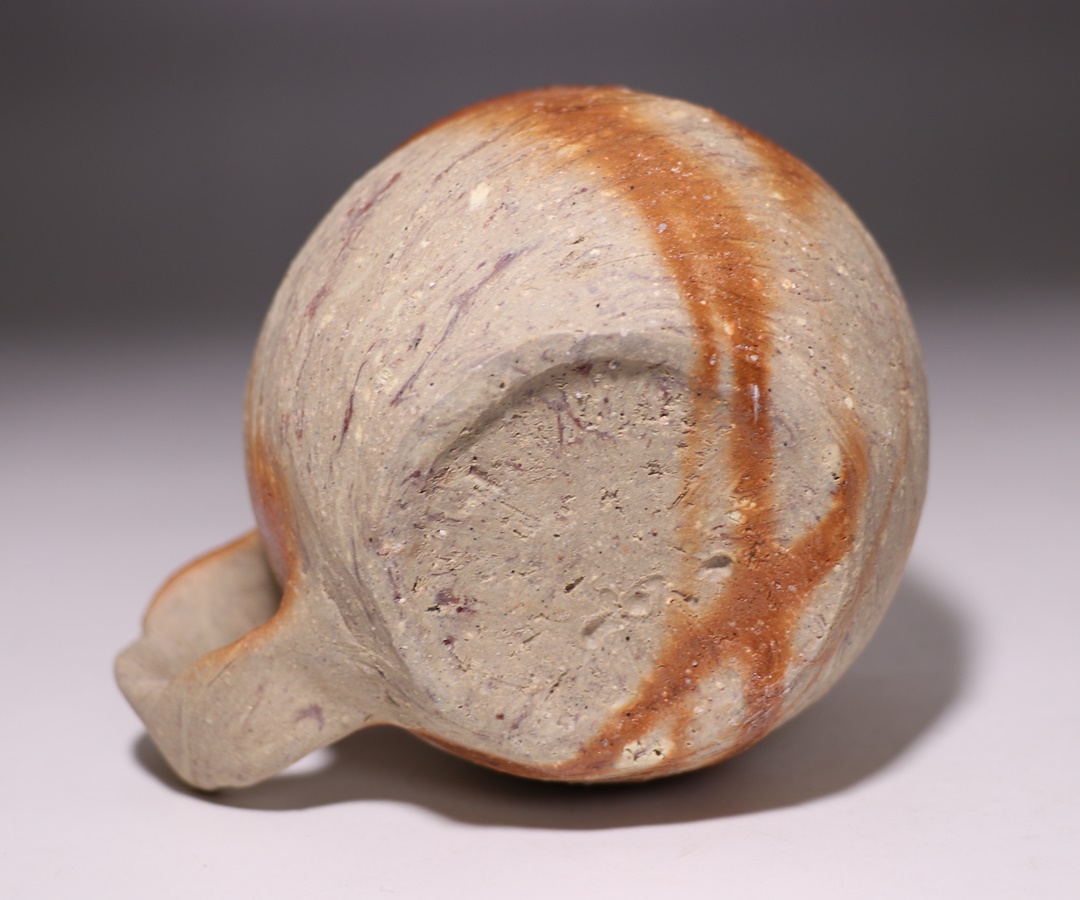
Naoki Yokoyama - Bizen Natural Nerikomi Cup & Saucer
9,900 YEN
size : Cup:W11.5cm×8.8cm×H6.6cm
Saucer:W14.8cm×14.3cm×H1.8cmNaoki Yokoyama was captivated by the mysteries of Bizen ware and studied under Fumio Kawabata. This is a Bizen Natural Nerikomi Cup & Saucer by the artist.
The work was created using a technique Yokoyama calls *Natural Nerikomi*. During the normal process of refining raw Bizen clay, its various components would ordinarily be blended together evenly. Instead, he deliberately leaves them partially unmixed, allowing their natural differences to remain visible in a marbled pattern.
The resulting clay surface has a remarkable sense of depth, reminiscent of fine handmade Japanese washi paper. Through this Nerikomi technique, the inherent warmth and softness of Bizen clay are brought out even more strongly.
Another distinctive quality of Natural Nerikomi comes from the forming process itself. The vessel is built up by stacking coils of clay into a cylindrical form while carefully compressing each layer. The densely compacted clay gives the piece an extraordinarily concentrated presence, almost as though it were expanding through a process of cellular division.
The firing is restrained to soft Hidasuki markings that seem to envelop the surface like a delicate veil. Because the clay itself is intended to remain the principal feature of the work, this understated kiln effect never becomes overly assertive and harmonizes beautifully with the Natural Nerikomi surface.
Even the technically demanding handle and saucer have been carefully formed using the same Natural Nerikomi technique, resulting in a highly accomplished and beautifully unified Cup & Saucer set.
1 / 41 page NEXT LAST