
Products
| Bizen Sake Bottle & sake Cup | Tea Ceremony Things | Bizen Flower Vase | Bizen Dish & Bowl | Others |
Bizen Sake Bottle & sake Cup
1094 Items
1 / 92 page NEXT LAST
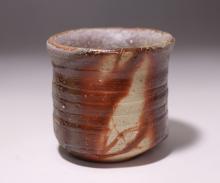


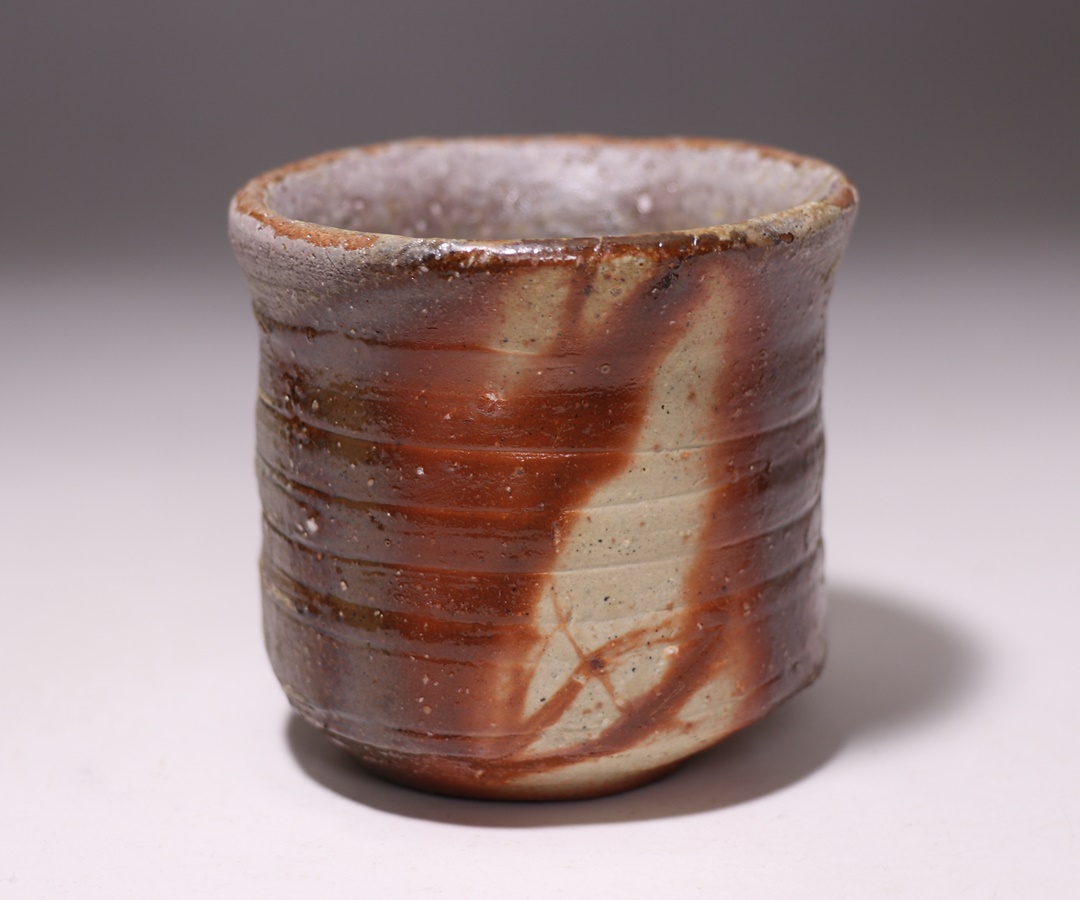
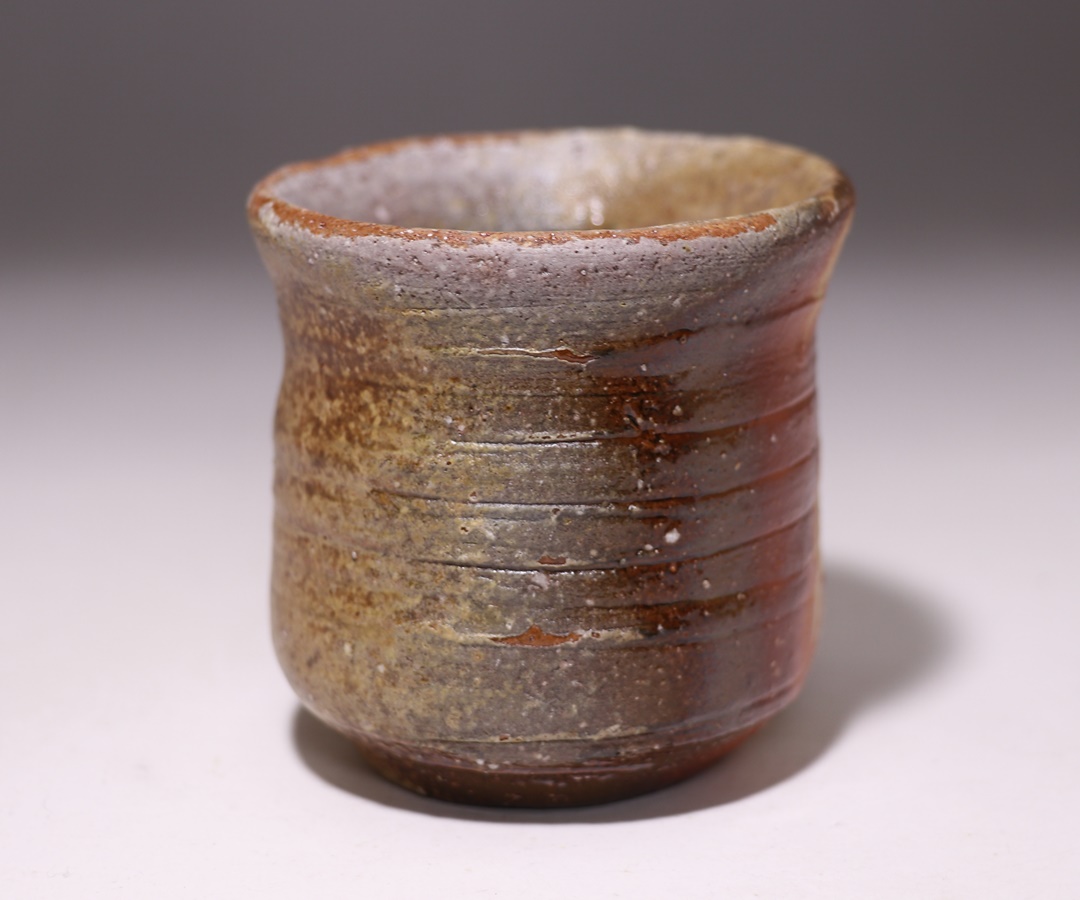
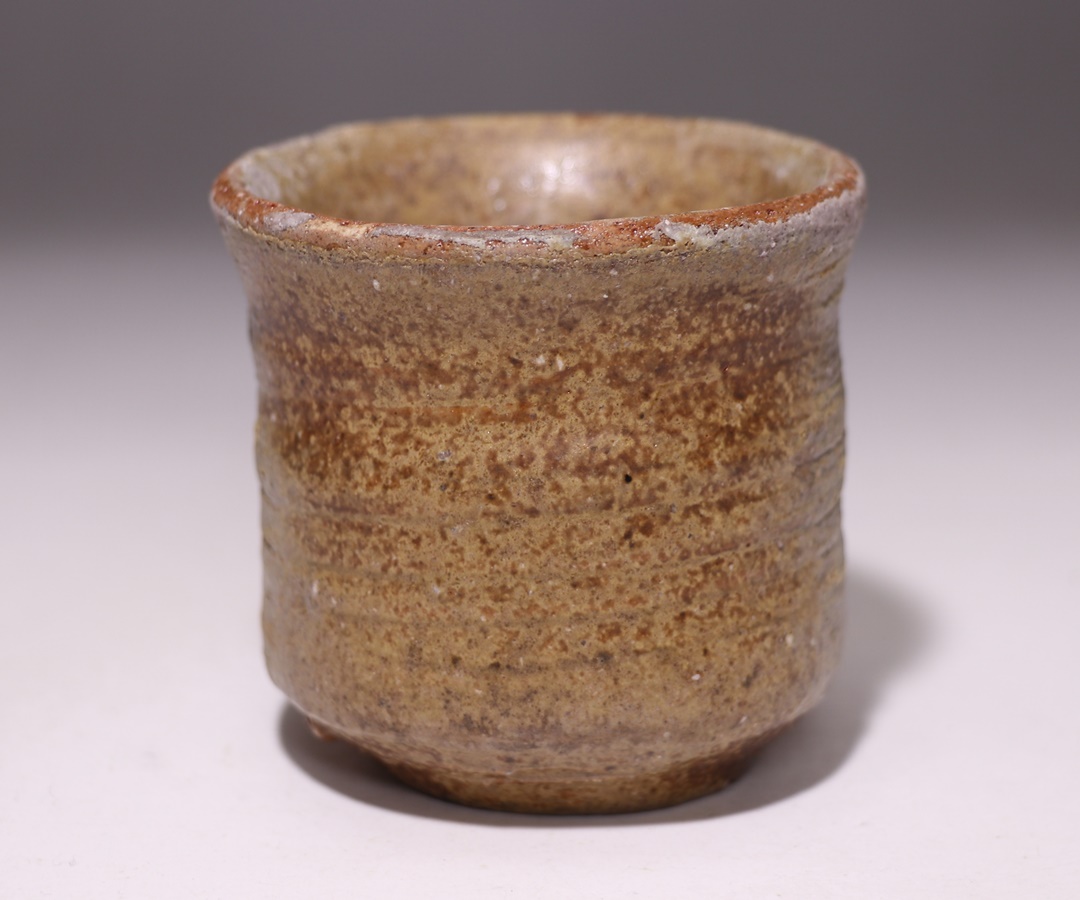
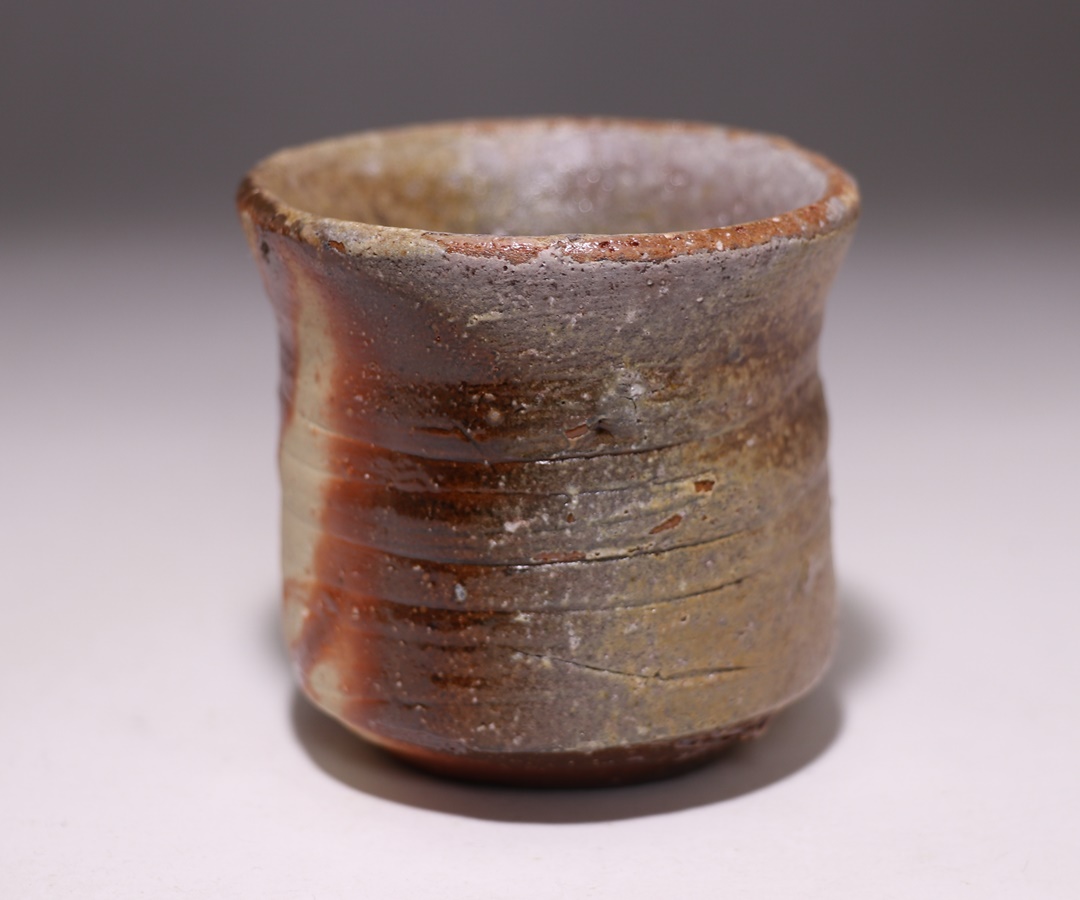
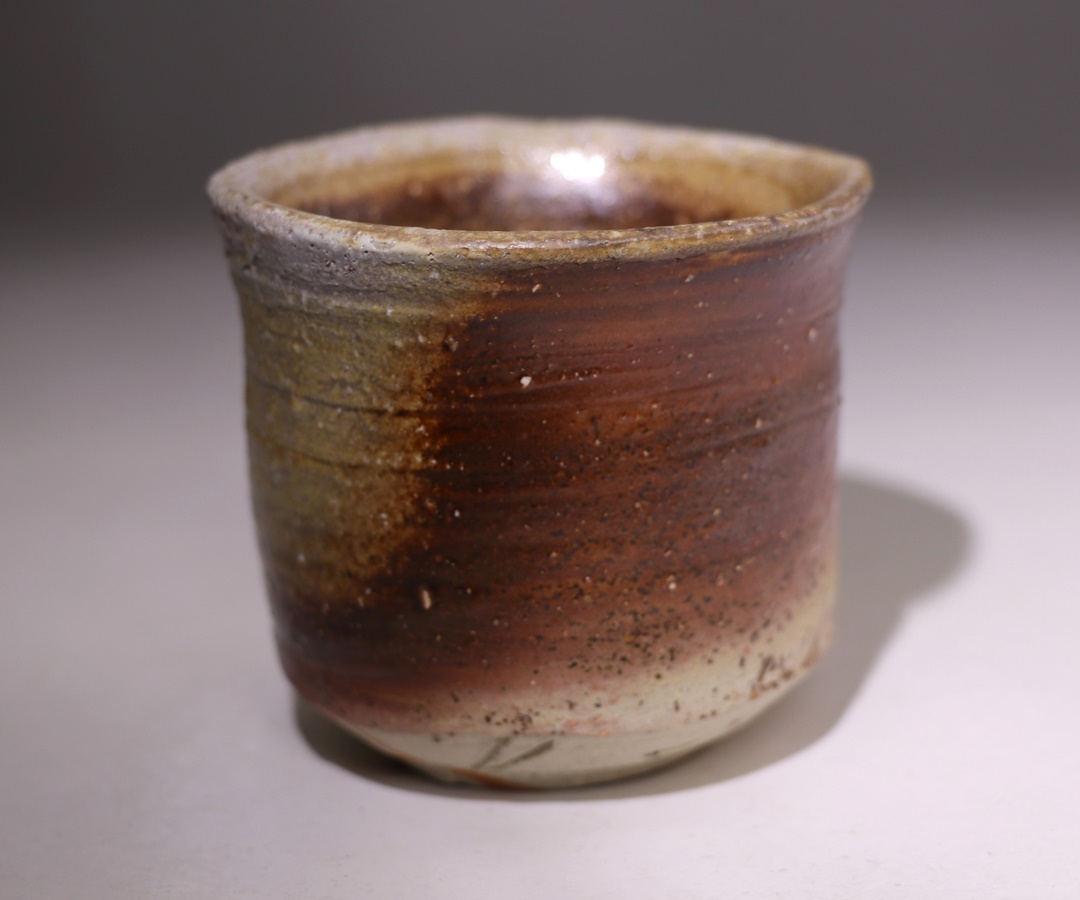
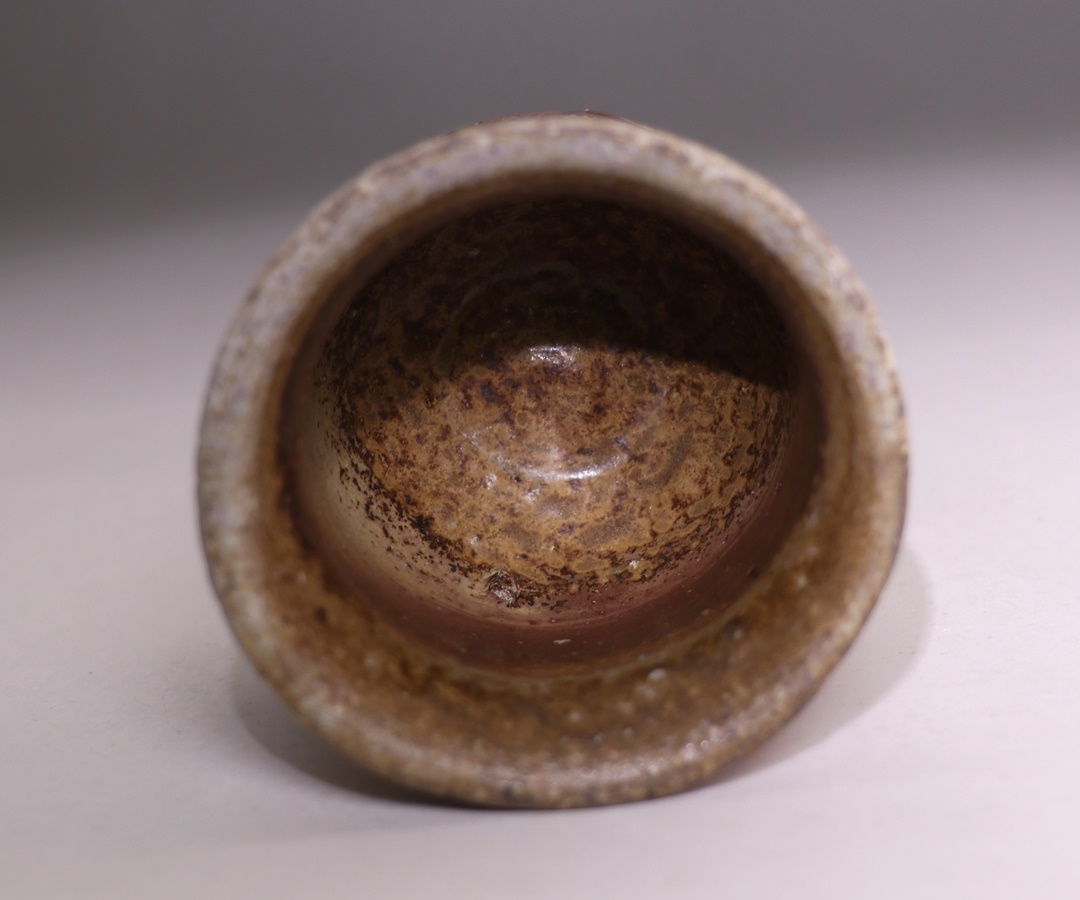
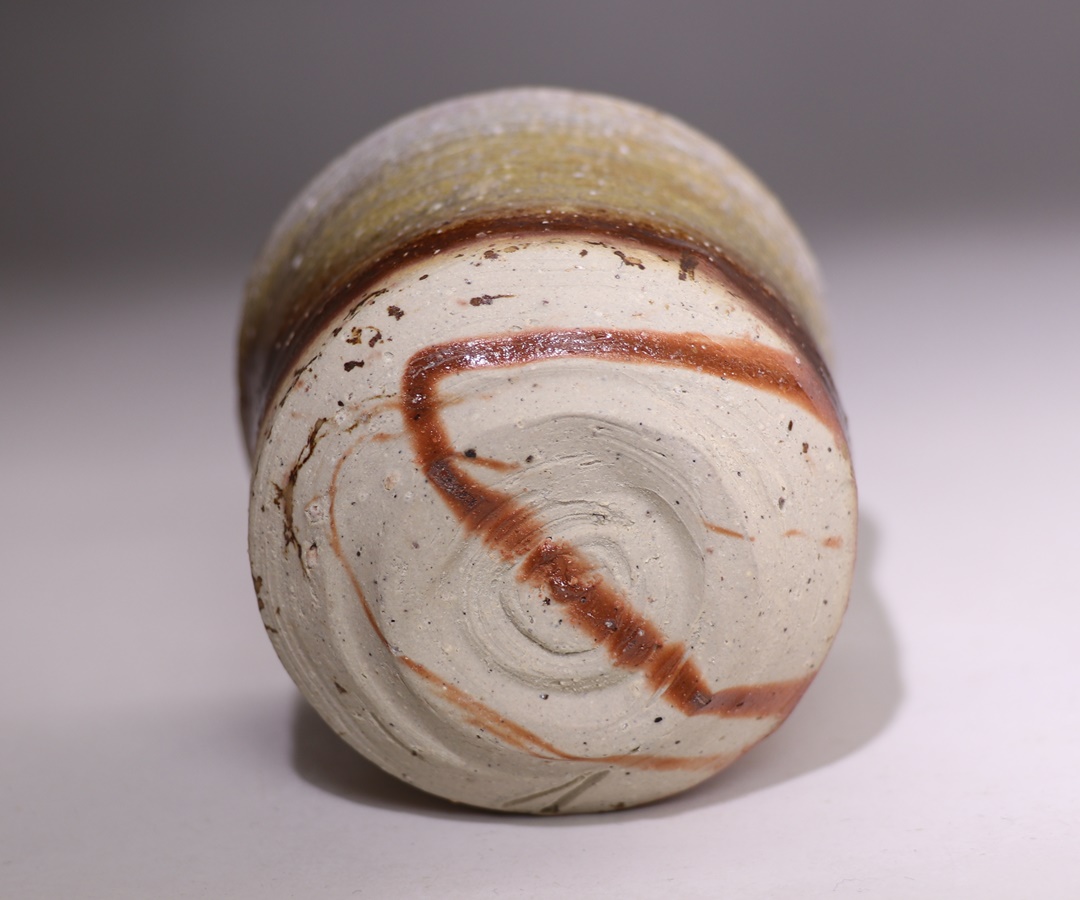
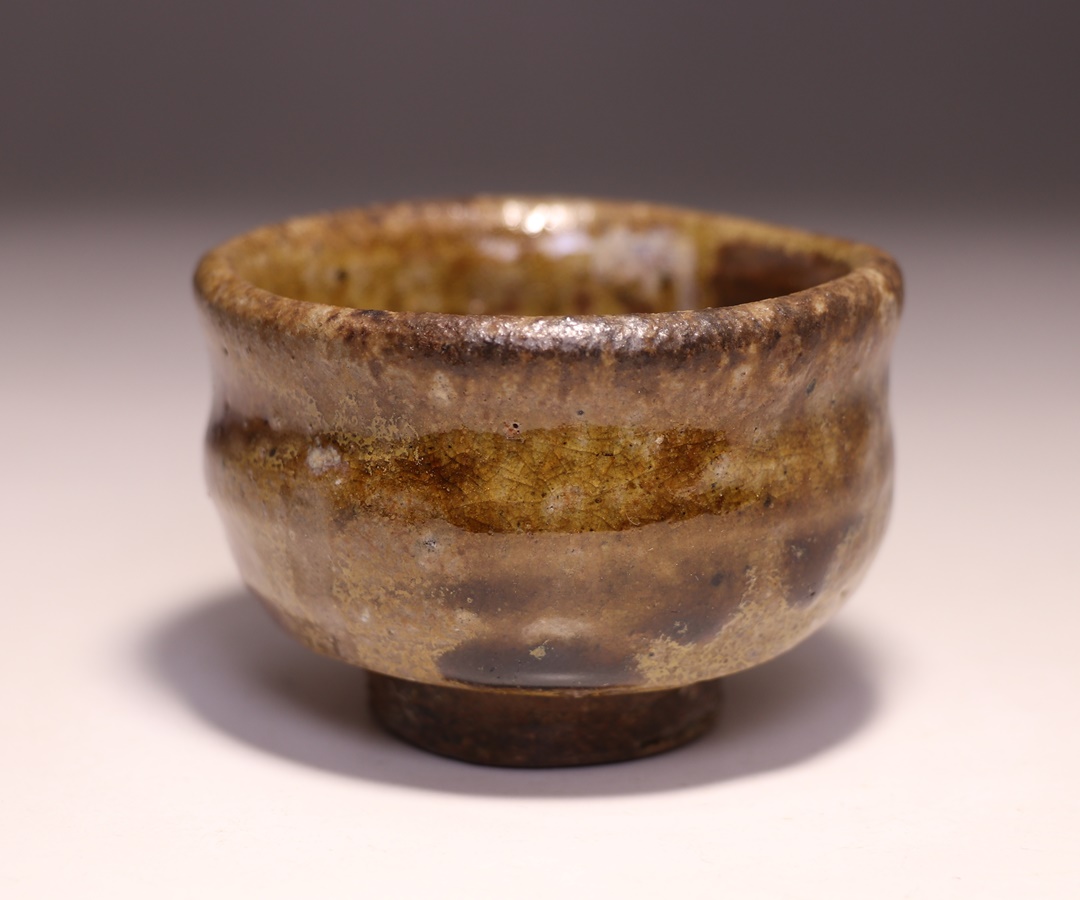
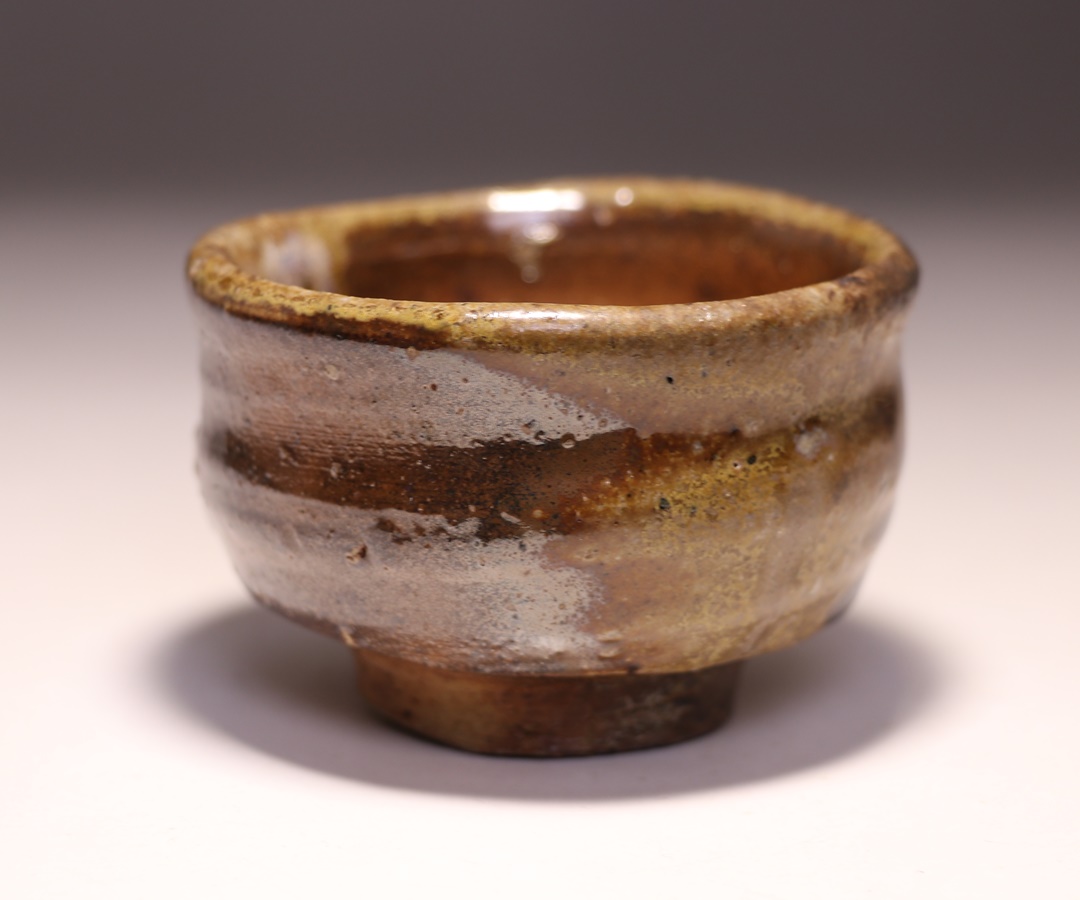
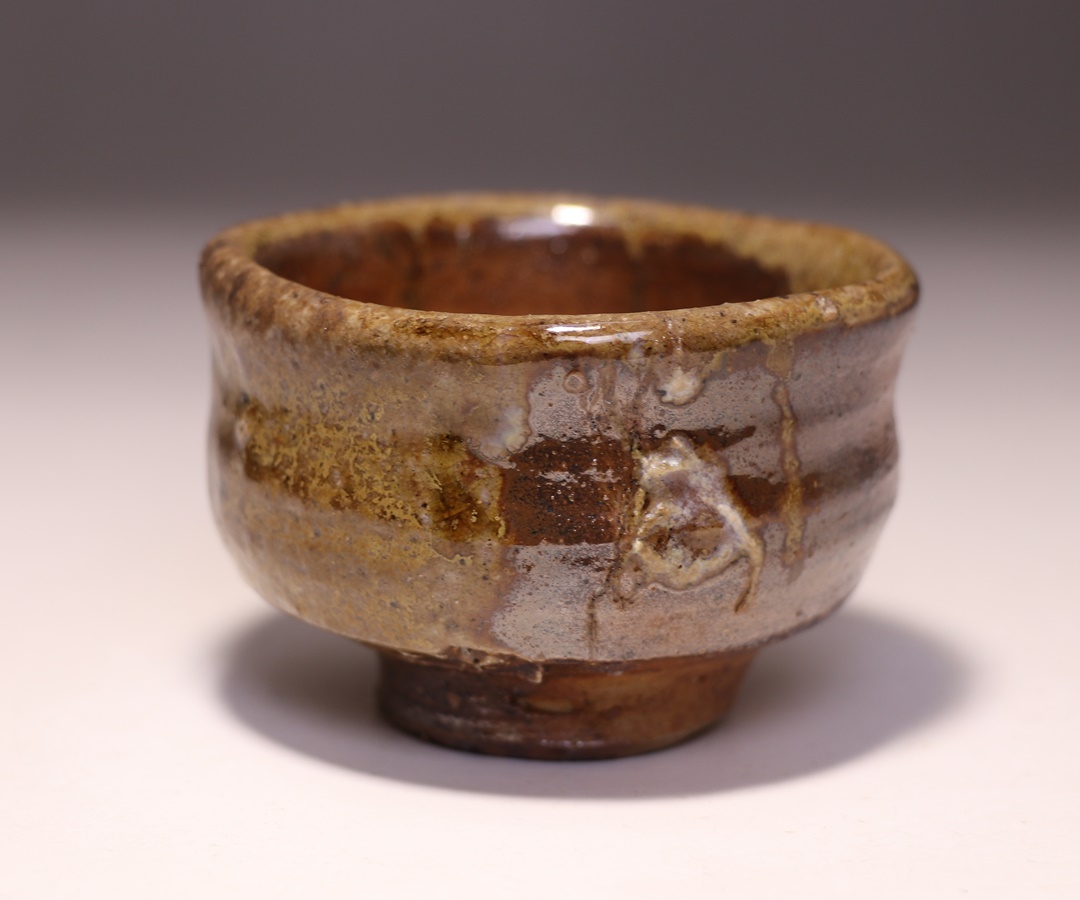
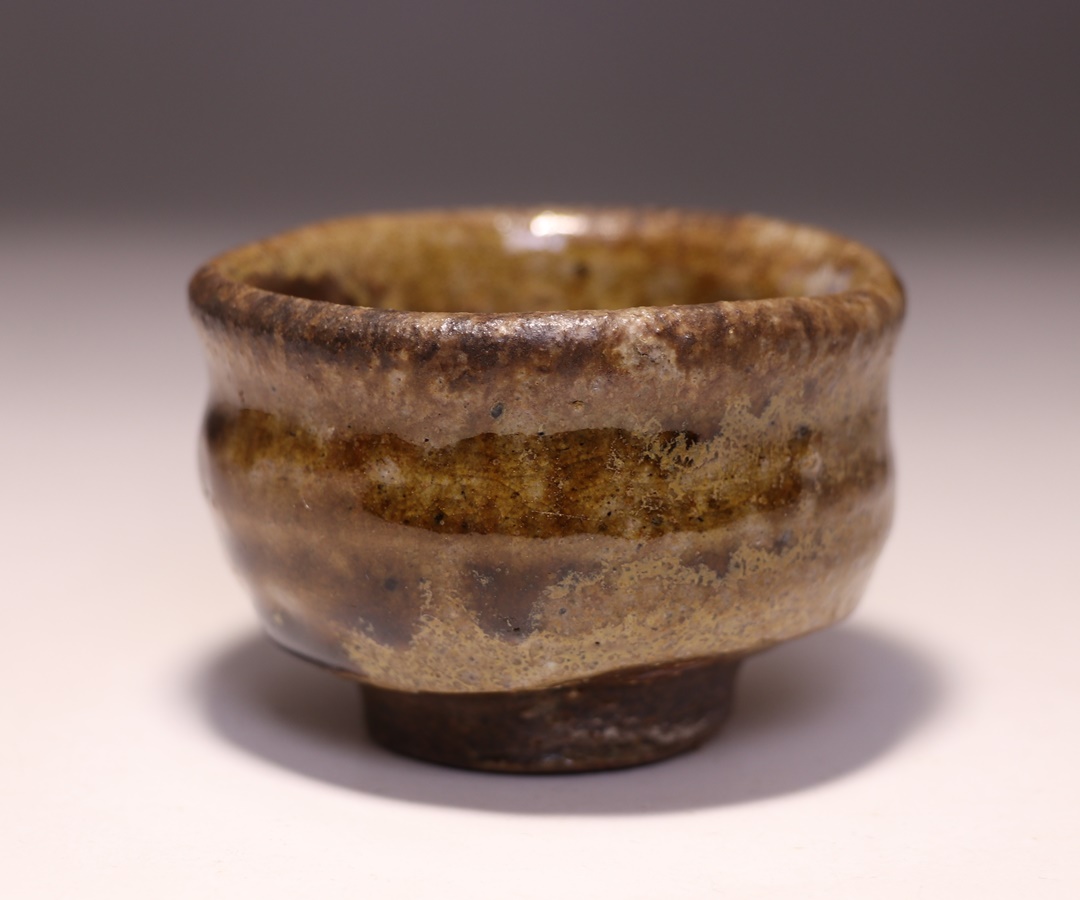
Jun Isezaki - Bizen Guinomi
66,000 YENSold out
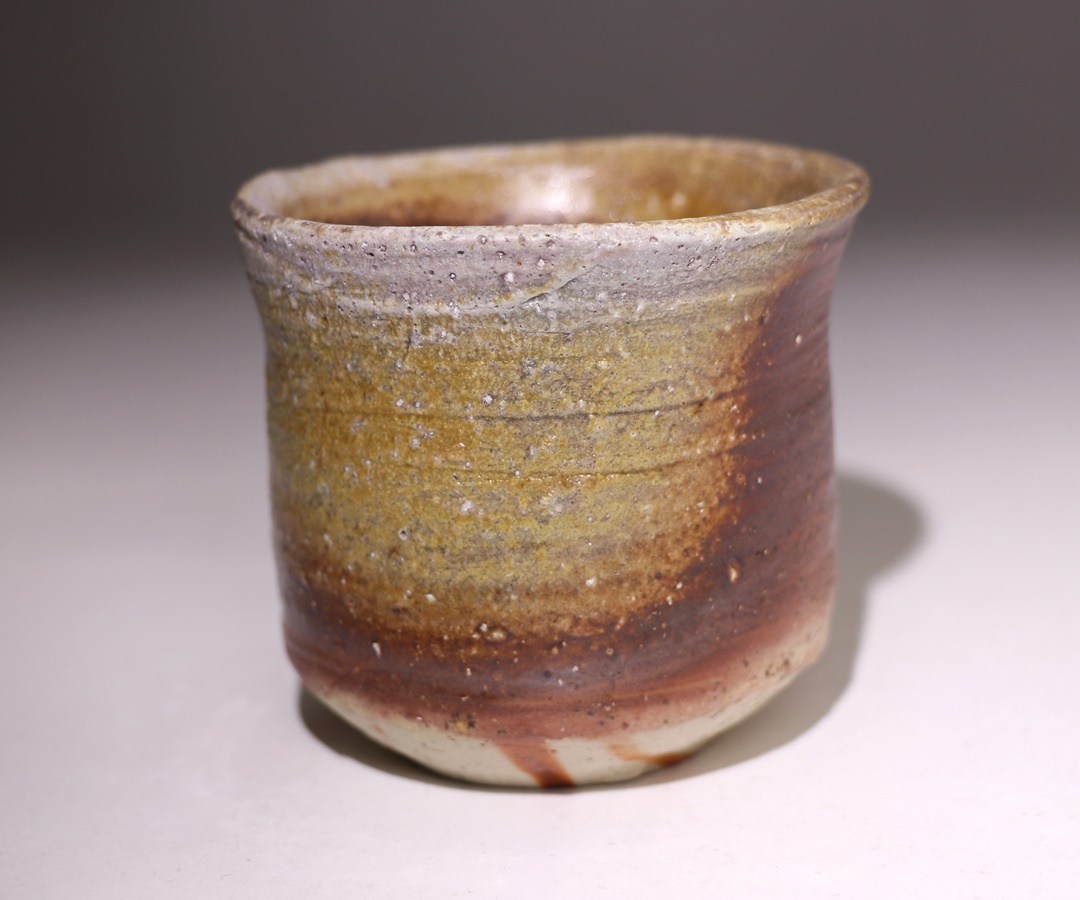
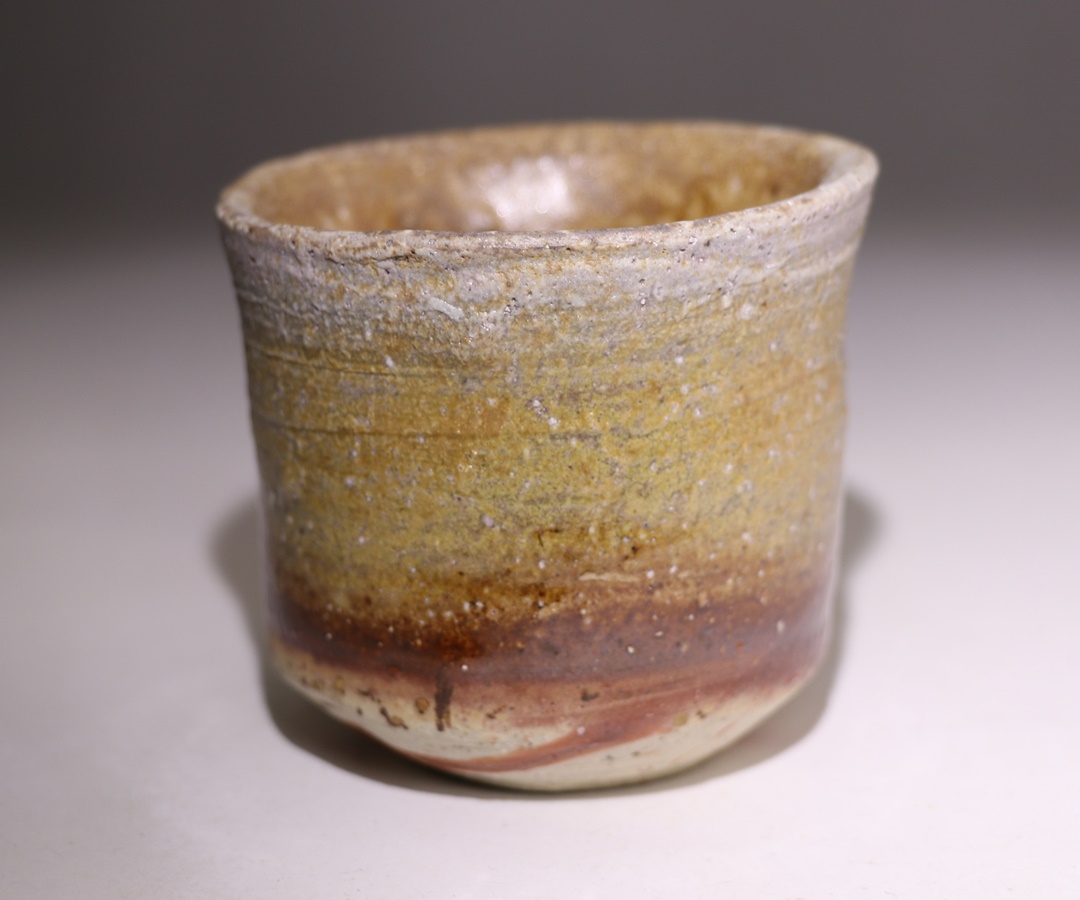
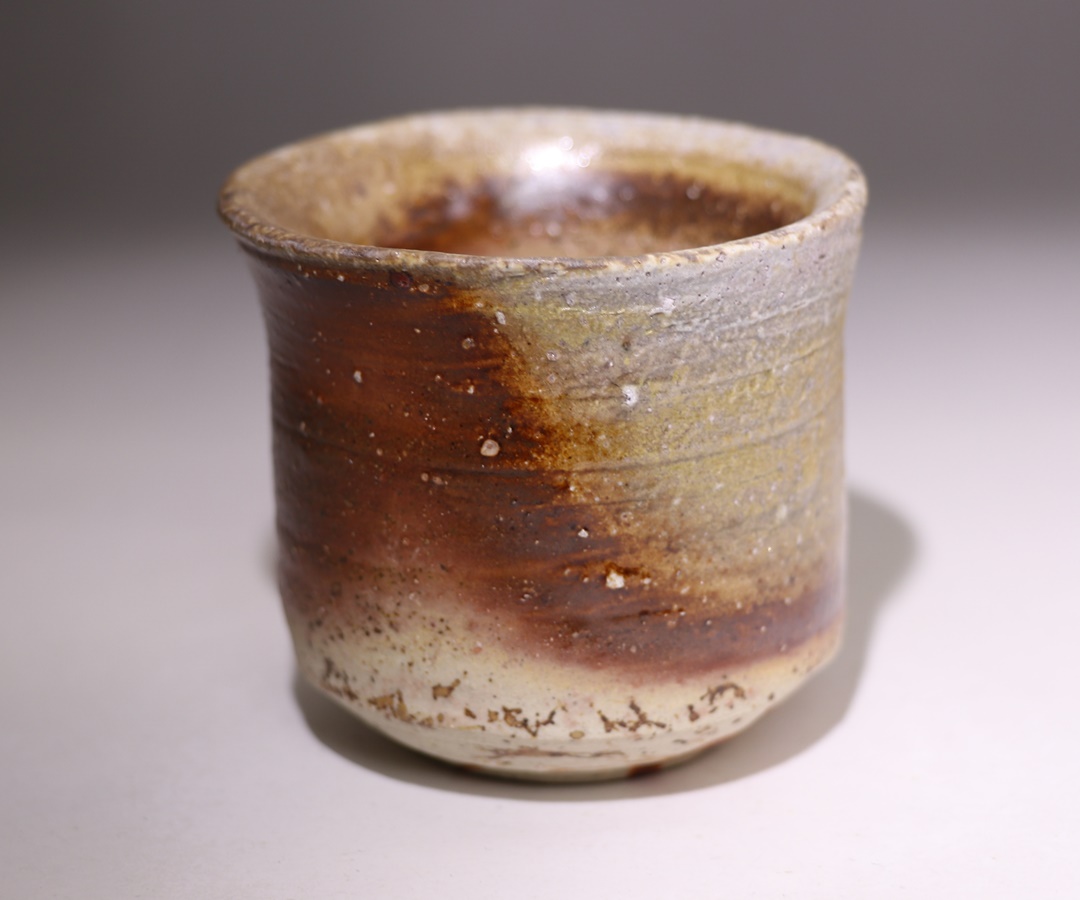
size : W7.1cm×6.9cm×H6.7cmDrawing a wealth of inspiration from the natural environment of his beloved home of Bizen, Jun Isezaki brought a new spirit to the tradition of Bizen ware. This is a newly released Bizen Guinomi by the artist.
The piece was formed on the potter’s wheel by Jun Isezaki in January 2026 and later fired by Koichiro Isezaki in July of the same year, making it one of Jun Isezaki’s posthumous works.
It was created during a period in January when Jun Isezaki’s health had temporarily improved. Despite having been made only shortly before his passing, the vessel rises with a remarkably powerful and energetic form.
It is said that his fingernails were slightly long when he threw the piece on the wheel, leaving subtle traces across the body that resemble wheel marks. These lines provide a gentle accent within the relaxed and spacious form.
The humidity brought by prolonged rainfall in July affected the firing conditions in Koichiro Isezaki’s kiln, resulting in Kase-Goma that developed across the surface like a layer of frost covering the vessel.
Vivid Hidasuki markings, characteristic of Anagama firing, also appear across the exposed clay. Against the soft white tone of the clay, the deep scarlet lines resemble flashes of crimson lightning and create an especially striking contrast.
The trimming of the foot also has a distinctive sense of ease and restraint, giving it a deeply expressive character. Looking at it brings to mind Jun Isezaki’s warm smile as he quietly watched over his apprentices in the throwing room.
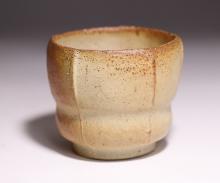


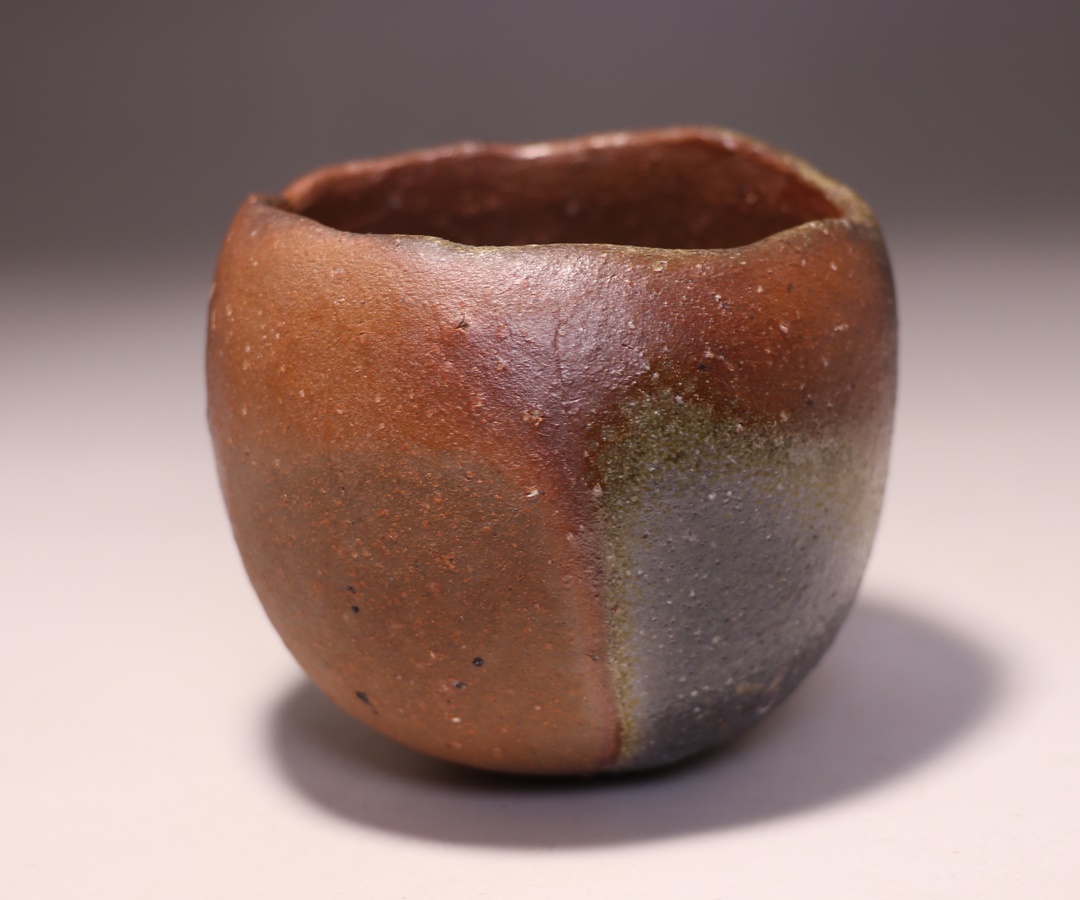
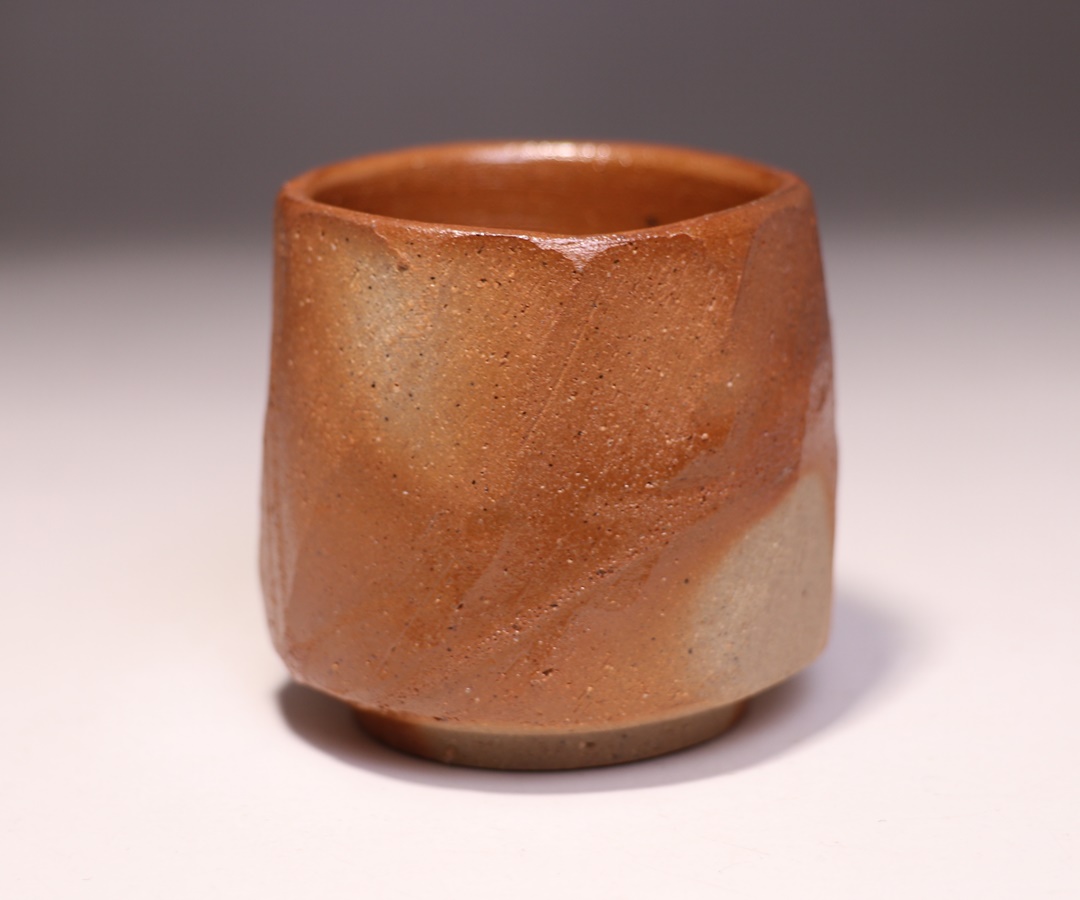
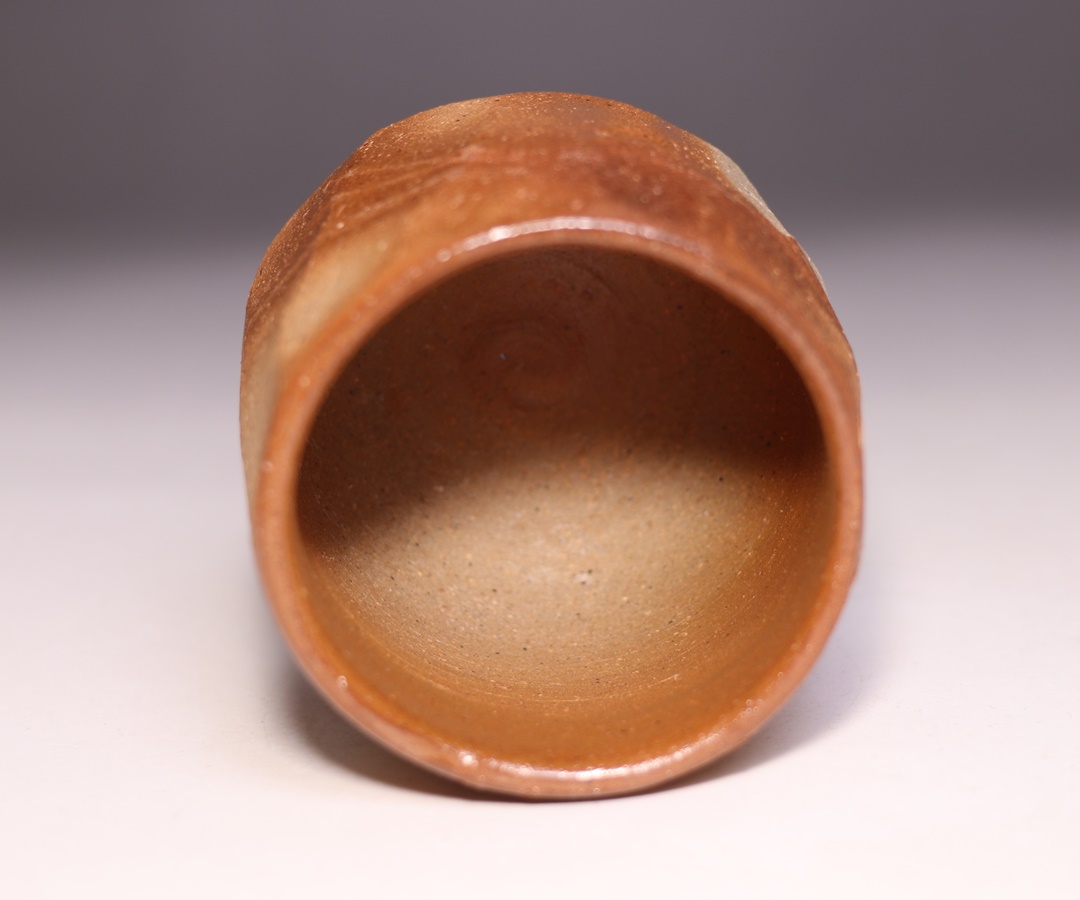
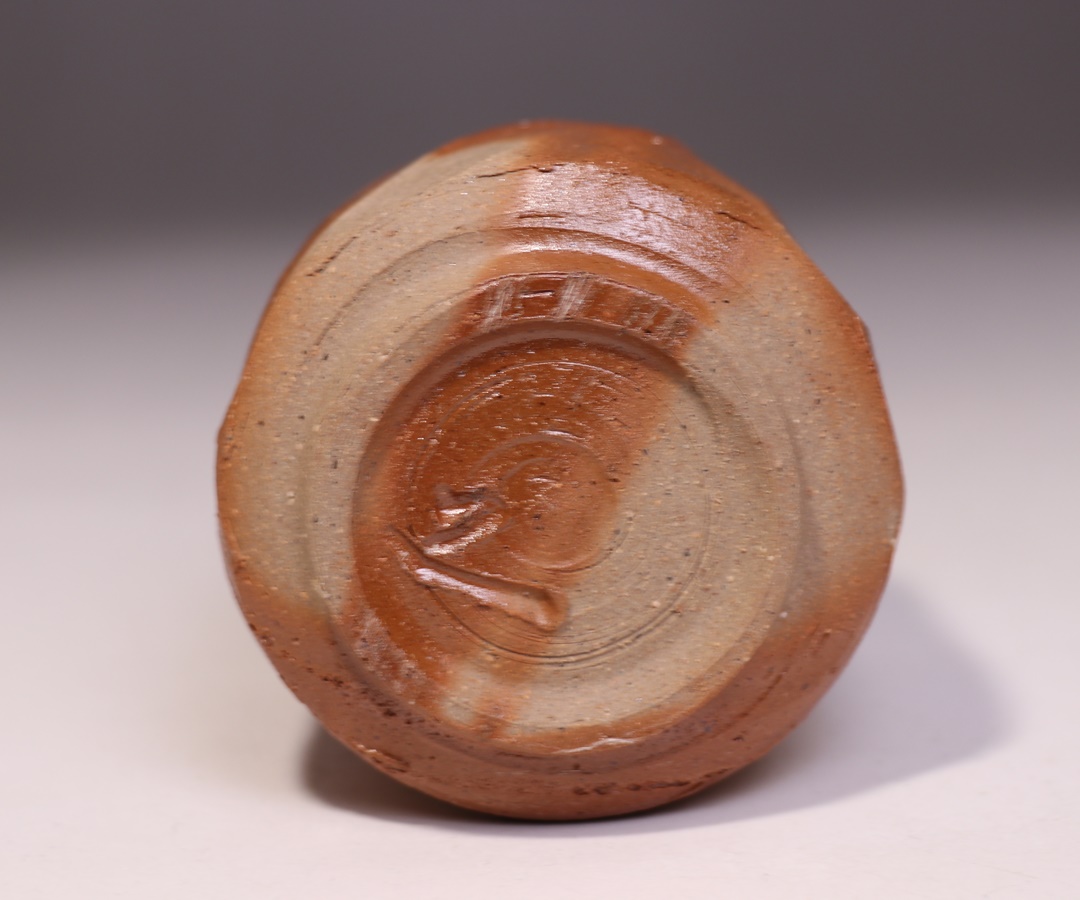
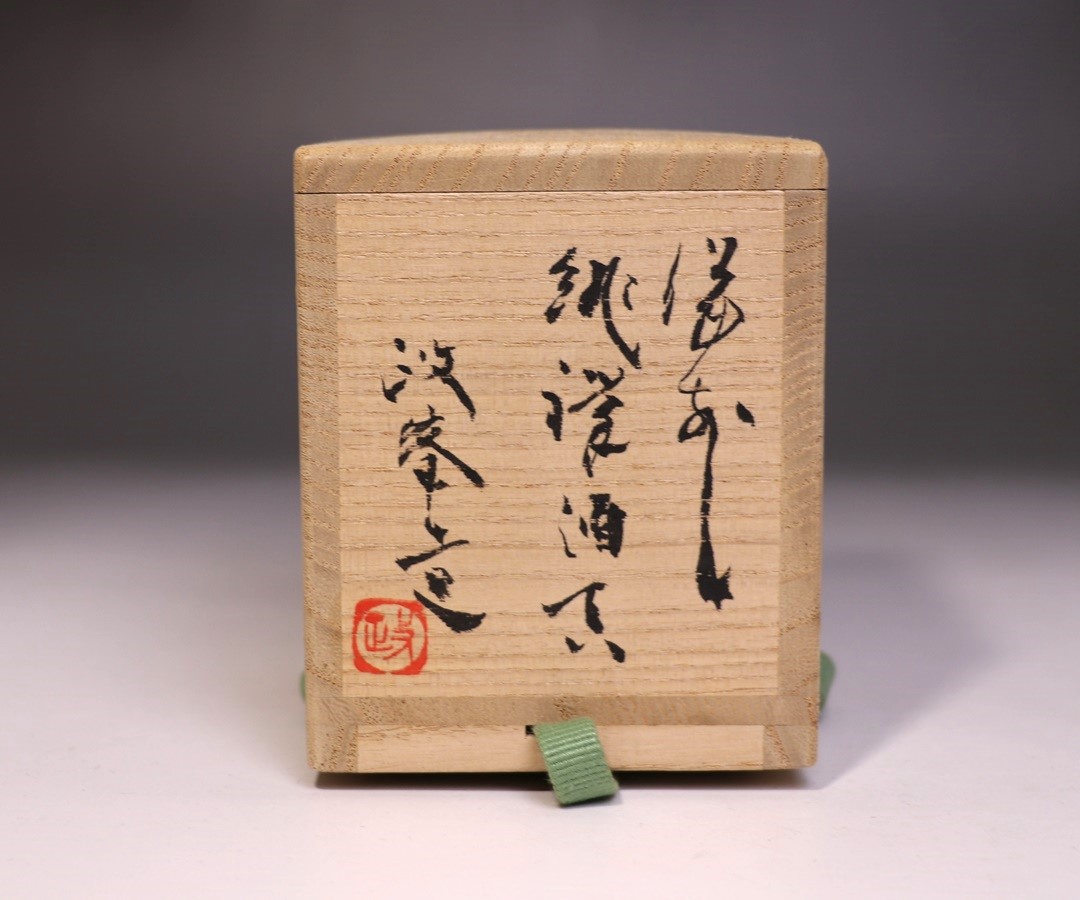
Togaku Mori - Guinomi
55,000 YENSold out
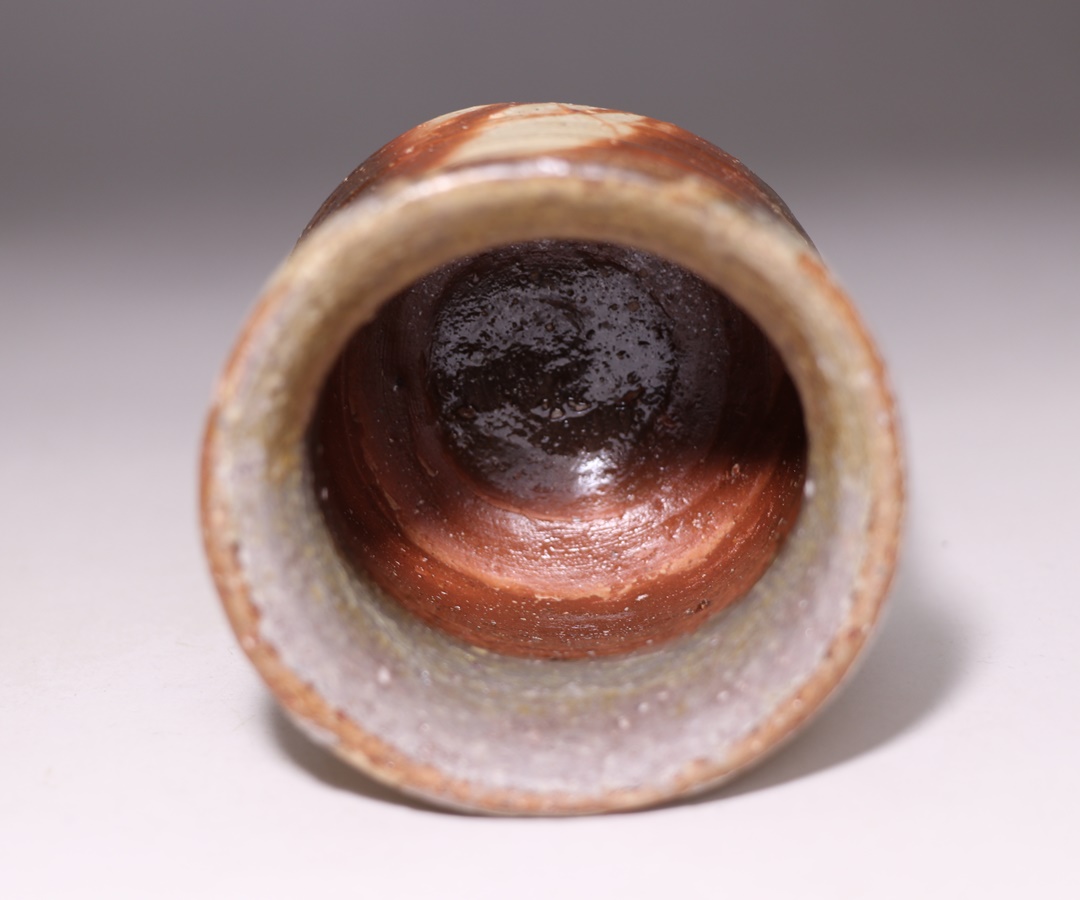
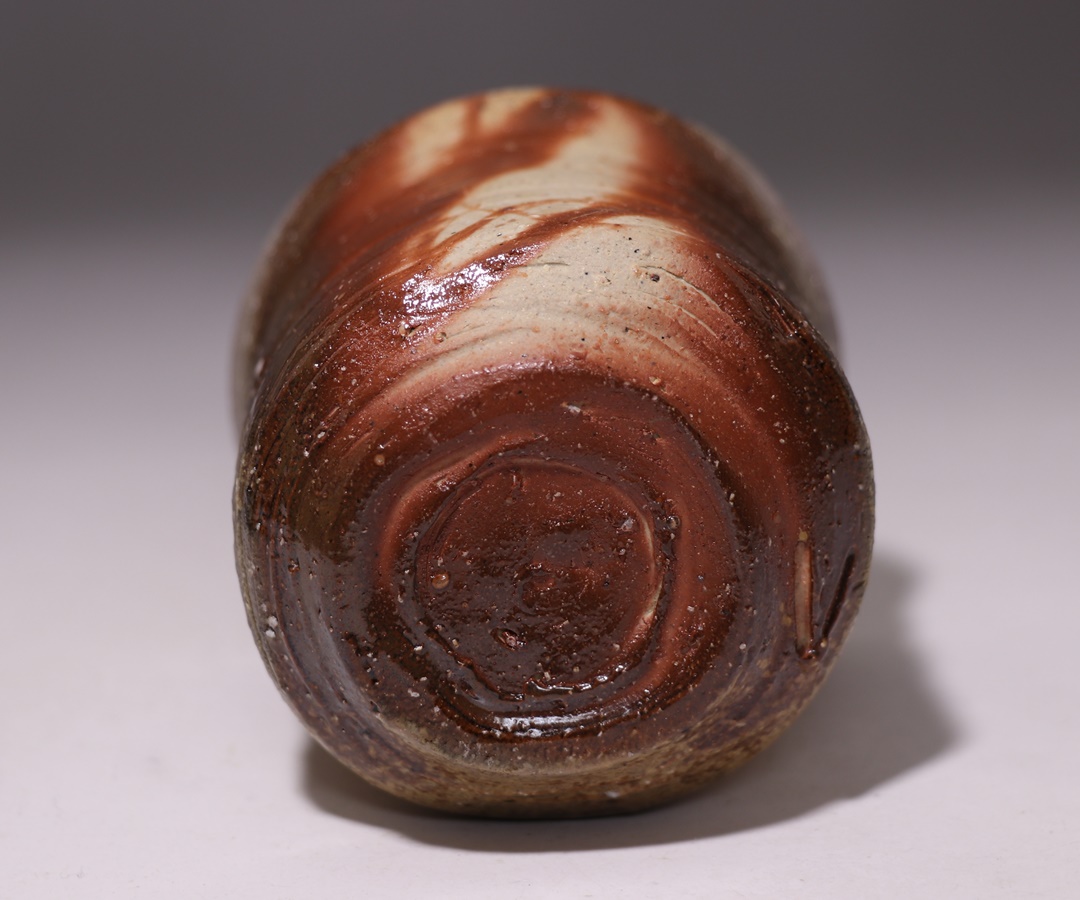
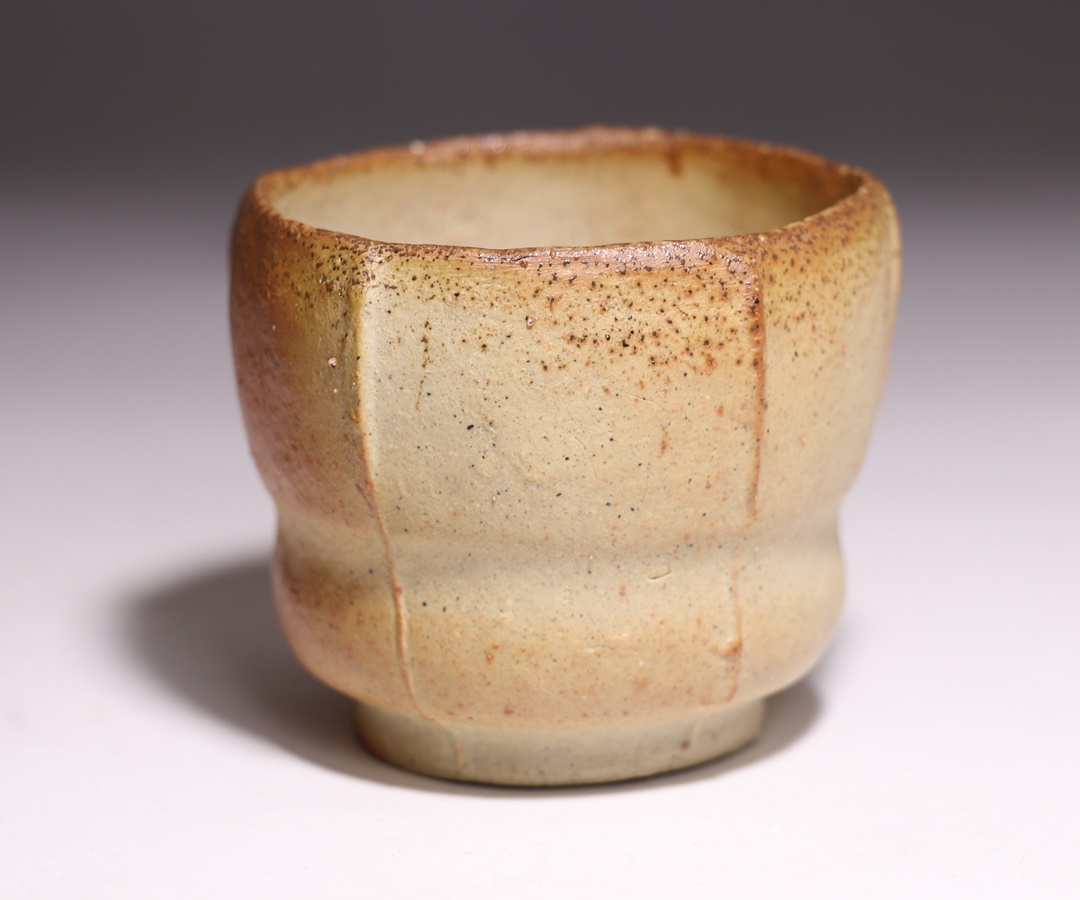
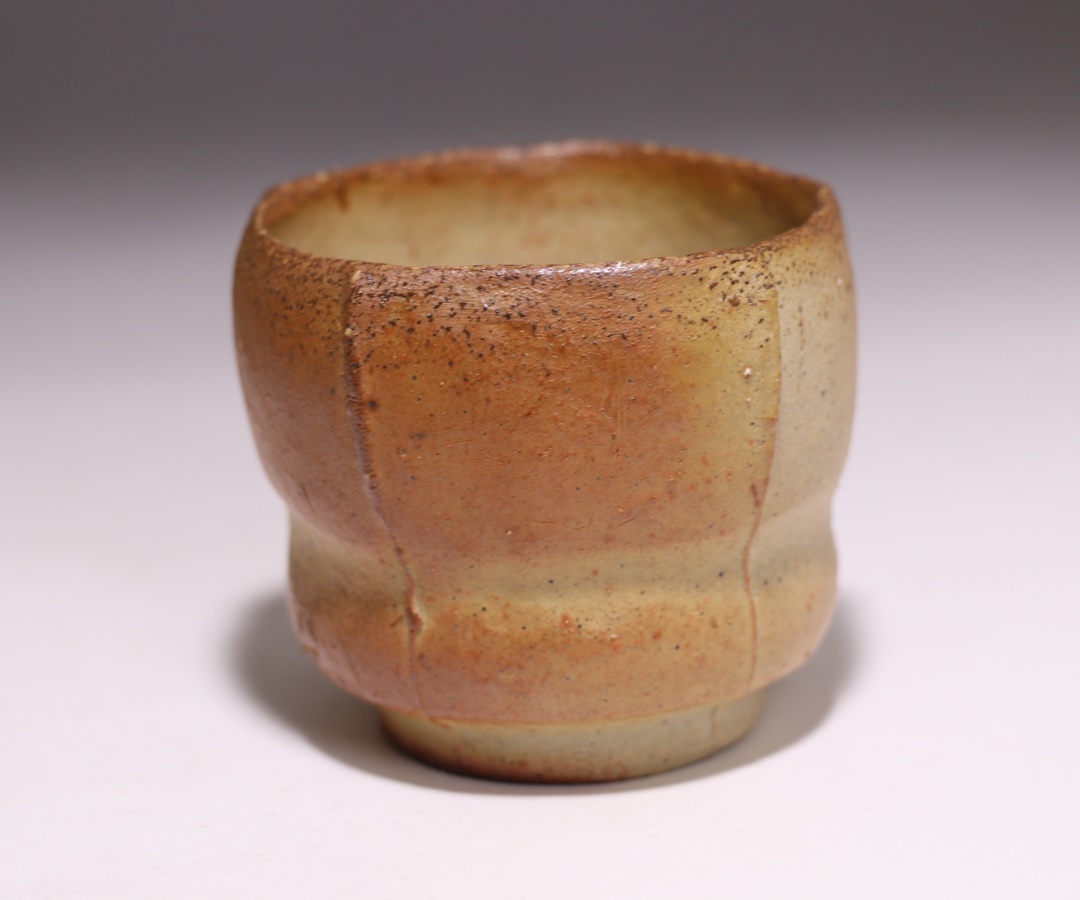
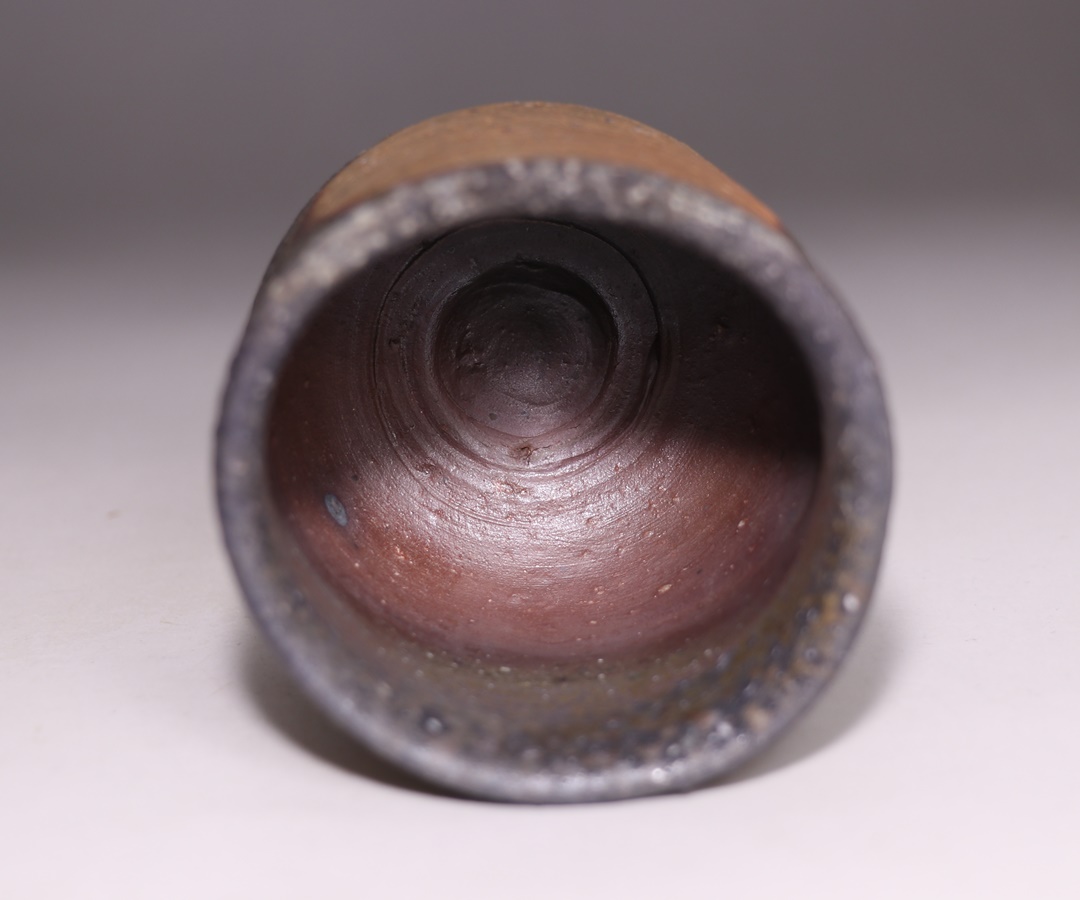
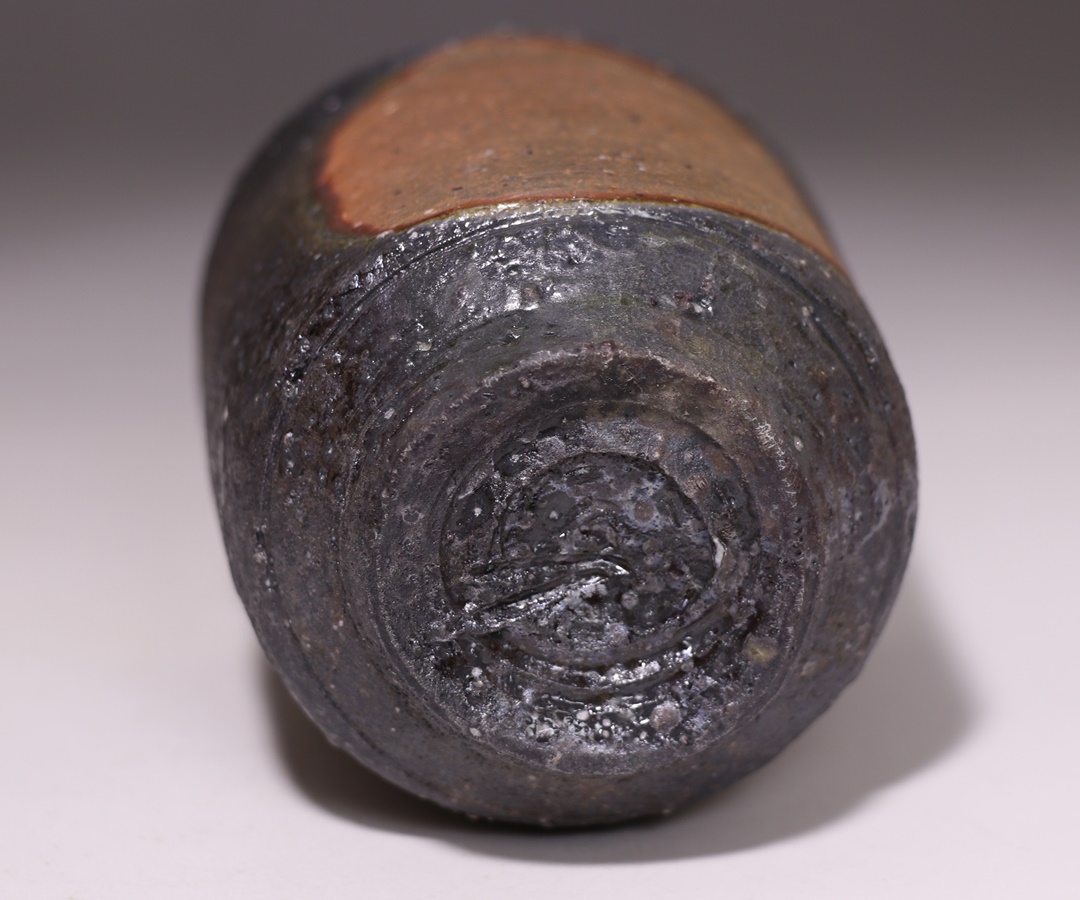
size : W6.7cm×6.6cm×H5.6cmTogaku Mori achieved one of the great feats in the history of ceramics by successfully firing an enormous kiln measuring 85 meters in length. This is an earlier Guinomi by the artist.
Created around the middle period of Mori’s career, this work was fired in 1994 in the 53-meter-long Samukaze Great Kiln.
It was made after Mori had completed his firings in the Aioi Great Kiln and relocated to Samukaze. Beautiful Tobi-Goma markings appear across the clean white clay characteristic of Samukaze.
The exceptionally fine Tobi-Goma, one of the distinctive features of the Samukaze Great Kiln, is particularly beautiful. Together with the subtly colored caramel-brown tones of the clay, it creates a surface that remains endlessly captivating to observe.
By this period, Mori had begun moving away from wheel throwing and toward forming his works with plaster molds. This piece was constructed by joining five separate sections, creating its distinctive angular edges.
Unlike wheel-thrown vessels, it is difficult to perceive the maker’s rhythm or breathing through traces of the potter’s wheel, giving the work a somewhat impersonal and almost inorganic atmosphere.
Yet this very quality harmonizes beautifully with the white Samukaze clay. The result is a refined design that feels both primal and remarkably timeless.
Although this is an earlier work offered on the secondary market, it shows no staining, wear, or signs of use.
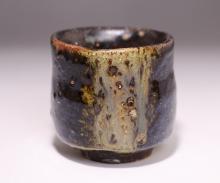


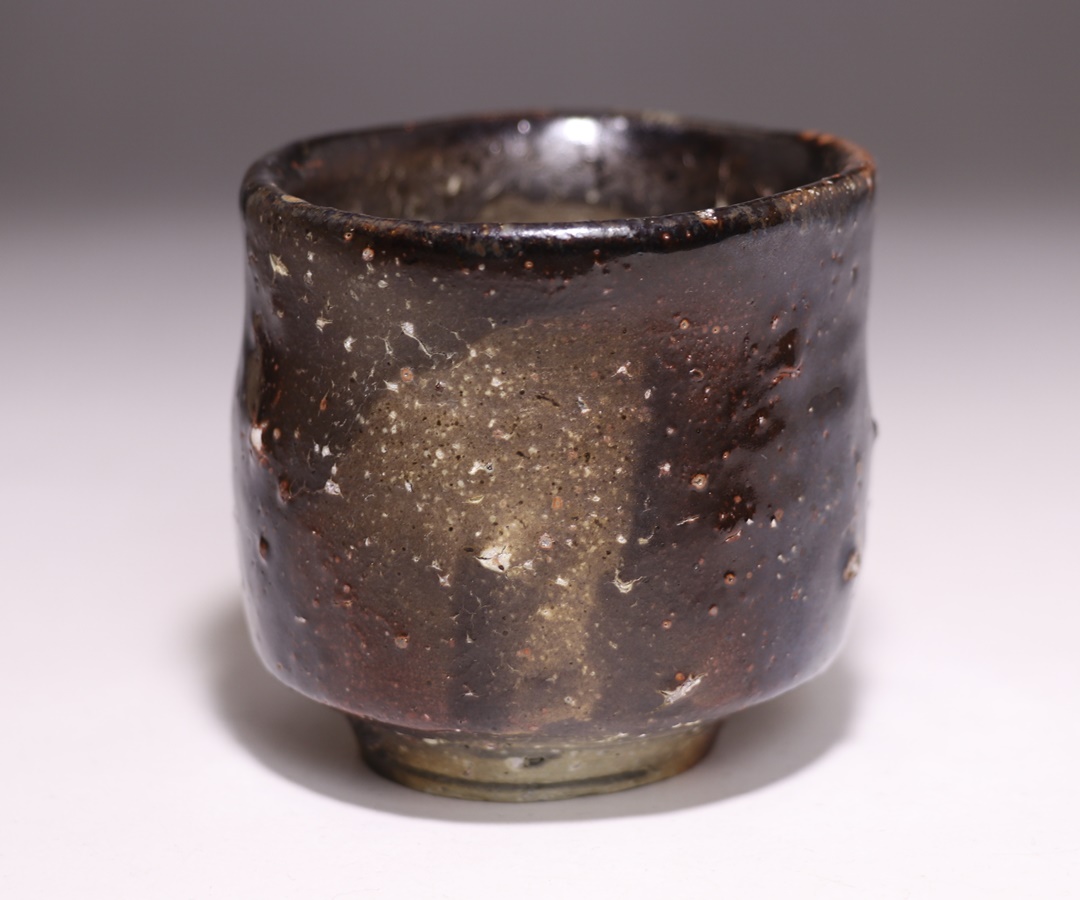
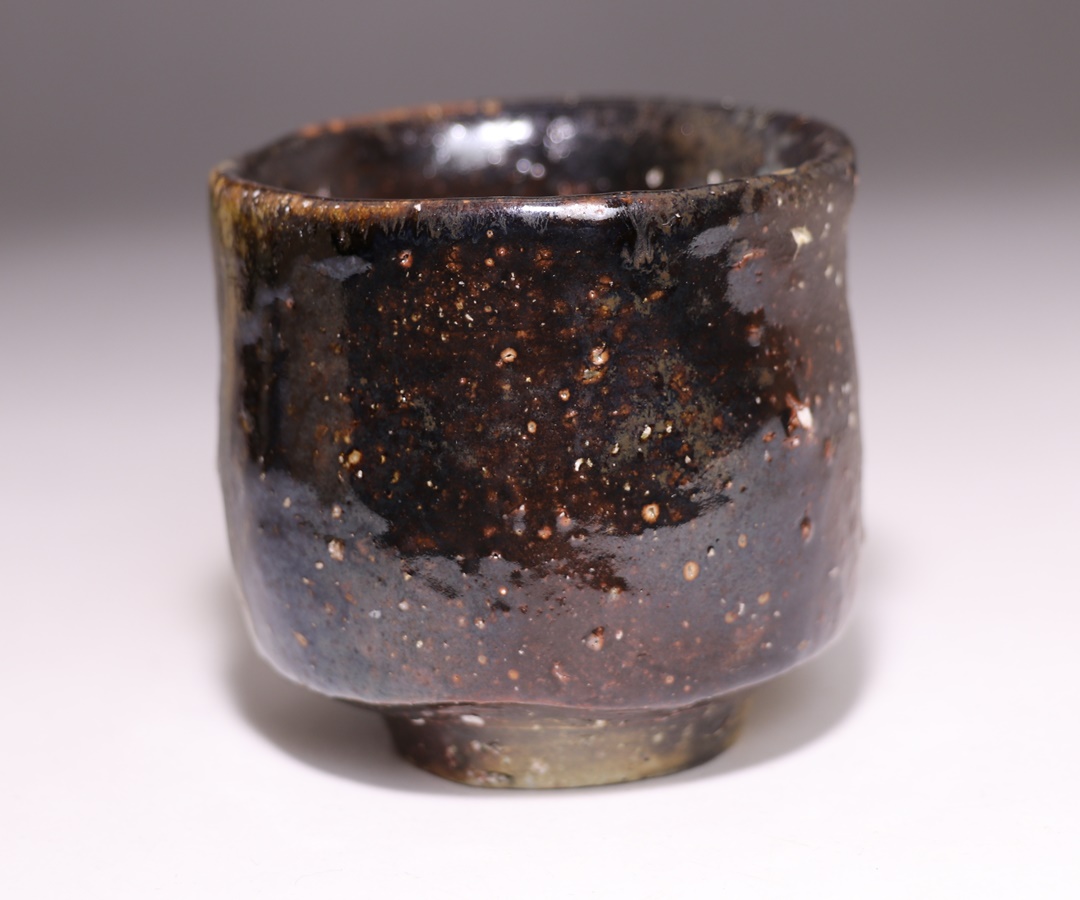
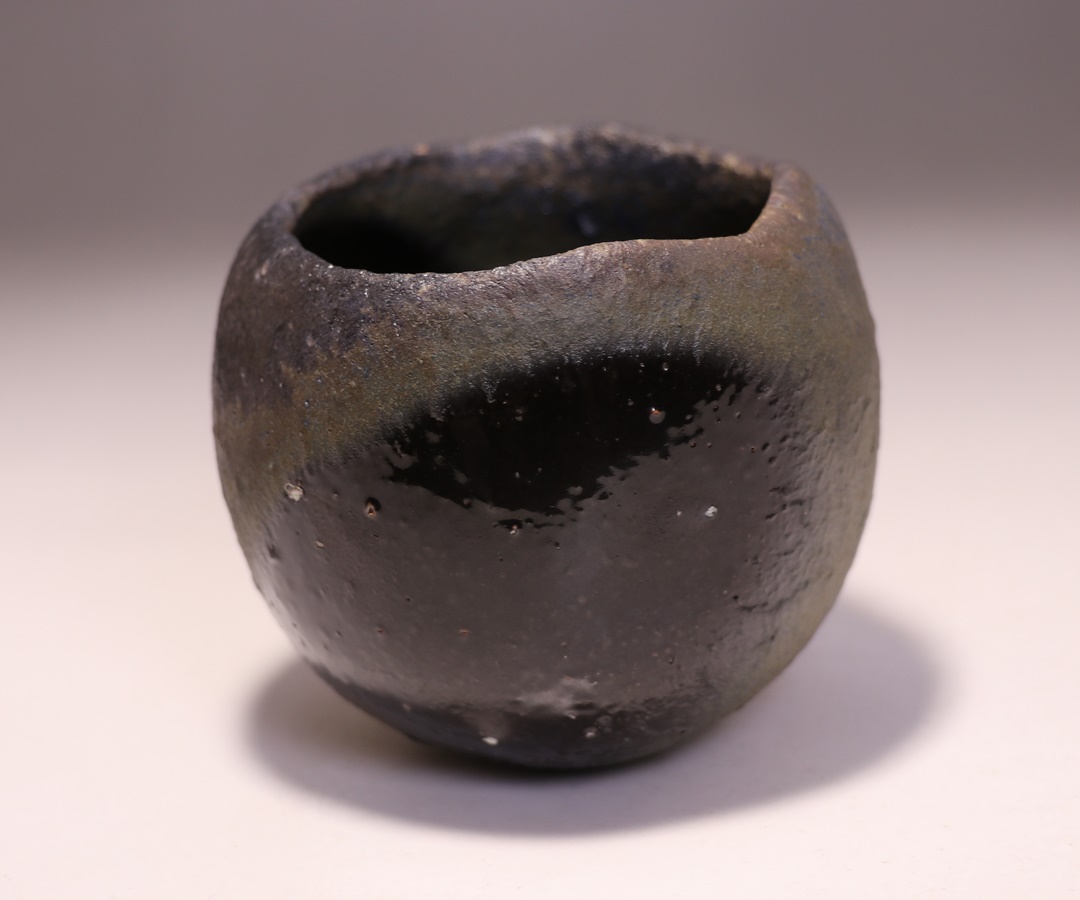
Jun Isezaki - Bizen Kuro Guinomi
132,000 YENSold out
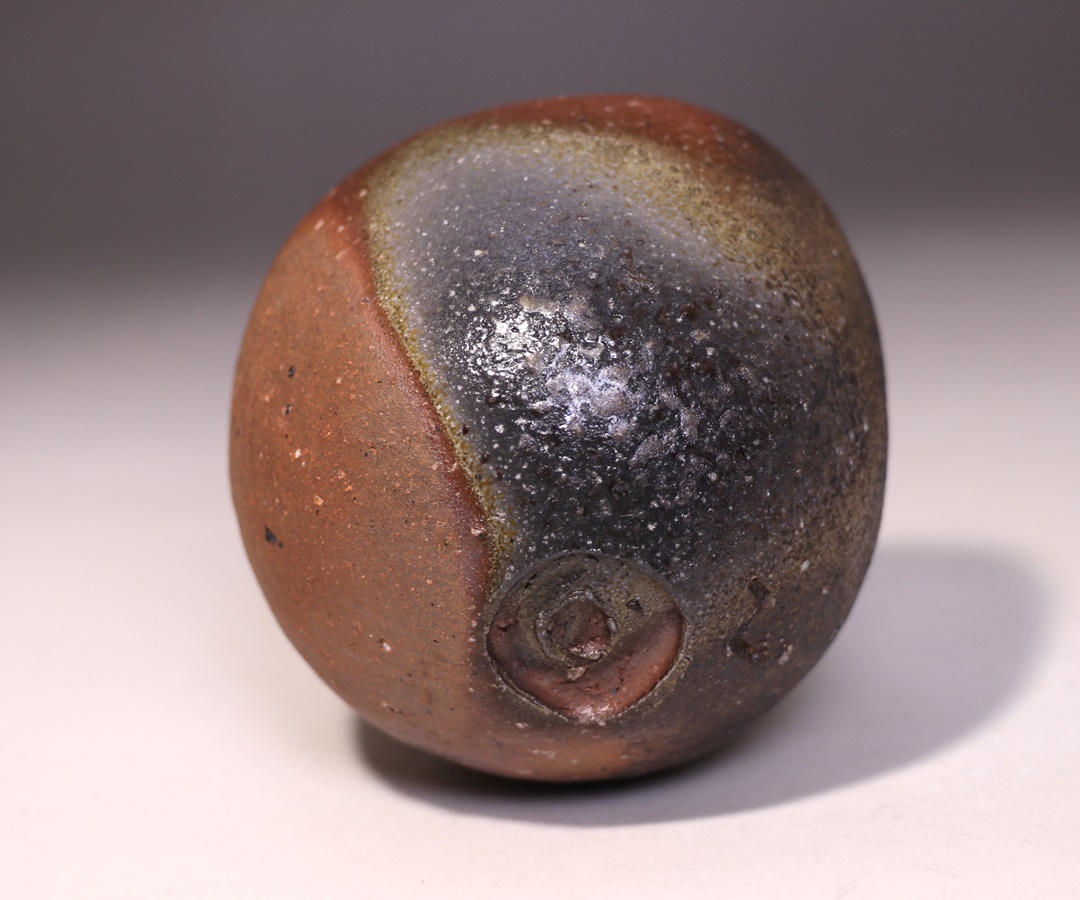
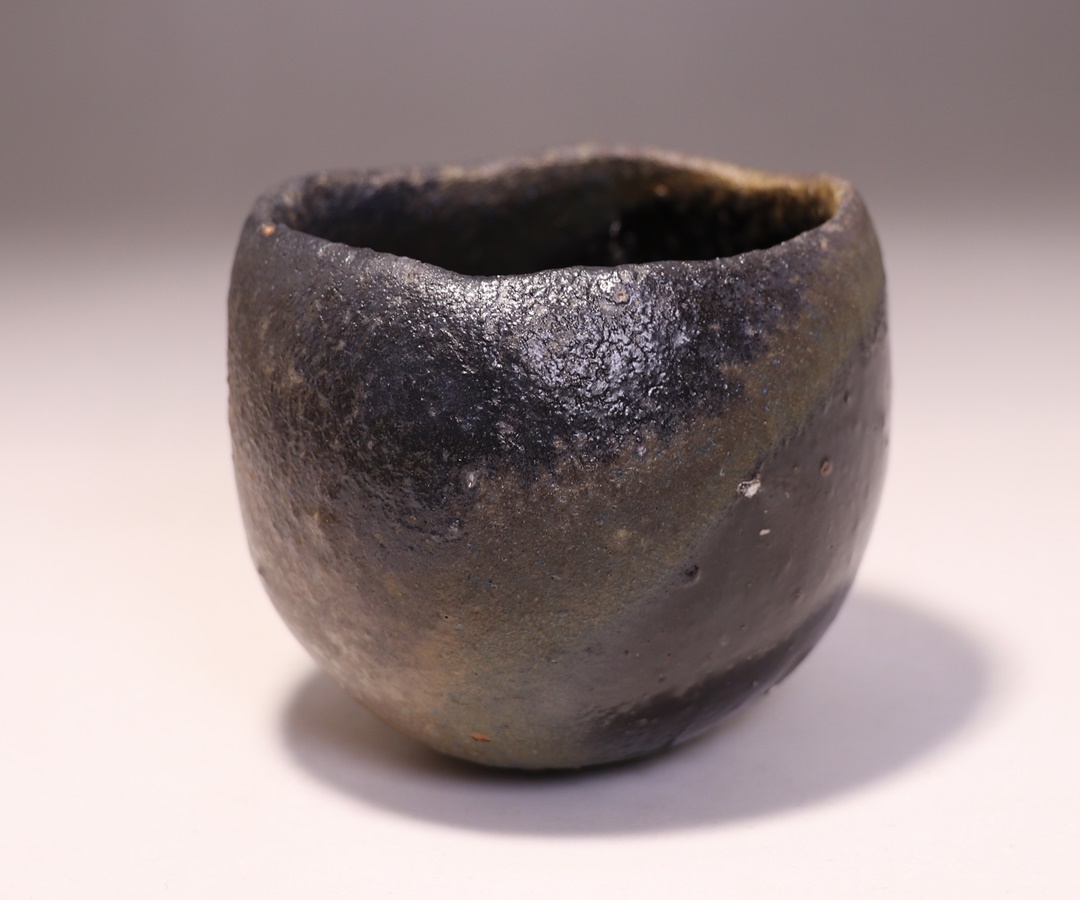
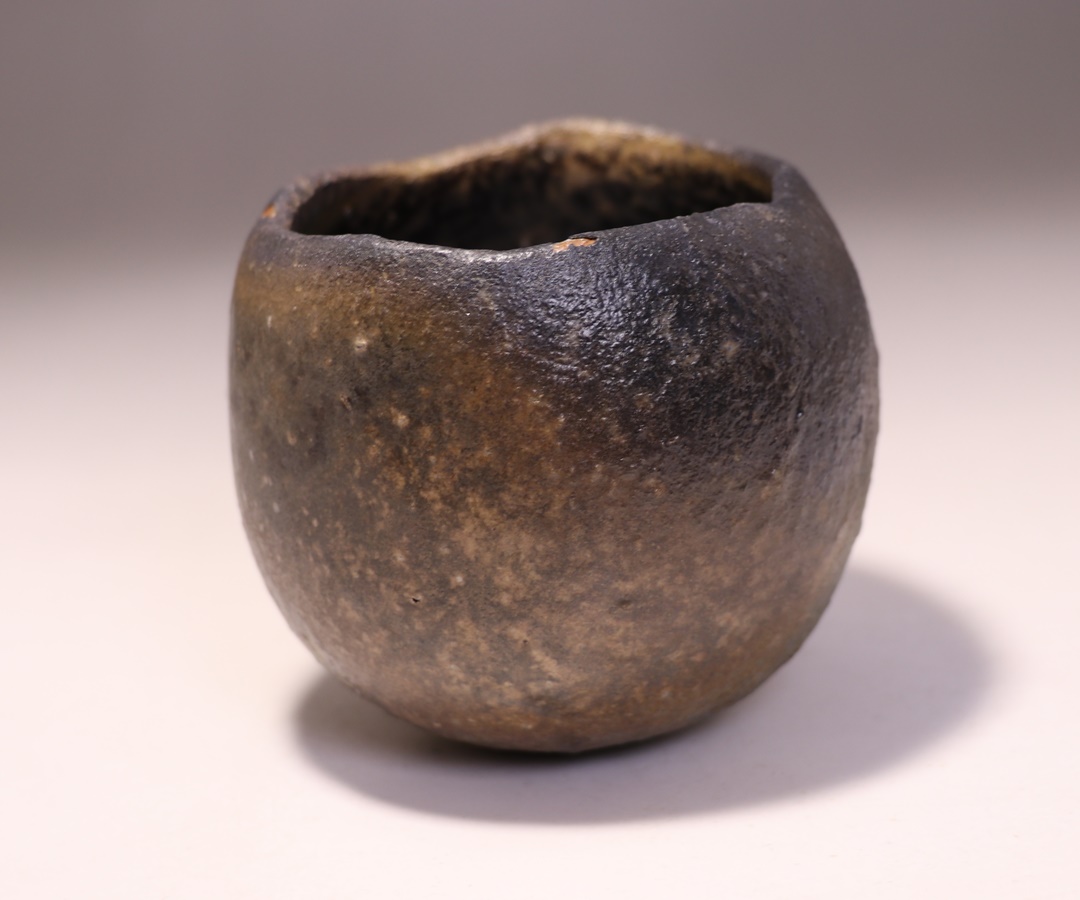
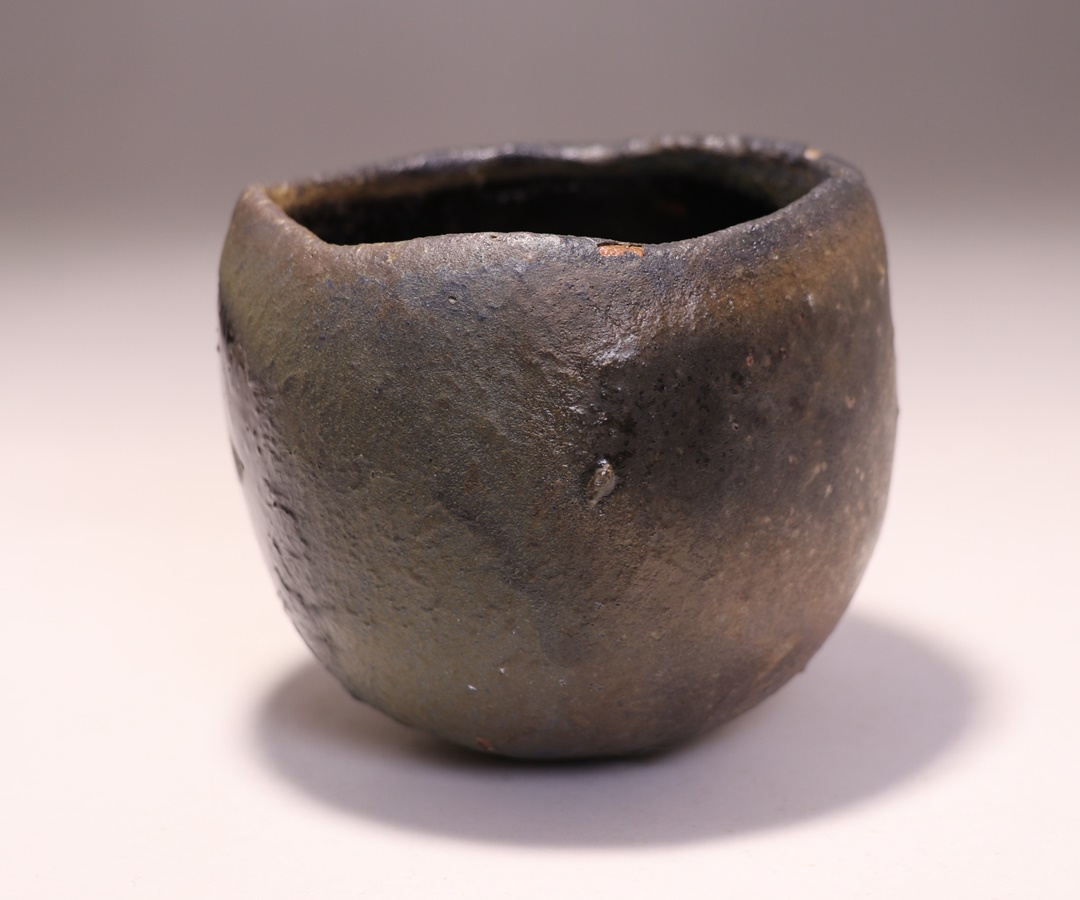
size : W6.9cm×6.7cm×H6.4cmDrawing a wealth of inspiration from the natural environment of his beloved home of Bizen, Jun Isezaki brought a new spirit to the tradition of Bizen ware. This is a Bizen Kuro-Guinomi by the artist.
Fired several years ago, it is a work from the later period of his career.
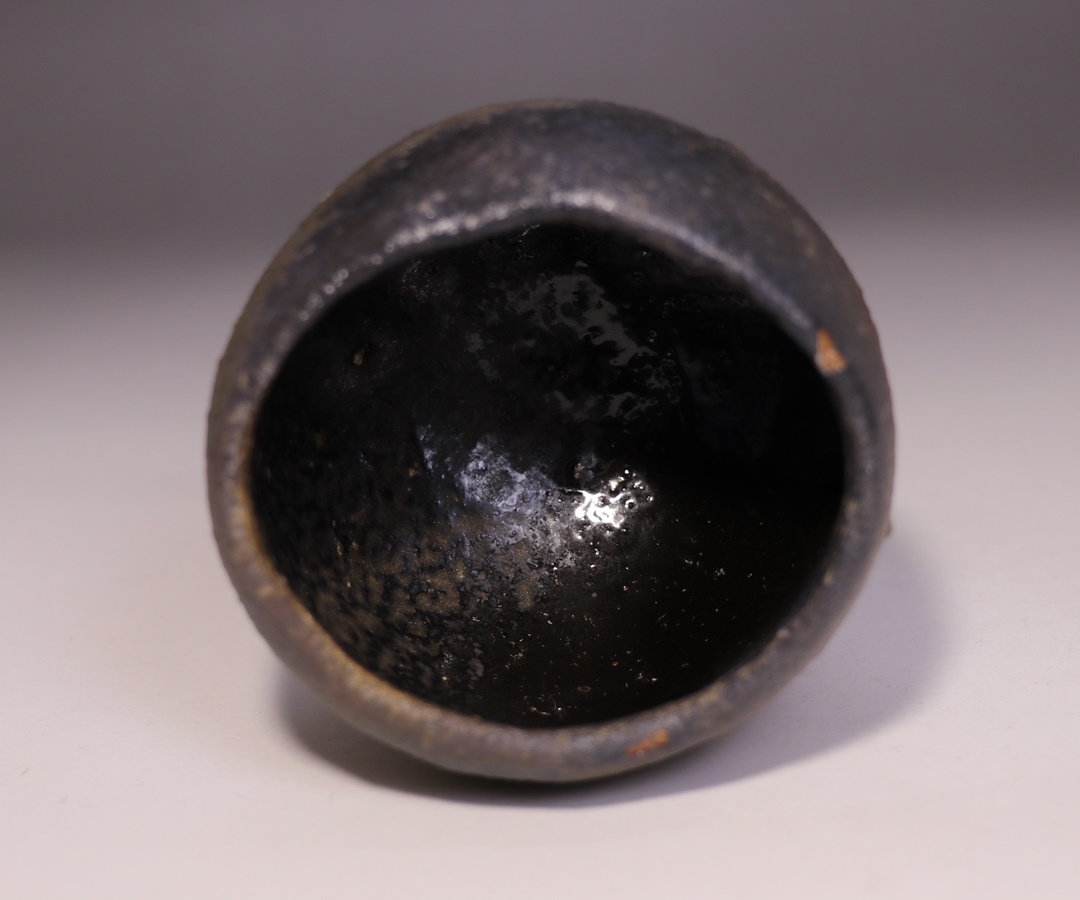
The piece was fired in a semi-underground Anagama kiln while absorbing a large amount of smoke, resulting in a distinctive luster quite different from that seen on his more typical black works.
On the front, concentrated Kigoma flows downward like a waterfall from a single point. Combined with the fresh, almost moist appearance of the black surface, it creates a solemn and painterly atmosphere.
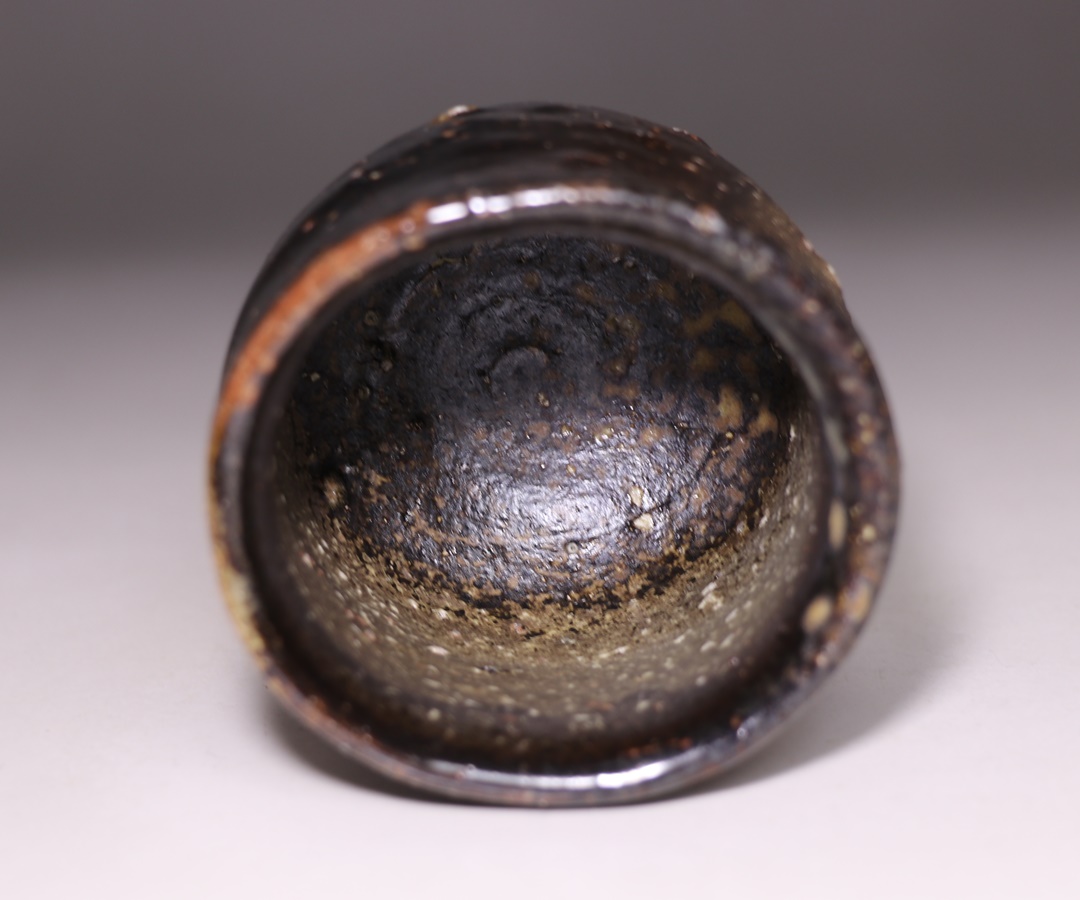
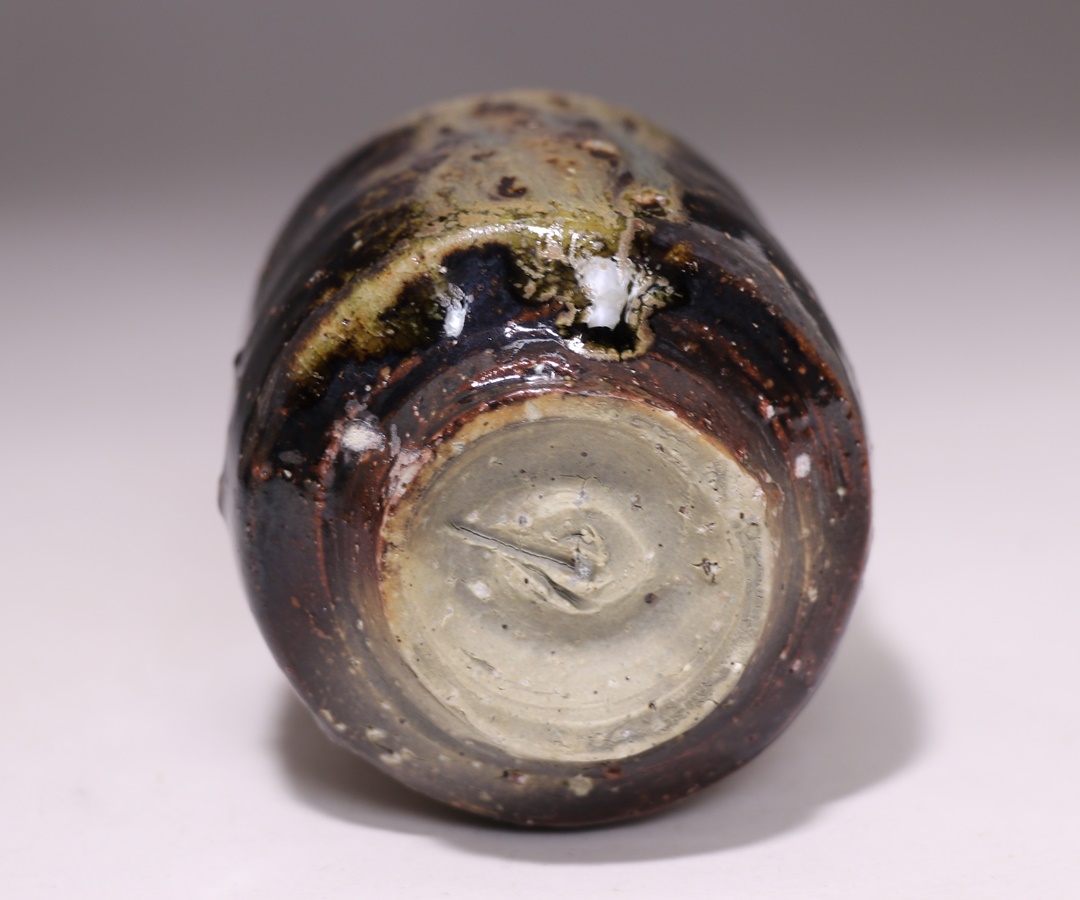
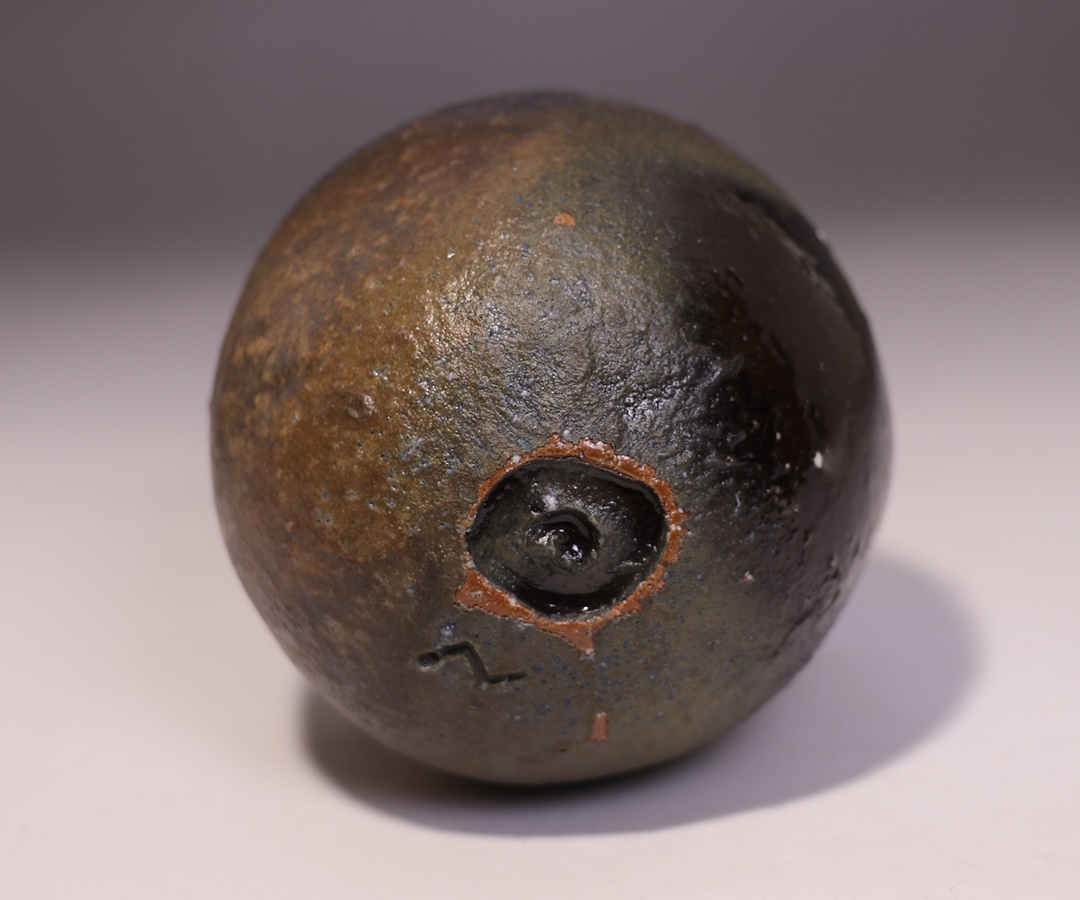
The work was formed from an unusually coarse clay, rarely seen among Isezaki’s pieces. This rough body has produced a fascinating combination of highly lustrous and matte surfaces not normally found in his black works.
While the front has an almost wet-looking sheen, the interior and reverse are far more matte. Through these areas, the coarse stone particles within the clay body remain visibly present, giving the surface a particularly intriguing texture.
With its two contrasting types of black luster, its powerful yet refined form, and its many varied surface effects, this Guinomi is a work filled with the qualities characteristic of Jun Isezaki.
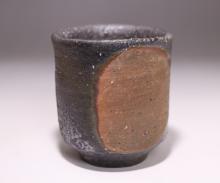


Jun Isezaki - Bizen Yohen Guinomi
132,000 YENSold out
size : W7.2cm×6.9cm×H7.8cmDrawing a wealth of inspiration from the natural environment of his beloved home of Bizen, Jun Isezaki brought a new spirit to the tradition of Bizen ware. This is a Bizen Yohen Guinomi by the artist.
This piece was fired by Jun Isezaki some time ago and was one of the works he had kept in his own possession. Particularly striking is the sharply defined *Nuke* area, a relatively rare effect even among the varied kiln transformations produced in an Anagama kiln.
Anagama Yohen itself is especially rare among Isezaki’s works, and this piece stands out even within that group for the exceptional intensity of its firing. The powerful Hai-kaburi rivals that seen in works from a climbing kiln, developing a distinctive metallic sheen that gives the surface remarkable beauty.
The *Nuke* on the front remained protected enough to escape complete transformation despite being surrounded by intense flames. Its delicately fired clay surface retains a faint scarlet tone, which becomes even richer and more beautiful when moistened during use.
Another notable feature is the vivid *Kumadori* marking along the boundary between the Yohen and Nuke areas. Here, the clay has developed a meltingly rich reddish-purple tone accompanied by golden metallic highlights, creating an especially beautiful transition.
To allow the kiln effects to take center stage, the form is simple and generously proportioned, without decorative elements such as impressed markings. This restraint, in turn, makes the graceful arch of the Kumadori boundary even more striking.
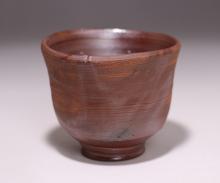


Yu Fujiwara - Bizen Shuhai
38,500 YEN
size : W7.0cm×6.8cm×H5.9cmYu Fujiwara, a Living National Treasure, broadened his vision beyond Japan and helped introduce the appeal of Bizen ware to audiences around the world. This is a Bizen Shuhai by the artist.
The work is immediately recognizable as one by Yu Fujiwara. Free from decorative tricks or unnecessary technical display, it has a direct and unguarded quality, as though confronting the viewer with the artist’s spirit laid bare.
Created during the later years of his career, the piece is somewhat thinly formed, yet still clearly displays the distinctive characteristics of Fujiwara’s work.
Deep brown Hidasuki markings run across the reddish-brown clay surface. The piece was fired inside a saggar in a climbing kiln, protecting it from direct ash while allowing the straw markings to develop.
Inside the cup, Hidasuki covers almost the entire surface. The markings themselves carry a noticeable sheen, giving the interior an atmosphere quite different from the exterior, almost reminiscent of lacquerware or ironware.
The form is also unmistakably Fujiwara’s, combining a relatively tall, sharply cut foot with a body that rises in his characteristically soft and relaxed manner.
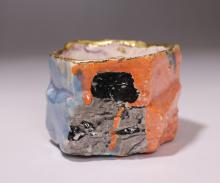


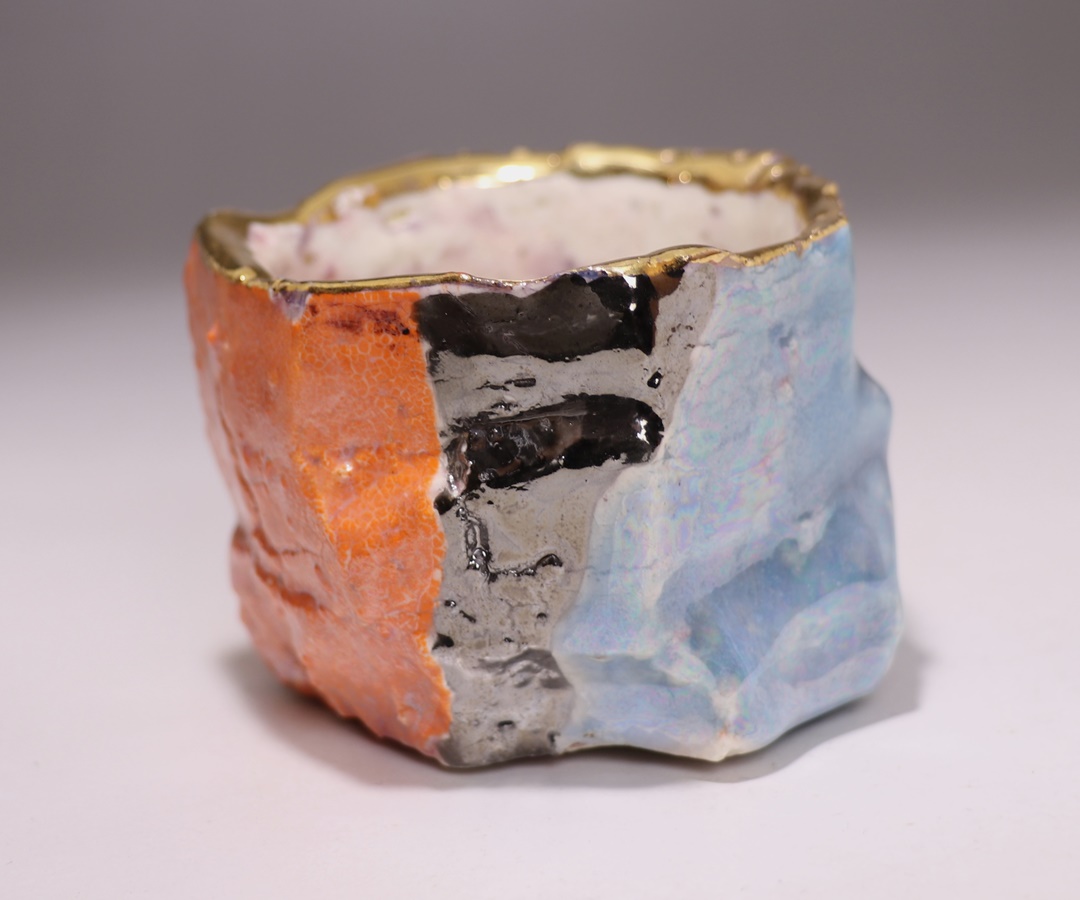
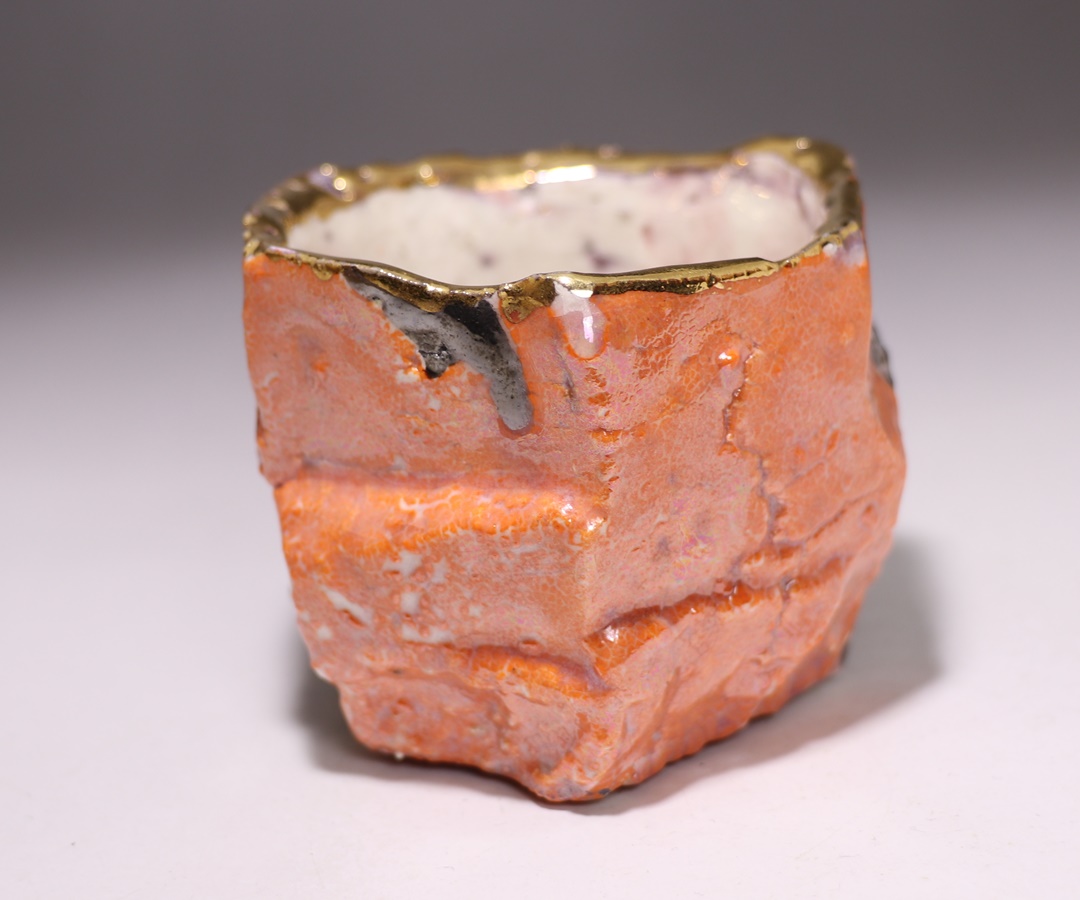
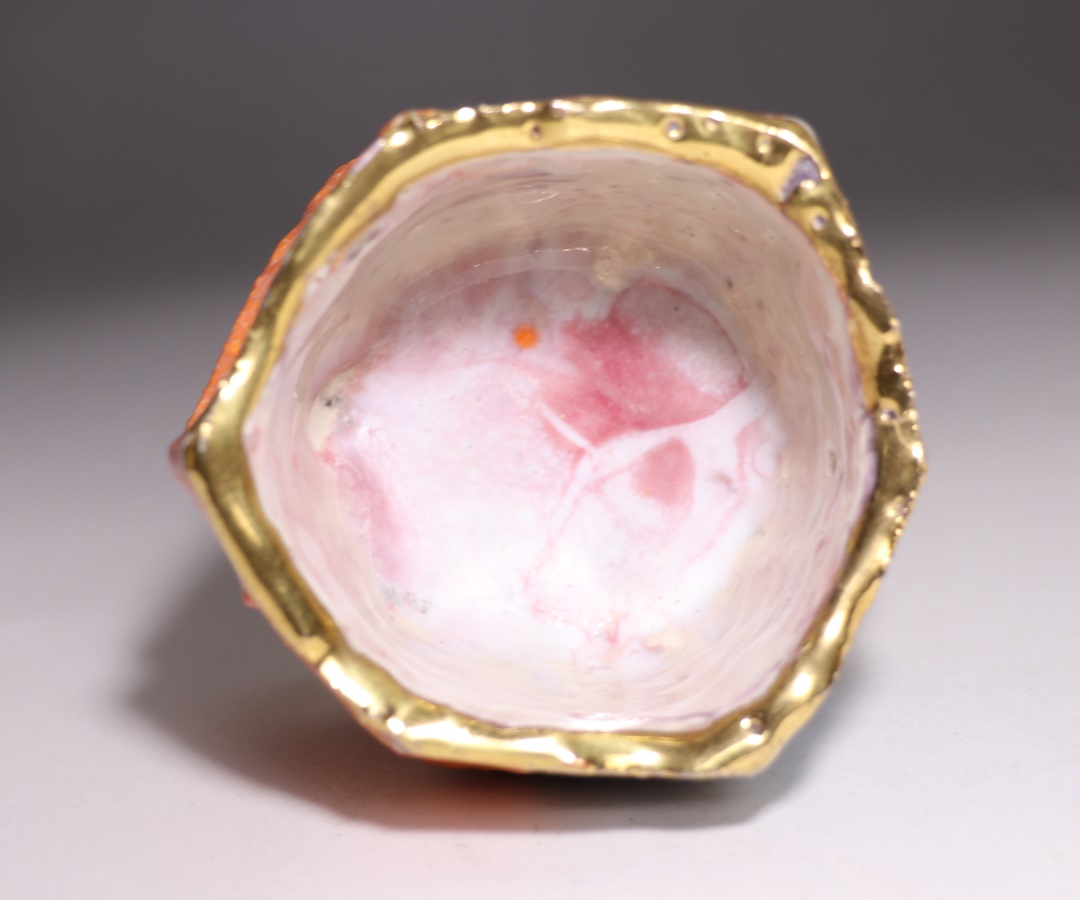
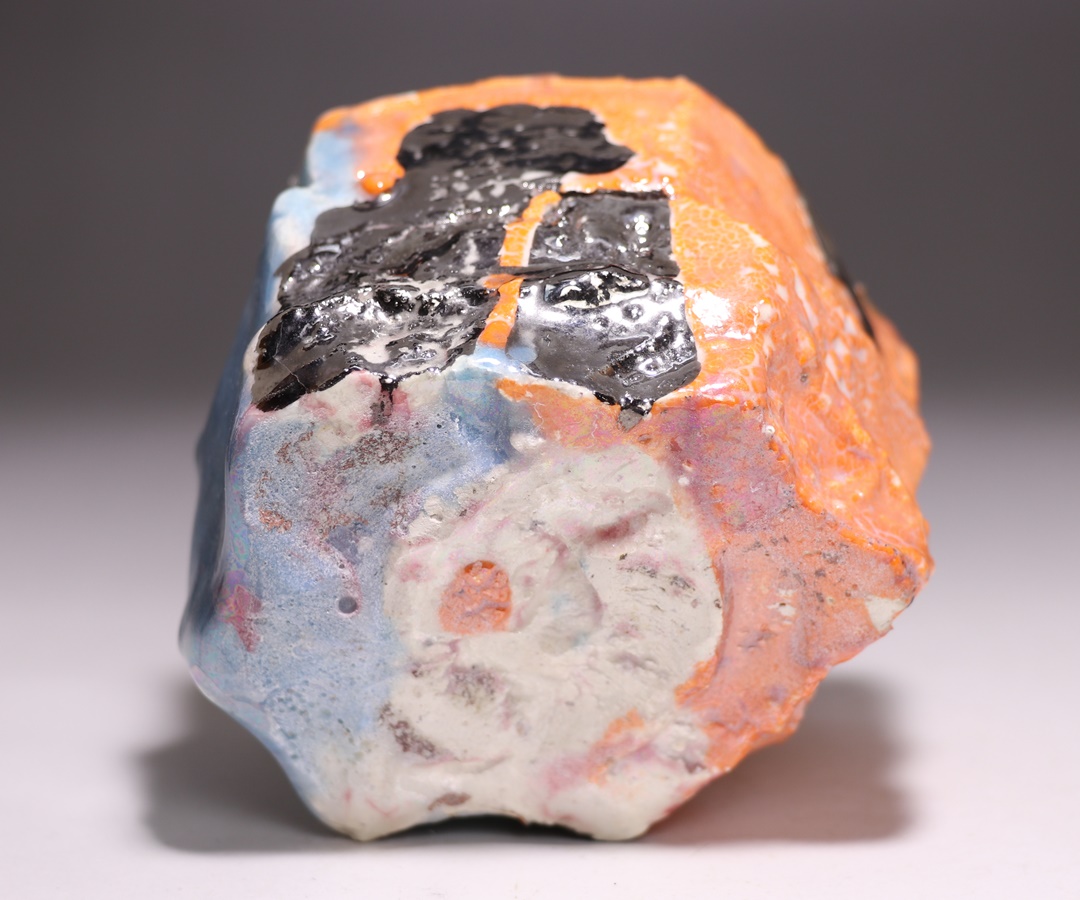
Toru Ichikawa - Guinomi Ray?
36,960 YEN
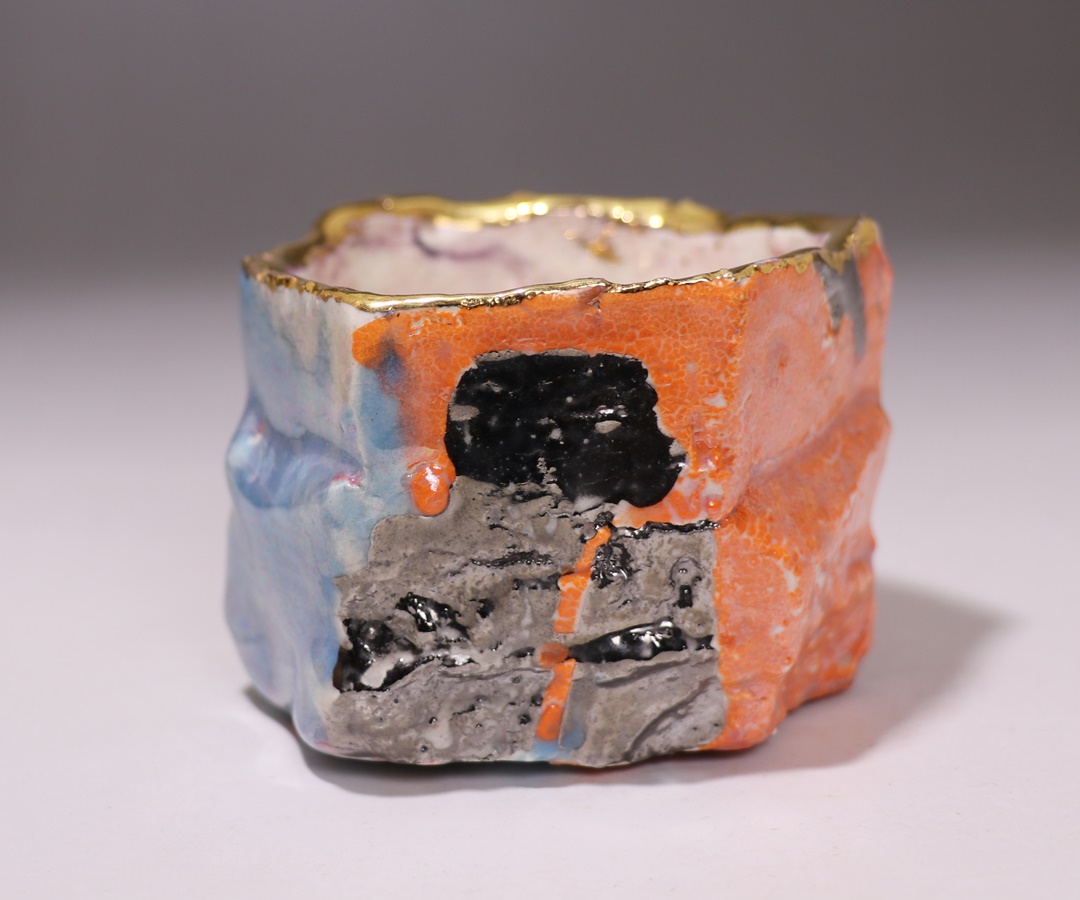
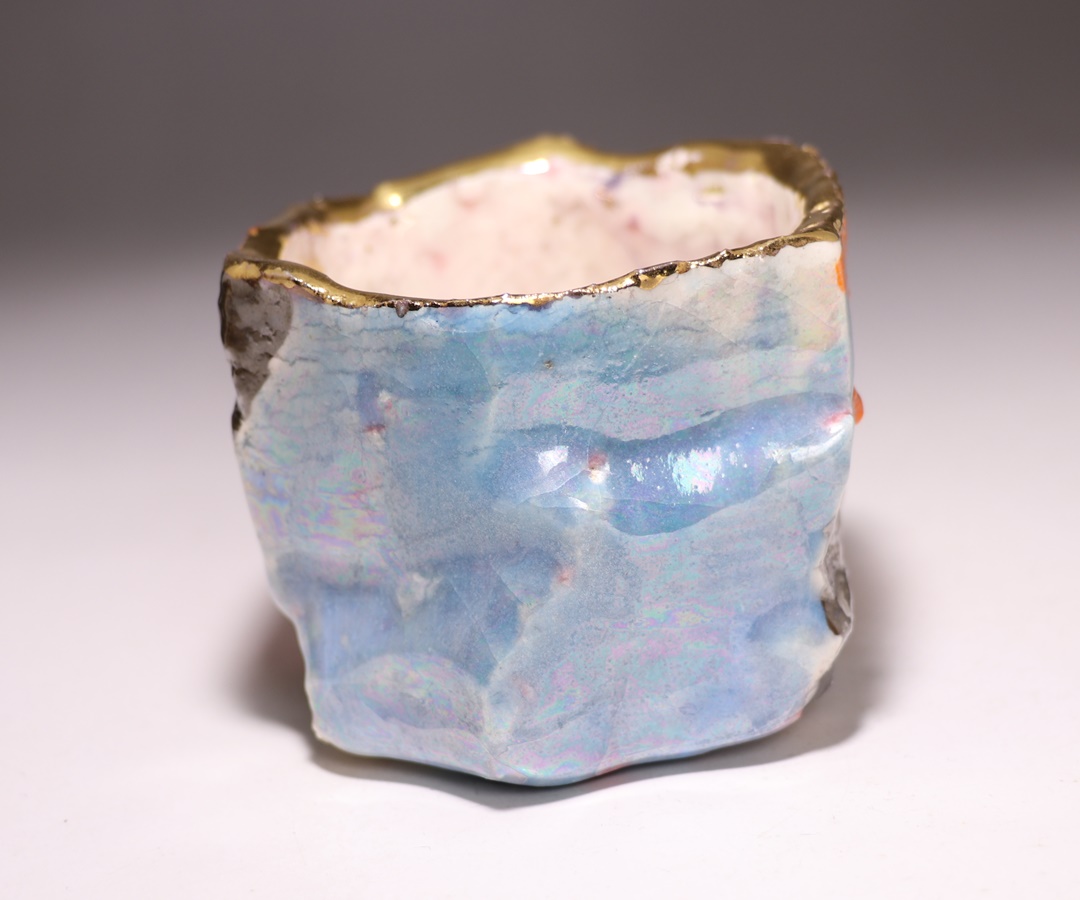
size : W8.4cm×8.4cm×H6.0cmToru Ichikawa studied under Ryuichi Kakurezaki and made a striking debut of his own. This is a slightly earlier Guinomi by the artist, titled *Ray III*.
Characteristic of Ichikawa, who gives form to an endless stream of ideas through the extraordinary material of clay, this is an unconventional and highly original work filled with his distinctive imagination.
The piece is titled *Ray III* and incorporates a cosmological theme, using ceramics as a means of approaching the universal question, “Why do we live?”
The clay body has a vanilla-white tone with only the faintest hint of yellow. Over this, a transparent finishing glaze with an iridescent, nacre-like sheen has been poured across the surface, creating a fresh and harmonious composition in which the clean white color takes center stage.
Vivid sky-blue and orange glazes are then layered into the design, while gold and platinum decoration—familiar elements in Ichikawa’s work—provide the finishing accents. The result is a striking color scheme that combines a playful pop sensibility with a sense of luxury.
Inside the Guinomi, a pearl-white finishing glaze creates a soft and mellow expression, while drops of orange glaze add another playful accent, allowing one to fully enjoy the distinctive visual world of Toru Ichikawa.
Although this is an earlier work, it has never been used.
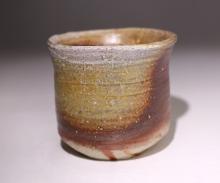


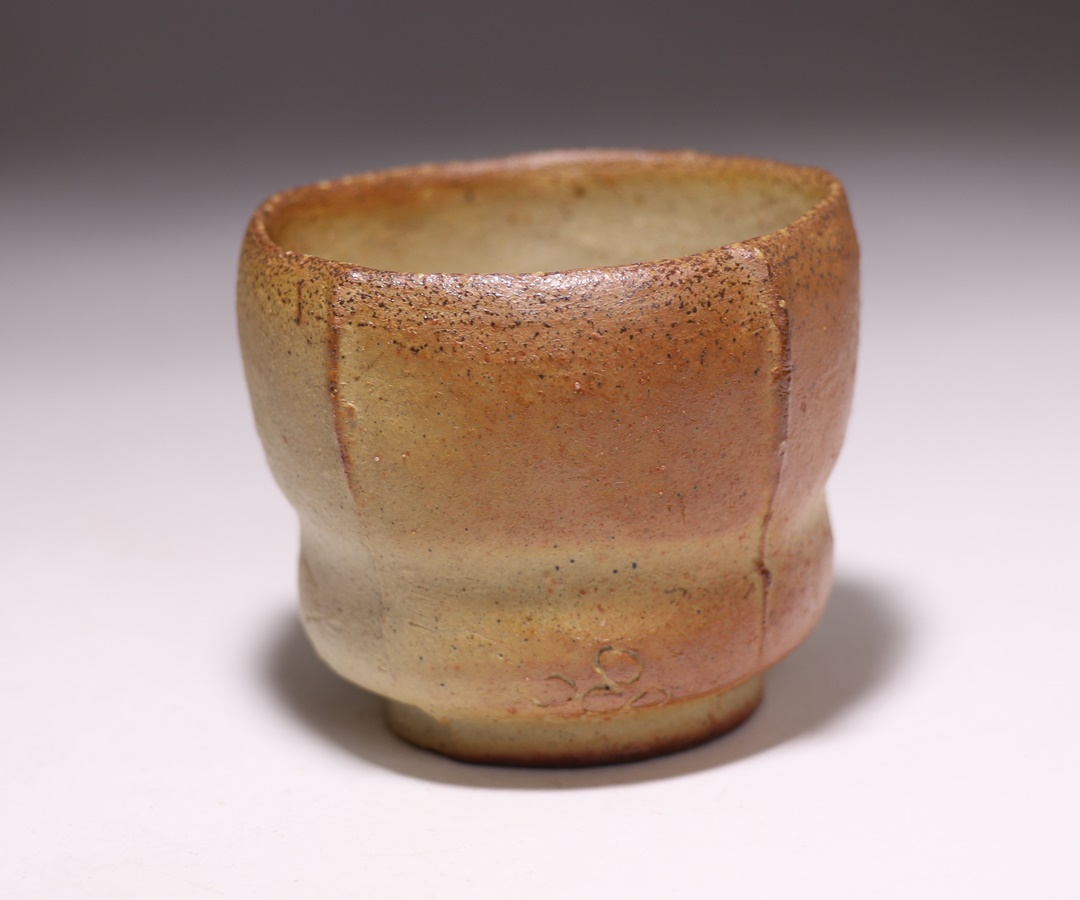
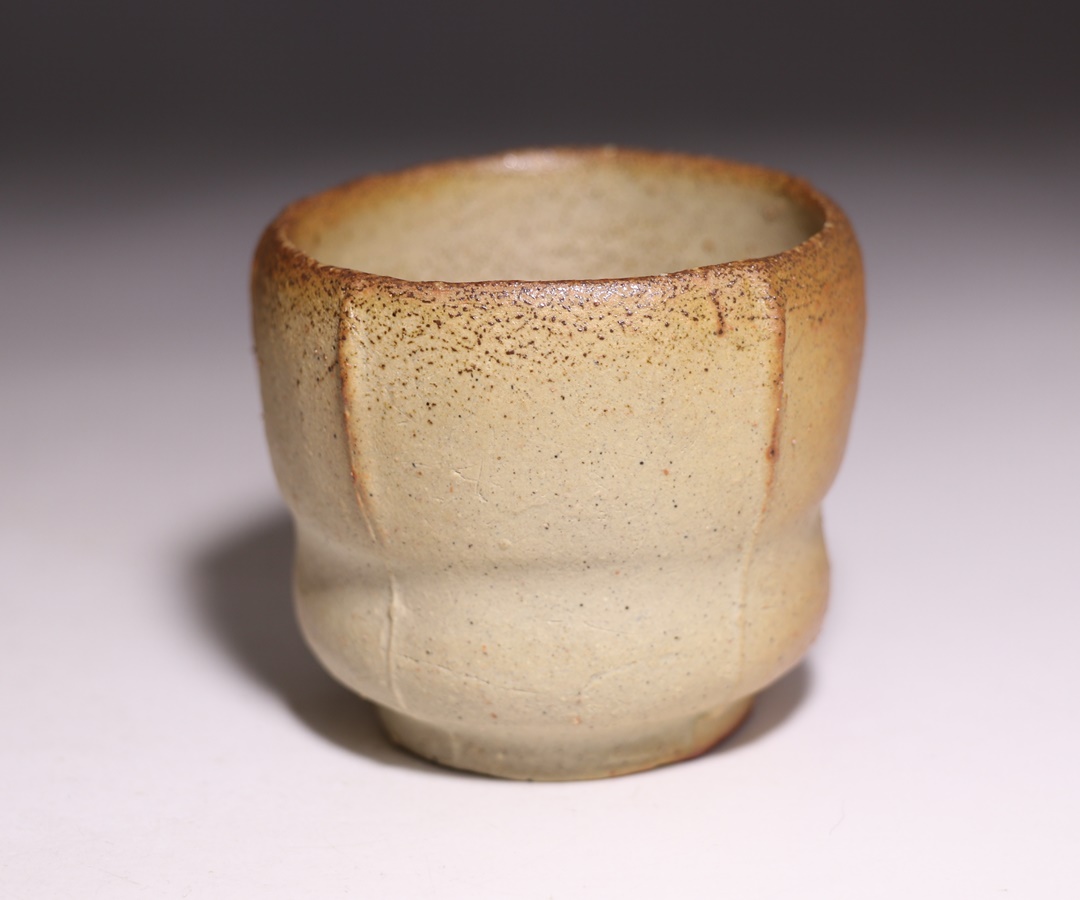
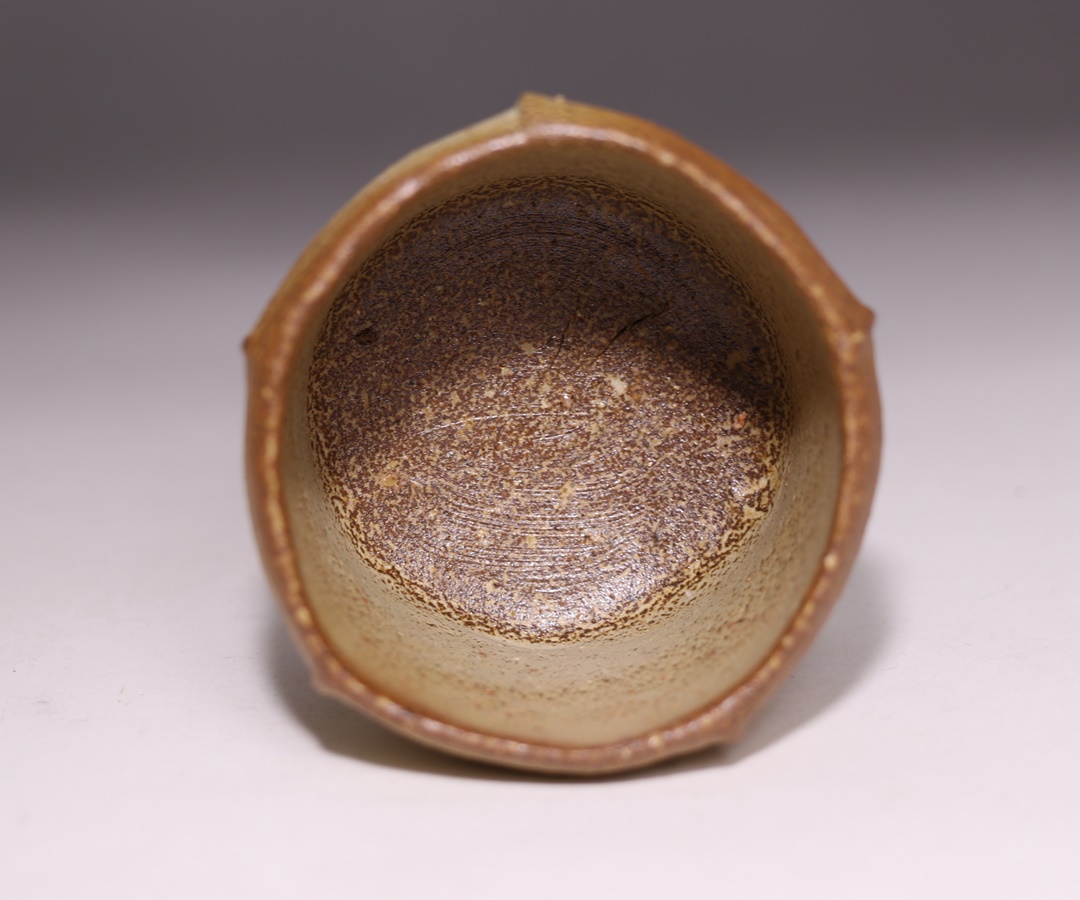
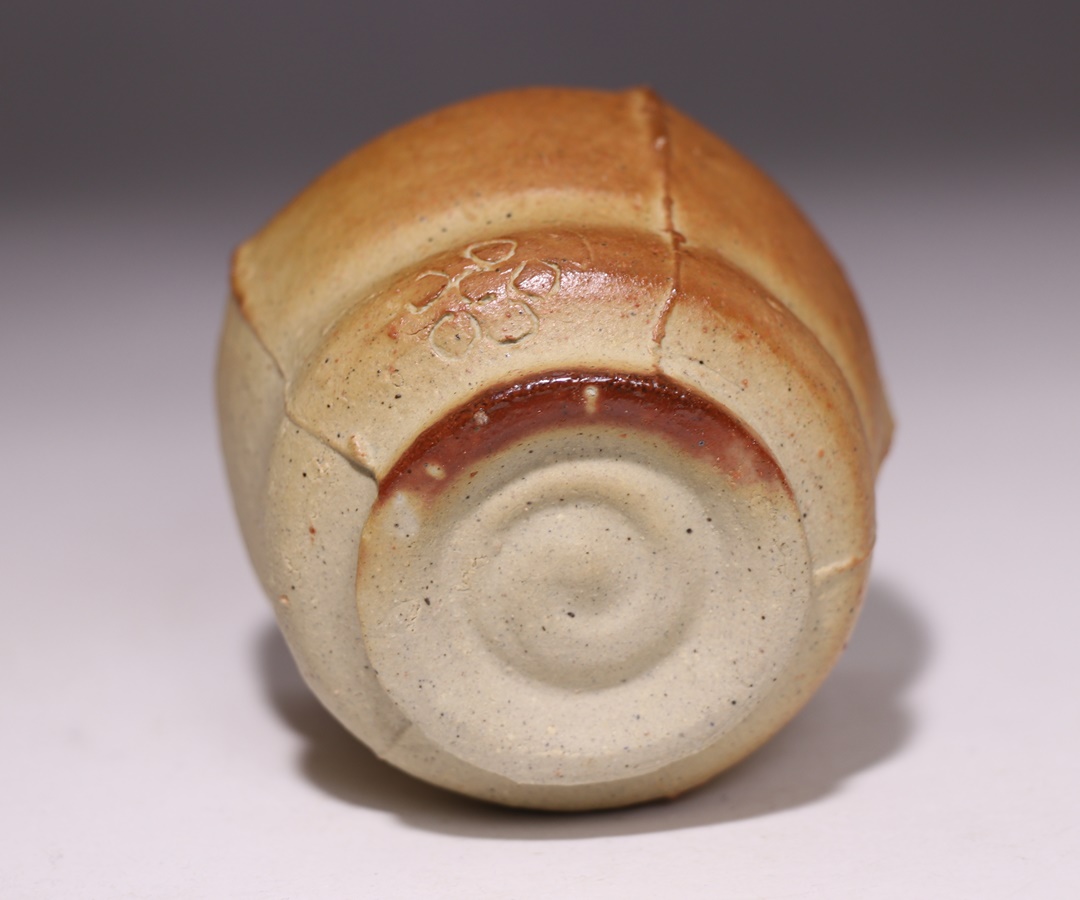
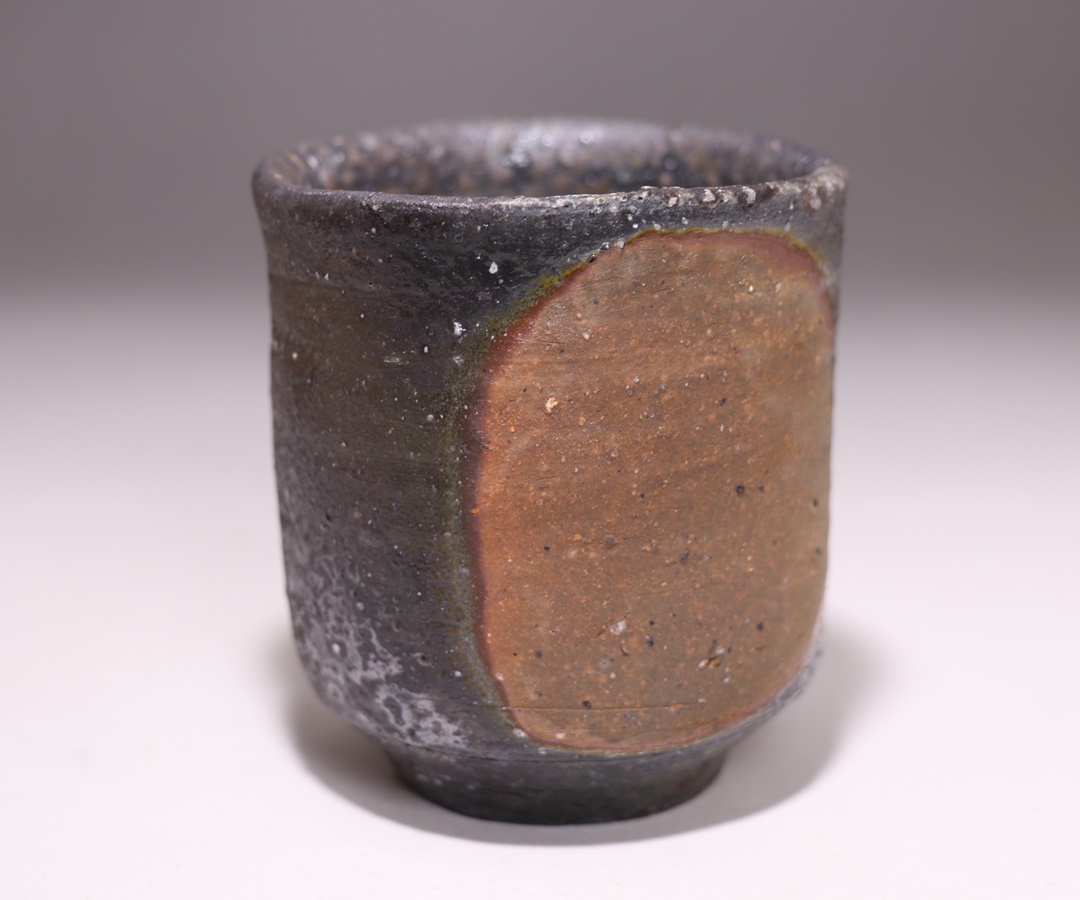
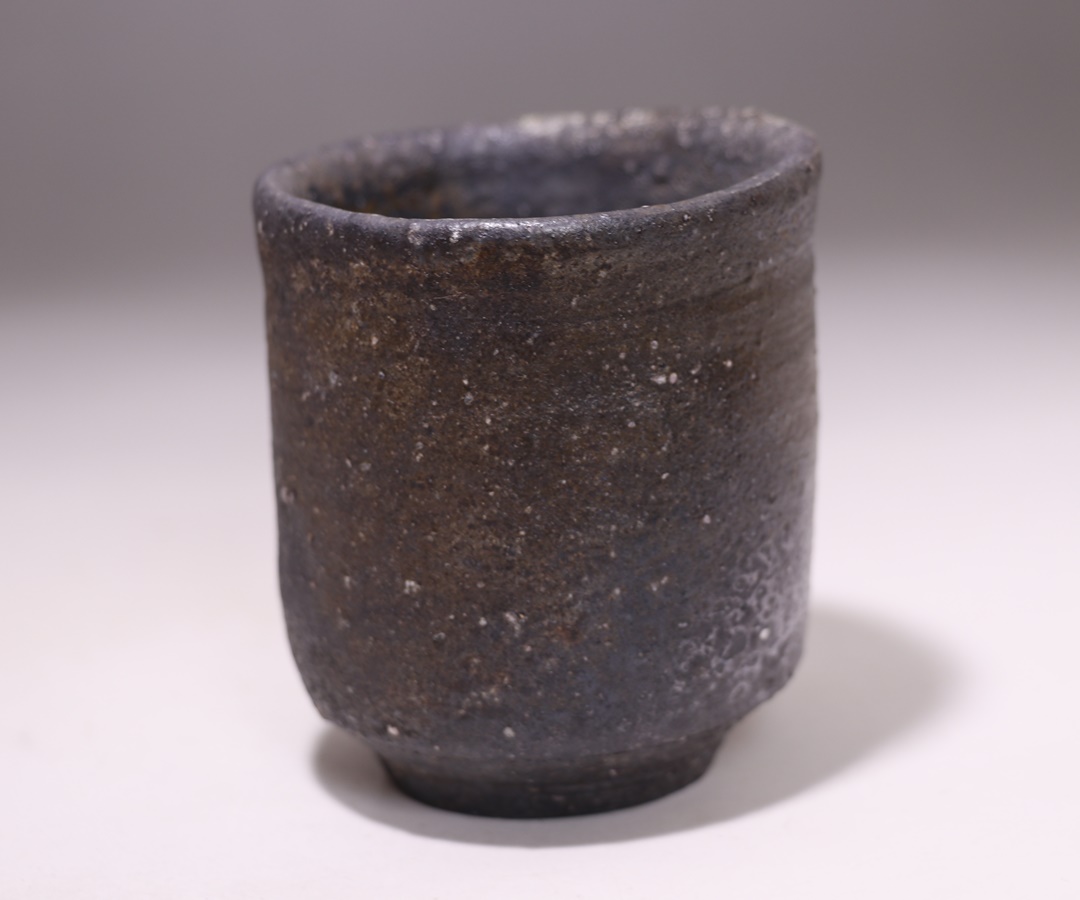
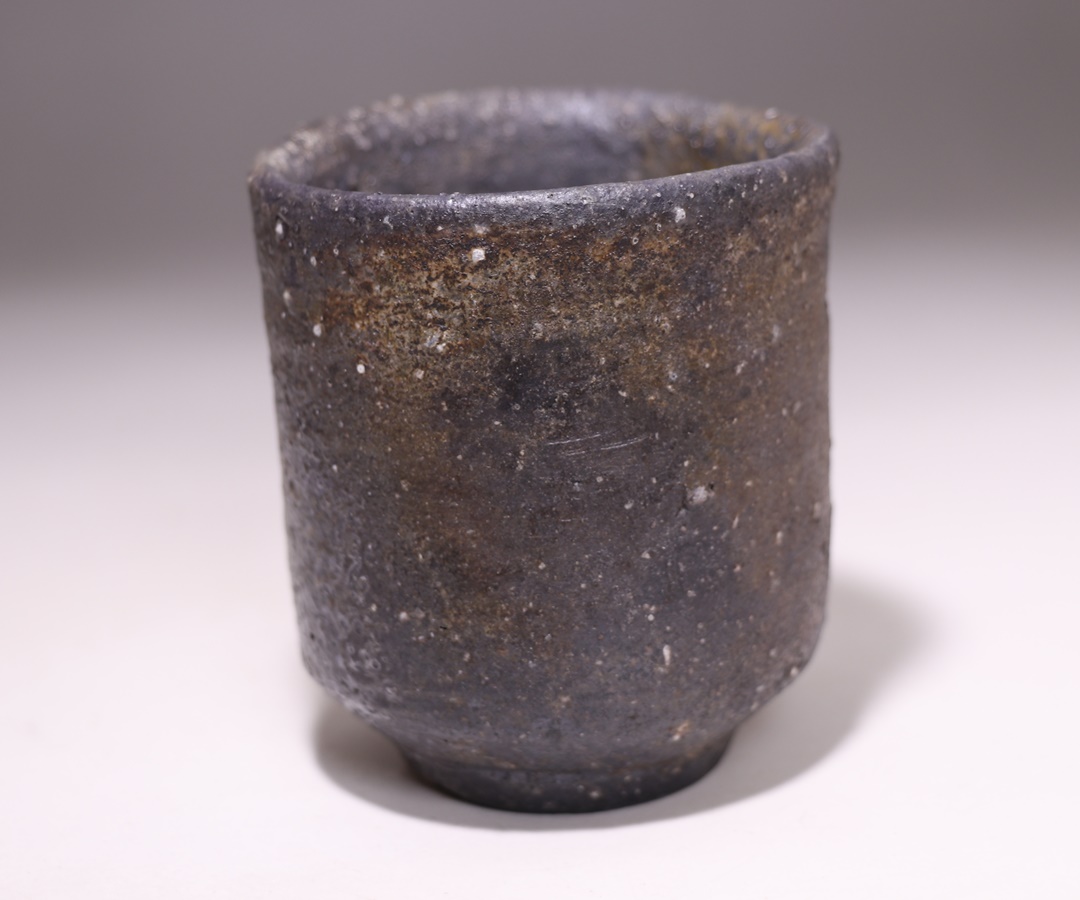
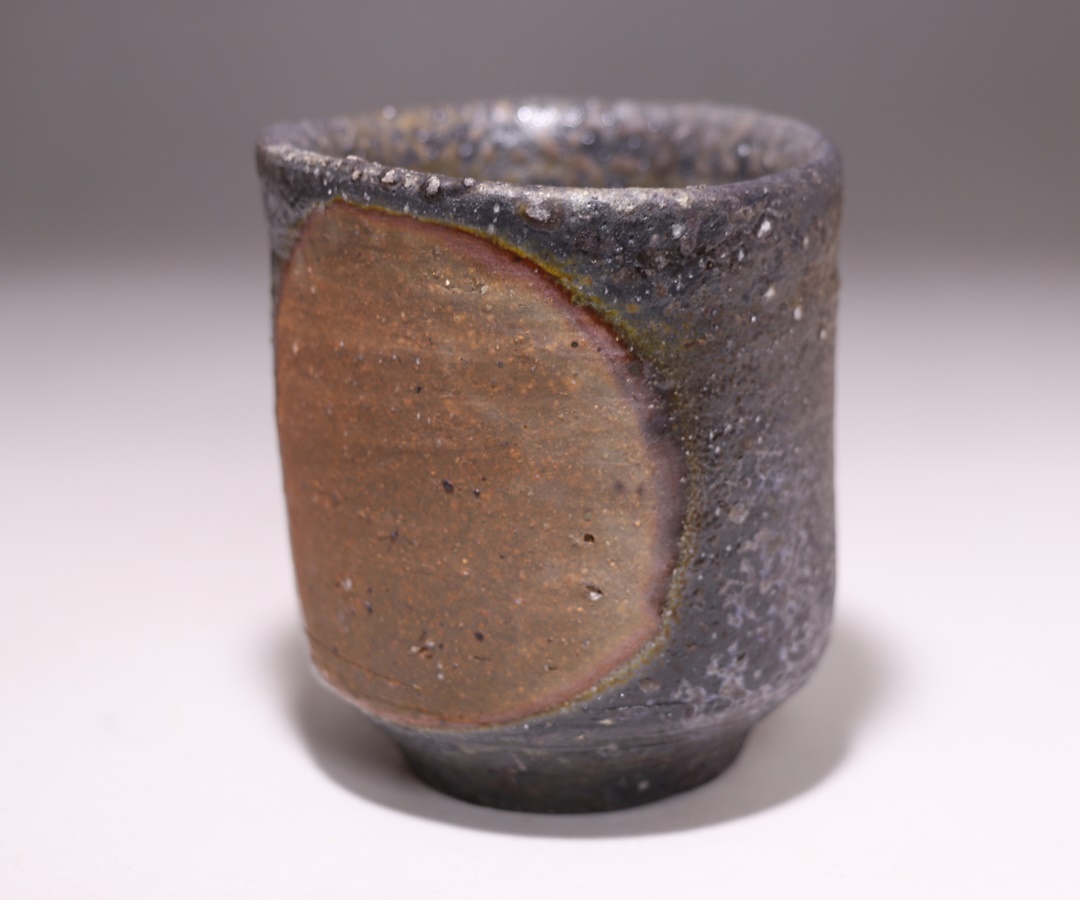
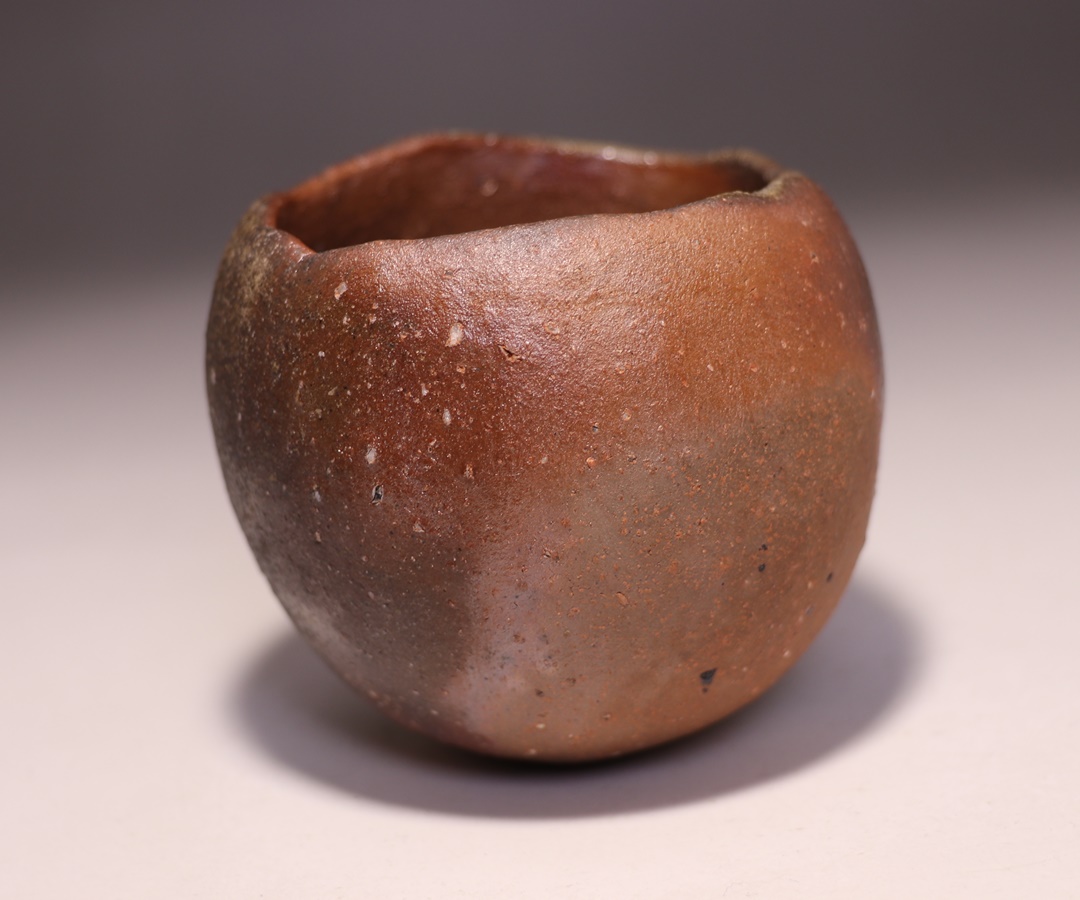
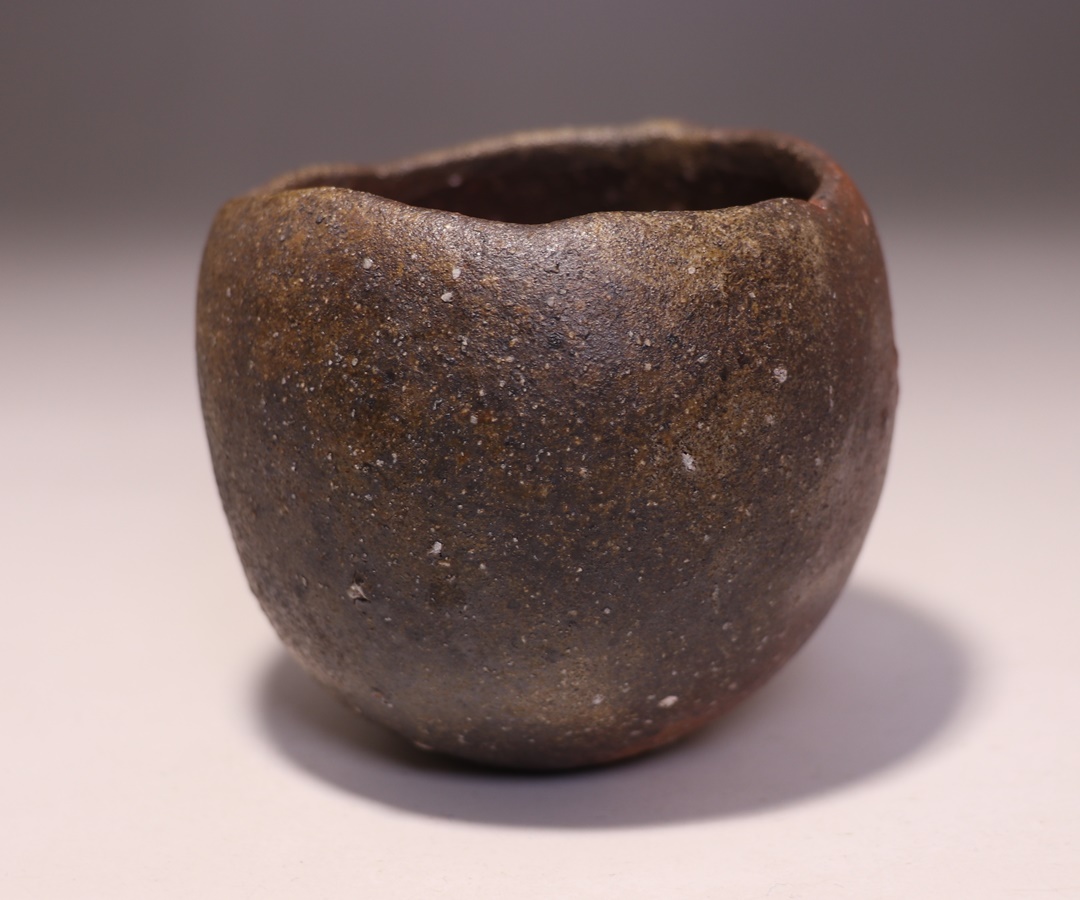
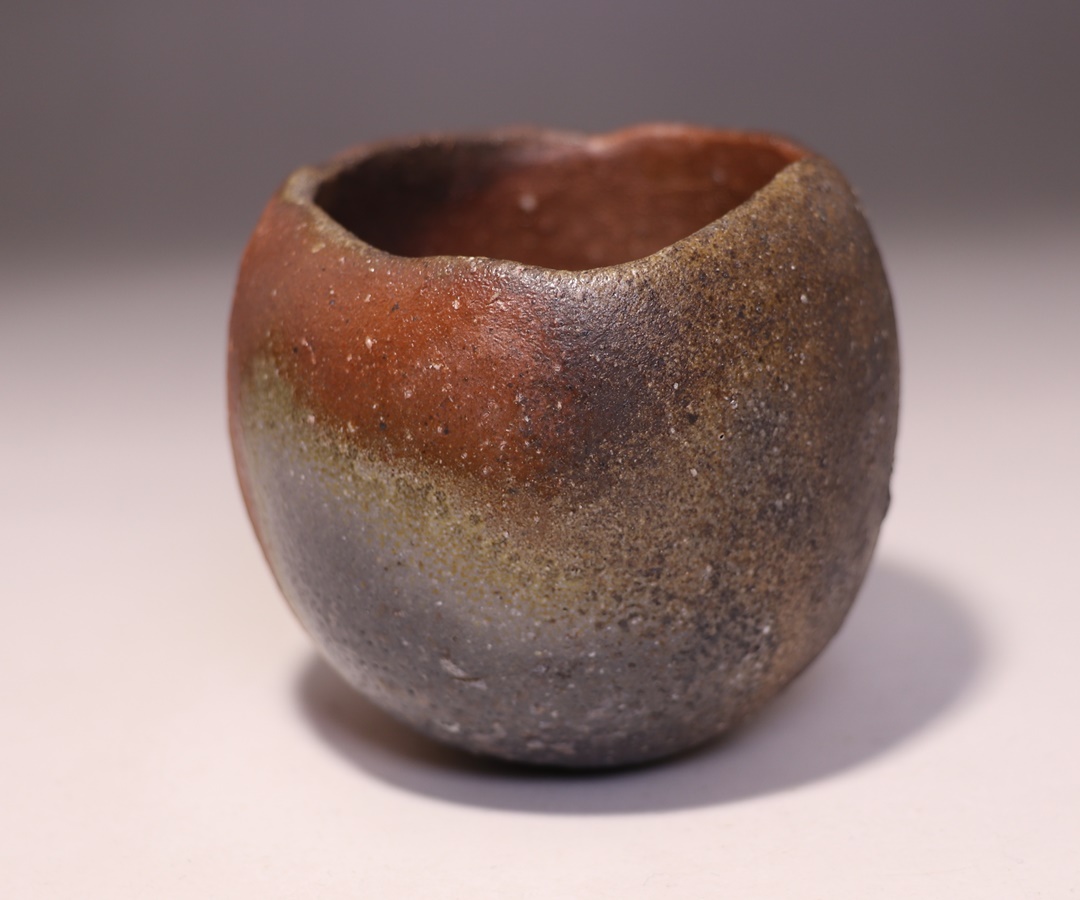
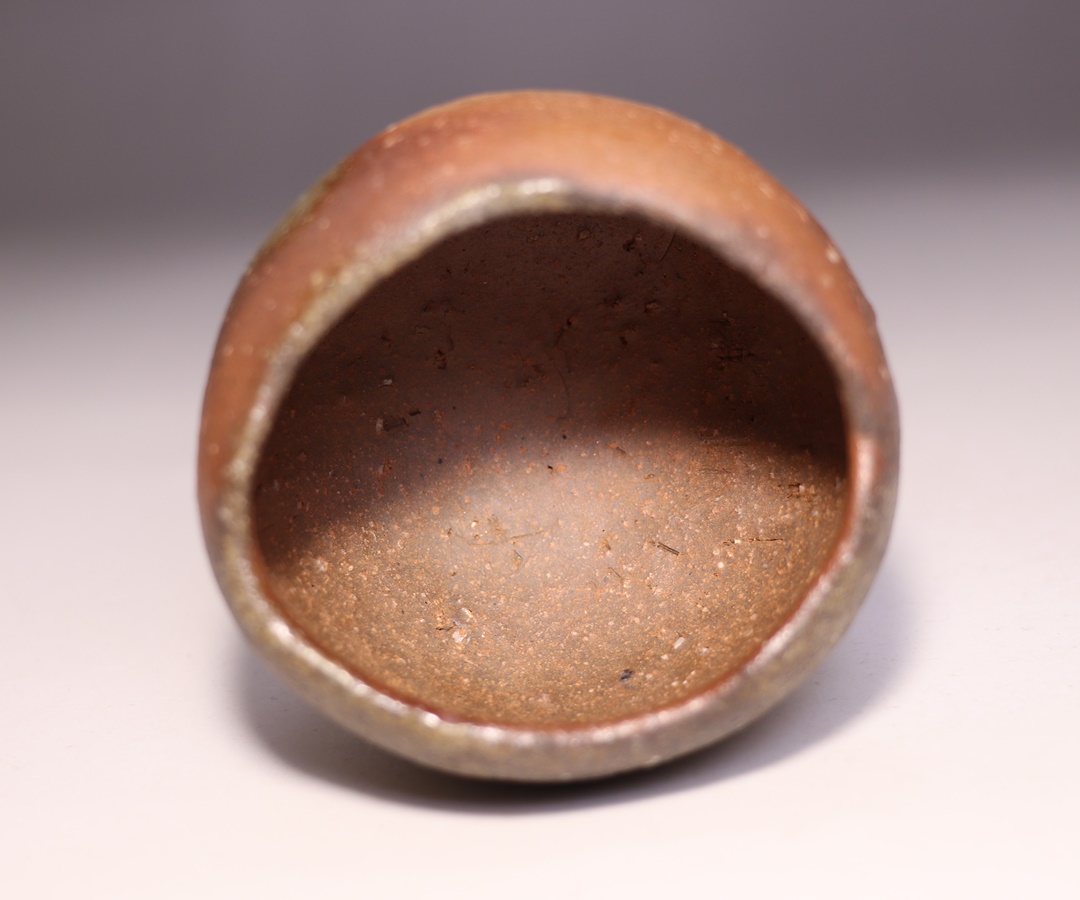
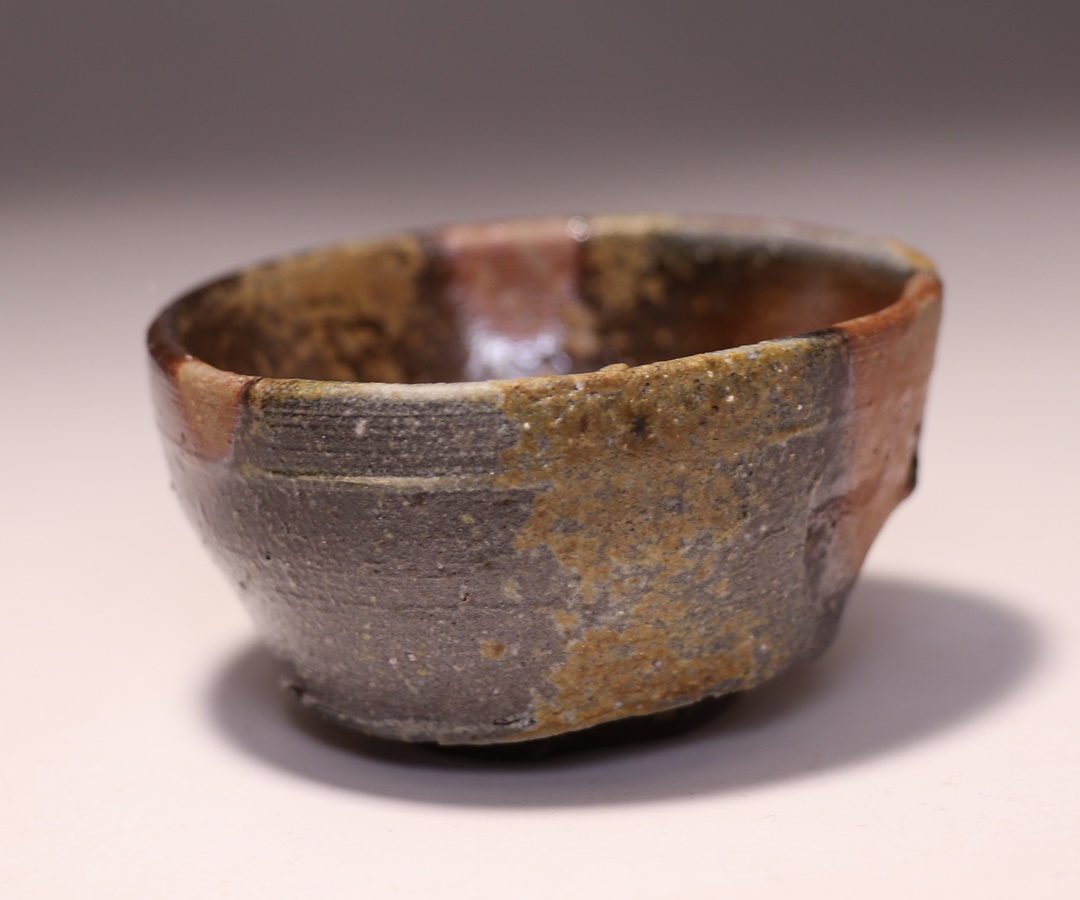
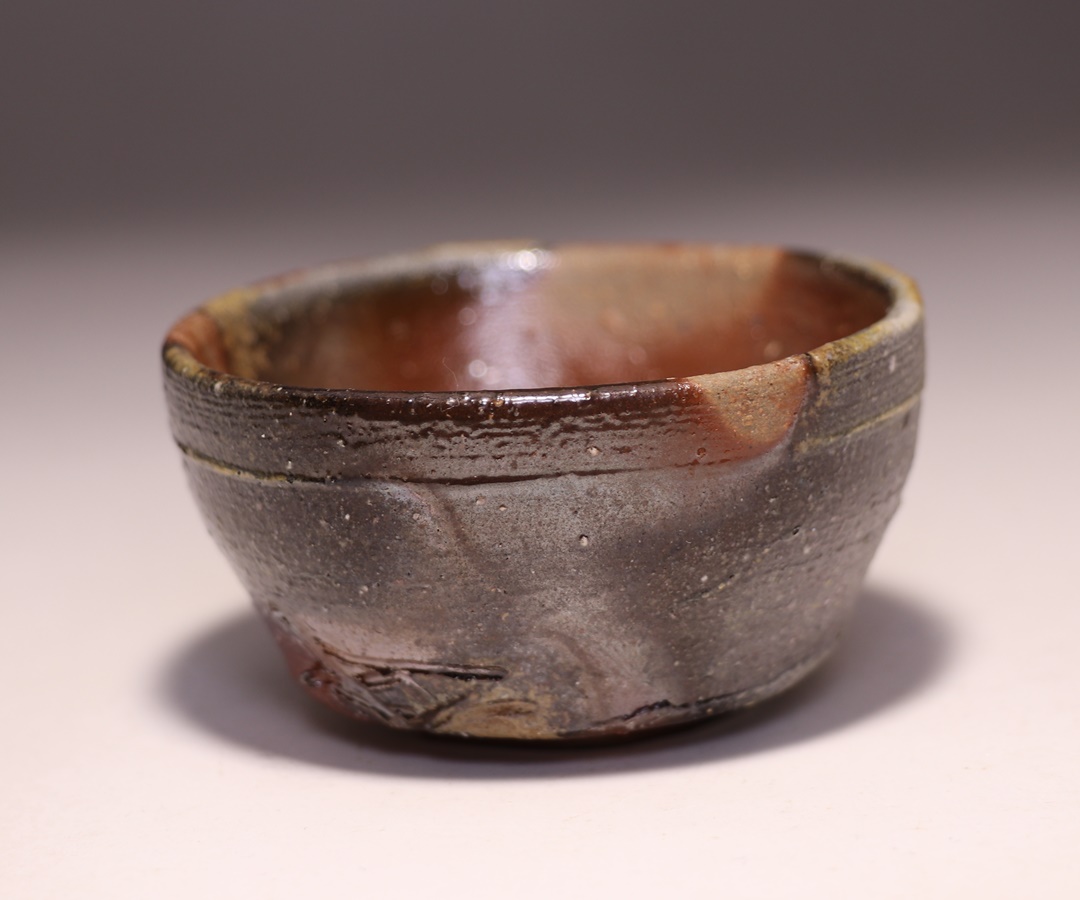
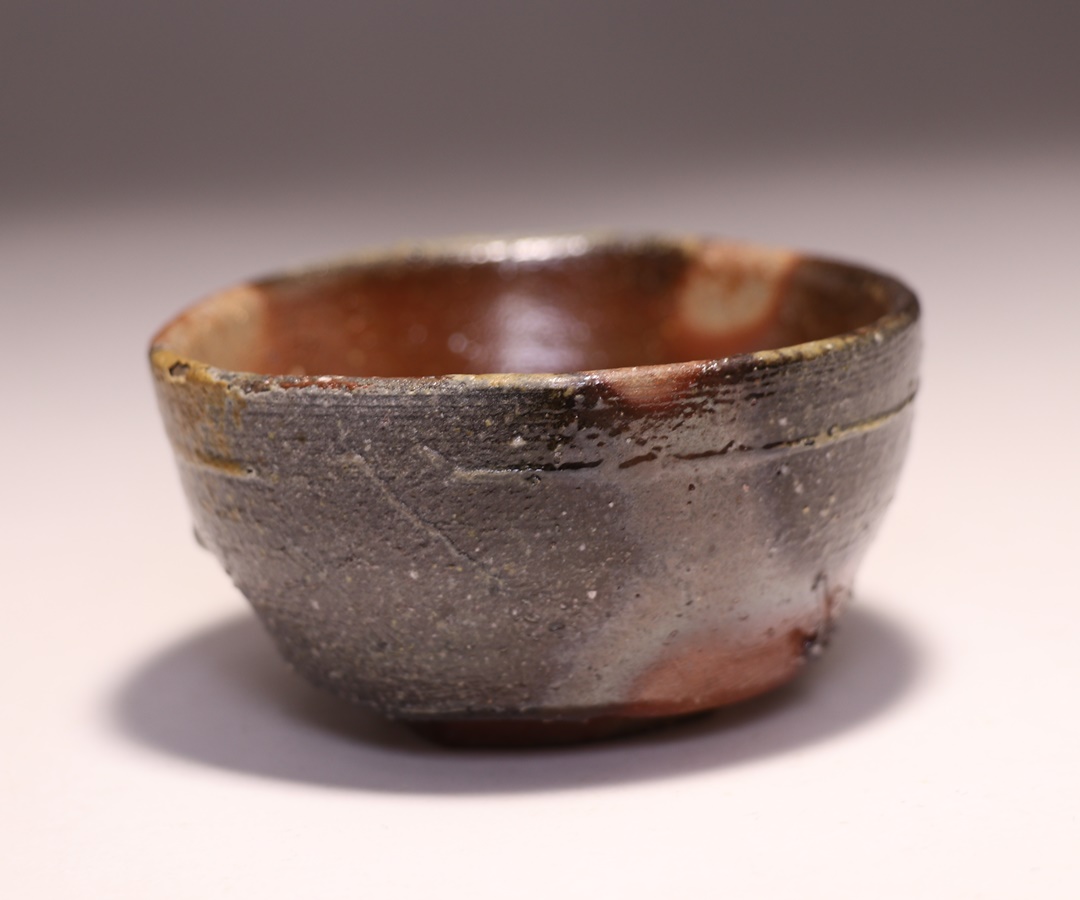
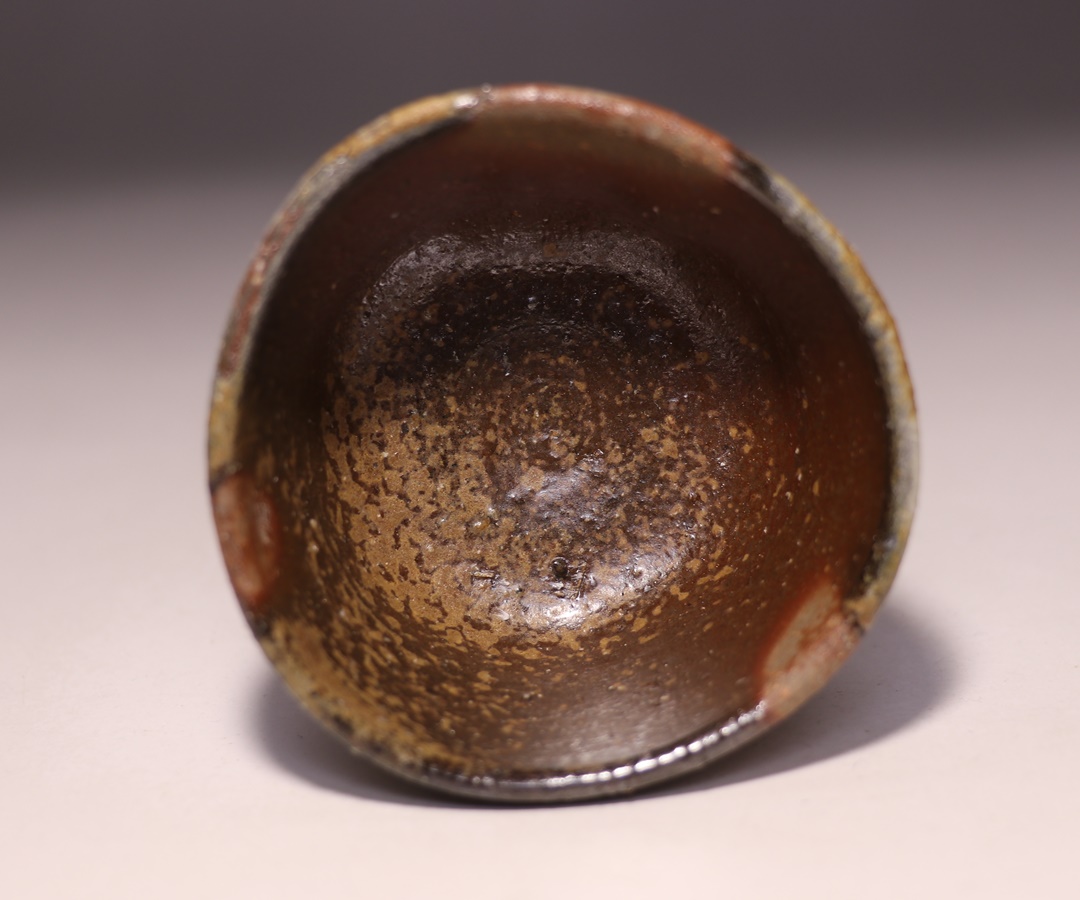
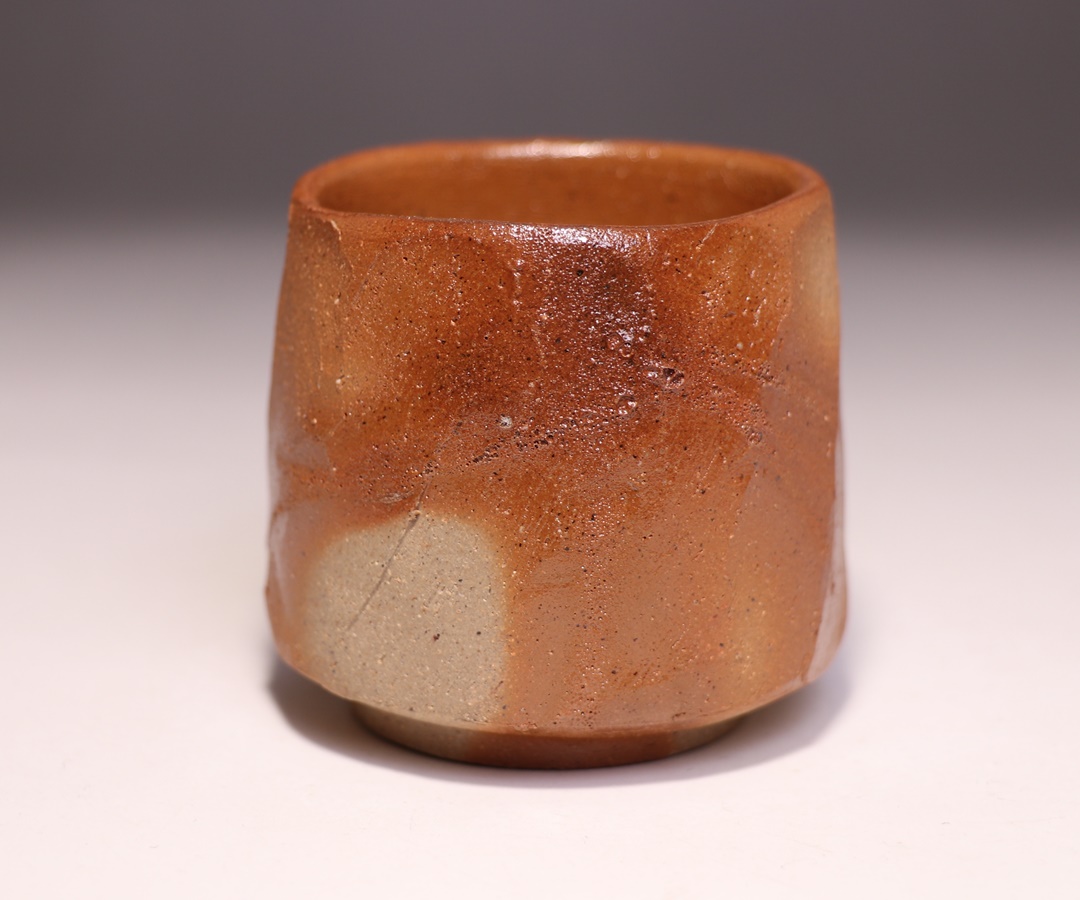
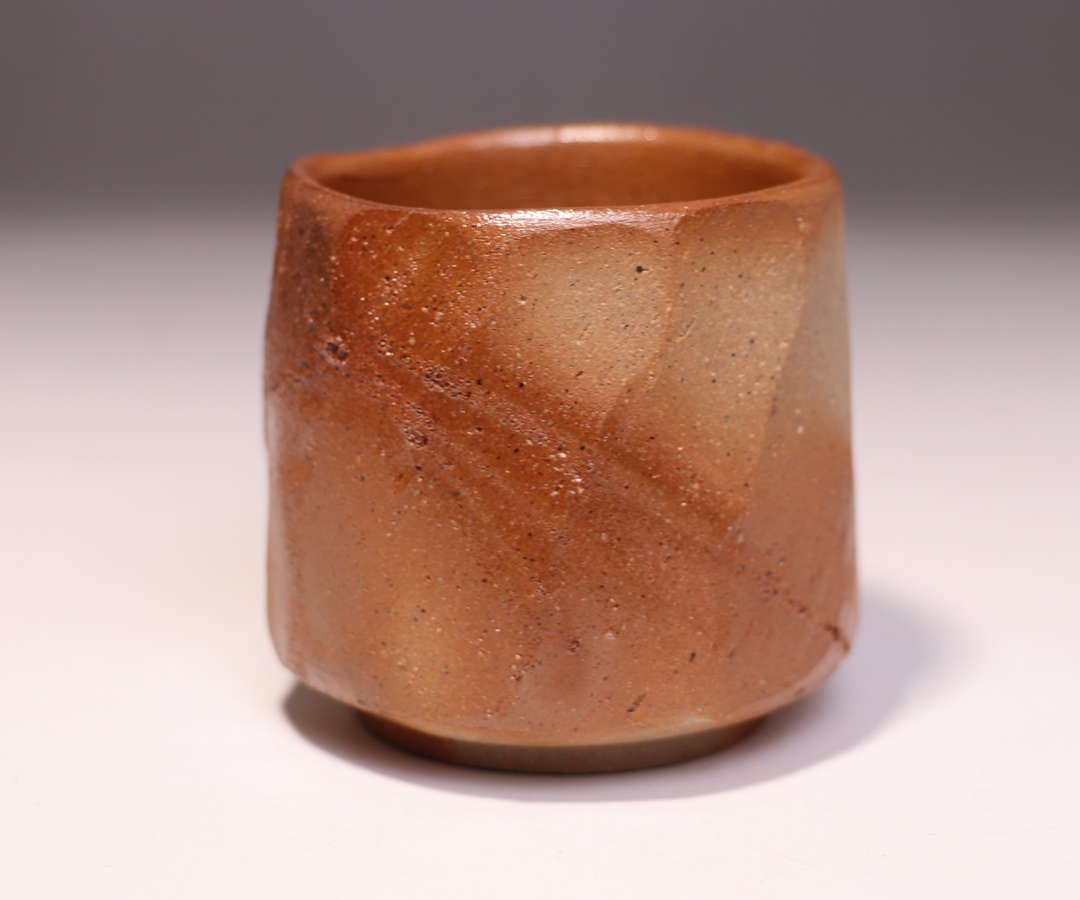
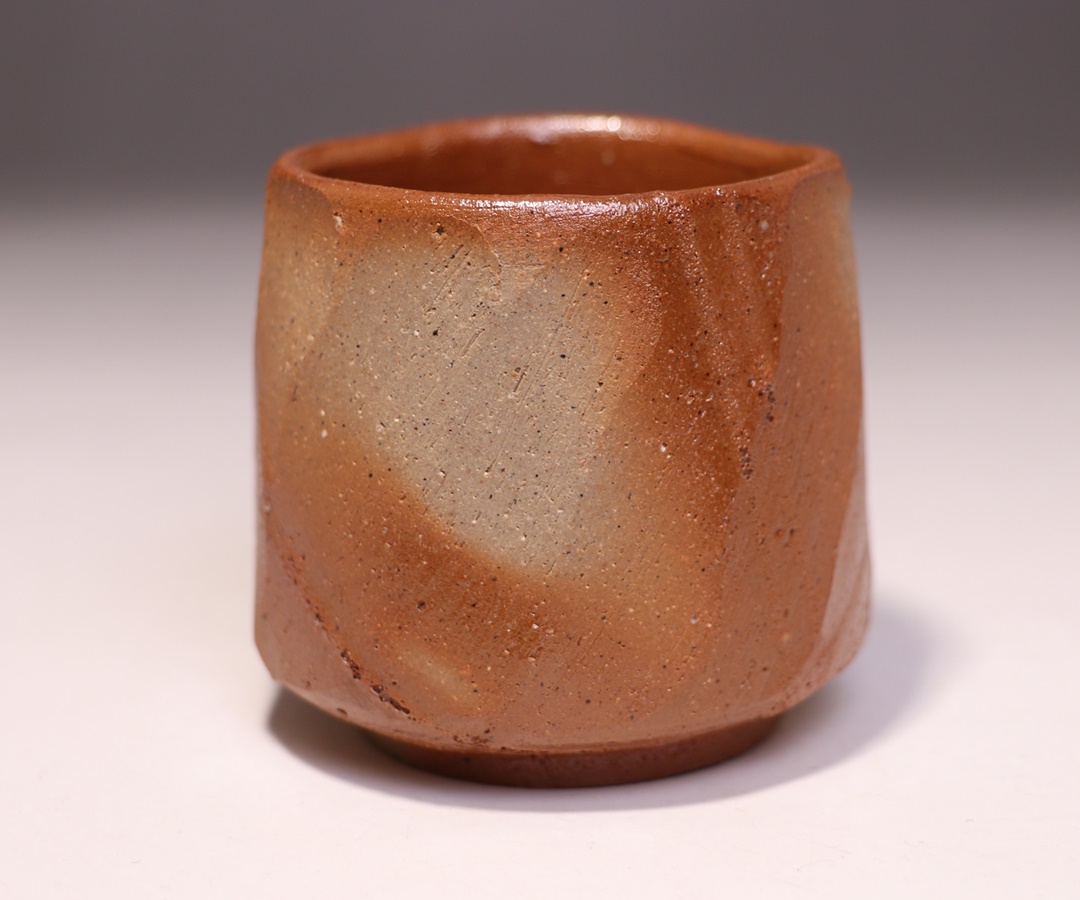
Jun Isezaki - Bizen Guinomi
66,000 YENSold out
size : W7.3cm×7.2cm×H6.6cmDrawing a wealth of inspiration from the natural environment of his beloved home of Bizen, Jun Isezaki brought a new spirit to the tradition of Bizen ware. This is a newly released Bizen Guinomi by the artist.
The piece was formed on the potter’s wheel by Jun Isezaki in January 2026 and later fired by Koichiro Isezaki in July of the same year, making it one of Jun Isezaki’s posthumous works.
It was created during a period in January when Jun Isezaki’s health had temporarily improved. Despite having been made only shortly before his passing, the vessel rises with a remarkably powerful and energetic form.
It is said that his fingernails were slightly long when he threw the piece on the wheel, leaving subtle traces across the body that resemble wheel marks. These lines provide a gentle accent within the relaxed and spacious form.
Powerful flames caused natural ash glaze to cover approximately half of the vessel, while the area below the waist was sheltered from the direct flames, leaving the raw clay surface exposed.
Vivid Hidasuki markings were also created across this exposed clay. Against the soft white tone of the clay, the deep scarlet lines resemble flashes of crimson lightning and create an exceptionally striking contrast.
The trimming of the foot also has a distinctive sense of ease and restraint, giving it a deeply expressive character. Looking at it brings to mind Jun Isezaki’s warm smile as he quietly watched over his apprentices in the throwing room.
Due to an issue with our photography equipment, the images appear slightly darker than the work does in person. If you would like to see photographs taken with an iPhone under natural lighting conditions, please feel free to contact us.
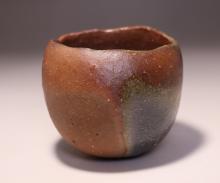


Koichiro Isezaki - Yohen Guinomi
35,200 YENSold out
size : W8.0cm×7.9cm×H6.7cmBorn as the eldest son of Living National Treasure Jun Isezaki, Koichiro Isezaki brings a fresh spirit to the world of Bizen ware through his exceptional sense of design and remarkable skill in forming clay. This is a newly fired Bizen Yohen Guinomi by the artist.
Fresh from the kiln in July 2026, it is one of his latest works.
While making full use of the distinctive qualities of Bizen clay, Isezaki skillfully incorporates elements drawn from wood carving, one of the roots of his artistic practice, creating a unique work that is immediately recognizable as his own.
This piece displays a rare type of Anagama kiln transformation found near the side-stoking openings located around the middle section of the kiln. The Hai-kaburi effect is sharply divided into red and black, creating an appearance reminiscent of Yohen produced in a climbing kiln.
Compared with typical climbing-kiln Yohen, however, the changes across the surface are even more clearly defined. At the center is a distinctive Anagama effect in which Kigoma appears to merge with Hai-kaburi, surrounded by an extraordinary variety of colors and textures, including gray Namako-like surfaces and golden metallic tones.
The areas left relatively untouched by ash display a complex mixture of red, purple, and brown. Combined with their matte, non-glossy texture, these exposed clay surfaces have tremendous potential to develop beautifully through continued use.
The basic form was built entirely by hand without the use of a potter’s wheel. Every detail has been carefully considered, giving this small Guinomi a remarkably concentrated presence, almost reminiscent of a Chawan.
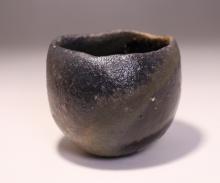


Koichiro Isezaki - Kuro Guinomi
35,200 YEN
size : W8.2cm×8.1cm×H7.1cmBorn as the eldest son of Living National Treasure Jun Isezaki, Koichiro Isezaki brings a fresh spirit to the world of Bizen ware through his exceptional sense of design and remarkable skill in forming clay. This is a newly fired Kuro-Guinomi by the artist.
Fresh from the kiln in July 2026, it is one of his latest works.
While making full use of the distinctive qualities of Bizen clay, Isezaki skillfully incorporates elements drawn from wood carving, one of the roots of his artistic practice, creating a unique work that is immediately recognizable as his own.
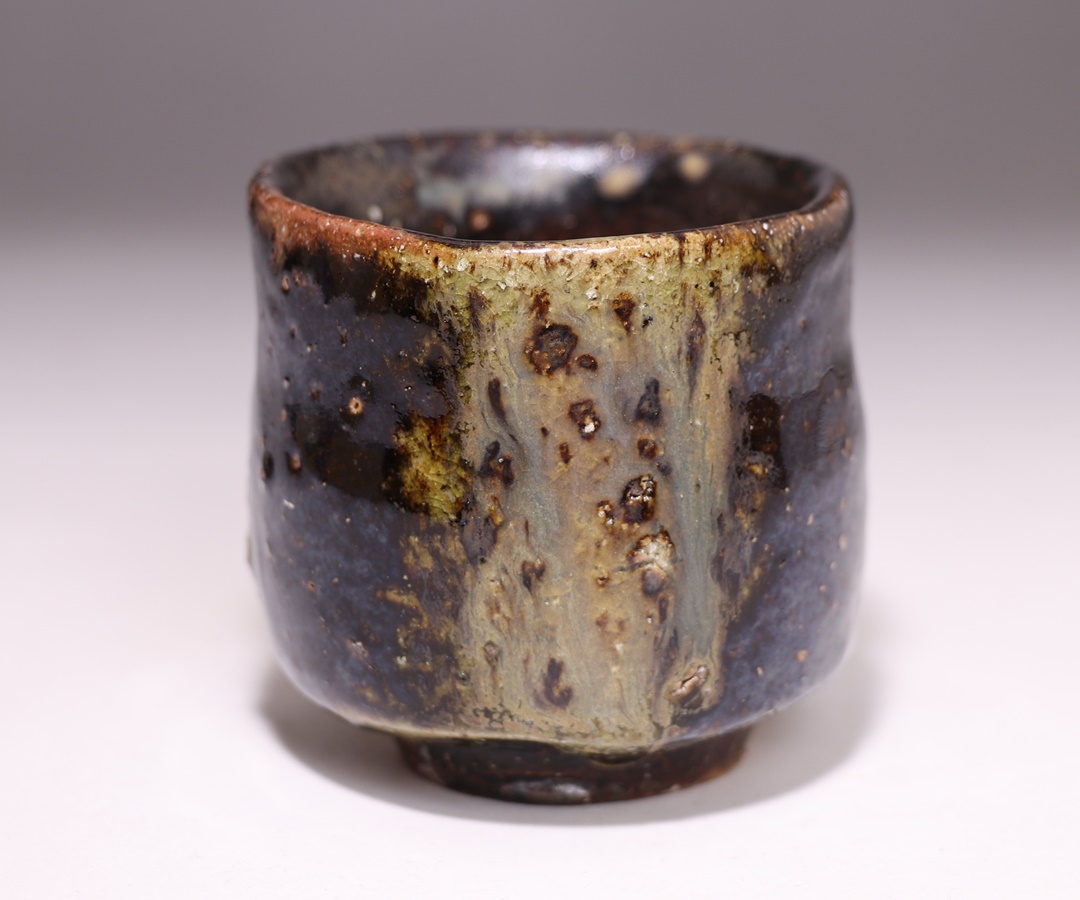
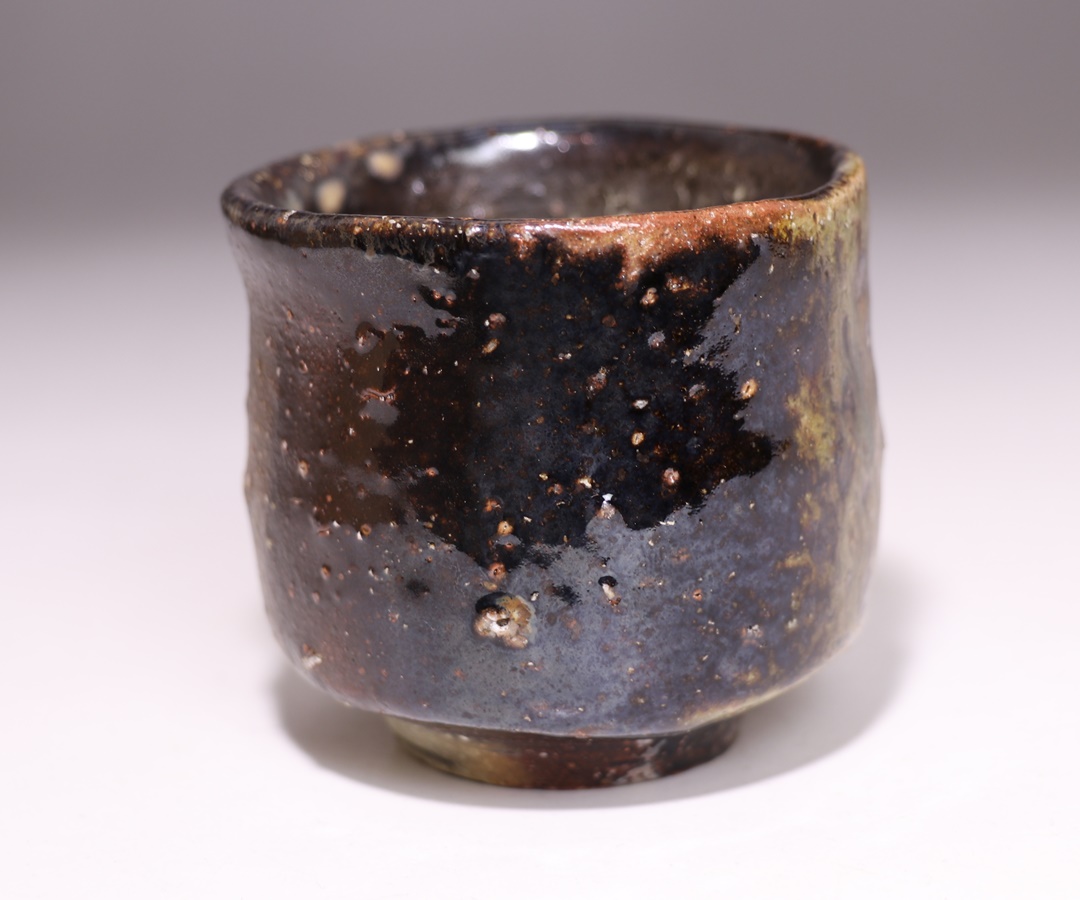
This firing took place in the height of summer, and the humidity brought by prolonged rainfall affected the conditions inside the Anagama kiln. As a result, exceptionally intense Kase-Goma accompanied by blue kiln effects developed across the surface, appearing almost as though it had adhered directly to the clay.
Approximately one third of the exterior is also covered with Koge-Goma created by powerful flames. The ash has melted thoroughly into an exceptionally smooth surface, adding not only visual interest but also a more pleasant sensation against the lips.
While the exterior is dominated by Kase-Goma and Koge-Goma produced by the intense firing and humid kiln conditions, the interior presents an entirely different expression. Here, golden Kigoma resembling scattered grains of gold appears alongside the matte black surface characteristic of Koichiro Isezaki’s work.
The basic form itself was built entirely by hand without the use of a potter’s wheel. Every detail has been carefully considered, giving this small Guinomi a remarkably concentrated presence, almost reminiscent of a Chawan.
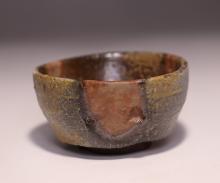


Zenji Urakami - Bizen Shuhai
16,500 YEN
size : W7.1cm×6.9cm×H3.7cmZenji Urakami received numerous honors throughout his career and became internationally renowned as a master of ceramic art and a designated holder of Intangible Cultural Property. This is a Bizen Shuhai by the artist.
The work is accompanied by an artist biography listing his career through 1997 and is believed to date from the later years of Urakami’s career.
Over the amber-colored natural ash glaze with its strong luster lies a further layer of Kase-Goma with an almost wet-looking sheen. The entire vessel seems to reflect a faint light, giving this Shuhai a mysterious and distinctive presence.
The clay surface on the interior also has a relatively strong sheen, but here the scenery is much more restrained, consisting primarily of elegant Tobi-Goma. The dramatic change in atmosphere between the interior and exterior is another fascinating feature of the work.
The form is Urakami’s signature constricted-body style, making the artist immediately recognizable at a glance. Two characteristic spatula marks have been applied across the center of the body.
The indented body design, together with the moderately thin construction, makes the cup comfortable to hold. Overall, it is a straightforward and highly practical sake vessel that is easy to enjoy in daily use.
The piece was purchased new and carefully stored ever since. It has never been used.
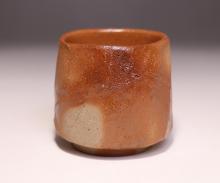


Seiho Kakumi - Bizen Hidasuki Guinomi
11,000 YENSold out
size : W6.4cm×6.4cm×H5.9cmJuho Kakumi studied under some of the great masters of modern ceramics and went on to establish a distinctive artistic style of his own. This is a Bizen Hidasuki Guinomi from the period when he worked under the name Seiho Kakumi. ([メルカリ][1])
The work is accompanied by an artist biography listing his career through 2005 and is believed to have been created around that time.
Having received guidance from such renowned Bizen masters as Toyo Kaneshige and Toshu Yamamoto, Seiho Kakumi developed a deep command of traditional techniques. This Guinomi displays the soft and gentle coloring of Hidasuki produced in an electric kiln.
Along with its delicate coloring, the work also allows one to appreciate the exceptionally fine and smooth texture of the clay, resulting in a finish that could almost serve as a textbook example of Hidasuki ware.
Another highlight is Kakumi’s signature Shinogi technique, in which a thickly wheel-thrown form is carved away with a spatula. The spiraling form appears to converge as it rises, evoking a sacred mountain peak soaring upward—an image that seems particularly fitting for the character “峯” in his artist name.
Although this is an earlier work offered on the secondary market, it shows no staining, wear, or signs of use.
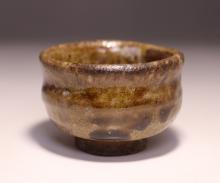


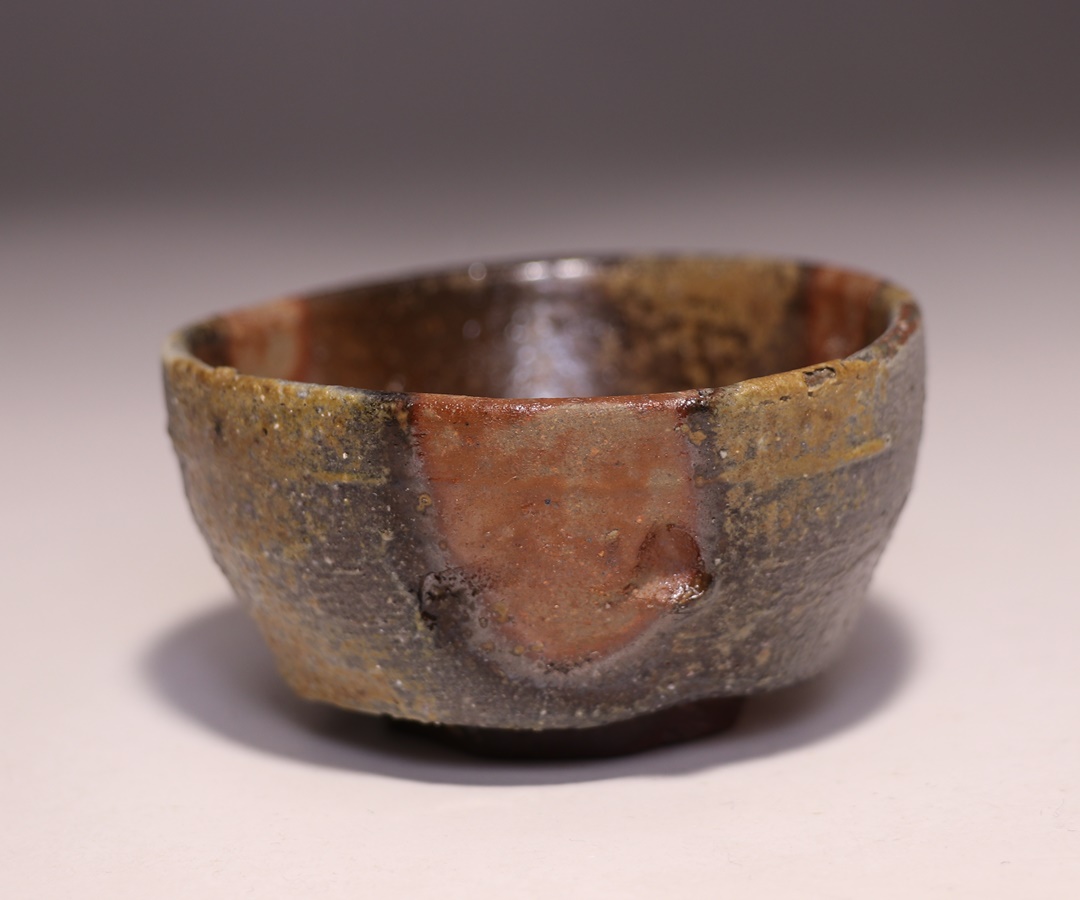
Ken Fujiwara - Bizen Guinomi
19,800 YENSold out
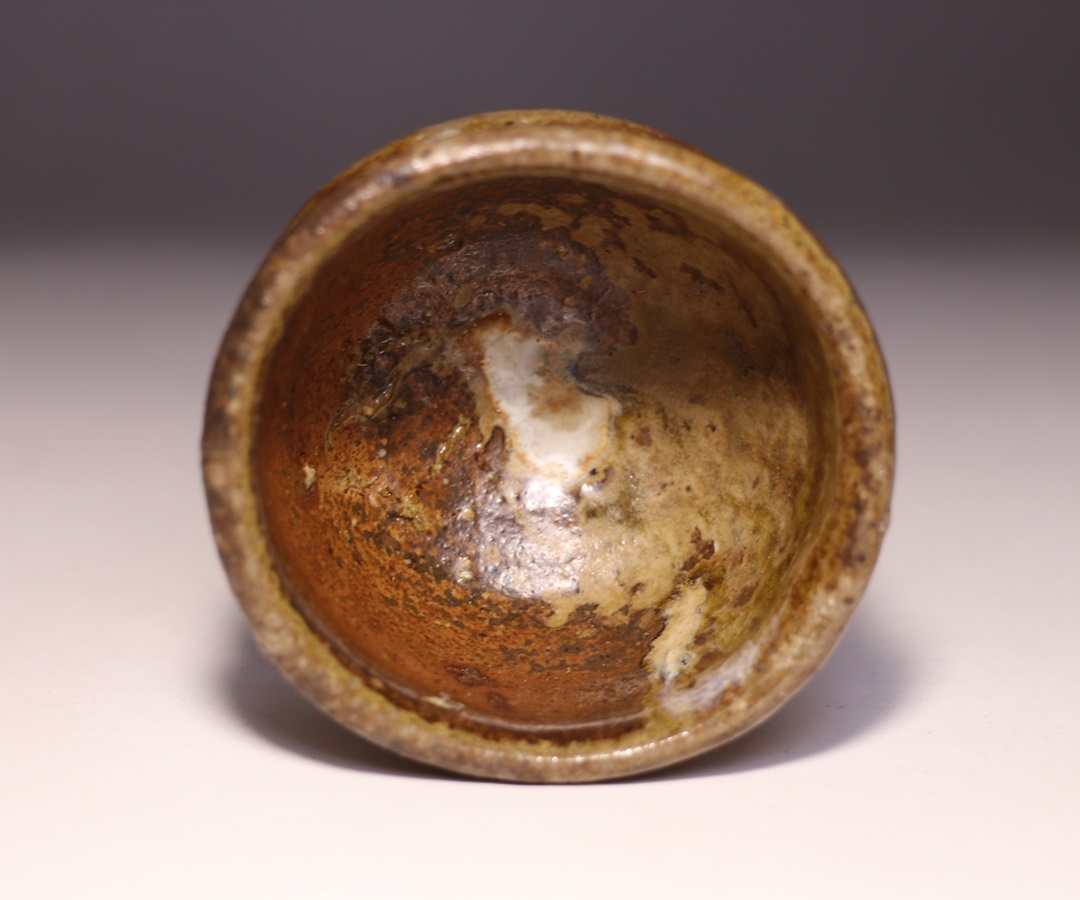
size : W6.9cm×6.7cm×H4.7cmKen Fujiwara was a timeless master whose works combine boldness with remarkable precision. This is a Bizen Guinomi by the artist.
The piece was fired slowly and thoroughly in the kiln with straw placed over it, allowing one to enjoy not only powerful Goma effects but also Ito-Goma and Shiro-Goma created by the straw.
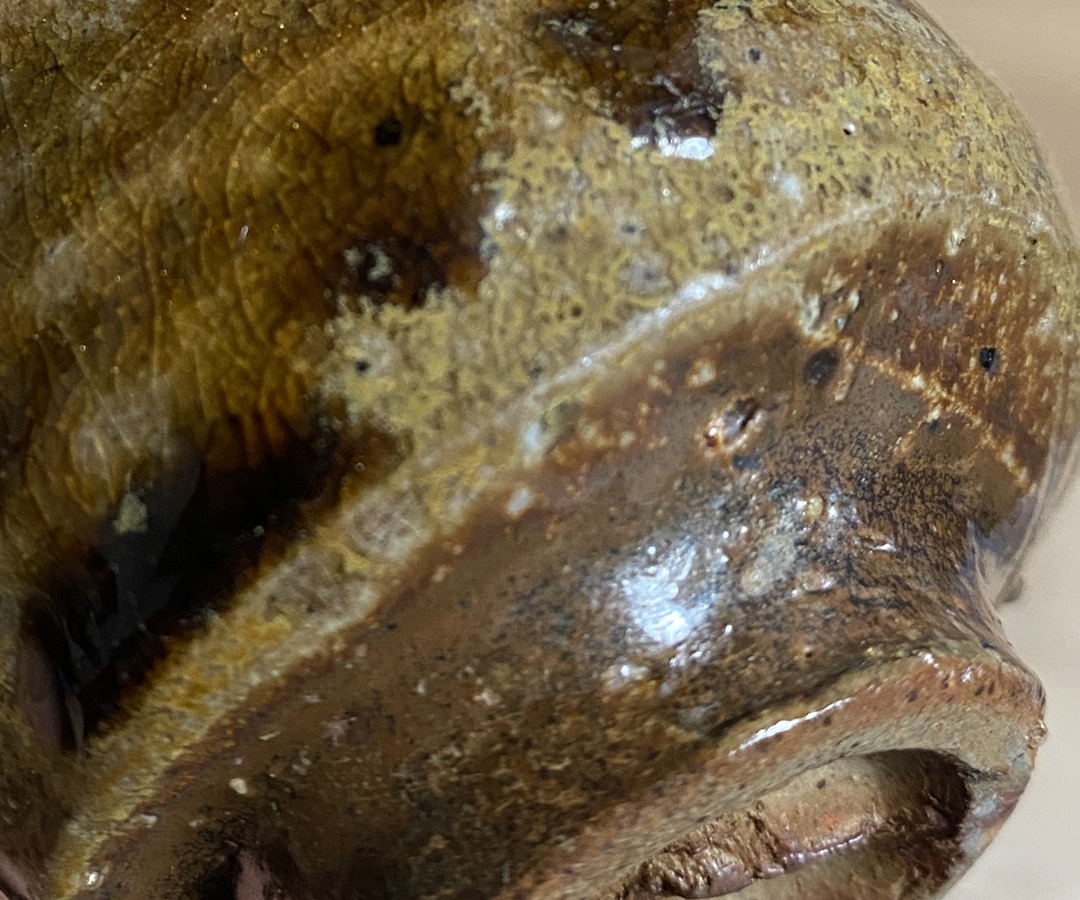
The intense Goma scenery, likely produced by placing the work close to the fire, is especially impressive. On the front, it has developed into a black flowing Goma effect reminiscent of obsidian.
Inside the Guinomi, the surface is even more dramatic, as though the vessel had been carried deep into a blazing fire and had scooped up a mass of ash directly from the flames.
The straw placed over the work during firing also played a particularly fascinating role. Especially inside the vessel, the melted straw fused with the Goma to create Shiro-Goma.
When the Guinomi is in use, this white marking appears like a single cherry blossom petal floating on the sake, or like softly falling snow, giving the work a deeply poetic atmosphere.
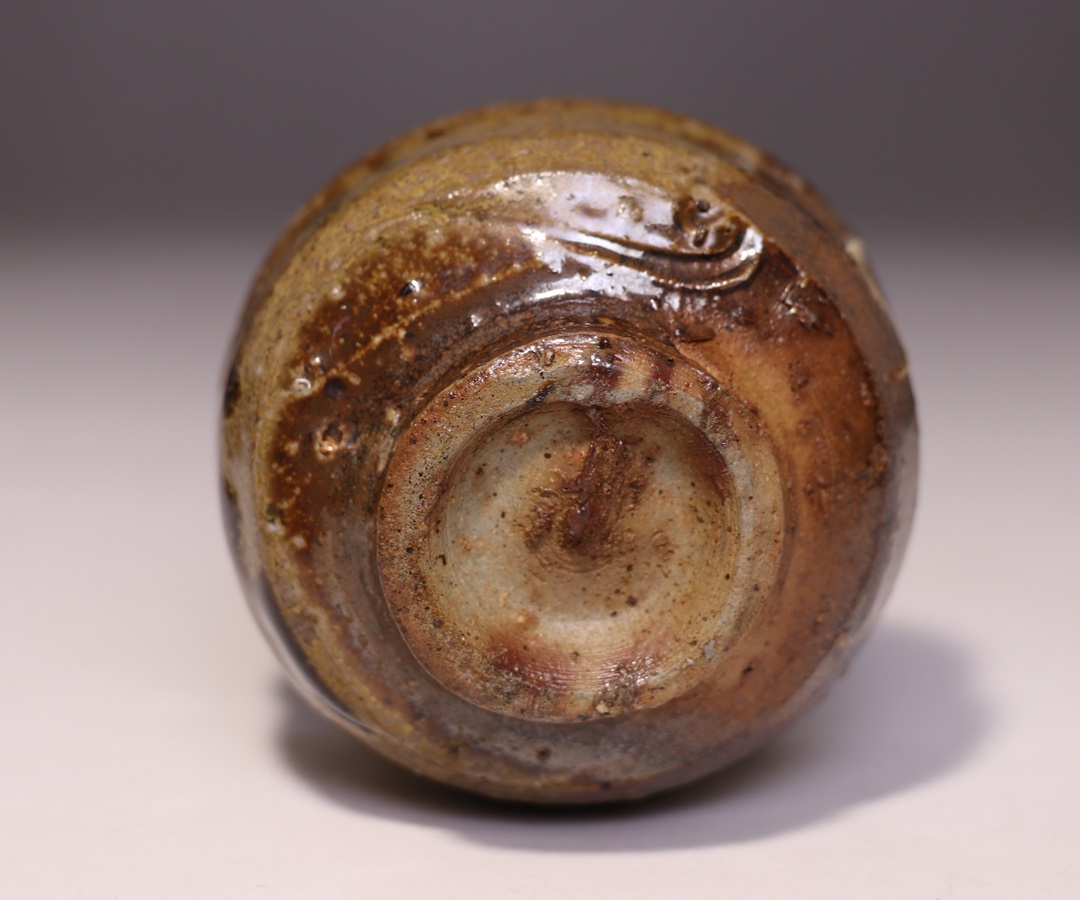
With a diameter of 7 cm, the somewhat broad form has a presence almost like that of a Chawan despite its small size. Fujiwara’s characteristically graceful and extended foot complements the form beautifully.
Part of the foot appears to have fused during firing and has subsequently been repaired, but this does not affect normal use.
(*Please refer to photo 7, beneath the black flowing Goma.*)
1 / 92 page NEXT LAST