
Products
| Bizen Sake Bottle & sake Cup | Tea Ceremony Things | Bizen Flower Vase | Bizen Dish & Bowl | Others |
Bizen Sake Bottle & sake Cup
1094 Items
FIRST PREV 2 / 92 page NEXT LAST
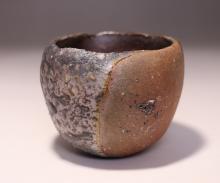


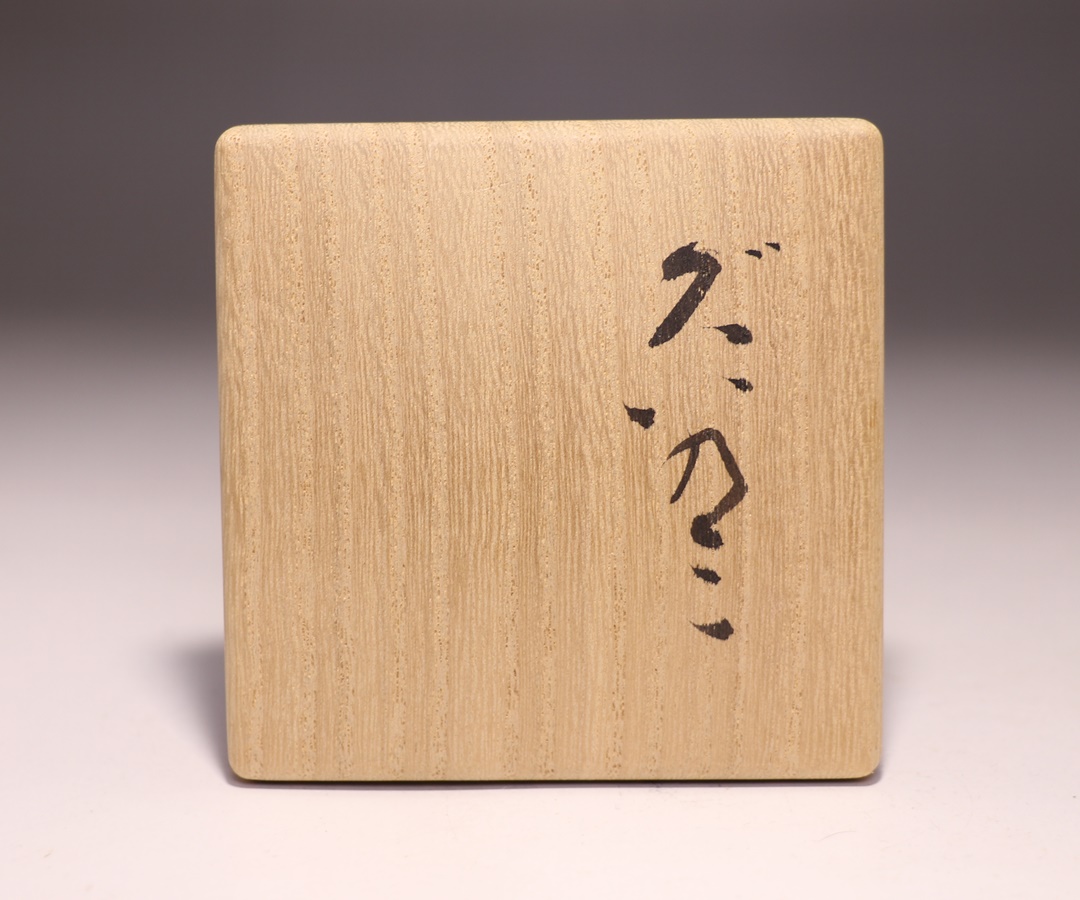
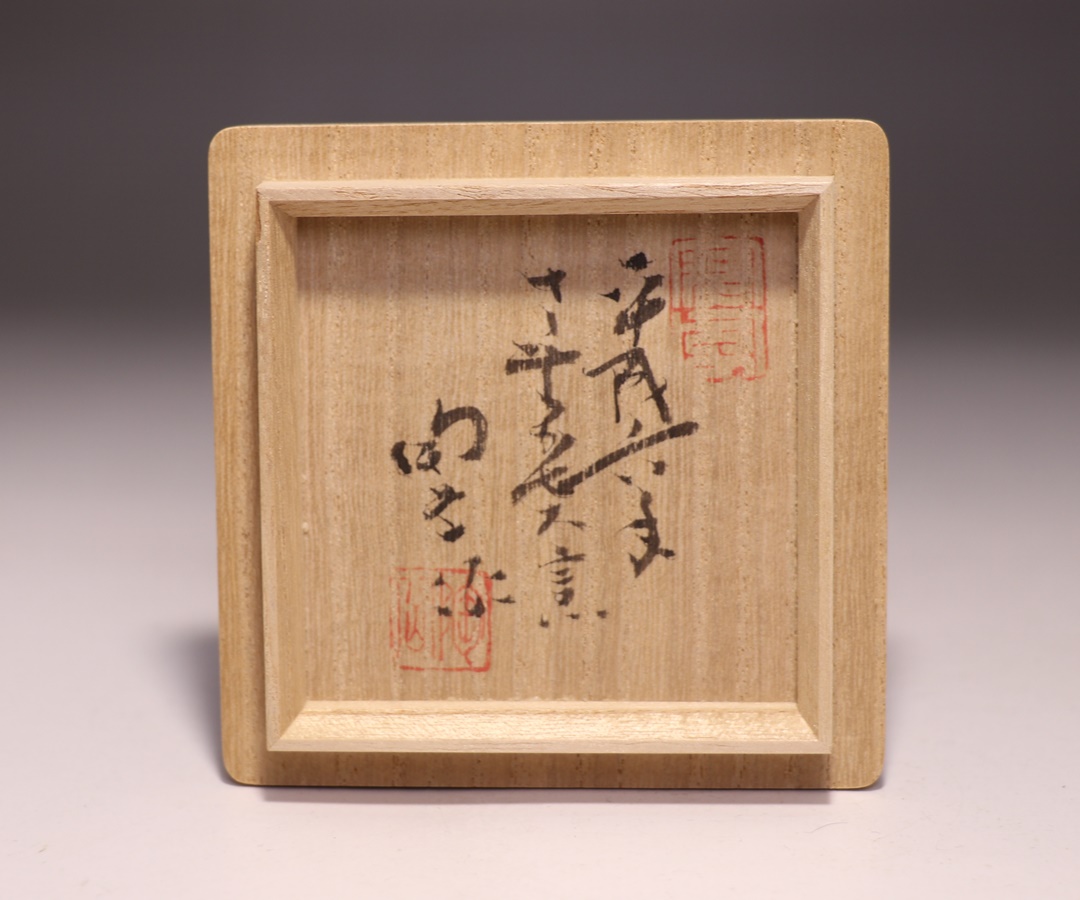
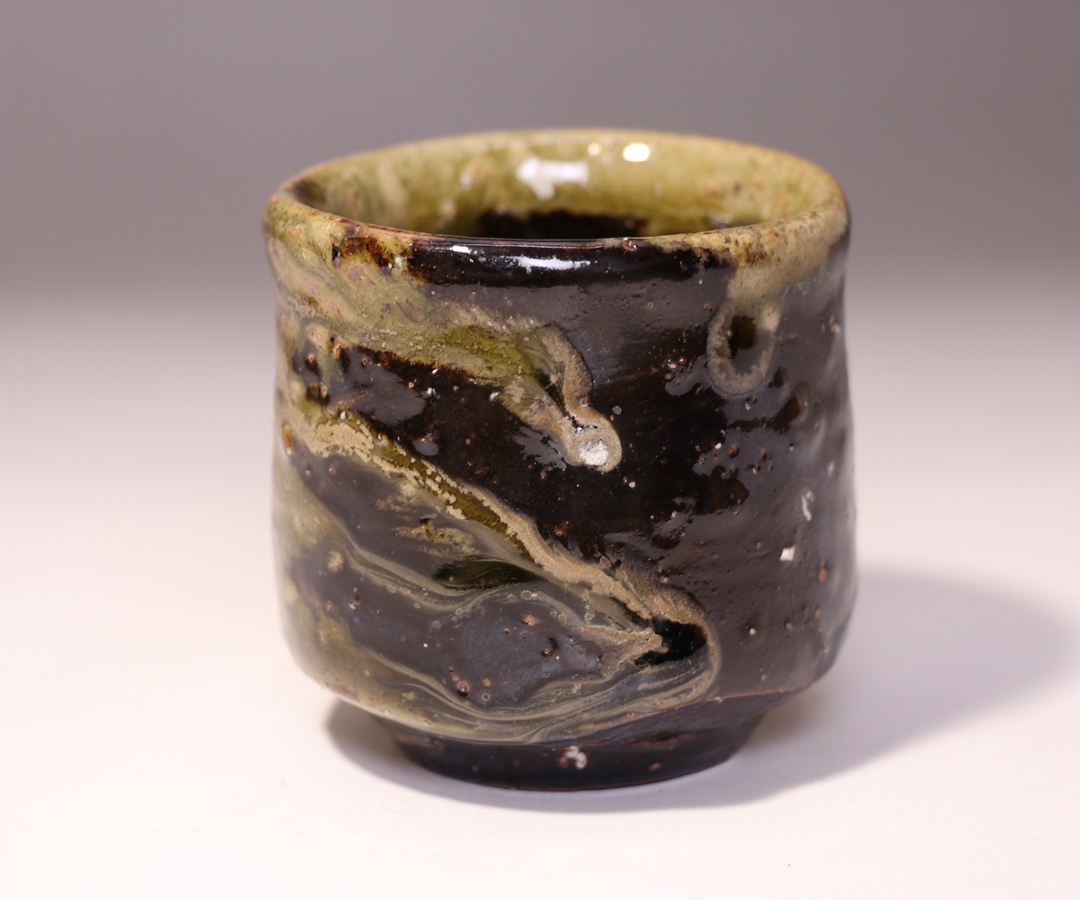
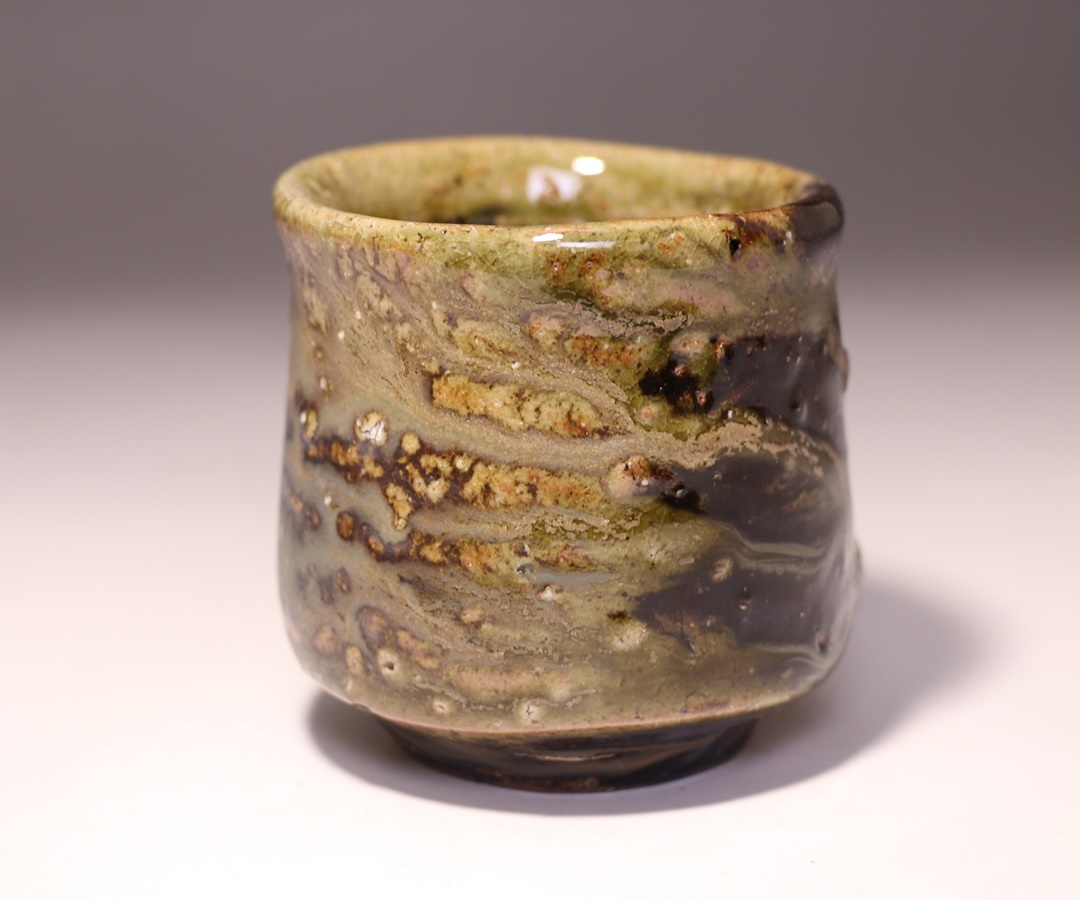
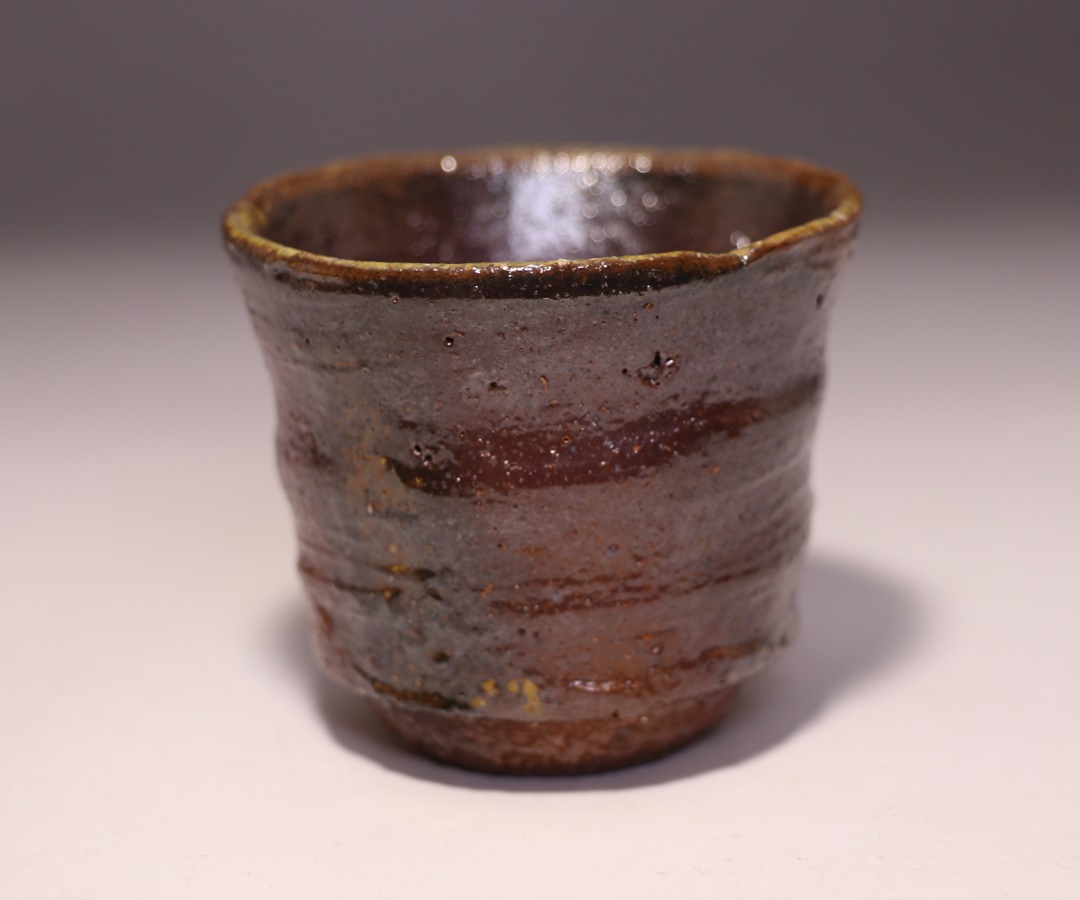
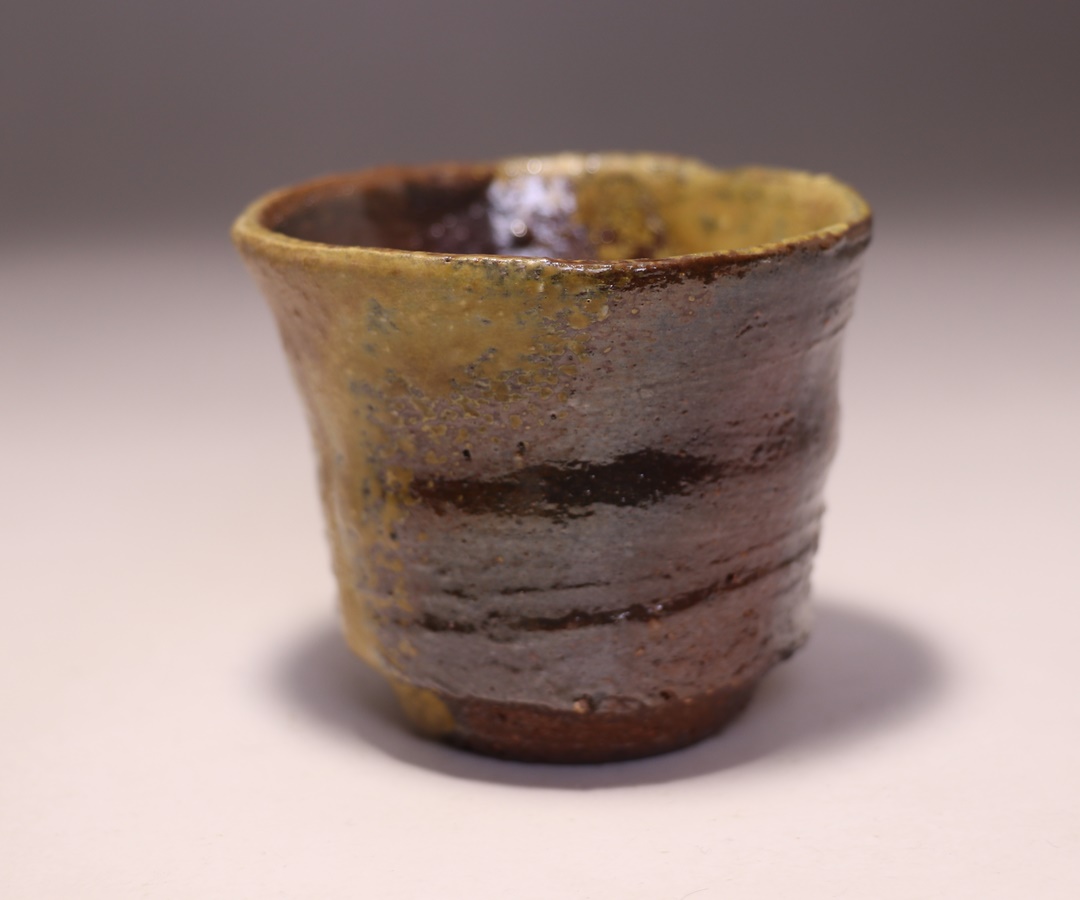
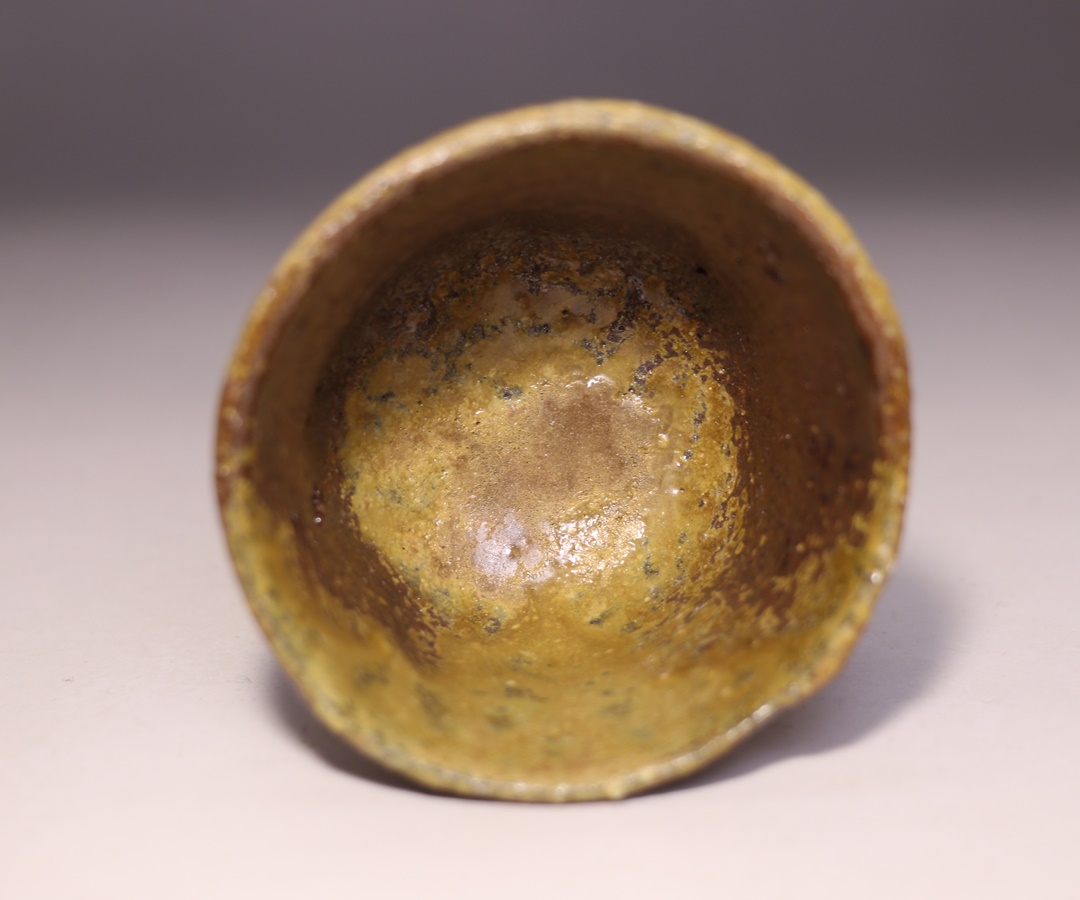
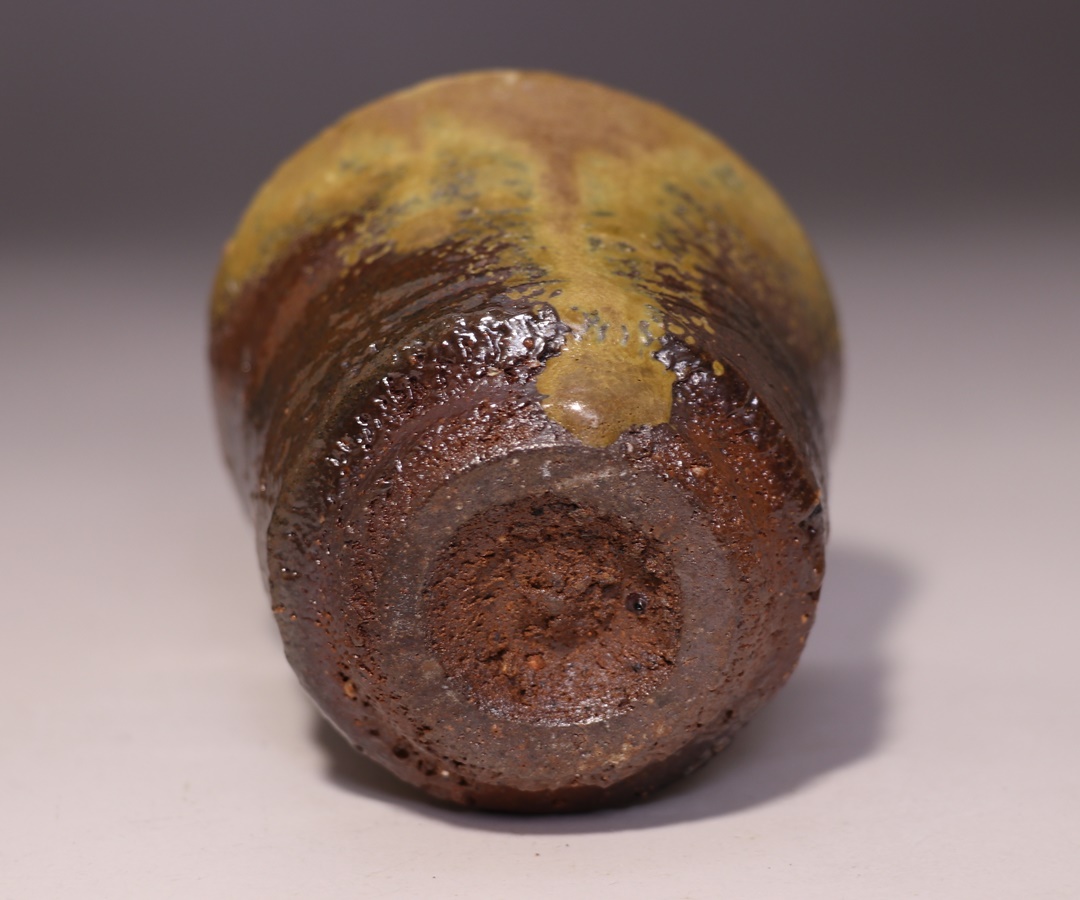
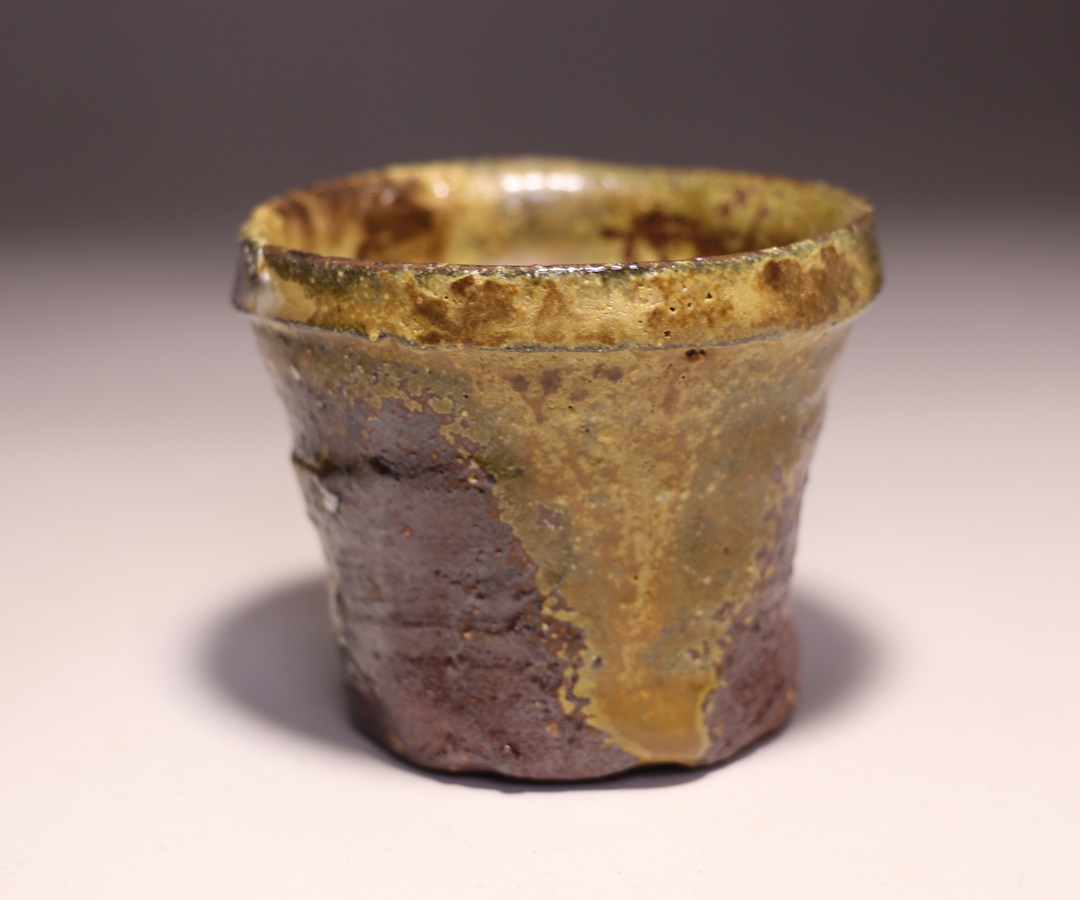
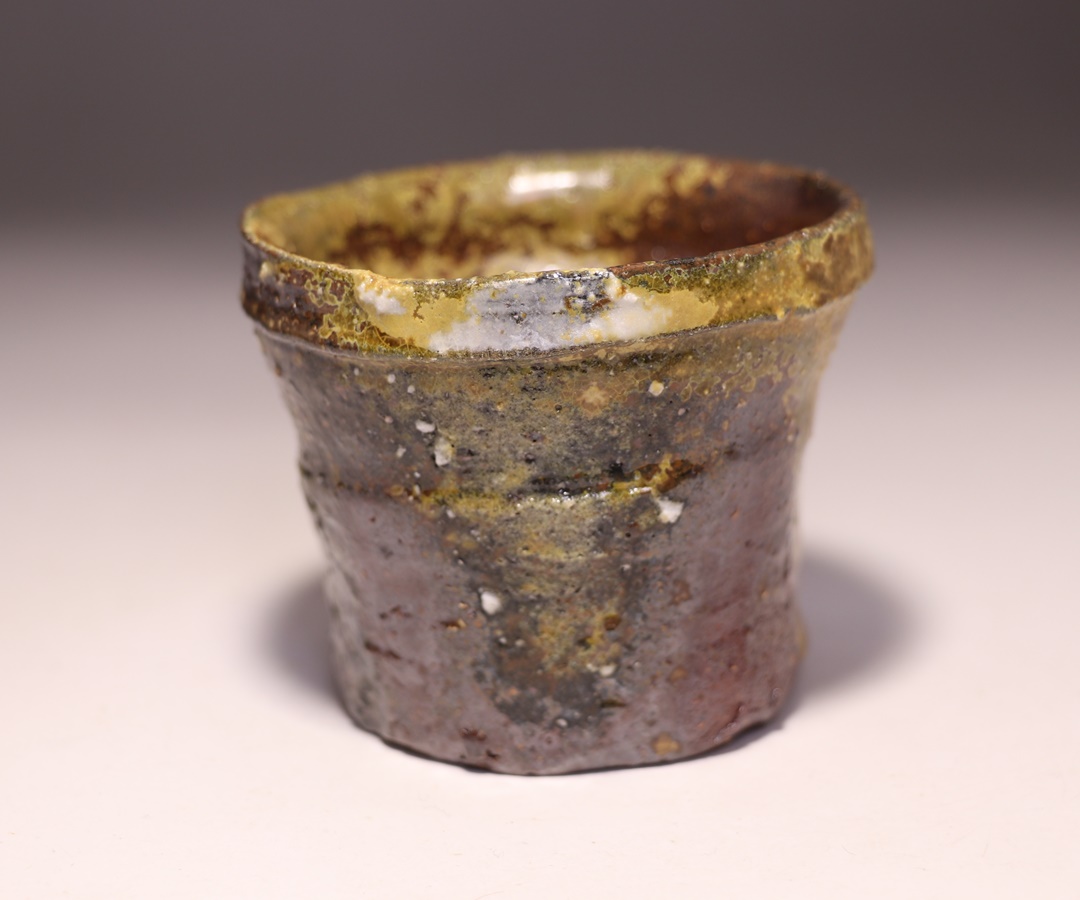
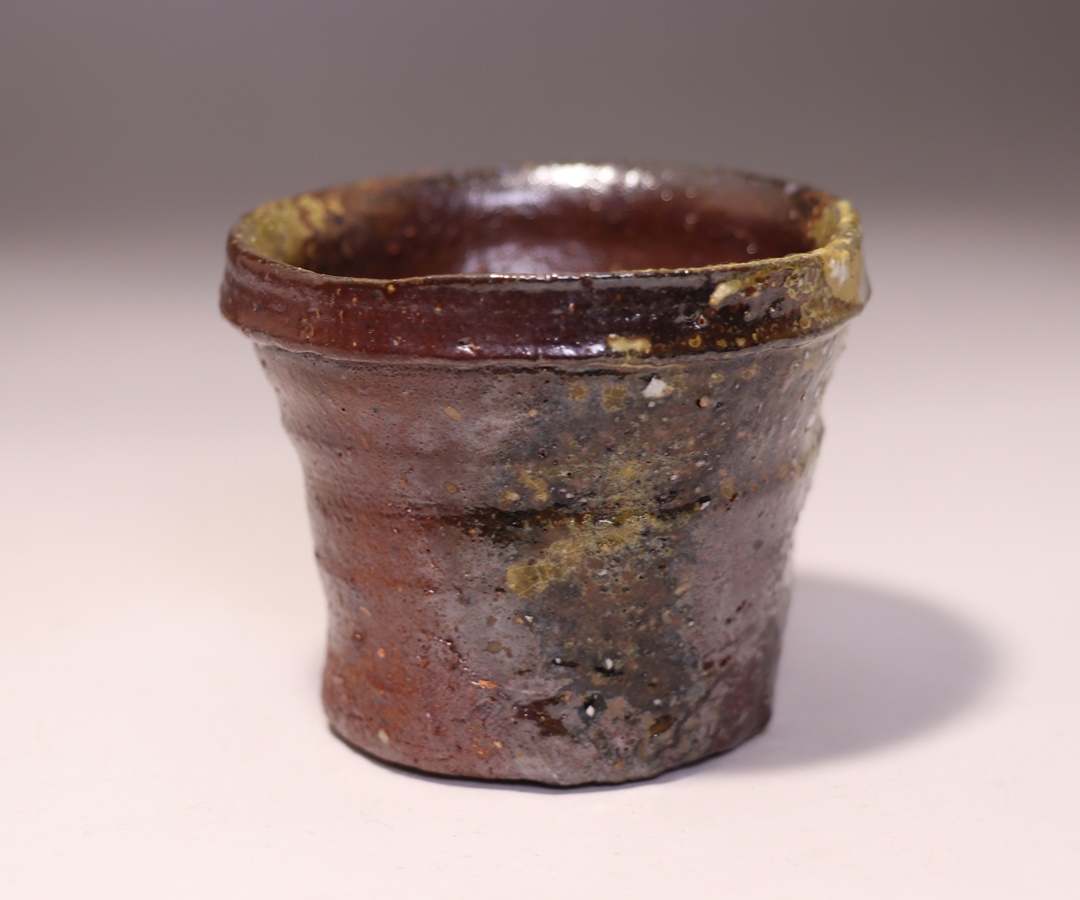
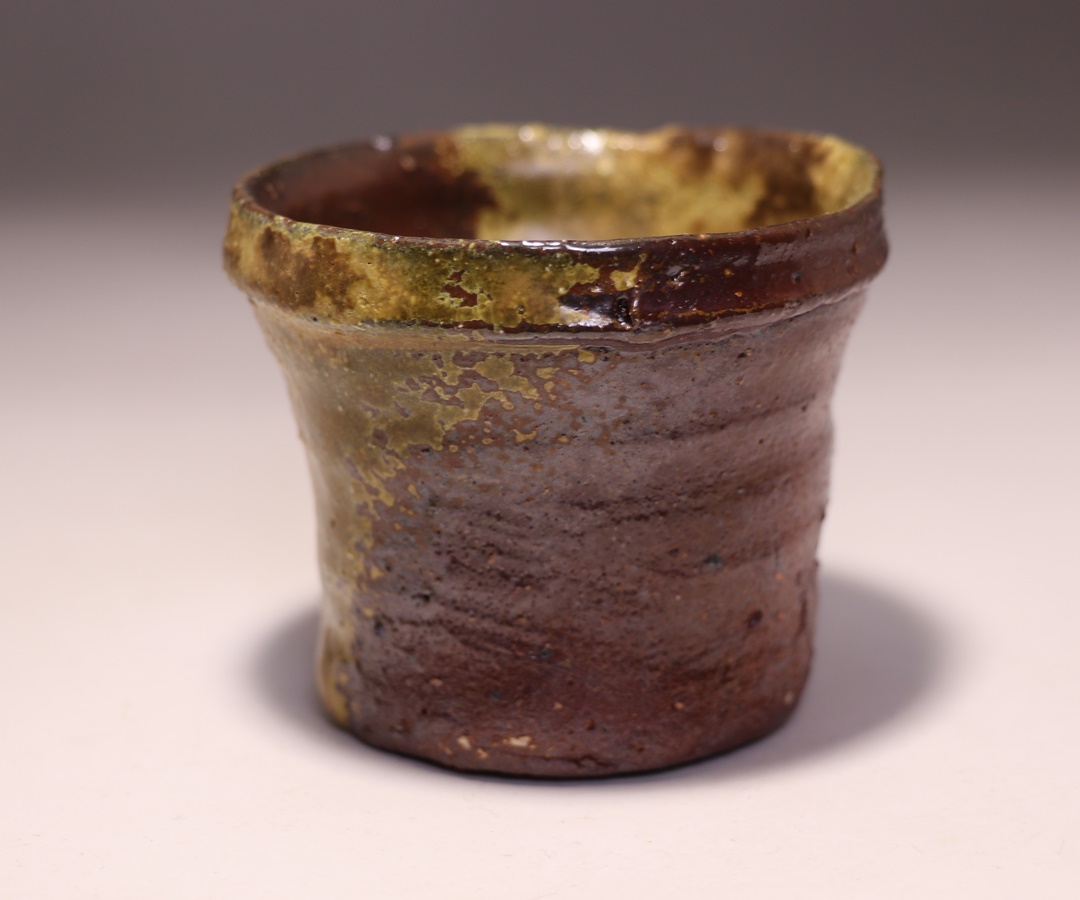
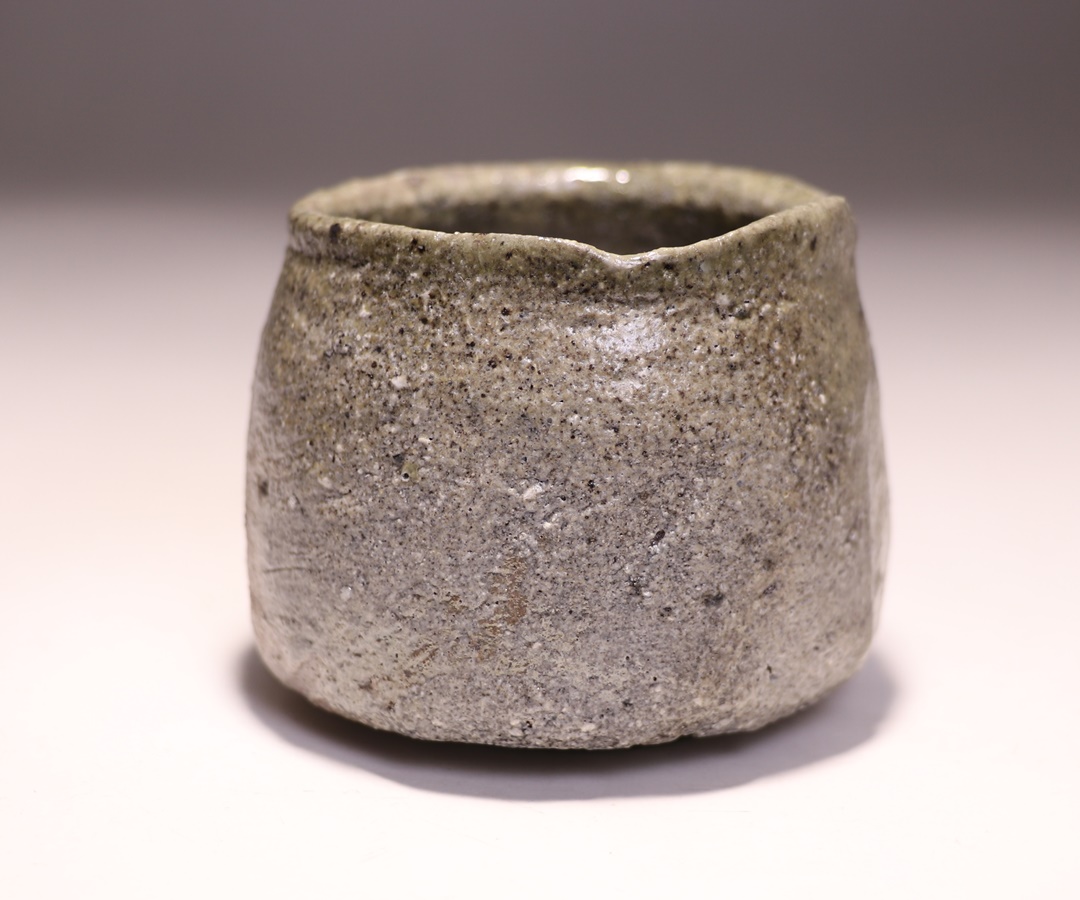
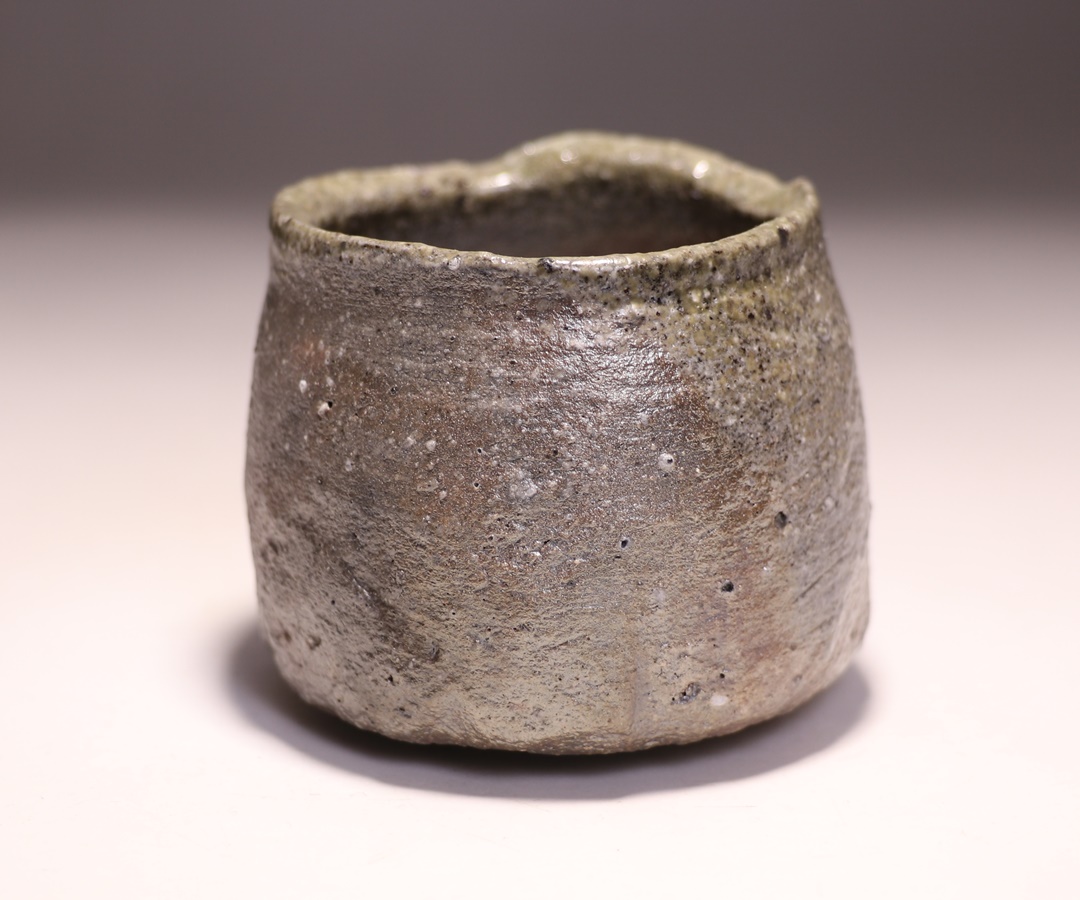
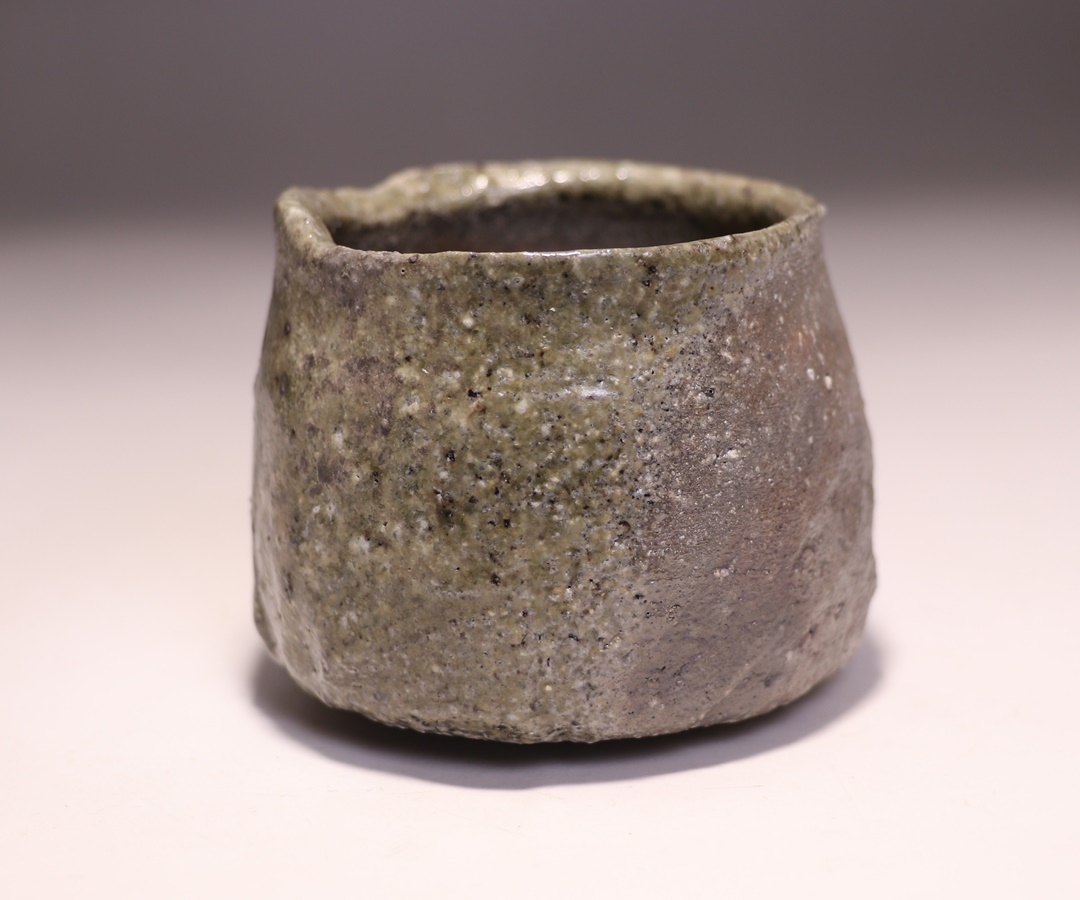
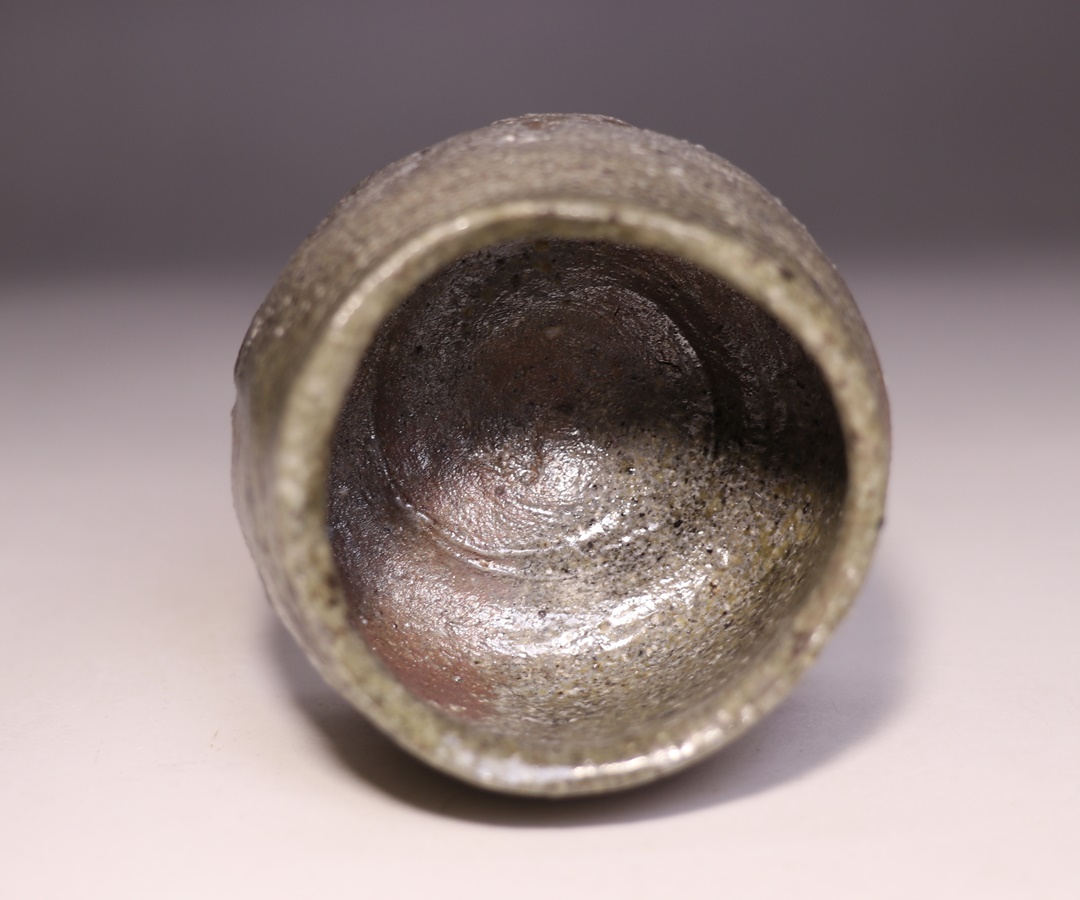
Koichiro Isezaki - Bizen Yohen Guinomi
35,200 YEN
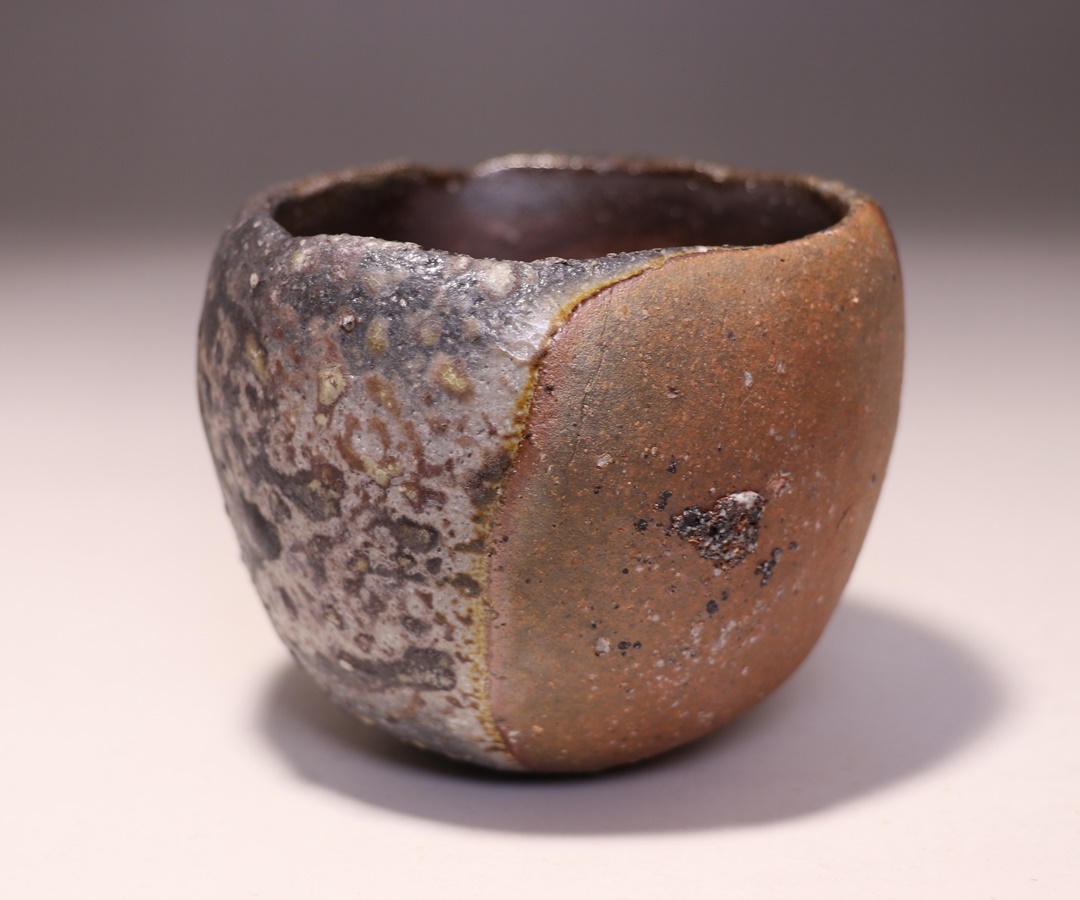
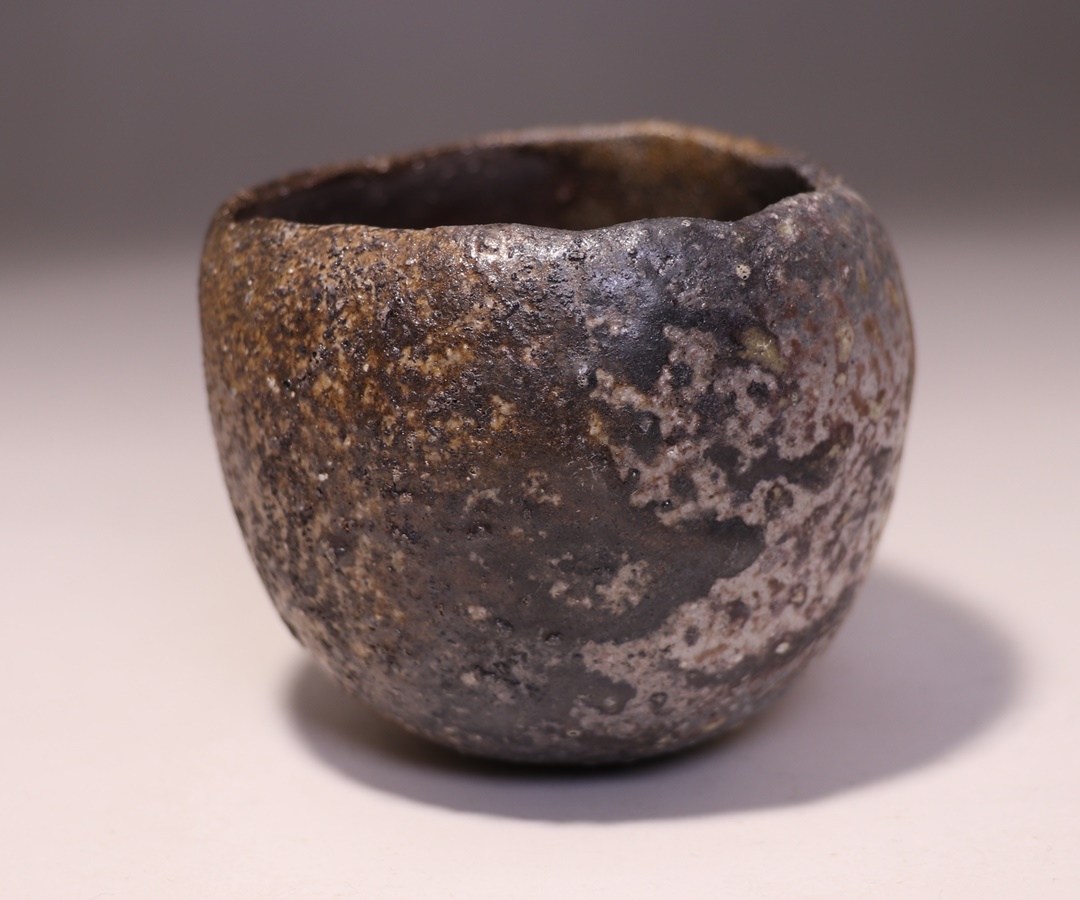
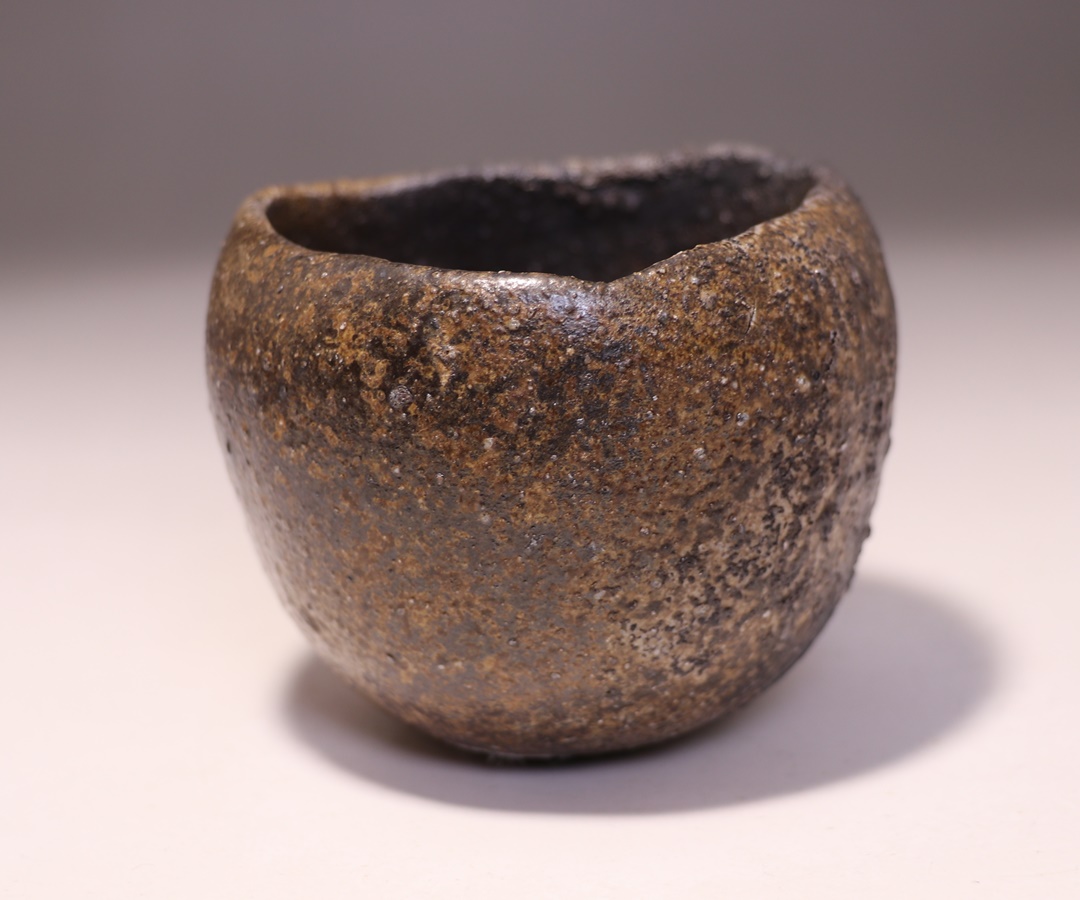
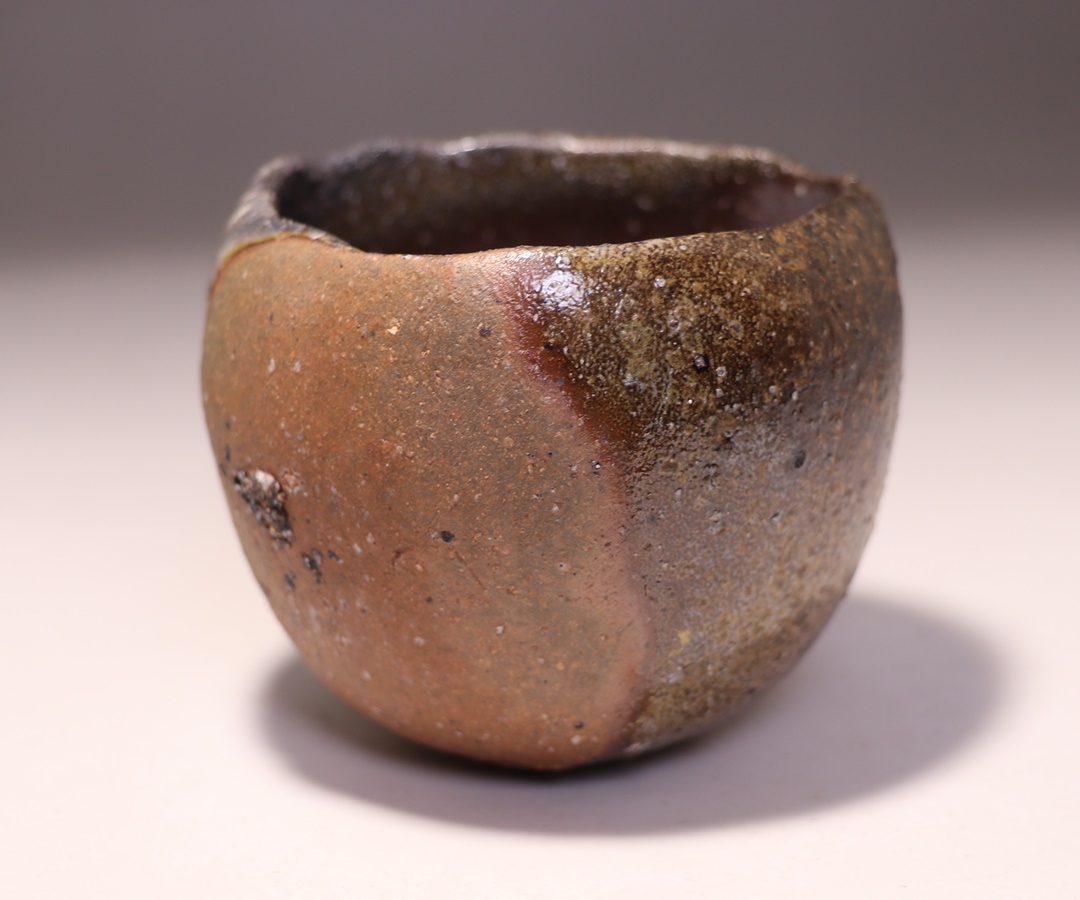
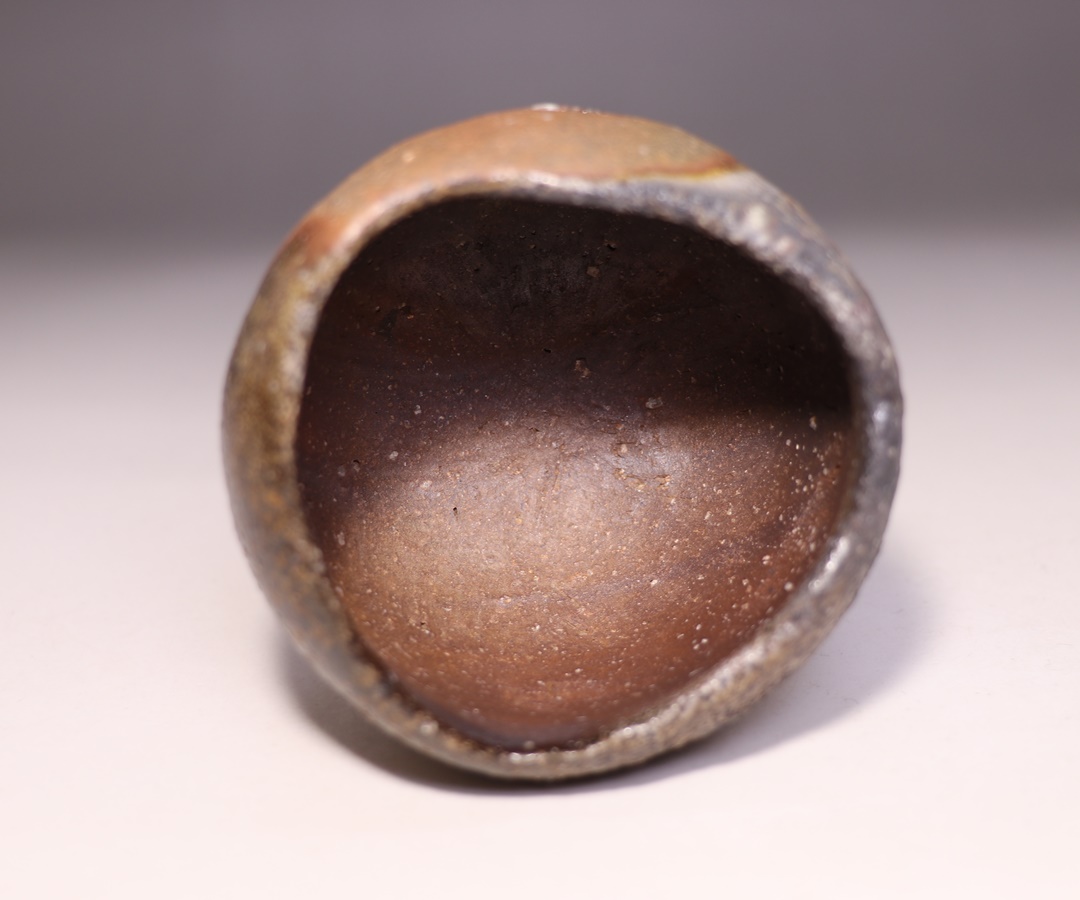
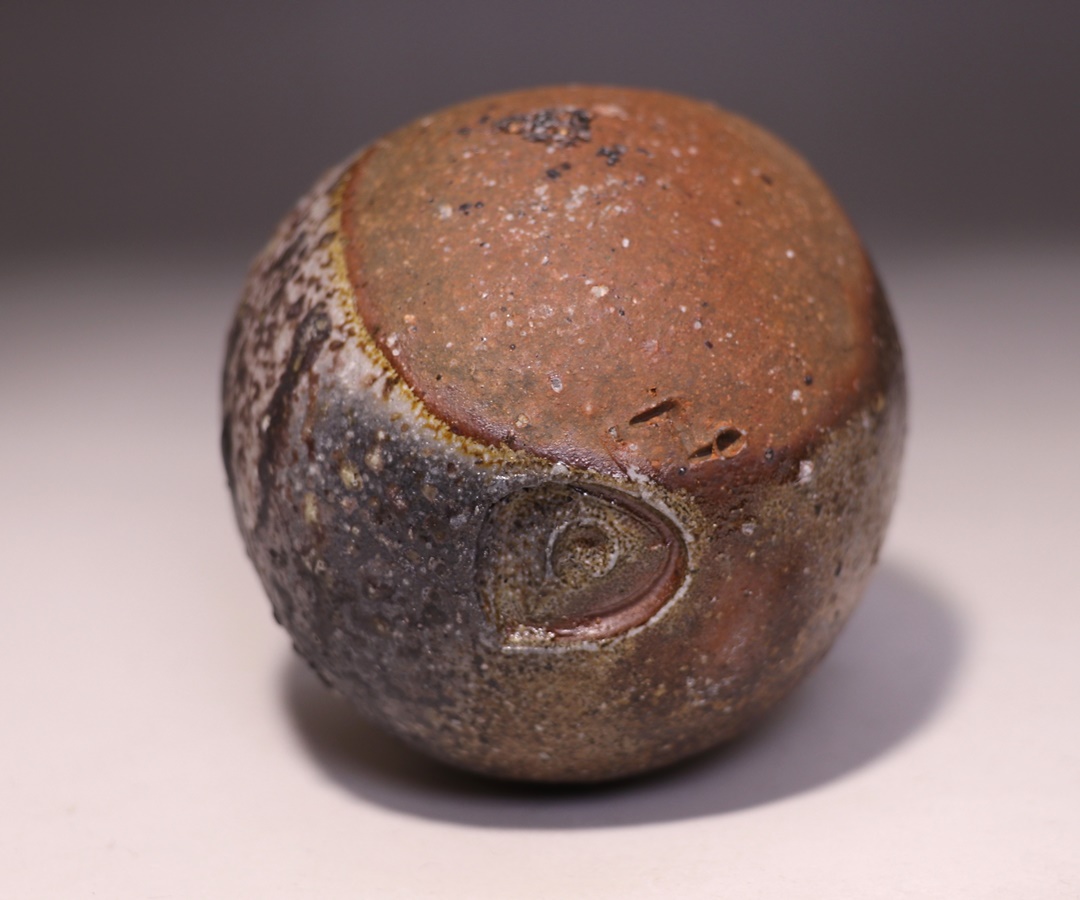
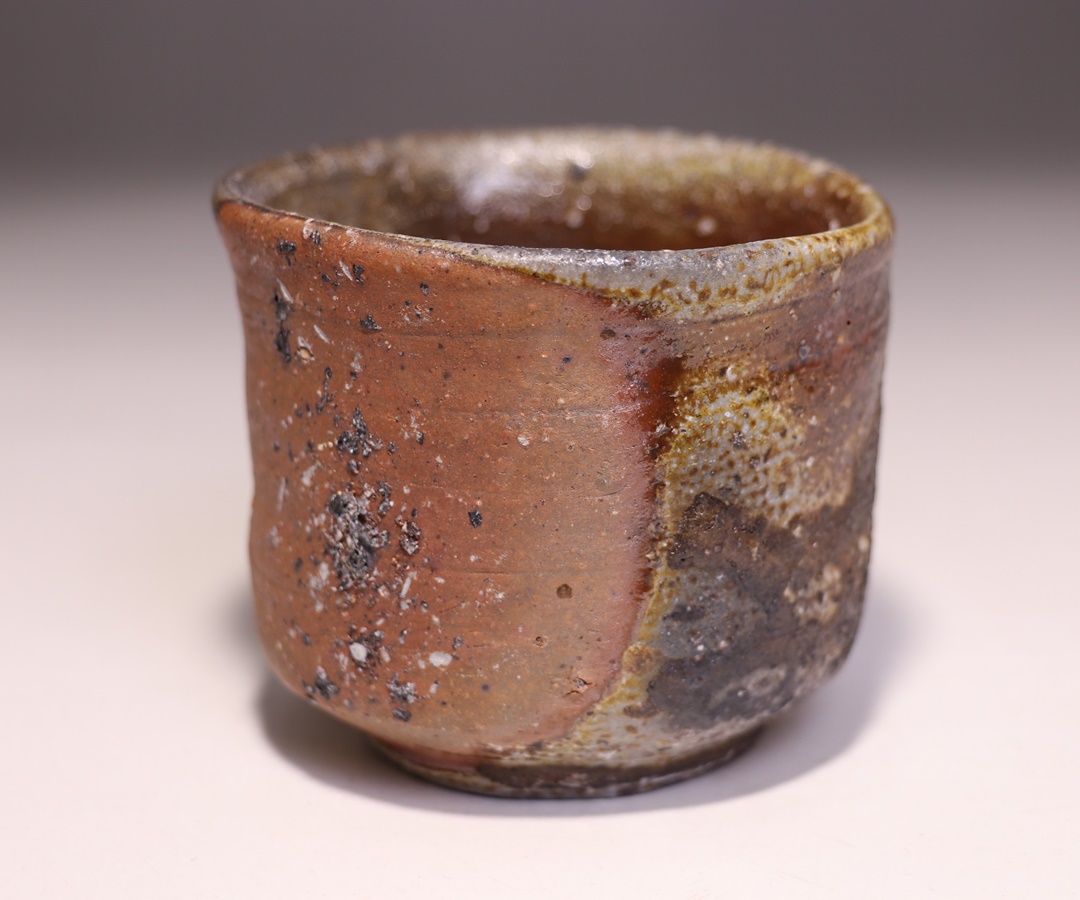
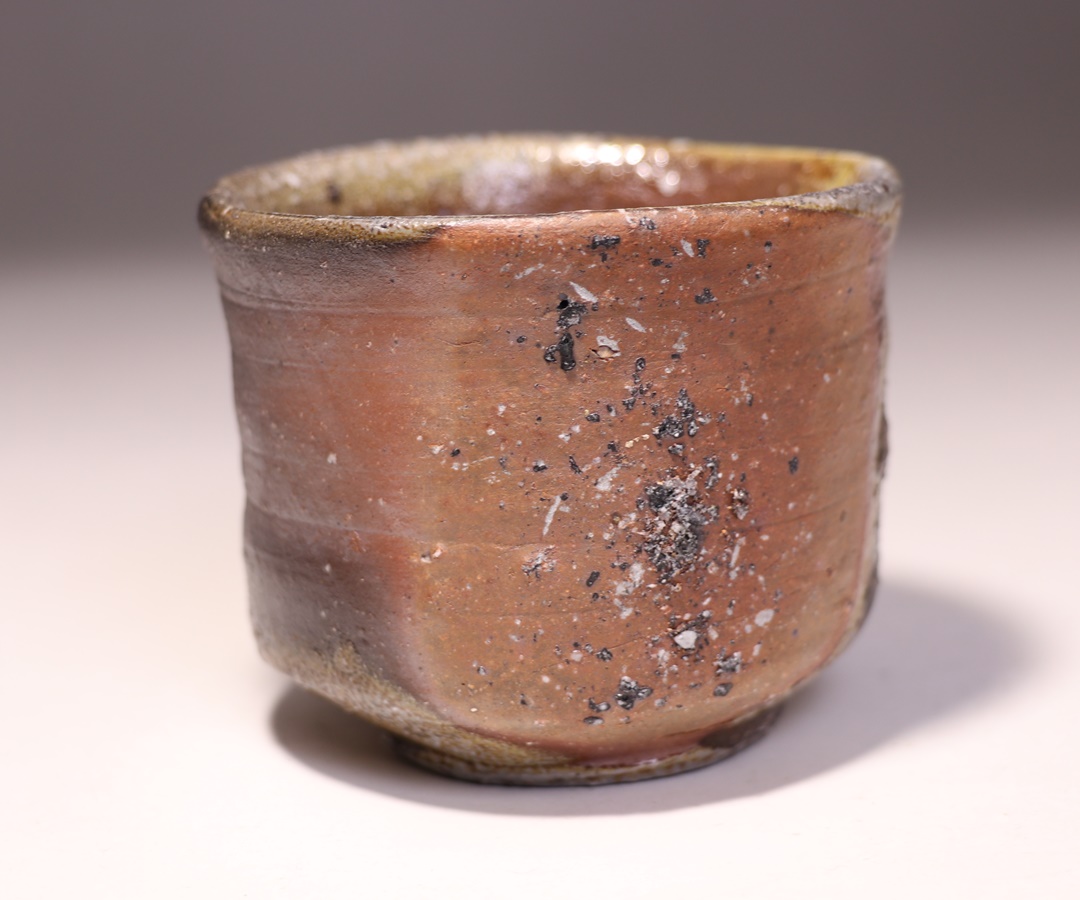
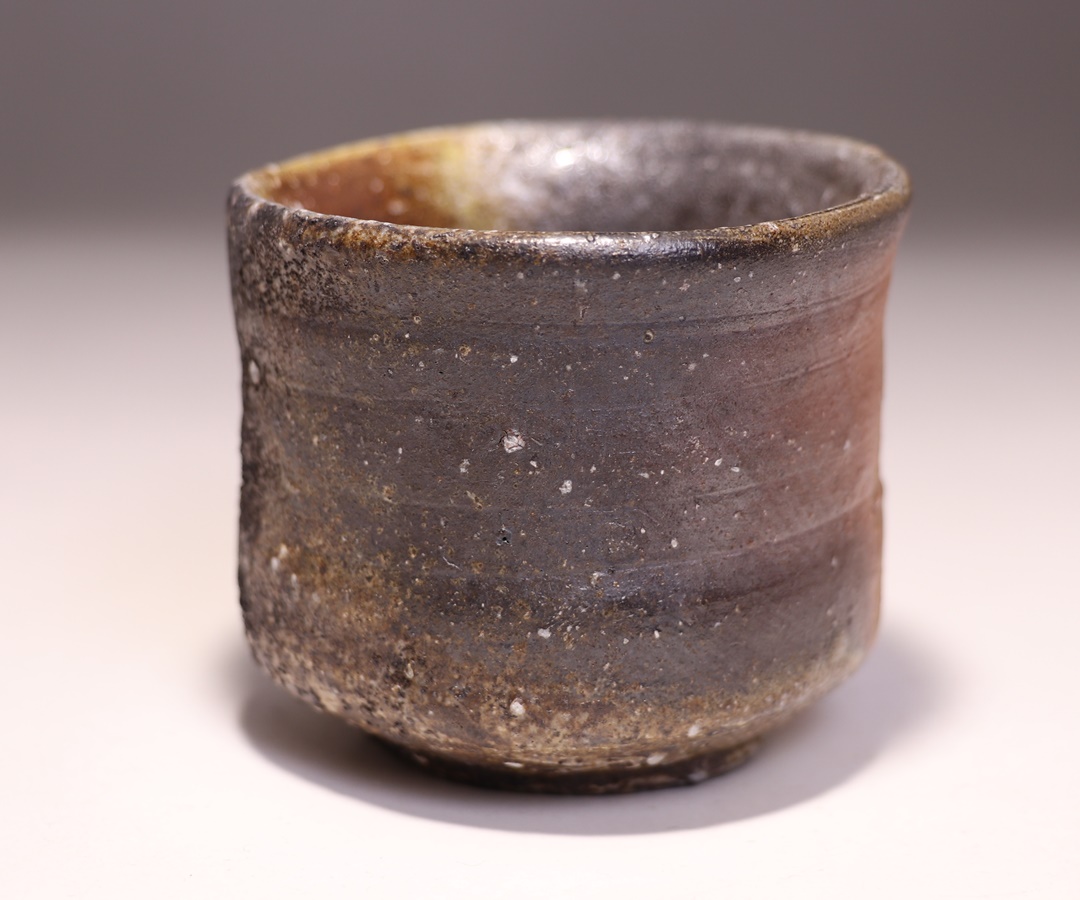
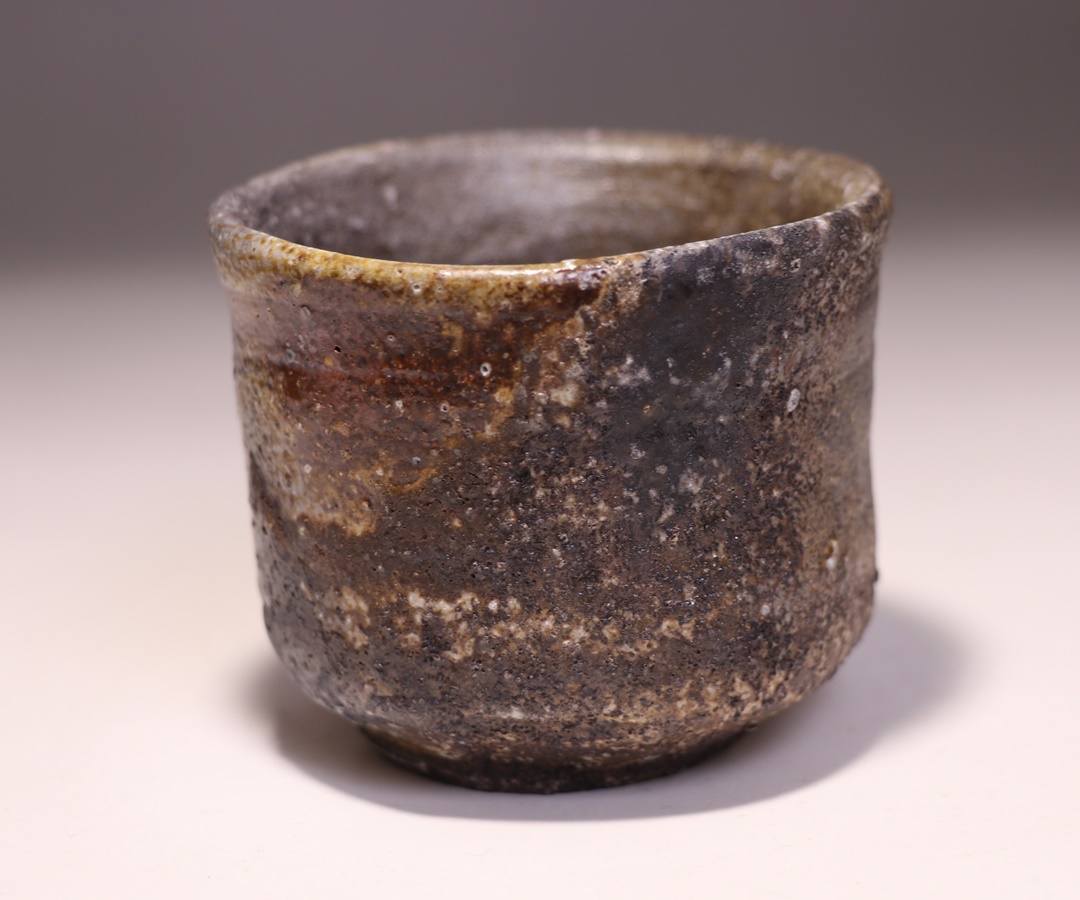
size : W8.1cm×7.9cm×H6.5cmBorn as the eldest son of Living National Treasure Jun Isezaki, Koichiro Isezaki brings a fresh spirit to the world of Bizen ware through his exceptional sense of design and remarkable skill in forming clay. This is a newly fired Bizen Yohen Guinomi by the artist.
Fresh from the kiln in July 2026, it is one of his latest works.
While making full use of the distinctive qualities of Bizen clay, Isezaki skillfully incorporates elements drawn from wood carving, one of the roots of his artistic practice, creating a unique work that is immediately recognizable as his own.
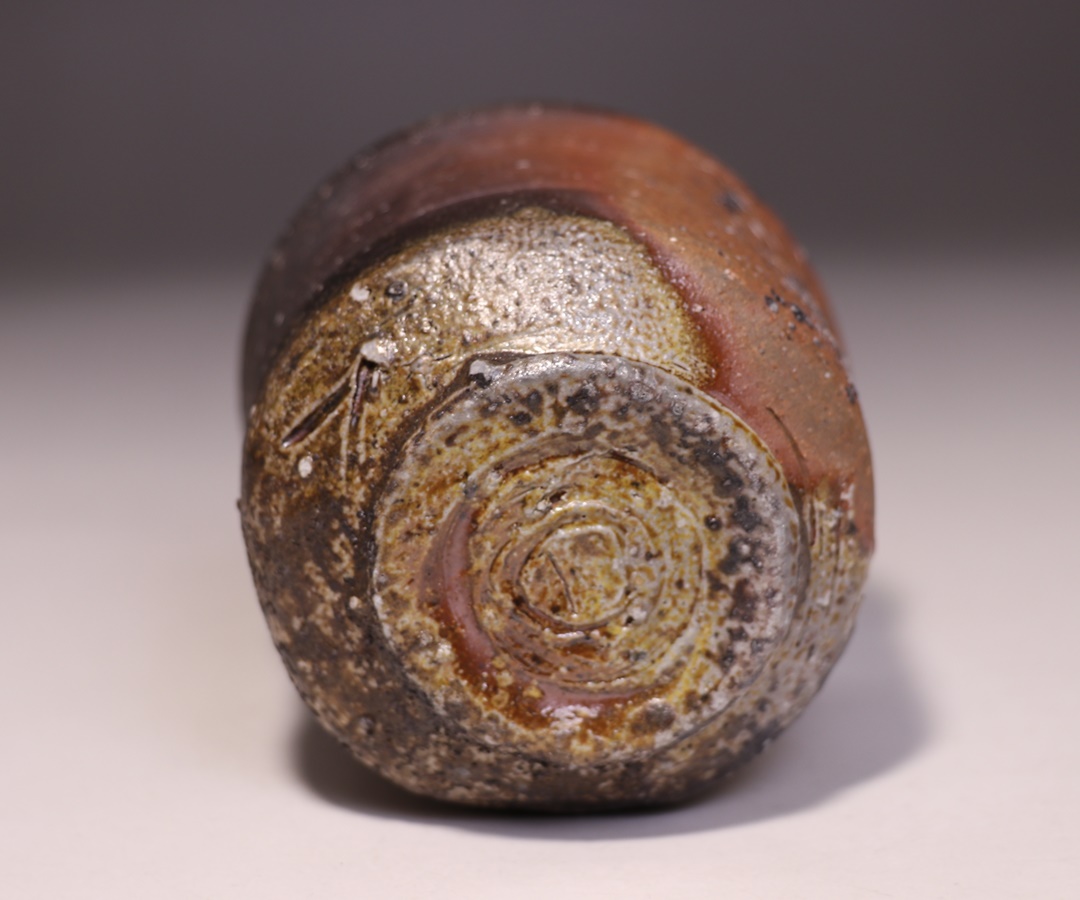
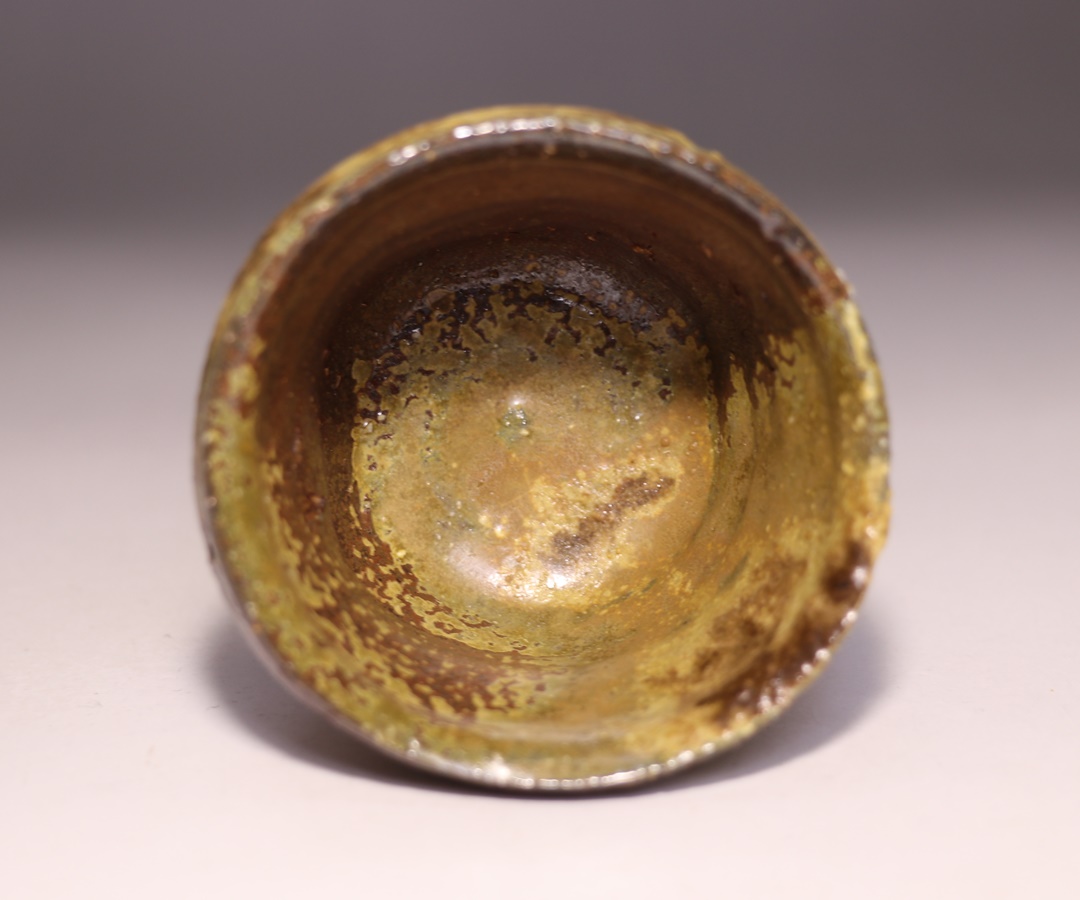
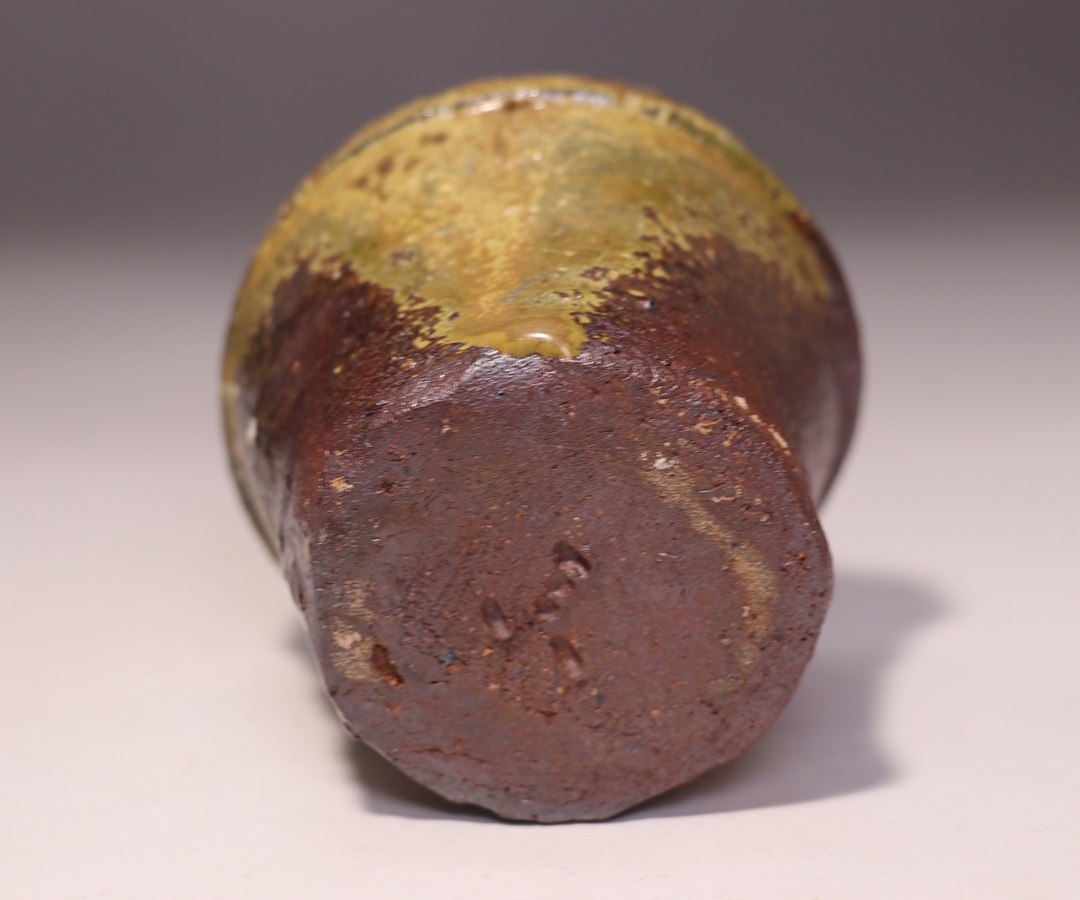
This piece displays a rare type of Anagama kiln transformation found near the side-stoking openings located around the middle section of the kiln. The Hai-kaburi effect is sharply divided into red and black, creating an appearance reminiscent of Yohen produced in a climbing kiln.
Compared with typical climbing-kiln Yohen, however, the changes across the surface are even more clearly defined. At the center is a distinctive Anagama effect in which Kigoma appears to merge with Hai-kaburi, surrounded by an extraordinary variety of colors and textures, including gray Namako-like surfaces and golden metallic tones.
The areas left relatively untouched by ash display a complex mixture of red, purple, and brown. Combined with their matte, non-glossy texture, these exposed clay surfaces have tremendous potential to develop beautifully through continued use.
The basic form was built entirely by hand without the use of a potter’s wheel. Every detail has been carefully considered, giving this small Guinomi a remarkably concentrated presence, almost reminiscent of a Chawan.
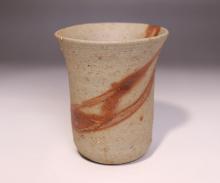


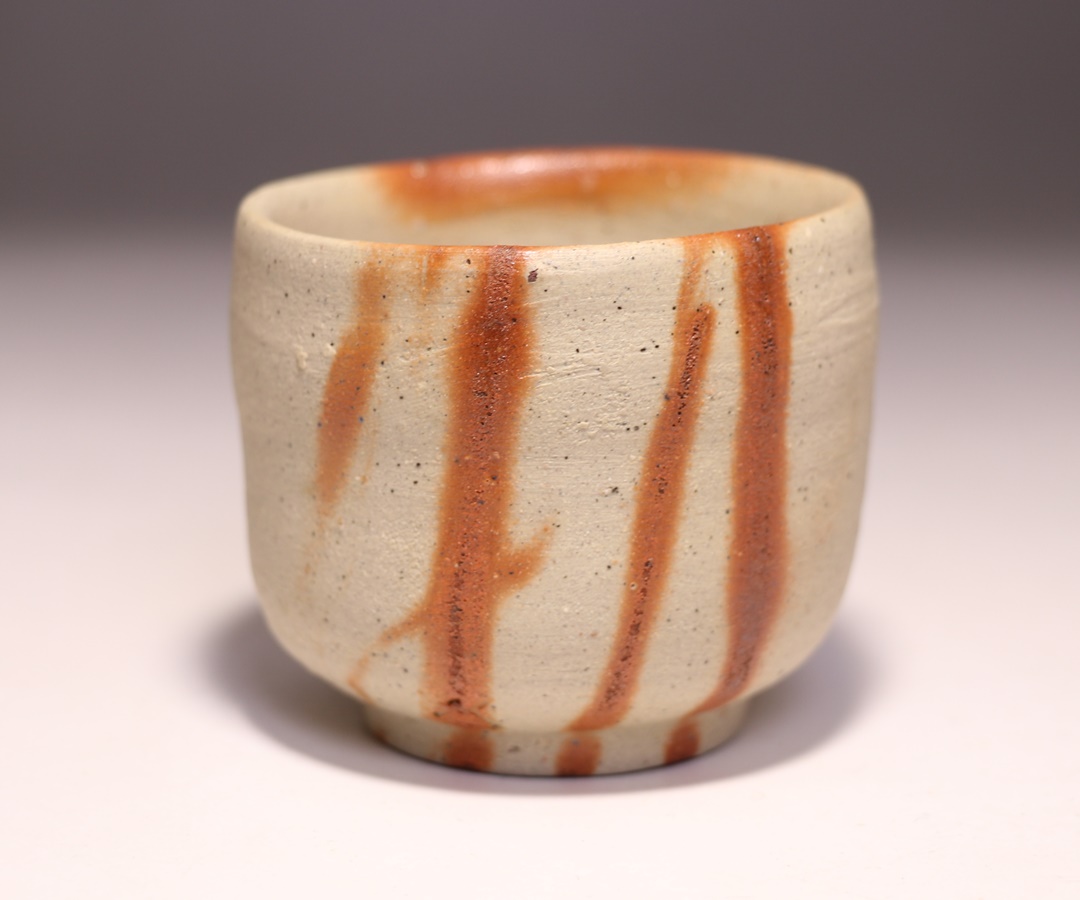
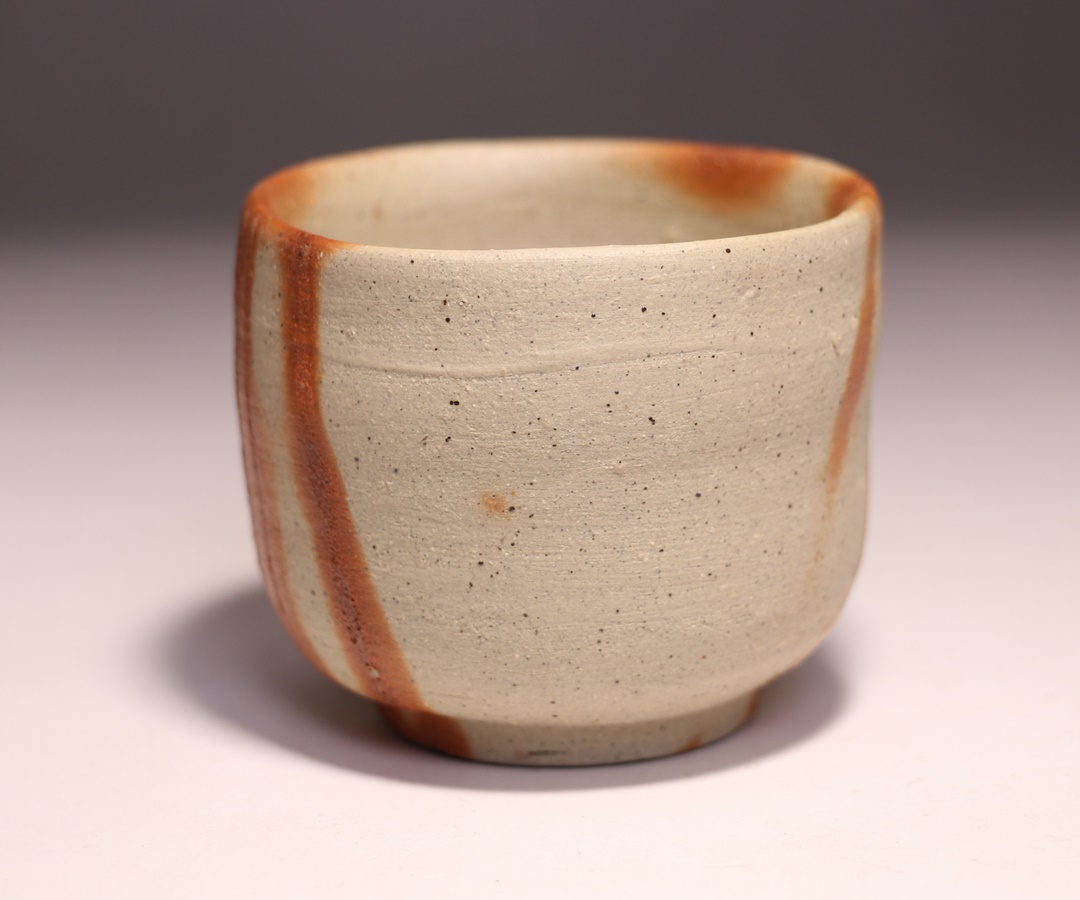
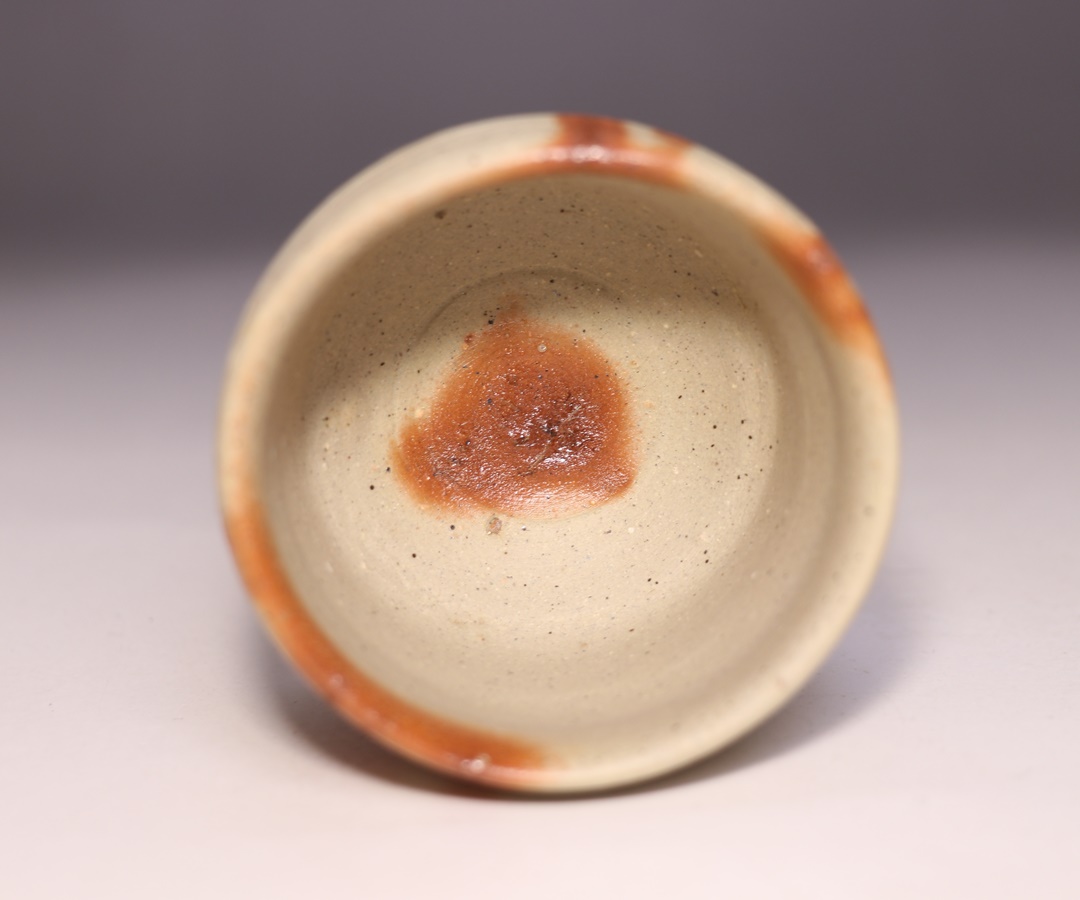
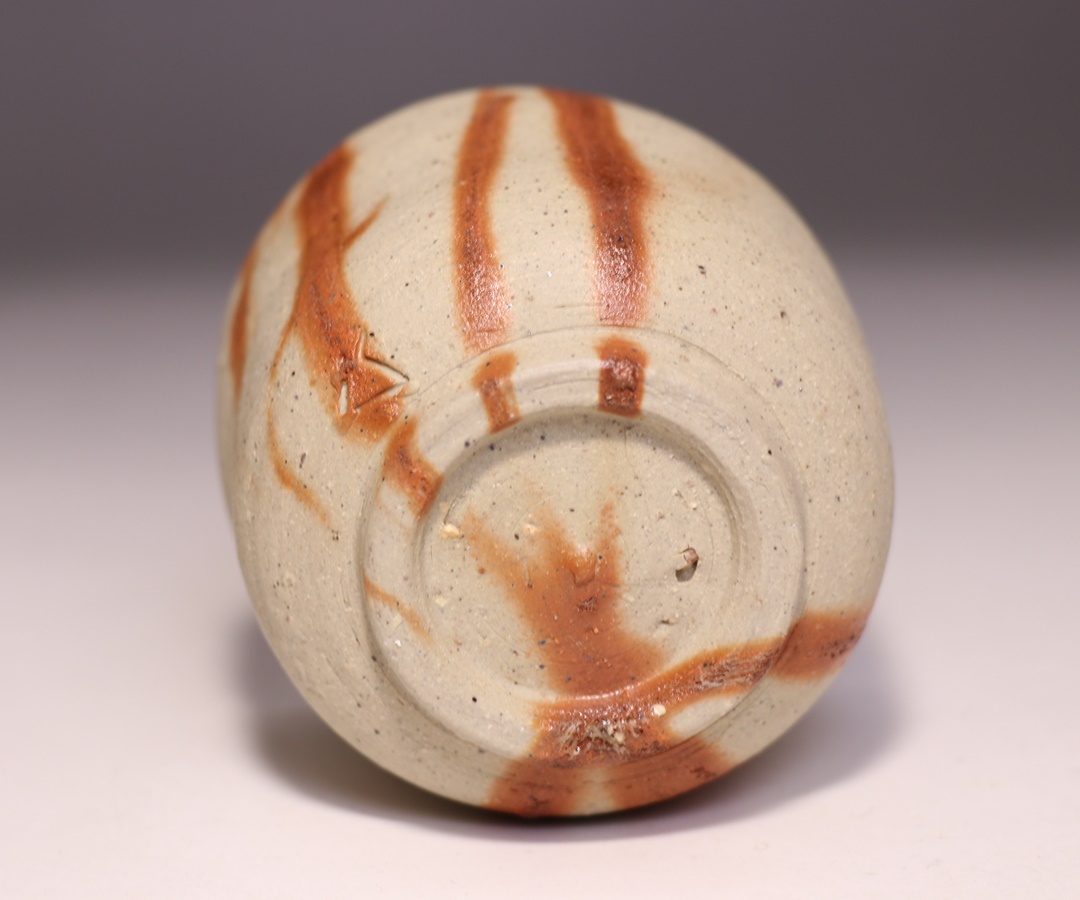
Ken Fujiwara - Bizen Hidasuki Ichigo-hai
38,500 YENSold out
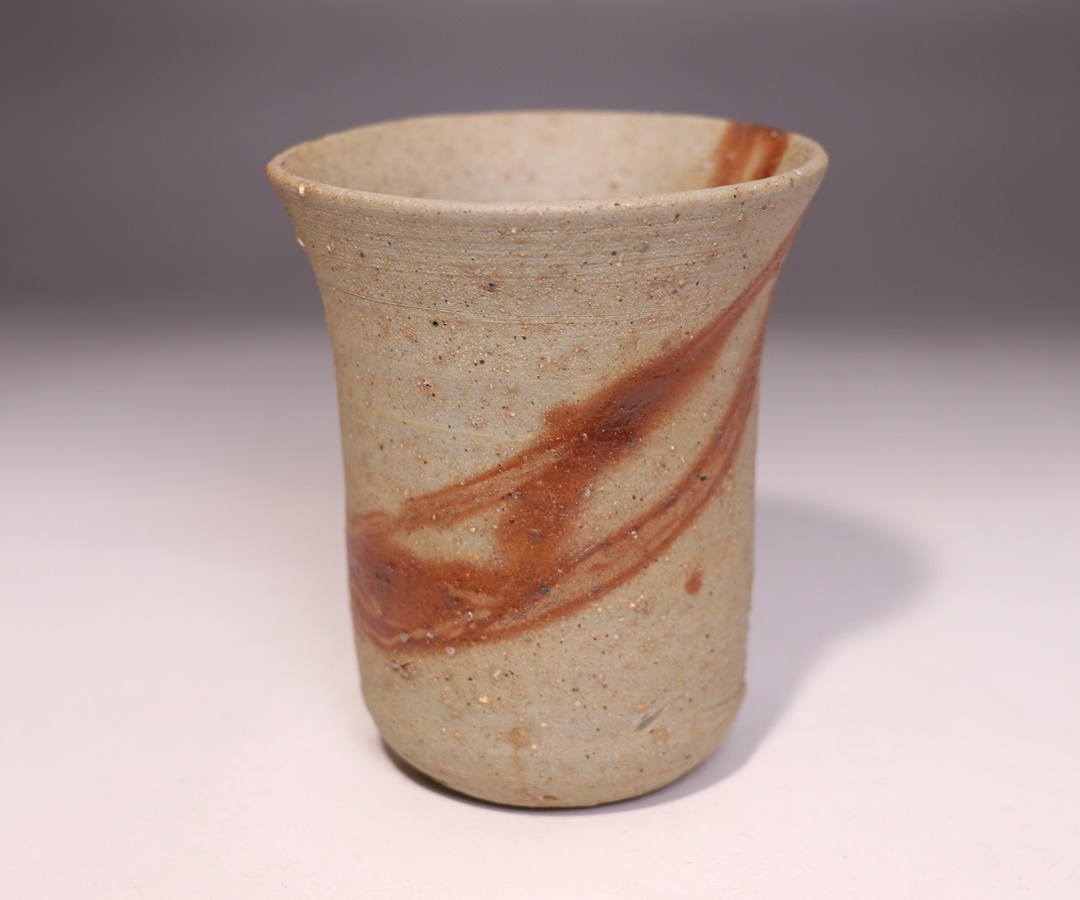
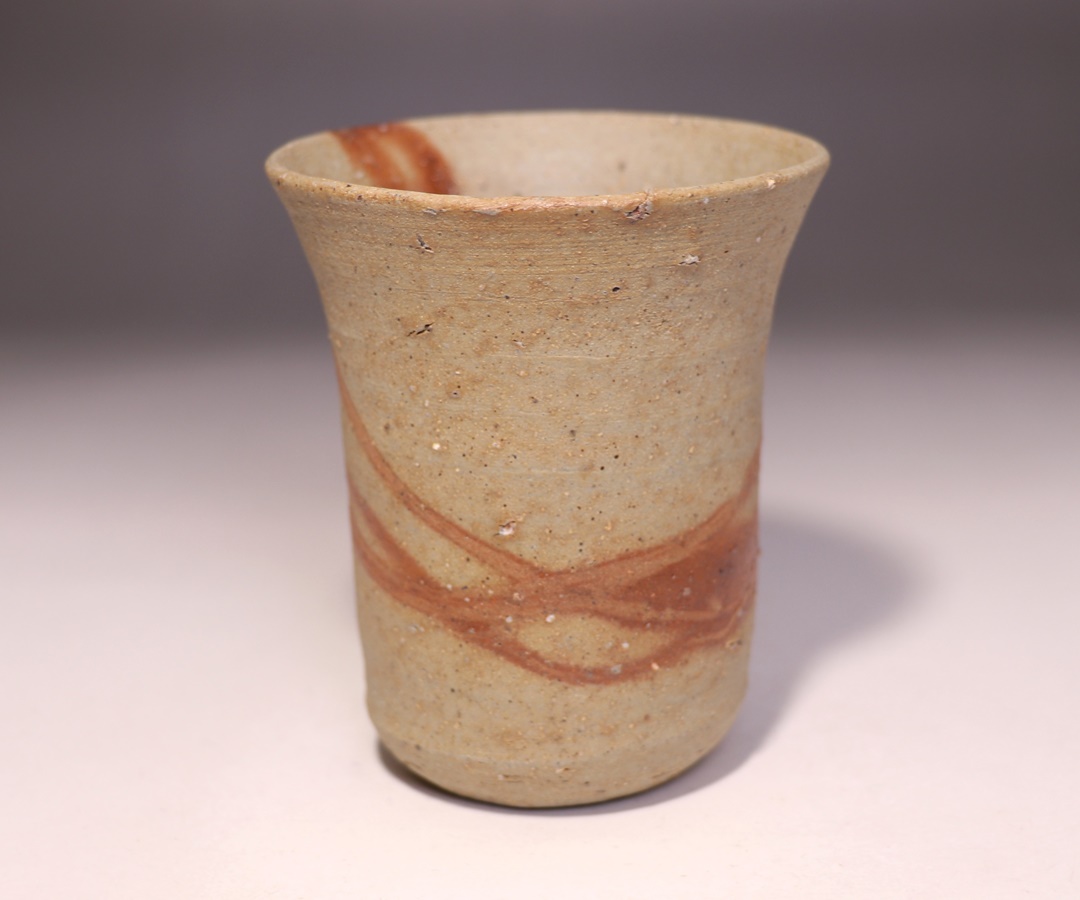
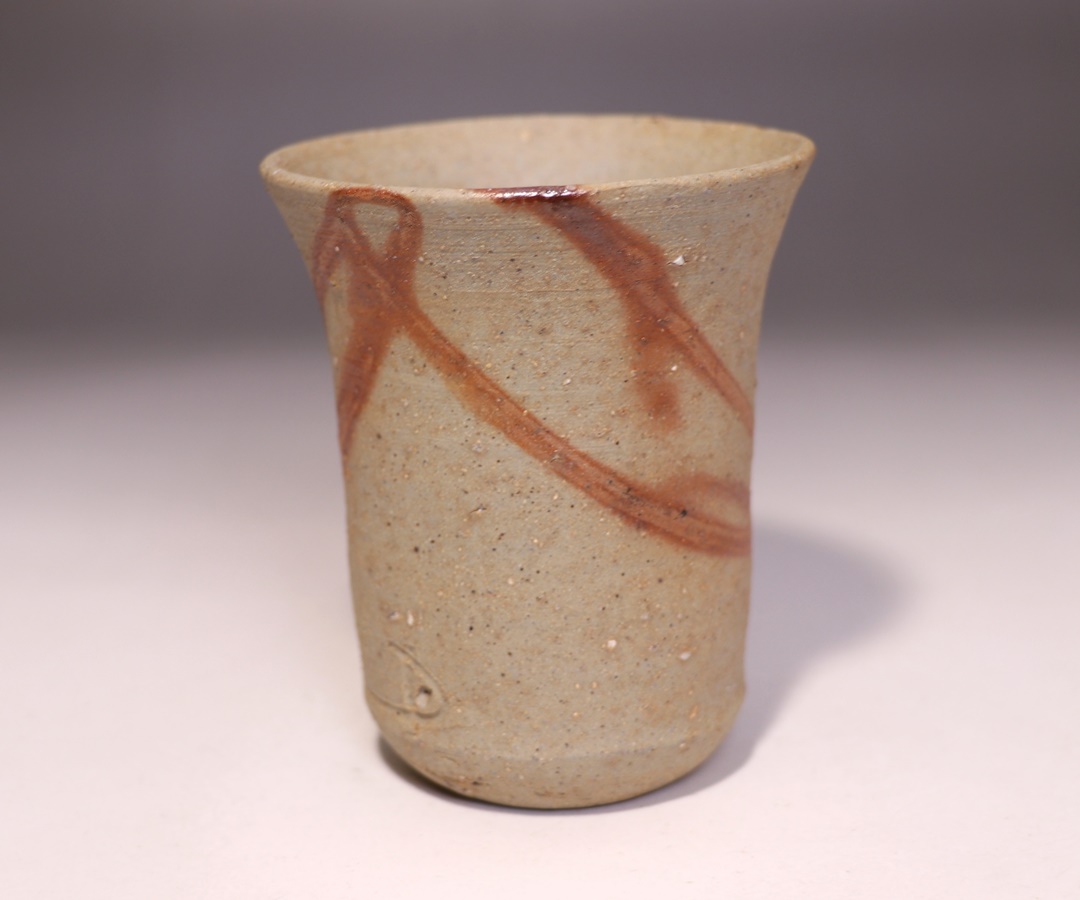
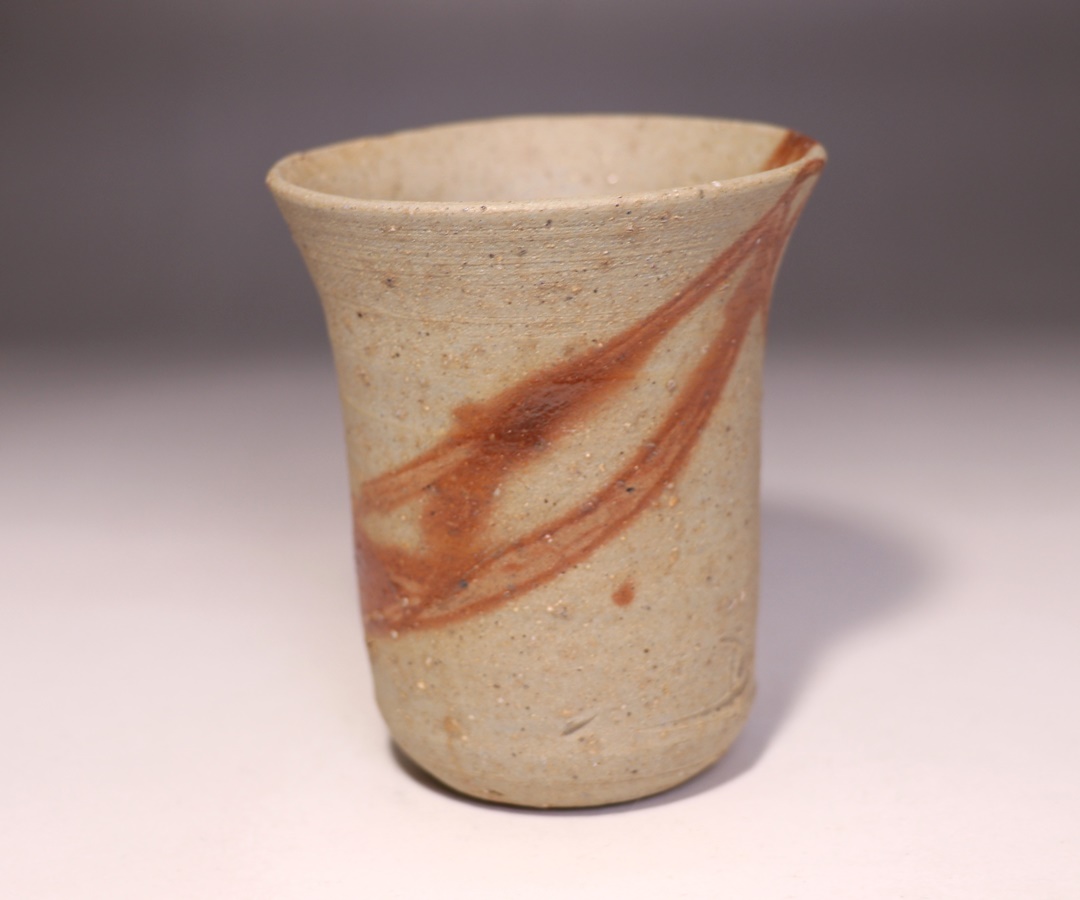
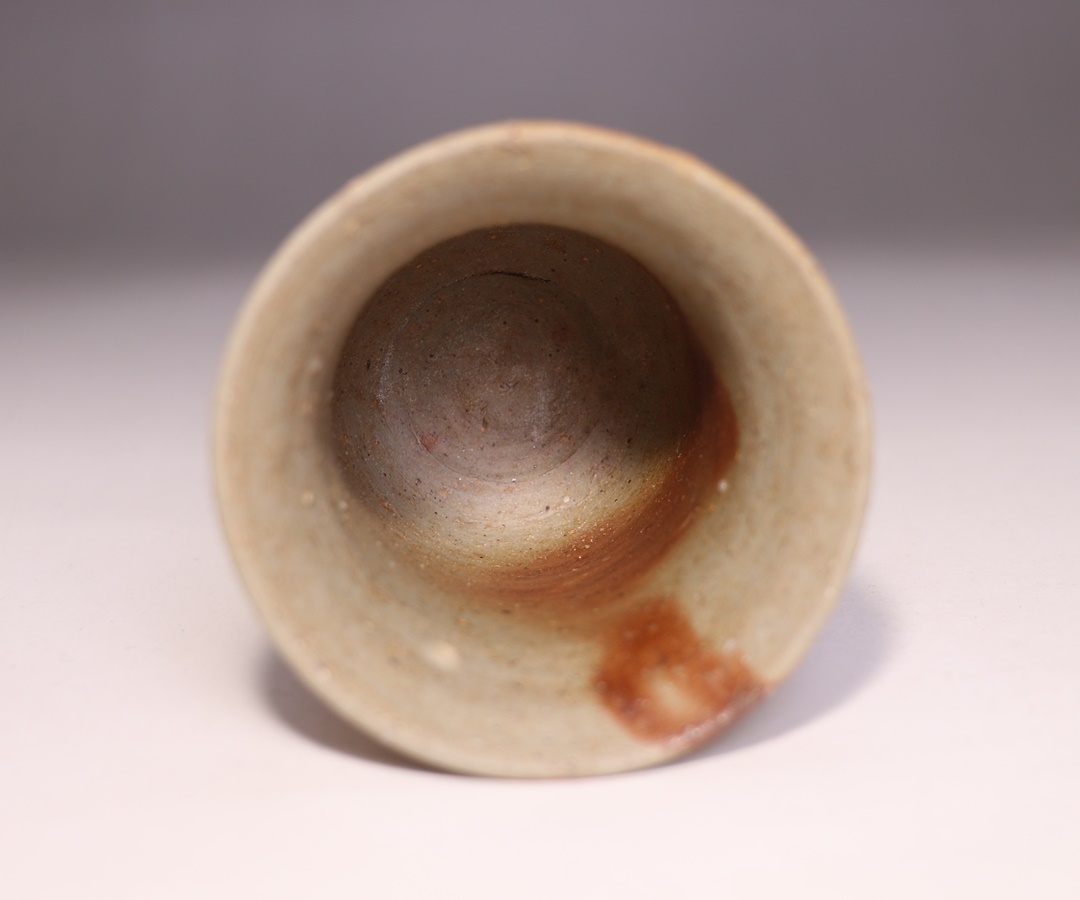
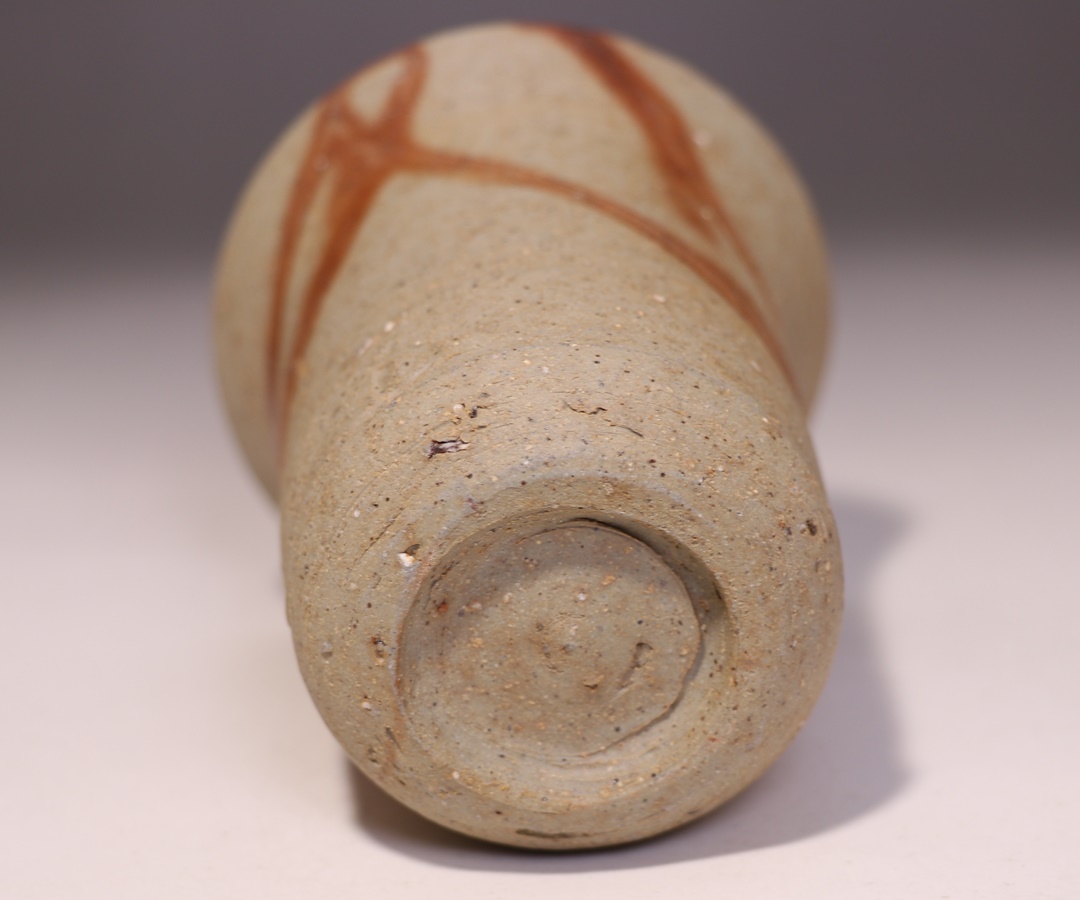
size : W7.8cm×7.7cm×H9.1cmKen Fujiwara was a timeless master whose works combine boldness with remarkable precision. This is a Bizen Hidasuki Ichigo-hai by the artist.
As suggested by the unusual name *Ichigo-hai*—a cup with a capacity of approximately one *go*—this is a relatively rare form among Fujiwara’s works and can be used much like what we would today call a beer cup.
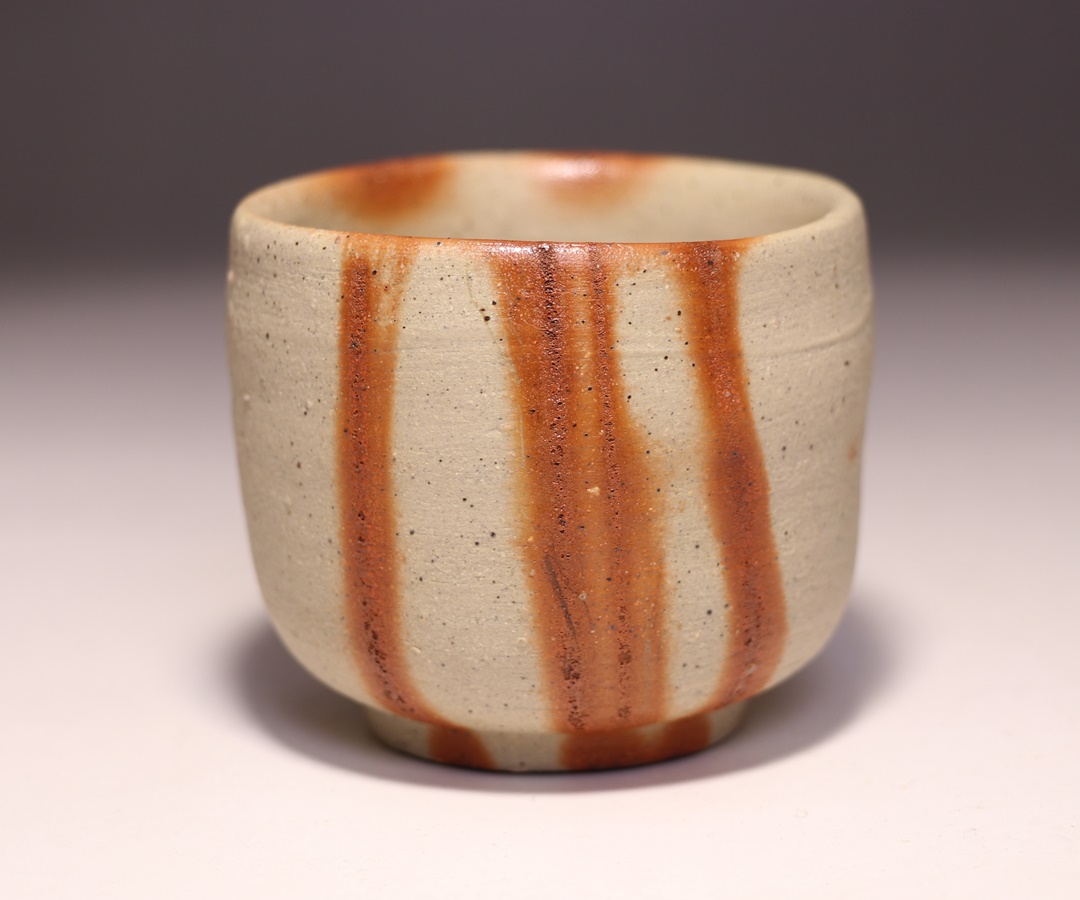
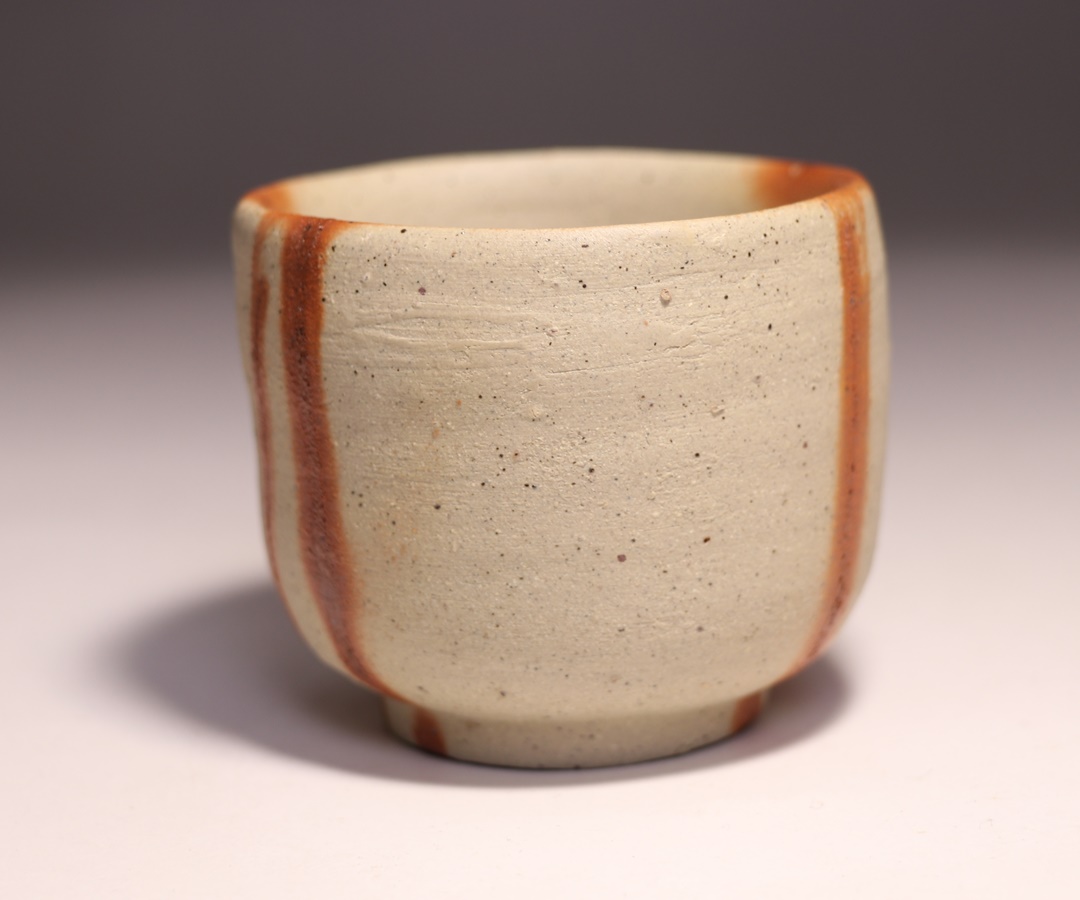
The piece was fired while placed inside another vessel in the kiln. Rich Hidasuki markings spread across the clay surface, which contains a small amount of fine sand.
The clean, refreshing white clay, together with the subtle sheen created by a slight intrusion of flame, gives the work a clay character reminiscent of the relatively low-iron rice-field clay used by Toyo Kaneshige during the later years of his career.
Fujiwara was renowned for his exceptional aesthetic sense and mastery of Hidasuki. Here, the bold yet fluid movement of the straw markings is particularly impressive. Rather than relying on elaborate technical effects, the work presents a direct and compelling expression created simply through clay and firing.
Perhaps with beer and similar drinks in mind, the rim is drawn slightly narrower than that of a typical Guinomi. The result is a beautifully balanced work that combines practicality with refined visual appeal.
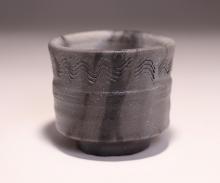


Zenji Urakami - Ao-Bizen Shuhai
44,000 YEN
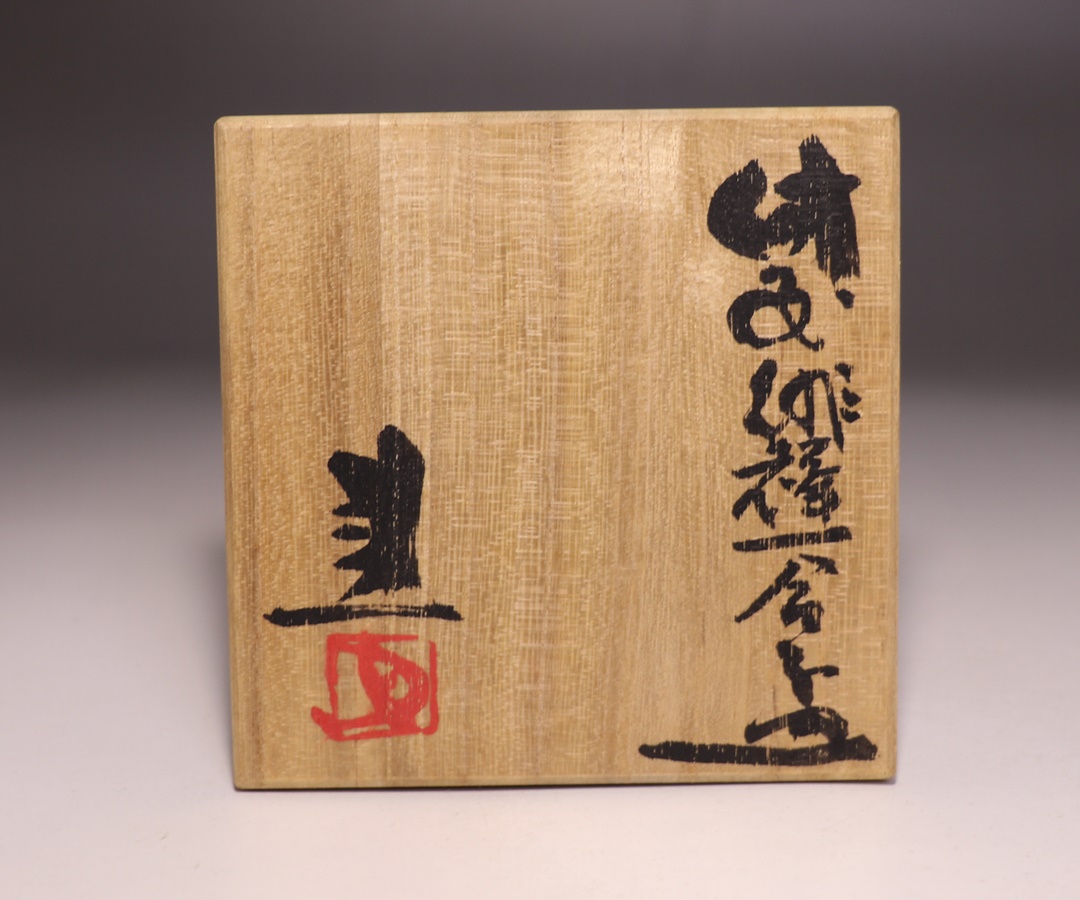
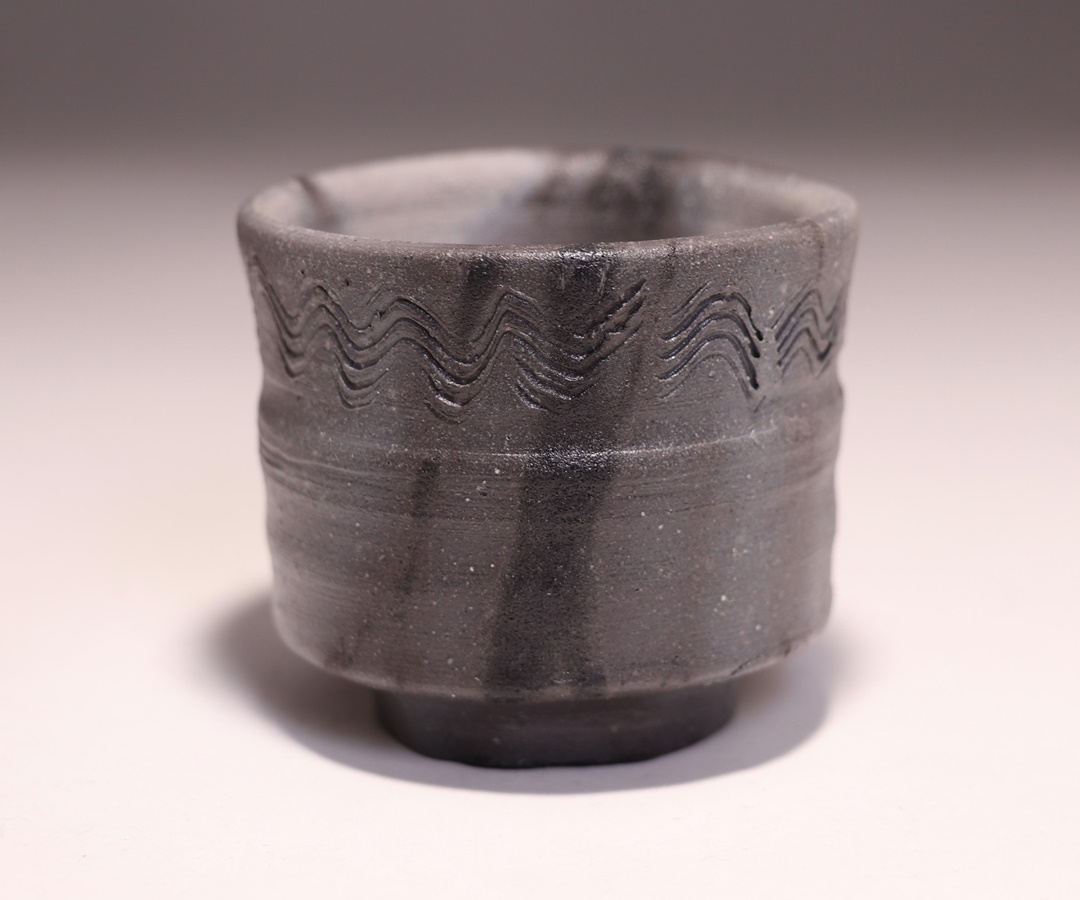
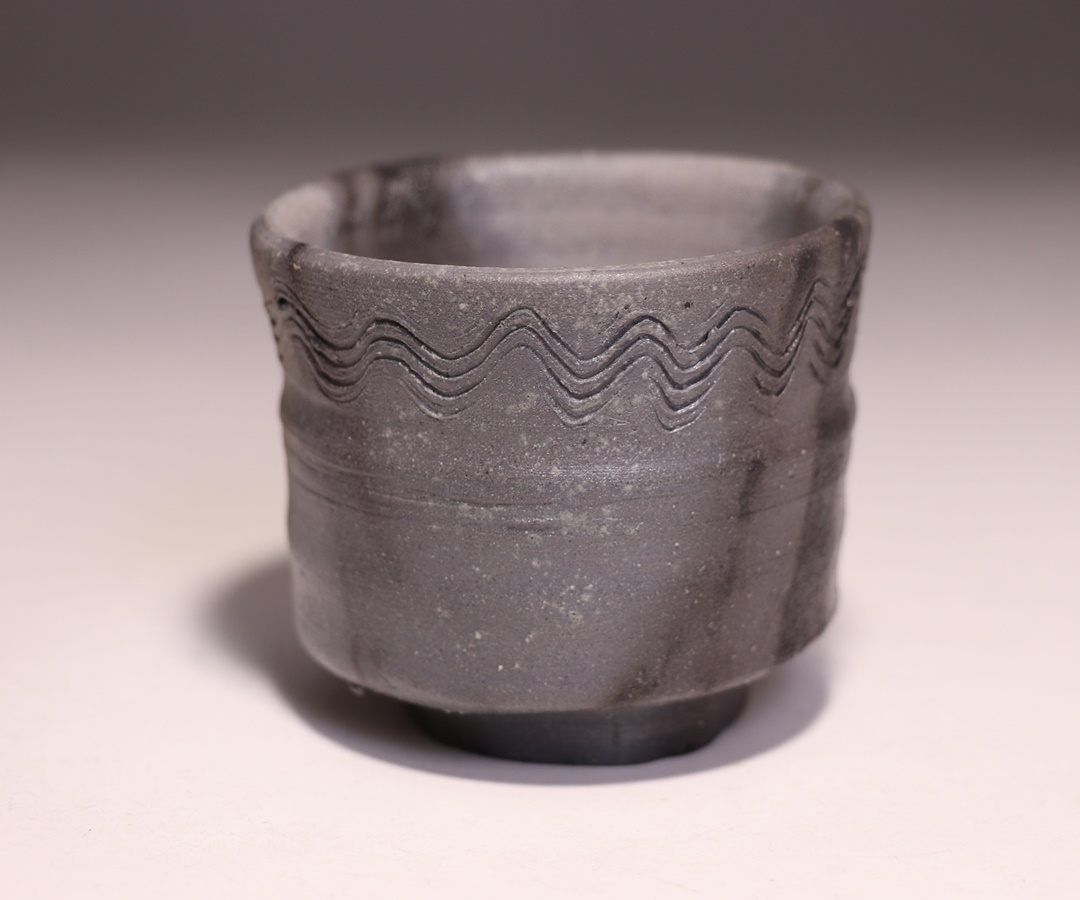
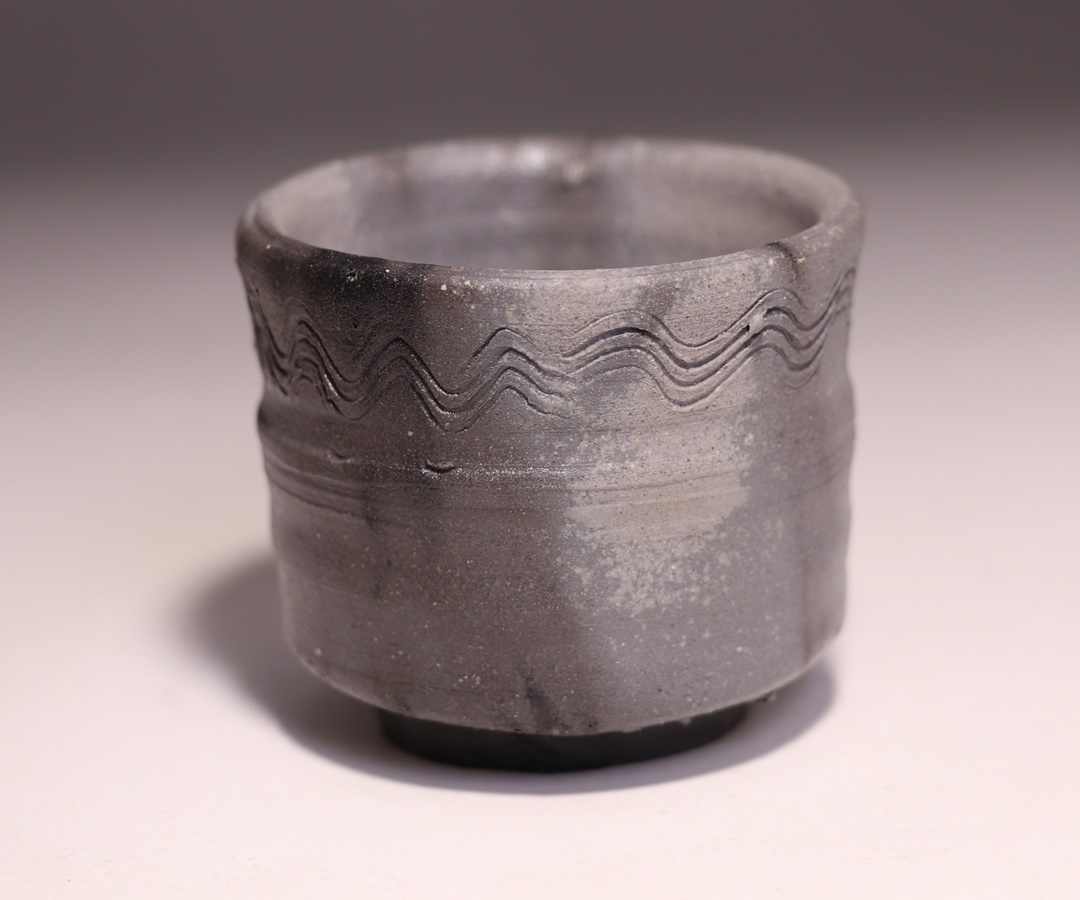
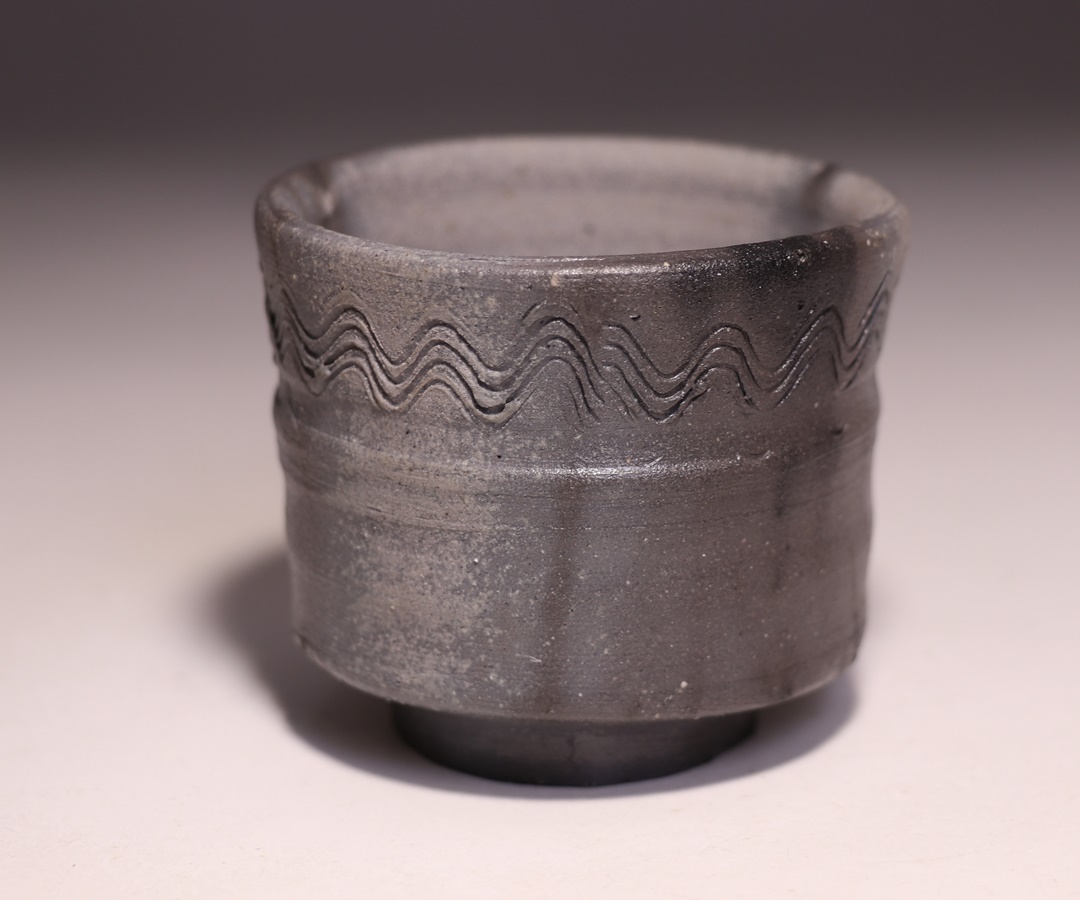
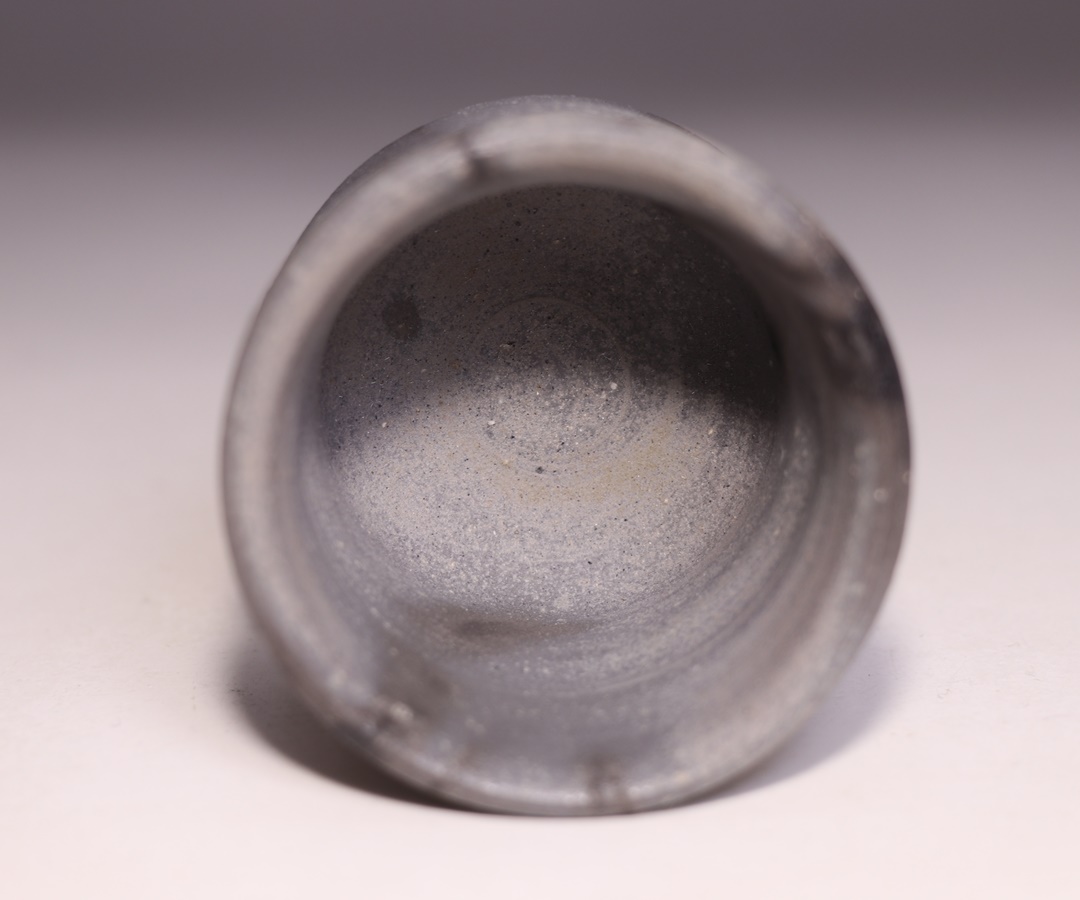
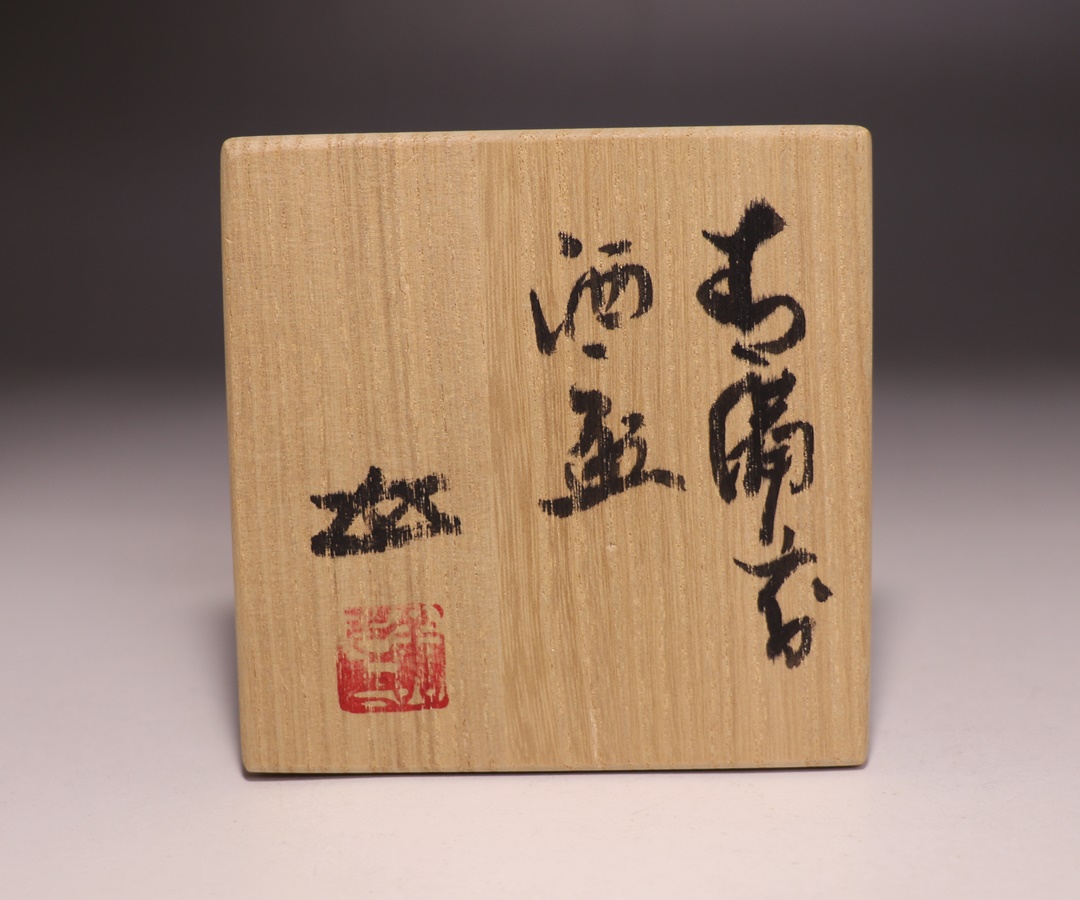
size : W6.3cm×6.0cm×H5.2cmZenji Urakami received numerous honors throughout his career and became internationally renowned as a master of ceramic art and a designated holder of Intangible Cultural Property. This is an Ao-Bizen Shuhai by the artist.
The work is accompanied by an artist biography listing his career through 1995 and is believed to date from the later years of Urakami’s career.
It was fired in the Ao-Bizen style through a strongly reducing atmosphere, a technique particularly associated with Zenji Urakami and his son, Mitsuhiro Urakami. The resulting bluish-gray clay surface gives the piece a refined and sophisticated appearance.
The Hidasuki has also been transformed by the strong reduction firing into deep black bands. Against the bluish-gray surface, these dark lines create a dramatic effect reminiscent of rays of light.
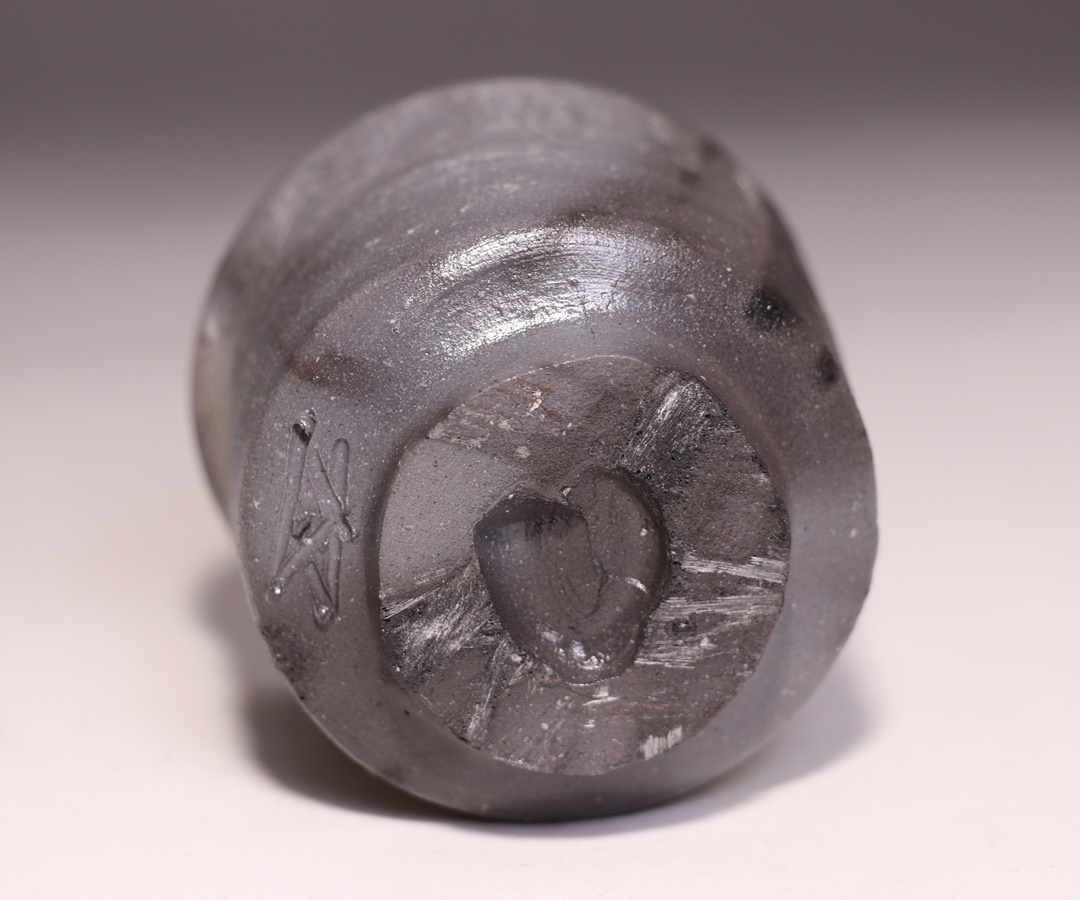
Details such as the combed markings around the shoulder and the exceptionally substantial foot ring reveal Zenji Urakami’s playful spirit and bold sense of design.
The piece was purchased new and carefully stored ever since. It has never been used.
It’s a little unstable because of the shape of the bottom, but it becomes stable once you pour the contents in.
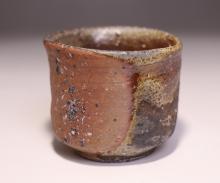


Jun Isezaki - Bizen Yohen Guinomi
132,000 YENSold out
size : W7.3cm×7.0cm×H6.1cmDrawing a wealth of inspiration from the natural environment of his beloved home of Bizen, Jun Isezaki brought a new spirit to the tradition of Bizen ware. This is a newly released Bizen Yohen Guinomi by the artist.
The piece was formed on the potter’s wheel by Jun Isezaki in January 2026 and later fired by Koichiro Isezaki in July of the same year, making it one of Jun Isezaki’s posthumous works.
It was created during a period in January when Jun Isezaki’s health had temporarily improved. Despite having been made only shortly before his passing, the vessel rises with a remarkably powerful and energetic form.
It is said that his fingernails were slightly long when he threw the piece on the wheel, leaving subtle traces across the body that resemble wheel marks. These lines provide a gentle accent within the relaxed and spacious form.
The trimming of the foot also has a distinctive sense of ease and restraint, giving it a deeply expressive character. Looking at it brings to mind Jun Isezaki’s warm smile as he quietly watched over his apprentices in the throwing room.
The piece was fired by Koichiro Isezaki in an Anagama kiln in July. Despite the firing taking place in the intense heat of midsummer, the work emerged with a remarkable range of Yohen kiln effects.
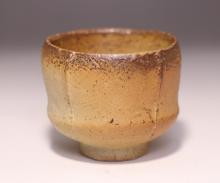


Togaku Mori - Guinomi
55,000 YENSold out
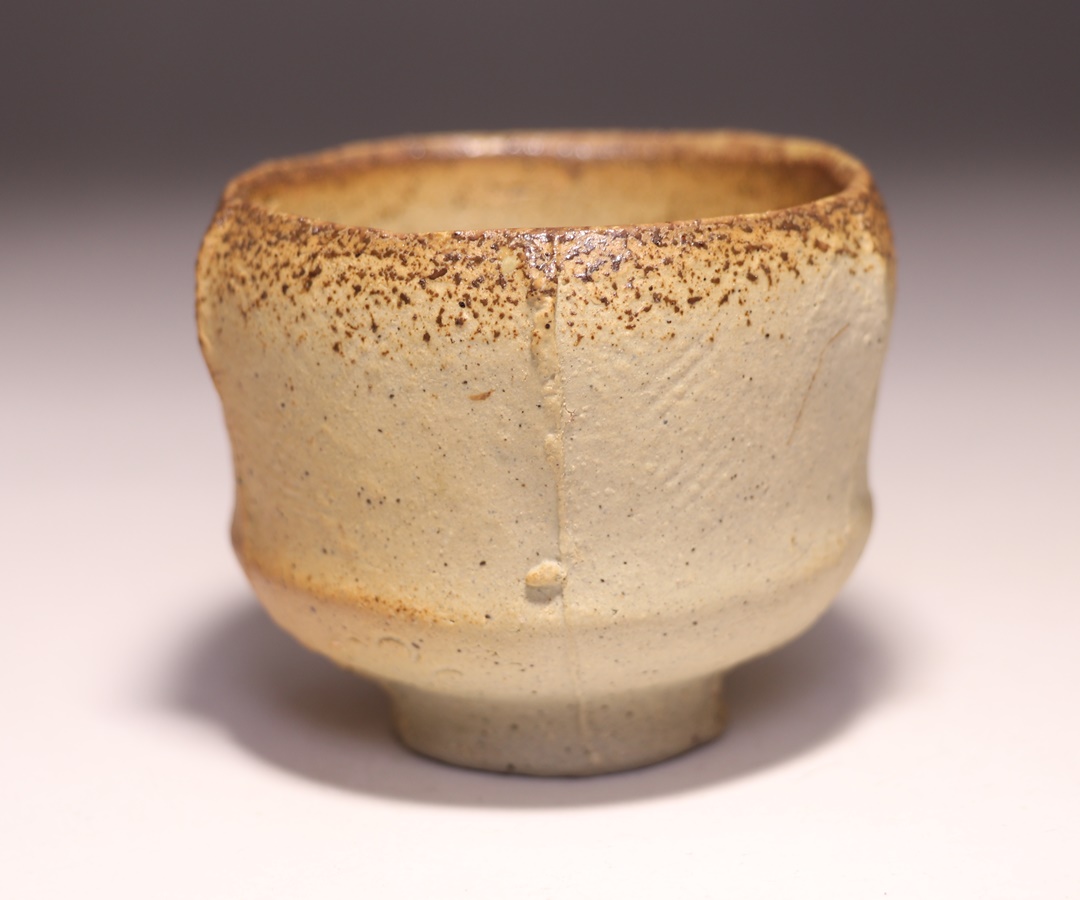
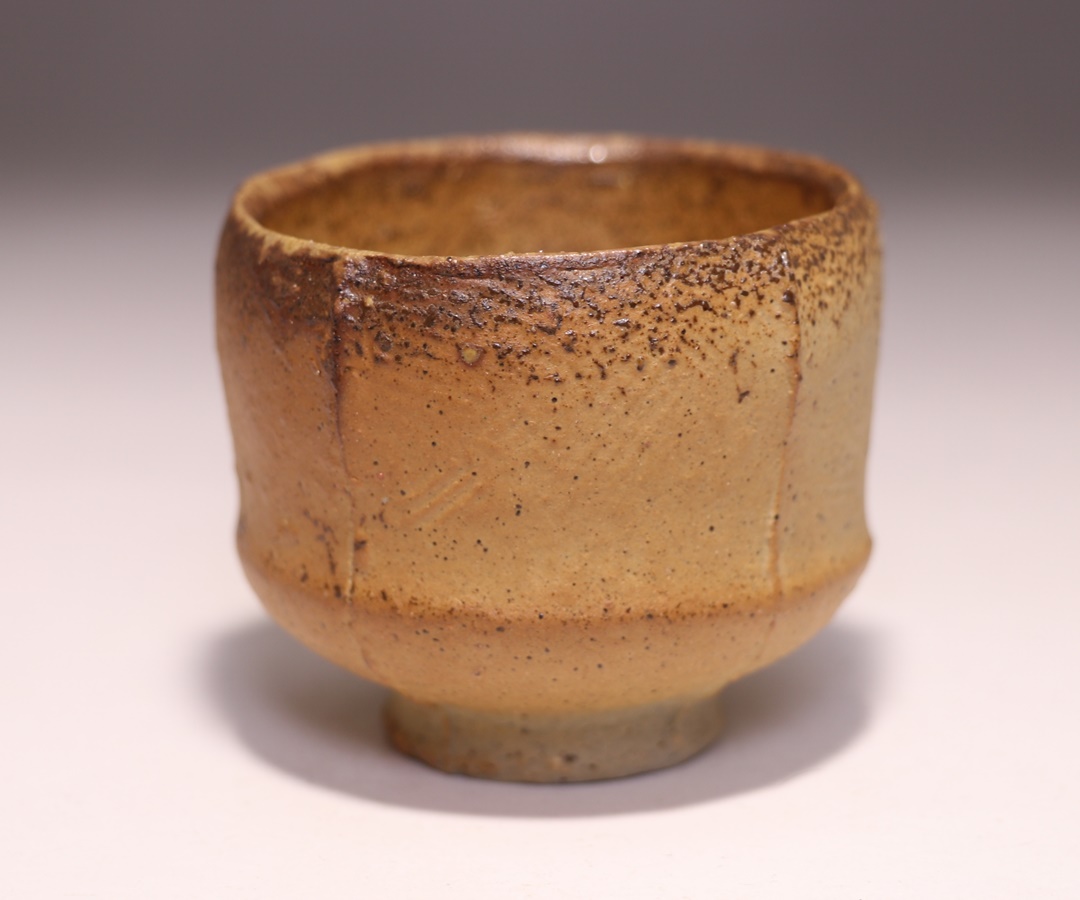
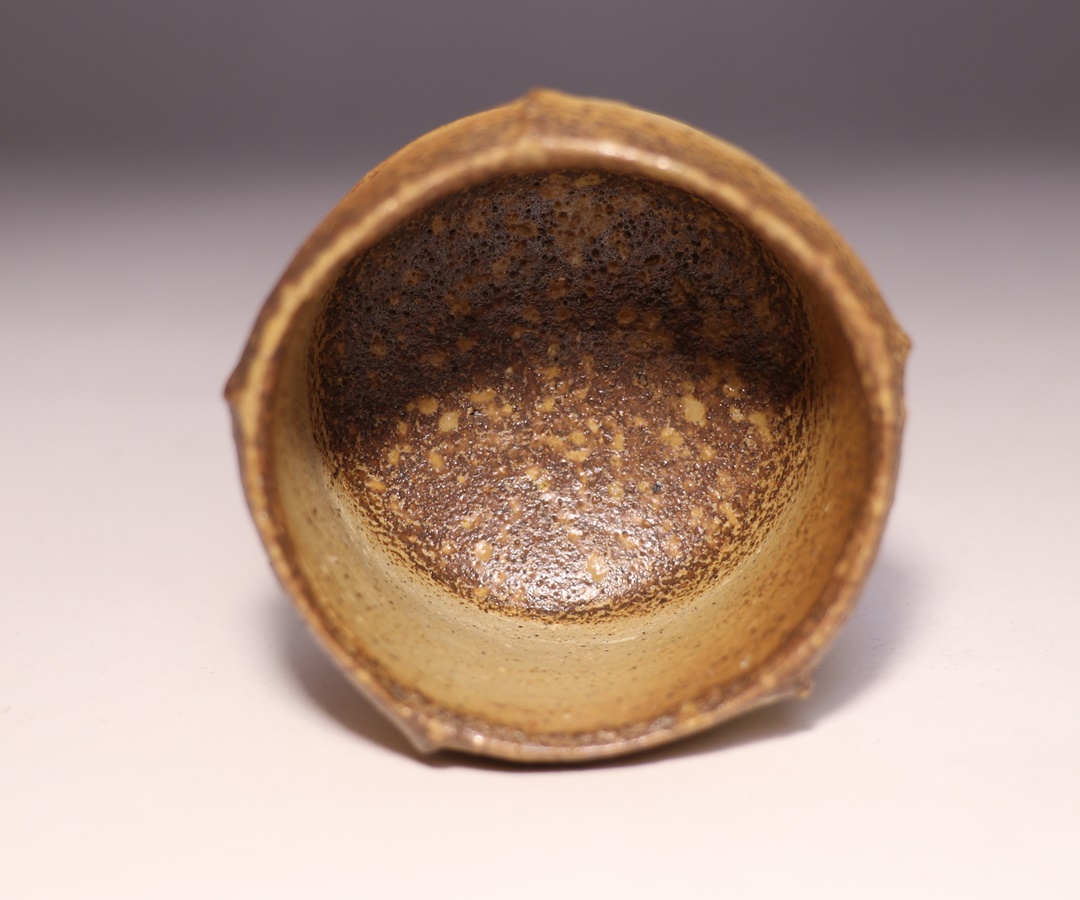
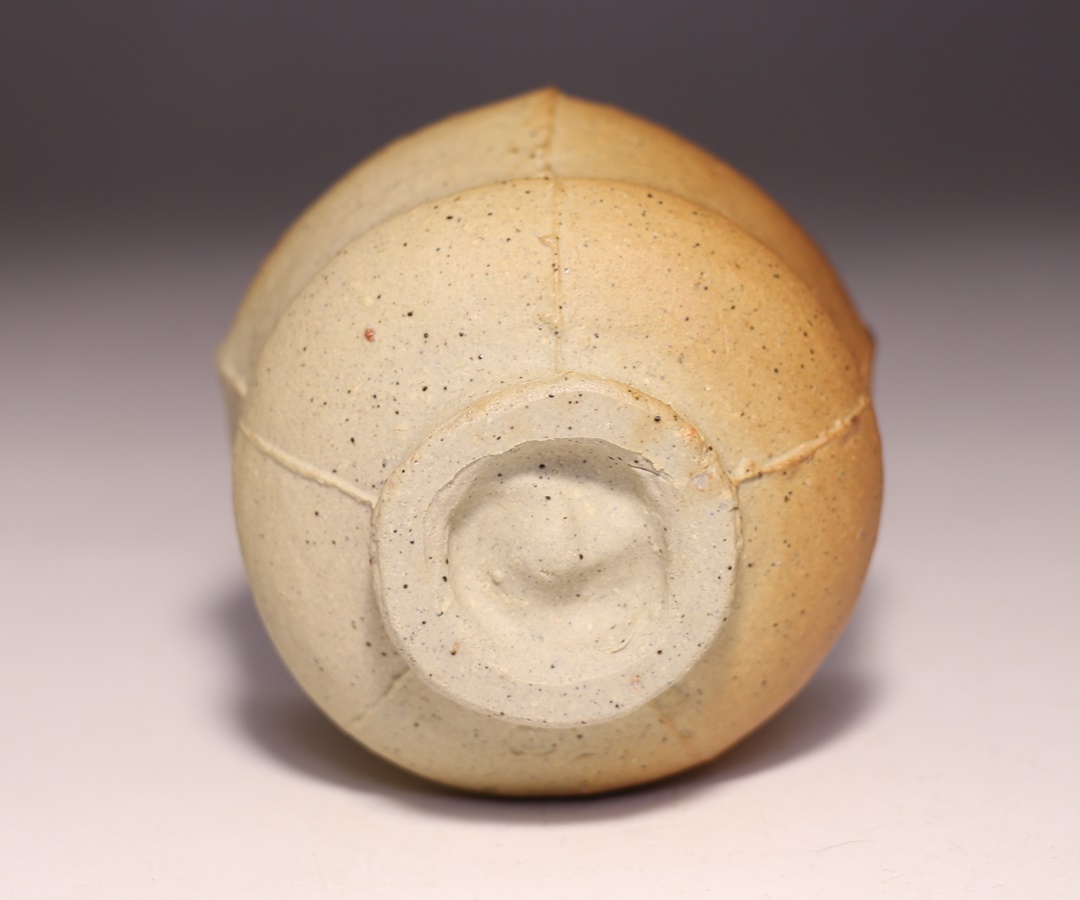
size : W6.5cm×6.3cm×H5.3cmTogaku Mori achieved one of the great feats in the history of ceramics by successfully firing an enormous kiln measuring 85 meters in length. This is an earlier Guinomi by the artist.
Created around the middle period of Mori’s career, this work was fired in 1994 in the 53-meter-long Samukaze Great Kiln.
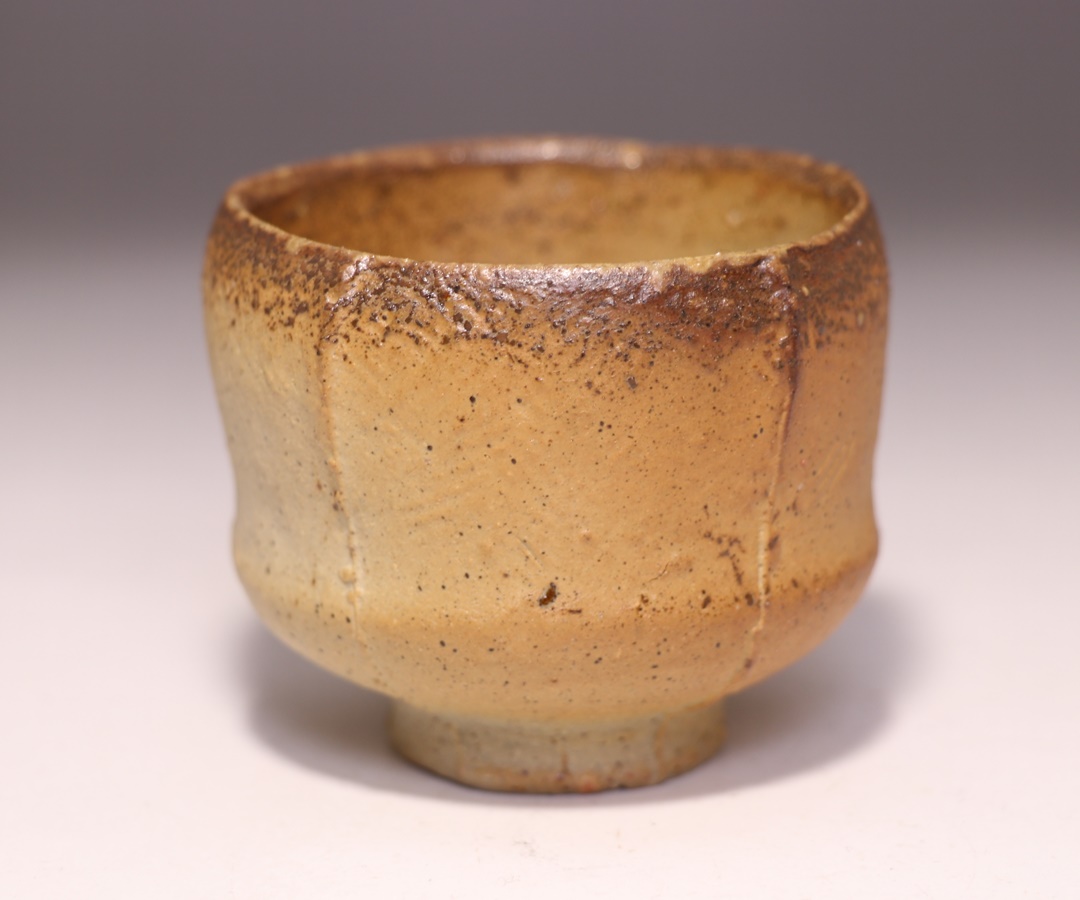
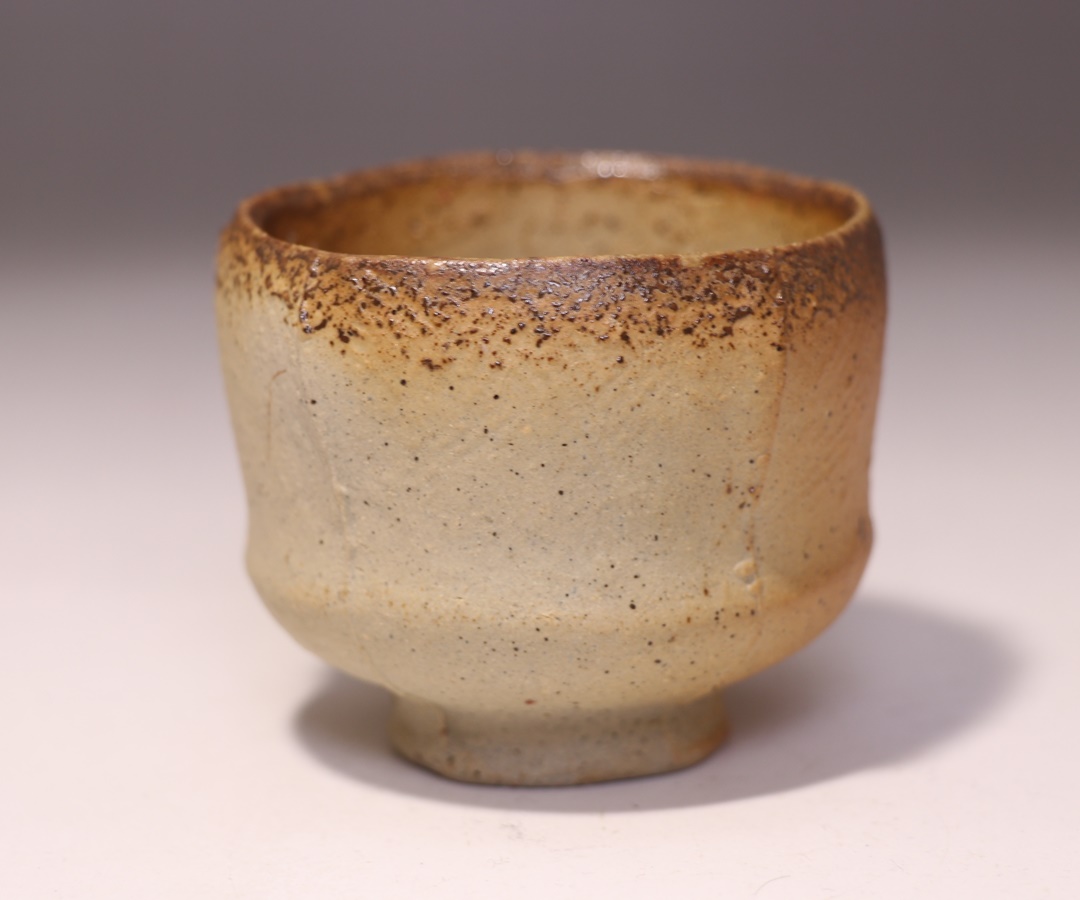
It was made after Mori had completed his firings in the Aioi Great Kiln and relocated to Samukaze. Beautiful Tobi-Goma markings appear across the clean white clay characteristic of Samukaze.
The exceptionally fine Tobi-Goma, one of the distinctive features of the Samukaze Great Kiln, is particularly beautiful. Together with the subtly colored caramel-brown tones of the clay, it creates a surface that remains endlessly captivating to observe.
By this period, Mori had begun moving away from wheel throwing and toward forming his works with plaster molds. This piece was constructed by joining five separate sections, creating its distinctive angular edges.
Unlike wheel-thrown vessels, it is difficult to perceive the maker’s rhythm or breathing through traces of the potter’s wheel, giving the work a somewhat impersonal and almost inorganic atmosphere.
Yet this very quality harmonizes beautifully with the white Samukaze clay. The result is a refined design that feels both primal and remarkably timeless.
Although this is an earlier work offered on the secondary market, it shows no staining, wear, or signs of use.
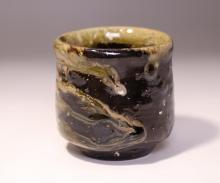


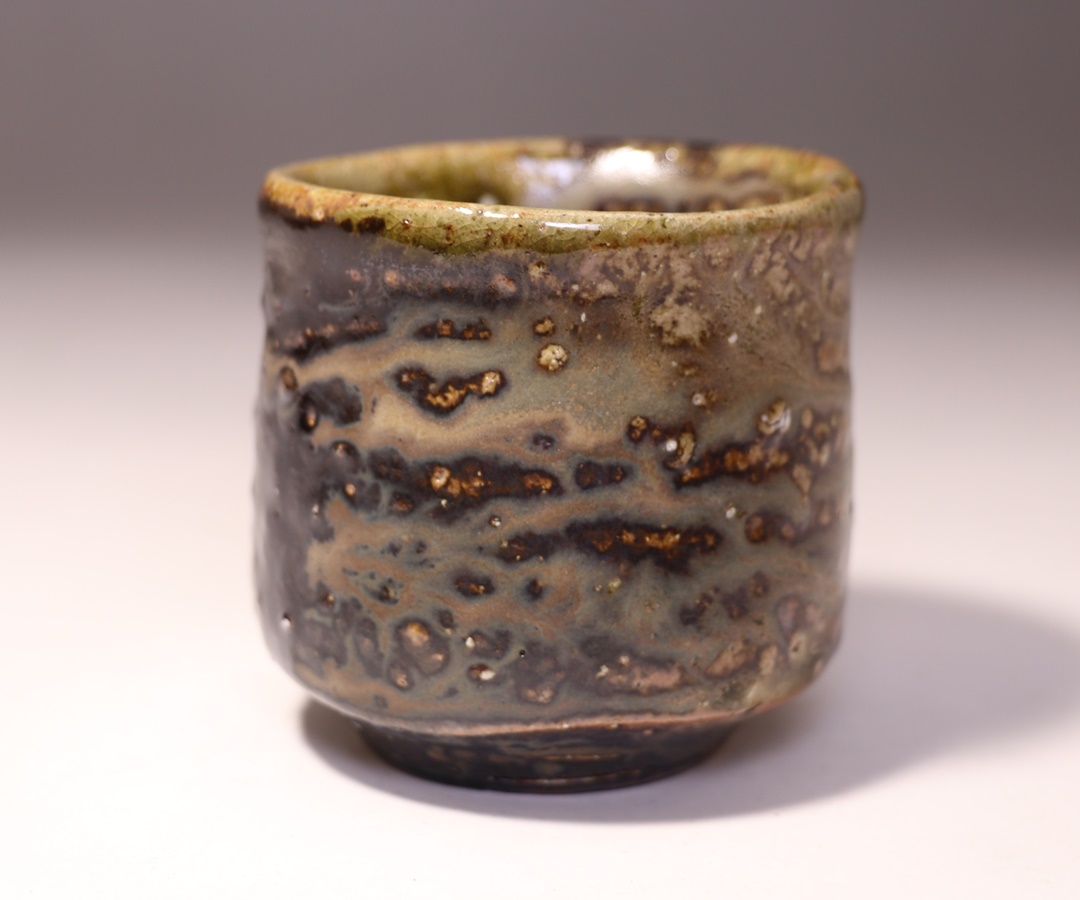
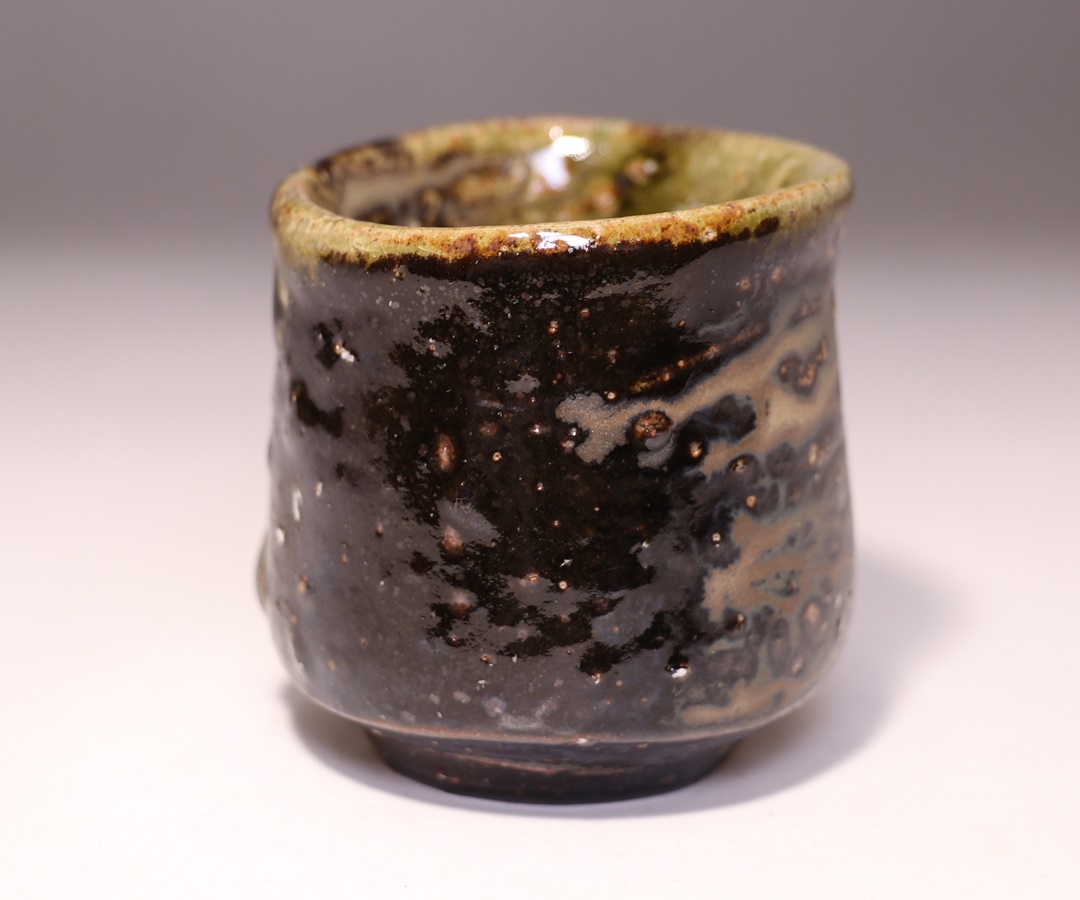
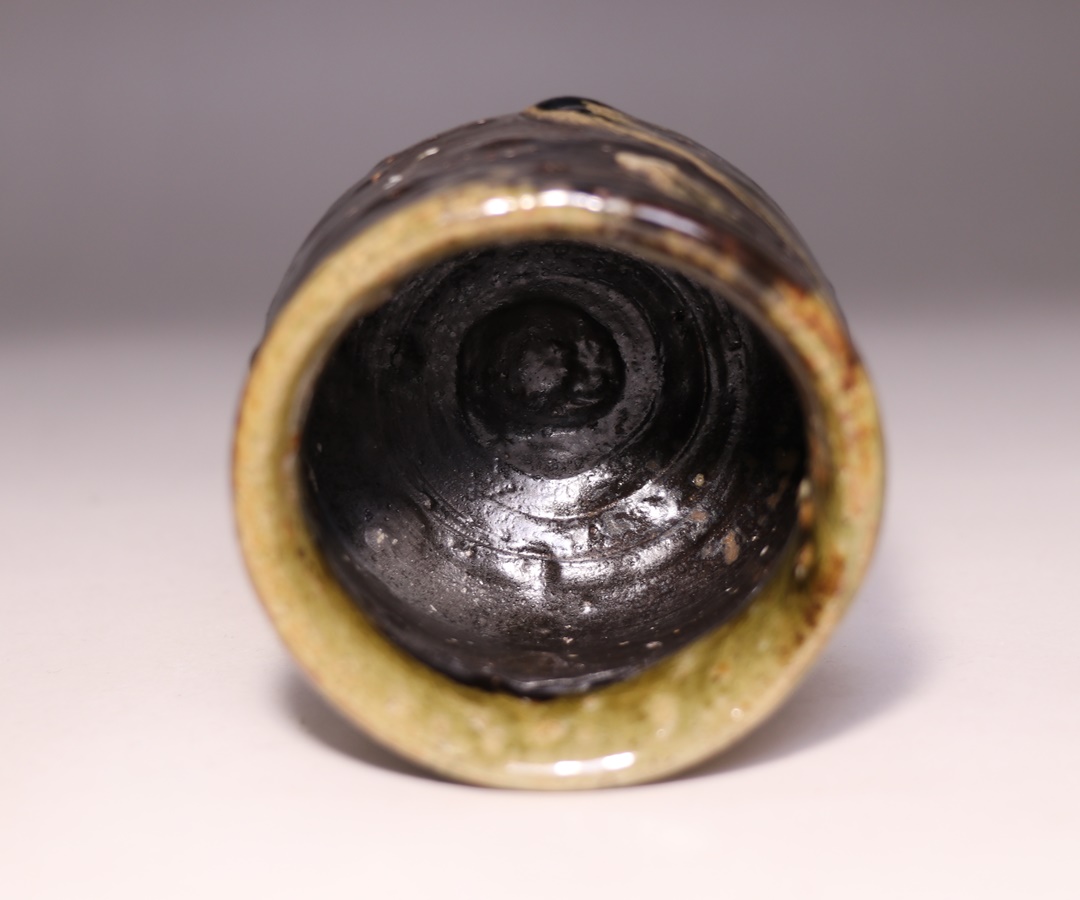
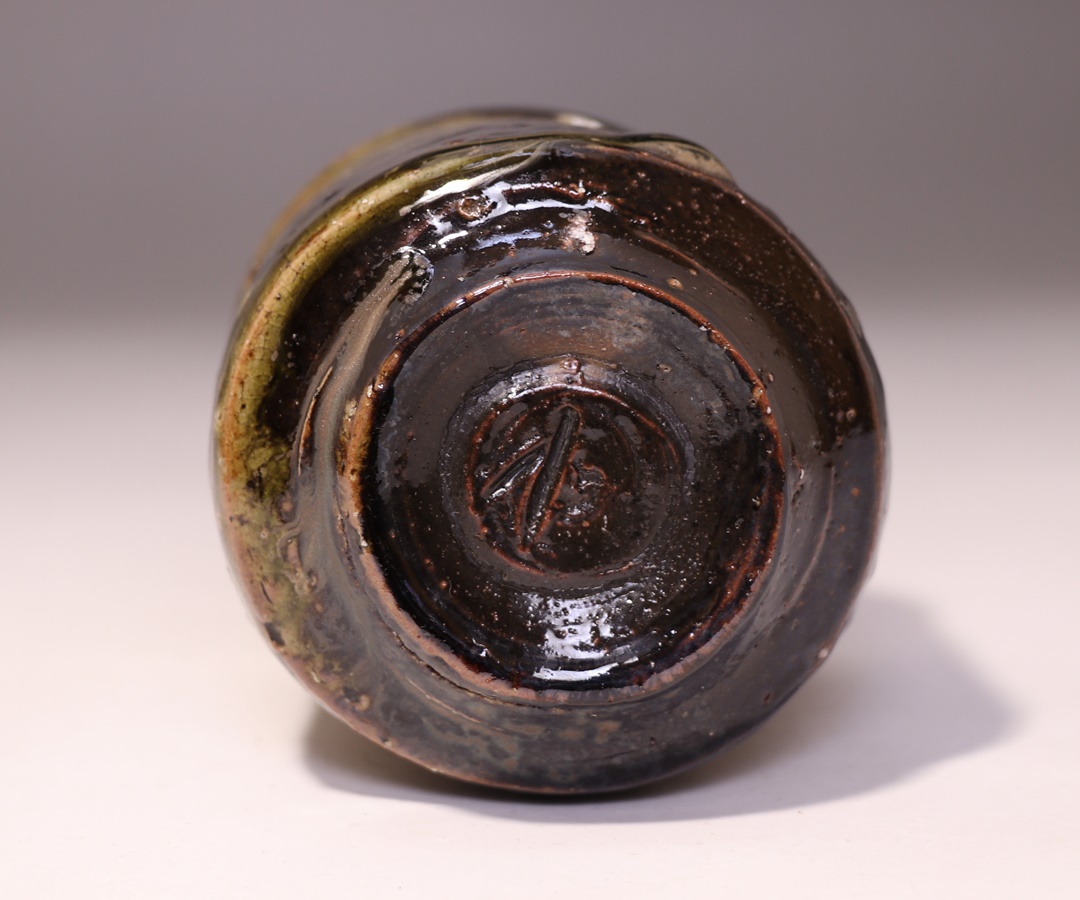
Jun Isezaki - Bizen Kuro Guinomi
132,000 YENSold out
size : W7.1cm×7.0cm×H6.8cmDrawing a wealth of inspiration from the natural environment of his beloved home of Bizen, Jun Isezaki brought a new spirit to the tradition of Bizen ware. This is a newly released Bizen Kuro-Guinomi by the artist.
Fired in February 2026, it is a work from the final period of his career.
The Guinomi was fired for approximately ten days in a semi-underground Anagama kiln. Its clay surface was exposed to a great deal of smoke during the firing, developing a beautiful natural sheen.
The work was also subjected to an intense flow of flames from the reverse side. Golden Kigoma, resembling scattered grains of gold and produced by high-quality split pine wood, surged toward the front of the vessel, where the streams converged to form a magnificent Tamadare pattern.
The overall sheen of the surface and the translucent streams of Goma are almost reminiscent of works produced using the hikidashi technique. Together with the exceptionally smooth texture, they give the Guinomi a distinctive and compelling presence.
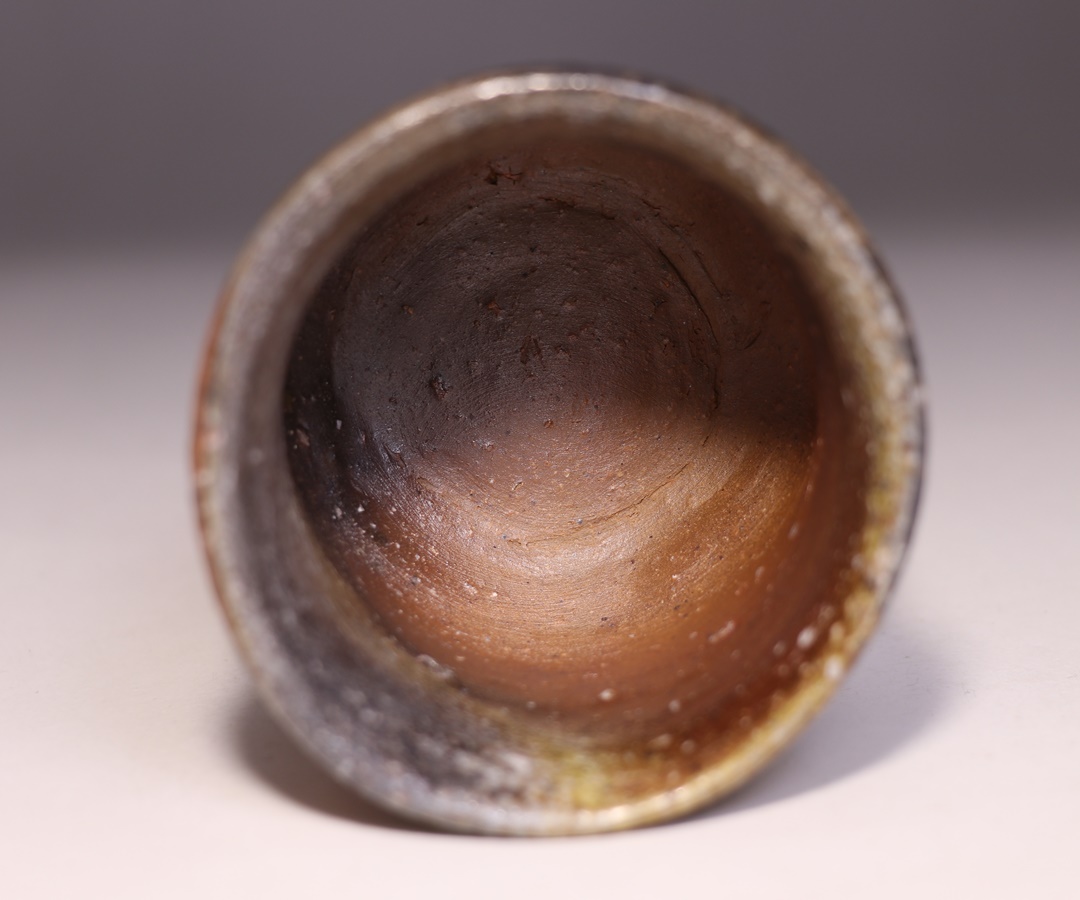
In contrast, the interior has a much more matte surface with little sheen. Its metallic appearance, blending shades of black and silver, becomes particularly rich and sensual when moistened with sake.
With its black surface displaying two distinctly different types of luster, its exceptionally large and energetic form, and its many varied kiln effects, this is a work filled with the qualities characteristic of Jun Isezaki.
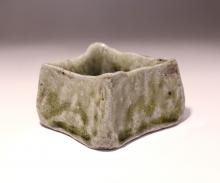


Yoshiteru Takariki - Bizen Hikidashi Guinomi square type
13,200 YEN
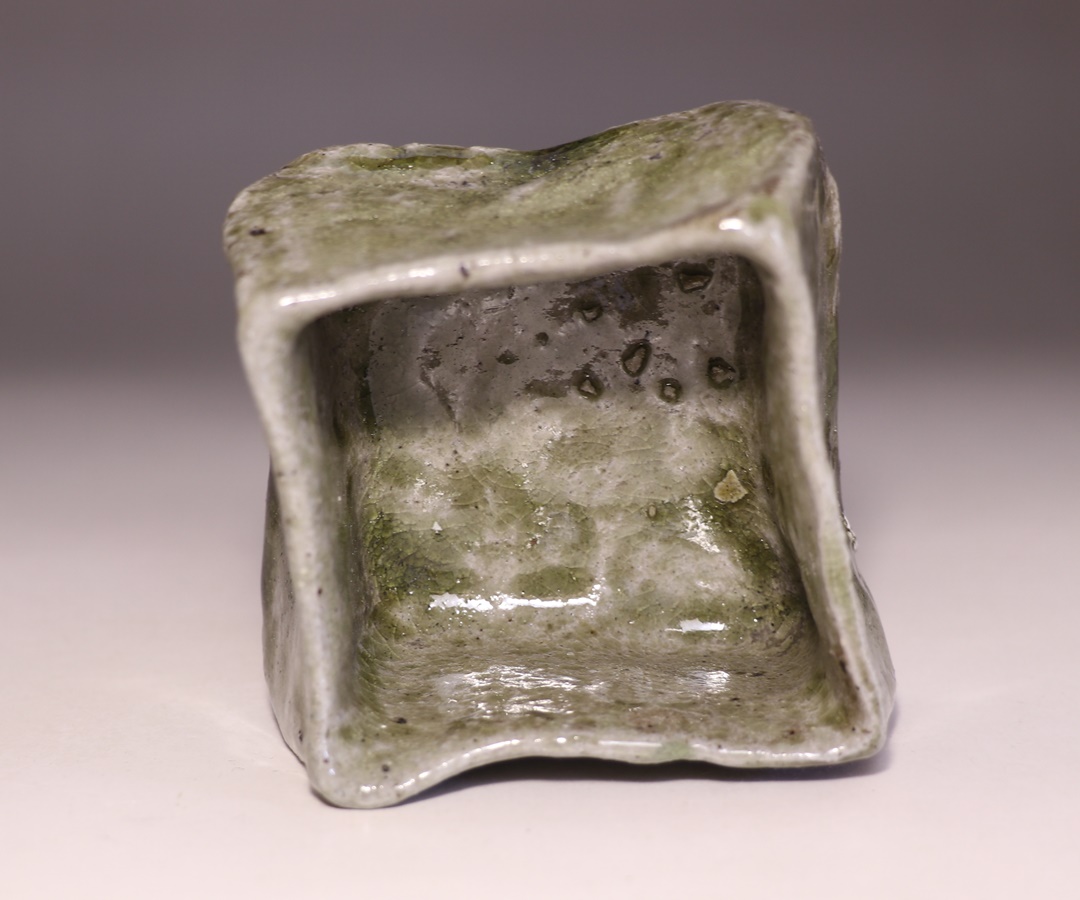
size : W7.2cm×8.0cm×H4.3cmThis is a Bizen Hikidashi Guinomi, square type, by Yoshiteru Takariki, who studied under Sozan Kaneshige and Yuho Kaneshige.
This piece was unloaded from the kiln in September 2025 (Reiwa 7).
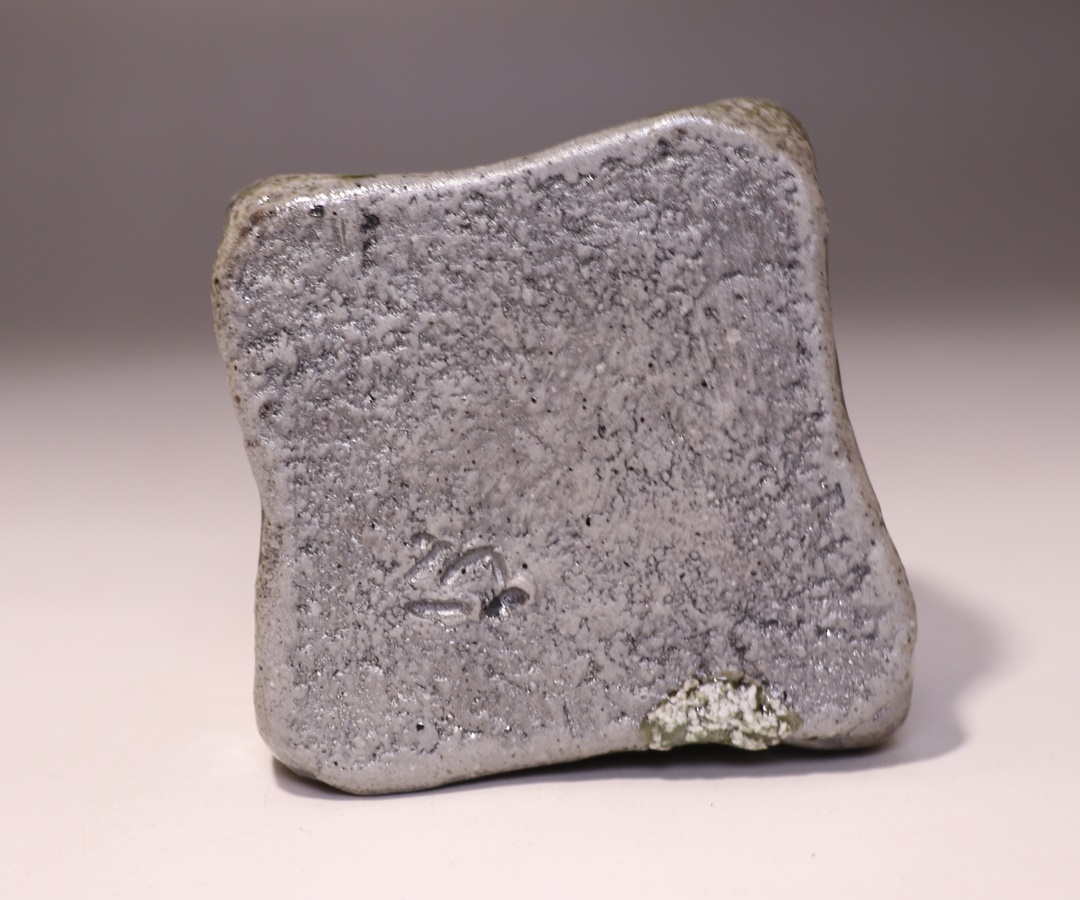
It was placed at the very front of the kiln, in the hottest zone, and pulled out during the firing. As a result, the entire surface looks as if it has been coated with glass.
However, on the bottom where it was in contact with the kiln shelf, the color changes completely from the outer surface, taking on an almost lead-like tone. It is a guinomi that makes you feel anew the mystery of Hikidashi-guro and the strange nature of light.
The four-sided form is also fascinating, evoking Chojiro’s Muki-guri in some way, and together with the pale green fire pattern, it shows an expression quite different from typical Bizen ware.
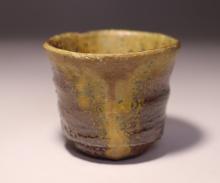


Shinjiro Aika - Bizen Guinomi
19,800 YENSold out
size : W6.9cm×6.6cm×H5.7cmShinshiro Aika creates works of unwavering honesty and strength. This is a newly released Bizen Guinomi by the artist.
Even among the many artists working in Bizen ware, Aika is distinguished by his particular devotion to firing. This work allows one to appreciate the rich colors of the clay and the expressive kiln effects that emerge only through exceptionally thorough firing.
Few works seem to embody the phrase “created without regard for profitability” as perfectly as this one. Aika fired it relentlessly until it achieved the appearance he sought, then selected it through an uncompromising process of evaluation. Even from a distance, it is immediately apparent that the vessel bears extraordinary kiln transformations.
Clay slips and repeated firings were used extensively, creating a complex interplay of clay surfaces and kiln effects, each with its own distinctive coloring. Together they form an astonishing texture reminiscent of Ko-Bizen ware—at once moist in appearance and yet distinctly dry to the touch.
As Bizen ware is fired more intensely, its surface generally becomes harder and increasingly loses its color. This work, however, retains a subtle, almost wet-looking sheen, together with a profound palette in which reddish purple, dark brown, and other tones blend intricately into one another.
The form has also been meticulously calculated and constructed, giving the vessel a poised and compelling presence. It is a work that invites one to enjoy sake slowly while appreciating the dynamic movement expressed in every detail.
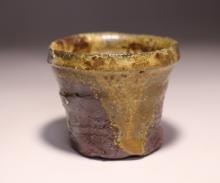


Shinjiro Aika - Bizen Onioke Guinomi
19,800 YENSold out
size : W7.0cm×6.8cm×H5.6cmShinshiro Aika creates works of unwavering honesty and strength. This is a newly released Bizen Onioke Guinomi by the artist.
Even among the many artists working in Bizen ware, Aika is distinguished by his particular devotion to firing. This work allows one to appreciate the rich colors of the clay and the expressive kiln effects that emerge only through exceptionally thorough firing.
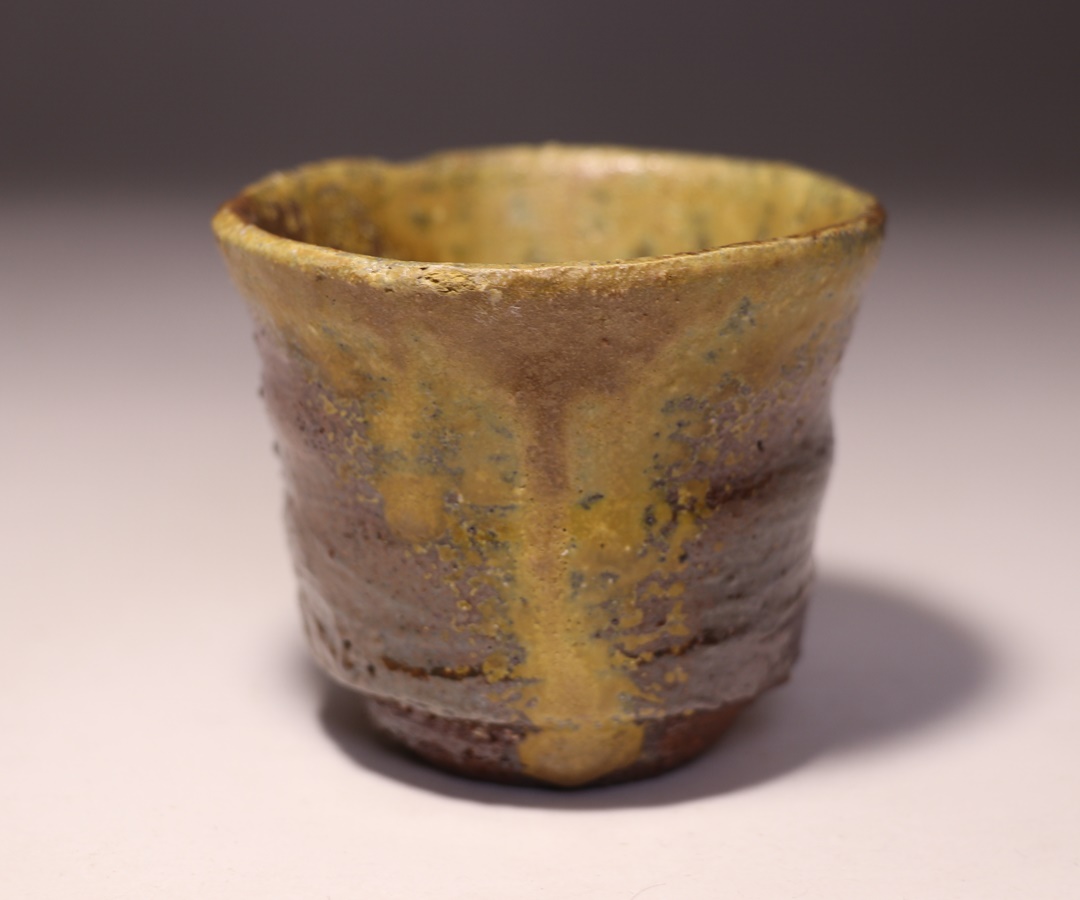
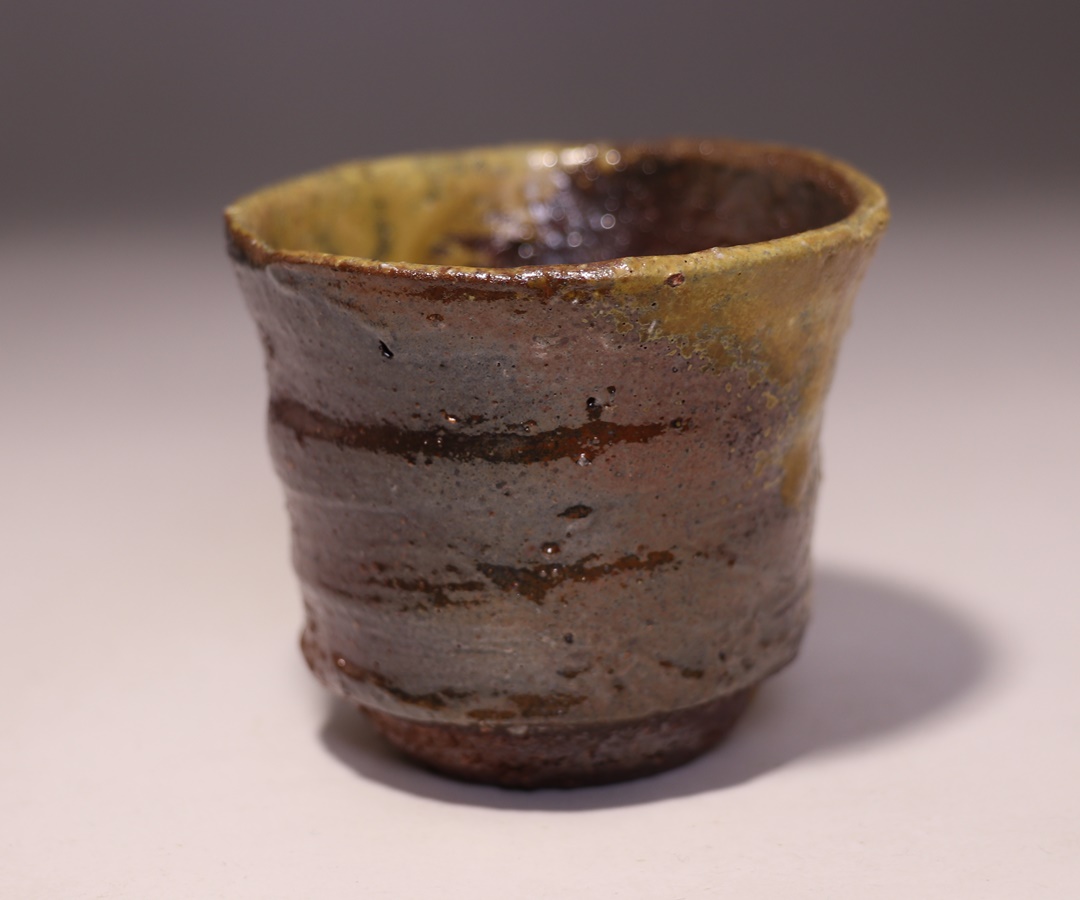
The Guinomi features a unique design inspired by the celebrated Shigaraki *Onioke Mizusashi*. Its boldly formed rim, characteristic of the Onioke style, merges with natural ash glaze that resembles thickly applied oil paint.
Few works seem to embody the phrase “created without regard for profitability” as perfectly as this one. Aika fired it relentlessly until it achieved the appearance he sought, then subjected it to an uncompromising process of selection. Even from a distance, it is immediately apparent that the vessel bears extraordinary kiln transformations.
Clay slips and repeated firings were used extensively, creating a complex interplay of clay surfaces and kiln effects, each with its own distinctive coloring. Together they form an astonishing texture reminiscent of Ko-Bizen ware—at once moist in appearance and yet distinctly dry.
As Bizen ware is fired more intensely, its surface generally becomes harder and increasingly loses its color. This work, however, retains a subtle, almost wet-looking sheen, together with a profound palette in which reddish purple, dark brown, and other tones blend intricately into one another.
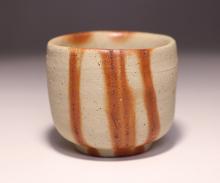


Tosyu Yamamoto - Bizen Guinomi
55,000 YEN
size : W6.6cm×6.6cm×H6.6cmPossessing extraordinary and unrivalled skills often described as almost divine, Tōshū Yamamoto created numerous masterpieces and was designated a Living National Treasure. This is a Bizen Guinomi by the artist.
Yamamoto began his career as a craftsman and lived through a period of great upheaval before being designated a holder of an Important Intangible Cultural Property by Okayama Prefecture. This Guinomi bears the potter’s mark he used during the later years of his career.
Its perfectly symmetrical and exceptionally refined form is deeply pleasing to the eye, reflecting the mastery of an artist who devoted his entire life to working at the potter’s wheel.
The work is distinguished by its delicate Hidasuki, created in an electronically controlled gas kiln jointly developed by Tōshū and his son, Yūichi Yamamoto. Precise adjustments to the temperature throughout the firing made this subtle expression possible.
It possesses a character quite different from Hidasuki produced in an electric kiln. The white tone of the clay is particularly pronounced, creating a clean and translucent appearance.
Although the wheel-thrown form is exceptionally precise, its carefully judged weight allows it to rest comfortably in the hand. Tōshū’s uncompromising character as a craftsman can also be seen in the perfectly straight trimming of the foot, which is so entirely free of playfulness that it might, in a certain sense, even appear almost stubbornly austere.
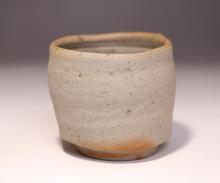


Makoto Kaneshige - Hidasuki Guinomi Highest quality clay
88,000 YENSold out
size : W6.7cm×6.7cm×H5.9cmMakoto Kaneshige, the eldest son of Sozan Kaneshige and heir to Maruyama-gama, continues to captivate many admirers through the harmony of refined, graceful clay texture and powerful form.
This is a newly fired Bizen Hidasuki Guinomi by Makoto Kaneshige, inscribed on the box as Saijyo Tsuchi Nite (“Made with the Highest quality clay”).
It is his latest work, freshly fired at the end of 2025.
As indicated by the box inscription Saijyo Tsuchi Nite, this piece was made from the finest possible clay, and was high-fired at Maruyama-gama to achieve a softly moist and supple surface.
About forty years ago, Sozan Kaneshige and Makoto Kaneshige discovered an exceptional batch of the highest-quality clay.
After preparing it entirely by hand, without the use of machines, they left it resting in storage for many years.
It was clay so precious that Makoto Kaneshige is said to have remarked that it would be too wasteful to die without ever using it.
In striking contrast to the somewhat coarse clay surface often seen in his Hidasuki works until now, this piece has an extraordinarily fine texture, so refined that one might almost think it had been passed through an extremely fine sieve.
Sozan Kaneshige, the previous generation, generally chose slightly coarser clay for his Hidasuki works, and for that reason as well, this Guinomi can truly be described as luxuriously exceptional beyond compare.
The form is restrained to the essentials of wheel-throwing, avoiding excessive ornament and placing the beauty of the clay itself at the center of expression.
As if to prove the excellence of the clay, the surface displays a vivid yet delicate Hidasuki pattern, as though the straw had only just gently brushed against it, while the foot, revealed when the piece is turned over, asserts an overwhelming presence all on its own.
It is nothing less than masterful.
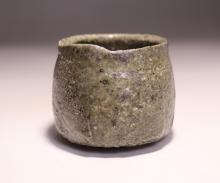


Mitsuhiro Kaneshige - Ao-Bizen Shuhai
19,800 YEN
size : W7.0cm×6.8cm×H5.8cmThis is an Ao-Bizen Shuhai by Mitsuhiro Kaneshige, who was born into Kaneshige Ritouen, one of the six traditional Bizen kiln families, yet pursues his own path in pottery without being bound by the family name.
This piece aims for an Ao-Bizen style firing through intense reduction flames, while also retaining a beautiful gradation created by natural ash glaze.
The blue-toned firing caused by the reduction flames has produced a refreshing blue surface across the entire piece, giving it a color reminiscent of Sueki ware, the ancestor of Bizen ware.
In addition, natural ash glaze has settled along the rim almost like lipstick, while the blue surface has reacted with the glaze to create black fire effects. The subtle combination of blue and black gives the piece a particularly fascinating character.
The carefully considered wheel marks inside, reminiscent of a pool of tea, are beautifully resolved, and the trimmed foot, with its crepe-like wrinkles, is equally impressive.
FIRST PREV 2 / 92 page NEXT LAST