
Products
| Bizen Sake Bottle & sake Cup | Tea Ceremony Things | Bizen Flower Vase | Bizen Dish & Bowl | Others |
Bizen Sake Bottle & sake Cup
1094 Items
FIRST PREV 6 / 92 page NEXT LAST
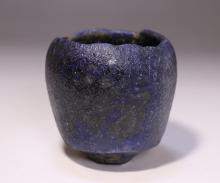


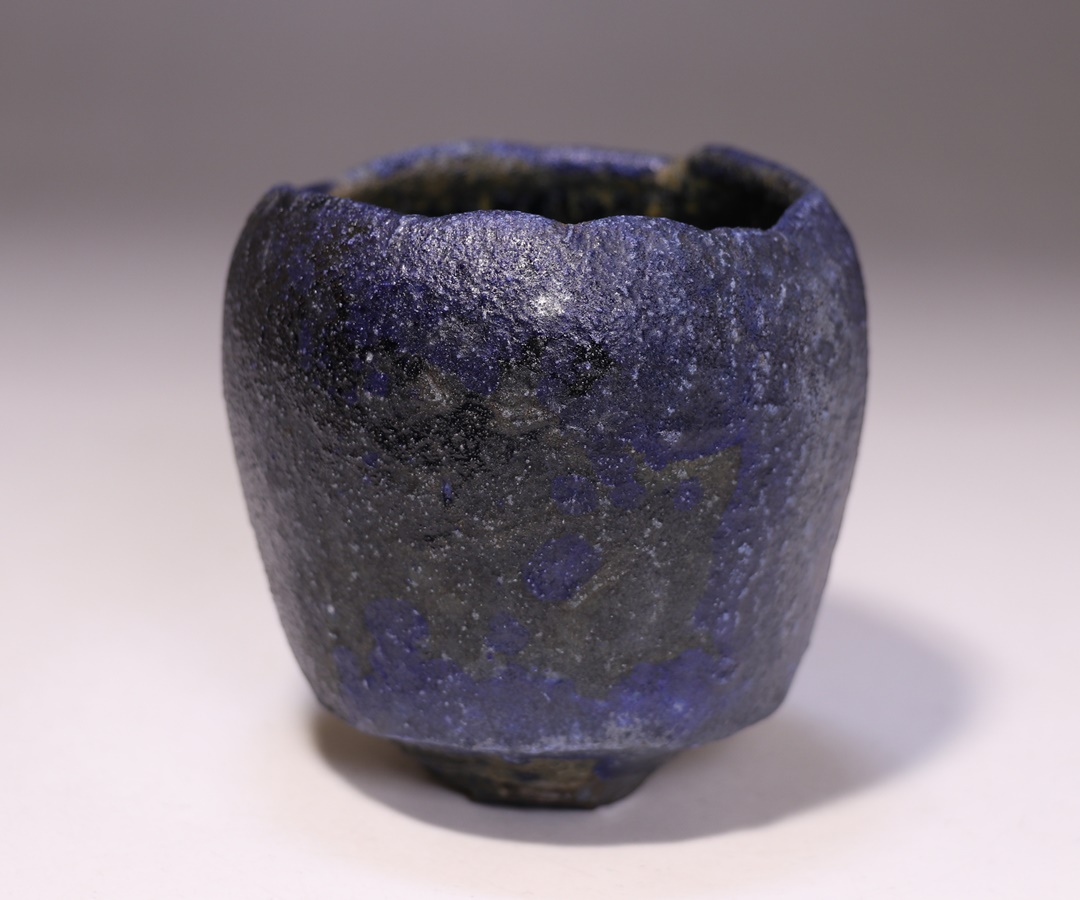
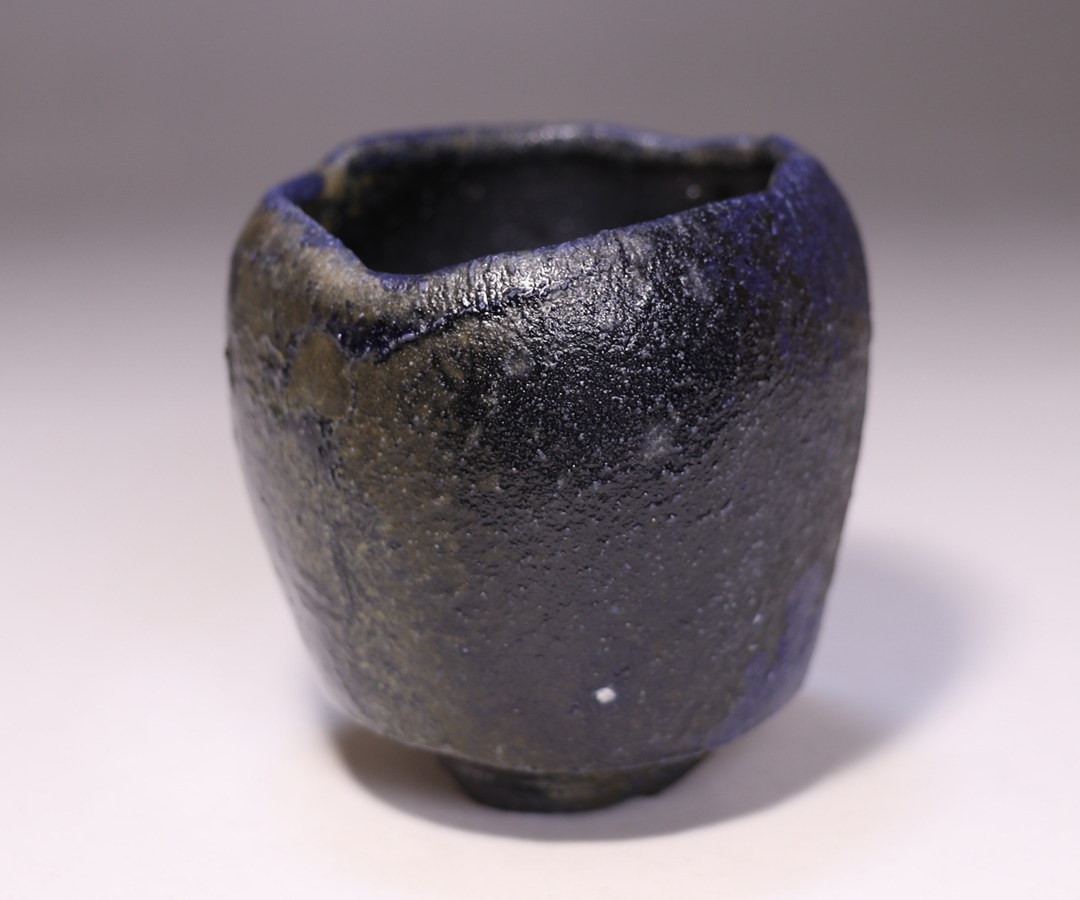
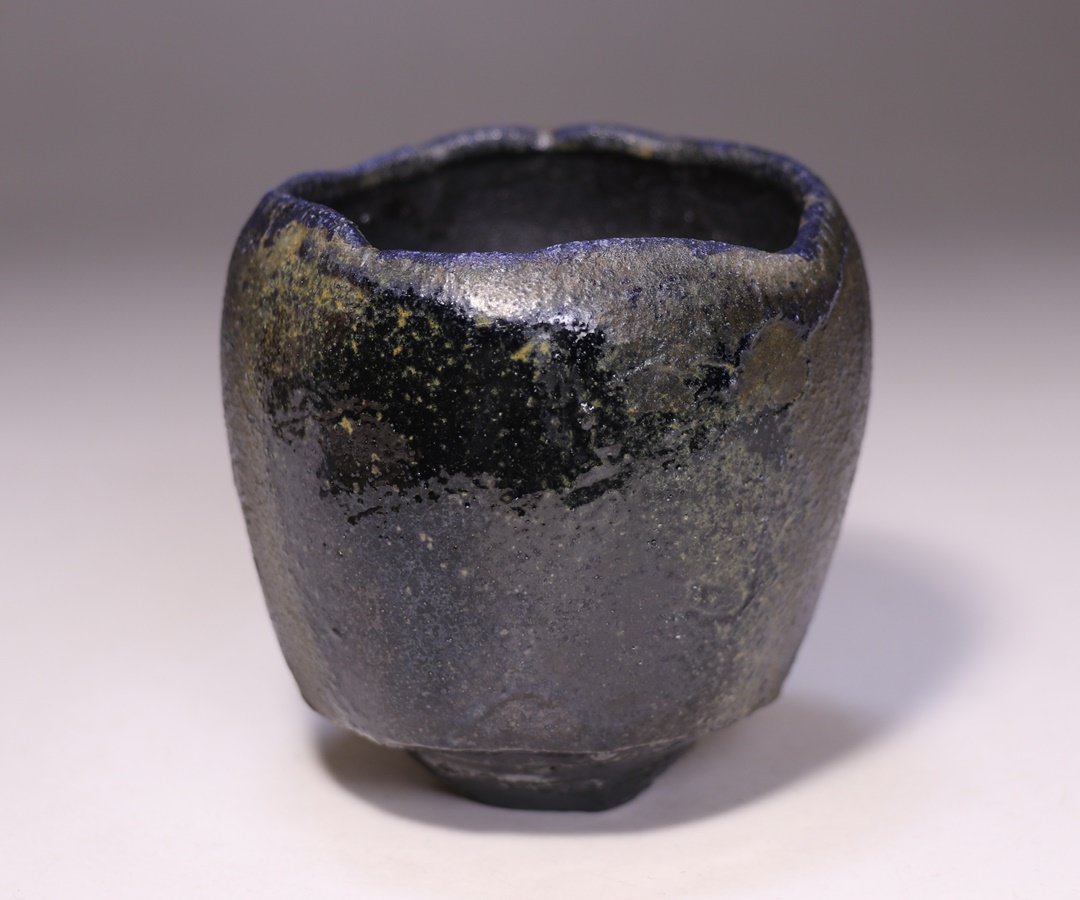
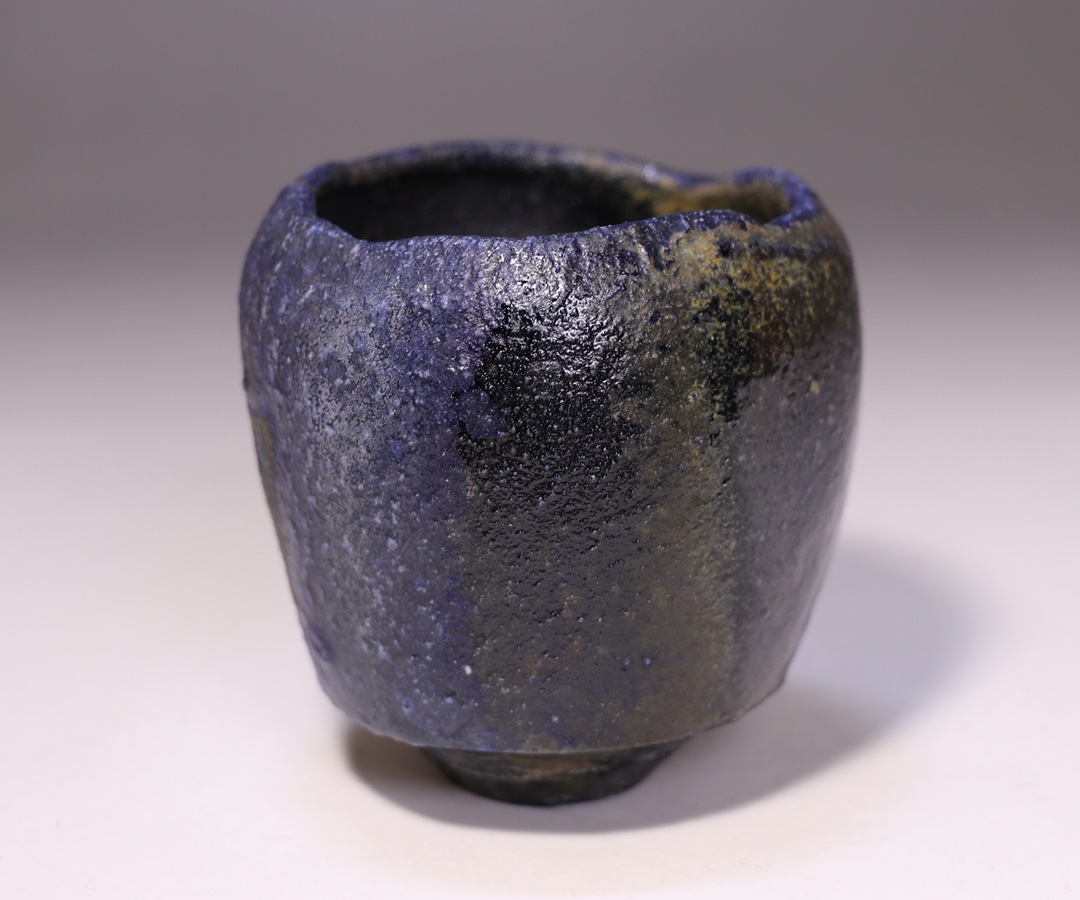
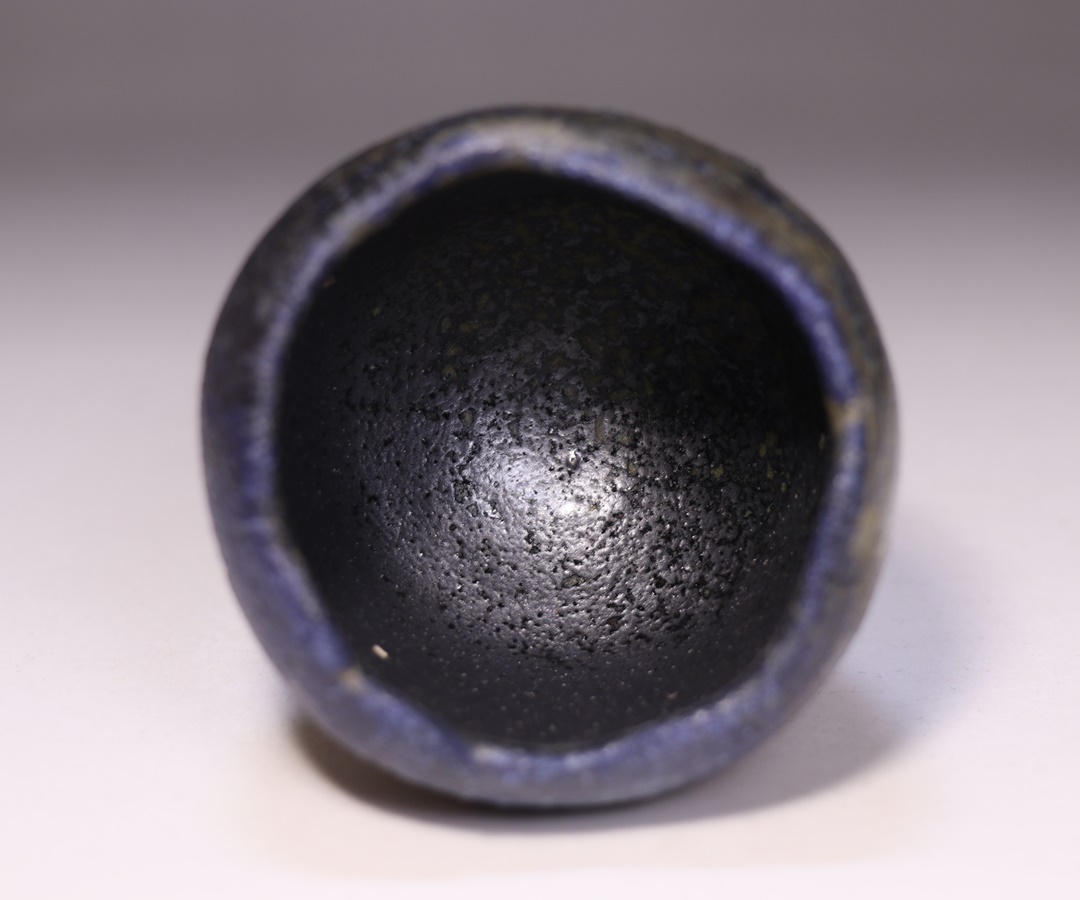
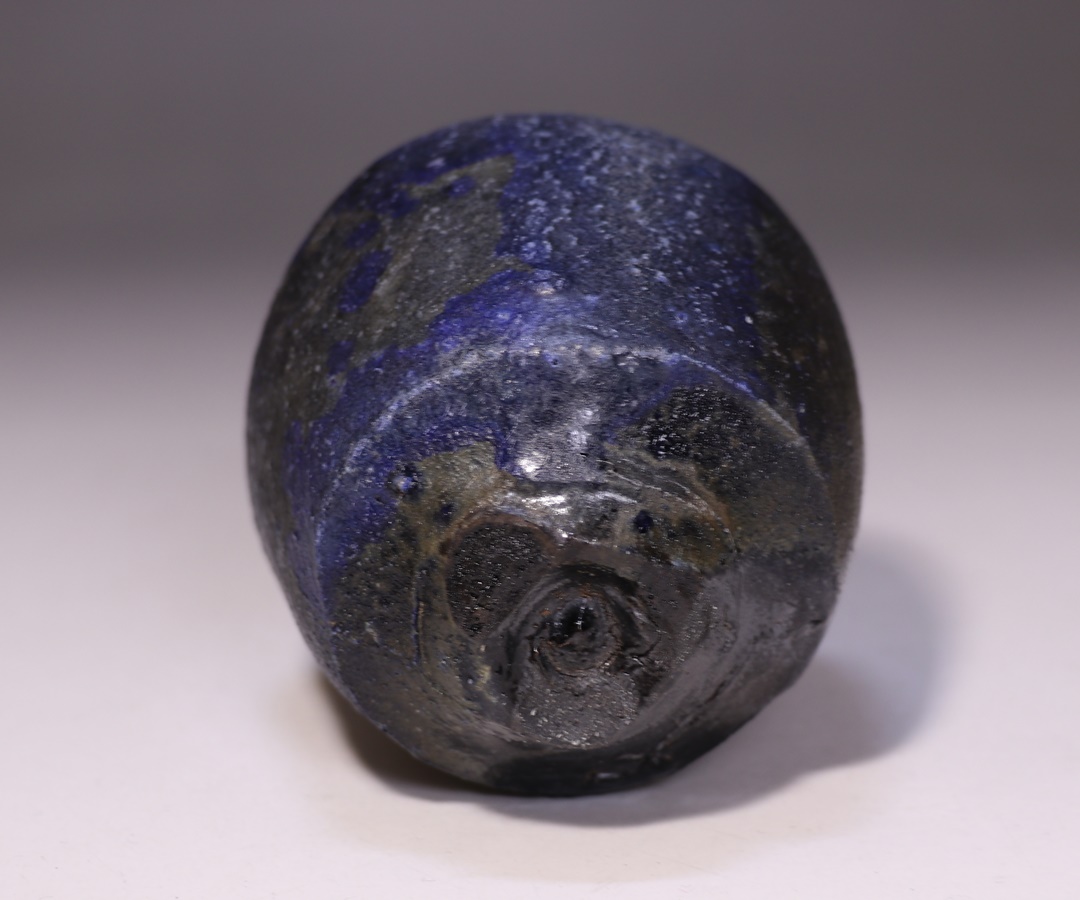
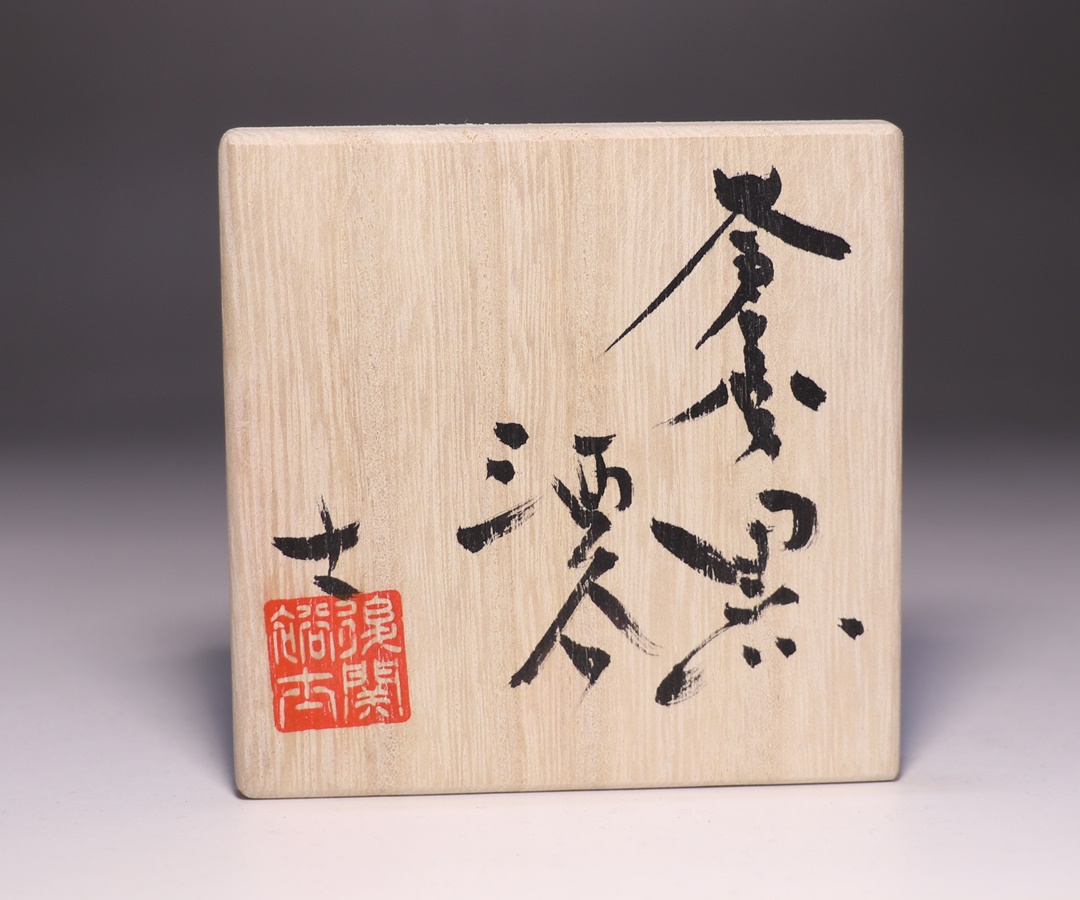
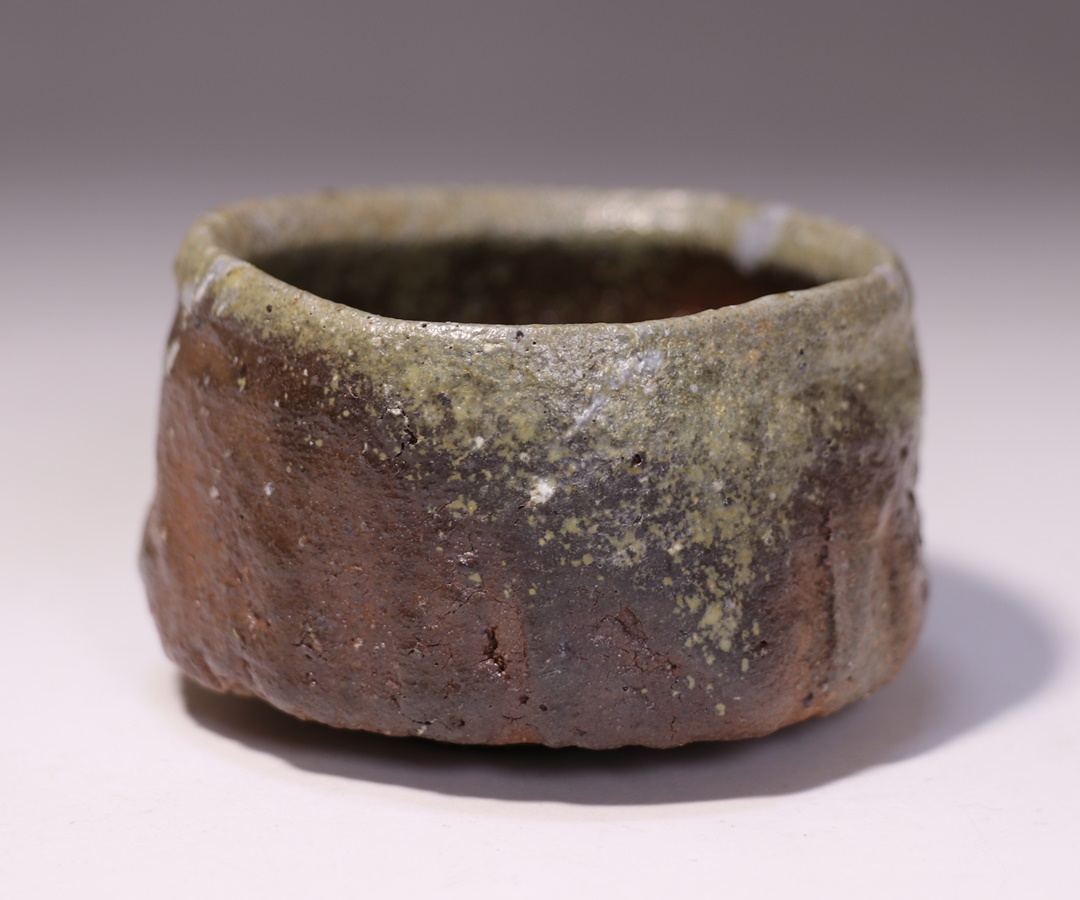
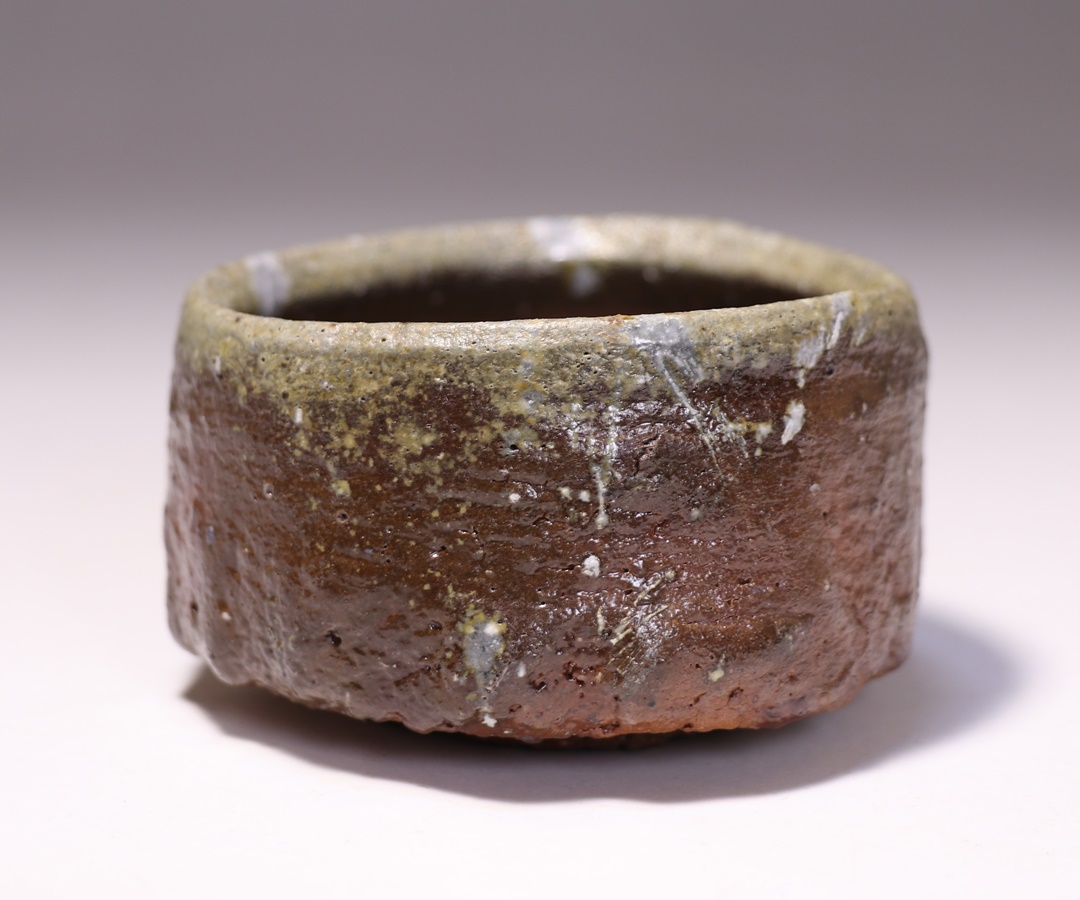
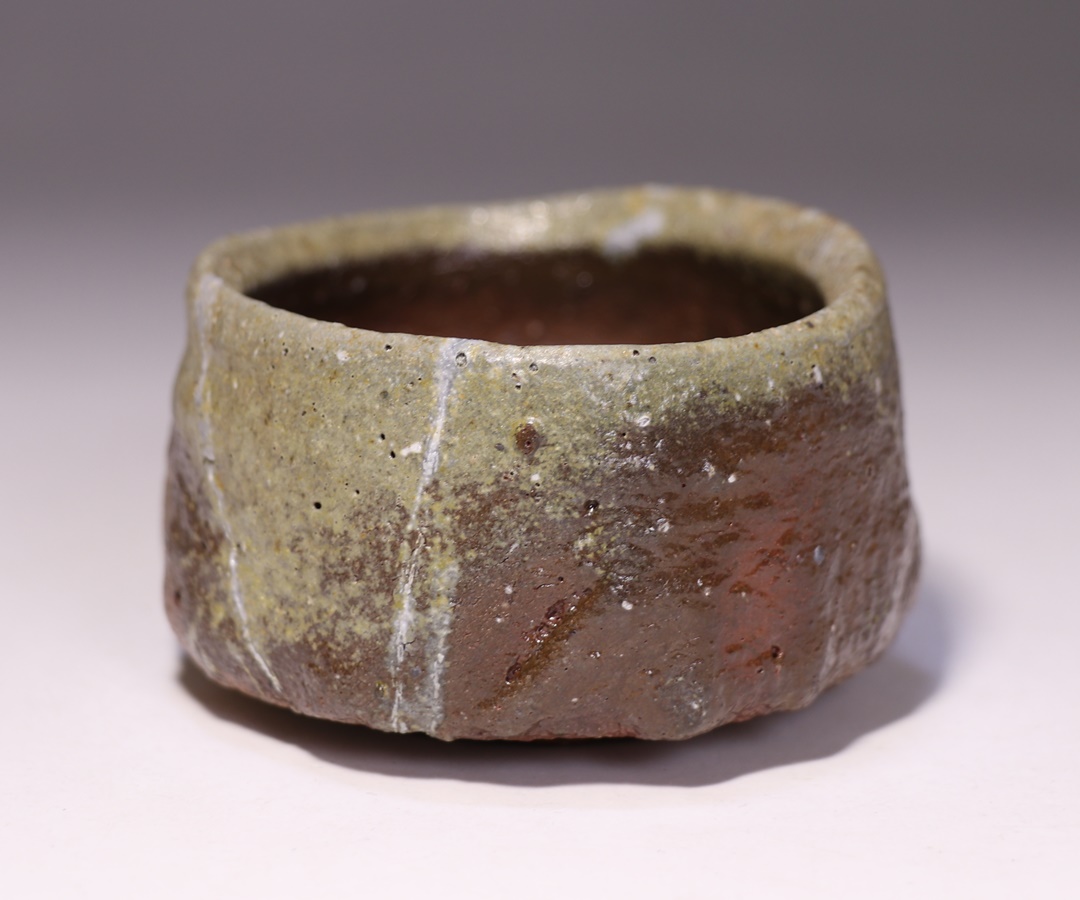
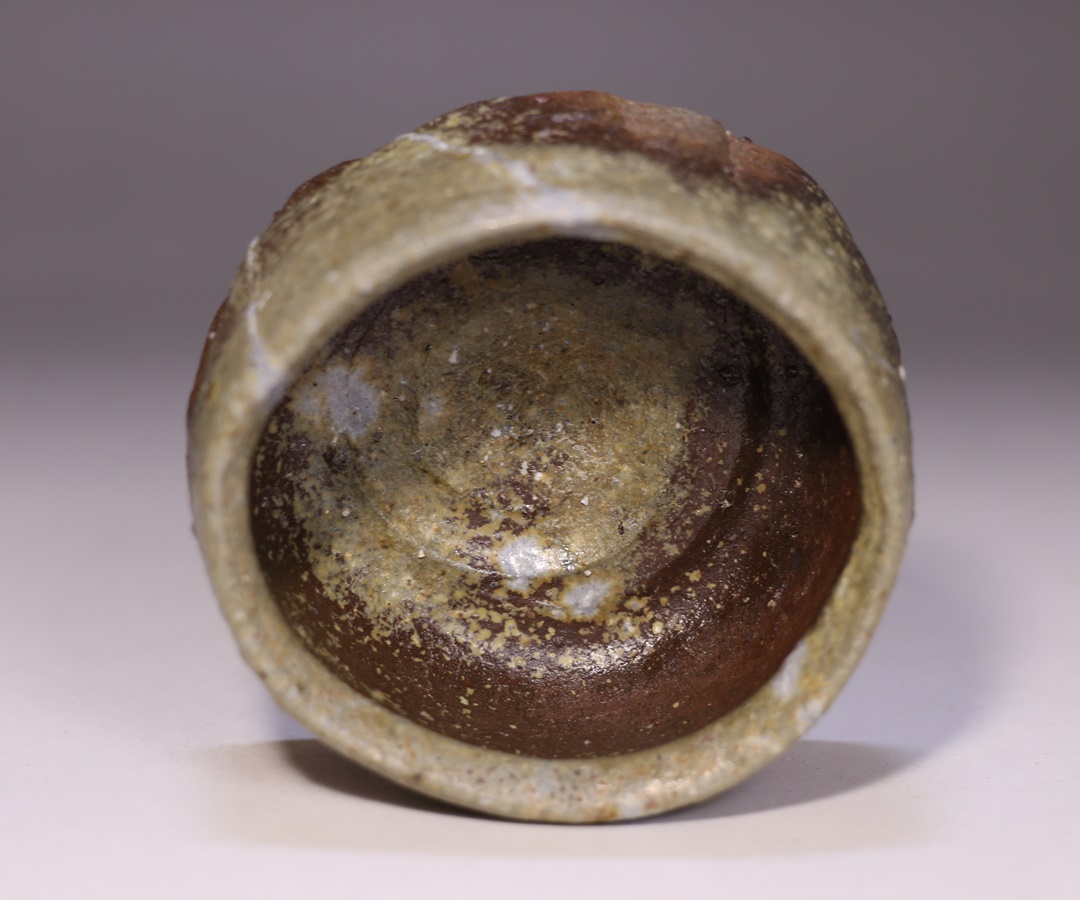
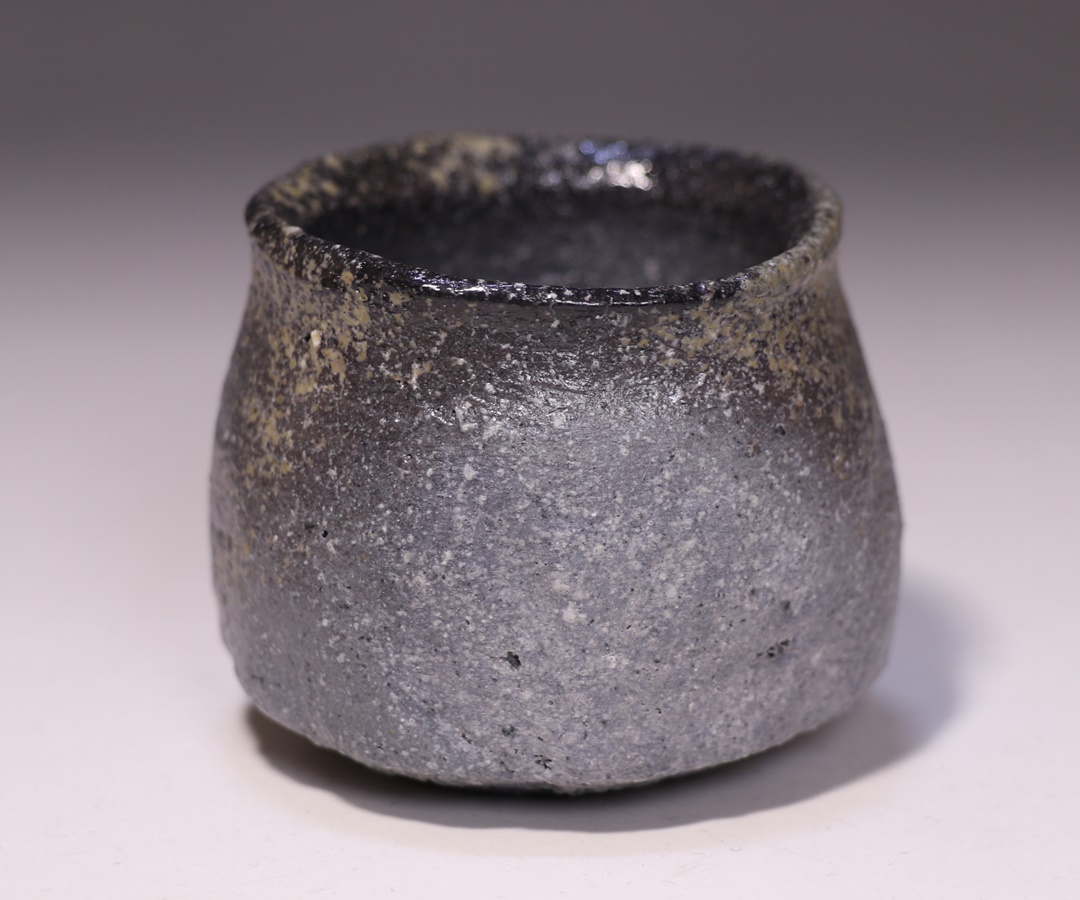
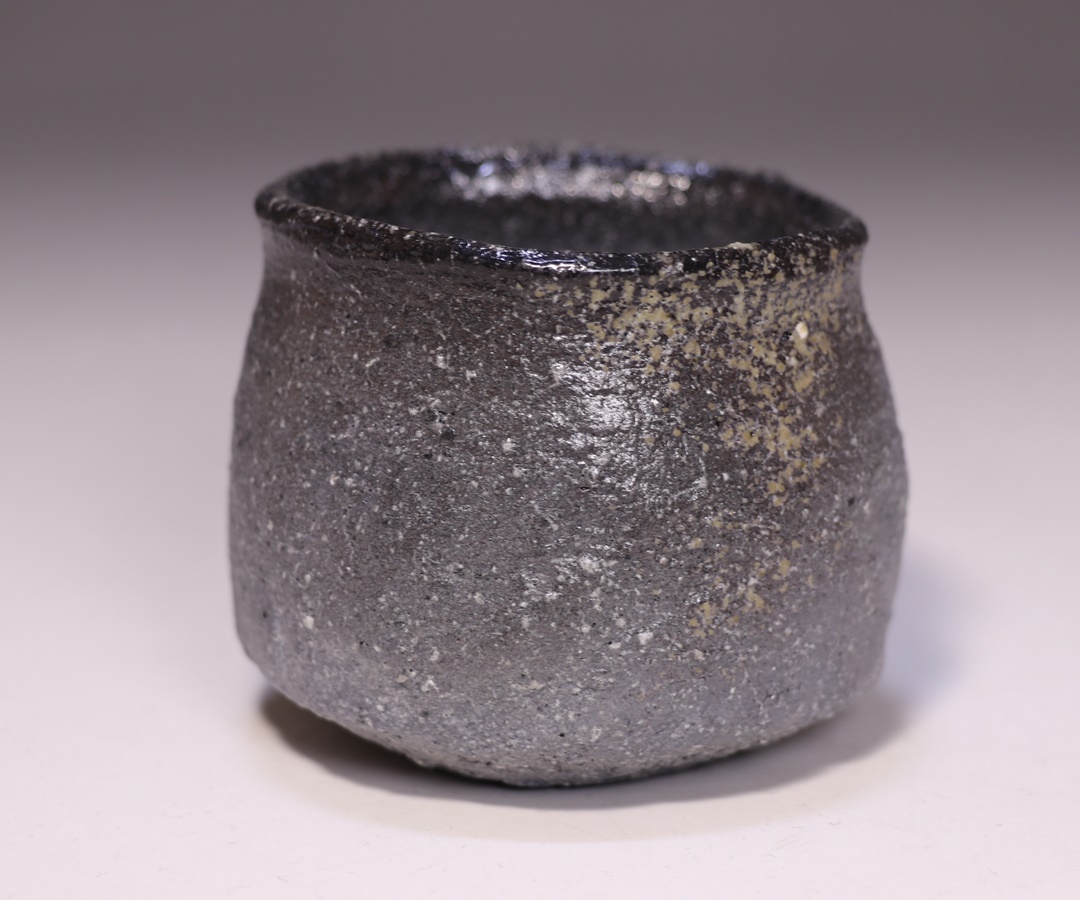
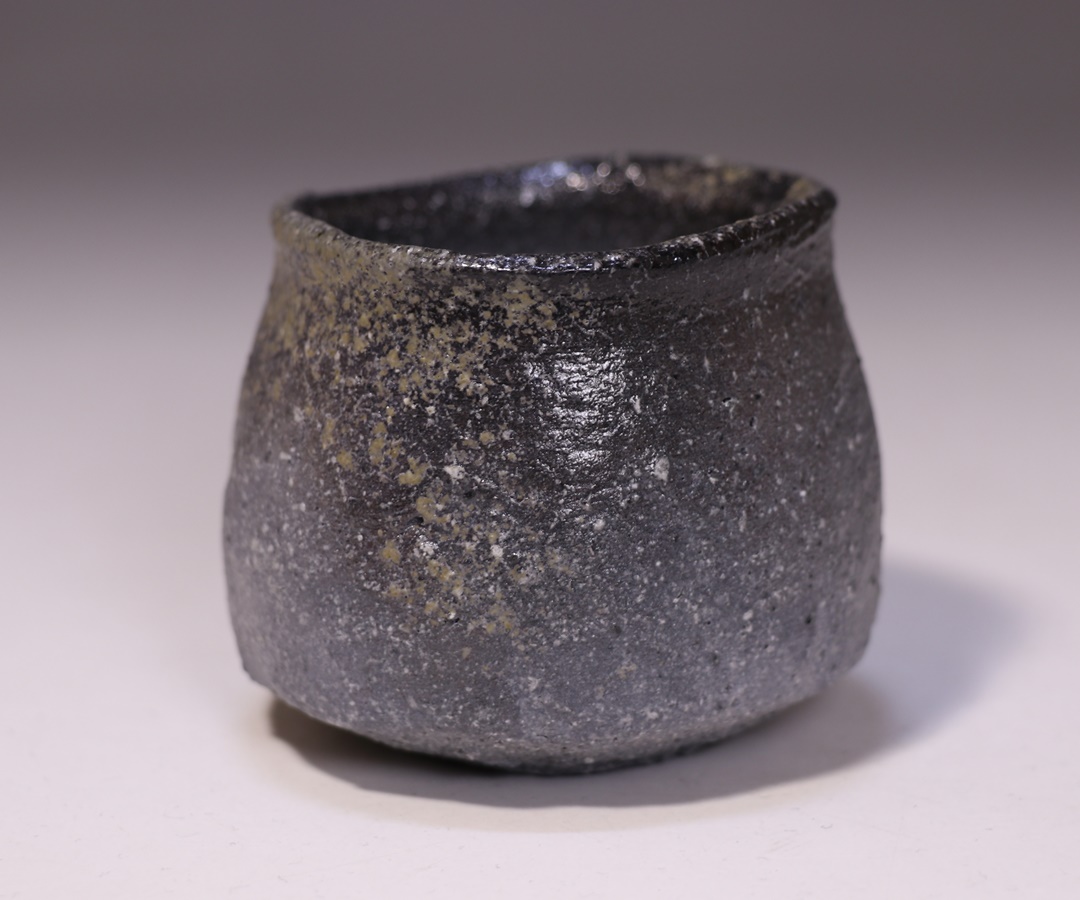
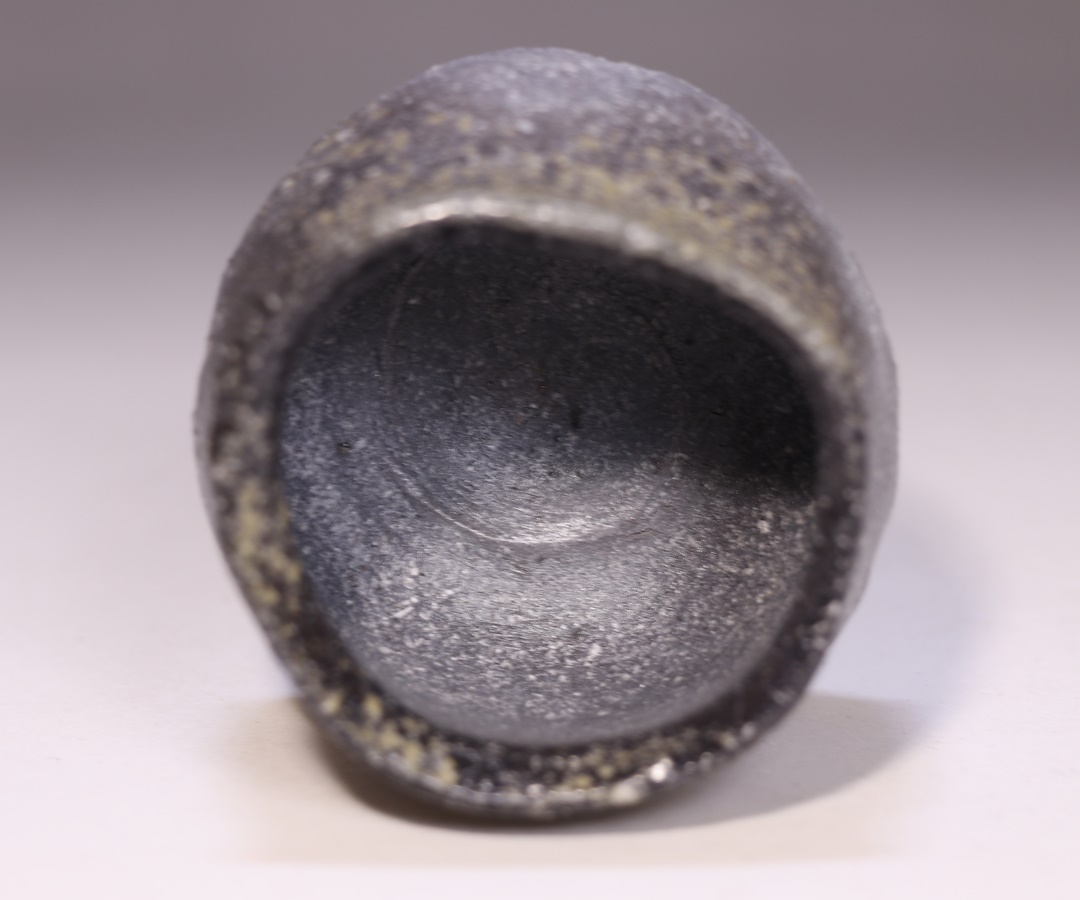
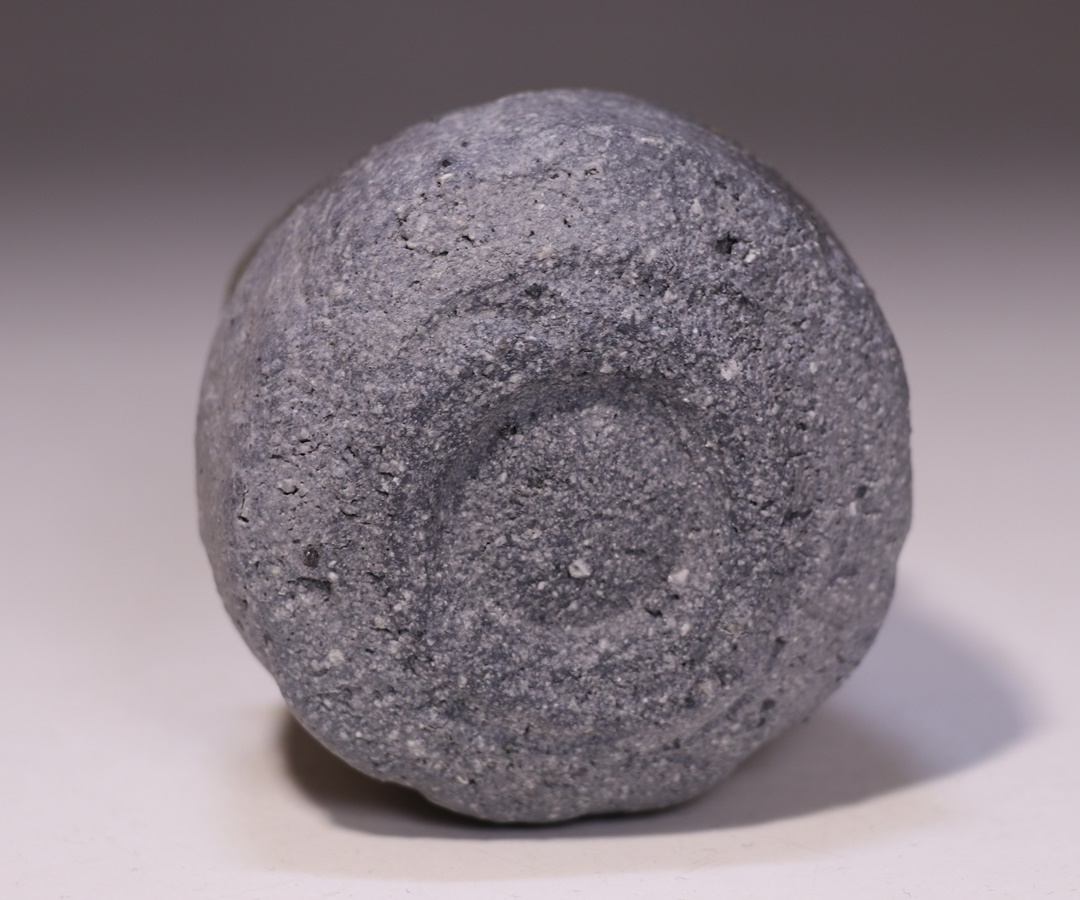
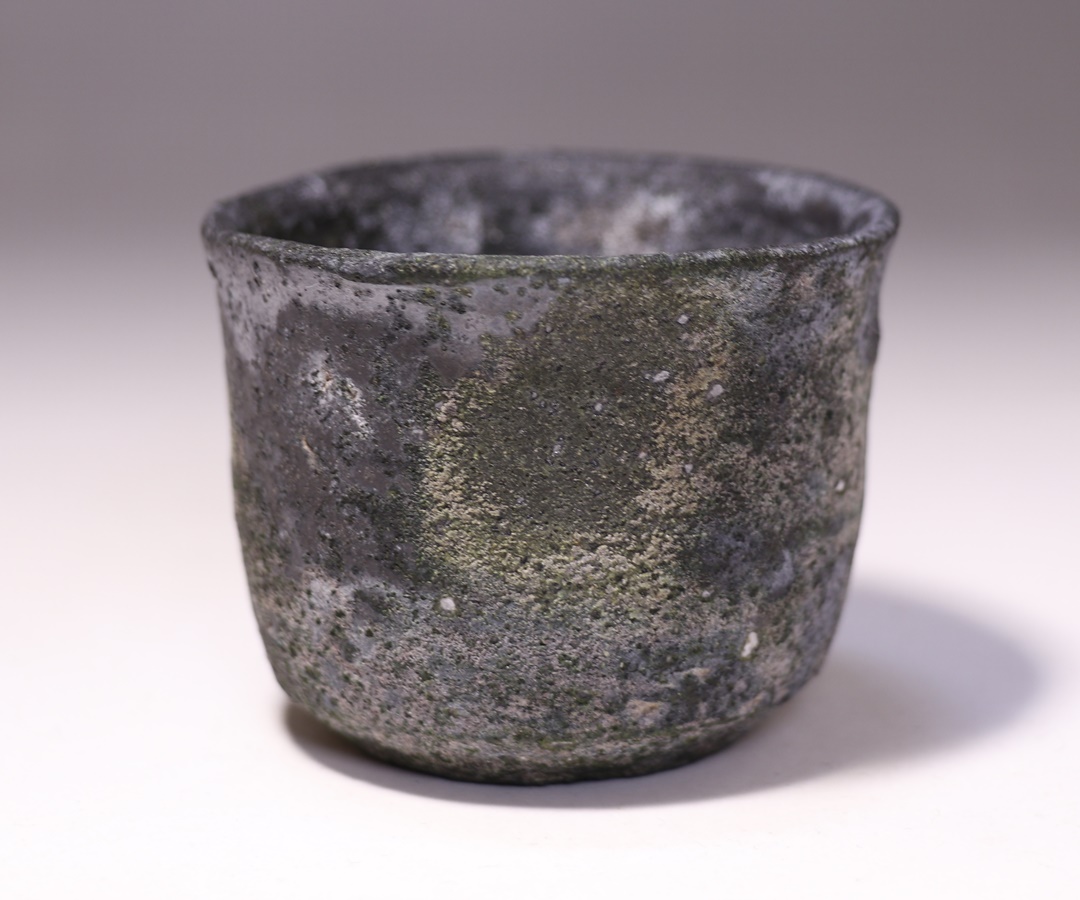
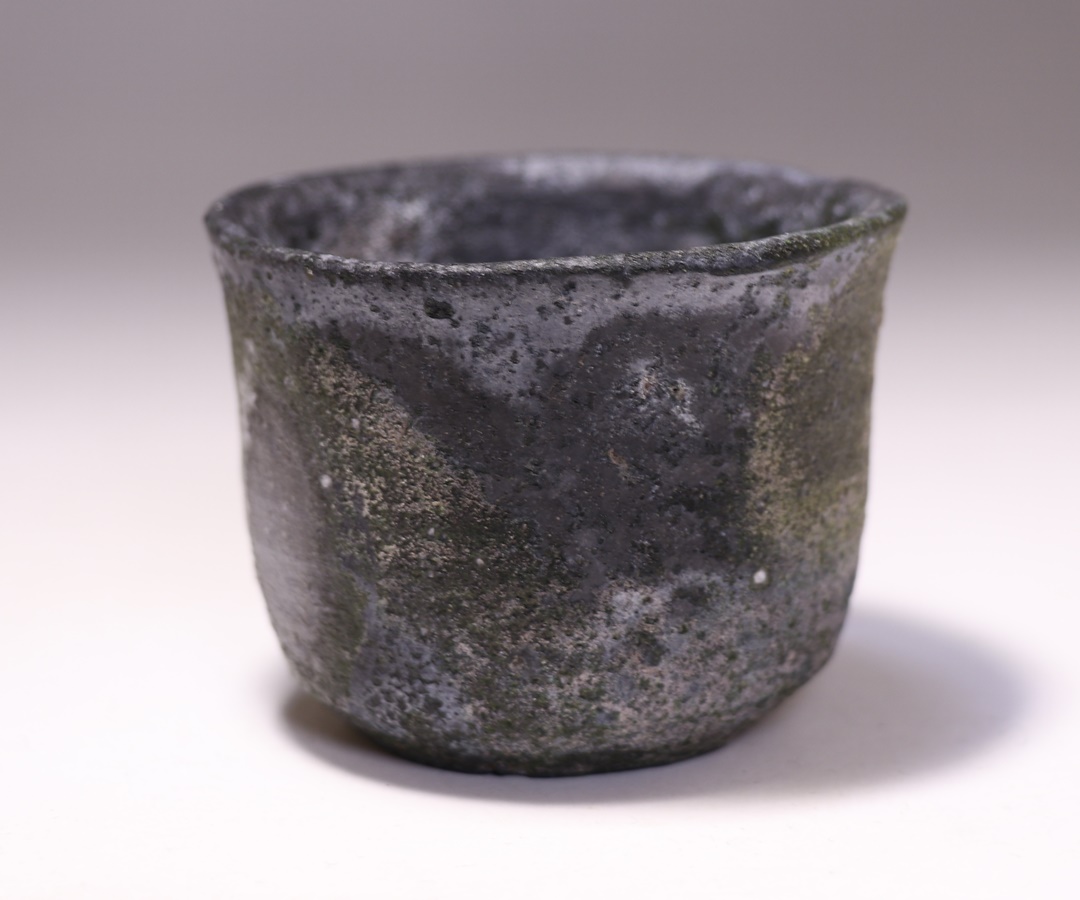
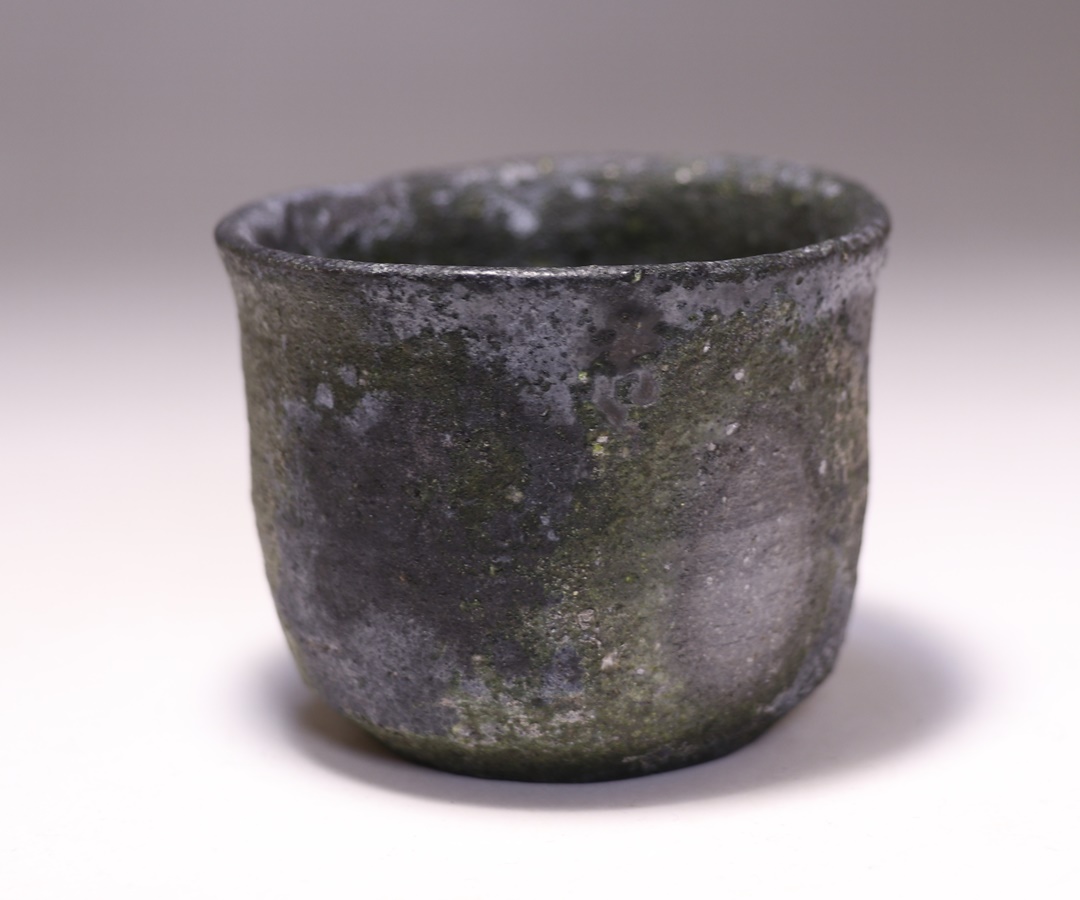
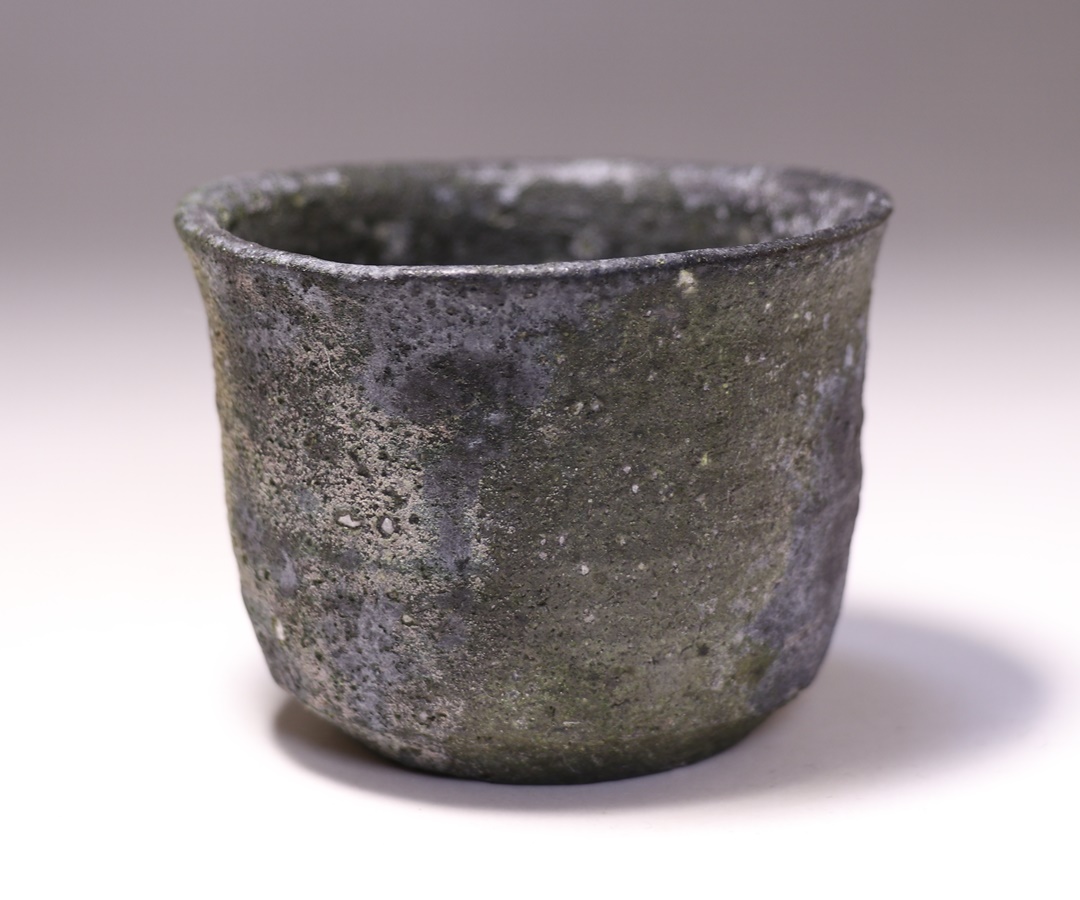
Hiroshi Goseki - Sohen Kuro Guinomi
13,200 YENSold out
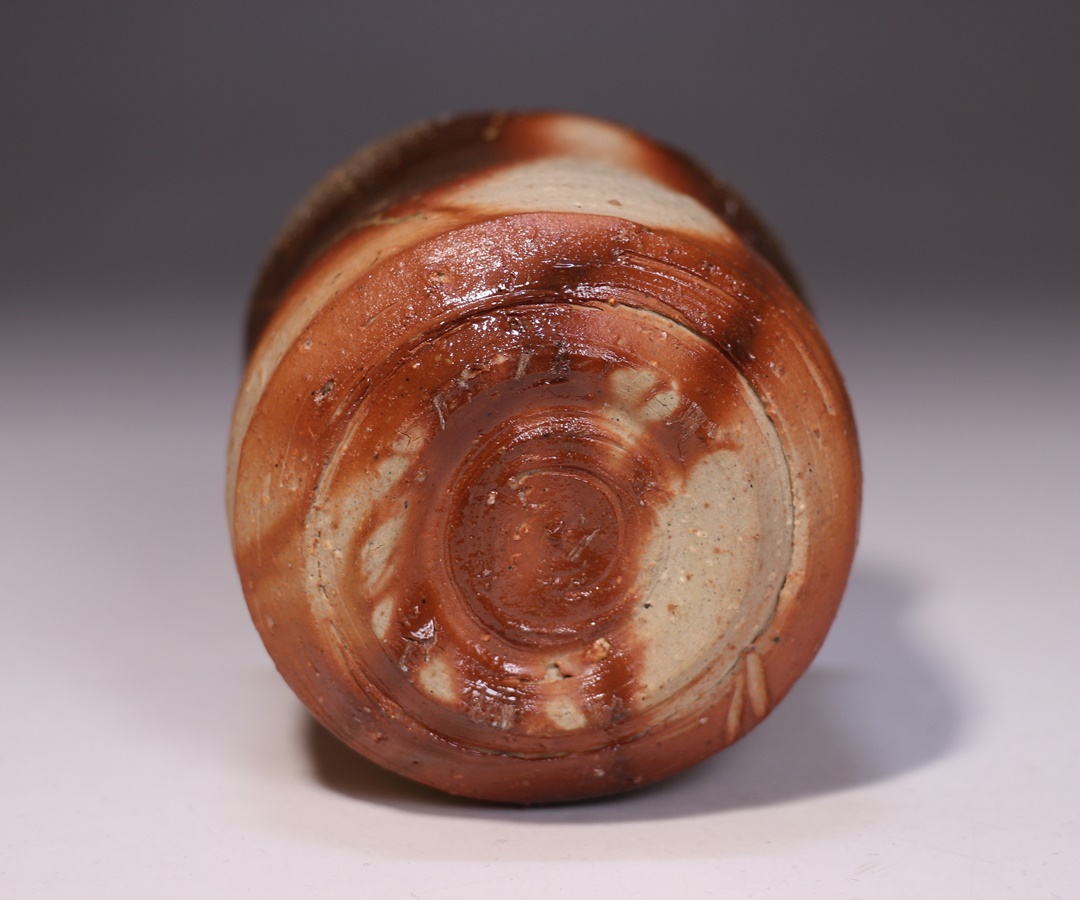
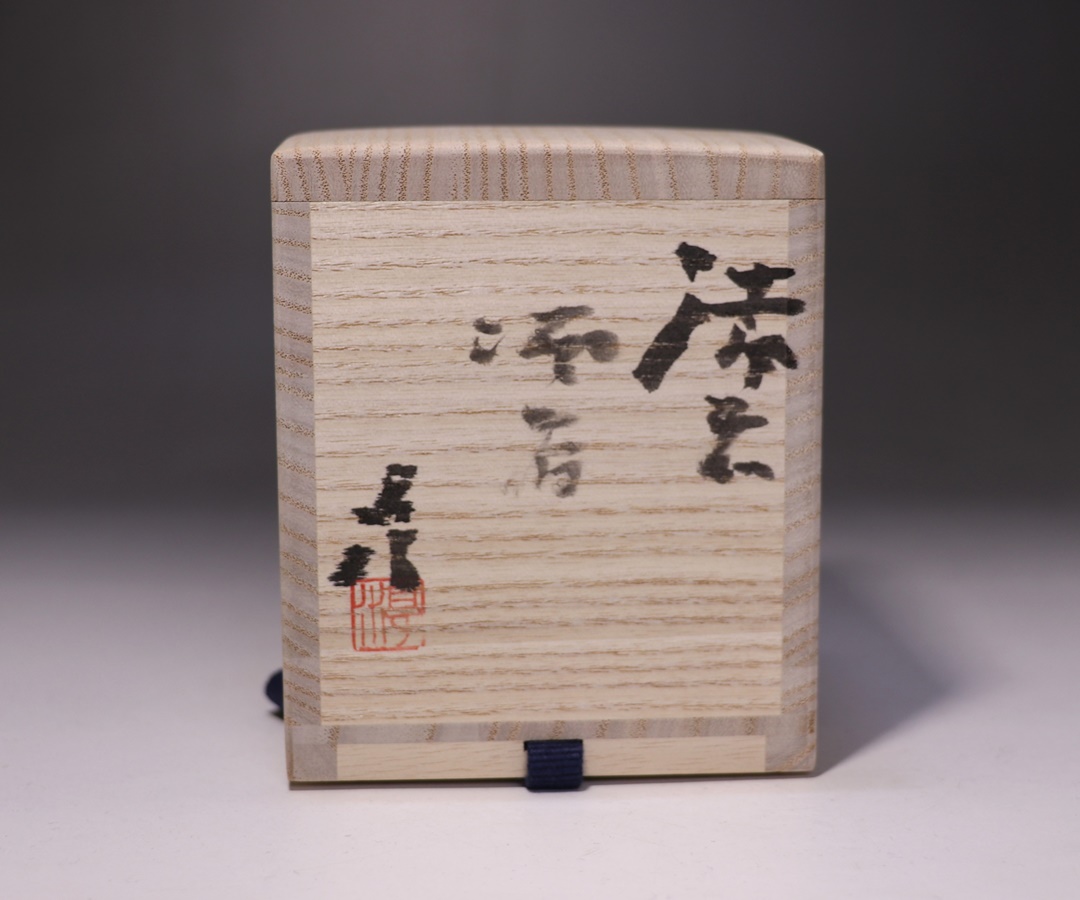
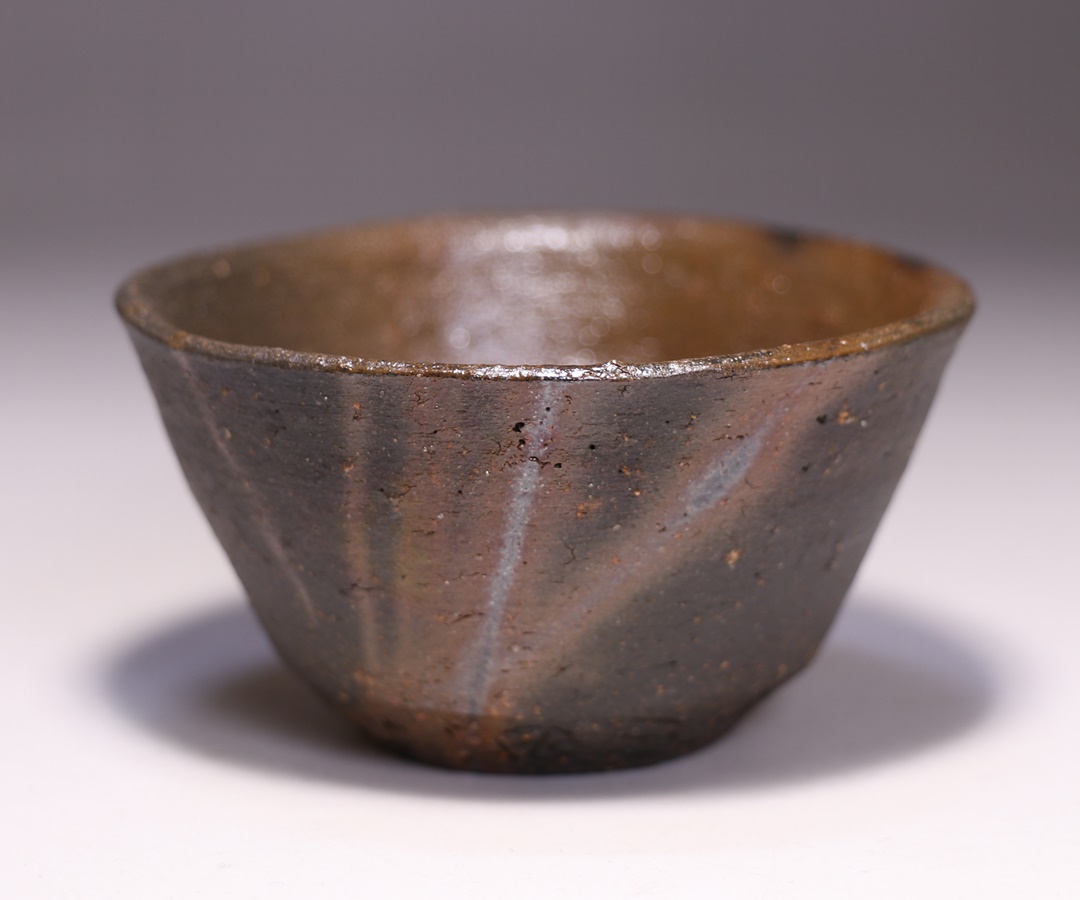
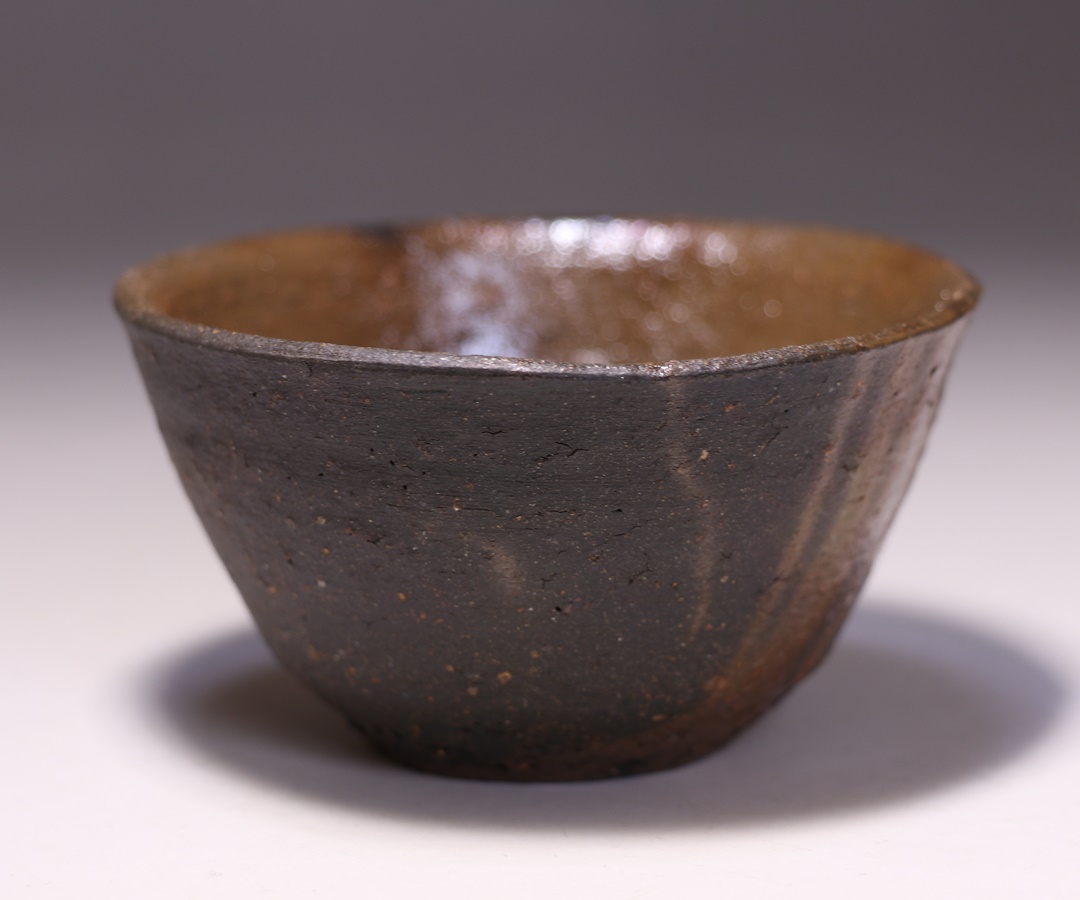
size : W7.3cm×7.2cm×H7.1cmHiroshi Goseki trained under Jun Isezaki, Living National Treasure, and later established his kiln in Ibaraki Prefecture.
This is his Souhen Kuro Guinomi.
At a glance, the use of black slip clearly recalls the Isezaki lineage, and the work bears the title Souhen Kuro because the areas where the natural ash glaze has accumulated turn a vivid cobalt blue.
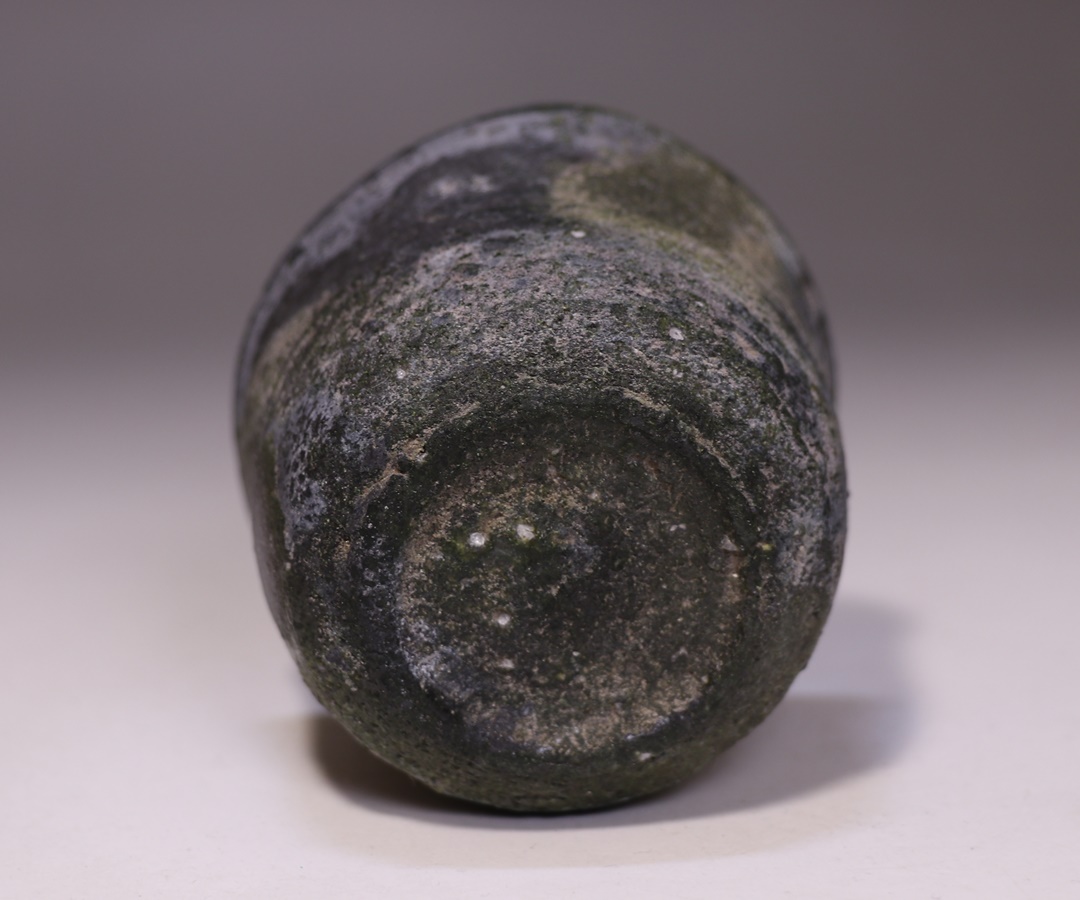
Upon the calm Kigoma, which carries a slightly greenish tone, there appears a rich cobalt-blue Yohen fully worthy of the name Souhen.
For this piece, the basic form was first built up to a certain extent using slab construction, and was then carefully adjusted by hand in the finishing stage.
The result is an exceptional form that conveys the quiet stillness and subtle fluctuation of a Raku tea bowl.
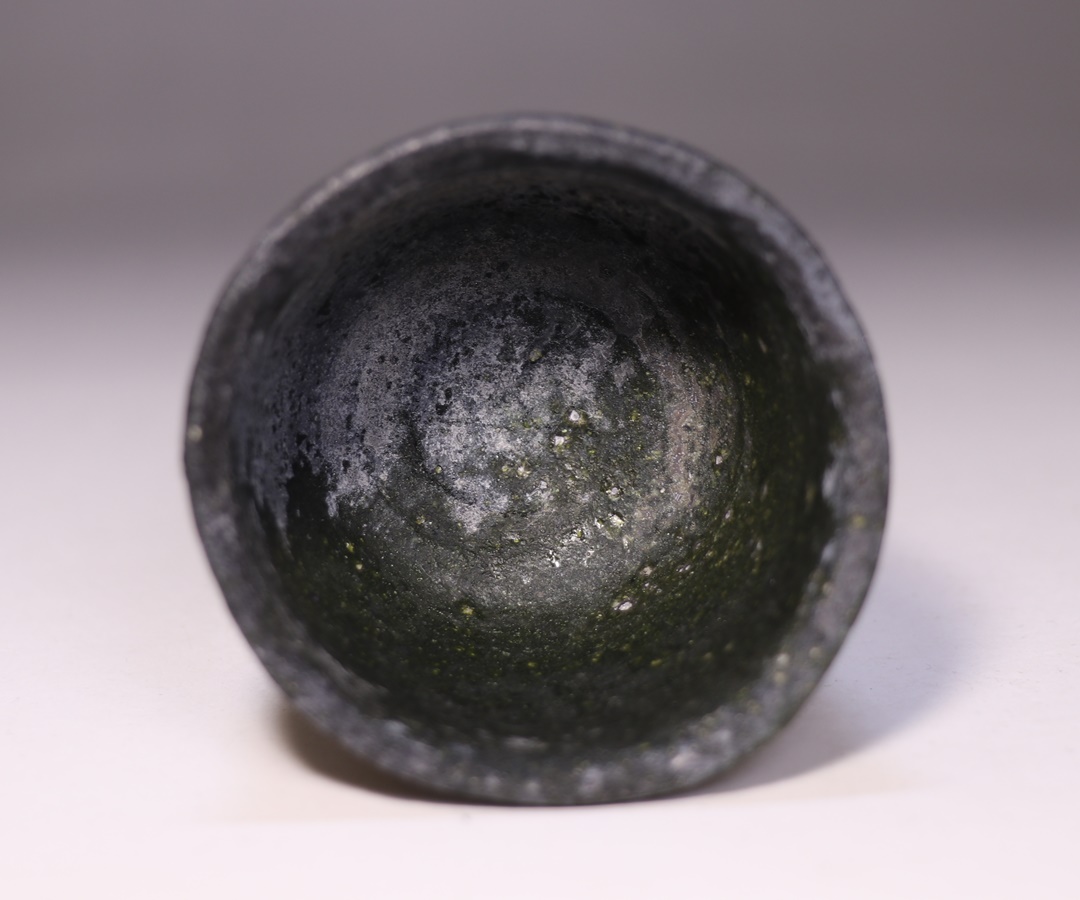
The black interior differs in mood from the surface, taking on the deep tone of finely prepared black ink, and creating a captivating depth that seems to draw the eye inward, perfectly suited to the serene character of the work.
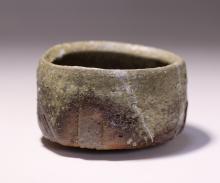


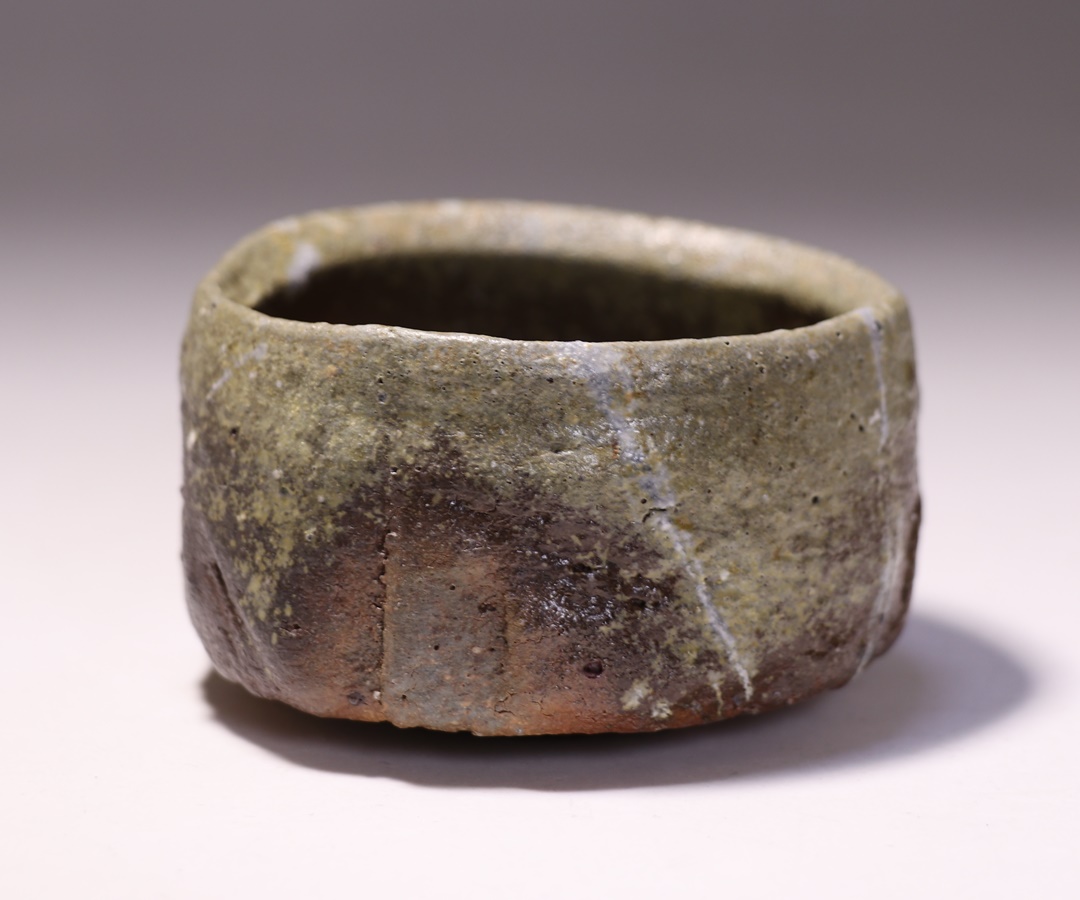
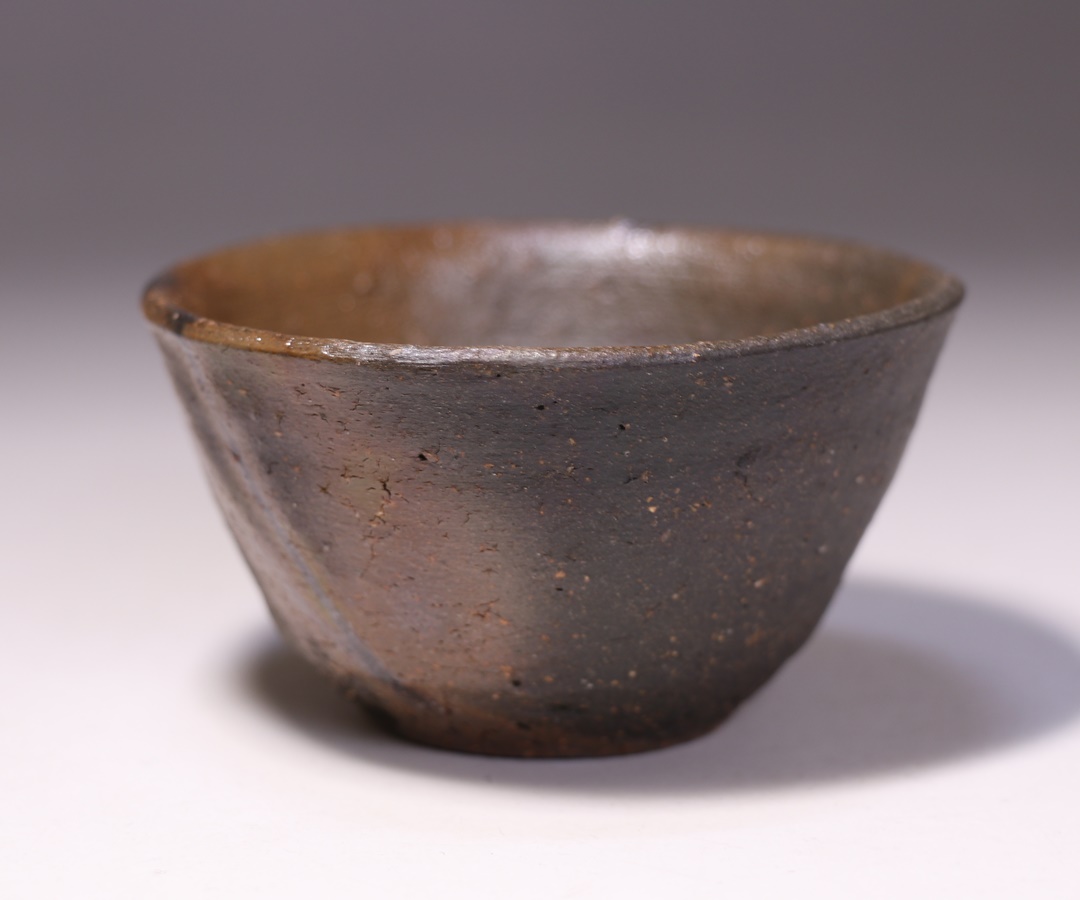
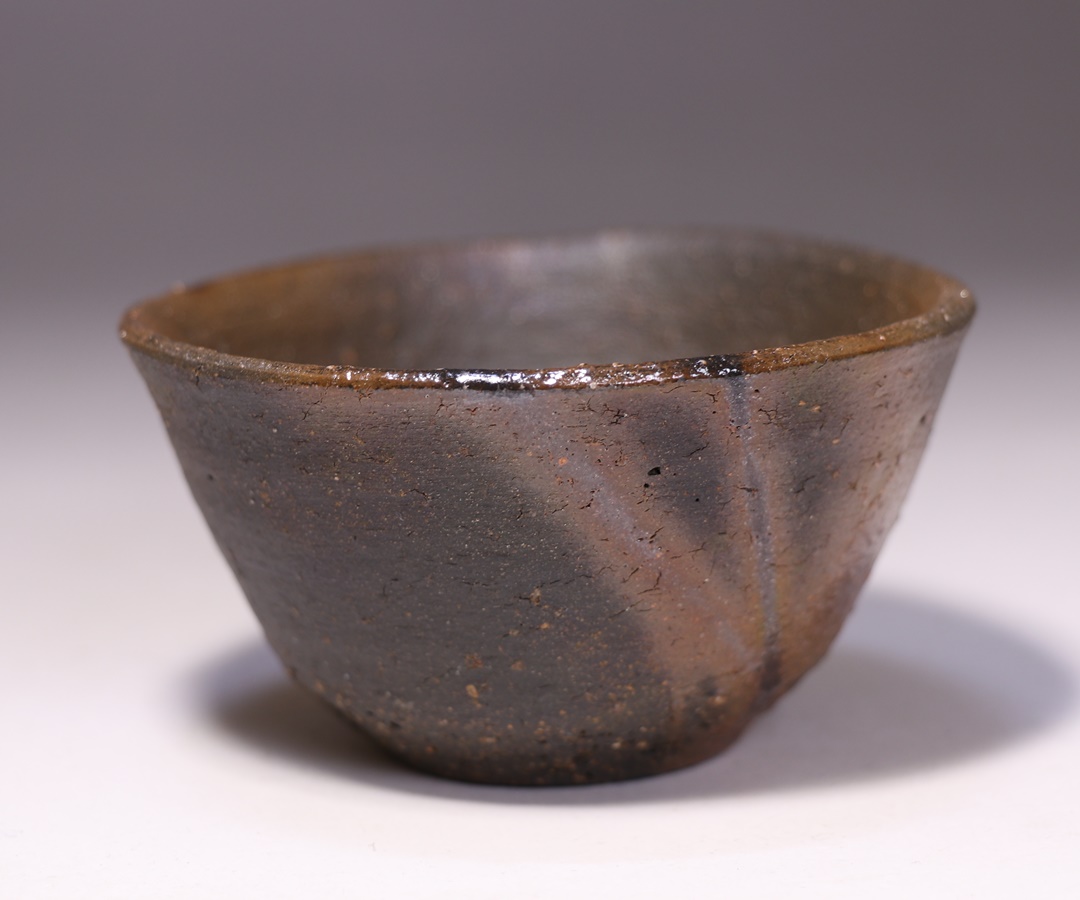
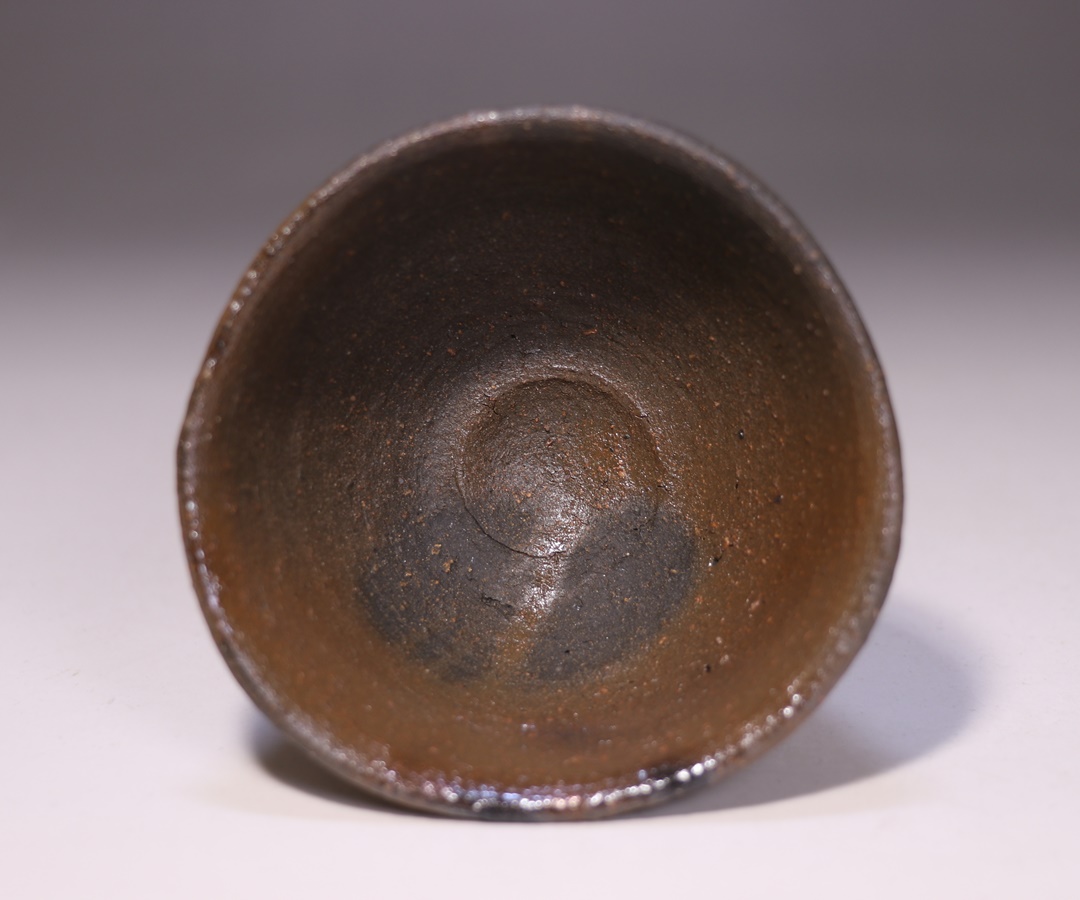
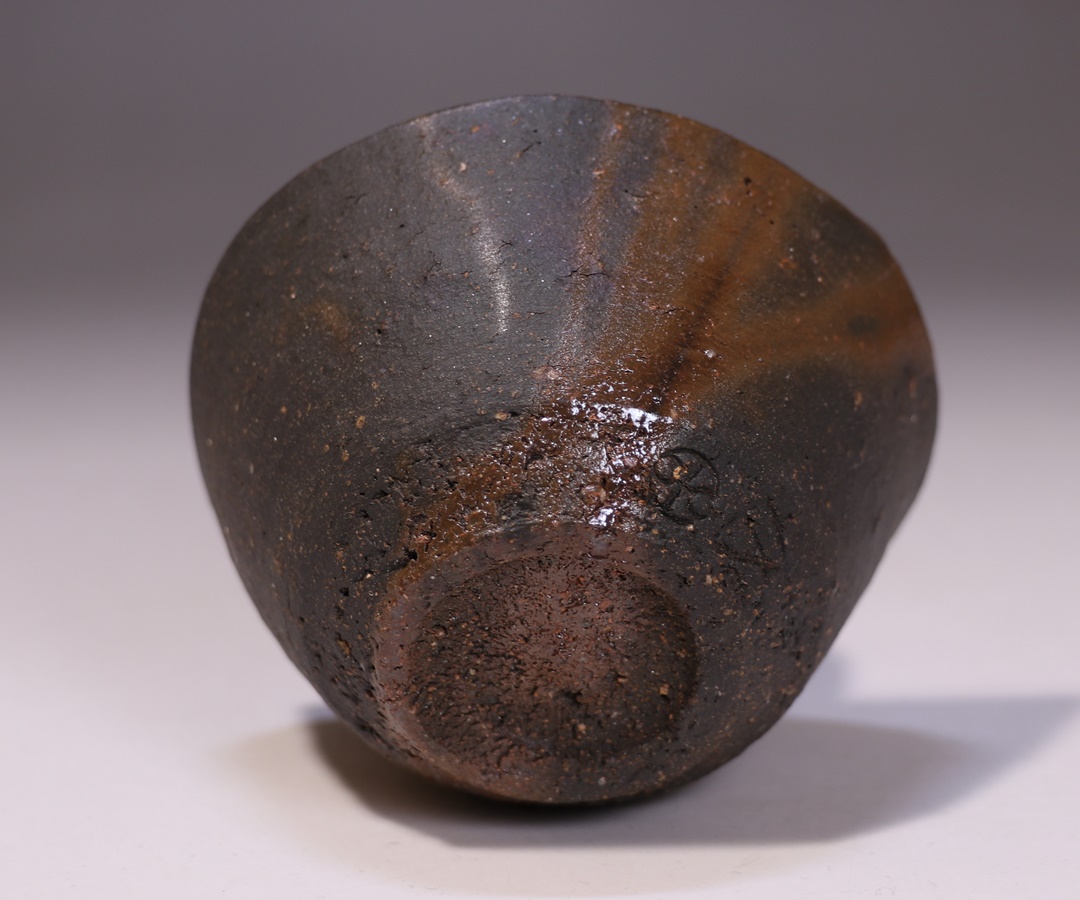
Mitsuhiro Kaneshige - Bizen Shuhai
19,800 YEN
size : W7.6cm×7.5cm×H4.5cmThis is a Bizen Shuhai by Mitsuhiro Kaneshige, who was born into Kaneshige Ritouen, one of the six traditional Bizen kiln families, yet pursues his own path in pottery without being bound by the family name.
This work was created through a combination of electric kiln and wood-firing under a variety of firing conditions, as he sought to approach the texture and presence of the old ceramics he admires.
It is a Shuhai characterized by a rich, substantial surface created through multiple firings, together with deep Kigoma. The clay tone beautifully recreates the distinctive chocolate-like color found in old Bizen ware.
The control of the fire pattern, made possible through multiple firings, is also excellent. Slightly greenish Kigoma and subdued Ito-Goma appear across the surface, creating a highly engaging fire pattern.
The gently triangular body fits very comfortably in the hand, making this Shuhai easy to use despite its powerful appearance.
The carefully considered wheel marks inside, reminiscent of a pool of tea, are beautifully resolved, and the trimmed foot, with its crepe-like wrinkles, is equally impressive.
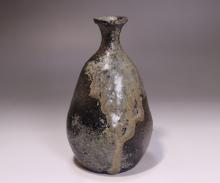


Mitsuhiro Kaneshige - Ao-Bizen Iro-Goma Tokkuri
33,000 YENSold out
size : W9.4cm×9.3cm×H16.2cm 450ccThis is an Ao-Bizen Iro-Goma Tokkuri by Mitsuhiro Kaneshige, who was born into Kaneshige Ritouen, one of the six traditional Bizen kiln families, yet pursues his own path in pottery without being bound by the family name.
This is a highly distinctive work that aims for an Ao-Bizen style firing through intense reduction flames, while also creating a matiere reminiscent of Ibe-te through multiple firings.
From a distance, it almost appears to be an Ibe-te work finished with applied slip, but when held in the hand, one realizes with surprise that its coloration comes not from slip, but from the firing method itself.
Over the blue-toned surface created by the reduction flames, rich flowing Goma has settled, causing the Goma itself to appear white. In this way, it recalls the white Goma seen on old Bizen works from the Muromachi period and the early Edo period.
Furthermore, as suggested by the title Iro-Goma, this work also incorporates colored decoration. Green and pale blue glazes have been applied so that they blend naturally over the Goma, functioning as accent colors that connect the blue-black clay surface and the white Goma.
In spite of its powerful firing, the surface feels remarkably smooth, and the neck is shaped for a very comfortable grip. It is a thoughtfully designed Tokkuri that reflects Mitsuhiro Kaneshige’s wide-ranging study and collection of many different kinds of ceramics.
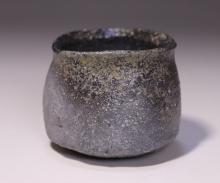


Mitsuhiro Kaneshige - Ao-Bizen Shuhai
19,800 YENSold out
size : W6.8cm×6.5cm×H5.4cmThis is an Ao-Bizen Shuhai by Mitsuhiro Kaneshige, who was born into Kaneshige Ritouen, one of the six traditional Bizen kiln families, yet pursues his own path in pottery without being bound by the family name.
This piece aims for an Ao-Bizen style firing through intense reduction flames, while also retaining a beautiful gradation created by natural ash glaze.
The blue-toned firing caused by the reduction flames has produced a refreshing blue surface across the entire piece, giving it a color reminiscent of Sueki ware, the ancestor of Bizen ware.
In addition, natural ash glaze has settled along the rim almost like lipstick, while the blue surface has reacted with the glaze to create black fire effects. The subtle combination of blue and black gives the piece a particularly fascinating character.
The carefully considered wheel marks inside, reminiscent of a pool of tea, are beautifully resolved, and the trimmed foot, with its crepe-like wrinkles, is equally impressive.
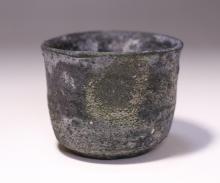


Mitsuhiro Kaneshige - Ao-Bizen Sangiri Shuhai
19,800 YENSold out
size : W6.8cm×6.7cm×H5.2cmThis is an Ao-Bizen Sangiri Shuhai by Mitsuhiro Kaneshige, who was born into Kaneshige Ritouen, one of the six traditional Bizen kiln families, yet pursues his own path in pottery without being bound by the family name.
This is a highly distinctive work that aims for an Ao-Bizen style firing through intense reduction flames, while also enveloping the entire piece in powerful Sangiri.
From a distance, it almost resembles charcoal or coal, and only when held in the hand does one fully realize that it is in fact a ceramic piece. This gives it a mysterious and fascinating fire pattern.
The surface, where the blue-toned firing from the reduction flames overlaps with the intense Sangiri effect, shows a complex mixture of blue, black, and silver, creating a profound fire pattern that changes its expression depending on the viewing angle.
Furthermore, when sake is poured into the piece and moisture soaks into the clay, Bizen-like yellow and green natural ash glaze, hidden beneath the fire pattern, gradually emerges, adding another layer of fascination.
The carefully considered wheel marks inside, reminiscent of a pool of tea, are beautifully resolved, and the trimmed foot, with its crepe-like wrinkles, is equally impressive.
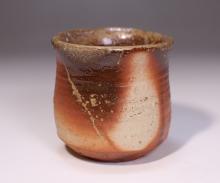


Jun Isezaki - Bizen Guinomi
66,000 YENSold out
size : W7.0cm×6.7cm×H6.8cmThis is a newly fired Bizen Guinomi by Jun Isezaki, a Living National Treasure who continues to lead the world of Bizen ware with a creative spirit that never runs dry.
This is one of his latest works, newly fired in February 2026.
Fired for about ten days in a semi-underground Anagama kiln, this piece allows you to enjoy the dynamic results unique to Anagama firing, including Kase-Goma, Kigoma, Ito-Goma, and Hidasuki.
The surface is centered on the clean white clay tones characteristic of Anagama firing, while natural ash carried on the hot air has transformed in various ways across the piece, creating a simple yet endlessly fascinating fire pattern.
The front is especially attractive, beginning with a beautiful contrast of red and white, and further enriched by amber-toned fire effect and lightning-like Ito-Goma.
Inside the piece as well, the white clay tones and yellow Goma form the main fire pattern, and when filled with sake, the grains of the clay seem almost to bloom into vivid color.
The form of this work has been intentionally kept simple, with decoration reduced to a minimum, and this in turn brings out the beauty of the various fire patterns all the more strongly.
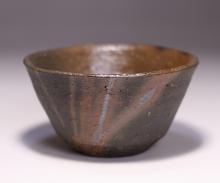


Mitsuhiro Kaneshige - Hidasuki Shuhai
19,800 YENSold out
size : W8.4cm×8.3cm×H4.6cmThis is a Hidasuki Shuhai by Mitsuhiro Kaneshige, who was born into Kaneshige Ritouen, one of the six traditional Bizen kiln families, yet pursues his own path in pottery without being bound by the family name.
This work was created through a combination of electric kiln and wood-firing under a variety of firing conditions, as he sought to approach the texture and presence of the old ceramics he admires.
It is a Shuhai with a matte black surface over which rich crimson Hidasuki has appeared, resulting in a finish that strongly conveys the artist’s deep commitment to firing.
The Hidasuki is especially striking, seeming almost to be sinking into the clay surface itself. Its strong luster and golden highlights create a beautiful contrast with the matte clay skin, making the piece highly captivating.
The carefully considered wheel marks inside, reminiscent of a pool of tea, are beautifully resolved, and the trimmed foot, with its crepe-like wrinkles, is equally impressive.
This is a Hidasuki work in which the bare clay surface can be fully appreciated, unadorned by any natural ash glaze. Precisely for that reason, the form has been thrown with a sense of tension that extends all the way to the rim.
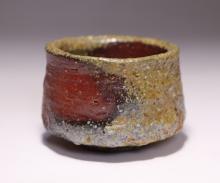


Mitsuhiro Kaneshige - Bizen Shuhai
19,800 YENSold out
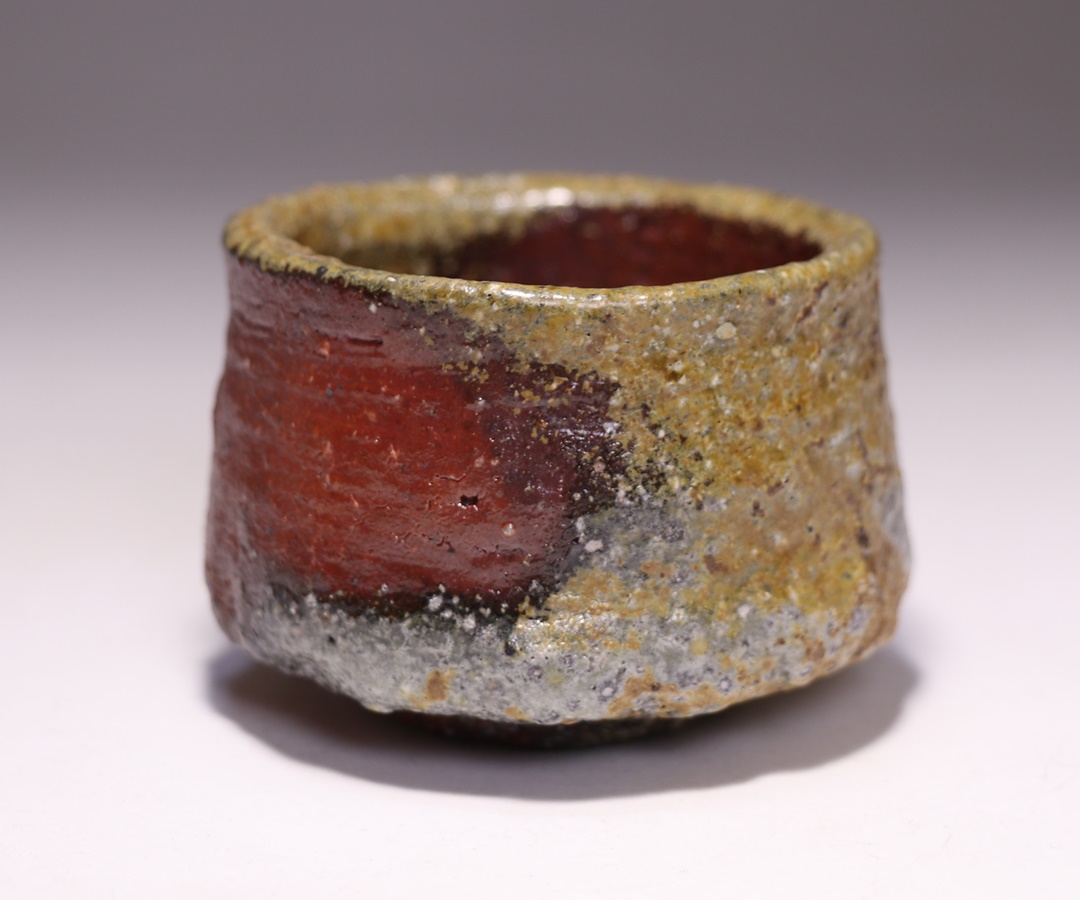
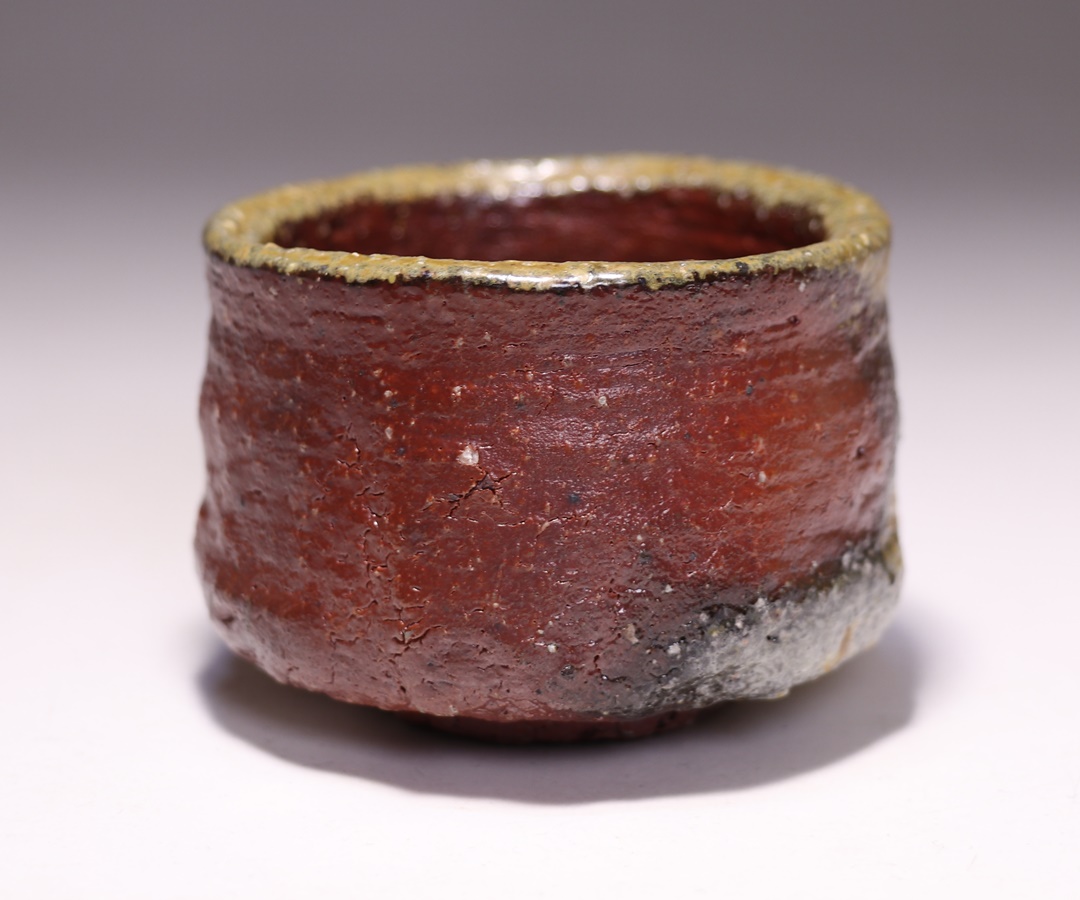
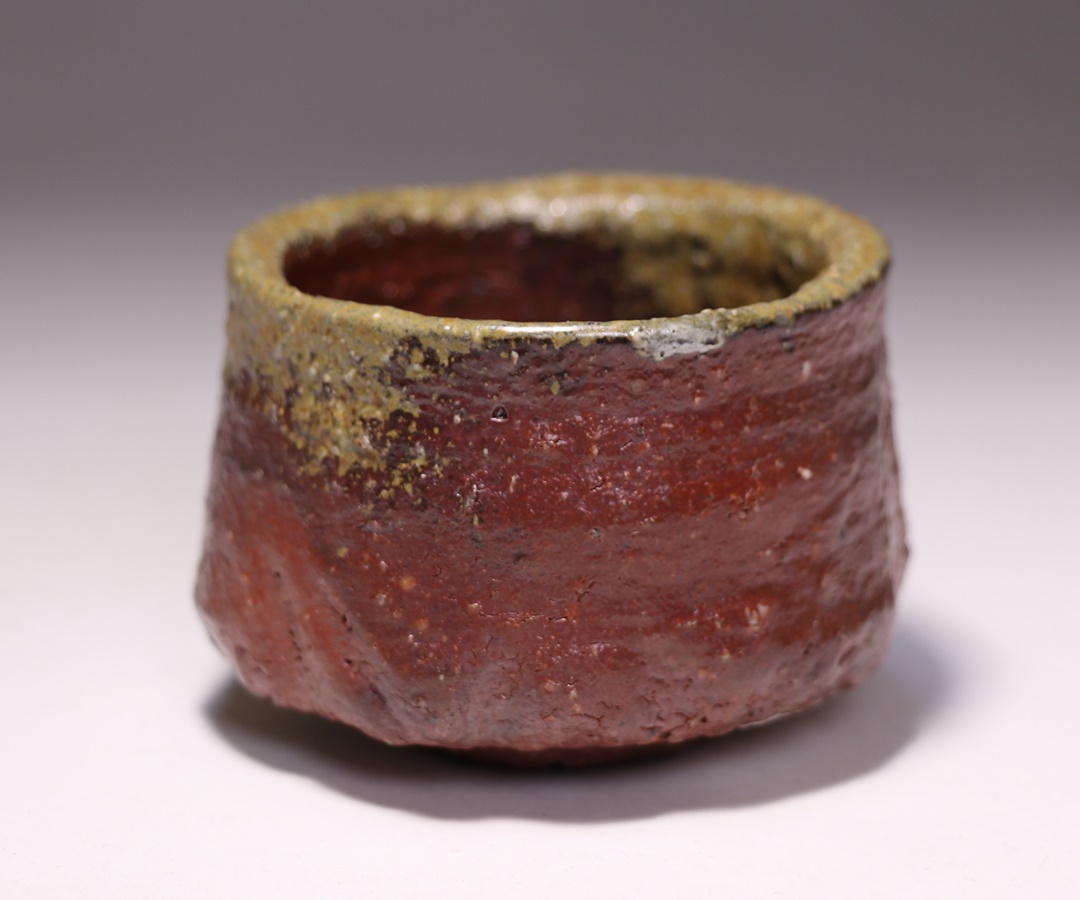
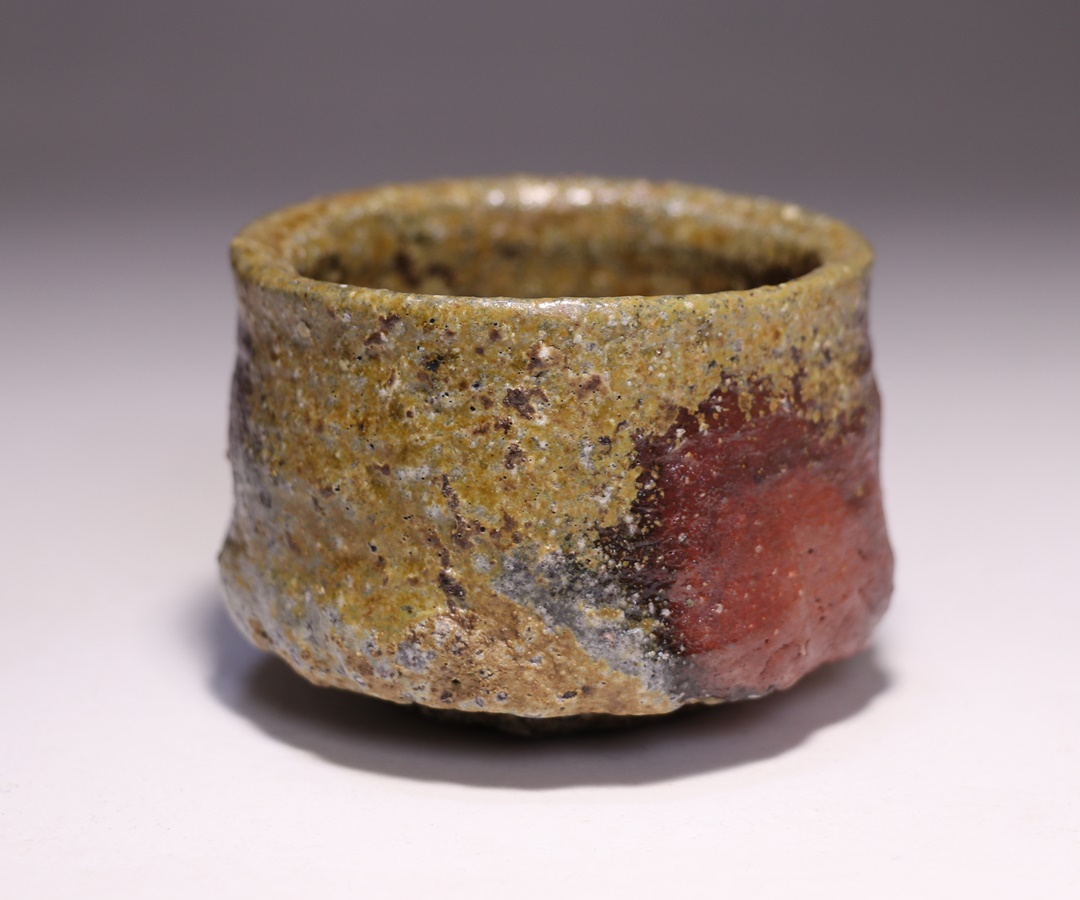
size : W6.8cm×6.7cm×H4.7cmThis is a Bizen Shuhai by Mitsuhiro Kaneshige, who was born into Kaneshige Ritouen, one of the six kiln families of Bizen, yet continues to make pottery guided not by his name, but by the direction of his own curiosity.
Created through a combination of electric kiln and wood firing under a variety of firing conditions, this work is an attempt to approach the matière found in the old ceramics he admires.
This Bizen Shuhai is distinguished by the substantial surface texture created through repeated firing, as well as its rich Kigoma and Sangiri, and it beautifully recreates the firmly fired red clay surface that differs from the soft-fired character of old Bizen.
The control of the fire pattern, only possible through repeated firing, is also masterful. The mustard-colored Goma seems to flow from the front toward the right rear, while the Sangiri is skillfully arranged so that it overlaps the lower body.
In addition, the potter’s wheel marks in the interior, reminiscent of a pool of tea, and the foot trimming that leaves traces like crepe wrinkles are both perfectly resolved.
However, when such carefully considered fire patterns come together so beautifully, the result can sometimes feel a little cramped. In this piece, that impression is skillfully balanced by its slightly smaller size compared to many contemporary sake vessels.
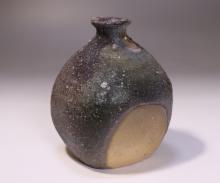


Makoto Kaneshige - Bizen Henko Tokkuri
220,000 YENSold out
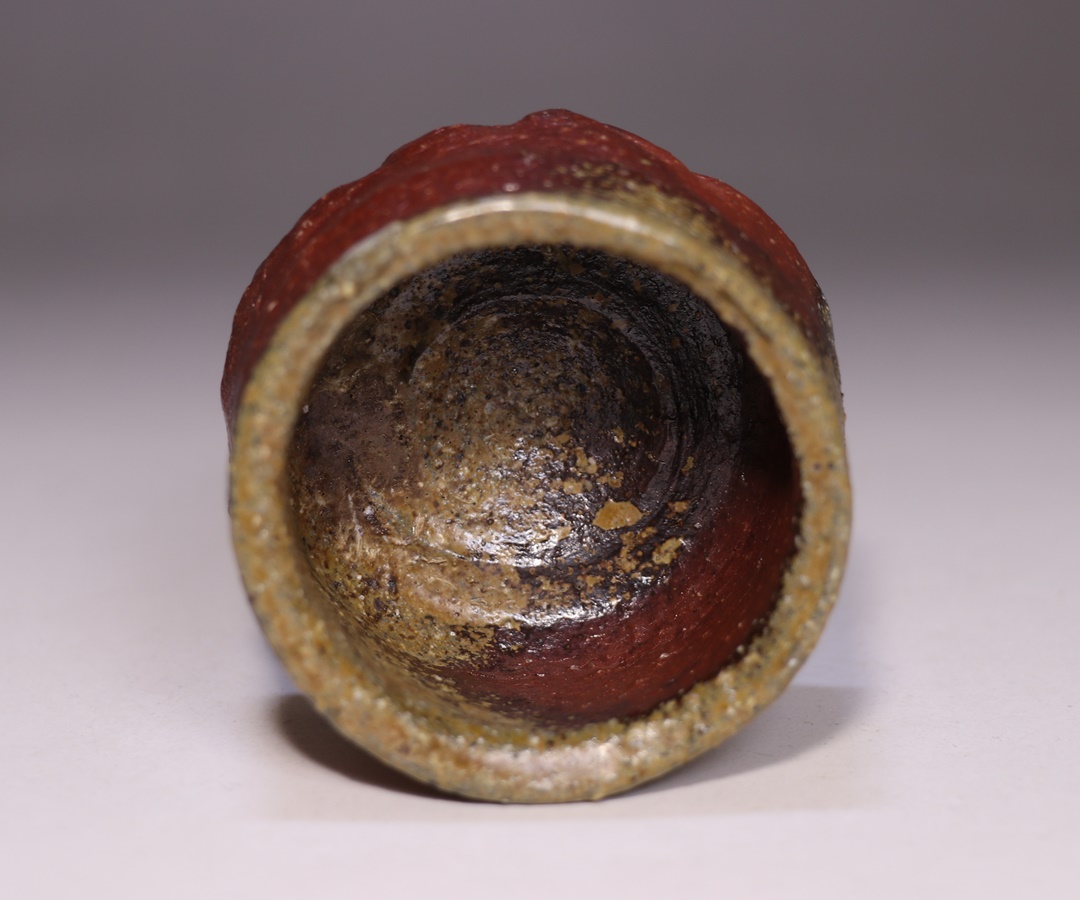
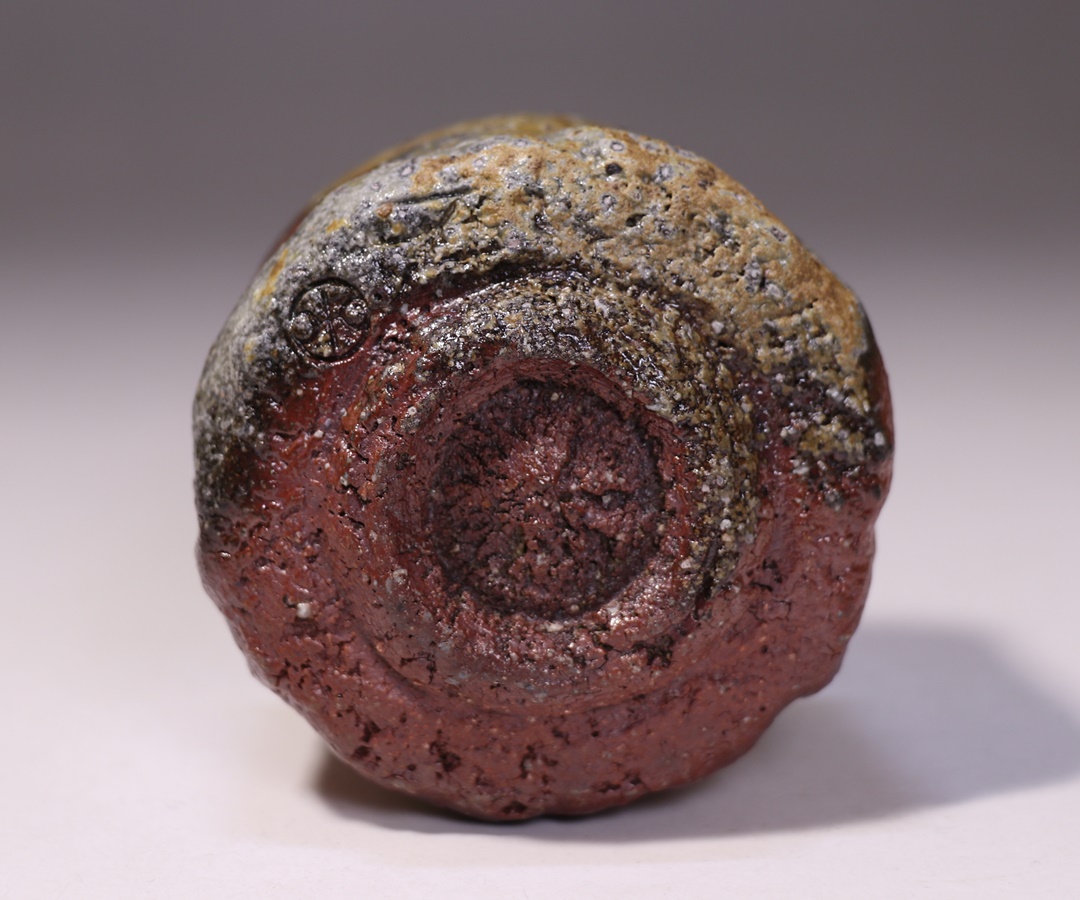
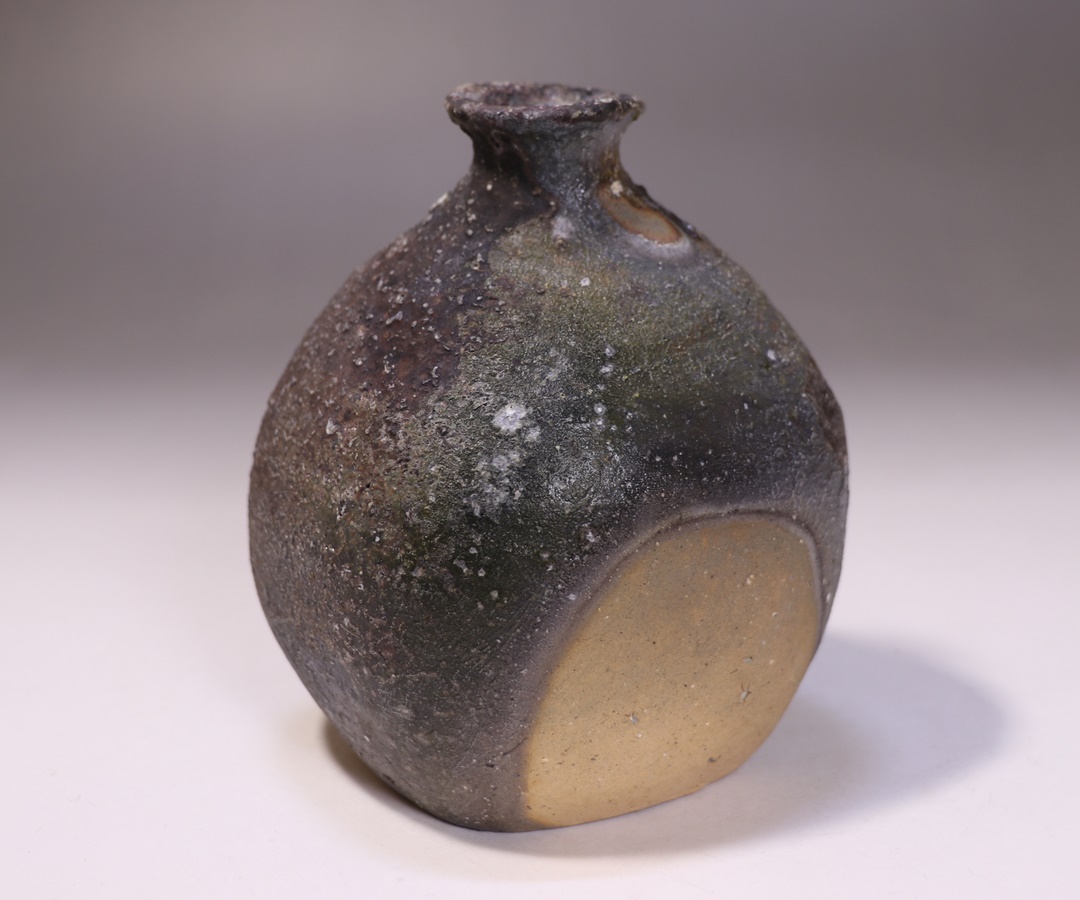
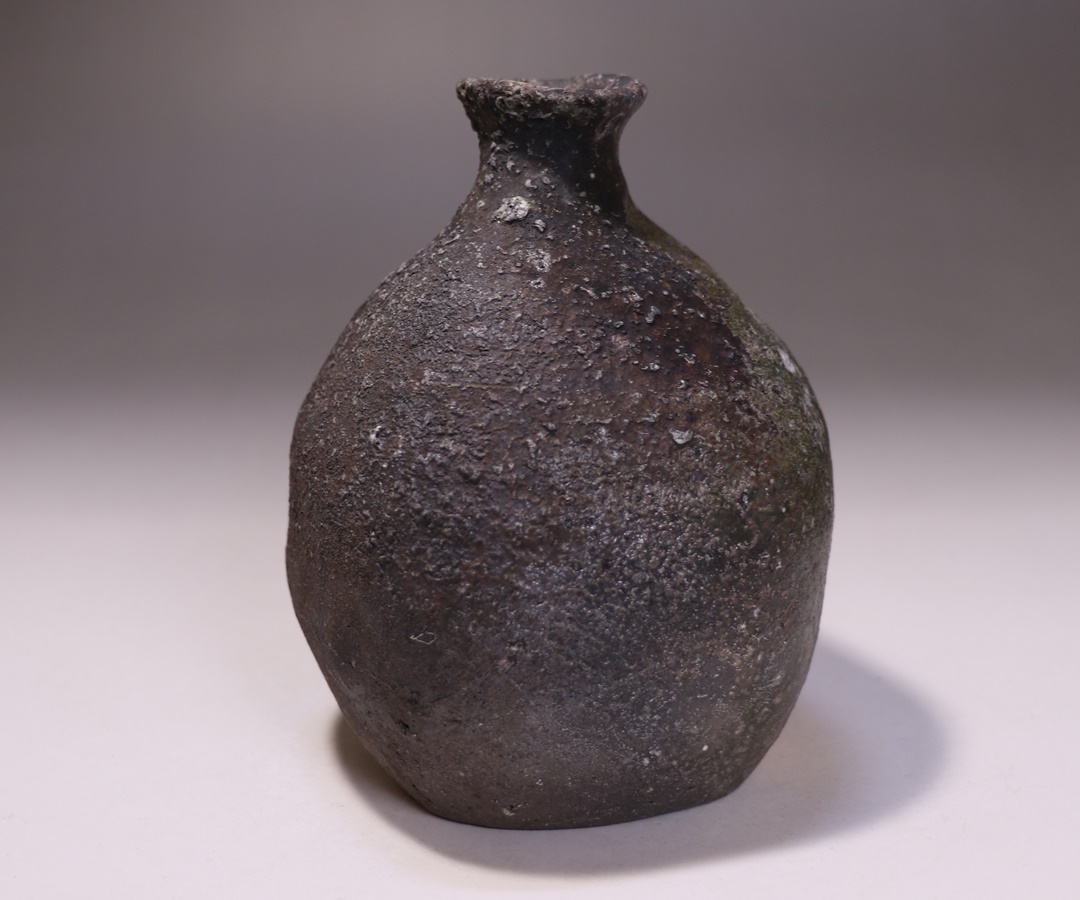
size : W10.5cm×9.7cm×H12.0cm 400ccThis is a newly fired Bizen Henko Tokkuri by Makoto Kaneshige, who inherited the Maruyama kiln as the eldest son of Sozan Kaneshige and captivates many with the harmony of delicate, elegant clay texture and powerful form.
It is one of his latest works, newly fired at the end of 2025.
When pursuing dramatic fire pattern, Makoto Kaneshige is known for firing his works to the utmost, and this piece displays the heavy and intense effect that only he can achieve, as though the clay itself had been fired to its very limit.
The reverse seems to capture the very moment when the earth is being overtaken by molten lava, and the softly gleaming mass of ash holds both a beauty that draws the viewer in and a sense of danger.
Alongside these black-silver masses of ash, brilliant golden highlights appear in the shaded areas, and together with the tones of the fire pattern and exposed clay, they create a scene reminiscent of a radiant full moon.
Although this is a powerfully fired work that seems almost to test the limits of the clay, it is surprising how pleasant the surface feels in the hand. This comes from the high quality of the clay itself and the careful, time-consuming finishing that is characteristic of the Kaneshige lineage.
At the neck, one finds a small exposed mark that resembles a necklace, as if left there by the playful hand of the kiln god, forming a fascinating combination with the moon-like exposed area on the body.
This is a commanding Henko Tokkuri that beautifully balances ease of handling with an intriguing presence, and it would not be an exaggeration to say that such a masterful work could only be achieved by Makoto Kaneshige, who has truly devoted himself to the art of sake vessels.
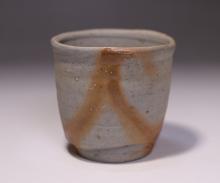


Makoto Kaneshige - Bizen Guinomi Highest quality clay
88,000 YENSold out
size : W6.7cm×6.6cm×H6.4cmMakoto Kaneshige, the eldest son of Sozan Kaneshige and heir to Maruyama-gama, continues to captivate many admirers through the harmony of refined, graceful clay texture and powerful form.
This is a newly fired Bizen Hidasuki Guinomi by Makoto Kaneshige, inscribed on the box as Saijyo Tsuchi Nite (“Made with the Highest quality clay”).
It is his latest work, freshly fired at the end of 2025.
As indicated by the box inscription Saijyo Tsuchi Nite, this piece was made from the finest possible clay, and was high-fired at Maruyama-gama to achieve a softly moist and supple surface.
About forty years ago, Sozan Kaneshige and Makoto Kaneshige discovered an exceptional batch of the highest-quality clay.
After preparing it entirely by hand, without the use of machines, they left it resting in storage for many years.
It was clay so precious that Makoto Kaneshige is said to have remarked that it would be too wasteful to die without ever using it.
In striking contrast to the somewhat coarse clay surface often seen in his Hidasuki works until now, this piece has an extraordinarily fine texture, so refined that one might almost think it had been passed through an extremely fine sieve.
Sozan Kaneshige, the previous generation, generally chose slightly coarser clay for his Hidasuki works, and for that reason as well, this Guinomi can truly be described as luxuriously exceptional beyond compare.
The form is restrained to the essentials of wheel-throwing, avoiding excessive ornament and placing the beauty of the clay itself at the center of expression.
As if to prove the excellence of the clay, the surface displays a vivid yet delicate Hidasuki pattern, as though the straw had only just gently brushed against it, while the foot, revealed when the piece is turned over, asserts an overwhelming presence all on its own.
It is nothing less than masterful.
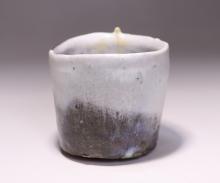


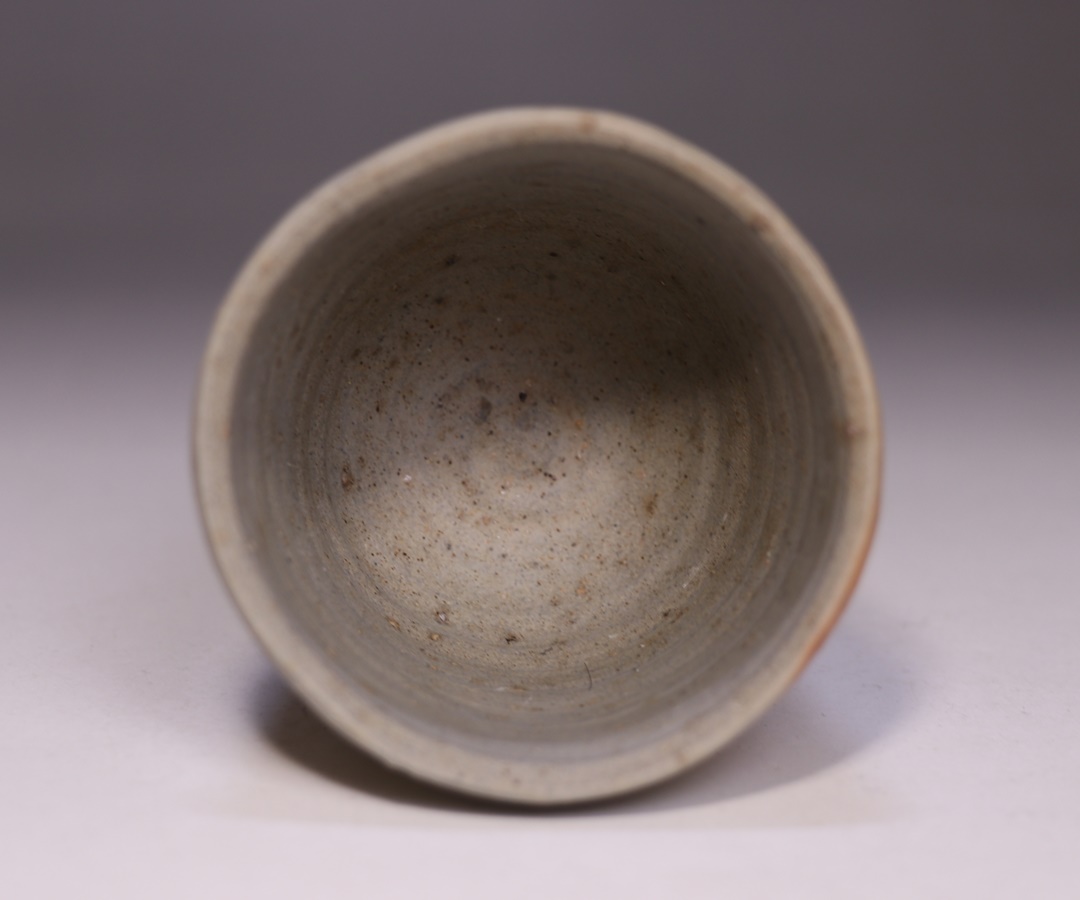
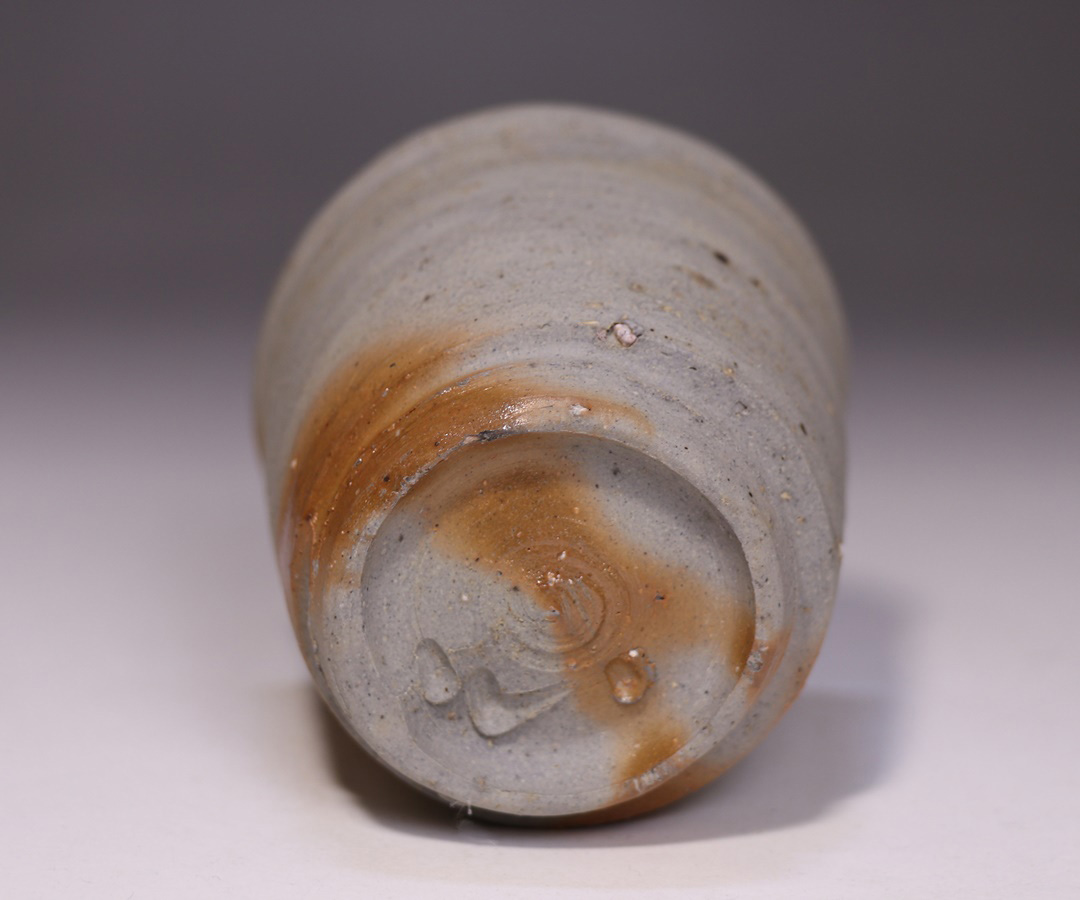
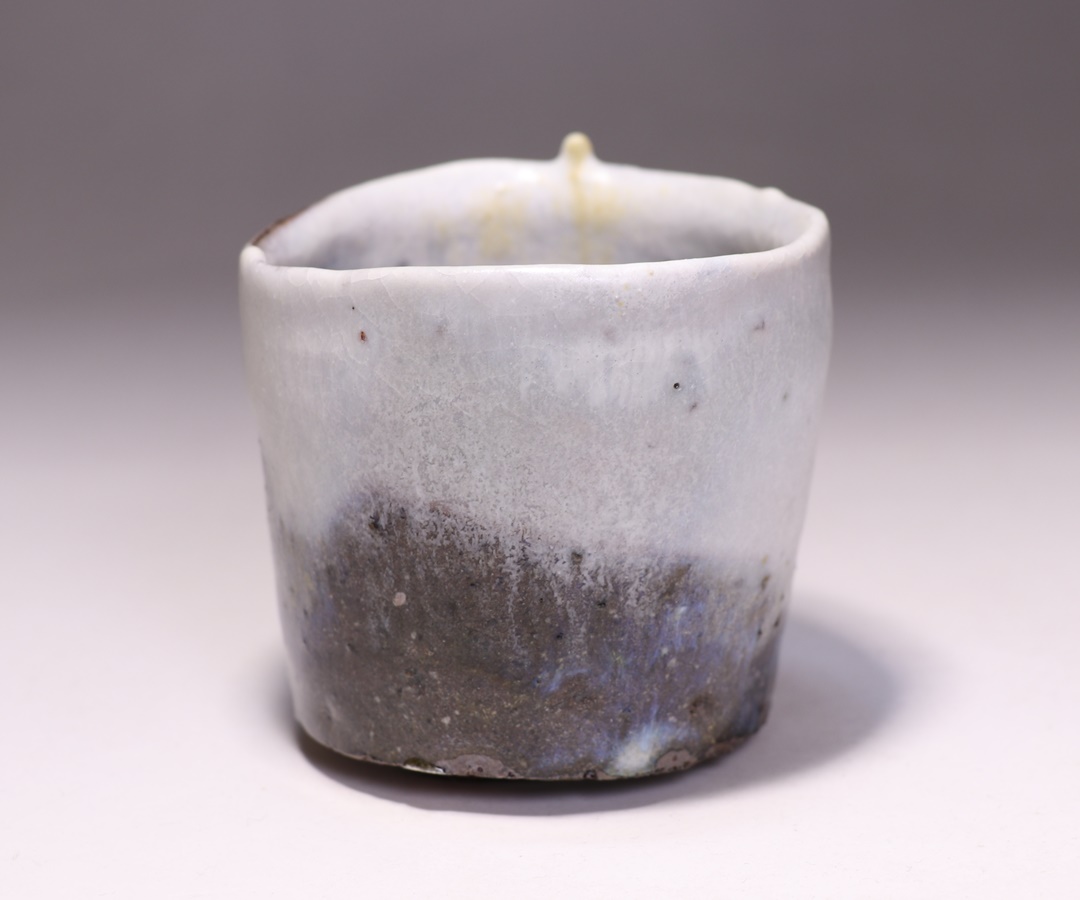
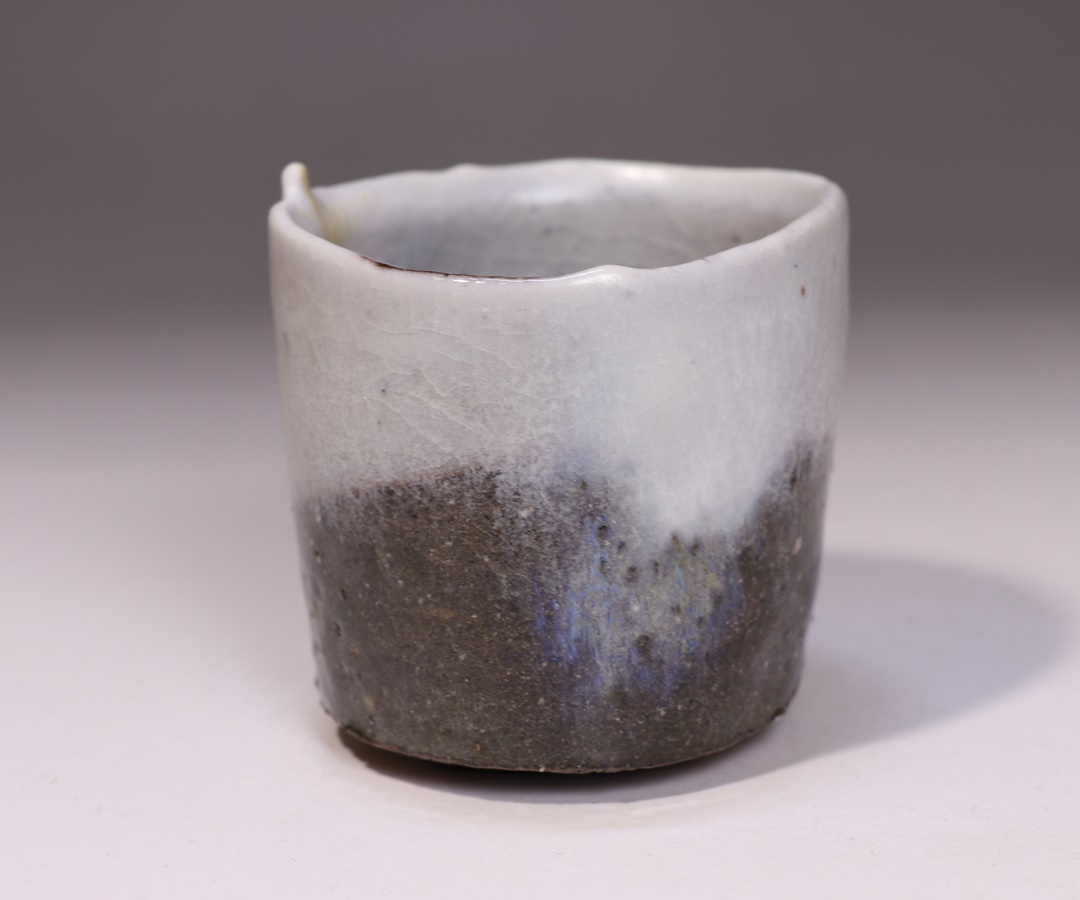
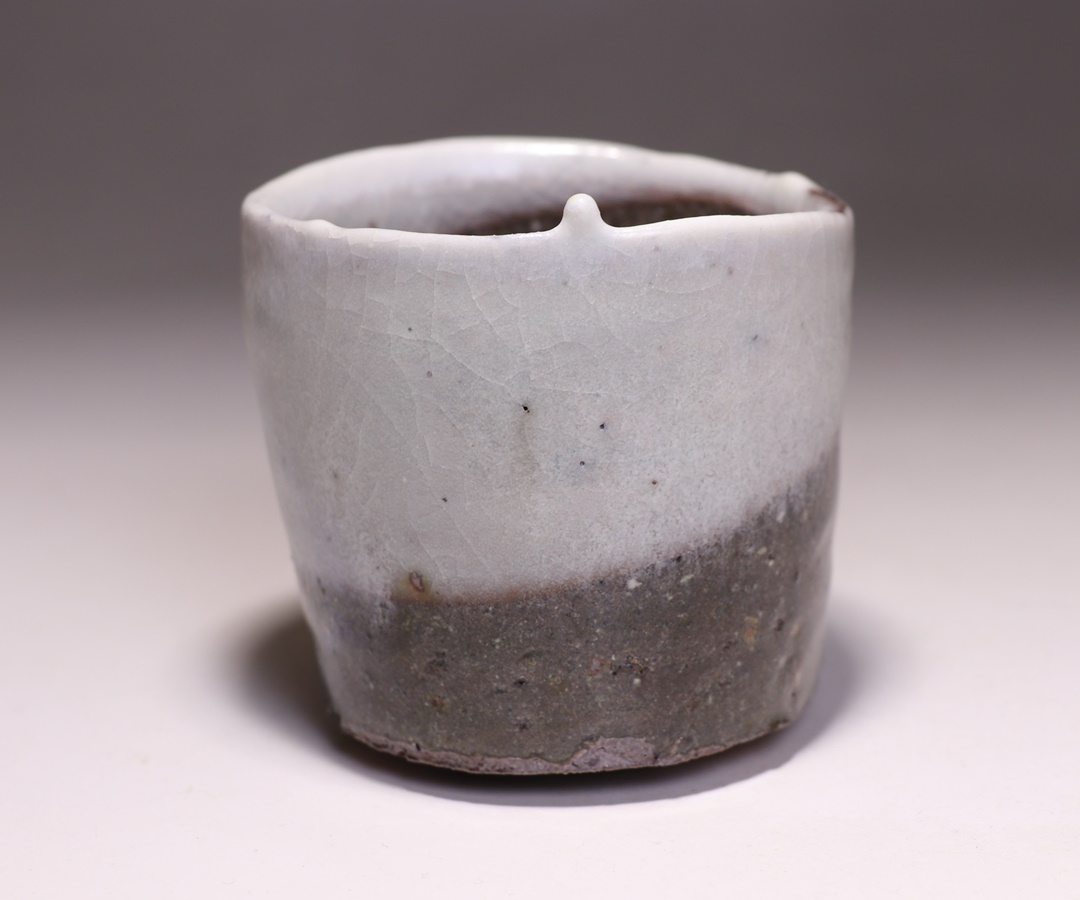
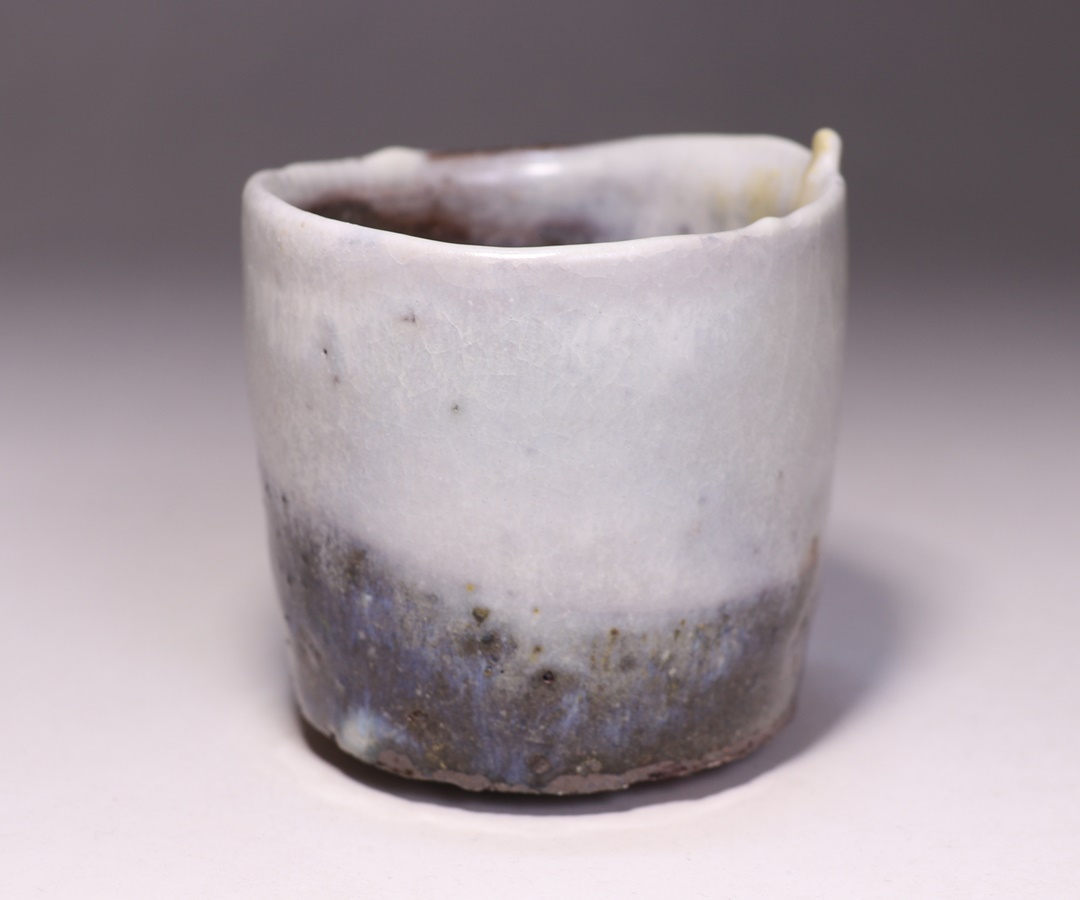
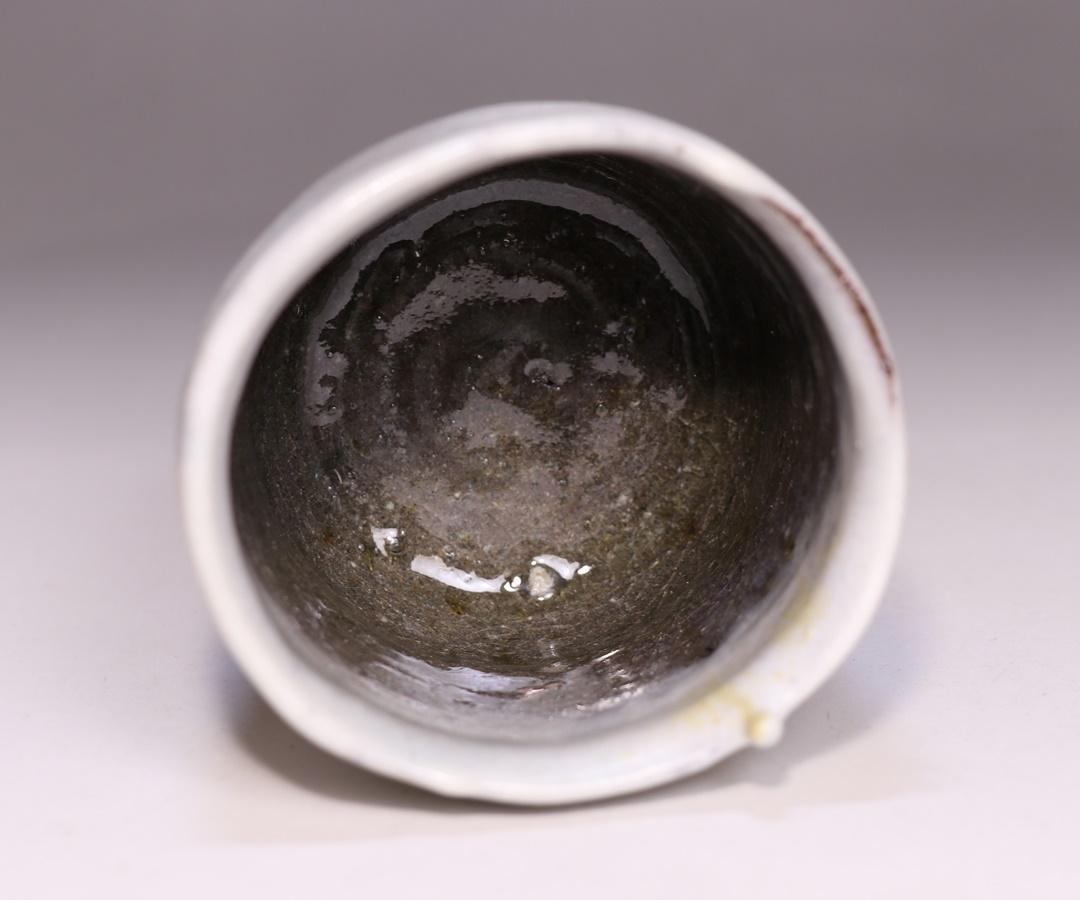
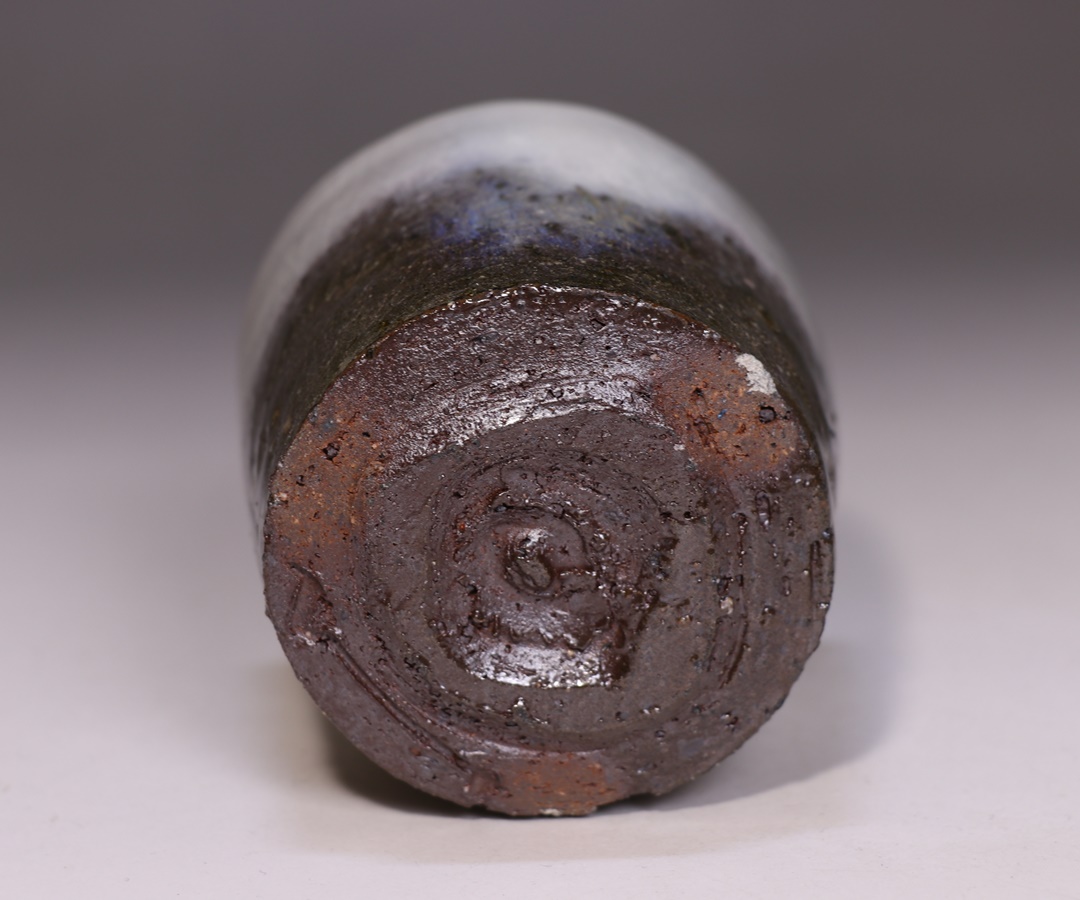
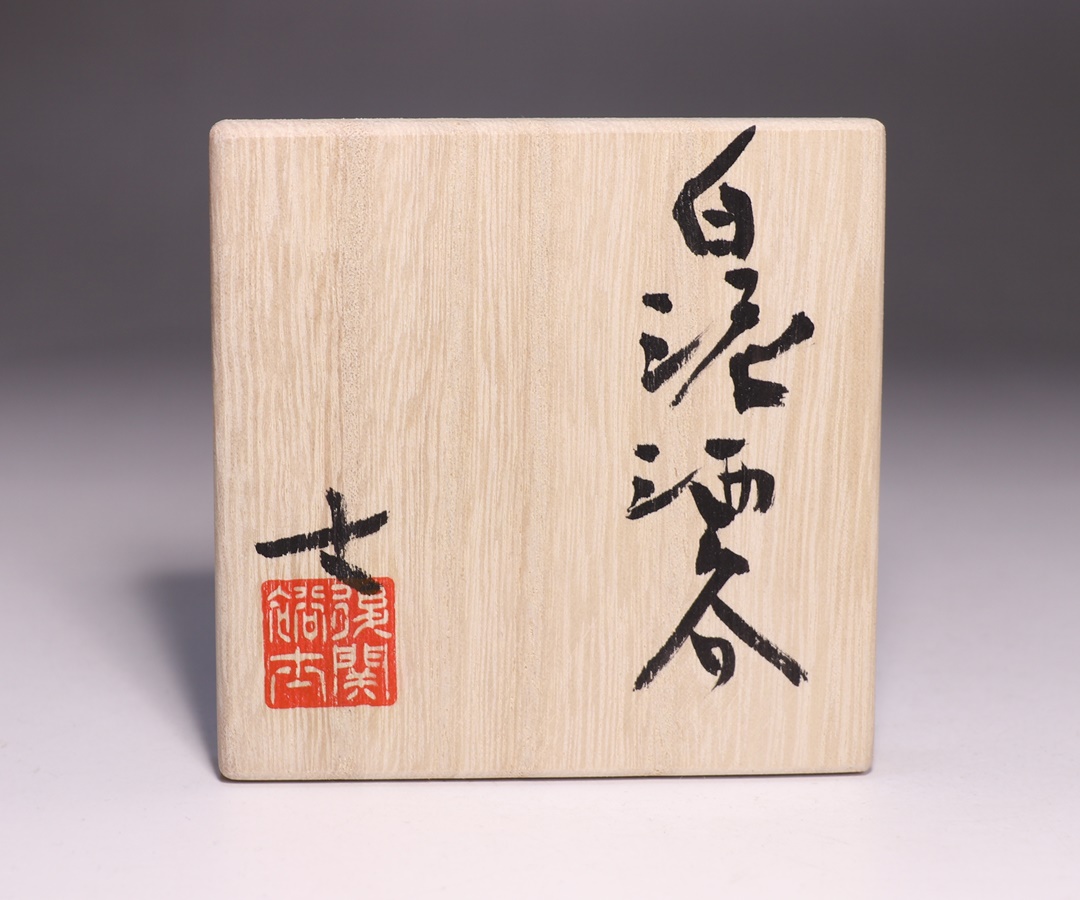
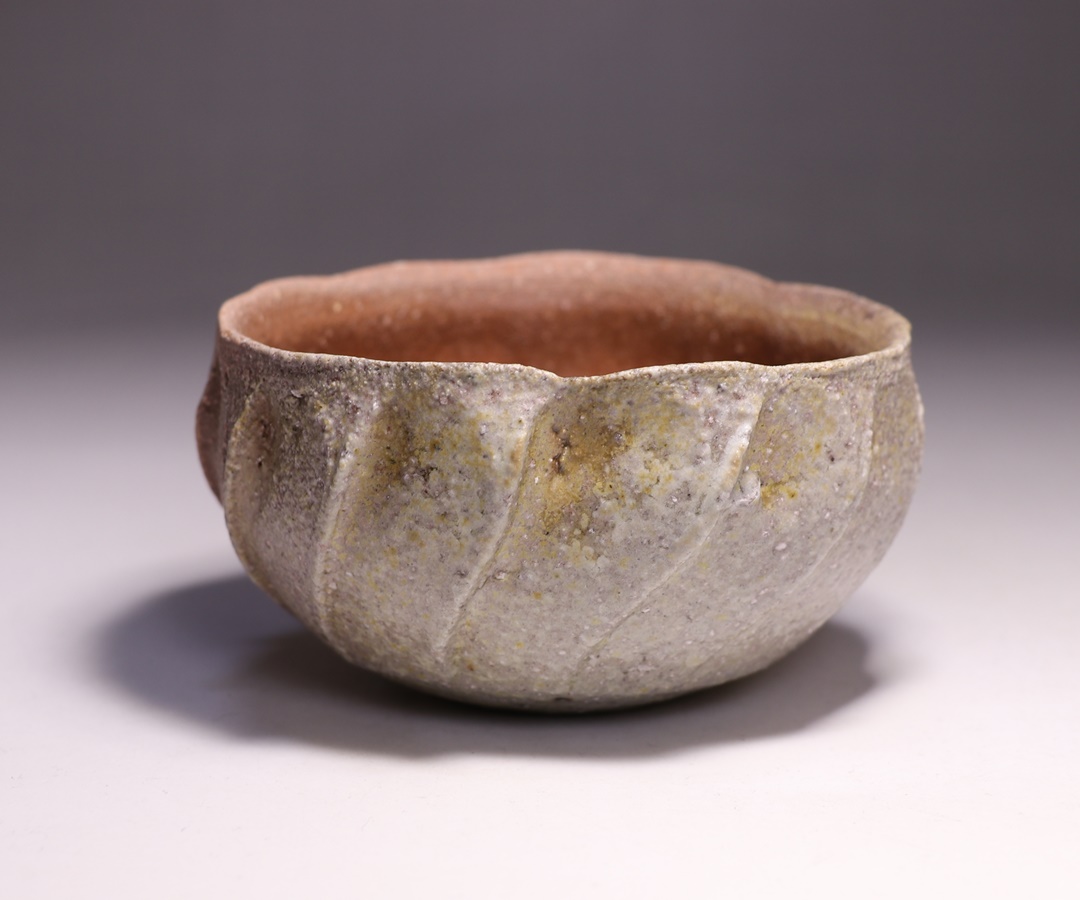
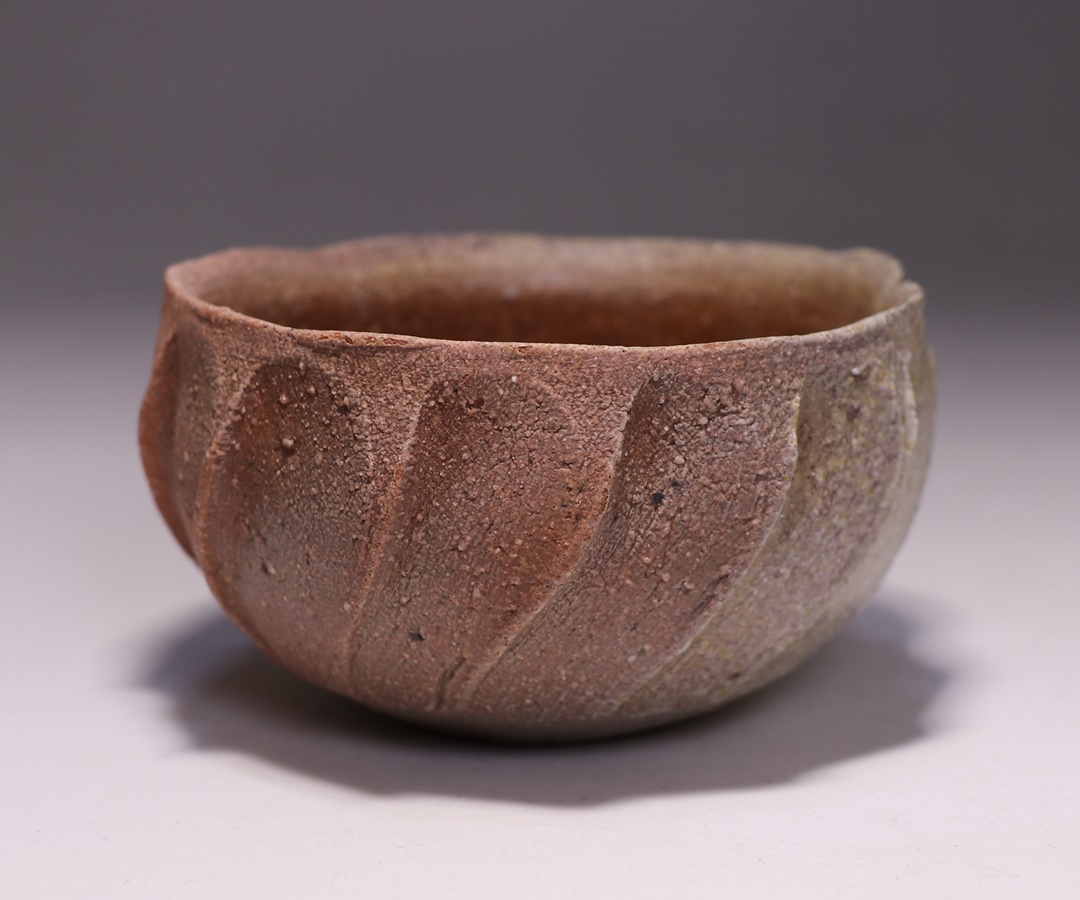
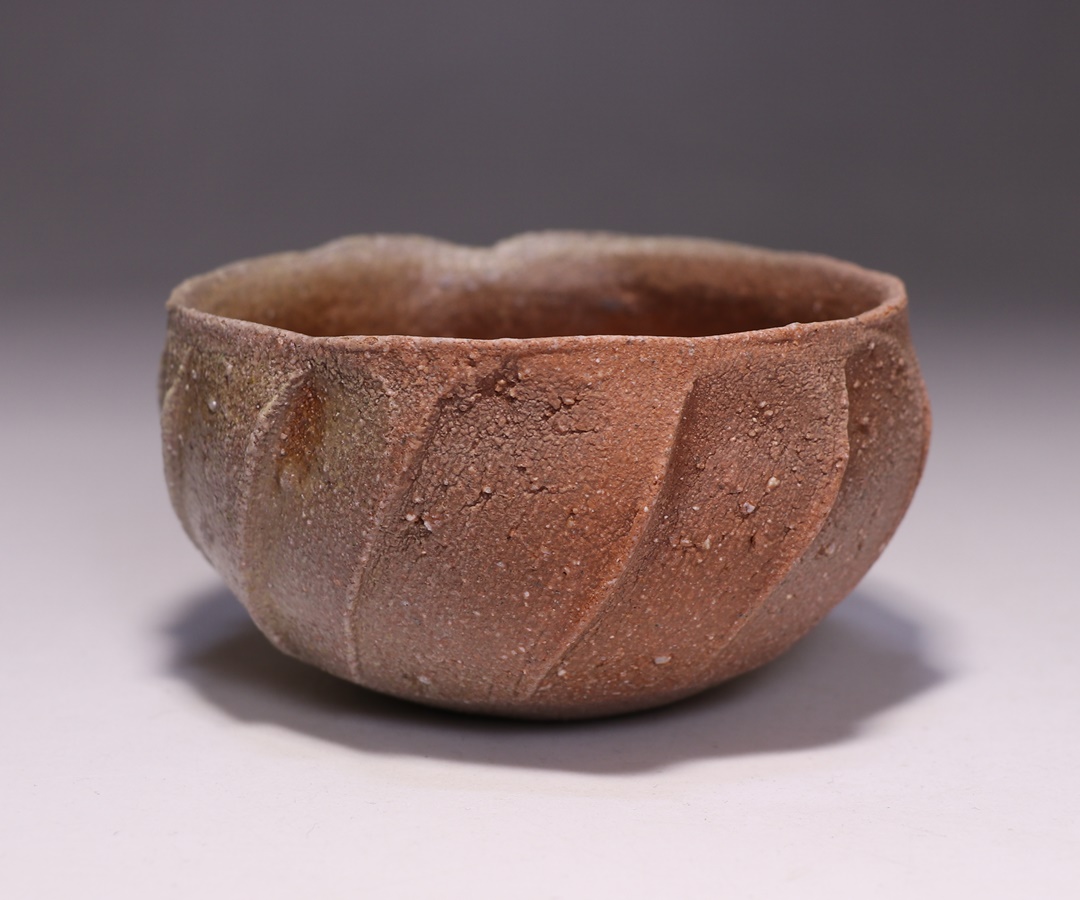
Hiroshi Goseki - Hakudei Guinomi
11,000 YEN
size : W7.2cm×6.9cm×H7.0cmHiroshi Goseki studied under Jun Isezaki, a Living National Treasure, and later established his kiln in Ibaraki. This is a White Slip Guinomi by Hiroshi Goseki.
While continuing to create works centered on Bizen pottery in Ibaraki, he has also devoted himself to the study of a wide variety of glazes. This piece is one of his glazed works that reflects that pursuit.
For this work, he used Hakudei, his original blended ash glaze. The entire surface shows a beautiful white tone with a faint bluish tint, giving the piece a cool, pure appearance and a quietly dignified atmosphere.
The effect of the straw-ash glaze has also produced flowing glaze patterns reminiscent of Madara-Karatsu, and along the boundary areas, a distinctive fire pattern appears, as if pale bluish-white flames were swirling upward.
The rhythmically cut foot and the gently spreading body come together to create a serene and noble presence, reminiscent of the celebrated tea bowl Fujisan.
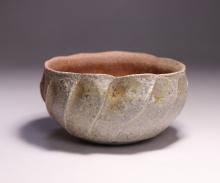


Masao Akiya - Bizen Guinomi
6,600 YENSold out
size : W8.7cm×8.5cm×H4.7cmMasao Akiya studied under Jun Isezaki, the fifth Living National Treasure of Bizen ware, and creates works full of originality within a fresh and contemporary spirit.
This is a newly fired Bizen Guinomi by Masao Akiya, just released from the kiln.
It is one of his latest works, freshly fired in February 2026.
This Guinomi is especially appealing for its brilliant surface effects produced through the anagama firing tradition of the Isezaki lineage.
Set against a clay surface marked by strong hiro, white Yohen appears beautifully across the whole piece.
Because the work was fired with abundant heat, white Goma has emerged over the entire surface, creating a highly distinctive appearance reminiscent of frost.
Inside the vessel, the hiro-toned clay is covered with fine Kigoma, and the overlap of these two elements produces a beautiful orange tone that seems especially well suited to sake.
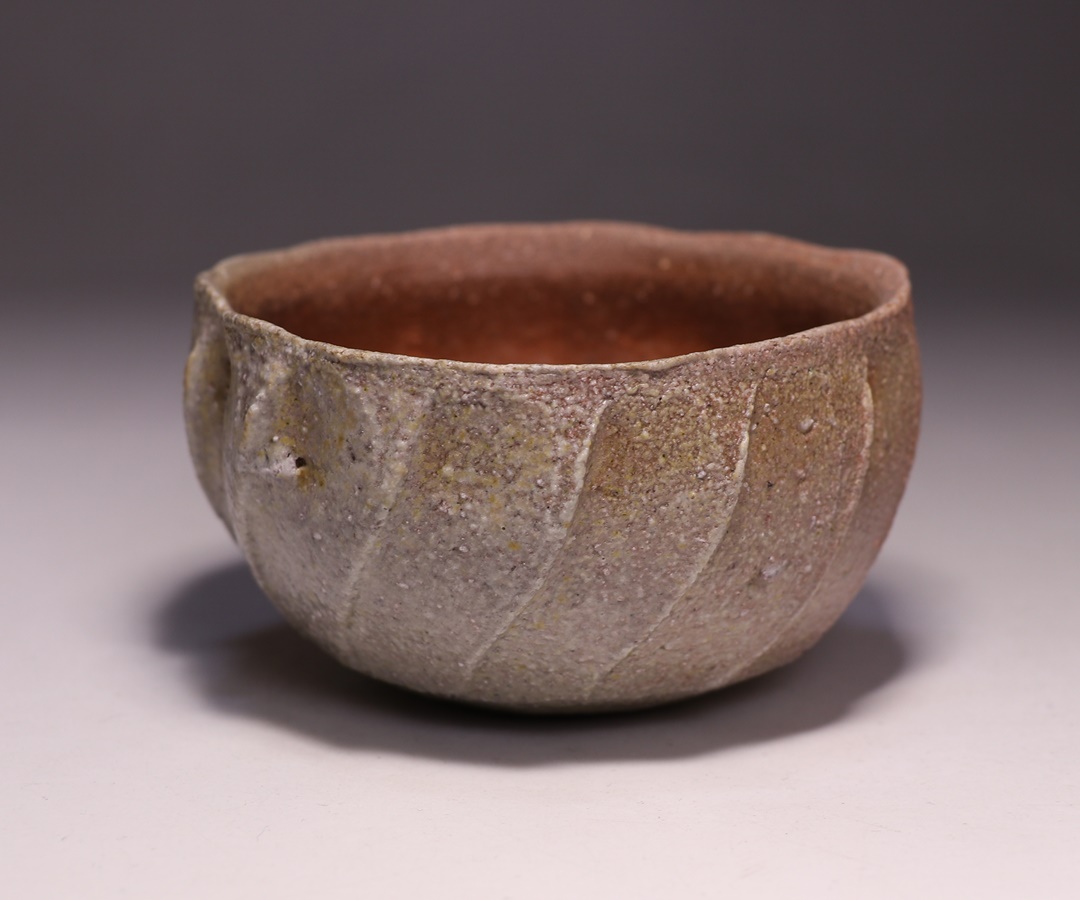
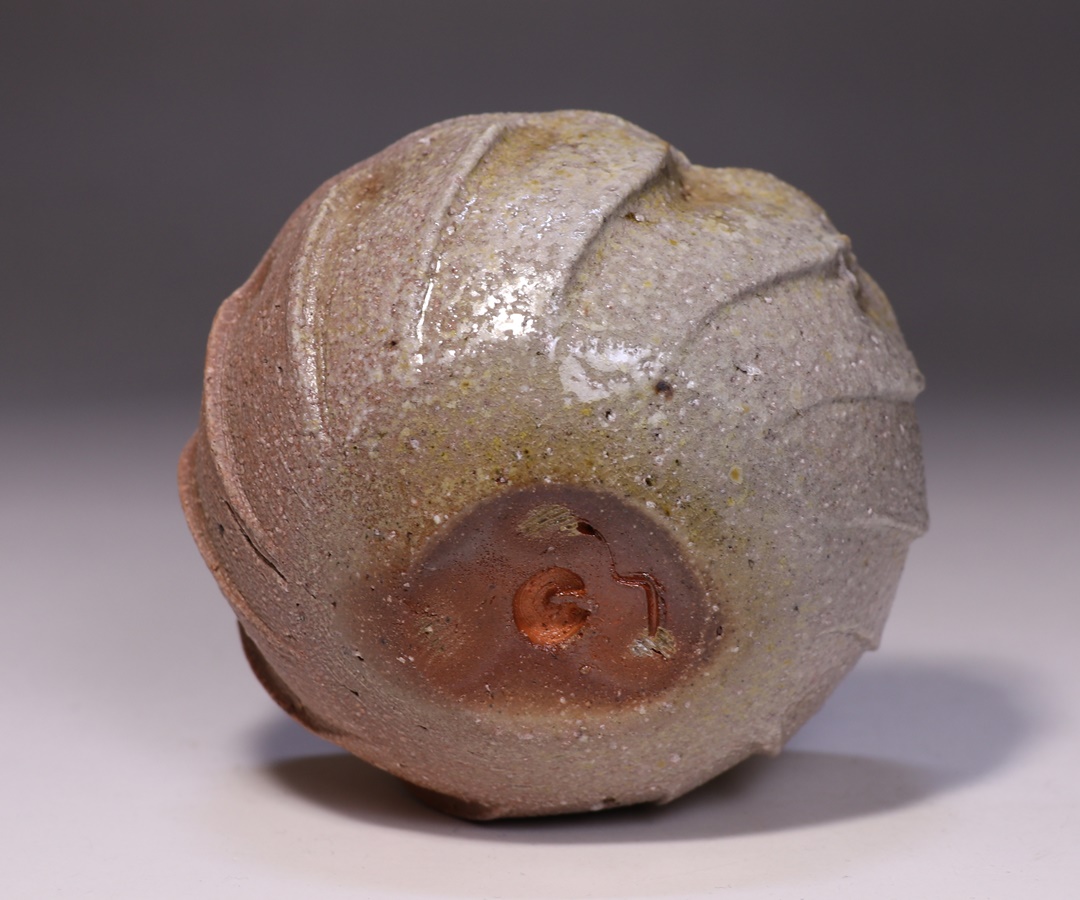
The entire piece has been carefully faceted with a spatula, resulting in a design that is simple, refined, and stylish.
FIRST PREV 6 / 92 page NEXT LAST